Coinbase has made a quite unexpected decision to delist two altcoins!

cryptonews.ruОпубліковано о 2026-08-28Востаннє оновлено о 2026-08-28

Анотація

Cryptocurrency exchange Coinbase has announced the suspension of trading for two altcoins, Badger DAO (BADGER) and Storj (STORJ), following a recent review of its listing standards. Trading for these assets will be halted on September 28, 2026, at approximately 9:00 PM Turkey Time, affecting Coinbase's retail and institutional platforms. Coinbase stated it regularly reviews listed assets and made the decision based on its standards, though no specific reason for the delisting was provided. Prior to the suspension, order books for BADGER and STORJ will be moved to limit-only mode. Badger DAO is a decentralized project focused on expanding Bitcoin's use within DeFi, with its BADGER token used for governance. Storj is a decentralized cloud storage network that distributes encrypted data across a global node network, using its STORJ token for network payments. The article includes a chart showing a decline in STORJ's price and concludes by stating it is not investment advice.

The American cryptocurrency exchange Coinbase announced its decision to suspend trading of the cryptocurrencies Badger DAO (BADGER) and Storj (STORJ) following a recent review of its listing standards.

According to Coinbase's statement, trading of BADGER and STORJ will be suspended on September 28, 2026, at approximately 21:00 Turkish time. This decision will also affect the Simple and Advanced Trade services on Coinbase, as well as Coinbase Exchange and Coinbase Prime, the platform for institutional investors.

The exchange stated that it regularly reviews cryptoassets traded on its platform for compliance with listing standards and, after recent reviews, made the decision to suspend trading of the two altcoins. According to Coinbase's official help page, delisting decisions can be made for various reasons, including changes to the project, failure of the asset to meet review standards, or the project ceasing operations. However, the exchange did not specify a clear reason for the delisting decision.

Prior to the delisting, Coinbase has moved the order books for BADGER and STORJ into 'limit-only' mode. At this stage, investors can only place limit orders or cancel existing limit orders. Trade execution may continue if a suitable counter order is found.

What is Badger DAO (BADGER)?

Badger DAO is a decentralized project focused on expanding the use of Bitcoin within the decentralized finance (DeFi) ecosystem. The project describes itself as a decentralized structure consisting of community-governed developers who support the growth of Bitcoin within DeFi.

The ecosystem's native token, BADGER, is used in various DeFi protocols related to Badger DAO, primarily for governance. The project's official website also states that support for some legacy products and vaults has been discontinued, and access to the relevant smart contracts is now directly via the blockchain.

What is Storj (STORJ)?

Storj is one of the blockchain projects developing decentralized and distributed cloud data storage infrastructure. The network's goal is to store user data by distributing it across various storage nodes, rather than storing it in a single centralized data center.

In Storj's infrastructure, files are encrypted, fragmented, and distributed across various storage nodes in a global network. The project also offers S3 compatibility as an alternative to traditional cloud storage services. The STORJ token is used for payments between storage services and network participants within the network's economic structure.
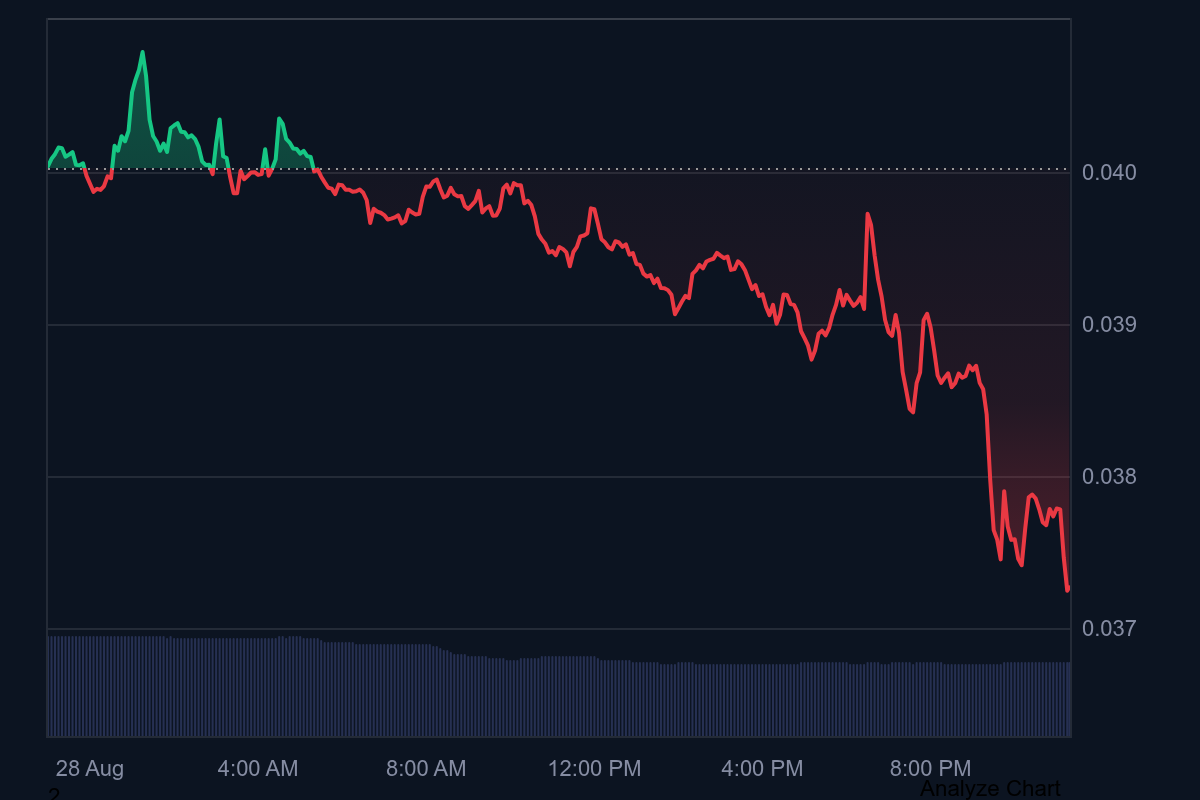
The chart shows the drop in the price of STORJ.

*This is not investment advice.

Пов'язані питання

QWhat are the two altcoins being delisted by Coinbase, and what is the scheduled date and time for trading suspension?

AThe two altcoins being delisted are Badger DAO (BADGER) and Storj (STORJ). Trading for these cryptocurrencies will be suspended on September 28, 2026, at approximately 21:00 Turkish Time.

QAccording to Coinbase, what are the general reasons that can lead to a delisting decision for a cryptocurrency?

AAccording to Coinbase's official help page, delisting decisions can be made for various reasons, including changes in the project, the asset no longer meeting the listing review standards, or the discontinuation of the project's activities.

QWhat is the primary focus of the Badger DAO (BADGER) project, and what is the main use of its token?

ABadger DAO is a decentralized project focused on expanding the use of Bitcoin in the decentralized finance (DeFi) ecosystem. Its native token, BADGER, is primarily used for governance within various DeFi protocols associated with Badger DAO.

QWhat problem does the Storj (STORJ) project aim to solve, and how does its network function?

AStorj aims to create a decentralized and distributed cloud data storage infrastructure. It functions by encrypting, fragmenting, and distributing user files across a global network of storage nodes, instead of storing them in a single centralized data center. Its STORJ token is used for payments within this network economy.

QHow will the delisting process affect order books for BADGER and STORJ on Coinbase prior to the suspension date?

APrior to the delisting, Coinbase will move the order books for BADGER and STORJ into 'limit-only' mode. During this phase, investors can only place limit orders or cancel existing limit orders. Trade execution may continue if a matching counterparty order is found.

Пов'язані матеріали

How Does Wall Street View Warsh's Jackson Hole Debut? Hawkish 'Correction' of July Communication; Failure to Hike in September May Further Damage Fed Credibility

Wall Street widely interpreted Fed Chair Wash's first speech at the Jackson Hole symposium as a "hawkish correction" to the Fed's July FOMC communications. Wash firmly reiterated the Fed's unwavering commitment to the 2% inflation target, indicated that overall financial conditions are not restrictive, and stated that recent positive PCE and CPI data are not enough to show meaningful improvement in underlying inflation trends. He said if confidence is lacking that inflation is falling "clearly and fast enough," the Fed "has more work to do," with Reuters calling it his closest admission yet that another rate hike may be needed. This shifted market focus to the September meeting. JPMorgan's Priya Misra called it a "hawkish speech" that cleaned up July's communication "misstep." Aberdeen's Matthew Amis warned that if the Fed doesn't hike in September, its credibility could take another hit. Barclays and Société Générale now forecast 25-basis-point hikes in September and December, with SocGen adding a March hike expectation. However, analysts noted Wash provided principles but no explicit forward guidance. The "new Fed whisperer," Nick Timiraos, observed Wash gave a more hawkish diagnosis but no clear "reaction function." The CME's FedWatch Tool showed the probability of a September hike jumped from about 35% to around 50-60% after the speech. The bond market reaction was telling: short-term yields rose more than long-term yields, indicating traders were repricing near-term rate hikes. In essence, Wash rebuilt a hawkish policy logic: if the economy remains resilient and inflation doesn't fall fast enough, more tightening is possible. The consensus is that he successfully delivered a hawkish reset. While a September hike is now a serious possibility, the final decision will hinge on incoming data, creating a credibility test for the Fed if data doesn't improve and it holds rates steady.

marsbit33 хв тому

How Does Wall Street View Warsh's Jackson Hole Debut? Hawkish 'Correction' of July Communication; Failure to Hike in September May Further Damage Fed Credibility

marsbit33 хв тому

Warsh's Latest Speech: The Era We Are In

Federal Reserve Chairman Kevin W. Warsh delivered a speech titled "In Our Time" at the Jackson Hole Economic Policy Symposium. The remarks struck a cautiously hawkish tone, with Warsh emphasizing that inflation remains significantly above the Fed's 2% target and should be the primary focus of monetary policy. He expressed that recent, better-than-expected CPI and PCE data do not yet signal a meaningful improvement in the underlying inflation trend. Warsh outlined core principles for monetary policy, including the firm commitment to the 2% inflation target, the importance of both price stability and maximum employment, and the primary role of short-term interest rates as a policy tool. He also stressed the relevance of monetary aggregates and advocated for a Fed that communicates with greater purpose and restraint. A significant portion of the speech addressed the practice of "forward guidance." Warsh argued that while essential during crises, forward guidance should be limited in normal times. He warned that excessive pre-commitment to future policy paths can constrain the Fed's flexibility and create a "hall-of-mirrors" problem, where markets rely too heavily on Fed signals rather than independently assessing economic fundamentals. On the current economy, Warsh noted impressive resilience, strong business investment (partly driven by AI infrastructure), healthy consumer spending, and a stable labor market with low unemployment. However, he observed that broad financial conditions are not particularly restrictive. Despite economic strength, inflation metrics remain elevated, with a high proportion of PCE basket components still showing price increases above 3%. Warsh concluded by stating the Fed's standard: policymakers must be confident that underlying inflation is moving clearly and sufficiently quickly toward the 2% target. Otherwise, "we have more work to do." He framed his approach as a commitment to disciplined policy-making rather than to any specific near-term decision.

marsbit2 год тому

Warsh's Latest Speech: The Era We Are In

marsbit2 год тому

Access to Active Sessions Instead of Databases: How the Shadow Market in Russia Has Changed

The Russian cybercriminal underground is shifting from selling massive, stolen corporate databases to trading active, short-term access to user accounts, according to a 2026 report. The value of information intercepted directly from infected devices by malware has risen nearly 13% in a year. Attackers now sell packets containing active session tokens (bypassing passwords and two-factor authentication), live email credentials, VPN and cloud storage logins, and corporate network access. A subscription for a steady stream of fresh data costs $250-$300 per month, far exceeding the value of outdated archives. While Russian regulators have successfully penalized companies for data leaks from centralized storage—with no repeat violations recorded after imposing turnover fines—this framework fails against the new threat model. Malware now steals data *after* it leaves the corporate perimeter and is on a user's personal device, a legal grey area. In 2026, 60% of studied web attacks aimed to steal keys for infiltrating corporate infrastructure. The situation mirrors global trends, akin to the Genesis Market shutdown in 2023, and highlights a structural risk: the demand for "fresh" data incentivizes botnet operators to maintain long-term control of infected devices for recurring revenue. This creates a persistent vulnerability layer between personal devices and corporate networks, currently outside the reach of existing regulatory protections.

cryptonews.ru5 год тому

Access to Active Sessions Instead of Databases: How the Shadow Market in Russia Has Changed

cryptonews.ru5 год тому

Торгівля

Спот
活动图片