Japan’s Banking Giants Unite for Yen Stablecoin Launch

TheNewsCryptoОпубліковано о 2026-06-10Востаннє оновлено о 2026-06-10

Анотація

Three of Japan's largest banks — Mitsubishi UFJ Financial Group, Sumitomo Mitsui Financial Group, and Mizuho Financial Group — will jointly issue a yen stablecoin by March, the end of the current financial year. They have formed a council to prepare for the launch, with the Japanese Financial Services Agency and the ruling Liberal Democratic Party expressing support. Yen-pegged stablecoins currently represent a minor part of the market, with JPYC being the most notable example. Separately, the New York State Department of Financial Services has proposed stringent new regulations for stablecoin issuers, focusing on stricter reserve custody rules, enhanced risk management, and mandatory executive certifications and audits.

Three of Japan’s largest banks said they will jointly issue a stablecoin this financial year, which ends in March. Mitsubishi UFJ Financial Group (MUFG), Sumitomo ⁠Mitsui Financial Group (SMBC) and Mizuho Financial Group will establish a council to explore operational frameworks and prepare for the issuance of stablecoins, according to a statement on MUFG’s website.

The three banks will act as “joint settlors and a trust bank or similar institution will act as trustee,” the statement said. Japan’s Financial Services Agency (FSA) signaled support for the development of a stablecoin by the three banks last November. More recently, the ruling Liberal Democratic Party (LDP) said the state should promote the usage of yen-based stablecoins.

Tokens pegged to the yen represent a negligible share of the market, accounting for less than $50 million in the $311 billion sector. The most prominent is JPYC with a market cap of around $18 million, issued by a Tokyo-based fintech of the same name.

NYSD Pushes for Stringent Regulations

The New York State Department of Financial Services released a proposed regulation for authorized payment stablecoin issuers on June 9, The Block reported on June 10. The proposal would turn stablecoin guidance issued in 2022 into formal regulation and incorporate the GENIUS Act and follow-up federal rulemaking.

The biggest change covers custody of reserve assets. Stablecoin issuers would be required to hold reserves across multiple custodians. The proposal also introduces new redemption-related measures to prevent excessive concentration of reserves at a single custodian.

Risk-management obligations would also be strengthened. Issuers would need to establish frameworks covering security, internal controls and audits, insider trading, and oversight of external service providers.

A dual-authorization system would apply to reserve management. Each month, an issuer’s chief executive officer and chief financial officer would have to certify the accuracy of reserve composition reports. Each year, issuers would also need an attestation from an accounting firm on the effectiveness of internal controls.

Highlighted Crypto News Today:

CertiK Backs Pharos AI Agent Hackathon With Security-Focused Skill Scanner

TagsAltcoinBlockchainJapan

Пов'язані питання

QWhich three major Japanese banks have announced a joint initiative to issue a yen-pegged stablecoin?

AMitsubishi UFJ Financial Group (MUFG), Sumitomo Mitsui Financial Group (SMBC), and Mizuho Financial Group.

QWhat is the current market share of yen-pegged stablecoins in the overall stablecoin market, according to the article?

AIt is a negligible share, accounting for less than $50 million in the $311 billion stablecoin sector.

QWhat role will a trust bank or similar institution play in the Japanese banks' stablecoin issuance plan?

AIt will act as the trustee, while the three banks will act as joint settlors.

QWhat major change did the New York State Department of Financial Services propose regarding stablecoin reserve assets?

AIt proposed that stablecoin issuers be required to hold reserves across multiple custodians to prevent excessive concentration at a single custodian.

QAccording to the article, which political party in Japan recently stated that the state should promote the usage of yen-based stablecoins?

AThe ruling Liberal Democratic Party (LDP).

Пов'язані матеріали

ChangXin's Debut: The Missed 50 Billion Yuan by Country Garden, and the Handover of an Era

On July 27, 2026, Changxin Memory Technologies (CXMT) debuted on the STAR Market, its share price surging 471.59%. With a market cap exceeding ICBC, it became China’s most valuable A-share company, highlighting a dramatic technological and economic shift. In 2021, at the peak of China's real estate boom, developer Country Garden invested 2 billion yuan (20 billion) for a 1.56% stake in the fledgling chipmaker through its venture capital arm. The investment was strategic; CXMT represented a crucial "chain-blocker" in China's semiconductor supply chain. Country Garden’s unique "perpetual capital" model allowed for long-term bets on hard tech, from space rockets to memory chips. However, the property sector’s severe downturn forced Country Garden's hand. Facing immense liquidity pressure to fund construction and deliver pre-sold homes, it sold its entire CXMT stake back to Hefei's state-owned capital for the original 2 billion yuan in December 2024. By the IPO date, that stake was worth roughly 50 billion yuan, a 500 billion opportunity lost. This story encapsulates a pivotal transition. Money accumulated during the property boom was redirected to seed next-generation industries like semiconductors. Yet the old cycle collapsed faster than the new one could mature. While Country Garden accurately foresaw the strategic importance of chip manufacturing, it ultimately misjudged how long its own capital could wait, becoming a poignant symbol of an era's handover from bricks and mortar to silicon and innovation.

marsbit23 хв тому

ChangXin's Debut: The Missed 50 Billion Yuan by Country Garden, and the Handover of an Era

marsbit23 хв тому

Why Can't Kimi Go to a Nightclub to Celebrate Success?

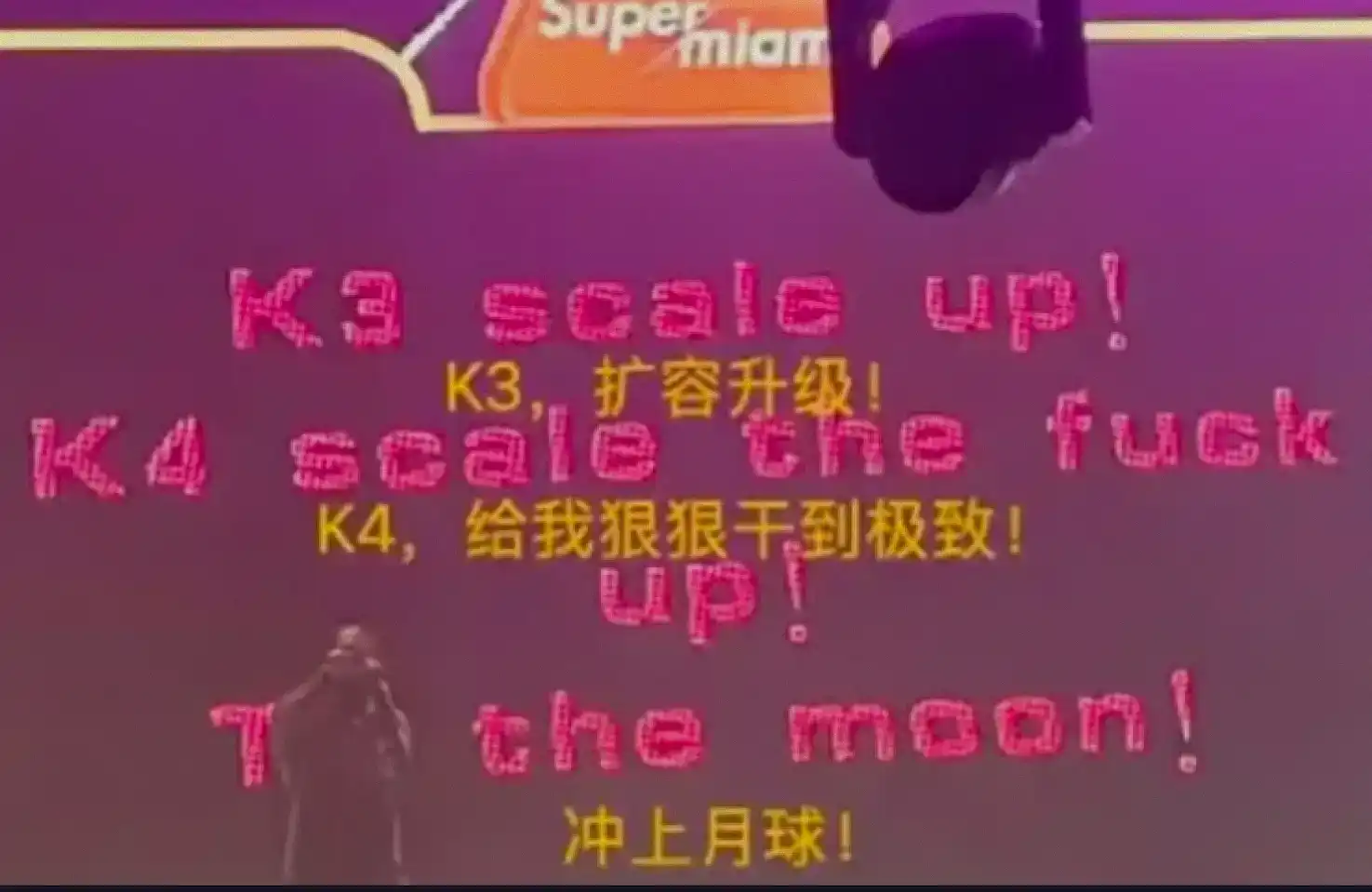
"Why Can't Kimi Go to a Nightclub to Celebrate Success?" The article discusses the controversy surrounding the Chinese AI company Kimi's decision to hold a celebration at a Beijing nightclub after the successful release of its K3 model. While the event drew criticism on social media for being "flashy" and a sign of losing focus, the author argues this reflects a double standard. The piece contrasts the reaction to Kimi with the perception of similar celebrations by Silicon Valley tech companies. In the U.S., such events are often seen as symbols of ambition and a vibrant culture. The author suggests a "Silicon Valley worship" exists, where Western tech elites are granted the freedom to define success and lifestyle, while Chinese companies face constant scrutiny and must prove their worthiness beyond just technical achievements. Furthermore, the article critiques a deep-rooted "moralism of hardship" in Chinese culture, where success is expected to be earned through visible struggle and austerity, especially for scientists and innovators. Figures like mathematician Wang Hong, who presents an elegant and stylish image, challenge the stereotypical expectation of the disheveled, ascetic academic. The core argument is that Kimi's nightclub celebration itself proves nothing about the company's long-term viability or technical prowess. The backlash, however, reveals unrealistic expectations for Chinese tech firms: to simultaneously embody the disruptive energy of Silicon Valley while maintaining the humble demeanor of a perpetual underdog. The author concludes that a mature tech culture should allow Chinese talent to experience and express the joy of their achievements without judgment.

marsbit44 хв тому

Why Can't Kimi Go to a Nightclub to Celebrate Success?

marsbit44 хв тому

Торгівля

Спот
活动图片