Trump's Midterm Election Donors Exposed: From Crypto.com to OpenAI, Crypto and AI Giants Generously Contribute

marsbitОпубліковано о 2026-02-04Востаннє оновлено о 2026-02-04

Анотація

Donald Trump's midterm election fundraising has reached $429 million, with his super PAC holding $304 million—tens of millions more than Democratic opponents. Significant contributions came from the crypto and AI sectors, including $5 million from Elon Musk, $25 million from OpenAI co-founder Greg Brockman and his wife, and $16 million from SIG co-founder Jeff Yass. Crypto.com donated $30 million, while Blockchain.com and a16z founders Ben Horowitz and Marc Andreessen each contributed. Major donations also poured in from energy, healthcare, and finance industries, such as $10 million from Extremity Care, $12.5 million from energy entrepreneur Kelcy Warren, and $1 million each from figures like NFL Dallas Cowboys owner Jerry Jones and Chevron board member John Hess.

Is Trump's midterm election in jeopardy? ????

——Not sure, but he definitely has more money than his opponents! He has raised a total of $429 million, with his super PAC currently holding $304 million, tens of millions more than the Democratic camp!

In this round of donations, the AI and crypto industries also accounted for a significant proportion:

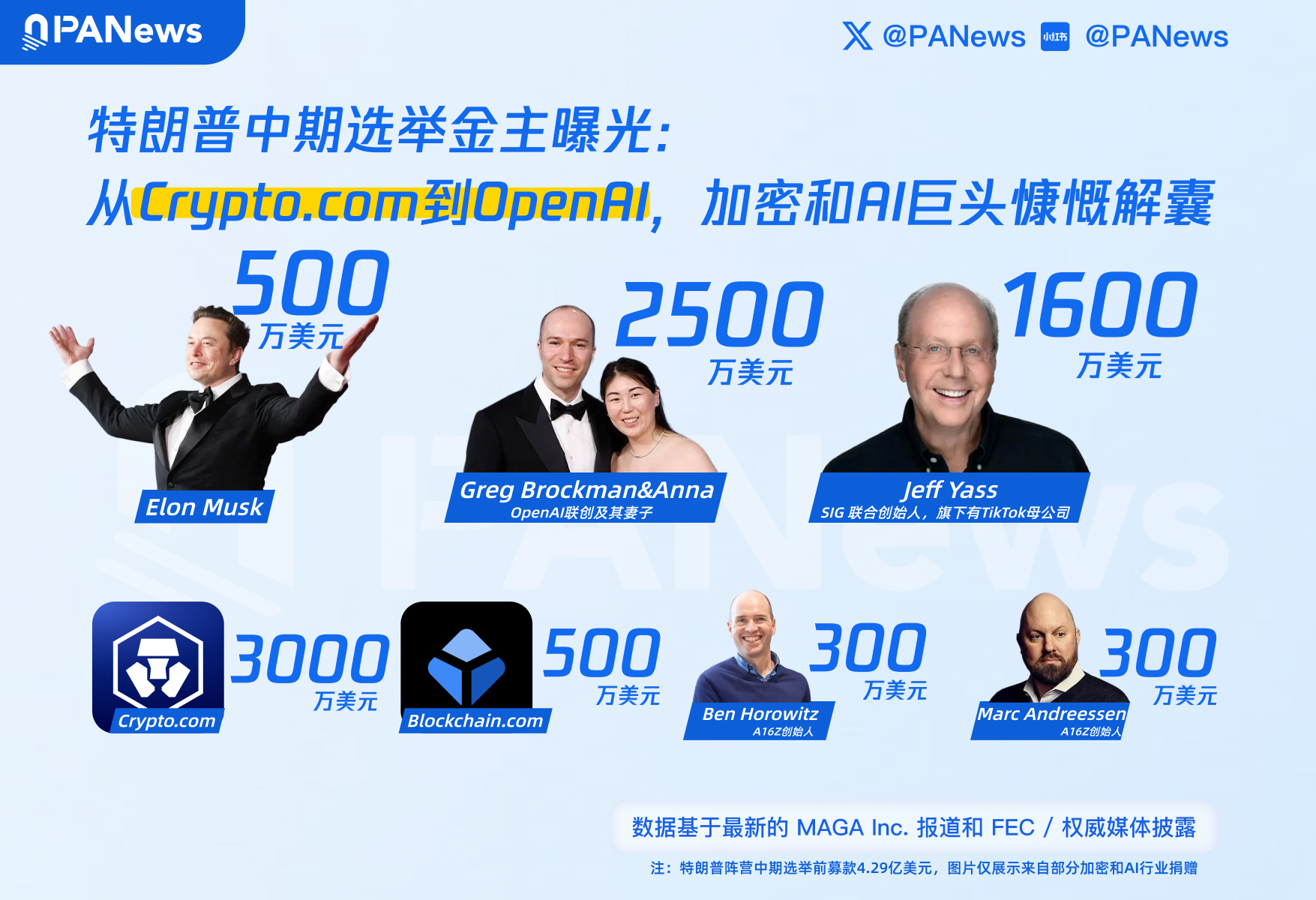
Elon Musk: $5 million
OpenAI co-founder Greg Brockman and his wife Anna: $25 million
SIG co-founder Jeff Yass: $16 million

Crypto.com: $30 million
Blockchain.com: $5 million
A16Z founder Ben Horowitz: $3 million
A16Z founder Marc Andreessen: $3 million

Funds from the energy, healthcare, and financial industries are also heavily betting:

Extremity Care (medical company) and related parties: $10 million
RAI Services (tobacco company): $3 million

Energy entrepreneur Kelcy Warren: $12.5 million
Private equity investor Konstantin Sokolov: $11 million
Banker Julio Herrera Velutini and his daughter: $3.5 million
NYSE parent company ICE CEO Jeffrey Sprecher: $2.5 million
Food business heir Lynsi Snyder-Ellingson: $2 million
Venture capitalist William E. Ford: $1.25 million
NFL Dallas Cowboys owner Jerry Jones: $1 million
Chevron board member John Hess: $1 million
John Hess's wife Susan Hess: $1 million
Investor Warren Stephens: $1 million
Entrepreneur Jared Isaacman: $1 million
Пов'язані питання

QHow much money did Donald Trump raise for the midterm elections according to the article?

ADonald Trump raised a total of $429 million for the midterm elections.

QWhich AI and crypto industry leaders made significant donations to Trump's campaign, and how much did they contribute?

AElon Musk donated $5 million, OpenAI co-founder Greg Brockman and his wife Anna donated $25 million, and SIG co-founder Jeff Yass donated $16 million. From the crypto industry, Crypto.com donated $30 million, Blockchain.com donated $5 million, and A16Z founders Ben Horowitz and Marc Andreessen each donated $3 million.

QWhat is the amount of money currently available in Trump's super PAC, and how does it compare to the Democratic camp?

ATrump's super PAC currently has $304 million, which is tens of millions more than the Democratic camp.

QBesides AI and crypto, which other industries contributed significantly to Trump's midterm election funds?

ASignificant contributions also came from the energy, healthcare, and financial industries, including donations from Extremity Care ($10 million), RAI Services ($3 million), energy entrepreneur Kelcy Warren ($12.5 million), and others.

QWho are some of the notable individual donors from outside the AI and crypto sectors mentioned in the article?

ANotable individual donors include NYSE parent ICE CEO Jeffrey Sprecher ($2.5 million), NFL Dallas Cowboys owner Jerry Jones ($1 million), Chevron board member John Hess and his wife Susan Hess ($1 million each), and food business heiress Lynsi Snyder-Ellingson ($2 million).

Пов'язані матеріали

Soaring Oil Prices No Longer Drive Up Interest Rates, What Is the Market Afraid Of?

Oil prices surged nearly 60% in March 2026—the steepest monthly rise since Brent crude's inception in 1988—after the Strait of Hormuz closed, cutting off 17.8 million barrels per day of oil flow. Historically, such spikes pushed inflation expectations and bond yields higher, but this time, the 10-year Treasury yield fell sharply from 4.44% to 3.92% in late March, signaling a decoupling. This divergence reflects a market shift: growth risks now outweigh inflation concerns. Bond markets are betting on recession rather than persistent inflation. Historical oil shocks—like those in 1973, 1979, 1990, and 2008—often preceded economic downturns. The sole exception was the 2022 spike, which triggered severe inflation instead. Market expectations pivoted rapidly. Earlier, traders anticipated rate cuts, but by late March, weak consumer confidence and manufacturing data drove bets toward Fed dovishness. Chair Powell emphasized monitoring whether the supply shock is temporary, but the bond market has already priced in recession risks. If stagflation emerges—as during 1973–1982—real assets like gold and commodities may outperform, while stocks and bonds could suffer. The 60/40 portfolio would be particularly vulnerable. Analysts project Brent could average $115–125 in April, with a peak of $150 possible if the Strait remains closed. The bond market’s verdict is clear: fear of recession dominates.

marsbit27 хв тому

Soaring Oil Prices No Longer Drive Up Interest Rates, What Is the Market Afraid Of?

marsbit27 хв тому

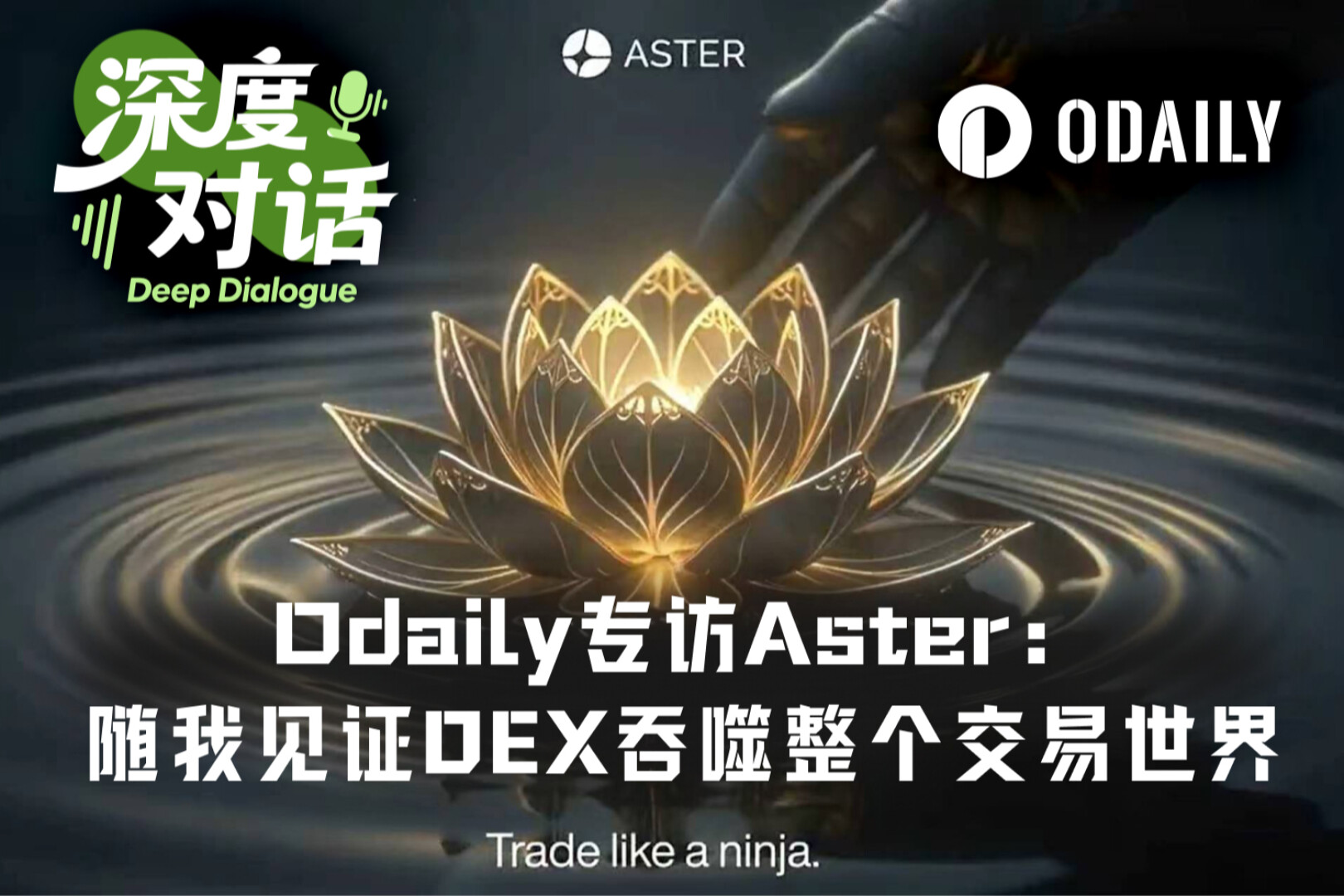
Odaily Interviews Aster: DEX Will Ultimately Devour the Entire Trading World, Optional Privacy is the Key Ladder

Odaily Interview with Aster: DEX Will Ultimately Devour the Trading World, Optional Privacy is the Key Ladder Aster has initiated key steps to build institutional-grade private DeFi infrastructure, marked by the launch of its Layer 1 mainnet, Aster Chain, on March 17. The mainnet offers traders fair ordering and optional privacy. This was followed by the launch of its native staking function on March 20. The project has rapidly evolved from an innovative Perp DEX into a complete infrastructure layer, achieving record-breaking trading volumes in late 2025 and a successful TGE. In an interview, CEO Leonard explained their core logic: launching a mainnet *after* securing users and revenue, not with a "cold start." This ensures every step is validated by real market demand. Aster's key differentiator is its unique "optional privacy" value proposition, implemented through a ZK + Stealth Address architecture. This allows for automatic privacy for each transaction while maintaining verifiability. The team believes this feature is a prerequisite for mass adoption and will be a primary driver for institutional use of DEXs, forming the core of their moat. Looking ahead, Aster predicts the DEX landscape will evolve into an oligopoly dominated by a few major players. The project is actively pursuing partnerships with both Web2 and Web3 entities, with significant interest from financial firms looking to build markets or list assets on its chain. For the immediate future, Aster's Q2 focus is on attracting privacy-seeking users and institutions, expanding assets and liquidity, growing its ecosystem via its developer program (Aster Code), and enhancing token utility.

Odaily星球日报59 хв тому

Odaily Interviews Aster: DEX Will Ultimately Devour the Entire Trading World, Optional Privacy is the Key Ladder

Odaily星球日报59 хв тому

Торгівля

Спот
Ф'ючерси
活动图片