Behind Robinhood's Chain Launch and Tokenized Stocks: No Equity Rights, How Far Can This Packaging Game Go?

marsbitОпубліковано о 2026-07-12Востаннє оновлено о 2026-07-12

Анотація

Robinhood is launching its own Layer 2 blockchain (Robinhood Chain) and "tokenized stocks," but these are not actual equity shares. The tokens are legally structured as debt securities or derivatives, offering economic exposure to a reference stock without granting voting rights or direct ownership. This move represents Robinhood's strategy to expand from a traditional brokerage into a "financial super app," building a user-friendly, programmable financial interface on top of complex, legally compliant, and jurisdiction-specific backend structures. The company's existing business remains strong, driven by options, event contracts, and stock trading. The new blockchain and tokenization efforts are an ambitious layer of infrastructure built atop this core, aiming to make financial products more portable and globally accessible via crypto rails. Key components include the Robinhood Wallet, Bitstamp acquisition (for institutional reach), the Lighter perpetual contracts platform, and Robinhood Earn (DeFi yield). The central challenge is the "brokerage chain paradox": maintaining a simple, intuitive user experience while the underlying assets are highly structured, regulated, and legally distinct from direct ownership. The success of this strategy depends on users, developers, and regulators accepting this model. If the complexity is misunderstood or deemed misleading, it could create product liability issues and stall expansion. The initiative is a significant infrastructure pla...

Author: insights4vc

Compiled by: Deep Chao TechFlow

Deep Chao Introduction: Robinhood's launch of its own Layer 2 chain and "tokenized stocks" appears to bring stocks onto the blockchain, but in reality, users receive only packaged debt instruments—with neither voting rights nor actual equity ownership. How far this packaging game can go depends on whether users, developers, and regulators can accept this contradiction of a "simple interface with a complex underlying mechanism."

Robinhood's move is easy to misinterpret if taken at face value. On the surface, the story is appealing: a major retail broker launches a public, Ethereum-compatible, Arbitrum-based Layer 2 chain; it supports wallets, ETH gas, bridges, tokenized market exposure, and DeFi integration; it aims to make financial products cheaper, more portable, and more global. These points are largely true.

The real strategic questions lie beneath. Robinhood is building a permissionless financial chain, but the assets that make this chain strategically interesting are not truly permissionless financial instruments. They are packaged claims on rights, still bound by legal constraints. The chain may be free to deploy. Tokens may be transferable between supporting wallets. But economically meaningful instruments still rely on issuers, prospectuses, custodians, networks of authorized participants, sanctions and KYC controls, jurisdictional exclusions, oracle designs, and legal recourse that looks nothing like direct share ownership.

This is the broker-chain paradox. Robinhood's opportunity lies in hiding this complexity well enough for the product to feel simple, global, and useful. Robinhood's risk lies in users, developers, and regulators refusing to ignore the underlying complexity. If users think "tokenized stock" means "stock," the gap between language and legal reality becomes a product liability issue. If regulators deem the packaging clear and fairly disclosed, the structure may expand. If they believe the packaging encourages misunderstanding, expansion could stall right where the story gets interesting.

Viewed this way, Robinhood Chain is neither a pure crypto experiment nor a simple extension of a brokerage app. It is an attempt to create a new layer in the middle: a consumer-facing financial stack whose interface feels intuitive, but whose underlying mechanics are deeply structured, strictly controlled, and jurisdiction-specific. This is commercially rational. But it is also inherently fragile. If Robinhood cannot maintain the illusion of simplicity without exaggerating what users actually own, no part of the strategy will work.

Robinhood's Current Position and Super App Ambitions

Robinhood's launch of Robinhood Chain is not a defensive move. The company is acting from an unusual position of operational strength—for a broker that, just a few years ago, was viewed by many investors as a cyclical retail trading platform.

Robinhood (Nasdaq: HOOD) plans to release its Q2 2026 earnings after the market close on Wednesday, July 29, 2026.

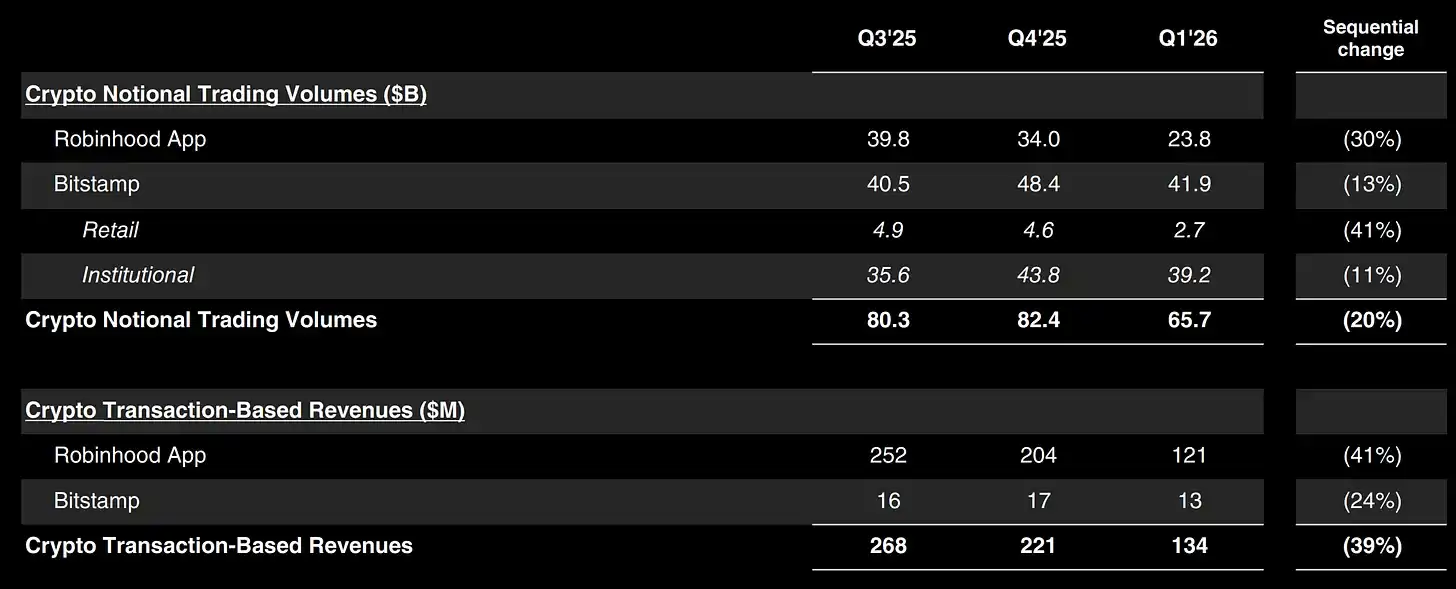
Revenue structure matters because it shows where the business actually monetizes today. In Q1 2026, options generated $260 million in transaction-based revenue, equities $82 million, event contracts $104 million, other transaction revenue $43 million, and cryptocurrency $134 million. The standout growth line is event contracts, rising from $3 million year-over-year to $104 million, while crypto revenue declined from $252 million to $134 million. Thus, the launch of Robinhood Chain comes as company earnings are still driven primarily by active retail trading, high-margin products, and balance sheet monetization, not any existing on-chain business line.

This distinction is important for strategy and valuation. Robinhood Chain is not rescuing the business. It is trying to create a new interface on top of a business that is already working. This makes the move more credible because the company can afford to experiment. It also makes the move easier to overhype, because the existing earnings engine remains rooted in established brokerage economics.

The rest of the balance sheet and user engagement point in the same direction. Robinhood disclosed a $17 billion margin book, $16.7 billion in cash and deposits, $27.4 billion in retirement assets under custody, and $66 billion in crypto notional trading volume in Q1 2026, with $42 billion from Bitstamp and $24 billion from the Robinhood app. This last number is particularly relevant. Bitstamp already makes Robinhood's crypto footprint look more like infrastructure than an isolated retail trading feature.

From Brokerage App to Financial Super App

Robinhood's strategic logic now appears more coherent than when the company first began adding piecemeal products around its core brokerage. In Q1 2026 and subsequent public materials, the company no longer merely describes product expansion. It outlines a more complete operating model: brokerage, options, futures, event contracts, banking, Gold, retirement, crypto, wallet, private market access, AI tools, global licenses, tokenized assets, and DeFi-linked yield. Management's talk about building a "global financial ecosystem" is not just corporate rhetoric. It is an attempt to explain how the layers fit together.

The broader stack now includes several parts that would seem disconnected in isolation. Robinhood Banking and higher cash engagement are important because they deepen deposit and balance relationships. Robinhood Gold is important because it boosts subscription attach rates and supports premium packaging models. Retirement is important because it extends the asset lifecycle and reduces pure trading cyclicality. Futures and event contracts are important because they increase engagement and monetization intensity. Crypto is important because it offers 24/7 markets, self-custody rails, and global funding flexibility. Bitstamp is important because it expands institutional and international reach. The wallet is important because it gives Robinhood a credible non-custodial interface. Robinhood Chain is important because it provides a programmable settlement layer where, in principle, all this financial activity could begin to converge.

The company's international direction reinforces the same point. Robinhood expanded into Canada via WonderFi, disclosed regulatory progress in Singapore, and described crypto plans for the UK. These steps matter not just for new territories, but because they create a sandbox for products that do not fit neatly into the U.S. retail brokerage rulebook. Tokenized wrappers and wallet-native products are easier to introduce at the edges of the group than to force into the regulated core of the U.S. app overnight.

The strategic sentence is simple: Robinhood Chain matters because it may let Robinhood extend its consumer distribution advantage into programmable finance without having to turn its core U.S. brokerage into a crypto-native venue overnight. This is why the chain should be read as infrastructure strategy, not launch marketing.

What Robinhood Chain Actually Is

Robinhood Chain's documentation describes it as an Arbitrum Layer 2 chain built on Ethereum, using Ethereum blobs for data availability, and ETH as the native gas token. Robinhood Wallet supports it natively, and other EVM wallets can add it manually. Assets can be moved onto the chain using the canonical Arbitrum bridge or partner routing. Public materials also emphasize the chain is open and permissionless, EVM-compatible, and designed for tokenized real-world assets.

Robinhood's July 2026 launch materials say the chain is built using the Arbitrum platform to "institutional standards" and name Uniswap as the day-one AMM and Pleiades as the proprietary AMM/proprietary trading venue. Robinhood's technical documentation adds that Stock Tokens are standard ERC-20s, each with a Chainlink price feed, and corporate actions are reflected via on-chain multipliers rather than rebalancing balances.

However, public documentation is not equally complete on all infrastructure questions. We found clear documentation on connectivity, gas, bridges, token formats, and oracle design, but less clear public explanation on sequencer decentralization, governance path, fraud-proof status, or the exact current production role of each named infrastructure partner. This doesn't mean the system is weak; it means some institutional-grade diligence questions still require more disclosure than the public documentation currently provides.

The main takeaway is straightforward. Robinhood Chain is real but still early. It has infrastructure, partners, and live products associated with it. What it does not yet have is proof of durable liquidity, broad developer adoption, seamless regulatory portability, or substantive revenue contribution. This distinction matters. A public mainnet and a few live products are enough to take the strategy seriously. They are not enough to prove it.

The Legal Reality of Stock Tokens and On-Chain Stocks

The most important sentence of this article is also the simplest: Robinhood's Stock Tokens should not be described as on-chain stocks. They are tokenized economic exposures to securities via a legal wrapper.

Robinhood's on-chain Stock Tokens are described in public materials and offering documents as tokenized debt securities issued by Robinhood Assets Jersey Limited. They provide economic exposure to a reference stock or ETF, but users do not receive direct legal ownership of the underlying security, beneficial ownership of those shares, or ordinary shareholder rights like voting. Product documentation is clear on this point, and the prospectus framework is clearer than most marketing shorthand around "stock tokens" implies.

The earlier "Classic Stock Tokens" from Robinhood Europe are legally distinct again. Those products are described as derivative contracts between the user and Robinhood Europe, UAB. They cannot be transferred to external wallets and can only be entered into or terminated via the Robinhood Europe platform. The legal boundary there is even less ambiguous: the customer is dealing with derivative exposure, not tokenized holder claims.

The newer on-chain products are more aggressive on distribution but more conservative on legal architecture. This is precisely why it might work. Tokens can behave like crypto assets at the interface layer: on-chain transfers, holding in compatible wallets, referencing in DeFi, and pricing by oracles. But the underlying claim remains conservative: Jersey-issued, prospectus-governed, collateralized, limited-recourse debt securities referencing underlying shares. Robinhood isn't tearing down securities law. It is wrapping around it.

The structure also relies on designated service providers and legal control points. Documentation reviewed for underlying research identifies Robinhood Assets Jersey Limited as the issuer and tokenizer, Bitstamp Global Ltd. as an authorized offeror in reviewed terms, and Alpaca Securities LLC as custodian and broker for the reference series. These roles matter because tokenized exposure that aspires to be globally portable, in practice, remains stitched together by highly traditional financial plumbing.

Even the asset-backing story is more complex than the phrase implies. Robinhood's materials say each token is 1:1 backed by underlying stock. The prospectus framework describes segregated accounts per series but also allows securities lending. During the lifecycle of a securities loan transaction, the issuer's economic exposure runs through collateral and contract rights, not through untouched shares sitting idle in custody. In stressed conditions, this difference may matter. It introduces borrower, collateral, operational, and recovery value risks that are foreign to the simple intuition a retail user might draw from the product name.

Corporate actions and dividends are similarly indirect. Robinhood's materials explain that dividends are handled via a multiplier mechanism adjusting token reference economics, not through direct shareholder distributions to users. The prospectus also flags withholding tax and Section 871(m) considerations for dividend equivalents. Again, this doesn't make the product defective. It makes it structured. Users should buy into this structure with eyes open.

Transferability is real but not absolute. Robinhood says on-chain Stock Tokens can be held and transferred on supported blockchains and compatible wallets. Simultaneously, documentation allows for suspension, freezing, and restrictions under certain conditions, and purchasing or redeeming remains subject to KYC, AML, sanctions compliance, and jurisdictional exclusions. This is closer to a programmable, wrapped, conditional product than an unrestricted bearer instrument.

The business conclusion is plain. The product is aggressive on distribution but conservative on legal architecture. This combination is not a flaw. It may be the only viable go-to-market route. But it also means Stock Tokens should be evaluated as legal and market-structure experiments in making economic exposure portable, not as on-chain substitutes for actual stock ownership.

Digital Assets as Infrastructure, Not Just Trading Revenue

Robinhood's digital assets strategy is now too broad to fit into the old "crypto trading revenue" box. Crypto as a revenue line still matters, but its role as infrastructure is becoming more important. This shift is precisely the deeper significance of Robinhood Chain.

Crypto trading revenue still matters, but it no longer tells the full story. In Q1 2026, Robinhood generated $134 million in crypto trading revenue, a significant year-over-year decline, despite crypto notional trading volume reaching $66 billion. Of this $66 billion in notional volume, $42 billion came from Bitstamp and $24 billion from the Robinhood app. In other words, Robinhood's digital asset footprint has outgrown its consumer-facing crypto label.
Bitstamp is central here. Robinhood completed its acquisition of Bitstamp for approximately $200 million in cash in June 2025, explicitly positioning the deal for global exchange capabilities, institutional clients, white-label infrastructure, staking, institutional lending, and broader license coverage. In subsequent filings, Robinhood has already described Bitstamp as extending the institutional side of the business into services like on-exchange lending, OTC settlement, post-trade settlement, and institutional perpetuals. A company that still viewed crypto as an appendage to its retail business would not talk this way.

Robinhood Earn makes the same point from the consumer side. Public materials describe a simple flow: users purchase USDG on Robinhood Crypto, transfer it to a self-custody wallet, then lend it via Morpho. Robinhood carefully discloses the wallet is non-custodial, and withdrawal timing depends on pool liquidity. Morpho, for its part, describes Robinhood Earn as a progressive rollout to eligible U.S. users. This is not just about adding yield to cash balances; it is about educating the Robinhood user base that DeFi can live behind an interface without requiring crypto-native behavior from customers.

The stablecoin angle matters because it may be more durable than any single speculative trading cycle. If Robinhood can turn stablecoin balances into an invisible funding rail, it gains a portable, programmable financing layer for wallet-native activities, international flows, and future collateral use cases. In that model, the stablecoin is not the product itself but the settlement medium underlying the product. This is a strategically more important role.

Robinhood Wallet is the user-facing bridge to this tech stack. Supporting materials show the wallet already covers several major blockchains and now includes Robinhood Chain itself. This matters because the wallet strategy is where brokerage distribution and crypto infrastructure meet. The broker can custody, the wallet can compose. Robinhood increasingly wants to own both within the same customer relationship.

Why Lighter Matters

Lighter is one of the clearest examples of Robinhood's infrastructure positioning. Lighter gives Robinhood advanced on-chain trading design without having to build a crypto-native perpetuals exchange from scratch. Public materials describe Lighter as a custom zk-rollup with order matching and clearing proofs, price-time priority execution, and emergency exit designs if certain operations are not processed on time. Robinhood Wallet materials describe perpetual contracts within the wallet, including liquidation mechanics and funding rate dynamics, with the underlying decentralized protocol handling liquidation.
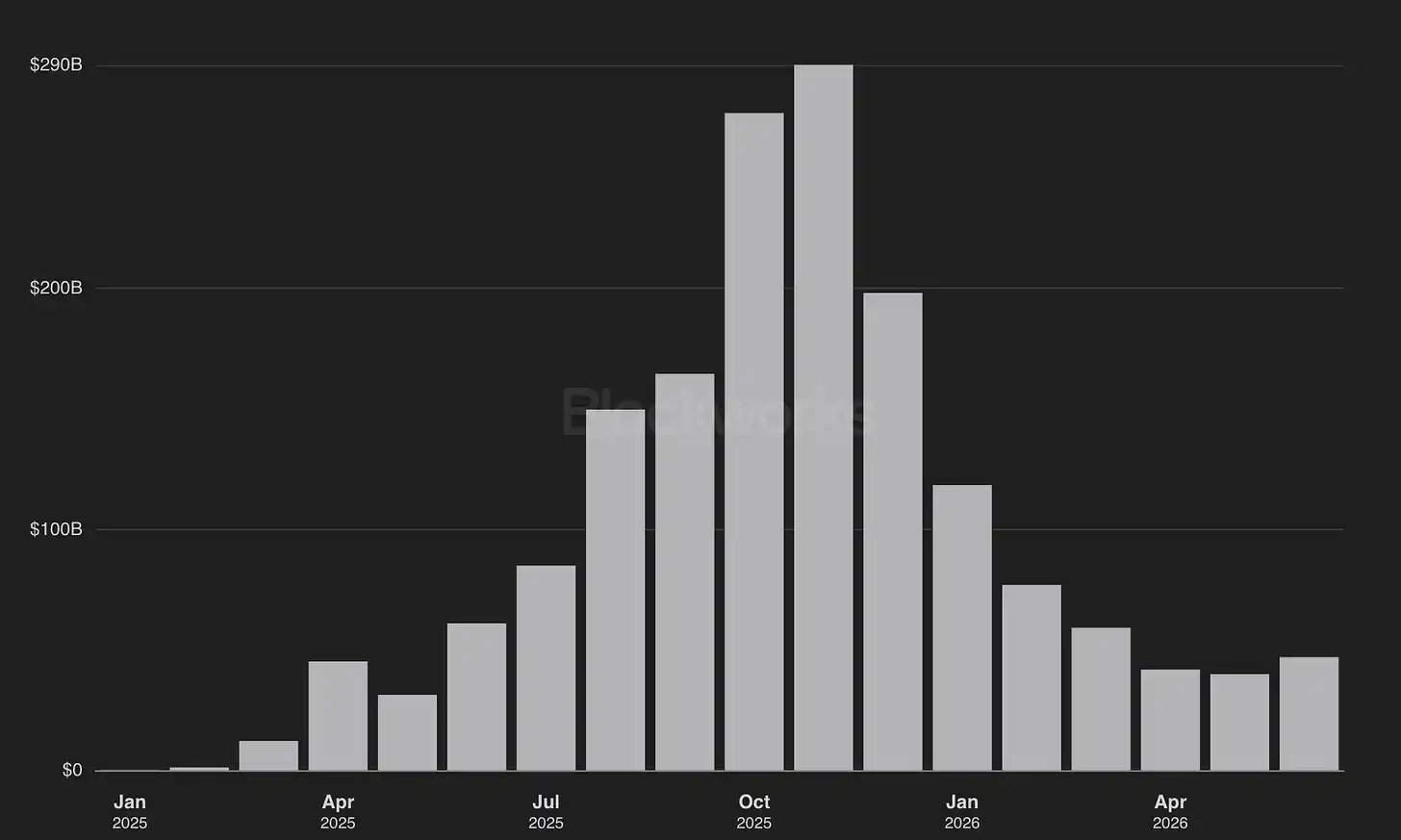
Perpetual Contracts Notional Trading Volume (Source: Blockworks)
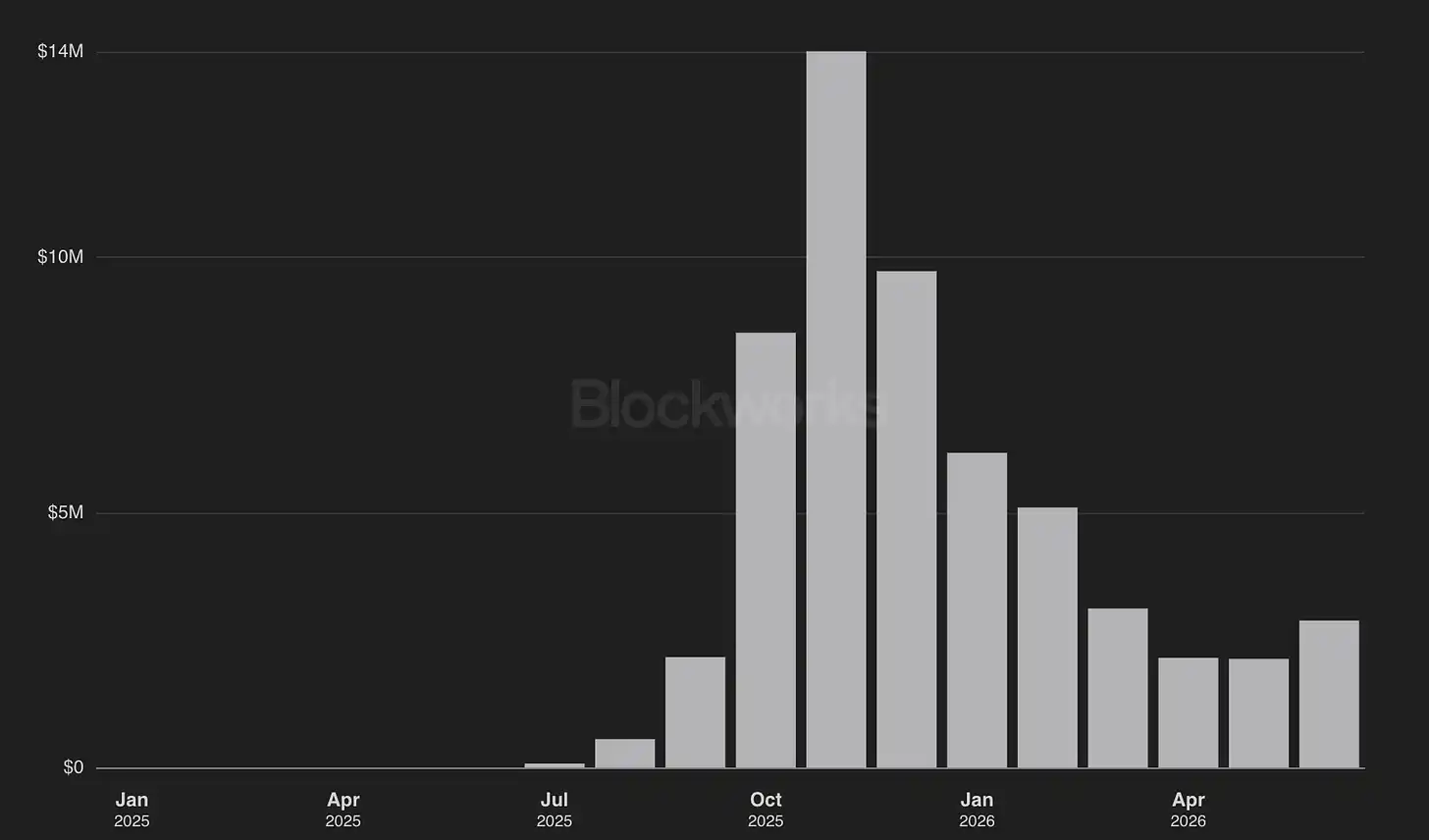
Revenue (Source: Blockworks)
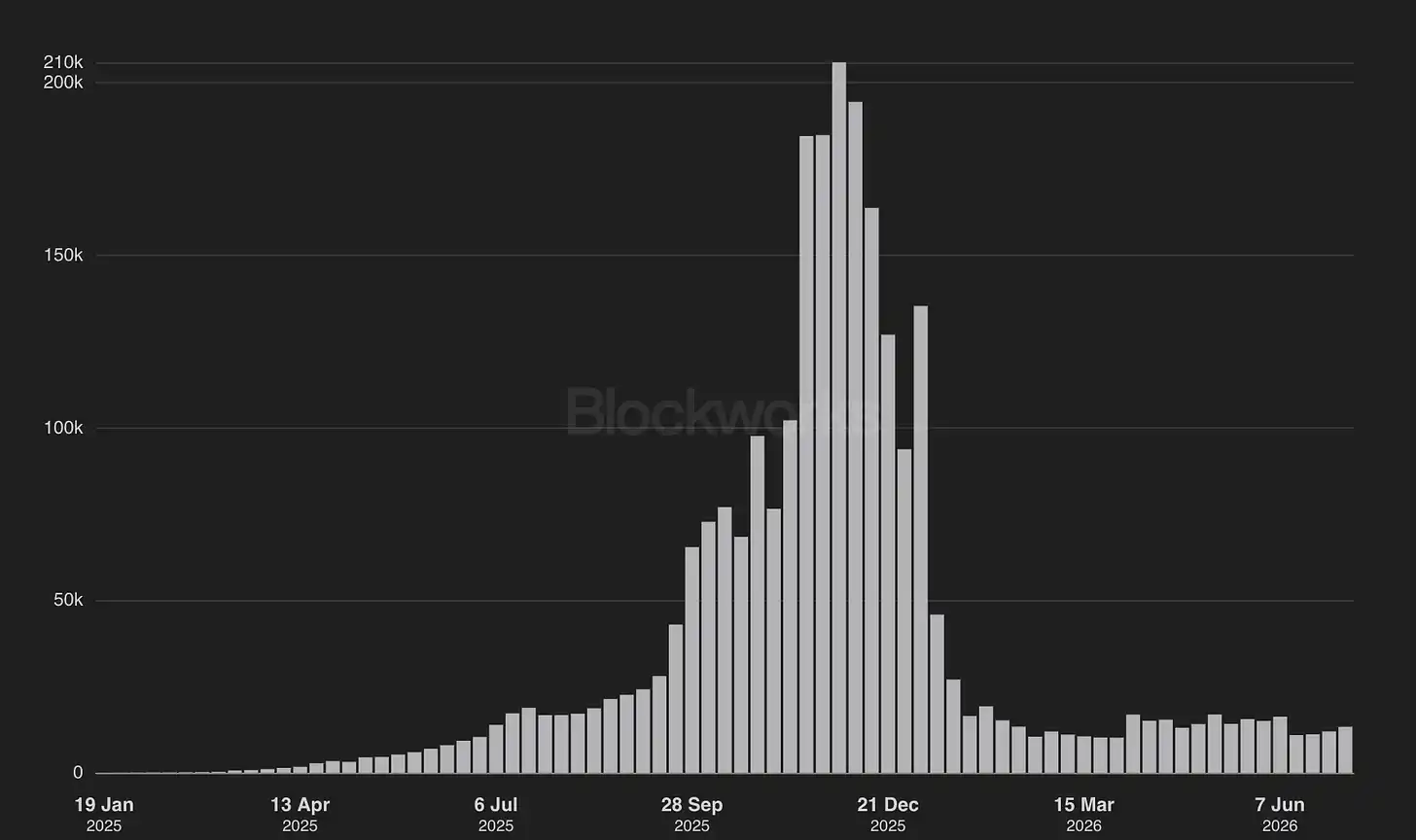
Traders (Source: Blockworks)

This is strategically useful in several ways. It expands the wallet's engagement surface. It lets Robinhood test high-frequency, high-engagement trading demand in a self-custody environment. It shortens time to market. It exposes Robinhood to the economic model and user behavior of global 24/7 trading without having to shift the entire burden onto the regulated U.S. brokerage architecture.

But Lighter also intensifies the brand challenge. Perpetuals bring leverage, liquidation, incentive-sensitive liquidity, and retail loss risk closer to the Robinhood ecosystem. Lighter's own documentation explicitly states that RWA markets trade around the clock and use margin mechanisms. This may be commercially attractive, but it is also the kind of product layer that could create political, regulatory, and reputational friction for a mass-market broker.

Therefore, the correct conclusion is narrower than the market might hope. Lighter is not proof Robinhood can own perpetuals economics like Hyperliquid, but proof Robinhood can plug crypto-native trading infrastructure into its consumer wallet funnel. This makes strategic sense, but it is not the same as owning the trading venue.

Risk Disclosure:

insights4.vc and its newsletter provide research and information for educational purposes only and should not be considered professional advice of any kind. We do not advocate any investment action, including buying, selling, or holding digital assets.

Content reflects author opinion only and does not constitute financial advice. Before engaging with digital assets or related technologies, please conduct your own due diligence, as they carry high risk and value can fluctuate significantly.


Трендові криптовалюти

Пов'язані питання

QAccording to the article, what is the fundamental difference between Robinhood's Stock Tokens and actual ownership of stock?

ARobinhood's Stock Tokens are tokenized debt securities (or derivative contracts in Europe) that provide economic exposure to the reference stock or ETF. They do not grant the user direct legal ownership, beneficial ownership, or shareholder rights like voting. The underlying mechanism involves a structured, legally compliant wrapper, not a direct chain-based representation of equity.

QWhat is the 'broker-chain paradox' highlighted in the article regarding Robinhood Chain's strategy?

AThe 'broker-chain paradox' refers to Robinhood's attempt to build an open, permissionless financial chain (Robinhood Chain) while populating it with strategically important assets that are not truly permissionless financial objects. These assets are wrapped legal claims dependent on issuers, custodians, KYC controls, and jurisdiction-specific regulations. The paradox lies in hiding this complexity behind a simple user interface.

QHow does the article frame Robinhood's strategic shift regarding its digital assets business?

AThe article frames Robinhood's digital assets business as evolving beyond just a source of 'crypto trading revenue.' It is increasingly playing a strategic role as infrastructure. This is evidenced by the Bitstamp acquisition (for institutional capabilities and global reach), the development of Robinhood Wallet (as a non-custodial bridge), and the launch of Robinhood Chain (as a programmable settlement layer) to support broader financial activities.

QWhat is the stated purpose and strategic importance of Lighter within the Robinhood ecosystem?

ALighter provides Robinhood with advanced on-chain trading infrastructure for perpetual contracts without requiring the company to build a crypto-native exchange from scratch. Its strategic importance is to expand the wallet's utility, allow Robinhood to test high-engagement trading behaviors in a self-custody environment, and access global 24/7 trading economies, all while keeping it somewhat separate from the core regulated US brokerage.

QWhat are the key legal and operational constraints on the transferability of Robinhood's chain-based Stock Tokens?

AWhile Robinhood's chain-based Stock Tokens can be held and transferred on supported blockchains and compatible wallets, their transferability is not absolute. The documentation allows for the suspension, freezing, or restriction of tokens under certain conditions. Furthermore, purchases and redemptions remain subject to KYC (Know Your Customer), AML (Anti-Money Laundering), sanctions compliance, and jurisdiction-based exclusions.

Пов'язані матеріали

Nearly a Hundred Players Rush into Embodied Data: With 4.47 Billion Yuan in Financing in One Year, Who Can Really Make Money by 'Selling Data'?

The domestic embodied AI data industry has attracted nearly 100 players, with 70 focused on data collection and 27 on data infrastructure. In the past year, 15 independent embodied data service providers raised approximately 4.47 billion yuan. Despite this growth, the sector remains early-stage, fragmented, and faces significant challenges. Data collection methods are diverse, categorized into four main routes: teleoperation of real robots, human demonstration without a robot (using motion capture, exoskeletons, etc.), simulation synthesis, and distillation from internet videos. Most companies (43%) adopt hybrid approaches, combining multiple routes, as no single method can meet all training needs. Teleoperation alone is pursued by 31% of players, often by state-owned platforms and robot companies, while newer firms favor asset-light, no-hardware human demonstration. Independent data service providers now form the largest player group (40%), indicating the emergence of a distinct industry segment rather than just a subsidiary function for robot makers. Two-thirds of all players are "embodied-native" startups, while one-third are companies that pivoted from fields like AI data annotation, which are more prevalent in the data infrastructure layer. Current annual industry capacity is estimated at 1.6-1.8 million hours plus 70-80 million data points, with a short-term goal to increase this 15-20 fold within 1-3 years. Data collection factories are spread across 20 provinces in China, concentrated in the Yangtze River Delta, Beijing-Tianjin-Hebei, and Pearl River Delta regions. Financially, the 4.47 billion yuan raised in the past year pales compared to the 43.8 billion yuan raised by the broader embodied intelligence sector in just the first half of 2026, highlighting that data remains a less "sexy" bet for investors. The 15 funded independent providers show clear stratification: a top tier led by a unicorn (Lightwheel Intelligence, 3.1 billion yuan), a middle tier of 11 firms raising tens to hundreds of millions, and an early-stage tier of 3 companies. Sixty-nine investment institutions have participated, but none have made concentrated bets, reflecting uncertainty about viable business models. Over half of these funded companies are less than a year old, most are at pre-A or A rounds, and profitability remains largely unproven. In summary, the embodied data industry has become an independent track creating jobs and local economic activity. However, it is still nascent, with unformed consensus, unsolved problems, and unproven business models. The coming 1-2 years will be a critical validation window to see if companies can build sustainable, profitable businesses purely by "selling data."

marsbit29 хв тому

Nearly a Hundred Players Rush into Embodied Data: With 4.47 Billion Yuan in Financing in One Year, Who Can Really Make Money by 'Selling Data'?

marsbit29 хв тому

Dialogue with Multicoin Partner: The Crypto Market Has Bottomed Out, Favoring Three Cryptocurrencies in This Cycle

In a recent interview, Multicoin Capital managing partner Tushar Jain shared his views on the crypto market. He believes the market has bottomed and is at an inflection point, citing that negative news no longer causes significant price declines and application adoption continues to grow. Jain remains highly bullish on Solana, viewing it as the correct architectural choice for internet capital markets, particularly for spot and tokenized security trading. He is also positive on Hyperliquid, noting its leadership in decentralized derivatives trading. His investment approach focuses on concentrating capital in top convictions rather than equal allocation. A distinct opportunity he highlights is Zcash (ZEC), which he sees as a return to the industry's cypherpunk ethos and a potential top-five asset by market cap. For assets like Zcash without cash flows, his valuation framework is based on relative market cap ranking. Regarding investment strategy, Jain employs a "three-part" entry method to avoid timing pitfalls and emphasizes long-term "active management" over "active trading." He outlines four sources of investment edge: informational, analytical, behavioral/psychological, and structural. On portfolio management, the fund uses Bitcoin as its "cash," selling assets into Bitcoin during market euphoria to reduce beta risk and using Bitcoin to buy dips. Sales occur only if a better opportunity arises, the investment thesis breaks, or valuations become excessively overheated. While respectful of Ethereum's resilience, he questions its unclear scaling roadmap. Finally, Jain reaffirms his commitment to the thesis that blockchains will form the foundational architecture for future capital markets.

marsbit53 хв тому

Dialogue with Multicoin Partner: The Crypto Market Has Bottomed Out, Favoring Three Cryptocurrencies in This Cycle

marsbit53 хв тому

Zhipu, Afraid of Becoming the Next MiniMax

Title: Zhipu, Fearing to Become the Next MiniMax In July 2026, amid the success of its coding-focused AI, Zhipu's founder, Tang Jie, issued an internal letter titled "The Giant Wave Has Come." It notably avoided celebrating recent triumphs, such as Zhipu's trillion-HKD market cap and booming MaaS revenue driven by its GLM-5.2 model in coding applications. Instead, the letter pivoted the narrative to future-oriented concepts like Long Horizon Task, Autonomous Agents, Self-Evolving systems, and AGI. This strategic shift in messaging followed the sharp devaluation of its competitor, MiniMax. After its lock-up period expired, MiniMax's stock plummeted as the market began evaluating it with traditional SaaS metrics like ARR and user growth, rather than as a frontier AI pioneer. Seeing this, Tang Jie aimed to preempt a similar revaluation of Zhipu. He fears that if the market starts viewing Zhipu primarily as a profitable "AI coding company," its valuation would become anchored to conventional financial metrics, losing the premium associated with AGI potential. Therefore, the letter reframed Zhipu's mission. While acknowledging that coding was the current commercial driver, Tang positioned Zhipu on the "infrastructure path," akin to OpenAI and Anthropic. The new focus is on developing agents capable of complex, long-term planning and autonomous operation—moving from assisting individuals (OPC: One Person Company) to automating entire organizations (NPC: No People Company). This "Touch High" plan explicitly prioritizes long-term AGI research over short-term monetization. The article frames this as a critical divergence in China's AI landscape: the "commercialization path" (exemplified by MiniMax) versus the "infrastructure path" (chosen by Zhipu). The former risks being judged harshly by internet-era metrics once growth slows, while the latter risks failing if technological breakthroughs stall. Tang Jie's letter is thus a calculated move to secure Zhipu's identity as an AGI contender, buying time before the inevitable market demand for commercial proof. The core question remains: can Zhipu's "mo gao" (reach high) plan achieve genuine technological leaps fast enough to outpace the market's diminishing patience for stories over substance?

marsbit1 год тому

Zhipu, Afraid of Becoming the Next MiniMax

marsbit1 год тому

Торгівля

Спот

Популярні статті

Що таке $S$

Розуміння SPERO: Комплексний огляд Вступ до SPERO Оскільки ландшафт інновацій продовжує еволюціонувати, виникнення технологій web3 та криптовалютних проектів відіграє ключову роль у формуванні цифрового майбутнього. Один з проектів, який привернув увагу в цій динамічній сфері, — це SPERO, позначений як SPERO,$$s$. Ця стаття має на меті зібрати та представити детальну інформацію про SPERO, щоб допомогти ентузіастам та інвесторам зрозуміти його основи, цілі та інновації в рамках web3 та крипто-сектору. Що таке SPERO,$$s$? SPERO,$$s$ — це унікальний проект у криптопросторі, який прагне використати принципи децентралізації та технології блокчейн для створення екосистеми, що сприяє залученню, корисності та фінансовій інклюзії. Проект розроблений для полегшення взаємодії між користувачами новими способами, надаючи їм інноваційні фінансові рішення та послуги. У своїй основі SPERO,$$s$ прагне надати можливості індивідам, забезпечуючи інструменти та платформи, які покращують користувацький досвід у криптовалютному просторі. Це включає в себе можливість більш гнучких методів транзакцій, сприяння ініціативам, що підтримуються спільнотою, та створення шляхів для фінансових можливостей через децентралізовані додатки (dApps). Основна концепція SPERO,$$s$ обертається навколо інклюзивності, прагнучи зменшити розриви в традиційній фінансовій системі, використовуючи переваги технології блокчейн. Хто є творцем SPERO,$$s$? Особистість творця SPERO,$$s$ залишається дещо невідомою, оскільки є обмежені публічно доступні ресурси, що надають детальну інформацію про його засновників. Ця відсутність прозорості може бути наслідком зобов'язання проекту до децентралізації — етики, яку багато проектів web3 поділяють, ставлячи колективні внески вище за індивідуальне визнання. Зосереджуючи обговорення навколо спільноти та її колективних цілей, SPERO,$$s$ втілює суть наділення без виділення конкретних осіб. Таким чином, розуміння етики та місії SPERO є більш важливим, ніж ідентифікація єдиного творця. Хто є інвесторами SPERO,$$s$? SPERO,$$s$ підтримується різноманітними інвесторами, починаючи від венчурних капіталістів до ангельських інвесторів, які прагнуть сприяти інноваціям у крипто-секторі. Зосередження цих інвесторів зазвичай узгоджується з місією SPERO — пріоритет надається проектам, які обіцяють технологічний прогрес у суспільстві, фінансову інклюзію та децентралізоване управління. Ці інвесторські фонди зазвичай зацікавлені в проектах, які не лише пропонують інноваційні продукти, але й позитивно впливають на спільноту блокчейн та її екосистеми. Підтримка з боку цих інвесторів підкріплює SPERO,$$s$ як значного конкурента в швидко змінюваній сфері крипто-проектів. Як працює SPERO,$$s$? SPERO,$$s$ використовує багатогранну структуру, яка відрізняє його від традиційних криптовалютних проектів. Ось деякі ключові особливості, які підкреслюють його унікальність та інноваційність: Децентралізоване управління: SPERO,$$s$ інтегрує моделі децентралізованого управління, надаючи користувачам можливість активно брати участь у процесах прийняття рішень щодо майбутнього проекту. Цей підхід сприяє відчуттю власності та відповідальності серед членів спільноти. Корисність токена: SPERO,$$s$ використовує свій власний криптовалютний токен, розроблений для виконання різних функцій в екосистемі. Ці токени дозволяють здійснювати транзакції, отримувати винагороди та полегшувати послуги, що пропонуються на платформі, підвищуючи загальну залученість та корисність. Шарова архітектура: Технічна архітектура SPERO,$$s$ підтримує модульність та масштабованість, що дозволяє безперешкодно інтегрувати додаткові функції та додатки в міру розвитку проекту. Ця адаптивність є надзвичайно важливою для збереження актуальності в постійно змінюваному крипто-ландшафті. Залучення спільноти: Проект підкреслює ініціативи, що підтримуються спільнотою, використовуючи механізми, які стимулюють співпрацю та зворотний зв'язок. Підтримуючи сильну спільноту, SPERO,$$s$ може краще задовольняти потреби користувачів та адаптуватися до ринкових тенденцій. Фокус на інклюзію: Пропонуючи низькі комісії за транзакції та зручні інтерфейси, SPERO,$$s$ прагне залучити різноманітну базу користувачів, включаючи осіб, які раніше не брали участі в крипто-просторі. Це зобов'язання до інклюзії узгоджується з його загальною місією наділення через доступність. Хронологія SPERO,$$s$ Розуміння історії проекту надає важливі уявлення про його розвиток та етапи. Нижче наведено пропоновану хронологію, що відображає значні події в еволюції SPERO,$$s$: Етап концептуалізації та ідеації: Початкові ідеї, що стали основою SPERO,$$s$, були сформовані, тісно пов'язані з принципами децентралізації та фокусом на спільноті в індустрії блокчейн. Запуск білого паперу проекту: Після концептуального етапу був випущений комплексний білий папір, що детально описує бачення, цілі та технологічну інфраструктуру SPERO,$$s$, щоб залучити інтерес та зворотний зв'язок від спільноти. Створення спільноти та ранні залучення: Активні зусилля були спрямовані на створення спільноти ранніх прихильників та потенційних інвесторів, що полегшило обговорення цілей проекту та отримання підтримки. Подія генерації токенів: SPERO,$$s$ провів подію генерації токенів (TGE) для розподілу своїх рідних токенів серед ранніх прихильників та встановлення початкової ліквідності в екосистемі. Запуск початкового dApp: Перший децентралізований додаток (dApp), пов'язаний з SPERO,$$s$, став доступним, дозволяючи користувачам взаємодіяти з основними функціями платформи. Постійний розвиток та партнерства: Безперервні оновлення та вдосконалення пропозицій проекту, включаючи стратегічні партнерства з іншими учасниками блокчейн-простору, сформували SPERO,$$s$ у конкурентоспроможного та еволюціонуючого гравця на крипто-ринку. Висновок SPERO,$$s$ є свідченням потенціалу web3 та криптовалют для революціонізації фінансових систем та наділення індивідів. Завдяки зобов'язанню до децентралізованого управління, залучення спільноти та інноваційно спроектованих функцій, він прокладає шлях до більш інклюзивного фінансового ландшафту. Як і з будь-якими інвестиціями в швидко змінюваному крипто-просторі, потенційним інвесторам та користувачам рекомендується ретельно досліджувати та обдумано взаємодіяти з поточними подіями в SPERO,$$s$. Проект демонструє інноваційний дух крипто-індустрії, запрошуючи до подальшого дослідження його численних можливостей. Хоча подорож SPERO,$$s$ ще триває, його основні принципи можуть справді вплинути на майбутнє того, як ми взаємодіємо з технологією, фінансами та один з одним у взаємопов'язаних цифрових екосистемах.

122 переглядів усьогоОпубліковано 2024.12.17Оновлено 2024.12.17

Що таке $S$

Що таке AGENT S

Агент S: Майбутнє автономної взаємодії в Web3 Вступ У постійно змінюваному ландшафті Web3 та криптовалюти інновації постійно переосмислюють, як люди взаємодіють з цифровими платформами. Один з таких новаторських проектів, Агент S, обіцяє революціонізувати взаємодію людини з комп'ютером через свою відкриту агентну структуру. Прокладаючи шлях для автономних взаємодій, Агент S прагне спростити складні завдання, пропонуючи трансформаційні застосування в штучному інтелекті (ШІ). Це детальне дослідження заглиблюється в складності проекту, його унікальні особливості та наслідки для сфери криптовалюти. Що таке Агент S? Агент S є революційною відкритою агентною структурою, спеціально розробленою для вирішення трьох основних викликів в автоматизації комп'ютерних завдань: Набуття специфічних знань у галузі: Структура інтелектуально навчається з різних зовнішніх джерел знань та внутрішнього досвіду. Цей подвійний підхід дозволяє їй створити багатий репозиторій специфічних знань у галузі, покращуючи її продуктивність у виконанні завдань. Планування на довгих горизонтах завдань: Агент S використовує планування з підкріпленням досвіду, стратегічний підхід, який полегшує ефективний розподіл та виконання складних завдань. Ця функція значно підвищує її здатність ефективно та результативно управляти кількома підзавданнями. Обробка динамічних, неоднорідних інтерфейсів: Проект представляє Інтерфейс Агент-Комп'ютер (ACI), інноваційне рішення, яке покращує взаємодію між агентами та користувачами. Використовуючи багатомодальні великі мовні моделі (MLLMs), Агент S може безперешкодно орієнтуватися та маніпулювати різноманітними графічними інтерфейсами користувача. Завдяки цим новаторським функціям Агент S надає надійну структуру, яка вирішує складнощі, пов'язані з автоматизацією людської взаємодії з машинами, прокладаючи шлях для численних застосувань у ШІ та за його межами. Хто є творцем Агент S? Хоча концепція Агент S є фундаментально новаторською, конкретна інформація про його творця залишається невідомою. Творець наразі невідомий, що підкреслює або початкову стадію проекту, або стратегічний вибір зберегти засновників у таємниці. Незважаючи на анонімність, акцент залишається на можливостях та потенціалі структури. Хто є інвесторами Агент S? Оскільки Агент S є відносно новим у криптографічній екосистемі, детальна інформація про його інвесторів та фінансових спонсорів не задокументована. Відсутність публічно доступних відомостей про інвестиційні фонди або організації, що підтримують проект, викликає питання щодо його фінансової структури та дорожньої карти розвитку. Розуміння підтримки є критично важливим для оцінки стійкості проекту та потенційного впливу на ринок. Як працює Агент S? В основі Агент S лежить передова технологія, яка дозволяє йому ефективно функціонувати в різних умовах. Його операційна модель побудована навколо кількох ключових функцій: Взаємодія з комп'ютером, подібна до людської: Структура пропонує розширене планування ШІ, прагнучи зробити взаємодії з комп'ютерами більш інтуїтивними. Імітуючи людську поведінку при виконанні завдань, вона обіцяє підвищити досвід користувачів. Наративна пам'ять: Використовується для використання високорівневого досвіду, Агент S використовує наративну пам'ять для відстеження історій завдань, тим самим покращуючи свої процеси прийняття рішень. Епізодична пам'ять: Ця функція надає користувачам покрокові інструкції, дозволяючи структурі пропонувати контекстуальну підтримку в міру виконання завдань. Підтримка OpenACI: Завдяки можливості працювати локально, Агент S дозволяє користувачам зберігати контроль над своїми взаємодіями та робочими процесами, узгоджуючи з децентралізованою етикою Web3. Легка інтеграція з зовнішніми API: Його універсальність і сумісність з різними платформами ШІ забезпечують те, що Агент S може безперешкодно вписатися в існуючі технологічні екосистеми, роблячи його привабливим вибором для розробників та організацій. Ці функціональні можливості колективно сприяють унікальному положенню Агент S у крипто-просторі, оскільки він автоматизує складні, багатоступеневі завдання з мінімальним втручанням людини. У міру розвитку проекту його потенційні застосування в Web3 можуть переосмислити, як відбуваються цифрові взаємодії. Хронологія Агент S Розробка та етапи Агент S можуть бути узагальнені в хронології, яка підкреслює його значні події: 27 вересня 2024 року: Концепція Агент S була представлена в комплексній науковій статті під назвою “Відкрита агентна структура, яка використовує комп'ютери як людина”, що демонструє основи проекту. 10 жовтня 2024 року: Наукова стаття була опублікована на arXiv, пропонуючи детальне дослідження структури та її оцінки продуктивності на основі бенчмарку OSWorld. 12 жовтня 2024 року: Було випущено відеопрезентацію, що надає візуальне уявлення про можливості та особливості Агент S, ще більше залучаючи потенційних користувачів та інвесторів. Ці маркери в хронології не лише ілюструють прогрес Агент S, але й вказують на його прихильність до прозорості та залучення громади. Ключові моменти про Агент S У міру розвитку структури Агент S кілька ключових характеристик виділяються, підкреслюючи її новаторський характер та потенціал: Інноваційна структура: Розроблена для забезпечення інтуїтивного використання комп'ютерів, подібного до людської взаємодії, Агент S пропонує новий підхід до автоматизації завдань. Автономна взаємодія: Здатність автономно взаємодіяти з комп'ютерами через GUI означає стрибок до більш інтелектуальних та ефективних обчислювальних рішень. Автоматизація складних завдань: Завдяки своїй надійній методології він може автоматизувати складні, багатоступеневі завдання, роблячи процеси швидшими та менш схильними до помилок. Безперервне вдосконалення: Механізми навчання дозволяють Агенту S покращуватися на основі минулого досвіду, постійно підвищуючи свою продуктивність та ефективність. Універсальність: Його адаптивність до різних операційних середовищ, таких як OSWorld та WindowsAgentArena, забезпечує його здатність служити широкому спектру застосувань. Оскільки Агент S займає своє місце в ландшафті Web3 та криптовалюти, його потенціал покращити можливості взаємодії та автоматизувати процеси означає значний прогрес у технологіях ШІ. Завдяки своїй інноваційній структурі Агент S є прикладом майбутнього цифрових взаємодій, обіцяючи більш безперешкодний та ефективний досвід для користувачів у різних галузях. Висновок Агент S представляє собою сміливий крок вперед у поєднанні ШІ та Web3, з можливістю переосмислити, як ми взаємодіємо з технологією. Хоча проект все ще на ранніх стадіях, можливості для його застосування є величезними та переконливими. Завдяки своїй комплексній структурі, що вирішує критичні виклики, Агент S прагне вивести автономні взаємодії на передній план цифрового досвіду. У міру того, як ми заглиблюємося в сфери криптовалюти та децентралізації, проекти, подібні до Агент S, безсумнівно, відіграватимуть ключову роль у формуванні майбутнього технологій та співпраці людини з комп'ютером.

751 переглядів усьогоОпубліковано 2025.01.14Оновлено 2025.01.14

Що таке AGENT S

Як купити S

Ласкаво просимо до HTX.com! Ми зробили покупку Sonic (S) простою та зручною. Дотримуйтесь нашої покрокової інструкції, щоб розпочати свою криптовалютну подорож.Крок 1: Створіть обліковий запис на HTXВикористовуйте свою електронну пошту або номер телефону, щоб зареєструвати обліковий запис на HTX безплатно. Пройдіть безпроблемну реєстрацію й отримайте доступ до всіх функцій.ЗареєструватисьКрок 2: Перейдіть до розділу Купити крипту і виберіть спосіб оплатиКредитна/дебетова картка: використовуйте вашу картку Visa або Mastercard, щоб миттєво купити Sonic (S).Баланс: використовуйте кошти з балансу вашого рахунку HTX для безперешкодної торгівлі.Треті особи: ми додали популярні способи оплати, такі як Google Pay та Apple Pay, щоб підвищити зручність.P2P: Торгуйте безпосередньо з іншими користувачами на HTX.Позабіржова торгівля (OTC): ми пропонуємо індивідуальні послуги та конкурентні обмінні курси для трейдерів.Крок 3: Зберігайте свої Sonic (S)Після придбання Sonic (S) збережіть його у своєму обліковому записі на HTX. Крім того, ви можете відправити його в інше місце за допомогою блокчейн-переказу або використовувати його для торгівлі іншими криптовалютами.Крок 4: Торгівля Sonic (S)Легко торгуйте Sonic (S) на спотовому ринку HTX. Просто увійдіть до свого облікового запису, виберіть торгову пару, укладайте угоди та спостерігайте за ними в режимі реального часу. Ми пропонуємо зручний досвід як для початківців, так і для досвідчених трейдерів.

1.6k переглядів усьогоОпубліковано 2025.01.15Оновлено 2026.06.02

Як купити S

Обговорення

Ласкаво просимо до спільноти HTX. Тут ви можете бути в курсі останніх подій розвитку платформи та отримати доступ до професійної ринкової інформації. Нижче представлені думки користувачів щодо ціни S (S).

活动图片