Just Now, The World's First Human vs. Robot Tennis Match Begins, Robot's Desperate Save Leaves Zheng Jie Astonished

marsbitОпубліковано о 2026-08-23Востаннє оновлено о 2026-08-23

Анотація

Just now, the world's first human vs. robot tennis match began, featuring stunning robotic saves that left tennis star Zheng Jie in awe. This historic event, part of the second World Humanoid Robot Games and broadcast live globally by China Media Group, marked a pivotal moment in Chinese technological innovation and embodied artificial intelligence. The match featured both mixed human-robot doubles and a groundbreaking singles match between Zheng Jie and the "Galaxy Xingzai" humanoid robot developed by Galaxy General. The robot demonstrated impressive skills including serving, forehands, backhands, and strategic court movement, with serves exceeding 100 km/h. It exhibited remarkable adaptability, recovering from a fall to continue play and handling slices and spins. The doubles match highlighted its ability to coordinate dynamically with a human partner. The event's significance extends far beyond a novelty match. Tennis represents an ultimate pressure test for embodied AI, demanding real-time integration of perception, decision-making, full-body motion control, and live博弈 within fractions of a second—a stark contrast to the discrete, contemplative environment of board games like Go mastered by AlphaGo. It directly confronts Moravec's paradox, showcasing AI's move from digital cognition to physical execution. This capability is powered by Galaxy General's proprietary "Galaxy Star Brain" (AstraBrain) model. Its key innovation is a unified architecture that integrates high-l...

AstraTennis moment for China's robots has arrived.

On August 22nd, the second World Humanoid Robot Games opened, broadcast live globally by China Media Group.

As the camera panned across the court, the entire venue seemed to hold its breath.

On either side of the net stood a human tennis star on one side, and a humanoid robot on the other.

This moment marks a historic singularity in embodied AI for Chinese technological innovation.

The world's first true human vs. robot tennis match officially began!

World's First Human vs. Robot Tennis Match

It started right away with an exciting human-robot mixed doubles match.

Surprisingly, Galaxy Xingzai's performance was brilliant: Its footwork was nimble, moving quickly back and forth as needed, playing very smoothly.

Moreover, Xingzai and its human partner formed a perfect one-in-front, one-behind formation with great默契, fighting hard against the opposing team.
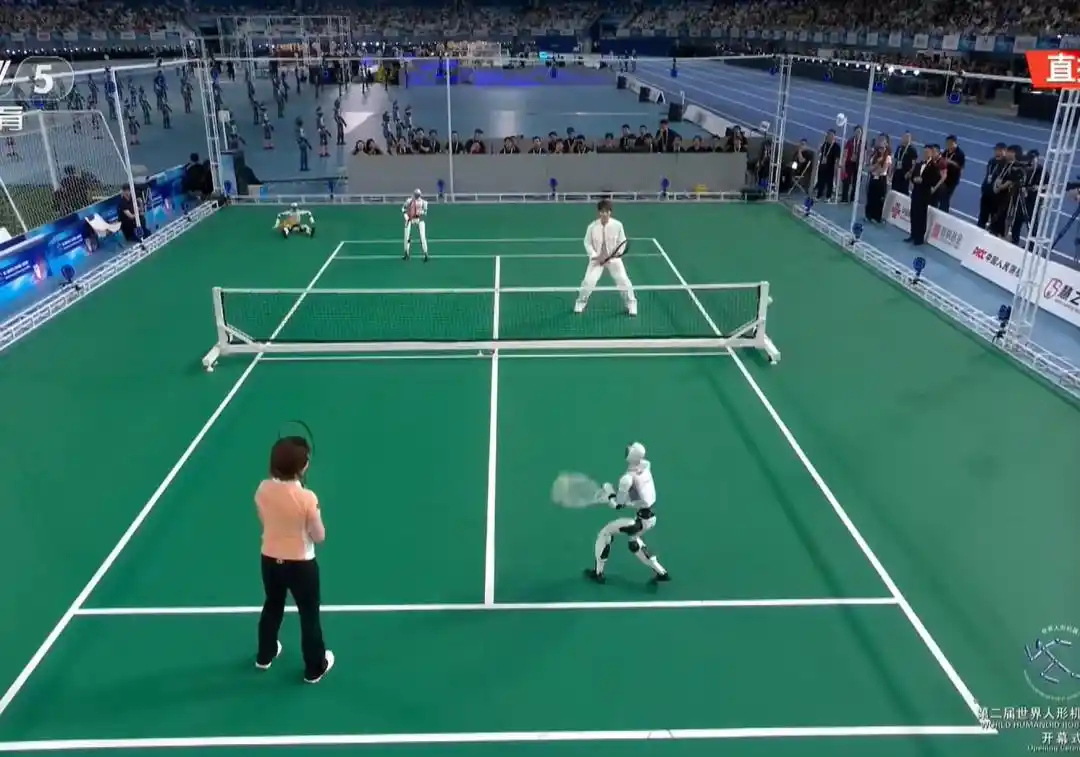
Next, tennis star Zheng Jie and Galaxy General-purpose Robot engaged in the world's first human vs. robot singles match.
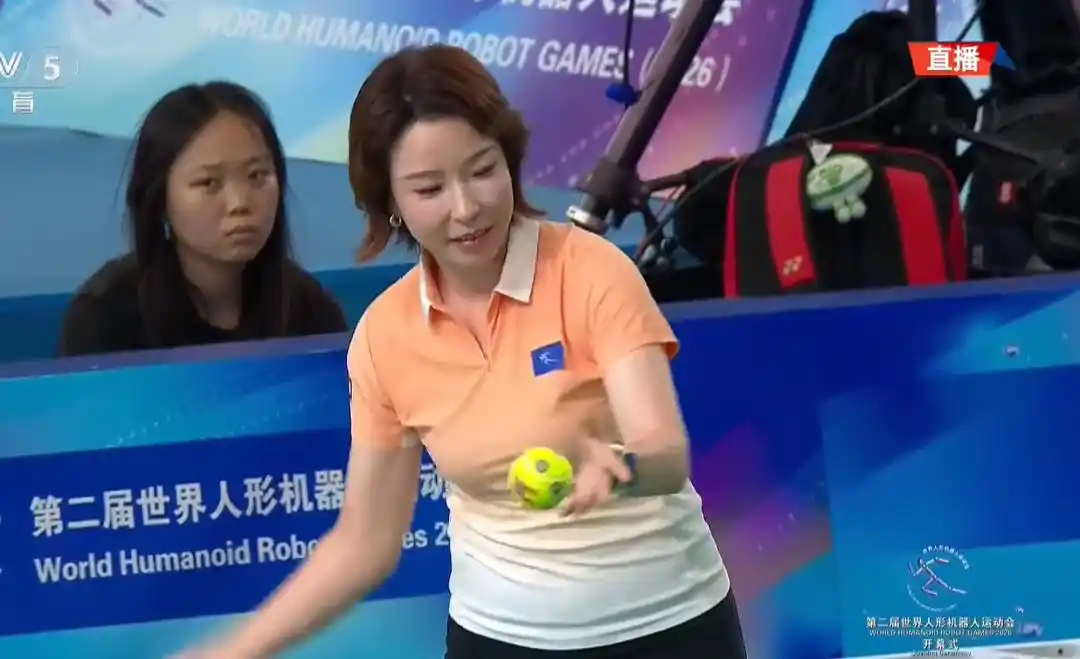
Whether forehand or backhand, the robot traded shots with the human on equal terms.

Then, Zheng Jie decided to up the difficulty, hitting a lob.
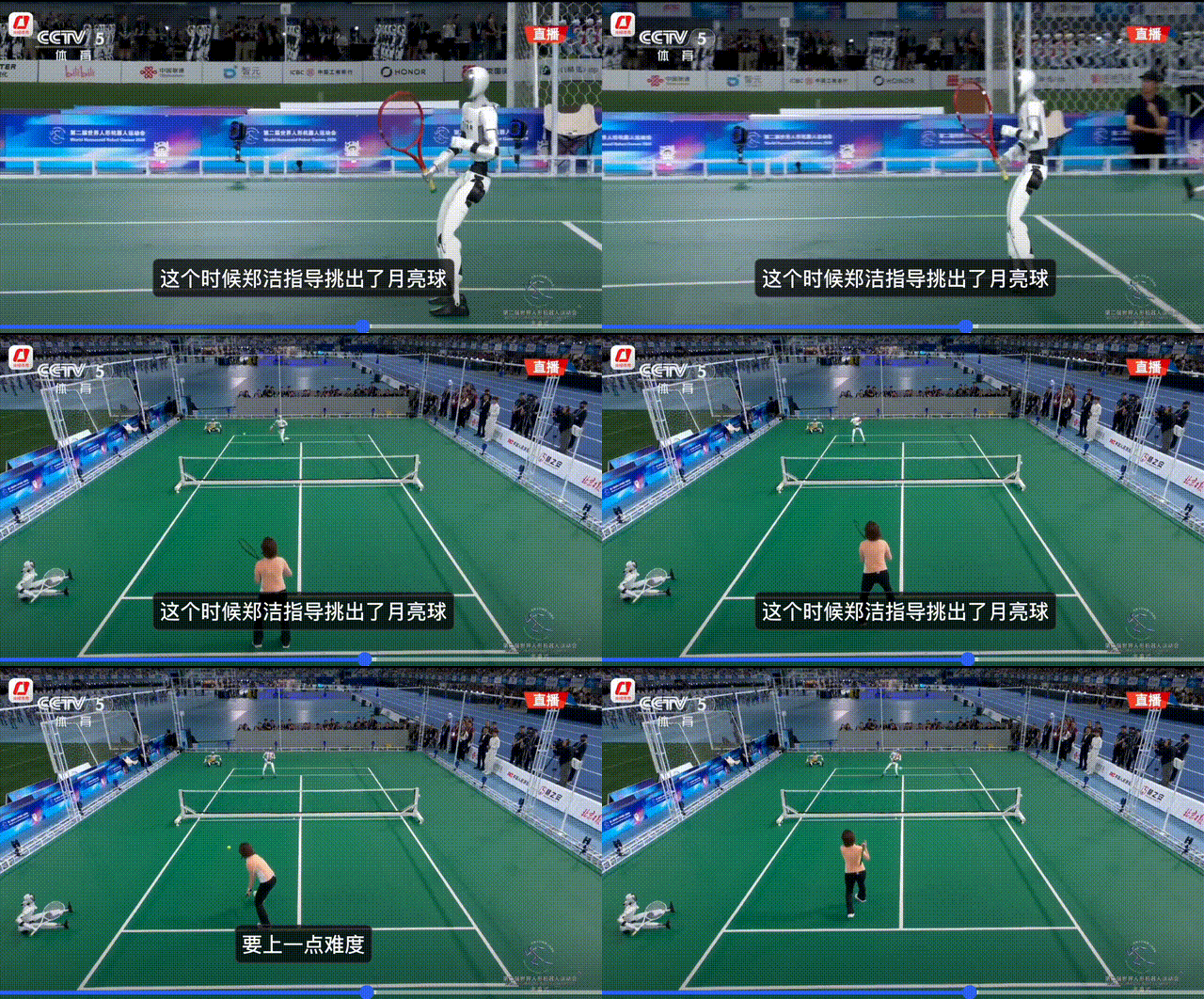
However, while being pulled left and right by its opponent, the robot accidentally took a tumble and landed flat on its back.

Unexpectedly, the next second, it immediately adjusted its posture and stood back up.

Facing Zheng Jie's slices and spins, the robot's judgment was also surprisingly good.

Finally, Zheng Jie knew she couldn't hold back anymore and began moving the robot around with shots left, right, forward, and back. The robot unexpectedly executed a brilliant split-step, earning cheers from the live audience.
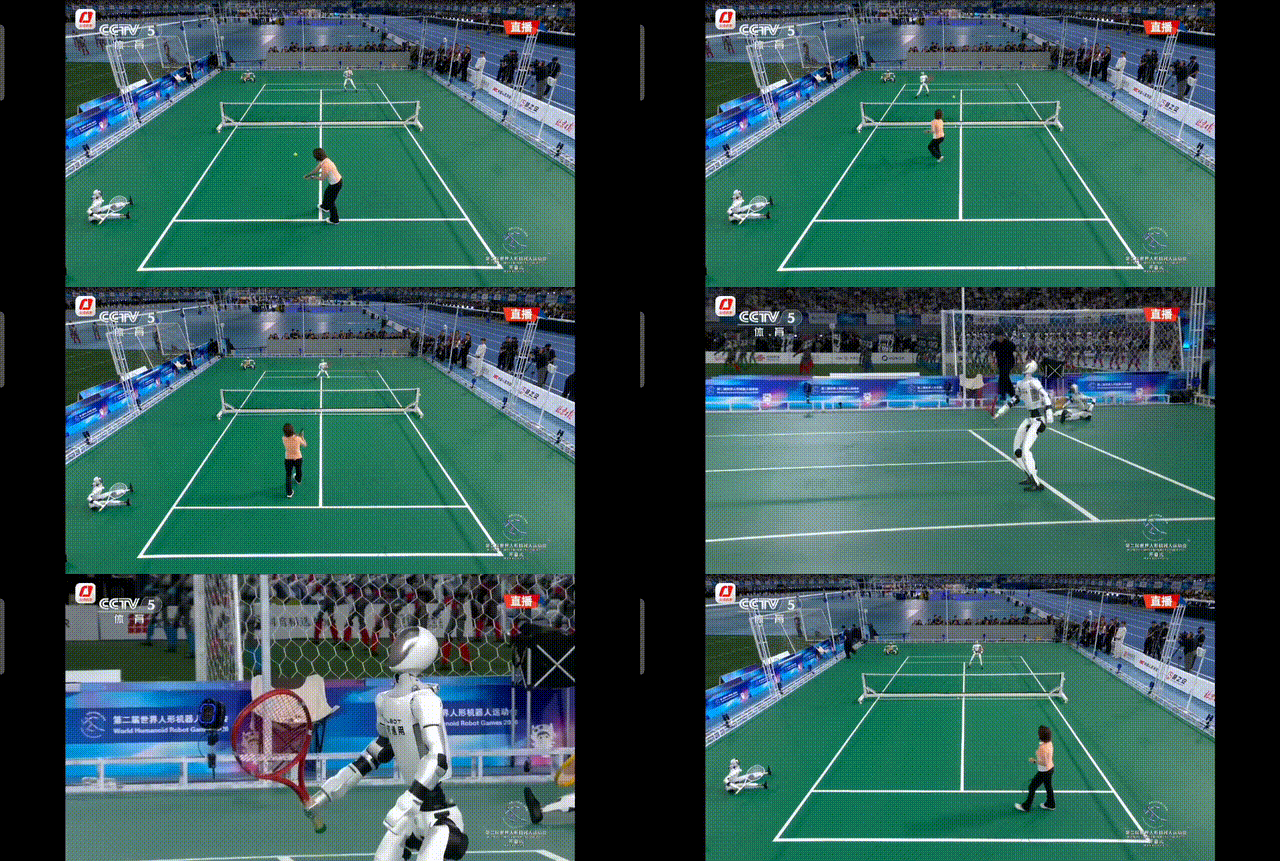
The match ended, and the robot's performance had everyone cheering.

Throughout the match, actions like bending the knees, tossing the ball, and body rotation were all performed autonomously by the humanoid robot.

Moreover, with serve speeds exceeding 100 kilometers per hour, leaving it only a few tenths of a second to react, it rarely faltered.

This robot is from Galaxy General.

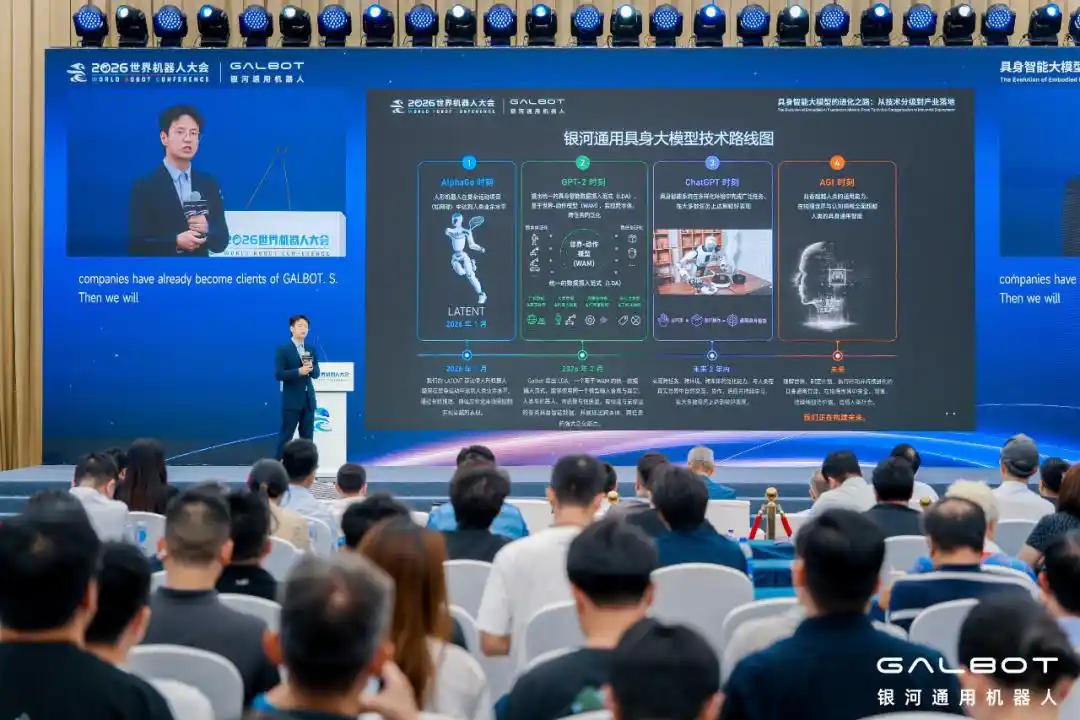
Ten years ago, AlphaGo defeated Lee Sedol. Ten years later, a Chinese robot competes on the same court as a top tennis athlete.

If AlphaGo proved AI could conquer the digital world, then today, Galaxy General's Chinese robot proves: AI can withstand the extreme pressure tests of the physical world.

For the first time, it stood up from within the code, running, swinging, strategizing in real competition, even getting up on its own after a fall and continuing the fight.

Such a spectacular embodied AI AstraTennis moment was witnessed globally, simultaneously!
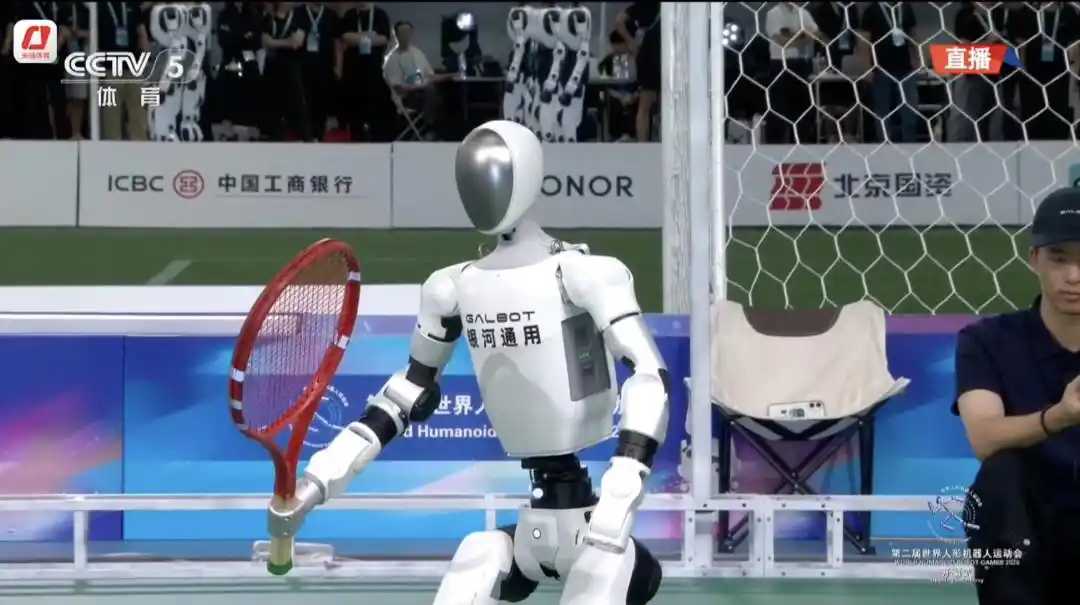
The AstraTennis Moment for China's Robots

Why could this tennis match trigger a massive earthquake in the global tech community?

Because tennis is the ultimate pressure test for embodied intelligence.

With reaction times of only a few tenths of a second, this sport simultaneously pushes a robot's perception, decision-making, whole-body motion control, and real-time strategic gameplay to their physical limits.

Furthermore, playing tennis is much harder for AI than playing Go.

After all, AlphaGo faced 361 definite intersections on a 19x19 grid, and after the opponent's move, it had tens of seconds or even minutes to calculate the next step.

That was gameplay in the digital world—vast solution space, but clear boundaries and constant rules. The entire world was static, discrete, and completely visible to the AI.

Although the solution space for this puzzle was larger than the number of atoms in the universe, for AI it was just a more difficult "math problem."
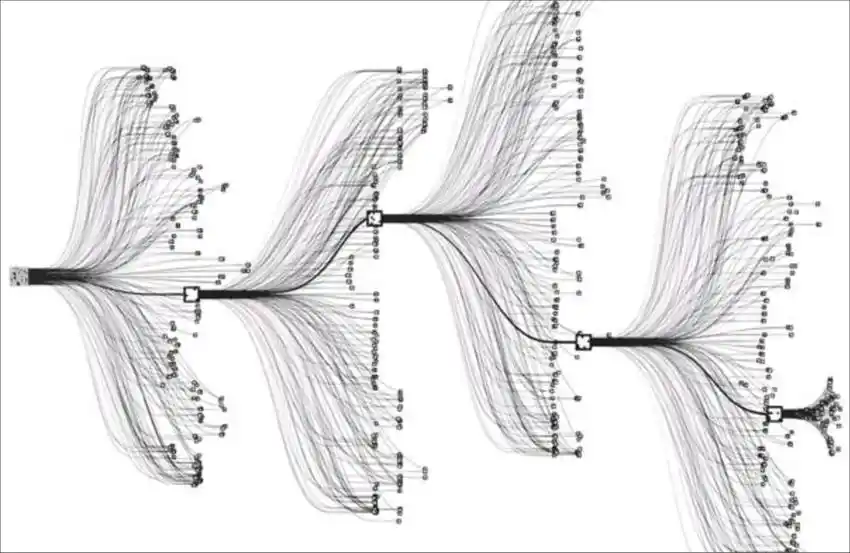
But a tennis court is different.

The ball comes at speeds over 100 km/h, its landing point affected by spin, wind, and court friction, with varying physical parameters for every single shot.

The robot must complete perception, prediction, decision-making, and whole-body coordination within a few hundred milliseconds, while keeping itself from falling. The opponent is a living person who can deceive the robot and change pace.

This is the Moravec's Paradox in action.

In 1988, Hans Moravec, then the head of Carnegie Mellon's Mobile Robot Laboratory, pointed out: "It is comparatively easy to make computers exhibit adult-level performance on intelligence tests or playing checkers, and difficult or impossible to give them the skills of a one-year-old when it comes to perception and mobility."
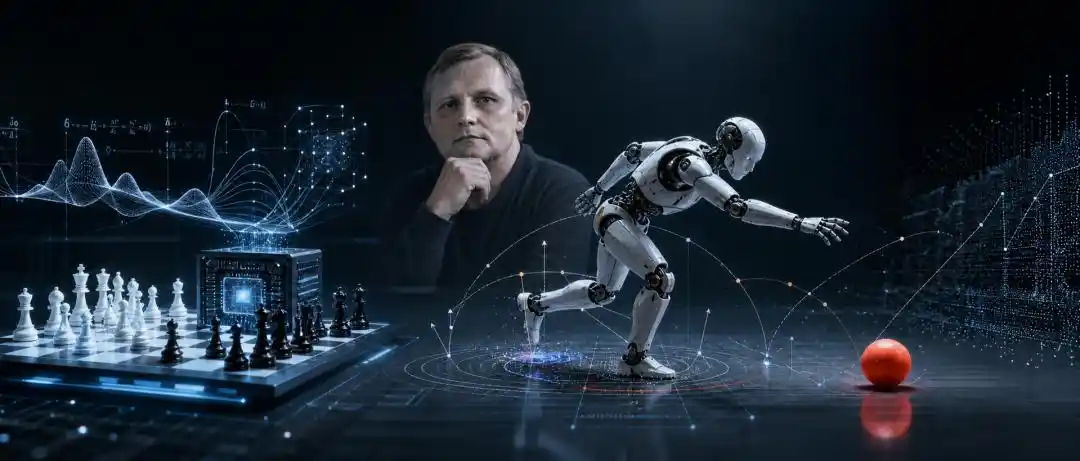
Over thirty years later, the first half has long been fulfilled, but the latter half remains very difficult to achieve.

Therefore, the true significance of this tennis match far exceeds "whether a robot can play tennis."

The question it poses is: This time, can AI truly step out of the digital world and close the loop—perceiving, deciding, controlling motion, and engaging in real-time gameplay—within a real physical environment?

AI cannot stop at thinking; it must complete the full loop from cognitive decision-making to whole-body execution.

This time, a Chinese company has submitted the answer first!

On the court, Galaxy General's robot performance was truly stunning.

Serving, forehand, backhand, baseline rallies, net volleys—all these individual skills appeared during the match, and all were performed exceptionally well.

Doubles presented even greater challenges.

With the robot and its human teammate on the same side, it had to judge in real-time who should go for the ball, who should cover, and dynamically adjust its tactics.

So, it needed to understand not just the ball, but also what its teammate intended to do next.

During the high-speed exchanges, there were moments of desperate saves. After falling down, the robot got back up on its own and continued playing.

Many people's first reaction was: Haven't robots done these individual movements before?

Shooting hoops, kicking a ball, running 100 meters—videos of humanoid robots over the past two years seem to show everything.

But the biggest difference here is that tennis is a contest between two players.

The environment for running is predictable; every shot in tennis is a new problem presented by the opponent in real-time. Running allows practicing one movement ten thousand times; no two tennis shots are exactly the same.

To stand firm in a contest—that is true intelligence.

Brain and Cerebellum, Housed in the Same Model for the First Time

Supporting all this is Galaxy General's self-developed embodied intelligence large model, "Galaxy Star Brain" AstraBrain.

One of its biggest highlights lies in its architectural choice.

The mainstream approach in the industry has been hierarchical: a "brain" model responsible for task understanding and high-level decision-making, a "cerebellum" module responsible for real-time motion control, with instructions passed between them via interfaces.

The drawbacks of this architecture are direct: Even if the brain thinks clearly, by the time the instruction reaches the cerebellum, it's already half a step late; even if the cerebellum's movements are precise, it doesn't know why the brain wants it to move that way.

A more subtle problem is the information gap.

When the brain issues a command, it doesn't know where its center of gravity is leaning or how much force the right arm has left; when the cerebellum executes an action, it doesn't know whether this shot is meant to move the opponent around or to win the point directly.

Both sides might be optimal individually, but together they form a system that "thinks but can't act" or "acts but doesn't think."

In a task like tennis, being slightly late means losing the point.

Galaxy Star Brain's approach is to integrate the brain layer (task understanding and tactical decision-making), the cerebellum layer (high-dynamic whole-body motion control), and neural control within the same model.

According to Galaxy General, this is the world's first model capable of simultaneously handling "thinking clearly" and "acting out," with no information loss in between.

Reasoning backward from the tennis task, this might be the only solution. Tactical decisions cannot be separated from real-time perception of one's own physical limits, and motion control cannot be separated from understanding tactical intent—the two should never have been separated in the first place.
Learning from Imperfect Human Data

Playing Ten Million Matches in Virtual Courts

Beyond architecture, another question is: How was this model trained?

A traditional challenge in robotics is the lack of data.

A language model can consume all the text on the internet; robots don't have such an internet.

Collecting one hour of real robot movement data takes one hour, requires human supervision, and risks hardware damage.
This is also why progress in embodied AI has often been slower than expected in recent years.

Supporting this effort is Galaxy General's core technology platform, "Galaxy Star Workshop."

The process is divided into two main steps.

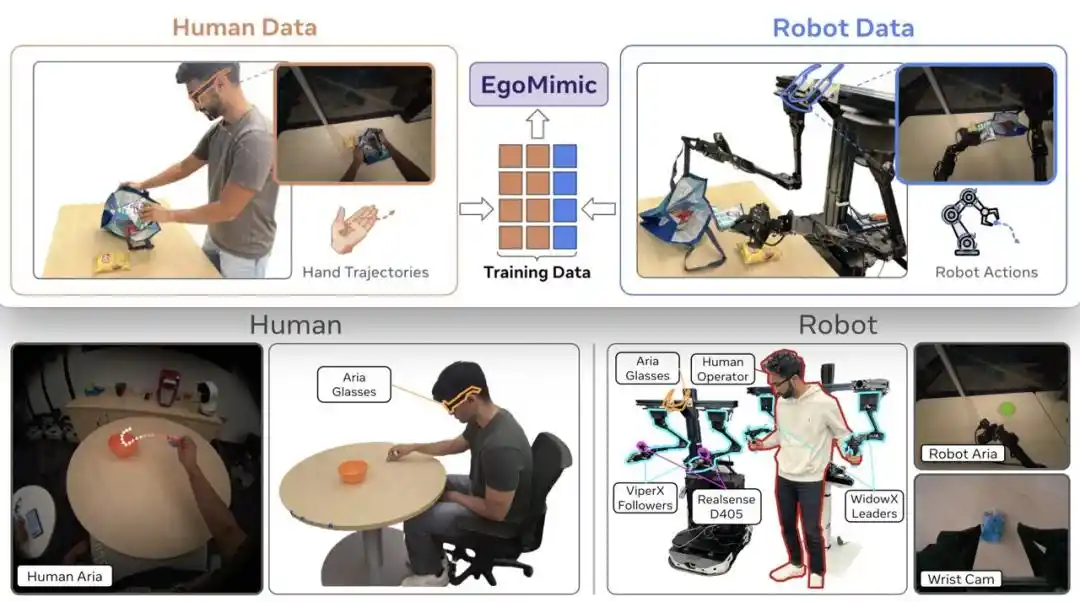
Step One: Learning from "Imperfect Human Data."

Human tennis movement data can be collected via motion capture, video, or wearable sensors.

However, human movements themselves are not standardized. Amateur players are indeed amateurs, with extraneous movements. Professional players' movements maximize their individual athleticism, making them difficult for others to replicate, and everyone's height, wingspan, and joint angles differ from the robot's.

Traditional imitation learning requires demonstration data to be clean, aligned, and high-quality—requirements almost impossible to meet with human data.

The task of the Galaxy Star Workshop data platform is to extract useful priors from this noisy, misaligned, mixed-quality demonstration data:

When to start moving, the general rhythm of a swing, how to transfer body weight—truly learning the underlying motion principles.

The value of this step lies in cold-start capability.

The robot doesn't have to start exploring from random movements; it begins with a rough idea of "what playing tennis looks like."

Step Two: Entering the Virtual Tennis World.

In the simulated environment, multiple intelligent agents play against each other. It's not one robot practicing against a ball machine, but multiple strategies evolving and competing against each other.

When one side learns to hit the sidelines, the other is forced to learn large lateral movements; when one side learns the drop shot, the other is forced to learn to rush the net.

Within this vast virtual competition, a miracle occurs—"skill emergence."

Engineers never taught it how to slide for a desperate save, but after countless failures to reach the ball, the model itself "figured out" the posture for a maximum extension.

Engineers never wrote hard-coded instructions for getting up after a fall, but after falling millions of times in the virtual world, the model itself "learned" how to coordinate all its motors to stand back up.

Skills do not need to be manually designed; under the pressure of competition, the AI learns them on its own.

Finally, when these "souls" honed to mastery in the virtual world are seamlessly transferred into the physical bodies of real robots in the physical world, a tennis master is born!

Placed within the spectrum of machine learning, this path lies between two extremes.

The ceiling of pure imitation learning is the level of the demonstrator; a human coach cannot teach a student who surpasses them, and human demonstrations simply don't contain data on "how to get up after falling and continue playing."

Pure reinforcement learning explores from scratch. In tasks like tennis with huge action spaces and sparse rewards, the search cost becomes unrealistically high, and it tends to learn bizarre, humanly incomprehensible actions that might win points but don't resemble tennis.

Start with human priors as a foundation, then elevate through autonomous evolution.

This approach isn't entirely new; AlphaGo also started by learning human Go games before self-play. What's new is that ten years ago, this method succeeded on a board, and ten years later, it has succeeded for the first time on a task requiring a body.

In a sense, this is the most fascinating technical echo between AstraTennis and AlphaGo.

In the AlphaGo era, intelligence thought on a board; this time, intelligence begins to enter the physical world.

This is far more than just a tennis match. This AstraTennis moment proves: In the new era of carbon-silicon symbiosis, the power of China is beginning to create more wonders.

Edited by: Aeneas, David

This article is from the WeChat public account "New Zhiyuan", author: ASI Apocalypse

Трендові криптовалюти

Пов'язані питання

QWhat major event in the history of AI and robotics is described in the article as taking place on August 22nd?

AThe second World Humanoid Robot Games, which featured the world's first genuine man vs. machine tennis match between Chinese tennis star Zheng Jie and a humanoid robot from Galaxy General Robots.

QWhat is the name of the AI model developed by Galaxy General Robots that powers the tennis-playing robot, and what is its key architectural innovation?

AThe AI model is called AstraBrain (Galaxy Star Brain). Its key innovation is integrating the 'brain' (task understanding and tactical decision-making) and the 'cerebellum' (high-dynamic full-body motion control) into a single model, eliminating information loss and delay between decision and action.

QAccording to the article, why is playing tennis a much harder challenge for AI than playing Go (like AlphaGo)?

ATennis is harder because it exists in the dynamic, continuous physical world. The robot must perceive, predict, decide, and coordinate its entire body within fractions of a second against a live, unpredictable opponent, dealing with variables like spin, wind, and friction. Go, in contrast, is a static, discrete digital board game with clear rules and longer decision times.

QHow did the Galaxy General Robots team train their AI model to play tennis, overcoming the lack of real-world robot data?

AThey used a two-step process. First, the model learned general movement priors from 'imperfect human data' (motion capture, videos). Second, multiple AI agents were placed in a high-fidelity virtual tennis simulator where they played millions of matches against each other. Through this self-play and evolutionary pressure, the model autonomously developed advanced skills like sliding saves and recovering from falls, which were then transferred to the physical robot.

QWhat broader technological significance does the article attribute to this 'AstraTennis moment' beyond just a robot playing a sport?

AThe event marks a historic 'embodied intelligence singularity' for Chinese innovation. It demonstrates that AI can successfully transition from pure cognitive tasks in the digital realm (like AlphaGo) to performing integrated perception, decision-making, and full-body motion control under the extreme pressure of real-time physical competition. It proves AI can form a complete closed loop from thought to action in the unpredictable physical world.

Пов'язані матеріали

Mysterious "Ox Alpha" Large Model Goes Viral with Limited-Time Free Access

A mysterious anonymous AI model named "Ox Alpha," nicknamed "Cow is Coming" by Chinese netizens, has appeared on OpenRouter, sparking widespread speculation. The model offers a 1 million token context, supports text, image, and video inputs, can call tools, and is currently free. Its standout feature is strong coding ability. Initial tests on the DeepSWE benchmark, which evaluates real-world software engineering tasks, showed an 80% pass rate on a subset of tasks, reportedly nearing top-tier code models. However, follow-up tests yielded a 63% score, with variations attributed to different task sets and configurations. The model's true developer is a major topic of debate. The prevailing theory points to Zhipu AI's unreleased GLM-5.3 Flash or its multimodal variant. Evidence cited includes identical visual token consumption patterns with GLM-5V-Turbo for videos, a consistent offset in text token counts compared to GLM-5.3, and similar behavioral traits like refusing audio processing. Zhipu has a precedent of anonymous testing. Simultaneously, another anonymous model, "korrine," appeared on Code Arena, with guesses ranging from Moonshot's Kimi K3.1 to models from Qwen or MiMo, adding to the industry's guessing game. This trend of anonymous "undercover" testing allows for unbiased performance evaluation in platforms like Arena and provides real-world, high-pressure testing through tools like OpenRouter before official release. It also serves as an effective marketing tactic, prolonging discussion through suspense. If Ox Alpha is indeed a "Flash" model, its performance raises expectations for the full-scale version's potential.

marsbit52 хв тому

Mysterious "Ox Alpha" Large Model Goes Viral with Limited-Time Free Access

marsbit52 хв тому

Breaking News: DeepSeek Announces All-Day Off-Peak Pricing on Weekends, Making Weekend Work More Cost-Effective?

DeepSeek has announced a significant change to its API pricing model, effective August 23. The new policy removes peak/off-peak distinctions on weekends (Saturdays and Sundays), charging the lower off-peak rate for the entire two-day period. This adjustment has sparked mixed reactions within the developer and professional communities. For developers and businesses heavily reliant on DeepSeek's V4-Flash and V4-Pro APIs, this is welcome news. It allows them to schedule bulk processing tasks on weekends without the higher peak-hour costs, potentially halving their API bills for such workloads. Some users have celebrated the move for making weekend work more cost-effective. However, the announcement has also raised concerns among employees. There is apprehension that companies, particularly in cost-sensitive sectors like AI-powered short drama production, might reorganize work schedules to align with these new cost incentives. Instances are already emerging where teams schedule high-token tasks during cheaper nighttime hours or adjust staff shifts. This has led to worries about a potential shift towards weekend workdays and weekday time-off, prioritizing cost savings over traditional work-life balance. Debate has ensued regarding the practicality of such schedule changes, with questions about increased communication overhead and overall efficiency. Speculation about DeepSeek's motives for the change includes theories that peak pricing correlates with internal model training schedules, though others counter that training is largely automated. The new pricing structure is now in effect, prompting users to reconsider their task scheduling strategies.

marsbit1 год тому

Breaking News: DeepSeek Announces All-Day Off-Peak Pricing on Weekends, Making Weekend Work More Cost-Effective?

marsbit1 год тому

The Biggest Dark Horse in AI Payments Might Be Coinbase Giving Agents a Wallet

In the AI payments race, while most focus on traditional giants like Visa or AI platforms like OpenAI, Coinbase has quietly emerged as a key player. Data from 2026 shows over 90% of on-chain Agent transactions occur on Coinbase's Base network, with 99% settled in USDC and over 97% using the x402 protocol. Coinbase's pivotal move was launching "Agentic Wallets" in February 2026—a dedicated wallet infrastructure giving AI Agents their own financial identity. Unlike Visa or Stripe, which connect Agents to existing payment rails, Coinbase provides Agents with autonomous wallets to hold assets (like stablecoins), initiate transfers, and execute transactions under predefined rules. This solves core issues for machine-to-machine payments: high credit card fees for micropayments, the need for constant human authorization, and unclear transaction attribution. Coinbase's strength lies in its closed-loop ecosystem: the Base blockchain (low-cost, high-throughput), the x402 payment protocol, Agentic Wallets, and native assets like USDC. This integrated stack, built through years of infrastructure investment, positioned Coinbase to capture early Agent payment demand as the AI economy surged. The key insight is that AI payment adoption may depend less on whose standard wins and more on whose usable infrastructure is ready first. While debates over protocols and payment rails continue, real Agent transactions are already flowing—primarily through Coinbase's ecosystem. It may not be the ultimate winner, but for now, it's the frontrunner by being prepared.

marsbit2 год тому

The Biggest Dark Horse in AI Payments Might Be Coinbase Giving Agents a Wallet

marsbit2 год тому

Dialogue with Bitwise CIO: Bitcoin May Be Near Bottom, Who Will Drive the Next Rally?

In a recent podcast, Bitwise CIO Matt Hougan analyzed Bitcoin's current market cycle, suggesting it is near a bottom characterized by low volatility and investor indifference. He believes the next major price surge will be driven primarily by wealth management platforms, financial advisors, and family offices, who control trillions in assets and are now gaining access to Bitcoin ETFs. Hougan views Bitcoin as a long-dated, out-of-the-money call option on it becoming a global reserve asset. Its value increases with global monetary system volatility, making it a natural hedge against currency disorder. He outlined Bitcoin's adoption path: first as a global digital store of value (competing with gold), and potentially later as a check against fiat currency abuse by sovereign states. Addressing the muted price action despite institutional ETF inflows, Hougan explained that significant selling by long-term retail holders has offset buying pressure. However, he is optimistic as data shows retail selling has subsided, which, combined with continued institutional inflows, could propel prices higher. Hougan downplayed the future impact of Federal Reserve interest rates and MicroStrategy's actions on Bitcoin's price, arguing they are becoming less relevant. Instead, he pointed to runaway U.S. fiscal deficits and debt as the core long-term drivers. Finally, he discussed the transformative potential of asset tokenization, predicting all traditional assets will eventually trade 24/7 on blockchains. This will merge traditional and crypto markets, increasing efficiency but also introducing crypto-like features such as overnight volatility and easier access to leverage into traditional finance.

marsbit3 год тому

Dialogue with Bitwise CIO: Bitcoin May Be Near Bottom, Who Will Drive the Next Rally?

marsbit3 год тому

Торгівля

Спот

Популярні статті

Що таке $S$

Розуміння SPERO: Комплексний огляд Вступ до SPERO Оскільки ландшафт інновацій продовжує еволюціонувати, виникнення технологій web3 та криптовалютних проектів відіграє ключову роль у формуванні цифрового майбутнього. Один з проектів, який привернув увагу в цій динамічній сфері, — це SPERO, позначений як SPERO,$$s$. Ця стаття має на меті зібрати та представити детальну інформацію про SPERO, щоб допомогти ентузіастам та інвесторам зрозуміти його основи, цілі та інновації в рамках web3 та крипто-сектору. Що таке SPERO,$$s$? SPERO,$$s$ — це унікальний проект у криптопросторі, який прагне використати принципи децентралізації та технології блокчейн для створення екосистеми, що сприяє залученню, корисності та фінансовій інклюзії. Проект розроблений для полегшення взаємодії між користувачами новими способами, надаючи їм інноваційні фінансові рішення та послуги. У своїй основі SPERO,$$s$ прагне надати можливості індивідам, забезпечуючи інструменти та платформи, які покращують користувацький досвід у криптовалютному просторі. Це включає в себе можливість більш гнучких методів транзакцій, сприяння ініціативам, що підтримуються спільнотою, та створення шляхів для фінансових можливостей через децентралізовані додатки (dApps). Основна концепція SPERO,$$s$ обертається навколо інклюзивності, прагнучи зменшити розриви в традиційній фінансовій системі, використовуючи переваги технології блокчейн. Хто є творцем SPERO,$$s$? Особистість творця SPERO,$$s$ залишається дещо невідомою, оскільки є обмежені публічно доступні ресурси, що надають детальну інформацію про його засновників. Ця відсутність прозорості може бути наслідком зобов'язання проекту до децентралізації — етики, яку багато проектів web3 поділяють, ставлячи колективні внески вище за індивідуальне визнання. Зосереджуючи обговорення навколо спільноти та її колективних цілей, SPERO,$$s$ втілює суть наділення без виділення конкретних осіб. Таким чином, розуміння етики та місії SPERO є більш важливим, ніж ідентифікація єдиного творця. Хто є інвесторами SPERO,$$s$? SPERO,$$s$ підтримується різноманітними інвесторами, починаючи від венчурних капіталістів до ангельських інвесторів, які прагнуть сприяти інноваціям у крипто-секторі. Зосередження цих інвесторів зазвичай узгоджується з місією SPERO — пріоритет надається проектам, які обіцяють технологічний прогрес у суспільстві, фінансову інклюзію та децентралізоване управління. Ці інвесторські фонди зазвичай зацікавлені в проектах, які не лише пропонують інноваційні продукти, але й позитивно впливають на спільноту блокчейн та її екосистеми. Підтримка з боку цих інвесторів підкріплює SPERO,$$s$ як значного конкурента в швидко змінюваній сфері крипто-проектів. Як працює SPERO,$$s$? SPERO,$$s$ використовує багатогранну структуру, яка відрізняє його від традиційних криптовалютних проектів. Ось деякі ключові особливості, які підкреслюють його унікальність та інноваційність: Децентралізоване управління: SPERO,$$s$ інтегрує моделі децентралізованого управління, надаючи користувачам можливість активно брати участь у процесах прийняття рішень щодо майбутнього проекту. Цей підхід сприяє відчуттю власності та відповідальності серед членів спільноти. Корисність токена: SPERO,$$s$ використовує свій власний криптовалютний токен, розроблений для виконання різних функцій в екосистемі. Ці токени дозволяють здійснювати транзакції, отримувати винагороди та полегшувати послуги, що пропонуються на платформі, підвищуючи загальну залученість та корисність. Шарова архітектура: Технічна архітектура SPERO,$$s$ підтримує модульність та масштабованість, що дозволяє безперешкодно інтегрувати додаткові функції та додатки в міру розвитку проекту. Ця адаптивність є надзвичайно важливою для збереження актуальності в постійно змінюваному крипто-ландшафті. Залучення спільноти: Проект підкреслює ініціативи, що підтримуються спільнотою, використовуючи механізми, які стимулюють співпрацю та зворотний зв'язок. Підтримуючи сильну спільноту, SPERO,$$s$ може краще задовольняти потреби користувачів та адаптуватися до ринкових тенденцій. Фокус на інклюзію: Пропонуючи низькі комісії за транзакції та зручні інтерфейси, SPERO,$$s$ прагне залучити різноманітну базу користувачів, включаючи осіб, які раніше не брали участі в крипто-просторі. Це зобов'язання до інклюзії узгоджується з його загальною місією наділення через доступність. Хронологія SPERO,$$s$ Розуміння історії проекту надає важливі уявлення про його розвиток та етапи. Нижче наведено пропоновану хронологію, що відображає значні події в еволюції SPERO,$$s$: Етап концептуалізації та ідеації: Початкові ідеї, що стали основою SPERO,$$s$, були сформовані, тісно пов'язані з принципами децентралізації та фокусом на спільноті в індустрії блокчейн. Запуск білого паперу проекту: Після концептуального етапу був випущений комплексний білий папір, що детально описує бачення, цілі та технологічну інфраструктуру SPERO,$$s$, щоб залучити інтерес та зворотний зв'язок від спільноти. Створення спільноти та ранні залучення: Активні зусилля були спрямовані на створення спільноти ранніх прихильників та потенційних інвесторів, що полегшило обговорення цілей проекту та отримання підтримки. Подія генерації токенів: SPERO,$$s$ провів подію генерації токенів (TGE) для розподілу своїх рідних токенів серед ранніх прихильників та встановлення початкової ліквідності в екосистемі. Запуск початкового dApp: Перший децентралізований додаток (dApp), пов'язаний з SPERO,$$s$, став доступним, дозволяючи користувачам взаємодіяти з основними функціями платформи. Постійний розвиток та партнерства: Безперервні оновлення та вдосконалення пропозицій проекту, включаючи стратегічні партнерства з іншими учасниками блокчейн-простору, сформували SPERO,$$s$ у конкурентоспроможного та еволюціонуючого гравця на крипто-ринку. Висновок SPERO,$$s$ є свідченням потенціалу web3 та криптовалют для революціонізації фінансових систем та наділення індивідів. Завдяки зобов'язанню до децентралізованого управління, залучення спільноти та інноваційно спроектованих функцій, він прокладає шлях до більш інклюзивного фінансового ландшафту. Як і з будь-якими інвестиціями в швидко змінюваному крипто-просторі, потенційним інвесторам та користувачам рекомендується ретельно досліджувати та обдумано взаємодіяти з поточними подіями в SPERO,$$s$. Проект демонструє інноваційний дух крипто-індустрії, запрошуючи до подальшого дослідження його численних можливостей. Хоча подорож SPERO,$$s$ ще триває, його основні принципи можуть справді вплинути на майбутнє того, як ми взаємодіємо з технологією, фінансами та один з одним у взаємопов'язаних цифрових екосистемах.

374 переглядів усьогоОпубліковано 2024.12.17Оновлено 2024.12.17

Що таке $S$

Що таке AGENT S

Агент S: Майбутнє автономної взаємодії в Web3 Вступ У постійно змінюваному ландшафті Web3 та криптовалюти інновації постійно переосмислюють, як люди взаємодіють з цифровими платформами. Один з таких новаторських проектів, Агент S, обіцяє революціонізувати взаємодію людини з комп'ютером через свою відкриту агентну структуру. Прокладаючи шлях для автономних взаємодій, Агент S прагне спростити складні завдання, пропонуючи трансформаційні застосування в штучному інтелекті (ШІ). Це детальне дослідження заглиблюється в складності проекту, його унікальні особливості та наслідки для сфери криптовалюти. Що таке Агент S? Агент S є революційною відкритою агентною структурою, спеціально розробленою для вирішення трьох основних викликів в автоматизації комп'ютерних завдань: Набуття специфічних знань у галузі: Структура інтелектуально навчається з різних зовнішніх джерел знань та внутрішнього досвіду. Цей подвійний підхід дозволяє їй створити багатий репозиторій специфічних знань у галузі, покращуючи її продуктивність у виконанні завдань. Планування на довгих горизонтах завдань: Агент S використовує планування з підкріпленням досвіду, стратегічний підхід, який полегшує ефективний розподіл та виконання складних завдань. Ця функція значно підвищує її здатність ефективно та результативно управляти кількома підзавданнями. Обробка динамічних, неоднорідних інтерфейсів: Проект представляє Інтерфейс Агент-Комп'ютер (ACI), інноваційне рішення, яке покращує взаємодію між агентами та користувачами. Використовуючи багатомодальні великі мовні моделі (MLLMs), Агент S може безперешкодно орієнтуватися та маніпулювати різноманітними графічними інтерфейсами користувача. Завдяки цим новаторським функціям Агент S надає надійну структуру, яка вирішує складнощі, пов'язані з автоматизацією людської взаємодії з машинами, прокладаючи шлях для численних застосувань у ШІ та за його межами. Хто є творцем Агент S? Хоча концепція Агент S є фундаментально новаторською, конкретна інформація про його творця залишається невідомою. Творець наразі невідомий, що підкреслює або початкову стадію проекту, або стратегічний вибір зберегти засновників у таємниці. Незважаючи на анонімність, акцент залишається на можливостях та потенціалі структури. Хто є інвесторами Агент S? Оскільки Агент S є відносно новим у криптографічній екосистемі, детальна інформація про його інвесторів та фінансових спонсорів не задокументована. Відсутність публічно доступних відомостей про інвестиційні фонди або організації, що підтримують проект, викликає питання щодо його фінансової структури та дорожньої карти розвитку. Розуміння підтримки є критично важливим для оцінки стійкості проекту та потенційного впливу на ринок. Як працює Агент S? В основі Агент S лежить передова технологія, яка дозволяє йому ефективно функціонувати в різних умовах. Його операційна модель побудована навколо кількох ключових функцій: Взаємодія з комп'ютером, подібна до людської: Структура пропонує розширене планування ШІ, прагнучи зробити взаємодії з комп'ютерами більш інтуїтивними. Імітуючи людську поведінку при виконанні завдань, вона обіцяє підвищити досвід користувачів. Наративна пам'ять: Використовується для використання високорівневого досвіду, Агент S використовує наративну пам'ять для відстеження історій завдань, тим самим покращуючи свої процеси прийняття рішень. Епізодична пам'ять: Ця функція надає користувачам покрокові інструкції, дозволяючи структурі пропонувати контекстуальну підтримку в міру виконання завдань. Підтримка OpenACI: Завдяки можливості працювати локально, Агент S дозволяє користувачам зберігати контроль над своїми взаємодіями та робочими процесами, узгоджуючи з децентралізованою етикою Web3. Легка інтеграція з зовнішніми API: Його універсальність і сумісність з різними платформами ШІ забезпечують те, що Агент S може безперешкодно вписатися в існуючі технологічні екосистеми, роблячи його привабливим вибором для розробників та організацій. Ці функціональні можливості колективно сприяють унікальному положенню Агент S у крипто-просторі, оскільки він автоматизує складні, багатоступеневі завдання з мінімальним втручанням людини. У міру розвитку проекту його потенційні застосування в Web3 можуть переосмислити, як відбуваються цифрові взаємодії. Хронологія Агент S Розробка та етапи Агент S можуть бути узагальнені в хронології, яка підкреслює його значні події: 27 вересня 2024 року: Концепція Агент S була представлена в комплексній науковій статті під назвою “Відкрита агентна структура, яка використовує комп'ютери як людина”, що демонструє основи проекту. 10 жовтня 2024 року: Наукова стаття була опублікована на arXiv, пропонуючи детальне дослідження структури та її оцінки продуктивності на основі бенчмарку OSWorld. 12 жовтня 2024 року: Було випущено відеопрезентацію, що надає візуальне уявлення про можливості та особливості Агент S, ще більше залучаючи потенційних користувачів та інвесторів. Ці маркери в хронології не лише ілюструють прогрес Агент S, але й вказують на його прихильність до прозорості та залучення громади. Ключові моменти про Агент S У міру розвитку структури Агент S кілька ключових характеристик виділяються, підкреслюючи її новаторський характер та потенціал: Інноваційна структура: Розроблена для забезпечення інтуїтивного використання комп'ютерів, подібного до людської взаємодії, Агент S пропонує новий підхід до автоматизації завдань. Автономна взаємодія: Здатність автономно взаємодіяти з комп'ютерами через GUI означає стрибок до більш інтелектуальних та ефективних обчислювальних рішень. Автоматизація складних завдань: Завдяки своїй надійній методології він може автоматизувати складні, багатоступеневі завдання, роблячи процеси швидшими та менш схильними до помилок. Безперервне вдосконалення: Механізми навчання дозволяють Агенту S покращуватися на основі минулого досвіду, постійно підвищуючи свою продуктивність та ефективність. Універсальність: Його адаптивність до різних операційних середовищ, таких як OSWorld та WindowsAgentArena, забезпечує його здатність служити широкому спектру застосувань. Оскільки Агент S займає своє місце в ландшафті Web3 та криптовалюти, його потенціал покращити можливості взаємодії та автоматизувати процеси означає значний прогрес у технологіях ШІ. Завдяки своїй інноваційній структурі Агент S є прикладом майбутнього цифрових взаємодій, обіцяючи більш безперешкодний та ефективний досвід для користувачів у різних галузях. Висновок Агент S представляє собою сміливий крок вперед у поєднанні ШІ та Web3, з можливістю переосмислити, як ми взаємодіємо з технологією. Хоча проект все ще на ранніх стадіях, можливості для його застосування є величезними та переконливими. Завдяки своїй комплексній структурі, що вирішує критичні виклики, Агент S прагне вивести автономні взаємодії на передній план цифрового досвіду. У міру того, як ми заглиблюємося в сфери криптовалюти та децентралізації, проекти, подібні до Агент S, безсумнівно, відіграватимуть ключову роль у формуванні майбутнього технологій та співпраці людини з комп'ютером.

985 переглядів усьогоОпубліковано 2025.01.14Оновлено 2025.01.14

Що таке AGENT S

Як купити S

Ласкаво просимо до HTX.com! Ми зробили покупку Sonic (S) простою та зручною. Дотримуйтесь нашої покрокової інструкції, щоб розпочати свою криптовалютну подорож.Крок 1: Створіть обліковий запис на HTXВикористовуйте свою електронну пошту або номер телефону, щоб зареєструвати обліковий запис на HTX безплатно. Пройдіть безпроблемну реєстрацію й отримайте доступ до всіх функцій.ЗареєструватисьКрок 2: Перейдіть до розділу Купити крипту і виберіть спосіб оплатиКредитна/дебетова картка: використовуйте вашу картку Visa або Mastercard, щоб миттєво купити Sonic (S).Баланс: використовуйте кошти з балансу вашого рахунку HTX для безперешкодної торгівлі.Треті особи: ми додали популярні способи оплати, такі як Google Pay та Apple Pay, щоб підвищити зручність.P2P: Торгуйте безпосередньо з іншими користувачами на HTX.Позабіржова торгівля (OTC): ми пропонуємо індивідуальні послуги та конкурентні обмінні курси для трейдерів.Крок 3: Зберігайте свої Sonic (S)Після придбання Sonic (S) збережіть його у своєму обліковому записі на HTX. Крім того, ви можете відправити його в інше місце за допомогою блокчейн-переказу або використовувати його для торгівлі іншими криптовалютами.Крок 4: Торгівля Sonic (S)Легко торгуйте Sonic (S) на спотовому ринку HTX. Просто увійдіть до свого облікового запису, виберіть торгову пару, укладайте угоди та спостерігайте за ними в режимі реального часу. Ми пропонуємо зручний досвід як для початківців, так і для досвідчених трейдерів.

2.1k переглядів усьогоОпубліковано 2025.01.15Оновлено 2026.06.02

Як купити S

Обговорення

Ласкаво просимо до спільноти HTX. Тут ви можете бути в курсі останніх подій розвитку платформи та отримати доступ до професійної ринкової інформації. Нижче представлені думки користувачів щодо ціни S (S).

活动图片