FTX Co-Founder Bankman-Fried Requests Trump Pardon–FTT Soars 45%

bitcoinistОпубліковано о 2026-06-08Востаннє оновлено о 2026-06-08

Анотація

Sam Bankman-Fried, the convicted former CEO of bankrupt crypto exchange FTX, has formally requested a presidential pardon from Donald Trump. He confirmed the move in an interview, stating he "absolutely" wants clemency. In March 2024, Bankman-Fried was sentenced to 25 years for fraud and conspiracy linked to FTX's collapse, which caused billions in losses for customers and investors. Despite his conviction, he maintains the case was unfair, claiming FTX customers have now been repaid with interest. Following news of his pardon bid, FTX's native token, FTT, surged 45% in price, though it remains 99.5% below its all-time high.

Sam Bankman-Fried, the co-founder and former CEO of the collapsed cryptocurrency exchange FTX, moved forward with a new legal effort on Monday by filing a request for a presidential pardon from President Trump.

Bankman-Fried’s Pardon Bid

Bloomberg reported that Bankman-Fried submitted an application to the Office of the Pardon Attorney within the US Department of Justice (DOJ), seeking what the site describes as a “pardon after completion of sentence.”

Later on Monday, during an exclusive conversation with FOX Business correspondent Susan Li, Bankman-Fried said he “absolutely” wants a presidential pardon. When Li asked whether he would expect to seek one from the White House, he agreed.

“Absolutely,” he said, adding that the decision ultimately rests with the president rather than him. Asked if his family or people he has been in contact with are lobbying the administration on his behalf, the FTX co-founder declined to confirm, stating, “I can’t speak for them.”

In March 2024, Bankman-Fried was sentenced to 25 years in prison after a jury found him guilty on two counts of wire fraud and five counts of conspiracy tied to the fall of his crypto empire.

The court also concluded that FTX customers lost $8 billion, equity investors associated with FTX lost $1.7 billion, and lenders to the Alameda Research hedge fund—Bankman-Fried’s firm—lost $1.3 billion.

FTX Token Rallies 45%

Despite the conviction and long sentence, Bankman-Fried has continued to argue that the case against him was unfair. He told Li that he believes FTX customers have ultimately been repaid and pointed to improvements in bankruptcy outcomes that he said have been helped, at least in part, by a recovery in cryptocurrency markets.

“I didn’t steal user funds either,” he said, adding that customers have been repaid, “now 170% or so on their deposits.” He described the situation as one of the few cases where the platform was reportedly over-collateralized—meaning customers were more than fully made whole—yet he said prosecutors still pursued criminal charges.

Notably, the move sparked a major surge in the price of FTX’s native token, FTT. On Monday, it recorded a massive 45% rally, reaching around $0.33 by the time this piece was written. However, the token’s recovery still leaves it 99.5% below its all-time high of $84, which was reached at the peak of the exchange’s operations.

The 1-D chart shows FTT’s price rally on Monday. Source: FTTUSDT on TradingView.com

Featured image created with OpenArt; chart from TradingView.com

Пов'язані питання

QWhat legal action did Sam Bankman-Fried take on Monday, and from whom did he request it?

ASam Bankman-Fried filed a request for a presidential pardon from President Trump with the Office of the Pardon Attorney within the US Department of Justice.

QWhat was the reason for Sam Bankman-Fried's 25-year prison sentence in March 2024?

AHe was sentenced to 25 years in prison after being found guilty on two counts of wire fraud and five counts of conspiracy related to the collapse of FTX.

QAccording to the court, what were the financial losses for FTX customers, equity investors, and Alameda Research lenders?

AFTX customers lost $8 billion, equity investors lost $1.7 billion, and lenders to Alameda Research lost $1.3 billion.

QHow did Sam Bankman-Fried defend himself regarding the use of customer funds, and what repayment claim did he make?

AHe stated, 'I didn’t steal user funds either,' and claimed that customers have been repaid 'now 170% or so on their deposits.'

QHow did the news of Bankman-Fried's pardon request affect the price of FTX's native token, FTT?

AThe price of FTT surged by 45% on Monday, reaching around $0.33, though it remains 99.5% below its all-time high of $84.

Пов'язані матеріали

Huang Renxun Dramatically 'Saves' South Korean Stock Market

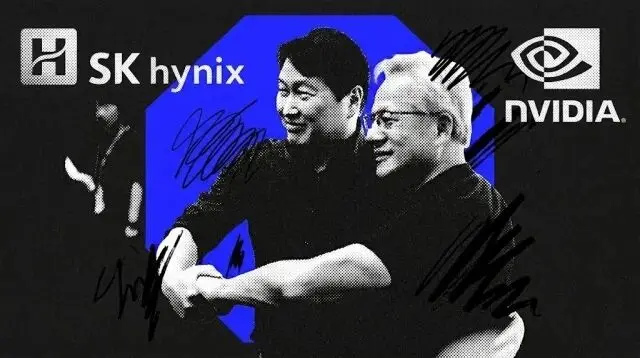
In early June, South Korea's stock market experienced a sharp decline, with the KOSPI index dropping over 5% and triggering a trading halt. Amid this volatility, NVIDIA CEO Jensen Huang's visit to Seoul provided a dramatic boost to market sentiment. During his trip, Huang held a dinner meeting with SK Group Chairman Chey Tae-won and SK Hynix CEO Kwak Noh-Jung. He announced that NVIDIA's new Vera CPU would utilize SK Hynix DRAM and confirmed a multi-year technical collaboration between the two companies. This partnership aims to co-develop next-generation memory for NVIDIA's AI infrastructure roadmap, covering products from data center supercomputers to personal AI devices. Huang also publicly commented that AI company stocks were attractively priced. A key announcement was that NVIDIA's upcoming Vera Rubin AI supercomputer systems will use HBM4 memory, with supply qualifications granted to all three major suppliers: SK Hynix, Samsung Electronics, and Micron Technology. Despite this multi-sourcing strategy, Huang warned that the industry-wide chip shortage, affecting everything from wafers to packaging, is expected to persist for several years due to relentless demand from global AI factory construction. The collaboration extends beyond memory supply. SK Hynix will employ NVIDIA's AI platforms and Omniverse digital twin technology to enhance its own semiconductor design, simulation, and manufacturing processes, aiming for more autonomous factory operations. This visit builds upon a prior October 2025 agreement for SK Group to build a large-scale AI data center using over 50,000 NVIDIA GPUs. Huang's itinerary also included meetings with other Korean giants like Hyundai, LG, and Samsung, indicating NVIDIA's broader strategy to deepen ties with South Korea's tech industry.

链捕手7 год тому

Huang Renxun Dramatically 'Saves' South Korean Stock Market

链捕手7 год тому

When Inference Becomes a Scarce Resource, Who Captures the Value?

When Inference Becomes the Scarce Resource, Who Captures the Value? The core AI bottleneck has shifted from model training to inference (runtime execution). While concerns persisted about an "AI compute gap"—initially a $200B, now a $600B problem—the market is now recognizing that the solution and value lie in the inference layer. Nvidia's financial restructuring around "serving tokens" and Cerebras's successful IPO highlight this shift. Inference is a recurring, usage-based cost, estimated to be 10-50x larger than the one-time training market, especially with the rise of agentic AI. The inference stack spans six layers: silicon (e.g., Nvidia), bare metal (e.g., CoreWeave), GPU rental/aggregation, deployment/optimization, model APIs, and end applications. Most companies operate in one layer. However, Hyperbolic uniquely spans three layers (GPU rental, deployment, and model APIs) without owning any hardware. It aggregates fragmented GPU supply from multiple cloud providers into a standardized pool, offering developers the cheapest available compute through intelligent routing. Its multi-cloud aggregation creates a data moat and a flywheel: more supply leads to better pricing data and liquidity, attracting more developers and providers. In contrast, applications like Venice operate at the top of the stack, reselling privacy-wrapped inference but remaining dependent on and constrained by the underlying compute costs they purchase. As inference demand explodes, value accrues not just to consumer applications but increasingly to the aggregation and routing layer that captures their cost of revenue. The coming potential GPU oversupply reinforces this dynamic. While hardware owners may suffer from depreciation, asset-light aggregators like Hyperbolic benefit from price arbitrage, routing workloads to the cheapest available capacity. The ultimate winner in the inference economy may not be the entity with the most GPUs, but the one that can most efficiently discover, aggregate, and route the world's fragmented compute.

链捕手7 год тому

When Inference Becomes a Scarce Resource, Who Captures the Value?

链捕手7 год тому

Торгівля

Спот
Ф'ючерси
活动图片