Circle Blacklists Zama Protocol Address, Freezing $12.6M In User Funds – Details

bitcoinistОпубліковано о 2026-05-31Востаннє оновлено о 2026-05-31

Анотація

Circle has blacklisted a smart contract address for the Zama protocol's Confidential USDC (cUSDC), freezing approximately $12.6 million in user funds. The action, identified by on-chain investigator ZachXBT, targeted a publicly documented contract on Ethereum. Investigations suggest the frozen funds may be indirectly connected to ongoing controversy and legal issues surrounding Overnight Finance, an asset-management protocol. A wallet linked to Overnight Finance had deposited a large sum into the Zama contract amidst governance disputes and allegations of a possible rug pull. This move by Circle, reportedly made without prior warning to Zama, has reignited criticism over transparency and unilateral enforcement by centralized stablecoin issuers. It highlights concerns about how external legal and governance risks can impact unrelated users in interconnected DeFi systems. Circle has not provided an official explanation for the freeze.

Stablecoin issuer Circle has reportedly blacklisted a smart contract linked to privacy protocol Zama, freezing approximately $12.6 million in user funds. The development, first flagged by on-chain investigator ZachXBT, involves the protocol’s Confidential USDC (cUSDC) contract deployed on Ethereum seven hours before ban. The affected contract address had been publicly documented in Zama’s docs and visible on blockchain explorers, making the freeze both traceable and verifiable in real time.

Zama’s Frozen Funds Draw Relationship To Overnight Finance And Legal Dispute

According to further findings by ZachXBT, the freeze may be indirectly tied to recent controversy and legal issues surrounding the asset-management and yield-generating protocol Overnight Finance.

Data shows that wallet address 0xf7fcc deposited roughly $12.4 million in USDC into the Zama contract on May 11, 2026. This wallet appears to be associated with Overnight Finance, which has recently been embroiled in governance tensions. Notably, token holders had alleged a possible rug pull by the development team. This resulted in a governance vote on the DeFi protocol to distribute its treasury assets.

ZachXBT shared additional information suggesting that Overnight Finance is also facing a civil case in court. One of the plaintiffs in the protocol case is Patagon Management, a firm known in the DeFi space for engaging in aggressive governance strategies, such as hostile DAO takeovers/RFV raiding. While no direct causal link has been confirmed between Circle actions and these events, the overlap between legal proceedings, treasury movements, and the frozen funds has raised concerns about how interconnected DeFi protocols can expose unrelated users, i.e., Zama users in this case, to external risks.

Circle’s Unilateral Action Sets Unwanted Precedent

Circle’s freeze has also reignited criticism of transparency practices by centralized issuers. According to ZachXBT, the Zama team appears to have received no prior notice before the cUSDC contract was blacklisted. If confirmed, this would amplify growing concerns about unilateral enforcement actions affecting decentralized applications and their users without warning.

Earlier in March 2026, Circle reportedly froze over 16 hot wallets associated with various entities without publicly explaining its rationale. The latest action, however, goes a step further by targeting a protocol-level contract where user funds are pooled, rather than isolated wallets. This distinction is significant because it raises questions about custodial risk in supposedly decentralized systems.

At the time of reporting, Circle has not issued an official explanation for its unilateral action in freezing Zama’s cUSDC contract.

Total crypto market cap valued at $2.47 trillion on the daily chart | Source: TOTAL chart on Tradingview.com

Featured image from Shutterstock, chart from Tradingview

Пов'язані питання

QWhat is the main reason Circle froze the $12.6 million in user funds according to the article?

ACircle blacklisted a smart contract linked to the privacy protocol Zama, specifically its Confidential USDC (cUSDC) contract, which held approximately $12.6 million in user funds.

QWhich on-chain investigator first reported the freeze of funds in the Zama protocol contract?

AThe freeze was first flagged by the on-chain investigator ZachXBT.

QHow is the frozen Zama contract potentially linked to the Overnight Finance protocol?

AA wallet address associated with Overnight Finance deposited roughly $12.4 million in USDC into the Zama contract. Overnight Finance is involved in governance tensions and a civil court case, and the timing and movement of funds have raised concerns about indirect connections.

QWhy is Circle's action against the Zama contract considered to set an unwanted precedent?

AThe action targeted a protocol-level contract where user funds are pooled, rather than isolated individual wallets. This raises concerns about custodial risk in decentralized systems and highlights unilateral enforcement by a centralized issuer without prior warning to the protocol team.

QHas Circle provided an official explanation for freezing the Zama cUSDC contract as of the reporting time?

ANo, at the time of reporting, Circle has not issued an official explanation for its unilateral action in freezing Zama's cUSDC contract.

Пов'язані матеріали

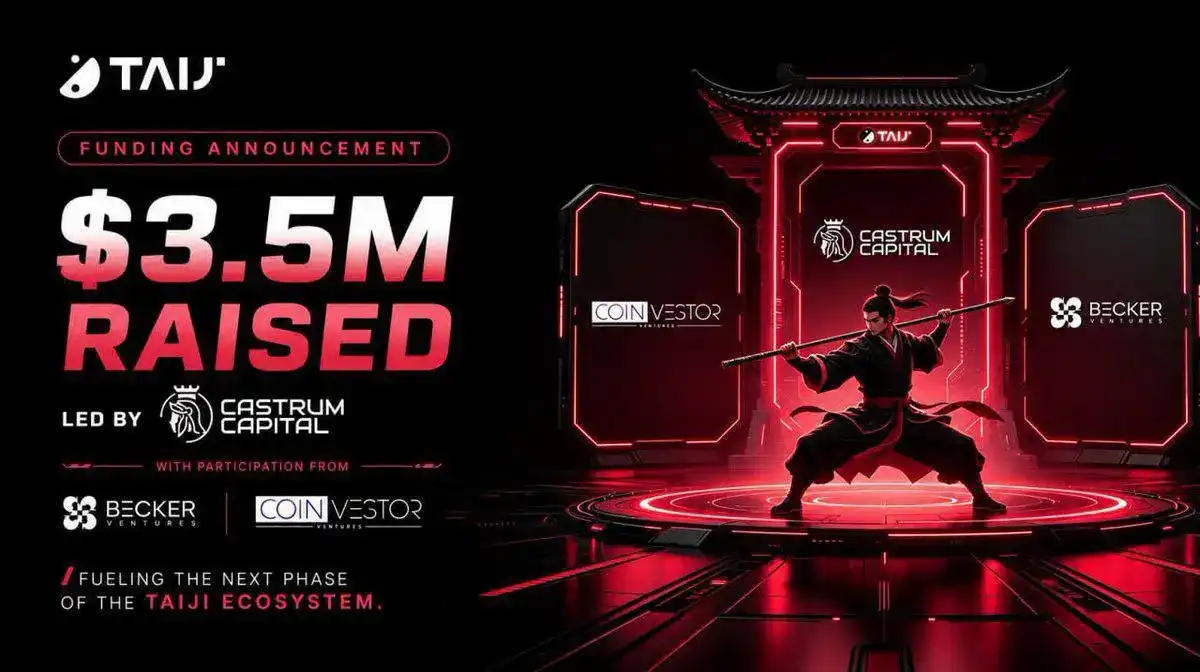
TaiJi Completes $3.5 Million Strategic Financing with Participation from Castrum Capital, Becker Ventures, and Coinvestor Ventures

TaiJi, an AI-driven market intelligence platform for Web3, has completed a $3.5 million strategic funding round. The investment was led by Castrum Capital, Becker Ventures, and Coinvestor Ventures. The funds will be allocated to product R&D, upgrading its AI inference engine, building a multi-agent analysis system, improving market data infrastructure, expanding its global community, and advancing ecosystem partnerships, particularly within the BSC ecosystem. TaiJi aims to transform how users understand the Web3 market by moving beyond simple data display. It integrates market data, on-chain signals, liquidity changes, social sentiment, and news events into a unified AI system. This system generates structured event inferences, impact pathways, risk assessments, and follow-up indicators. The platform's core approach involves a multi-agent framework where specialized agents (Market, On-chain, Sentiment, Risk, Event) collaboratively analyze disparate signals to produce coherent market intelligence. Its initial product will feature modules including Market Intelligence, a Scenario Engine for AI-powered event analysis, an Impact Map, Risk Signals, and a personalized user dashboard called "My TaiJi." TaiJi emphasizes that it does not custody user assets, execute trades, provide investment advice, or promise returns. Following this funding round, the company plans to accelerate product development and testing, gradually rolling out its core features to the broader Web3 market.

marsbit23 хв тому

TaiJi Completes $3.5 Million Strategic Financing with Participation from Castrum Capital, Becker Ventures, and Coinvestor Ventures

marsbit23 хв тому

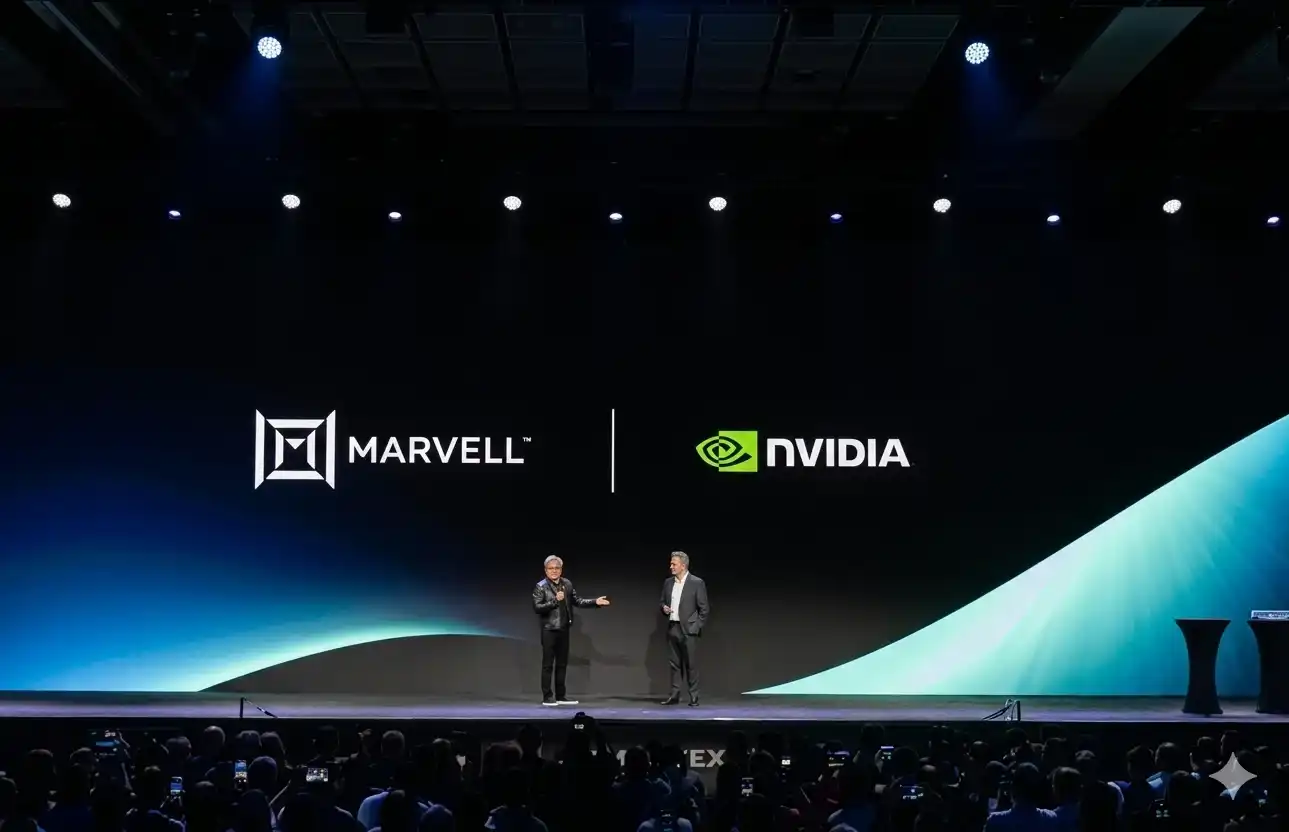
Huang Renxun and Marvell CEO Discuss on Stage: The Future of AI Competition is Not Computing Power but Connectivity, 'Use Copper Where You Can, Use Optics Only Where You Must'

Summary: At Computex 2024, NVIDIA CEO Jensen Huang joined Marvell CEO Matt Murphy on stage, highlighting the strategic partnership between their companies. The core theme was that the next decisive battleground for AI infrastructure is not compute or memory, but connectivity. As AI models evolve into vast agent-based systems, the ability to connect millions of processors efficiently is becoming the critical bottleneck. Huang announced NVIDIA's strategic $20 billion investment in Marvell, reflecting the deep integration between their technologies for AI data centers. A key discussion point was the transition from copper to optical interconnects within racks. The guiding principle, articulated by Huang, is: "You use optics wherever you must, you use copper wherever you can." While copper remains cost-effective for short distances, its physical limits are being reached as bandwidth demands double. When moving to 400Gbps, copper can no longer fully connect an entire rack. This shift necessitates innovations like Co-Packaged Optics (CPO), which integrates optical engines directly into the chip package to solve density and power challenges. Marvell demonstrated its 51.2T CPO-based switch, eliminating copper traces on the PCB. The future vision is a "distance-free data center," where optical connectivity removes physical constraints. This allows for fully disaggregated, dynamic architectures where compute, memory, and storage pools can be combined on-demand based on workload requirements, rather than being limited by connection boundaries. Marvell, positioned as a neutral "Switzerland" in the ecosystem with a comprehensive portfolio across all connectivity distances, is central to enabling this next era of AI infrastructure.

marsbit29 хв тому

Huang Renxun and Marvell CEO Discuss on Stage: The Future of AI Competition is Not Computing Power but Connectivity, 'Use Copper Where You Can, Use Optics Only Where You Must'

marsbit29 хв тому

Торгівля

Спот
Ф'ючерси
活动图片