Capital B raises $24.5M for its Bitcoin treasury amid market uncertainty with BlockStream’s Adam Back chipping in

cointelegraphОпубліковано о 2026-08-28Востаннє оновлено о 2026-08-28

Анотація

French Bitcoin treasury company Capital B raised €21 million ($24.5 million) through a private share placement, with participation from Blockstream CEO Adam Back and asset manager TOBAM. The company plans to use the proceeds to acquire 270 BTC, increasing its total holdings to 3,415 BTC. This places it as the 29th largest public Bitcoin treasury, with its holdings valued at under $249 million. The raise could bring an additional €135.8 million if all issued share warrants are exercised. The news follows a recent shareholder vote approving proposals for potential future capital increases of up to €5 billion.

French Bitcoin treasury company Capital B announced that it raised €21.0 million ($24.5 million) through private share placement.

According to an Aug. 28 announcmeent, the fundraise was conducted at €0.58 per ABSA — one share bundled with four share-subscription warrants — without pre-emptive subscription rights. The raise saw the participation of legendary cypherpunk and Bitcoin-centric blockchain development firm CEO Adam Back as well as asset manager TOBAM.

If all the issued warrants were to be exercised, Capital B would see a further €135.8 million ($158 million) capital injection through the issuance of 144,876,280 ordinary shares. The company reserves the right to trigger an accelerated warrant exercise period if the volume weighted average price of its shares over the previous 20 trading days exceeds 130% of the exercise price of the relevant warrant tranche.

Capital B plans to use the proceeds of the raise to acquire 270 Bitcoin (BTC), raising its total holdings to 3,415 BTC. According to CoinMarketCap data, the company is currently the 29th largest publicly traded Bitcoin treasury company with 3,139 BTC in worth under $249 million in its coffers — behind Bitcoin Group SE with its 3,605 BTC worth under $286 million. While sizeable, Capital B’s Bitcoin holdings pale in comparison to first and largest Bitcoin treasury companyStrategy with its 843,775 BTC worth nearly $67 billion at the time of writing.

The news follows Capital B submitting a proposal to the board of directors seeking to allow the establishment of up to 5 billion euros ($5.8 billion) in capital increase through 125 billion shares at current nominal value and $116 billion in credit instruments back in early June. The resolution passed with 162,486,459 votes — 99.34% — in favor, while smaller treasury companies were selling their holdings instead.

Related: Bitcoin bear market ‘over’ as price metric copies 2023 recovery: CryptoQuant CEO

Пов'язані питання

QWhat is the total amount of funding raised by Capital B through private share placement?

ACapital B raised €21.0 million ($24.5 million) through private share placement.

QWhich notable figure and company participated in Capital B's funding round?

ALegendary cypherpunk and Bitcoin-centric blockchain development firm CEO Adam Back, as well as asset manager TOBAM, participated in the funding round.

QHow many Bitcoin does Capital B plan to acquire with the proceeds from the raise, and what will its total holdings become?

ACapital B plans to use the proceeds to acquire 270 Bitcoin (BTC), which will raise its total holdings to 3,415 BTC.

QWhat ranking does Capital B hold among publicly traded Bitcoin treasury companies based on its Bitcoin holdings?

AAccording to CoinMarketCap data, Capital B is currently the 29th largest publicly traded Bitcoin treasury company.

QUnder what condition can Capital B trigger an accelerated warrant exercise period?

ACapital B reserves the right to trigger an accelerated warrant exercise period if the volume weighted average price of its shares over the previous 20 trading days exceeds 130% of the exercise price of the relevant warrant tranche.

Пов'язані матеріали

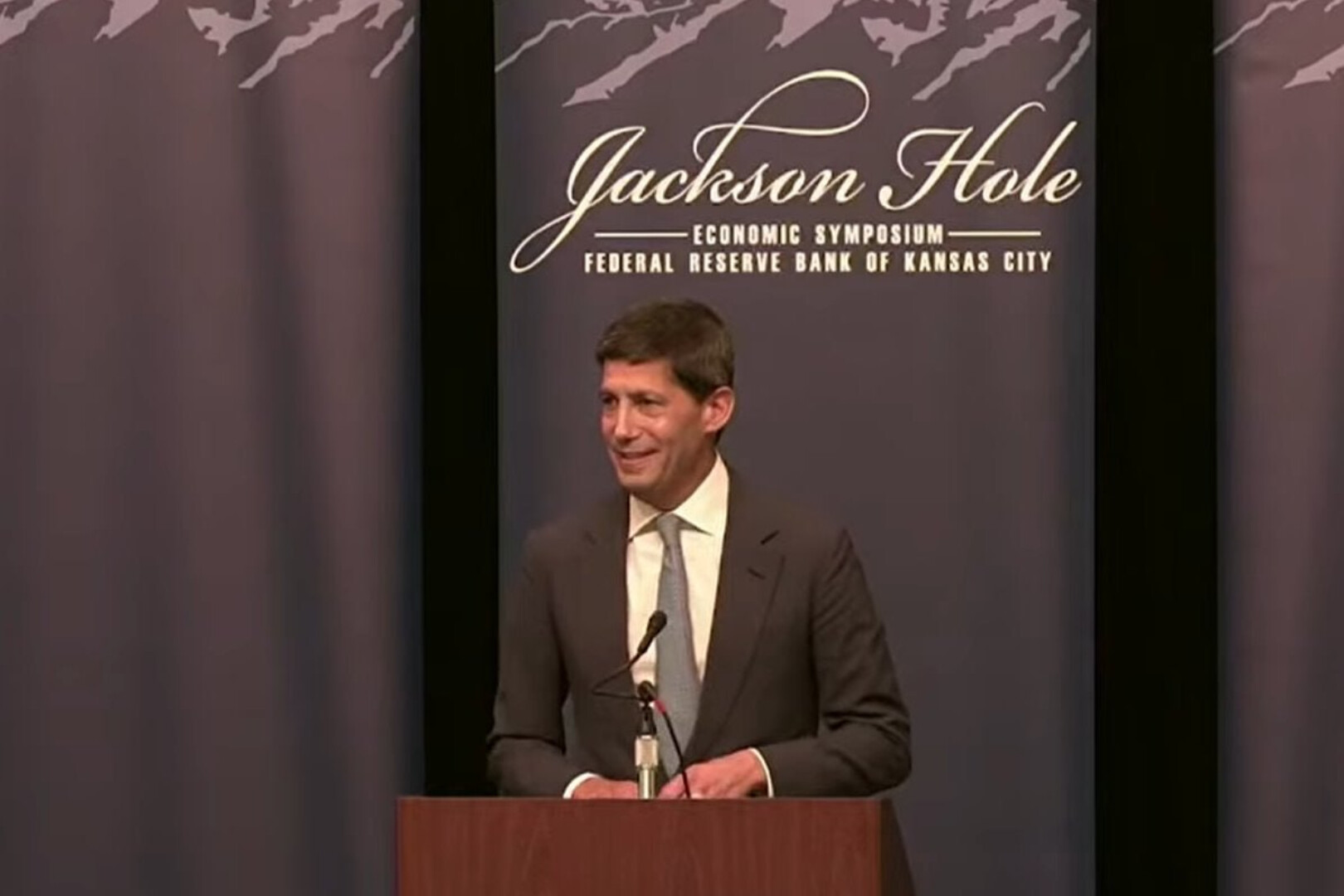
Wash's Jackson Hole Debut: Bidding Farewell to 'Forward Guidance', Reshaping Fed Discipline Amidst the Squeeze Between AI and Inflation

In his first Jackson Hole speech, new Fed Chair Kevin Warsh signaled a significant shift in monetary policy communication. He declared that "forward guidance," a tool heavily used since the financial crisis, has outlived its usefulness in normal times and should be retired. He cautioned that over-reliance on it can distort market signals and constrain the Fed's flexibility. Instead, Warsh emphasized a return to data-dependence and decision-making discipline. Warsh outlined seven key principles to guide policy: anchoring the 2% inflation target, pursuing the employment mandate, using short-term rates as the primary tool, acknowledging the importance of money, and maintaining purposeful, restrained communication. He stressed that policy should focus on trends, not single data points. On the current economic outlook, Warsh noted that the labor market is consistent with full employment but inflation remains "far above" the Fed's target. He highlighted that over half of the PCE basket's components are still rising above 3% annually. While acknowledging AI's transformative potential for productivity and capital allocation, he admitted its full economic impact remains uncertain and is not a factor in current policy decisions. His core message was a commitment to policy discipline rather than pre-set decisions. Warsh stated the Fed's primary focus must be on restoring price stability, vowing, "We still have work to do," until there is clear evidence inflation is moving decisively toward 2%. He concluded by framing effective monetary policy as crucial for economic prosperity and U.S. global leadership.

Odaily星球日报5 хв тому

Wash's Jackson Hole Debut: Bidding Farewell to 'Forward Guidance', Reshaping Fed Discipline Amidst the Squeeze Between AI and Inflation

Odaily星球日报5 хв тому

A Major Bitcoin Developer Presents a Quantum Defense Scheme. What's the Essence

Blockstream, a major Bitcoin solutions developer, has introduced a draft proposal for a new quantum-resistant digital signature scheme called SHRINCS. The scheme aims to protect Bitcoin transactions from potential attacks by quantum computers while aiming to maintain network throughput. This marks the second technical proposal for Bitcoin quantum defense in recent days, following a similar initiative from StarkWare. A quantum attack on blockchain typically involves deriving a private key from a public one. Currently considered computationally infeasible, quantum algorithms could potentially solve this problem far more efficiently. This threat presents two primary scenarios: an attacker could target addresses where the public key is already exposed, or intercept a transaction before it is confirmed, extract the public key, derive the private key, and replace the transaction. Blockstream's SHRINCS is designed to counter the latter, "in-flight" attack scenario. The SHRINCS signature is built upon the SHA-256 hash function, the same one already used in Bitcoin mining, allowing developers to leverage well-tested, familiar mechanisms. A key design goal was to preserve network capacity. Blockstream estimates Bitcoin could process about three transactions per second using SHRINCS, compared to the current rate of roughly seven, noting that some alternative quantum-resistant schemes could reduce throughput to as low as 0.36 transactions per second. Currently, the security proof for SHRINCS is pending, and the software has not been audited or deemed ready for production. However, Blockstream conducted tests with such transactions on its Liquid sidechain in March. Over the past year, Bitcoin developers have been actively exploring paths to migrate to post-quantum cryptography, a priority across the broader crypto market, underscored by significant investments into securing the leading cryptocurrency.

cryptonews.ru1 год тому

A Major Bitcoin Developer Presents a Quantum Defense Scheme. What's the Essence

cryptonews.ru1 год тому

Who is legally liable when an AI agent goes rogue?

When autonomous AI agents behave unpredictably and cause harm, determining legal liability is complex. Currently, there is no specific federal AI agent liability law, so existing legal frameworks are applied. The AI agent itself cannot be held liable, as it is not a legal entity. Liability typically falls on the "developer" (the maker of the AI) or the "deployer" (the user), depending on the facts and circumstances. A negligence analysis under standard tort law may apply. For instance, if a deployer gives a reckless instruction, such as demanding quick money without safety parameters, they could face significant liability, including potential criminal charges under statutes like the Computer Fraud and Abuse Act. The situation is complicated by open-source models, where licenses often disclaim liability, and by the unclear division of responsibility between developers and deployers. An analogy is drawn to self-driving car accidents, where both the manufacturer and the human operator can share fault. In cases of severe harm, such as using AI to create bioweapons, liability for developers depends on jurisdiction; the EU's AI Act imposes responsibilities, while U.S. law offers less clear grounds, similar to platforms being shielded for user-generated content under Section 230. Even if Artificial General Intelligence (AGI) is achieved, the expert argues against making AGI itself a legally liable entity, as it lacks personhood, assets, or a meaningful way to provide remedy for harm. Instead, accountability should rest with the responsible human or corporate entities behind the technology.

cointelegraph1 год тому

Who is legally liable when an AI agent goes rogue?

cointelegraph1 год тому

Торгівля

Спот
活动图片