Crypto urges SEC to see the good in blockchain privacy tools

cointelegraphОпубліковано о 2025-12-16Востаннє оновлено о 2025-12-16

Анотація

Crypto industry leaders urged the U.S. SEC to recognize the legitimate uses of blockchain privacy tools beyond criminal activity during a recent roundtable discussion. Participants argued that the assumption should be that these tools are used for good unless evidence suggests otherwise, rather than placing the burden on users to prove compliance. They highlighted that privacy-preserving technologies are essential for many lawful applications, including competitive business strategies and identity verification. Stablecoin adoption could increase if privacy features are integrated, according to industry executives. The discussion also addressed outdated KYC and AML measures, noting that AI and cryptographic solutions could improve security without unnecessarily compromising user privacy. SEC Chair Paul Atkins warned against excessive regulation that could turn crypto into a mass surveillance tool, emphasizing the need to balance deterring illicit activity with protecting Americans' privacy rights.

Crypto industry executives have urged the US Securities and Exchange Commission to shift its thinking on blockchain privacy tools, pitching that there are legitimate applications for them outside of criminal use.

The SEC hosted crypto and finance executives for a discussion and panel on financial surveillance and privacy on Monday, the agency’s sixth crypto-focused roundtable this year, as it seeks to overhaul its approach to crypto.

StarkWare general counsel Katherine Kirkpatrick Bos, who participated in a panel discussion, told Cointelegraph after the event that a major takeaway was that there shouldn’t be an assumption that those using and creating privacy tools are “overwhelmed by wrongdoers.”

“Why is the assumption that an individual needs to affirmatively prove that they are compliant or they’re using the tool for good?”

“As opposed to it being the other way around, where the assumption is that this individual is using the tool for good until there is some sort of indication that they’re using it for bad,” she said.

Kirkpatrick Bos added that “of course, wrongdoers were using, or are using those tools, but there needs to be a balance.”

Katherine Kirkpatrick Bos (left) discussing financial privacy at an SEC roundtable on Monday. Source: Paul Brigner

During the roundtable, Wayne Chang, the founder and CEO of the credential management company SpruceID, said some percentage of users of stablecoins, a crypto tool that is slowly becoming mainstream, will want privacy.

“There are a ton of stablecoins that aren’t onchain yet that would come onchain if there is privacy,” he said. “We’re going to see an increase in demand for privacy-preserving blockchains.”

“My hope is that regulators continue to engage industry, and we can have those discussions on how to keep privacy for folks while also having tools that are useful,” Chang said.

Customer checks are becoming outdated

Kirkpatrick Bos said a discussion on Know Your Customer (KYC) and Anti-Money Laundering (AML) measures focused on whether current rules are sufficient in the age of artificial intelligence.

“The question arose and was debated on the panel, well, what is necessary for Anti-Money Laundering?” she said. “Now we have AI. It’s made manual, AML and KYC antiquated. How do we solve for that?”

“There was a sense that the current system of AML and KYC is antiquated, it’s problematic, it’s ineffective,” she added. “But there needs to be some sort of check when it’s a centralized entity facilitating flows of money to ensure that they’re not helping wrongdoers.”

Many financial institutions request a picture of a user’s driver’s license for its KYC checks, which Kirkpatrick Bos said was “absurd, because an individual can go on the internet and develop a fake driver’s license in a matter of seconds.”

“So the question is, can cryptography-based tools improve that and make it harder for bad guys to do that? But can they also do that and make it harder for bad guys while preserving an individual’s privacy and not revealing data like an address, where it is not necessary to vet the legality of the funds?” she added.

Some projects have begun to test crypto-based solutions for proving identity while claiming to preserve privacy, such as Sam Altman’s World, which gives users a cryptographic key they can use to prove they’re human.

SEC’s Atkins warns of potential for crypto mass surveillance

SEC chair Paul Atkins had given opening remarks at the roundtable, warning that if “pushed in the wrong direction, crypto could become the most powerful financial surveillance architecture ever invented.”

“If the instinct of the government is to treat every wallet like a broker, every piece of software as an exchange, every transaction as a reportable event, and every protocol as a convenient surveillance node, then the government will transform this ecosystem into a financial panopticon,” he added.

Related: SEC ’eased up on’ 60% of crypto enforcement cases under Trump: Report

Atkins said that crypto allows for “privacy-preserving tools that the analog world could not provide,” which some institutions depend on to build positions or test strategies without “instantly telegraphing that activity to competitors.”

He added that some of the technology could balance the government’s interest in deterring security threats and the public’s privacy.

“But to best strike this balance, we must make certain that Americans can use these tools without immediately falling under suspicion.”

Magazine: 2026 is the year of pragmatic privacy in crypto — Canton, Zcash and more
Пов'язані матеріали

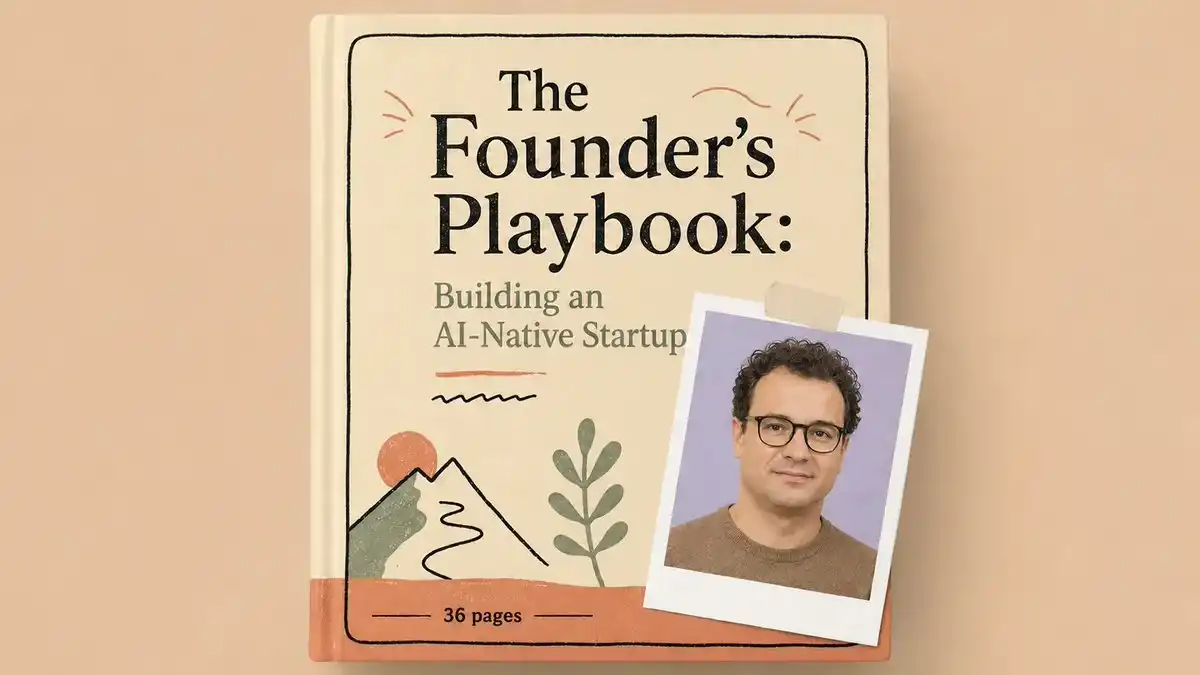
Anthropic Major Release: "The Founder's Playbook" - All 4 Stages of Entrepreneurship, Completely Reimagined with AI

**Anthropic Releases "The Founder's Playbook," Reimagining the Four Stages of Startups with AI** The logic of entrepreneurship is being fundamentally reshaped by AI. Anthropic's new handbook, "The Founder's Playbook: Building an AI-Native Startup," defines the AI-native startup as a new species: not a traditional company with AI tools, but a venture driven by AI from day one. The founder's role is transforming from a hands-on builder to a conductor or architect, orchestrating AI agents for execution while focusing on high-level judgment and strategy. Anthropic outlines a product matrix of Claude tools for different tasks: Claude Chat for interactive research, Claude Code for generating production-ready code, and Claude Cowork for automating knowledge-intensive workflows. The handbook structures the startup lifecycle into four stages, detailing core goals, pitfalls, and AI applications for each: 1. **Idea Stage**: Focuses on validating a real problem. The core challenge is avoiding confirmation bias. AI practices include using Claude as a "structured devil's advocate" to challenge assumptions and for automated market/competitor research. 2. **MVP Stage**: Aims to gather early signals of Product-Market Fit (PMF). Key risks are technical debt and scope creep due to rapid AI-assisted development. Recommended AI uses include maintaining project memory documents (e.g., CLAUDE.md), using Claude Code for structured coding, and automating user feedback analysis. 3. **Launch Stage**: Centers on establishing scalable growth, operations, and compliance. Challenges include accelerating technical debt and founders becoming bottlenecks. AI should be used to build an "operating system" for launch—automating routine tasks (scheduling, reporting, content) and code audits—freeing founders for critical decisions. 4. **Scale Stage**: Focuses on achieving sustainable business operations. The main challenge is delegating operational control. AI should be leveraged for differentiated marketing, operational optimization, and building competitive moats through data network effects. The handbook concludes that in the AI era, "Can we build it?" is no longer the primary constraint. The advantage shifts back to foundational strengths: **insight, judgment, and a deep understanding of a specific problem and audience.**

marsbit1 год тому

Anthropic Major Release: "The Founder's Playbook" - All 4 Stages of Entrepreneurship, Completely Reimagined with AI

marsbit1 год тому

Eight Departments Launch Severe Crackdown on Cross-Border Securities Firms, How to Interpret This?

China's top financial regulators, including the CSRC and seven other ministries, have launched a sweeping crackdown on unlicensed cross-border securities operations. The core action involves a joint enforcement plan and the issuance of administrative penalties against major offshore internet brokers like Futu and Tiger Brokers for conducting unauthorized securities business in mainland China without a domestic license. The primary legal basis is China's requirement for securities businesses to operate with proper, locally issued licenses. The crackdown aims to eliminate a major regulatory gray area, plugging channels that allowed massive, unmonitored capital outflows which posed risks to financial stability, currency controls, and foreign exchange reserves. It also seeks to protect mainland investors who previously lacked legal recourse when dealing with offshore platforms and to secure sensitive financial data. The immediate impact is severe for the targeted brokers, including a complete ban on new mainland business, forced liquidation of existing mainland client positions over two years, and the confiscation of illegal profits estimated in the billions. Their U.S.-listed shares plummeted in response. Market analysts warn that the forced sell-off of an estimated 250-280 billion RMB in assets, concentrated in U.S. tech stocks, Chinese ADRs, and Hong Kong equities, could create sustained selling pressure on these markets over the next two years, potentially lowering valuations. For mainland investors, legal cross-border investment channels will become extremely constrained. The high asset threshold for the Stock Connect program and the severe shortage of QDII fund quotas—leading to chronic high premiums on popular U.S.-focused ETFs—mean retail access to overseas markets like the U.S. will be sharply limited. Conversely, some of the returning capital may flow into domestic A-share sectors like AI, semiconductors, and advanced manufacturing. However, this could further inflate valuations in these already elevated sectors. In conclusion, regulators frame this move not as closing off cross-border investment, but as a necessary step to enforce compliance, manage systemic risk, and steer investors toward regulated, protected channels like QDII and Stock Connect for the long-term health of the financial system.

链捕手1 год тому

Eight Departments Launch Severe Crackdown on Cross-Border Securities Firms, How to Interpret This?

链捕手1 год тому

Торгівля

Спот
Ф'ючерси
活动图片