DeepSeek's Next Battlefield: The War Quietly Begins in This Fifth-Tier City

marsbitОпубліковано о 2026-08-11Востаннє оновлено о 2026-08-11

Анотація

DeepSeek and other major AI players are quietly shifting their battle for supremacy to the infrastructure front, with Wulanchabu, a small city in Inner Mongolia, emerging as a key battleground. The article details a visit to the massive data center clusters there, highlighting the industry's pivot from a light-asset model of renting computing power to a strategic race to build and control foundational AI infrastructure. Wulanchabu's advantages—low electricity costs (around ¥0.32-0.35 per kWh, 90% green energy), cool climate, and proximity to Beijing—have made it China's largest AI computing cluster. Companies like Alibaba Cloud are deploying modular, prefabricated data center "cabins" that can be assembled on-site in as little as 100 days, dramatically accelerating deployment compared to traditional multi-year construction. This "new Foxconn" model standardizes components for mass production. The drive for efficiency is paramount. Alibaba’s latest architecture flattens design, integrating power distribution, backup batteries, and liquid-cooled server racks into single modules. The ultimate bottleneck is power. As AI training and, increasingly, inference demand skyrocket, electricity cost and availability become decisive competitive factors. The industry faces the challenge of aligning fast-paced computing demand with slower power grid planning. DeepSeek's significant investment in building its own computing center in Wulanchabu underscores this trend: securing large-scale,...

After passing through multiple security checks and having phone camera lenses covered with privacy film, Phoenix Network Technology entered this data center located in Ulanqab, Inner Mongolia. This facility supports the large-scale intelligent computing operations of cloud providers and AI companies, serving as a microcosm of China's AI industry's struggle for computing infrastructure.

Contrary to expectations of dusty scenes, a low, deep hum filled the air—the sound of chilled air roaring through the containerized modules. Orange-and-white massive box-like structures stood in orderly rows, awaiting the insertion of computing cards.

"It can be said that today, not a single card is idle. Delivery translates directly to productivity; faster delivery enables greater customer value," explained Wang Chaoyang, General Manager of Alibaba Cloud Global Data Centers, to us.

Since the beginning of this year, as AI newcomers like DeepSeek have announced plans to build or co-build their own data centers, the industry has been quietly shifting from the light-asset model of "renting space, buying computing power" towards gaining deeper control over the computing power foundation. The corporate logic has also evolved from simply purchasing cards to stockpiling strategic assets, with ten thousand or even a hundred thousand cards becoming the starting threshold.

Ulanqab has thus become a key battleground for AI giants vying for computing power dominance. From self-built data centers with self-developed equipment to modular "containerized" solutions achieving rapid 100-day delivery in leased facilities, a "new Foxconn" model for the AI era is emerging.

Visiting Ulanqab: What's Inside an Intelligent Computing Center?

Ulanqab, a grassland city in central Inner Mongolia with an annual average temperature of just 4.3 degrees Celsius, entered the AI industry's spotlight in mid-year following a recruitment notice from DeepSeek.

Historically known as the "Potato Capital of China," Ulanqab introduced Huawei in 2013 to build its first cloud data center as the mobile internet era dawned, officially kicking off the big data epoch. In the subsequent years, the rise and fall of the internet unfolded here silently in symbols unreadable by humans, with Huawei, Alibaba, Apple, Kuaishou, 21Vianet, and GDS successively establishing a presence.

According to local government data, by the end of 2025, Ulanqab had signed 84 data center projects, 81 of which are intelligent computing centers, with total investments exceeding 500 billion yuan.

In 2026, a new protagonist arrived. DeepSeek began large-scale recruitment for its intelligent computing center in Ulanqab, planning to build an ultra-large intelligent computing center with a total power capacity of 1 Gigawatt (GW) there, simultaneously hiring IDC design and planning engineers.

Following the industry's collective gaze, the veil was lifted on a massive intelligent computing center cluster originally hidden on the grasslands. Phoenix Network Technology also arrived in Ulanqab this August.

"One step west from Beijing, and you're in Ulanqab." Exiting the high-speed rail station, besides the refreshing cool air, eye-catching red promotional banners were visible.

Situated 350 km from Beijing, reachable by high-speed rail in under two hours, with network latency as low as 4 milliseconds, a cool climate year-round, strong winds, dry air, and located away from seismic zones... Most importantly, it's a "price trough" for electricity, with green power accounting for 90% of its supply and electricity prices at 0.32-0.35 yuan per kWh—hosting the same data center in Ulanqab could save 5 billion yuan in annual electricity costs compared to a neighboring city.

With these combined advantages, Ulanqab has become the nation's largest intelligent computing cluster, surpassing all Eastern Data to Western Computing nodes, transforming into a true "City of Tokens."

Alibaba Cloud's data center campus is also in Ulanqab. Here, there is not only a data center Alibaba built years ago but also a newly constructed 5.0 containerized data center delivered in just 100 days using modular design—the latter now handles 80% of Alibaba Cloud's intelligent computing business.

Left: The top of the Alibaba data center office building, featuring a 'Mongolian yurt'-style structure for insulation; Right: Exterior view of the data center.

Here, we discovered that data center construction isn't just about "building houses." Like DeepSeek hiring IDC design and planning engineers, it's full of intricacies. For instance, Alibaba's self-built 2.0 architecture data center in Ulanqab represents the pinnacle of the previous generation's technology. To save power, Alibaba trialed its self-developed Panama Power Supply here, drastically compressing the power transformation process. To conserve water, the data center employs a closed-loop system, even utilizing server-generated heat to warm equipment rooms in winter.

In the power distribution room, our guide explained, "In traditional data centers, the first floor is all infrastructure, with servers on the second. But in our new 5.0 architecture, everything has been 'flattened.'"

This "flattening" essentially means "transforming construction into manufacturing, replacing projects with products," Wang Chaoyang clarified. Everything from the 10kV medium-voltage power distribution and the self-developed Panama Power Supply to lithium battery backup and liquid-cooled IT cabinets is prefabricated inside the containers. On-site, it's merely about positioning the containers like Lego blocks and connecting the cables.

"In the past, building a data center required thousands of workers on site. Now, it's a team of cranes positioning the containers. Our record is from breaking ground on a new building to delivery in four and a half months." The guide revealed that while currently constrained by pulsed shortages of upstream raw materials and components—making the ideal 100-day timeline with "30 days of prefabrication" sometimes difficult to hit perfectly—the assembly phase has been optimized to the extreme.

DeepSeek Joins the Fray, Competing for Computing Infrastructure

In recent years, competition among large model companies has focused on algorithms, data, and model parameters.

But entering the era of ten-thousand or even hundred-thousand-card training, computing power has transformed from a "procured resource" into a strategic asset determining a company's survival.

DeepSeek's heavy investment is a microcosm of this trend. A harsh reality faces all AI race contenders: readily available computing power facilities on the market have long been snapped up. Traditional construction cycles of 12 months or more simply cannot keep pace with the exponential explosion in Token demand. In the context of an AI demand boom, whoever can more quickly secure a large-scale, high-density, low-cost, dedicated computing power foundation holds the ticket to the next round of competition.

Moreover, the rise of Agents has led to an explosive growth in inference demand as well. According to China's National Bureau of Statistics, the national daily Token call volume surpassed 140 trillion in March 2026. This necessitates an even larger scale of data center construction.

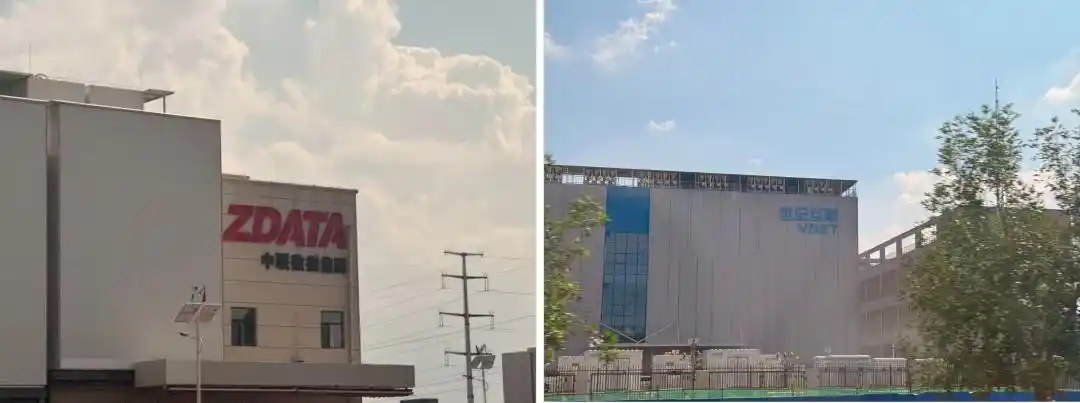
The massive Token demand has led to data centers springing up everywhere. Phoenix Network Technology witnessed numerous projects under construction in Ulanqab. In areas like Yiwutang, Bayin, and Chayou Qianqi, besides internet companies like Huawei, Kuaishou, and Alibaba, third-party data service providers like 21Vianet and Zhongjin Data occupy even larger plots.
How to make Tokens operate more efficiently has become a new competitive focus in the AI era.

Wang Chaoyang recalled significant internal opposition when the modular solution was first proposed, deemed too costly. "But once a product iterates and optimizes, costs will inevitably come down." Resistance persisted when seeking partners. "One partner disagreed, saying the cost was too high. Upon review, we found they had overestimated the cost per kilowatt by more than one-third. They later regretted it deeply; they had miscalculated." Wang stated that many partners have now fully accepted the approach.

What made him more aware of the industry shift was the reaction from competitors. "One of our biggest competitors spent three months internally learning it. Hearing we were developing the next architecture made them very nervous. Other partners are also asking when our new standard will be released." Not just domestically; overseas operators are following suit. In his view, this solution has evolved from Alibaba's own exploration into a path the industry is collectively adopting.

Alibaba Cloud has even more ambitious plans for data center construction—"to become the Foxconn of this industry." Through an ODM model, they aim for the supply chain to engage in large-scale manufacturing according to Alibaba's self-developed standards.

Inside the containers, even a power supply module is highly standardized. The guide used the on-site air conditioning as an example: "The market predominantly offers AC air conditioning, but AC to DC conversion incurs losses. Alibaba specifically commissioned a smaller manufacturer to customize DC air conditioning for this architecture." Wang Chaoyang later added that within this modular solution, "each module has undergone optimal debugging," and China's supply chain can fully keep up. "Wherever we want to build in a major base, these manufacturers are willing to follow us and set up local factories."

Wang Chaoyang emphasized that modularization is useless if not achieving over 90%. "If only 30% or 20% is modularized, it only solves part of the product issue. First, it doesn't address overall cost problems; second, it certainly doesn't solve overall delivery timeline issues." He also acknowledged the practical challenge of modularization: "once internally finalized, it's hard to change. Fortunately, we can now continuously iterate. Behind modularization must be versioning and standardization."

This capability to turn data centers into "standard products" could also stir the landscape of the US-China AI race. Wang Chaoyang further mentioned that China's manufacturing capacity is "frightening"; finding a few enterprises in Zhejiang can produce these containerized data centers. In contrast, facing widespread shortages of skilled labor overseas and delivery cycles stretching to 30 months, leveraging modular products from China's supply chain would present a crushing advantage. "When performance catches up with competitors, our Token cost will undoubtedly be at a killer level."

The Ultimate Limit of AI is Electricity

The ultimate limit of computing power is electricity. All efforts toward extreme efficiency and cost control ultimately point to electricity.

"For the same data center, locating it in Ulanqab versus a neighboring city can result in a 50 billion yuan difference in annual electricity costs," said Wang Chaoyang. When data center scales are over ten times larger than before, with single cabinet power heading towards 1000 kilowatts (equivalent to the heat emitted by over ten thousand people), electricity price becomes the sole critical factor besides chips.

However, cheap electricity isn't simply waited for. As AI enters the era of inference explosion, computing power demand presents a "two-way flow"—training workloads head west in a "three-level depth" pursuit of low-cost green power, while inference workloads move east in a "three-level下沉" (sinking) to be closer to economic hubs.

This encounters the current biggest pain point: computing-power-electricity coordination. Wang Chaoyang observed that many current so-called source-grid-load-storage initiatives are essentially for new energy consumption, not genuine computing power coordination. "Electricity delivery takes three to five years, but our computing power delivery is compressed to 100 days. When Tokens are experiencing quasi-exponential explosion, planning coordination is crucial."

Caption: Construction sites are everywhere.

He judges that the gap between current planned scale and actual demand is so significant that it will force the industry to develop explosive solutions within two years. "Power companies are excited but unsure how to participate. Future data centers cannot be rigid loads; they must become flexible, self-regulating systems, allowing computing power to adapt to electricity supply, achieving dynamic balance."

To find balance in water-scarce Inner Mongolia, Alibaba is also relentlessly tackling water usage. In Ulanqab, data centers exclusively use reclaimed water, with benchmark projects achieving a Water Usage Effectiveness (WUE) as low as 0.088, almost negligible water consumption. Wang Chaoyang admitted: "Using more water can save electricity, and low water pricing leads manufacturers to prefer water cooling. But when building ultra-large clusters, social costs must be considered, finding that微妙 (subtle)临界点 (critical point) between optimal cost and greenness."

From the "Potato Capital" to "China's Computing Power Capital," Ulanqab is witnessing a frenzied advance in computing infrastructure. As Alibaba Cloud and others transform data centers from "civil engineering projects" into "products" mass-producible on factory assembly lines, and as new players like DeepSeek also begin building their own computing power foundations along this path, a new paradigm for AI infrastructure, supported by Chinese manufacturing, is emerging.

Inside those orange-and-white containers on the grasslands, Tokens are being produced 24/7. The next chapter of this computing power surge may well be the true arrival of AI普惠 (inclusiveness/accessibility) when these "Chinese solutions" flow globally along the supply chain.

This article is from the WeChat public account "Phoenix Network Technology," author: Phoenix Network Technology.


Трендові криптовалюти

Пов'язані питання

QAccording to the article, why has Ulanqab become a key battleground for AI giants competing in computing power infrastructure?

AUlanqab has become a key battleground due to its combination of advantages: proximity to Beijing (350 km, ~2 hours by high-speed rail with 4ms latency), low average annual temperature (4.3°C), high green electricity ratio (90%), and extremely low electricity prices (0.32-0.35 RMB/kWh), saving up to 5 billion RMB in annual electricity costs compared to neighboring cities for similar data centers.

QWhat is the core innovation behind Alibaba Cloud's new 5.0 data center architecture described in the article?

AThe core innovation is the 'flattened' modular 'cabin' design. It transforms data center construction from an on-site engineering project into a factory-produced product. Prefabricated cabins containing medium-voltage power distribution, self-developed Panama power supplies, lithium battery backup, and liquid-cooled IT cabinets are delivered to the site. They are then simply hoisted into place and connected, drastically reducing construction time from years to a target of 100 days.

QWhat major shift in strategy for AI companies does the article highlight, using DeepSeek as an example?

AThe article highlights a strategic shift from a light-asset model of 'renting data center space and buying computing power' to deeply controlling the computing power infrastructure itself. Companies like DeepSeek are moving towards building or co-building their own large-scale data centers, treating computing power as a strategic asset to be stockpiled, with thresholds starting at tens of thousands or even hundreds of thousands of GPUs.

QWhat challenge related to power supply does Alibaba Cloud's Wang Zhaoyang identify for the future of large-scale AI computing clusters?

AHe identifies the challenge of 'computing-power coordination.' The delivery timeline for new power infrastructure is often 3-5 years, while modular data center delivery can be compressed to 100 days. This creates a significant planning gap as token demand grows explosively. He argues future data centers must evolve from being rigid power loads to becoming flexible, self-adaptive systems that dynamically balance computing tasks with the available power supply.

QWhat broader industry role does Alibaba Cloud envision for itself through its modular data center approach, according to the article?

AAlibaba Cloud envisions itself becoming the 'Foxconn of the industry.' It aims to use an ODM (Original Design Manufacturer) model, where the supply chain mass-produces data center modules according to Alibaba's self-developed standards. This 'productization' and standardization of data centers could leverage China's manufacturing capacity for a competitive advantage, potentially influencing the global AI infrastructure landscape.

Пов'язані матеріали

Trading Volume Halved: Korea's Two Major Crypto Exchanges Launch Listing Wars

As South Korea's stock market cools from its peak summer performance, leading cryptocurrency exchanges Upbit and Bithumb are intensifying their competition to list new digital assets. Following a significant slump in crypto trading volume during the first half of 2025—with total volume across five major KRW-based exchanges falling nearly 50% year-on-year as capital flooded into equities—the two exchanges have sharply increased their listing pace since July. In just over a month, both Upbit and Bithumb have each added 17 new KRW-trading pairs, far exceeding their average of 6-10 listings per month earlier in the year. This acceleration coincides with a decline in the Korean Composite Stock Price Index's (KOSPI) daily trading volume and a reduction in the proportion of retail investor participation in stocks. Analysts suggest that with the stock market's "wealth effect" diminishing, crypto exchanges are now competing more aggressively for the limited attention and risk capital of local retail investors. The newly listed assets are already contributing significantly to trading activity on the platforms. On Upbit, for example, several coins listed since July now rank among its top-traded assets by volume, collectively accounting for nearly 20% of its 24-hour trading volume recently. However, this surge in new listings appears to be primarily redistracting existing capital within the shrunken crypto market rather than attracting substantial new inflows. Consequently, the strategies of the two dominant exchanges, which together control about 96% of the KRW crypto trading market, are becoming increasingly similar, with both rushing to list the same trending assets to prevent the other from capturing all available trading demand.

marsbit18 хв тому

Trading Volume Halved: Korea's Two Major Crypto Exchanges Launch Listing Wars

marsbit18 хв тому

Behind a 26-Year-Old Hong Kong Trader's $150 Million Loss: A South Korean Stock Market 'Great Escape'

In 2026, the South Korean stock market, propelled by the AI boom's demand for high-performance memory chips, witnessed a dramatic rally and subsequent crash, illustrating the perils of excessive leverage, structural market flaws, and retail investor frenzy. The initial surge was driven by soaring share prices of memory giants Samsung Electronics and SK Hynix. This "once-in-a-lifetime" wealth creation story captivated local Korean retail investors, many of whom invested heavily using leverage, and attracted global capital through products like Hong Kong-listed leveraged ETFs. However, the market's heavy reliance on these two stocks and widespread leverage created systemic fragility. The turning point came in June 2026. A series of circuit-breaker halts triggered a vicious cycle of forced liquidations, leading to a steep market plunge. The collapse erased fortunes, leaving many leveraged retail investors in debt. It also exposed a high-profile case in Hong Kong where a 26-year-old trader, using unauthorized company funds and double leverage on a SK Hynix ETF, incurred massive losses of HKD 150 million. Analysis points to key factors behind the extreme volatility: the overwhelming dominance of two stocks in the KOSPI index, a culture of rampant retail leverage, and a fundamental mispricing where investors treated cyclical semiconductor stocks as perpetual growth stories. As the market entered a volatile consolidation phase, seasoned investors emphasized core risk management principles: avoiding leverage, understanding industry cycles, maintaining a margin of safety, and being wary of extreme market consensus. The episode serves as a stark reminder that high returns are inextricably linked to high risk, especially when amplified by leverage.

marsbit28 хв тому

Behind a 26-Year-Old Hong Kong Trader's $150 Million Loss: A South Korean Stock Market 'Great Escape'

marsbit28 хв тому

Торгівля

Спот

Популярні статті

Що таке $S$

Розуміння SPERO: Комплексний огляд Вступ до SPERO Оскільки ландшафт інновацій продовжує еволюціонувати, виникнення технологій web3 та криптовалютних проектів відіграє ключову роль у формуванні цифрового майбутнього. Один з проектів, який привернув увагу в цій динамічній сфері, — це SPERO, позначений як SPERO,$$s$. Ця стаття має на меті зібрати та представити детальну інформацію про SPERO, щоб допомогти ентузіастам та інвесторам зрозуміти його основи, цілі та інновації в рамках web3 та крипто-сектору. Що таке SPERO,$$s$? SPERO,$$s$ — це унікальний проект у криптопросторі, який прагне використати принципи децентралізації та технології блокчейн для створення екосистеми, що сприяє залученню, корисності та фінансовій інклюзії. Проект розроблений для полегшення взаємодії між користувачами новими способами, надаючи їм інноваційні фінансові рішення та послуги. У своїй основі SPERO,$$s$ прагне надати можливості індивідам, забезпечуючи інструменти та платформи, які покращують користувацький досвід у криптовалютному просторі. Це включає в себе можливість більш гнучких методів транзакцій, сприяння ініціативам, що підтримуються спільнотою, та створення шляхів для фінансових можливостей через децентралізовані додатки (dApps). Основна концепція SPERO,$$s$ обертається навколо інклюзивності, прагнучи зменшити розриви в традиційній фінансовій системі, використовуючи переваги технології блокчейн. Хто є творцем SPERO,$$s$? Особистість творця SPERO,$$s$ залишається дещо невідомою, оскільки є обмежені публічно доступні ресурси, що надають детальну інформацію про його засновників. Ця відсутність прозорості може бути наслідком зобов'язання проекту до децентралізації — етики, яку багато проектів web3 поділяють, ставлячи колективні внески вище за індивідуальне визнання. Зосереджуючи обговорення навколо спільноти та її колективних цілей, SPERO,$$s$ втілює суть наділення без виділення конкретних осіб. Таким чином, розуміння етики та місії SPERO є більш важливим, ніж ідентифікація єдиного творця. Хто є інвесторами SPERO,$$s$? SPERO,$$s$ підтримується різноманітними інвесторами, починаючи від венчурних капіталістів до ангельських інвесторів, які прагнуть сприяти інноваціям у крипто-секторі. Зосередження цих інвесторів зазвичай узгоджується з місією SPERO — пріоритет надається проектам, які обіцяють технологічний прогрес у суспільстві, фінансову інклюзію та децентралізоване управління. Ці інвесторські фонди зазвичай зацікавлені в проектах, які не лише пропонують інноваційні продукти, але й позитивно впливають на спільноту блокчейн та її екосистеми. Підтримка з боку цих інвесторів підкріплює SPERO,$$s$ як значного конкурента в швидко змінюваній сфері крипто-проектів. Як працює SPERO,$$s$? SPERO,$$s$ використовує багатогранну структуру, яка відрізняє його від традиційних криптовалютних проектів. Ось деякі ключові особливості, які підкреслюють його унікальність та інноваційність: Децентралізоване управління: SPERO,$$s$ інтегрує моделі децентралізованого управління, надаючи користувачам можливість активно брати участь у процесах прийняття рішень щодо майбутнього проекту. Цей підхід сприяє відчуттю власності та відповідальності серед членів спільноти. Корисність токена: SPERO,$$s$ використовує свій власний криптовалютний токен, розроблений для виконання різних функцій в екосистемі. Ці токени дозволяють здійснювати транзакції, отримувати винагороди та полегшувати послуги, що пропонуються на платформі, підвищуючи загальну залученість та корисність. Шарова архітектура: Технічна архітектура SPERO,$$s$ підтримує модульність та масштабованість, що дозволяє безперешкодно інтегрувати додаткові функції та додатки в міру розвитку проекту. Ця адаптивність є надзвичайно важливою для збереження актуальності в постійно змінюваному крипто-ландшафті. Залучення спільноти: Проект підкреслює ініціативи, що підтримуються спільнотою, використовуючи механізми, які стимулюють співпрацю та зворотний зв'язок. Підтримуючи сильну спільноту, SPERO,$$s$ може краще задовольняти потреби користувачів та адаптуватися до ринкових тенденцій. Фокус на інклюзію: Пропонуючи низькі комісії за транзакції та зручні інтерфейси, SPERO,$$s$ прагне залучити різноманітну базу користувачів, включаючи осіб, які раніше не брали участі в крипто-просторі. Це зобов'язання до інклюзії узгоджується з його загальною місією наділення через доступність. Хронологія SPERO,$$s$ Розуміння історії проекту надає важливі уявлення про його розвиток та етапи. Нижче наведено пропоновану хронологію, що відображає значні події в еволюції SPERO,$$s$: Етап концептуалізації та ідеації: Початкові ідеї, що стали основою SPERO,$$s$, були сформовані, тісно пов'язані з принципами децентралізації та фокусом на спільноті в індустрії блокчейн. Запуск білого паперу проекту: Після концептуального етапу був випущений комплексний білий папір, що детально описує бачення, цілі та технологічну інфраструктуру SPERO,$$s$, щоб залучити інтерес та зворотний зв'язок від спільноти. Створення спільноти та ранні залучення: Активні зусилля були спрямовані на створення спільноти ранніх прихильників та потенційних інвесторів, що полегшило обговорення цілей проекту та отримання підтримки. Подія генерації токенів: SPERO,$$s$ провів подію генерації токенів (TGE) для розподілу своїх рідних токенів серед ранніх прихильників та встановлення початкової ліквідності в екосистемі. Запуск початкового dApp: Перший децентралізований додаток (dApp), пов'язаний з SPERO,$$s$, став доступним, дозволяючи користувачам взаємодіяти з основними функціями платформи. Постійний розвиток та партнерства: Безперервні оновлення та вдосконалення пропозицій проекту, включаючи стратегічні партнерства з іншими учасниками блокчейн-простору, сформували SPERO,$$s$ у конкурентоспроможного та еволюціонуючого гравця на крипто-ринку. Висновок SPERO,$$s$ є свідченням потенціалу web3 та криптовалют для революціонізації фінансових систем та наділення індивідів. Завдяки зобов'язанню до децентралізованого управління, залучення спільноти та інноваційно спроектованих функцій, він прокладає шлях до більш інклюзивного фінансового ландшафту. Як і з будь-якими інвестиціями в швидко змінюваному крипто-просторі, потенційним інвесторам та користувачам рекомендується ретельно досліджувати та обдумано взаємодіяти з поточними подіями в SPERO,$$s$. Проект демонструє інноваційний дух крипто-індустрії, запрошуючи до подальшого дослідження його численних можливостей. Хоча подорож SPERO,$$s$ ще триває, його основні принципи можуть справді вплинути на майбутнє того, як ми взаємодіємо з технологією, фінансами та один з одним у взаємопов'язаних цифрових екосистемах.

283 переглядів усьогоОпубліковано 2024.12.17Оновлено 2024.12.17

Що таке $S$

Що таке AGENT S

Агент S: Майбутнє автономної взаємодії в Web3 Вступ У постійно змінюваному ландшафті Web3 та криптовалюти інновації постійно переосмислюють, як люди взаємодіють з цифровими платформами. Один з таких новаторських проектів, Агент S, обіцяє революціонізувати взаємодію людини з комп'ютером через свою відкриту агентну структуру. Прокладаючи шлях для автономних взаємодій, Агент S прагне спростити складні завдання, пропонуючи трансформаційні застосування в штучному інтелекті (ШІ). Це детальне дослідження заглиблюється в складності проекту, його унікальні особливості та наслідки для сфери криптовалюти. Що таке Агент S? Агент S є революційною відкритою агентною структурою, спеціально розробленою для вирішення трьох основних викликів в автоматизації комп'ютерних завдань: Набуття специфічних знань у галузі: Структура інтелектуально навчається з різних зовнішніх джерел знань та внутрішнього досвіду. Цей подвійний підхід дозволяє їй створити багатий репозиторій специфічних знань у галузі, покращуючи її продуктивність у виконанні завдань. Планування на довгих горизонтах завдань: Агент S використовує планування з підкріпленням досвіду, стратегічний підхід, який полегшує ефективний розподіл та виконання складних завдань. Ця функція значно підвищує її здатність ефективно та результативно управляти кількома підзавданнями. Обробка динамічних, неоднорідних інтерфейсів: Проект представляє Інтерфейс Агент-Комп'ютер (ACI), інноваційне рішення, яке покращує взаємодію між агентами та користувачами. Використовуючи багатомодальні великі мовні моделі (MLLMs), Агент S може безперешкодно орієнтуватися та маніпулювати різноманітними графічними інтерфейсами користувача. Завдяки цим новаторським функціям Агент S надає надійну структуру, яка вирішує складнощі, пов'язані з автоматизацією людської взаємодії з машинами, прокладаючи шлях для численних застосувань у ШІ та за його межами. Хто є творцем Агент S? Хоча концепція Агент S є фундаментально новаторською, конкретна інформація про його творця залишається невідомою. Творець наразі невідомий, що підкреслює або початкову стадію проекту, або стратегічний вибір зберегти засновників у таємниці. Незважаючи на анонімність, акцент залишається на можливостях та потенціалі структури. Хто є інвесторами Агент S? Оскільки Агент S є відносно новим у криптографічній екосистемі, детальна інформація про його інвесторів та фінансових спонсорів не задокументована. Відсутність публічно доступних відомостей про інвестиційні фонди або організації, що підтримують проект, викликає питання щодо його фінансової структури та дорожньої карти розвитку. Розуміння підтримки є критично важливим для оцінки стійкості проекту та потенційного впливу на ринок. Як працює Агент S? В основі Агент S лежить передова технологія, яка дозволяє йому ефективно функціонувати в різних умовах. Його операційна модель побудована навколо кількох ключових функцій: Взаємодія з комп'ютером, подібна до людської: Структура пропонує розширене планування ШІ, прагнучи зробити взаємодії з комп'ютерами більш інтуїтивними. Імітуючи людську поведінку при виконанні завдань, вона обіцяє підвищити досвід користувачів. Наративна пам'ять: Використовується для використання високорівневого досвіду, Агент S використовує наративну пам'ять для відстеження історій завдань, тим самим покращуючи свої процеси прийняття рішень. Епізодична пам'ять: Ця функція надає користувачам покрокові інструкції, дозволяючи структурі пропонувати контекстуальну підтримку в міру виконання завдань. Підтримка OpenACI: Завдяки можливості працювати локально, Агент S дозволяє користувачам зберігати контроль над своїми взаємодіями та робочими процесами, узгоджуючи з децентралізованою етикою Web3. Легка інтеграція з зовнішніми API: Його універсальність і сумісність з різними платформами ШІ забезпечують те, що Агент S може безперешкодно вписатися в існуючі технологічні екосистеми, роблячи його привабливим вибором для розробників та організацій. Ці функціональні можливості колективно сприяють унікальному положенню Агент S у крипто-просторі, оскільки він автоматизує складні, багатоступеневі завдання з мінімальним втручанням людини. У міру розвитку проекту його потенційні застосування в Web3 можуть переосмислити, як відбуваються цифрові взаємодії. Хронологія Агент S Розробка та етапи Агент S можуть бути узагальнені в хронології, яка підкреслює його значні події: 27 вересня 2024 року: Концепція Агент S була представлена в комплексній науковій статті під назвою “Відкрита агентна структура, яка використовує комп'ютери як людина”, що демонструє основи проекту. 10 жовтня 2024 року: Наукова стаття була опублікована на arXiv, пропонуючи детальне дослідження структури та її оцінки продуктивності на основі бенчмарку OSWorld. 12 жовтня 2024 року: Було випущено відеопрезентацію, що надає візуальне уявлення про можливості та особливості Агент S, ще більше залучаючи потенційних користувачів та інвесторів. Ці маркери в хронології не лише ілюструють прогрес Агент S, але й вказують на його прихильність до прозорості та залучення громади. Ключові моменти про Агент S У міру розвитку структури Агент S кілька ключових характеристик виділяються, підкреслюючи її новаторський характер та потенціал: Інноваційна структура: Розроблена для забезпечення інтуїтивного використання комп'ютерів, подібного до людської взаємодії, Агент S пропонує новий підхід до автоматизації завдань. Автономна взаємодія: Здатність автономно взаємодіяти з комп'ютерами через GUI означає стрибок до більш інтелектуальних та ефективних обчислювальних рішень. Автоматизація складних завдань: Завдяки своїй надійній методології він може автоматизувати складні, багатоступеневі завдання, роблячи процеси швидшими та менш схильними до помилок. Безперервне вдосконалення: Механізми навчання дозволяють Агенту S покращуватися на основі минулого досвіду, постійно підвищуючи свою продуктивність та ефективність. Універсальність: Його адаптивність до різних операційних середовищ, таких як OSWorld та WindowsAgentArena, забезпечує його здатність служити широкому спектру застосувань. Оскільки Агент S займає своє місце в ландшафті Web3 та криптовалюти, його потенціал покращити можливості взаємодії та автоматизувати процеси означає значний прогрес у технологіях ШІ. Завдяки своїй інноваційній структурі Агент S є прикладом майбутнього цифрових взаємодій, обіцяючи більш безперешкодний та ефективний досвід для користувачів у різних галузях. Висновок Агент S представляє собою сміливий крок вперед у поєднанні ШІ та Web3, з можливістю переосмислити, як ми взаємодіємо з технологією. Хоча проект все ще на ранніх стадіях, можливості для його застосування є величезними та переконливими. Завдяки своїй комплексній структурі, що вирішує критичні виклики, Агент S прагне вивести автономні взаємодії на передній план цифрового досвіду. У міру того, як ми заглиблюємося в сфери криптовалюти та децентралізації, проекти, подібні до Агент S, безсумнівно, відіграватимуть ключову роль у формуванні майбутнього технологій та співпраці людини з комп'ютером.

892 переглядів усьогоОпубліковано 2025.01.14Оновлено 2025.01.14

Що таке AGENT S

Як купити S

Ласкаво просимо до HTX.com! Ми зробили покупку Sonic (S) простою та зручною. Дотримуйтесь нашої покрокової інструкції, щоб розпочати свою криптовалютну подорож.Крок 1: Створіть обліковий запис на HTXВикористовуйте свою електронну пошту або номер телефону, щоб зареєструвати обліковий запис на HTX безплатно. Пройдіть безпроблемну реєстрацію й отримайте доступ до всіх функцій.ЗареєструватисьКрок 2: Перейдіть до розділу Купити крипту і виберіть спосіб оплатиКредитна/дебетова картка: використовуйте вашу картку Visa або Mastercard, щоб миттєво купити Sonic (S).Баланс: використовуйте кошти з балансу вашого рахунку HTX для безперешкодної торгівлі.Треті особи: ми додали популярні способи оплати, такі як Google Pay та Apple Pay, щоб підвищити зручність.P2P: Торгуйте безпосередньо з іншими користувачами на HTX.Позабіржова торгівля (OTC): ми пропонуємо індивідуальні послуги та конкурентні обмінні курси для трейдерів.Крок 3: Зберігайте свої Sonic (S)Після придбання Sonic (S) збережіть його у своєму обліковому записі на HTX. Крім того, ви можете відправити його в інше місце за допомогою блокчейн-переказу або використовувати його для торгівлі іншими криптовалютами.Крок 4: Торгівля Sonic (S)Легко торгуйте Sonic (S) на спотовому ринку HTX. Просто увійдіть до свого облікового запису, виберіть торгову пару, укладайте угоди та спостерігайте за ними в режимі реального часу. Ми пропонуємо зручний досвід як для початківців, так і для досвідчених трейдерів.

1.9k переглядів усьогоОпубліковано 2025.01.15Оновлено 2026.06.02

Як купити S

Обговорення

Ласкаво просимо до спільноти HTX. Тут ви можете бути в курсі останніх подій розвитку платформи та отримати доступ до професійної ринкової інформації. Нижче представлені думки користувачів щодо ціни S (S).

活动图片