Bitcoin Surges: Why Investors Are Preparing to Take Profits Again

cryptonews.ruОпубліковано о 2026-08-27Востаннє оновлено о 2026-08-27

Анотація

Bitcoin Surges: Why Investors Are Preparing to Take Profits Bitcoin experienced a sharp price increase in the second half of August, marking its best daily performance in six months. This rally was driven by several simultaneous factors: a US Treasury announcement to increase long-term bond purchases, which lowered yields and shifted capital to riskier assets like crypto; renewed political support from Donald Trump calling for crypto legislation; massive short position liquidations exceeding $2.1 billion; a return of institutional inflows into Bitcoin spot ETFs, with BlackRock's iShares Trust attracting significant funds; and a broad market uptick, with Ethereum and other altcoins also posting strong gains. As the market recovers, long-term holders are moving coins, often to exchanges to realize profits. The article highlights the importance of a cryptocurrency's transaction history, as exchanges may scrutinize coin origins for AML compliance. Risks exist even for legitimate users if coins passed through P2P platforms, old wallets, or multiple addresses. To address privacy concerns and obscure transaction links when preparing Bitcoin for sale, the article describes mixing services like Mixer.money. It offers two modes: a standard "Mixer" for simpler obfuscation with lower fees (1-1.5%) and a "Complete Anonymity" mode with a more complex multi-stage process for higher security, albeit with higher fees (4-5%). The piece concludes by advising investors in a bullish market to ...

The cryptocurrency market remained relatively calm until mid-August. A sharp surge began in the second half of the month: on August 19, Bitcoin gained over 7% in a single day, marking its best daily performance in the last six months.

By August 21, $BTC had consolidated above previous resistance levels, and market sentiment changed rapidly. The Fear and Greed Index rose by 43 points to reach 72, as investors became more active in opening positions, returning to risky assets, and reacting to positive news.

What Influenced the Growth

Bitcoin's rise was not linked to a single piece of news. The market was simultaneously influenced by macroeconomics, political statements in the U.S., institutional money inflows, and short position liquidations.

  1. The U.S. Treasury Increased Its Long-Term Bond Purchases. One of the main catalysts was the statement from the U.S. Department of the Treasury about plans to at least double its purchases of government bonds, which triggered a decline in their yields. When the yield of safe-haven instruments falls, some capital shifts to riskier assets—including stocks and cryptocurrencies.

  2. Trump Returns to the Crypto Agenda. Additional market support came from Donald Trump's meeting with representatives of the crypto industry on August 19. The U.S. President urged Congress to return to considering the CLARITY Act bill.

  3. Mass Short Squeeze. From August 19 to 21, short positions worth over $2.1 billion were forcibly liquidated. For comparison, long liquidations during the same period amounted to only $48.19 million. This imbalance amplified the upward movement: the faster the bets on a decline were closed, the stronger the pressure on sellers became.

  4. Fund Inflows Returned to ETFs. Spot Bitcoin ETFs showed a weekly inflow of $1 billion for the first time since January. Most of this amount—$588.54 million—went to BlackRock's iShares Bitcoin Trust. This is an important signal for the market: institutional demand for $BTC has started growing again after a period of calm.

  5. Growth Spread to Other Cryptocurrencies. Ethereum added over 26% for the week and rose above $2300 for the first time since May. Spot ETH ETFs recorded inflows for the sixth time in seven weeks. Among altcoins, Dogecoin, Zcash, and Ethena saw notable gains. This shows that the movement was not a local spike in $BTC, but a broader return of interest to the crypto market.

When Bitcoin surges sharply, not only active traders but also long-term holders return to the market. Some investors start taking profits, transferring coins to exchanges, exchanging $BTC, or consolidating funds from different wallets. At such moments, not only the selling price matters but also the history of the coins themselves.

Why Coin History Matters

If a user is preparing $BTC for sale via an exchange or an exchanger, the service may check the origin of the coins using AML tools. The risk exists not only for those who consciously interacted with questionable platforms. Coins could have been purchased via P2P, received from a counterparty, transferred from an old wallet, or passed through several external addresses before reaching the current owner.

Therefore, in a rising market, it is useful to assess coin purity in advance. This is especially important for large amounts, old wallets, and transfers to centralized services. One way to reduce the public linkage of $BTC transactions is to use mixing services.

Mixer.money works with $BTC in two modes: "Mixer" and "Full Anonymity." The first option is closer to the classic mixing model. The user transfers bitcoins to the service address, after which the funds undergo intermediate processing and are then sent to cryptocurrency exchanges. The client receives back not the same coins they initially sent, but other $BTC—from the pool of users who previously chose the "Full Anonymity" mode.
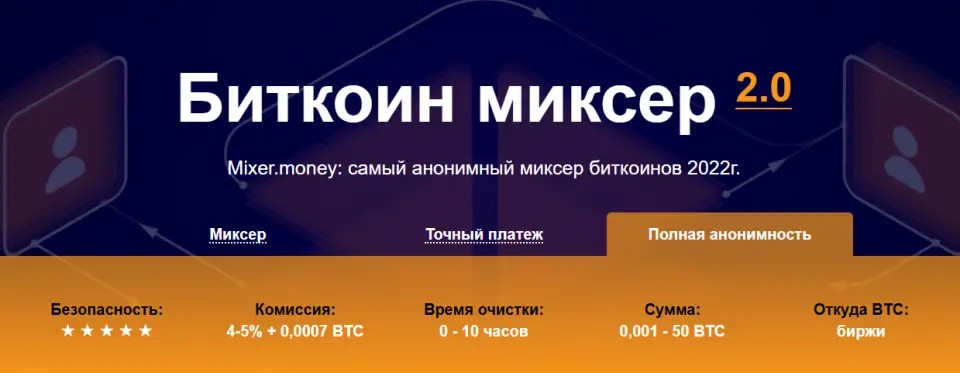
In "Mixer" mode, you can specify one address for receiving funds. The minimum request amount is 0.001 $BTC, and the maximum is 1 $BTC. Processing takes up to two hours, with a service fee of 1–1.5% plus 0.00035 $BTC.

The "Full Anonymity" mode involves a more complex chain of operations. In this case, the user's $BTC are not directly mixed with other clients' coins. First, they go through a preliminary mixer, then are split into random parts and distributed among investors on different crypto exchanges. Upon completion of the process, the client receives different bitcoins—from other investors' accounts and from different exchange addresses.

Additional stages are needed to complicate the link between outgoing and incoming transactions. In "Full Anonymity" mode, withdrawals to two addresses are available. The request amount ranges from 0.003 to 50 $BTC, processing time is up to six hours, and the fee is 4–5% plus 0.0007 $BTC.

In a rising market, investors often act faster than usual: they transfer coins, take profits, prepare assets for exchange. If $BTC is planned to be sent to an exchange or exchanger, it is worth considering not only the exchange rate but also privacy, coin history, and the requirements of the platform through which the transaction will take place.

end-content
Пов'язані питання

QWhat were the main factors that led to the sharp rise in Bitcoin in mid-August?

AThe rise was driven by several simultaneous factors: 1) The US Treasury's announcement to significantly increase its buyback of long-term bonds, lowering their yields. 2) Donald Trump's renewed focus on crypto policy. 3) Mass liquidations of short positions worth over $2.1 billion. 4) A return of inflows into Bitcoin ETFs, totaling $1 billion for the week. 5) The rally spreading to other cryptocurrencies like Ethereum.

QWhat is the significance of a coin's transaction history for an investor preparing to sell Bitcoin?

AThe transaction history of coins is crucial because exchanges and other services may analyze them using AML tools before allowing a sale. Coins can be flagged if they passed through suspicious platforms, even if the current owner wasn't directly involved. This is especially important for large sums, old wallets, or transfers to centralized services.

QAccording to the article, what happened to the 'Fear and Greed Index' during Bitcoin's price surge?

AThe article states that during Bitcoin's rally, the Fear and Greed Index rose by 43 points and reached a value of 72, reflecting a significant and rapid shift in market sentiment towards optimism or 'greed'.

QWhat are the two operating modes of the mixing service mentioned in the article, and what are their key differences?

AThe service, Mixer.money, operates in two modes. 1) 'Mixer' Mode: More classic mixing, user receives different coins from a pool, processing up to 2 hours, fee 1-1.5% + 0.00035 BTC. 2) 'Complete Anonymity' Mode: Involves a more complex chain of operations to further obscure the transaction link, supports up to two output addresses, processing up to 6 hours, fee 4-5% + 0.0007 BTC.

QWhy is there renewed institutional interest in Bitcoin, as indicated by the ETF data?

ASpot Bitcoin ETFs recorded a weekly inflow of $1 billion, the first such inflow since January. The majority of this ($588.54 million) went into BlackRock's iShares Bitcoin Trust. This signals a return of institutional demand for BTC after a period of stagnation, providing a key confidence signal to the broader market.

Пов'язані матеріали

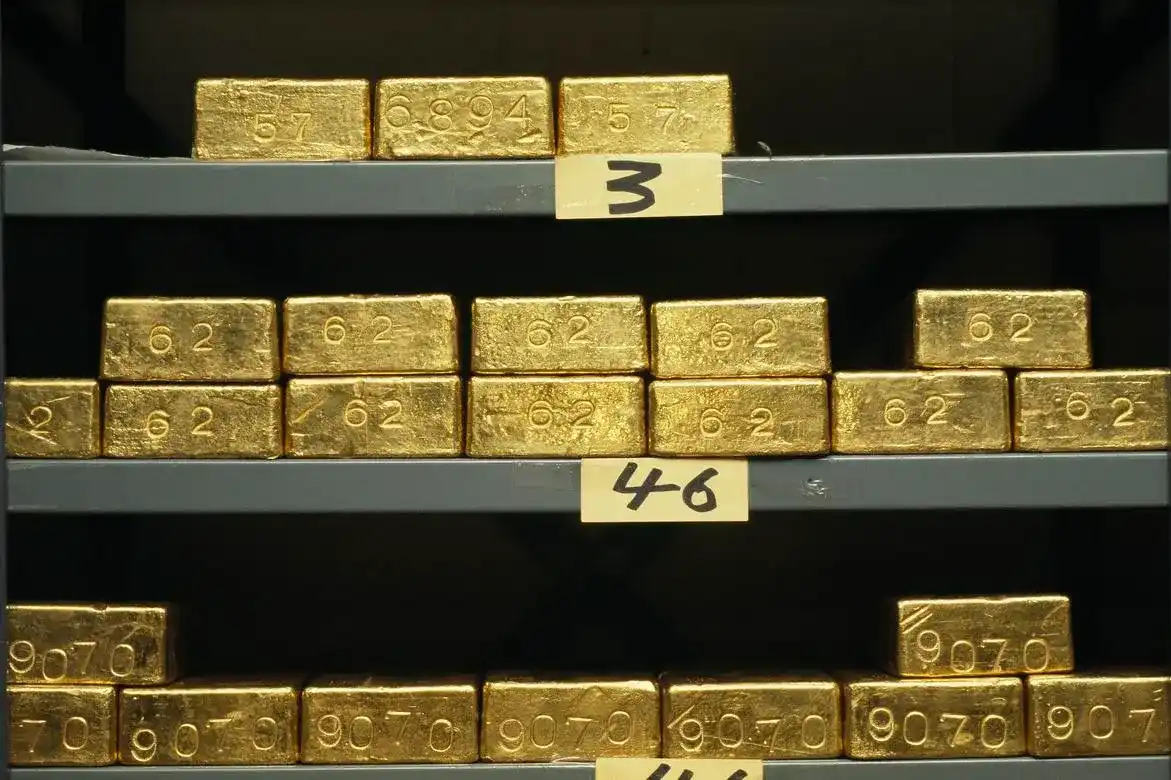
Gold Price Achieves Strongest Rally in 46 Years, Tokenized Gold Trading Volume Already Exceeds Full-Year 2025

Gold is experiencing its strongest rally since 1979, with prices reaching a record high near $5,600 per ounce in January. This surge is driven primarily by central banks, not retail investors. In 2025, central banks net purchased 863 tonnes of gold, with a similar increase expected in 2026. Traditional gold investment methods—physical bullion and ETFs—present trade-offs like storage issues, limited access, or management fees. Tokenized gold emerges as a third option: digital tokens representing ownership of physical bars stored in professional vaults. These tokens are globally transferable in seconds, divisible, and redeemable for physical metal. The potential impact mirrors that of dollar stablecoins. Stablecoins digitized the dollar, enabling cheap, instant, global transfers and driving adoption from $27 billion in 2020 to over $3 trillion today. Similarly, tokenized gold solves gold's "form problem"—its lack of divisibility, portability, and accessibility. Adoption is accelerating. In Q1 2026, tokenized gold trading volume hit $90.7 billion, surpassing the $84.6 billion for all of 2025. Its market cap exceeded $6 billion, growing 5.5 times faster than physical gold holdings in the quarter. While concerns about counterparty risk exist, tokenized gold represents a direct claim on allocated bars, with major issuers providing regular attestation reports. Just as stablecoins placed dollars on a digital, global rail, tokenized gold now offers a more practical form for this ancient asset, potentially expanding access to billions.

marsbit8 хв тому

Gold Price Achieves Strongest Rally in 46 Years, Tokenized Gold Trading Volume Already Exceeds Full-Year 2025

marsbit8 хв тому

Japanese Rates Return to 1996 Levels, Can Bitcoin Withstand the September Rate Hike?

Japanese borrowing costs have hit their highest levels since 1996, with yields on 30-year bonds reaching 4.185%. This marks a significant shift for a country long reliant on negative rates. Concurrently, Bitcoin surged 22% past $80,000, seemingly decoupled from the bond market turmoil. Historically, the massive yen carry trade has fueled global risk assets, predicated on near-zero Japanese rates. This assumption is now challenged. A potential rate hike by the Bank of Japan in September could strengthen the yen, forcing carry trade unwinds and potentially triggering a global deleveraging event, as seen in August 2024 when Bitcoin fell sharply. Conversely, if the yen weakens further, Bitcoin could attract Japanese investors as a hedge against currency depreciation and the country's massive debt burden. Institutional adoption in Japan is growing, with regulatory changes paving the way for potential crypto ETFs by 2027. The key variable is the BoJ's September policy signal. If it hints at a rapid tightening cycle to combat inflation and support the yen, risk assets like Bitcoin may face selling pressure from carry trade liquidation. However, if debt sustainability concerns limit its hawkishness, leading to a weaker yen, Bitcoin could benefit. Currently, the market is betting on a slow-motion debt crisis, not a sudden collapse. While Bitcoin shows resilience, its fate remains tied to the direction of the yen and the scale of any carry trade unwind.

marsbit11 хв тому

Japanese Rates Return to 1996 Levels, Can Bitcoin Withstand the September Rate Hike?

marsbit11 хв тому

How Can Bitcoin Resist Quantum Computers? A Comparison of Three Lattice-Based Signature Schemes

"Bitcoin's Quantum Defense: A Comparison of Three Lattice-Based Signature Schemes" by the Blockstream Research Team explores how Bitcoin can transition to quantum-resistant digital signatures, as current schemes like Schnorr and ECDSA are vulnerable to quantum computers. The report evaluates three lattice-based signature candidates—Dilithium, Falcon, and Hawk—against criteria like on-chain cost (key/signature size), implementation complexity, deployment risks, and support for Bitcoin's key derivation standard (BIP-32). The analysis recommends a minimum Security Level 3 for Bitcoin due to its long-term security needs. Dilithium (ML-DSA) is praised for its simplicity and integer-only operations, making it easier to implement securely, but it has the largest signature size (~5.3 KB for Level 3). Falcon (FN-DSA) offers the most compact signatures (e.g., ~3.1 KB for Level 5) and the fastest verification, though its signing requires complex floating-point sampling—a solvable engineering challenge. Hawk, despite its small size, was withdrawn from NIST standardization after a security vulnerability was discovered, highlighting the importance of conservative security margins. Currently, neither Dilithium nor Falcon has a fully viable, production-ready BIP-32 key derivation method. The report concludes that if a lattice-based scheme had to be chosen now, Falcon-1024 would be the preferred option for its balance of size, speed, and mature security assumptions. However, the short-term recommendation remains hash-based signatures (like SPHINCS+) for their lower risk, with a potential future hybrid or full transition to Falcon once its standard (FN-DSA) is finalized and well-supported.

marsbit13 хв тому

How Can Bitcoin Resist Quantum Computers? A Comparison of Three Lattice-Based Signature Schemes

marsbit13 хв тому

Торгівля

Спот
活动图片