Analyzing if Hyperliquid can become the 24/7 derivatives hub – Why and why not?

ambcryptoОпубліковано о 2026-03-08Востаннє оновлено о 2026-03-08

Анотація

Crypto markets operate 24/7, providing continuous price discovery, especially during off-hours geopolitical or macroeconomic events, as seen with recent Middle East tensions. Derivatives dominate this ecosystem, with perpetual futures volume vastly exceeding spot trading. Hyperliquid [HYPE], a high-speed Layer-1 blockchain, is emerging as a key decentralized derivatives hub. It features ultra-fast block finality, an on-chain order book, and a cross-margin model. With significant volume and open interest, it is consolidating liquidity in the decentralized space, sometimes offering better order book depth than centralized competitors like Binance. While it has the potential to become a global, 24/7 risk-transfer layer, persistent market fragmentation could limit this advantage.

Market activity across crypto venues increasingly reflects the structural advantage of continuous trading infrastructure. Unlike traditional financial markets, crypto operates without closing hours, enabling uninterrupted price discovery throughout the week.

Traditional equity exchanges such as the NYSE and NASDAQ function for roughly 32.5 hours weekly. On the contrary, crypto markets sustain liquidity and trading activity across the full 168-hour cycle. This structural difference becomes especially relevant when geopolitical or macroeconomic shocks occur outside conventional trading windows.

During recent Middle East tensions, volatility surfaced over the weekend while traditional markets remained closed. Bitcoin [BTC] funding rates briefly turned negative as participants rapidly repriced global risk.

Meanwhile, derivatives dominated this ecosystem. Perpetual Futures volume reached over $92 trillion in 2025, exceeding spot trading by roughly 4.6 times.

At the same time, institutional OTC volumes rose 109% year over year, reinforcing crypto’s expanding role in continuous global risk pricing.

Hyperliquid’s architecture enables always-on derivatives markets

Hyperliquid [HYPE] runs on a sovereign Layer-1 designed for high-speed derivatives trading. HyperBFT consensus delivers median block finality near 0.2 seconds, while the 99th percentile remains under 0.9 seconds. As a result, execution latency stays lower than many competing decentralized venues.

At the same time, the fully on-chain central limit order book enables direct price discovery and precise order matching. The cross-margin collateral model also links positions across markets, allowing traders to deploy capital more efficiently.

Market activity is evidence of this structure. At press time, daily perpetual futures volume was around $7.3 billion, while Open Interest stood near $5.8 billion.

Meanwhile, HIP-3 tokenized markets capture off-hours volatility, generating about $2.2 billion in daily volume.

WTI contracts alone surged 140% to roughly $242 million. HIP-4 outcome markets further expand derivatives coverage beyond price speculation.

Liquidity consolidation or market fragmentation?

Hyperliquid is rapidly consolidating liquidity within decentralized derivatives markets. Over the past two years, global crypto derivatives activity has expanded by 75%. At the same time, decentralized exchanges increased their market share to about 10.2%. Within this shift, Hyperliquid has emerged as a major liquidity hub.

Order book depth seemed to reinforce this transition too. Hyperliquid holds roughly $3 million in BTC liquidity near the mid-price. In comparison, Binance maintains about $2.1 million in the same trading range. As a result, larger trades often face lower slippage.

Participation has continued to expand as market makers and institutions monitor liquidity conditions. If liquidity concentrates around shared collateral and composable derivatives, Hyperliquid could anchor a global 24/7 risk-transfer layer.

However, persistent fragmentation may limit its structural advantage.


Final Summary

  • Crypto markets are increasingly functioning as the world’s continuous risk-pricing layer, where 24/7 trading and derivatives liquidity absorb macro shocks beyond traditional market hours.
  • Hyperliquid [HYPE] is emerging as a major decentralized derivatives hub, where liquidity consolidation around shared collateral could redefine global 24/7 risk transfer.


Пов'язані питання

QWhat is the key structural advantage of crypto markets over traditional financial markets like NYSE and NASDAQ?

ACrypto markets operate 24/7 without closing hours, enabling uninterrupted price discovery and trading activity across a full 168-hour week, unlike traditional exchanges which function for roughly 32.5 hours weekly.

QHow did Hyperliquid's technical architecture contribute to its performance as a derivatives trading venue?

AHyperliquid runs on a sovereign Layer-1 blockchain with HyperBFT consensus, achieving median block finality near 0.2 seconds and execution latency lower than many competing decentralized venues. It also features a fully on-chain central limit order book for direct price discovery and a cross-margin collateral model for efficient capital deployment.

QWhat evidence from market activity supports Hyperliquid's emergence as a major derivatives hub?

AAt the time of the article, Hyperliquid's daily perpetual futures volume was around $7.3 billion with Open Interest near $5.8 billion. Its tokenized markets (HIP-3) generated about $2.2 billion in daily volume, and it was rapidly consolidating liquidity within the decentralized derivatives market segment.

QAccording to the article, what is a potential risk that could limit Hyperliquid's structural advantage?

APersistent market fragmentation may limit Hyperliquid's structural advantage, even though it is currently consolidating liquidity.

QBeyond price speculation, how does Hyperliquid expand its derivatives coverage?

AHyperliquid expands its derivatives coverage beyond price speculation through HIP-4 outcome markets.

Пов'язані матеріали

Kalshi and Coinbase Receive CFTC Approval, Ushering in the Most Regulation-Friendly Era for the Crypto Industry?

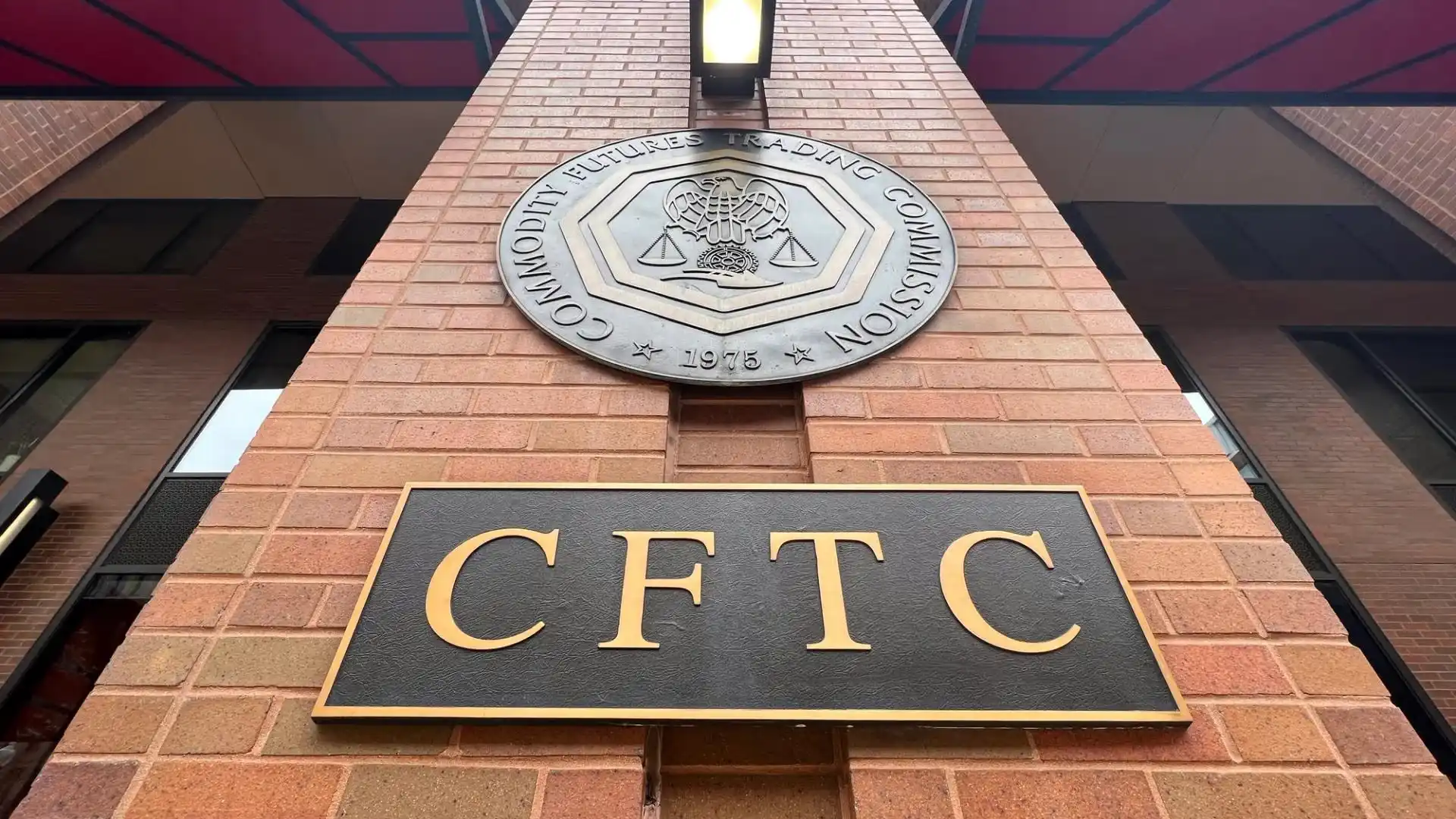
The U.S. Commodity Futures Trading Commission (CFTC) took two landmark actions on May 29. It approved Kalshi's application to list a Bitcoin perpetual futures contract and issued a no-action letter to Coinbase Financial Markets. This allows Coinbase to offer certain perpetual futures products to U.S. customers through a subsidiary, with digital assets permitted as collateral. These moves, coupled with a new CFTC policy statement, provide a clearer regulatory pathway for perpetual contracts in the U.S., moving them from a regulatory gray area. CFTC Chair Mike Selig stated this is a key step for U.S. crypto leadership but noted the policy is not yet permanent. The article explains that CFTC's previous reluctance stemmed from legal ambiguities, as perpetual contracts lack an expiration date. However, such contracts dominate global crypto derivatives, accounting for ~78% of centralized exchange volume in 2025, forcing U.S. regulators to adapt to competition from offshore platforms like Hyperliquid. The approvals offer two compliance paths: Kalshi's direct listing and Coinbase's model using foreign futures. This is expected to attract institutional capital back to regulated U.S. venues, stimulate the launch of more products like ETH perpetuals, and enhance U.S. competitiveness in the global crypto derivatives market. The author suggests this may signal a "regulatorily friendly" era for crypto.

marsbit1 год тому

Kalshi and Coinbase Receive CFTC Approval, Ushering in the Most Regulation-Friendly Era for the Crypto Industry?

marsbit1 год тому

Sharplink CEO: Ethereum's Future Is Playing Out Now

This article presents a perspective from Joseph Chalom, CEO of Sharplink and a former BlackRock executive. He argues that current controversies surrounding the Ethereum Foundation (EF) and ETH's price miss the bigger picture for institutional adoption. Chalom asserts that Ethereum is decisively winning in the three key attributes institutions value most: trust, security, and liquidity. He cites its dominance in stablecoin settlement, tokenized real-world assets (RWA), and high-value DeFi as evidence. This success is attributed to the EF's consistent, long-term protocol development over a decade, including major upgrades like The Merge and a robust future roadmap. He defends Ethereum's decentralization as a core strength, not a weakness, stating institutions require a neutral infrastructure not controlled by any single entity. Comparing ETH to Amazon, Chalom suggests critics focusing on short-term price are missing its potential to become the foundational settlement layer for the entire global financial system. The article encourages a contrarian "be greedy when others are fearful" investment approach, drawing parallels to Warren Buffett's strategy and BlackRock's continued investment during crypto winters. Chalom concludes that while the EF correctly focuses on core protocol attributes (CROPS: Censorship Resistance, Capture Resistance, Open Source, Privacy, Security), a leadership gap exists in market-facing narrative and institutional adoption. He calls for ecosystem participants, including his own firm Sharplink, to become more vocal advocates to support Ethereum's impending "supercycle" of institutional adoption.

链捕手1 год тому

Sharplink CEO: Ethereum's Future Is Playing Out Now

链捕手1 год тому

Deconstructing the Investment Methodology of the 'Stock God Serenity' in One Article

"Serenity's Bottleneck Investment Methodology: A Deep Dive" This article dissects the "bottleneck point investment" strategy of the pseudonymous investor Serenity, known for exceptional returns (YTD 4502.45%). The core methodology involves identifying a major technological trend (e.g., AI compute expansion), mapping its supply chain, and investing early in the most irreplaceable, supply-constrained upstream component before the market fully values it. The framework is broken down into a five-factor model: 1. **Deterministic Demand**: Anchored in a large, validated trend. 2. **Constrained Supply**: The component must be difficult to replicate or scale quickly. 3. **Low Market Attention**: Opportunities exist where coverage is sparse. 4. **Value Capture**: The company must have pricing power, high margins, and customer lock-in. 5. **Catalyst**: A near-term event to trigger price discovery (earnings, customer ramp, etc.). The article provides illustrative examples like $AXTI (InP substrates for photonics), $RPI (edge hardware for AI agents), and $AAOI/$LITE (components for cloud ASICs). To apply this method, a six-step process is outlined: identify the macro trend, map the supply chain, pinpoint the true bottleneck, gather evidence (client wins, certifications), assess risks ("anti-thesis table"), and size the position according to research depth. Crucially, the article notes significant limitations: risk of overfitting inferences from sparse data, valuation challenges for pre-revenue companies, liquidity/reflexivity risks due to Serenity's own market influence, and survivor bias amplified by a strong AI bull market. The key takeaway is to emulate the rigorous research process—finding the trend, the bottleneck, the evidence—rather than blindly copying specific stock picks, emphasizing the discipline of "walking through the narrow gate."

marsbit2 год тому

Deconstructing the Investment Methodology of the 'Stock God Serenity' in One Article

marsbit2 год тому

One Article Deconstructs the Investment Methodology of 'Stock God Serenity'

This article deconstructs the "bottleneck point" investment methodology of the renowned investor known as "Serenity" (aleabitoreddit). Characterized by a YTD return of over 4500%, the strategy involves identifying a major, confirmed trend (e.g., AI data center expansion), mapping its supply chain, and then pinpointing a critical, hard-to-replace upstream bottleneck that the market has yet to fully price in. The core framework is a five-factor model: 1) **Certain Demand** from a clear megatrend; 2) **Constrained Supply** with high barriers to entry and slow replication; 3) **Low Market Attention**, where the company is overlooked; 4) **Value Capture** potential through pricing power and market share; and 5) a near-term **Catalyst** to trigger re-evaluation. Case studies include **$AXTI** (InP substrates for photonics), **$RPI** (edge hardware for AI agents), and companies like **$AAOI** and **$LITE** tied to hyperscaler-specific ASIC demand (e.g., Microsoft Maia, Amazon Trainium). The article provides a six-step guide for applying this approach: 1) Identify a validated macro trend; 2) Map the entire supply chain; 3) Find the true bottleneck; 4) Gather concrete evidence (e.g., filings, customer contracts); 5) Perform rigorous risk assessment ("anti-thesis"); 6) Match position size to depth of research. Key limitations are also noted: the risk of narrative overfitting, difficulty in valuing early-stage companies, Serenity's own market-moving influence creating reflexivity, and potential survivorship bias due to the AI bull market. The essence of the method is not to copy picks but to adopt the research process: find the trend, locate the bottleneck, verify with evidence, assess valuation, await a catalyst, and then invest with discipline. The philosophy is summarized as "walking through the narrow gate"—seeking non-consensus, structurally vital points within booming industries before they become widely recognized.

链捕手2 год тому

One Article Deconstructs the Investment Methodology of 'Stock God Serenity'

链捕手2 год тому

Торгівля

Спот
Ф'ючерси
活动图片