White House 'Exclusive' Teleprompter Operator Cashes in Over $100,000 Using Insider Information for Predictions

Odaily星球日报Опубліковано о 2026-07-22Востаннє оновлено о 2026-07-22

Анотація

The White House is embroiled in another insider trading scandal, this time involving a teleprompter operator for former President Trump. Gabriel Perez, a longtime aide who controlled Trump's speech teleprompters, used his advance knowledge of speech content to profit over $100,000 on prediction markets like Kalshi by betting on which specific words Trump would mention. After Kalshi's monitoring systems flagged suspicious trading activity and froze his funds, the case was referred to the CFTC. Perez was suspended without pay by Trump, who called his actions "disgusting." Unlike previous insiders prosecuted in similar cases, Perez faced no criminal charges, only a CFTC settlement requiring him to return profits and cease such trading. The article highlights how "mention" markets are uniquely vulnerable to manipulation by insiders or even the speakers themselves, citing examples like a Grammy host jokingly saying a random word and a Coinbase CEO reading all prediction market options aloud. As prediction markets like Kalshi tighten compliance—such as requiring users to disclose employers—the piece argues this crackdown on insider trading, while promoting regulatory compliance, may move these markets further from "collective wisdom" and closer to being pure gambling venues.

Original | Odaily Planet Daily (@OdailyChina)

Author | Golem (@web3_golem)
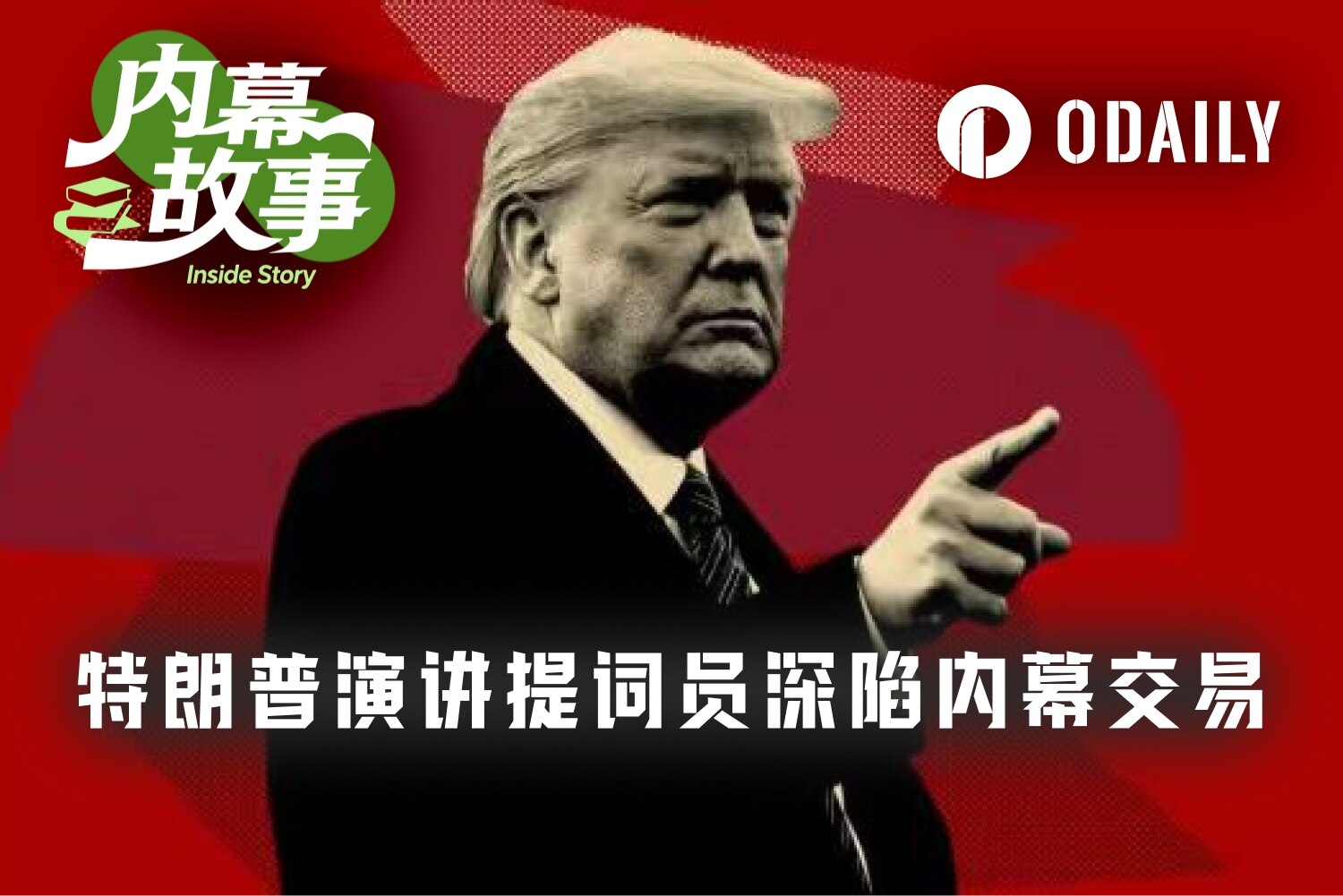
Recently, the White House was embroiled in yet another insider trading scandal.

A White House staff member traded using insider information to profit tens of thousands of dollars in prediction markets. The insider's identity turned out to be a long-term operator responsible for Trump's teleprompter during speeches. This employee has now been suspended and had his salary stopped.

This teleprompter operator has become the third insider disclosed by U.S. judicial authorities, following a special forces soldier involved in the Maduro capture operation and a Google security engineer, to have profited substantially in prediction markets using insider information. (Related Reading: After 4 Months, Polymarket Helped Trump Catch the Leaker of a Military Operation, but the Cost Was...; Checking the Answers Before Handing in the Test? Google Engineer Entangled in Polymarket Insider Trading Case)

Reported by Kalshi, Funds Frozen, But Ultimately Avoids Criminal Liability

The protagonist is named Gabriel Perez, who has been operating the teleprompter for Trump's speeches since 2016. Perez's journey to this job is rather dramatic. In 2016, Trump's campaign team urgently needed a teleprompter operator, so they searched for "teleprompter" on Google and found Perez's company. Perez was thus hired by Trump's team.

Gabriel Perez

Although Perez was hired by chance, over these 10 years, he gradually became one of Trump's closest aides. American Politico even stated that "Perez has become the only person Trump trusts," as he often receives Trump's personal last-minute modifications to public speeches.

Therefore, Perez became one of the few people with access to Trump's complete speech drafts in advance and held near-final approval authority over almost all of Trump's prepared remarks. This power is not insignificant. Perez's official title at the White House is Deputy Assistant to the President and Technical Advisor, with an annual salary of $175,000, only $20,000 less than senior staff like Chief of Staff Susie Wiles and Press Secretary Karoline Leavitt.

Such compensation already places him in the high-income bracket in the U.S., but the greedy Perez was not satisfied.

When prediction markets became popular, with countless players betting on which specific words Trump would "mention" in certain speeches, Perez discovered that his "privilege" could bring him even more wealth.

CFTC investigators found that Perez placed bets on over a dozen of Trump's speeches within about three months, with total profits exceeding $100,000. This included Trump's prime-time speech in December of last year, his speech at the World Economic Forum in Davos, Switzerland, in January of this year, the State of the Union address in February, and Trump's remarks at the Medal of Honor ceremony in March.

The U.S. President's statutory annual salary is $400,000, and with various allowances, the President receives approximately $569,000 per year. If Perez hadn't been caught, at his rate of earning over $100,000 in three months, his annual income, though his power is less than the President's, would have exceeded the President's salary.

However, even knowing the speech content in advance, Perez could not always successfully predict which words Trump would mention in his speeches because Trump often goes off-script "impromptu." When Trump skipped a word Perez had bet on during a speech, Perez would immediately sell to cut his losses. Trump himself admitted during a speech at the Detroit Economic Club in January that he doesn't look at the teleprompter 80% of the time.

Similar to the fates of the special forces soldier and the Google security engineer, Perez's exposure also originated from the prediction market platform's proactive reporting. Perez frequently used Kalshi for insider trading. Starting in March of this year, Kalshi's monitoring system detected some abnormal trades related to specific words mentioned in Trump's speeches, thus drawing attention to Perez.

After concluding its internal investigation, Kalshi quickly froze over $90,000 in Perez's account and handed the case over to the U.S. Commodity Futures Trading Commission (CFTC). Upon learning of this, Trump commented that it was "disgraceful" and personally decided to suspend Perez without pay during the suspension.

Ultimately, Perez's greed led him to lose both his profits and his original job. However, compared to the special forces soldier and the Google security engineer, Perez was fortunate because U.S. judicial authorities did not file criminal charges against him; Perez won't face jail time.

During the investigation, the CFTC had notified federal prosecutors in Manhattan, but the prosecutors declined to open a criminal investigation. According to informed sources, CFTC regulators have expressed willingness to reach a settlement with Perez and have discussed terms with him. The result requires Perez to return his profits and cease similar trades thereafter.

Perez is Just the Beginning of Purging Insiders from "Mention" Markets

The reason Perez avoided jail is that prosecutors believe his actions do not constitute a criminal offense; he neither leaked important government information in advance nor caused harm to national security. As Trump said, "it's just disgraceful," damaging the clean image of government officials.

In March of this year, the White House warned staff not to use non-public information to place bets in prediction markets. White House spokesperson Davis Ingles stated: "The White House has strict ethics guidelines, and we expect all staff and officials to adhere to them."

But Perez is definitely not the only White House staff member profiting from insider information, and Trump, who openly runs a paid subscription group, is even less qualified to comment on this teleprompter operator (Related Reading: $100,000 a Month, Trump Starts Selling 'Alpha' ).

It's no wonder Perez couldn't resist the temptation; the "mention" markets in prediction platforms are indeed the category most susceptible to manipulation. When the cost for insiders to participate is pushed extremely low, while the potential returns are extremely high, it ceases to be merely a moral issue and becomes a mechanism design problem. In the face of profit, even outwardly respectable and ostensibly righteous politicians cannot guarantee they will never cross that line.

The gameplay of "mention" markets involves users betting on specific words, phrases, or topics that will be mentioned in public speeches. Compared to other events (such as political elections, sports events, etc.), the cost of cheating in "mention" markets is extremely low. It's not limited to people like Perez who know the speech content in advance; for the speaker themselves, cheating is as simple as uttering a word, literalizing "a word is worth a thousand pieces of gold."

At the Grammy Awards ceremony in February this year, host Trevor Noah, after saying "welcome back to the Grammys," suddenly shouted the word "Potato." As everyone was confused, Trevor Noah continued, "if you bet on Polymarket that I was going to say this word, you just made a killing," and congratulated user "Noah 22." However, in reality, the "What will be mentioned at the Grammy Awards" prediction on Polymarket didn't even have "potato" as an option, and the user "noah-22" was purely fictional.

Grammy host shouting potato at the awards ceremony

Some analyses later suggested this was a marketing activity by Polymarket, but it already demonstrated the speaker's ability to manipulate the "mention" market.

There's an even more direct example. In October 2025, during Coinbase's Q3 earnings call, just as the meeting was about to end, CEO Brian Armstrong said he noticed many people were betting in prediction markets on what he would mention during this call. He then opened Polymarket and read aloud all the words listed in the options, ultimately causing all outcomes in that market to reach 100% probability, ending in a draw.

The above are just two examples showcasing speakers' control over "mention" markets; there are certainly many more individuals truly profiting from this lurking beneath the surface. However, as regulation of prediction markets gradually intensifies, perhaps all insiders in "mention" markets will eventually be purged. Perez is just the beginning.

Last month, Kalshi updated its policy, requiring users to disclose their employers. Kalshi's head of enforcement, Bobby DeNault, explained the rationale: "If you have access to information because of your job or employment, and you have a legal duty related to that information, you have an obligation not to take that information for your own use and not to convert it for personal use." Polymarket has not yet imposed such strict disclosure requirements on users, but in the increasingly competitive and compliant prediction market landscape, it is believed that stricter compliance requirements from Polymarket are also on the horizon.

From the special forces soldier and Google engineer to the White House teleprompter operator, prediction markets are step by step purging insider trading. Simultaneously, the market is undergoing a demystification of prediction markets. What was once thought to reflect the wisdom of the crowd is, in reality, just a cash machine for a few insiders.

Although purging insider trading makes prediction markets more compliant, it also moves them further away from truth and closer to being pure casinos.


Трендові криптовалюти

Пов'язані питання

QWho is Gabriel Perez and what was his role in the White House?

AGabriel Perez was a White House staffer, officially titled Deputy Assistant to the President and Technical Advisor. His primary role was operating the teleprompter for former President Donald Trump's speeches, a position he held since 2016.

QHow did Gabriel Perez allegedly profit over $100,000 using inside information?

AGabriel Perez allegedly used his advance knowledge of the prepared text of Trump's speeches to place bets on prediction markets, specifically Kalshi, on whether Trump would mention specific words or phrases during those speeches. Over approximately three months, he profited over $100,000 from these bets.

QWhy was Perez not criminally prosecuted for his actions, according to the article?

AFederal prosecutors reportedly declined to bring criminal charges. They determined Perez's actions did not constitute a criminal offense, as he did not leak significant government information or pose a threat to national security. The CFTC pursued a civil settlement instead.

QWhat action did prediction market platform Kalshi take after discovering Perez's suspicious activity?

AKalshi's monitoring system flagged abnormal trading activity related to Trump's speech keywords. After an internal investigation, Kalshi froze over $90,000 in Perez's account and reported the case to the U.S. Commodity Futures Trading Commission (CFTC).

QAccording to the article, what is a major flaw with 'mention' markets on prediction platforms?

AA major flaw is their vulnerability to manipulation and insider trading. The cost for insiders (like speechwriters, teleprompter operators, or the speakers themselves) to influence the outcome is extremely low, as they can simply include or exclude specific words, making these markets easy targets for exploitation rather than reflecting true crowd wisdom.

Пов'язані матеріали

After Three Consecutive Quarters of Decline, Can the Crypto Market Find a Window for Stabilization in Q3?

The cryptocurrency market has just concluded its worst-performing quarter since 2022, with total capitalization dropping 12.6% to $2.1 trillion. All core metrics indicate capital is leaving the sector, not just rotating within it. Bitcoin fell 14.2% and Ethereum dropped 25.4% in Q2, breaking their previous correlation with US tech stocks. A key driver is the reversal in US spot Bitcoin ETF flows, which saw a net outflow of approximately $4.67 billion in Q2, including a record monthly outflow near $4.5 billion in June. While recent data suggests long-term holders are accumulating again, sustained ETF outflows mean continued selling pressure. Market focus is now singularly on the Federal Reserve. The upcoming July FOMC meeting is seen as the most critical event for Q3. A dovish signal could support Bitcoin reclaiming a $68,000-$84,000 range, while a hawkish stance might establish a new trading band around $50,000-$56,000. Additionally, regulatory uncertainty persists, with the progress of the crucial *CLARITY Act* stalling in the Senate, reducing its perceived 2026 passage probability to 40-45%. Despite the broad downturn, a few sectors showed growth. Prediction markets saw nominal volume surge 48.7% year-over-year to $113.8 billion, and tokenized collectibles transaction volume rose 143% quarterly to $1.4 billion. The Real-World Asset (RWA) tokenization sector also continued steady growth, now representing ~$28.1 billion in on-chain value. The market's foundation for an extreme crash appears limited, with Bitcoin price hovering near its 200-week moving average. However, the trading paradigm has shifted from narrative-driven speculation to decisions based on price action, policy developments, and interest rate expectations, making a broad sentiment-driven rally unlikely in the near term.

marsbit15 хв тому

After Three Consecutive Quarters of Decline, Can the Crypto Market Find a Window for Stabilization in Q3?

marsbit15 хв тому

BIT Trading Moment: BTC Still Suppressed by Weekly 200 EMA, Rejection May Restart Decline; Storage and Semiconductors that Surged Last Night Begin Falling in Evening Trading

**Crypto & Stock Market Wrap: Bitcoin Tests Resistance, Stocks Retreat After AI Surge** Bitcoin consolidates around $66,000, facing key resistance near $68,000—an area seen as a major psychological and technical hurdle where previous rallies have failed. Analysts note the cryptocurrency is caught between its 200-week moving average (~$63,333) and 200-week EMA (~$68,328). A clear break above $68k is needed to signal a stronger bullish trend, while a rejection could lead to a retest of $63k support. Market sentiment remains cautious, with low futures open interest pointing to a low-liquidity rebound rather than a full bull market. Bitcoin spot ETFs saw another $203 million inflow. US stock futures pointed lower after a strong Tuesday session led by a massive rebound in semiconductors and memory stocks. The rally was fueled by renewed optimism about AI-driven hardware demand, with Micron, SanDisk, and SK Hynix surging. However, those gains reversed in pre-market trading. Super Micro Computer (SMCI) soared over 20% after hours on strong guidance and a record backlog. Other standouts included Rocket Lab and nuclear energy plays Oklo and X-Energy. Rising oil prices (Brent above $91) and climbing Treasury yields (10-year near 4.64%), however, are reigniting inflation concerns and acting as a headwind for equities. In Asia, markets were mixed. South Korea's KOSPI pared early gains to close slightly higher as semiconductor stocks like SK Hynix gave back initial surges. Japan's Nikkei edged lower as the yen hit a fresh 38-year low against the dollar, raising fears of potential market intervention. Key events to watch include the Samsung Galaxy launch, AMD's AI event, and a slew of major tech earnings from Alphabet, Tesla, and IBM after the close on Wednesday, followed by the ECB meeting and Intel's earnings on Thursday.

marsbit23 хв тому

BIT Trading Moment: BTC Still Suppressed by Weekly 200 EMA, Rejection May Restart Decline; Storage and Semiconductors that Surged Last Night Begin Falling in Evening Trading

marsbit23 хв тому

Former CFTC Chairman, Circle President Tarbert: Preaching Long-Termism While Cashing Out $30 Million Himself

Former CFTC Chairman and Circle President Heath Tarbert has consistently advocated for a long-term vision in public, urging patience from investors as Circle’s stock price has fallen significantly from its peak. However, it has been revealed that since Circle’s IPO, Tarbert has continuously sold his CRCL shares through pre-arranged trading plans, cashing out approximately $30 million, without making any public market purchases. This contrast between his public messaging and personal actions has drawn criticism. Tarbert joined Circle in July 2023 as Chief Legal Officer, leveraging his regulatory experience to help guide the company through its IPO and expansion. Despite promoting stablecoins as long-term infrastructure, he established a 10b5-1 trading plan just before Circle went public, leading to substantial stock sales over the following year. In March 2026, he initiated another plan to sell more shares. His career trajectory highlights a pattern of moving between high-level regulatory roles and influential positions in the financial sector. After resigning as CFTC Chairman in early 2021, he joined Citadel Securities as Chief Legal Officer just 27 days later, during a period of intense regulatory scrutiny for the firm. He later joined Circle, aiding its efforts to navigate regulatory challenges for its public listing. While Tarbert's expertise in policy and compliance is valuable to companies like Circle, his actions—advocating long-term confidence while personally divesting—raise questions about the alignment between his public statements and his private financial decisions, leaving investors who followed his advice to bear the market risks.

marsbit46 хв тому

Former CFTC Chairman, Circle President Tarbert: Preaching Long-Termism While Cashing Out $30 Million Himself

marsbit46 хв тому

Gate Research Institute: The 'Wall Street-ization' Wave of Crypto Financial Products – Competition or Integration?

The article titled "Gate Research Institute: Are Crypto Financial Products Sparking a 'Wall Street' Wave—Competition or Convergence?" explores the evolving relationship between the crypto ecosystem and traditional finance (TradFi). The piece begins by reflecting on Bitcoin's original 2009 vision of decentralization, disintermediation, and moving away from banks. It then contrasts this with the 2024 landscape, where key crypto assets like Bitcoin are increasingly held through Wall Street products like ETFs issued by giants like BlackRock. The article questions whether this signifies that TradFi is systematically taking over the rights to issue, price, custody, and distribute crypto financial assets. The core argument is that this is not a zero-sum takeover but rather a bidirectional convergence where each side addresses the other's weaknesses. Crypto offers 24/7 global markets, programmable settlement, and open access but lacks compliant channels, institutional-grade custody, deep fiat liquidity, and mainstream distribution. TradFi possesses these but is constrained by legacy systems, limited operating hours, and slow settlement. Two primary convergence paths are highlighted: * **Path A (CEX to TradFi):** Exemplified by Gate, which has progressed from offering tokenized stocks and CFDs to providing direct, real stock trading (US, Hong Kong, South Korea) within its platform, using USDT. * **Path B (TradFi to Crypto):** Exemplified by Robinhood, which has integrated crypto trading, acquired exchanges like Bitstamp, and is moving traditional assets like stocks onto the blockchain via tokenization and its own Layer 2. Both paths are ultimately competing to become the next-generation, unified financial account—a "super account" where users can seamlessly trade cryptocurrencies, stocks, ETFs, RWA (Real World Assets), and tokenized treasury products in one interface. The growth of RWA and tokenized treasuries (e.g., BlackRock's BUIDL) is presented as the asset-layer fusion, providing stable, yield-bearing assets on-chain and acting as a bridge between the two worlds. In conclusion, the "Wall Street-ization" of crypto is framed as a mutual transformation. Decentralized ideals persist in the protocol layer, while at the application layer, a more efficient, global, and accessible unified capital market is emerging from this convergence. The future competition lies not between crypto exchanges and stockbrokers, but between platforms vying to offer the most comprehensive asset coverage, liquidity, and user experience within a single account.

marsbit50 хв тому

Gate Research Institute: The 'Wall Street-ization' Wave of Crypto Financial Products – Competition or Integration?

marsbit50 хв тому

Торгівля

Спот

Популярні статті

Як купити HOUSE

Ласкаво просимо до HTX.com! Ми зробили покупку Housecoin (HOUSE) простою та зручною. Дотримуйтесь нашої покрокової інструкції, щоб розпочати свою криптовалютну подорож.Крок 1: Створіть обліковий запис на HTXВикористовуйте свою електронну пошту або номер телефону, щоб зареєструвати обліковий запис на HTX безплатно. Пройдіть безпроблемну реєстрацію й отримайте доступ до всіх функцій.ЗареєструватисьКрок 2: Перейдіть до розділу Купити крипту і виберіть спосіб оплатиКредитна/дебетова картка: використовуйте вашу картку Visa або Mastercard, щоб миттєво купити Housecoin (HOUSE).Баланс: використовуйте кошти з балансу вашого рахунку HTX для безперешкодної торгівлі.Треті особи: ми додали популярні способи оплати, такі як Google Pay та Apple Pay, щоб підвищити зручність.P2P: Торгуйте безпосередньо з іншими користувачами на HTX.Позабіржова торгівля (OTC): ми пропонуємо індивідуальні послуги та конкурентні обмінні курси для трейдерів.Крок 3: Зберігайте свої Housecoin (HOUSE)Після придбання Housecoin (HOUSE) збережіть його у своєму обліковому записі на HTX. Крім того, ви можете відправити його в інше місце за допомогою блокчейн-переказу або використовувати його для торгівлі іншими криптовалютами.Крок 4: Торгівля Housecoin (HOUSE)Легко торгуйте Housecoin (HOUSE) на спотовому ринку HTX. Просто увійдіть до свого облікового запису, виберіть торгову пару, укладайте угоди та спостерігайте за ними в режимі реального часу. Ми пропонуємо зручний досвід як для початківців, так і для досвідчених трейдерів.

447 переглядів усьогоОпубліковано 2025.04.27Оновлено 2026.06.02

Як купити HOUSE

Обговорення

Ласкаво просимо до спільноти HTX. Тут ви можете бути в курсі останніх подій розвитку платформи та отримати доступ до професійної ринкової інформації. Нижче представлені думки користувачів щодо ціни HOUSE (HOUSE).

活动图片












