Are Meme Coins a Shortcut or a Trap? Robinhood Chain Faces a Crucial Decision

Foresight NewsОпубліковано о 2026-07-16Востаннє оновлено о 2026-07-16

Анотація

Robinhood Chain, the blockchain initiative by the brokerage platform, is experiencing a strong initial surge in activity. Key metrics include over 300,000 daily active addresses, daily DEX trading volume surpassing $1 billion (ranking second among public blockchains), and a TVL exceeding $3 billion. However, the article expresses significant concern that this growth is overwhelmingly driven by memecoin trading, as observed on the Robinhood Wallet. The author argues this is a dangerous shortcut. While memecoins can rapidly boost user numbers, trading volume, and liquidity, they often result in substantial investor losses, erode trust in the ecosystem, and risk cementing Robinhood's reputation as a speculative, meme-driven platform—a perception Wall Street already holds. The piece contrasts this path with that of Coinbase's Base chain, which has emphasized fostering applications with real utility and sustainable business models. It urges Robinhood Chain to avoid becoming a "memecoin chain" and instead focus its resources on substantial use cases, particularly the tokenization of real-world assets (RWA). The proposed strategic pivot is toward facilitating global access to tokenized stocks, RWA, and other real financial instruments through its chain. This aligns with crypto's original promise of democratizing finance and represents Robinhood's largest growth opportunity: tapping into over 100 million potential new international users beyond its nearing-saturation U.S. market. ...


Written by: Jon Ma, Co-founder of Artemis

Compiled by: Saoirse, Foresight News


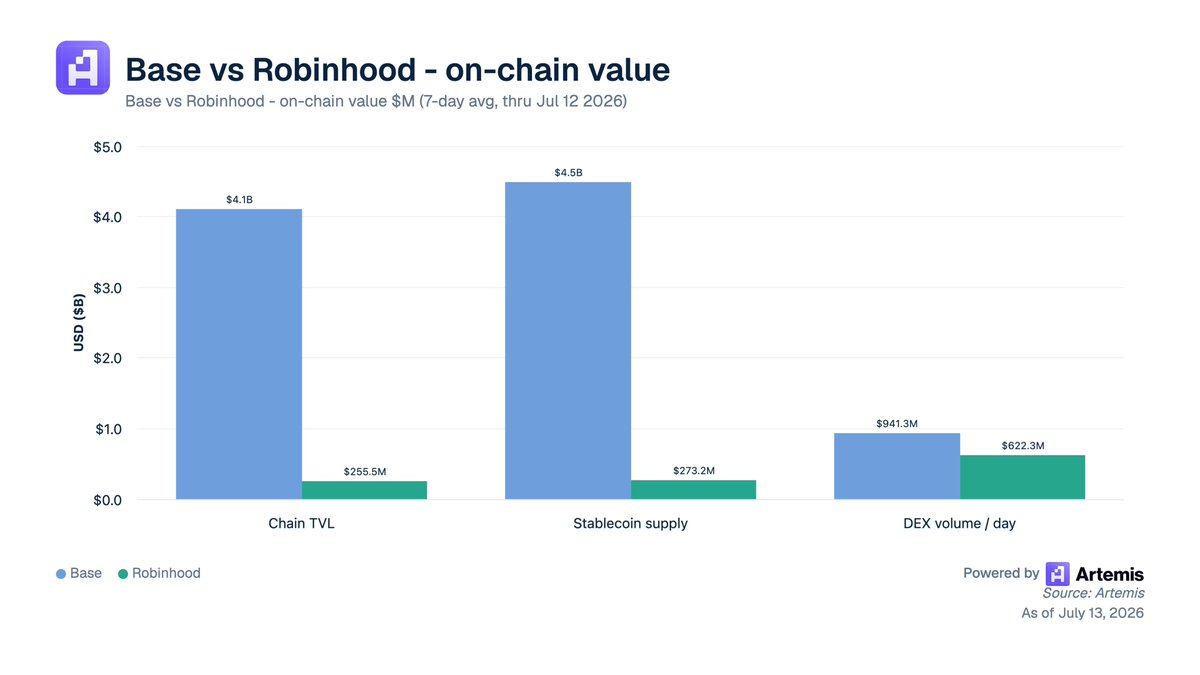
Robinhood Chain has made an impressive start on its path to promoting inclusive finance:


  • Over 300,000 daily active addresses;
  • Spot decentralized exchange (DEX) daily average trading volume exceeds $1 billion, ranking second among public chains;
  • Stablecoin circulation scale of approximately $300 million;
  • On-chain annualized fee revenue over $40 million;
  • Projects like Morpho, Ethena, and Uniswap have driven the total value locked (TVL) on-chain to surpass $300 million.
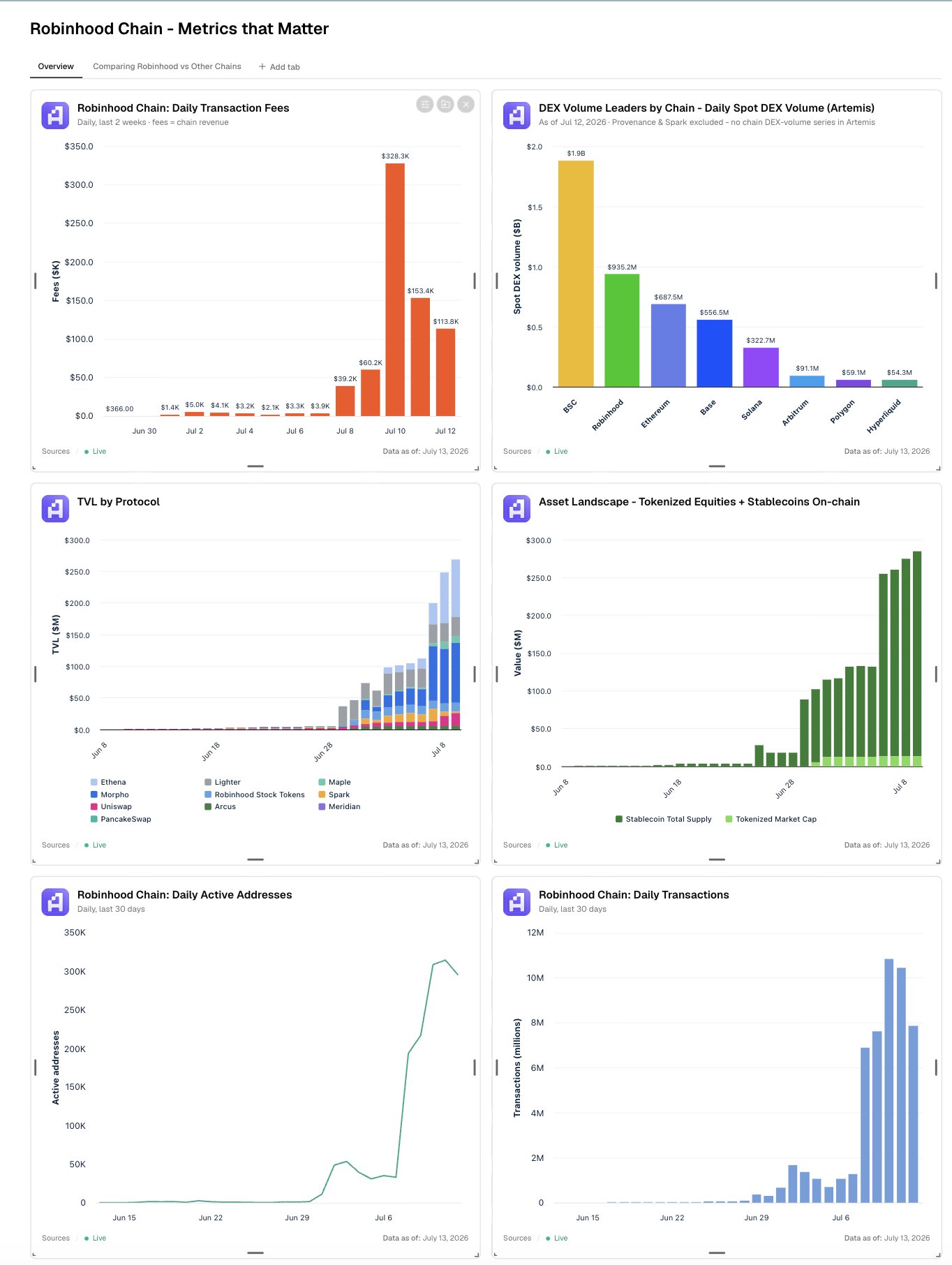

Related data dashboard: https://www.artemis.ai/jon/dashboard/334077439341928255


I participated in Robinhood's pre-IPO funding round in 2019 via @whalerock and followed Coinbase's IPO roadshow coverage in 2020. My original intention was to guide people to invest in quality assets with long-term value in the crypto and stock markets, not to speculate on Meme coins.


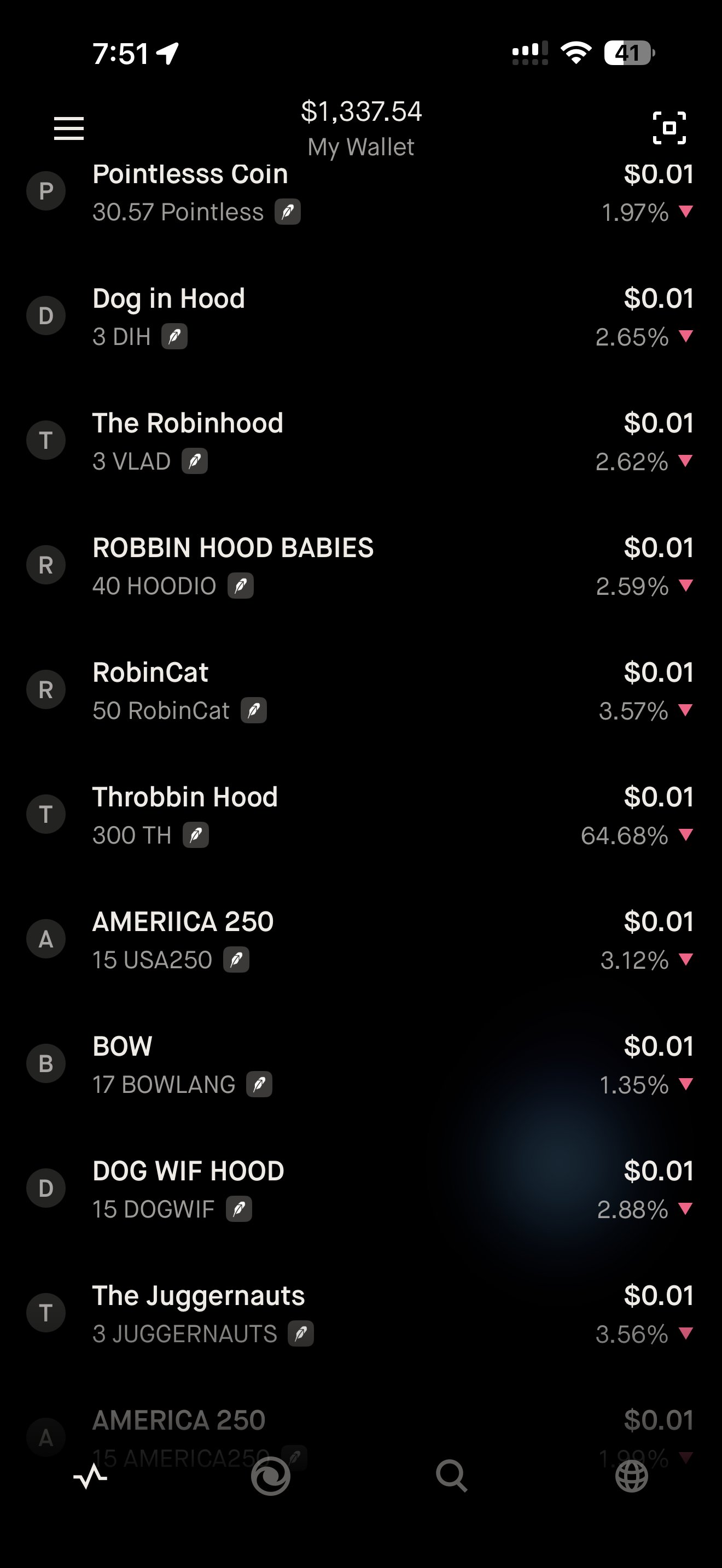
Last week, I opened the Robinhood wallet and was genuinely shocked and disappointed: the platform's available trading options were almost exclusively various Meme coins. After purchasing a small amount of CASCHAT, my wallet received a flood of random, worthless token airdrops within just three days, including one even named "Pointless Coin."


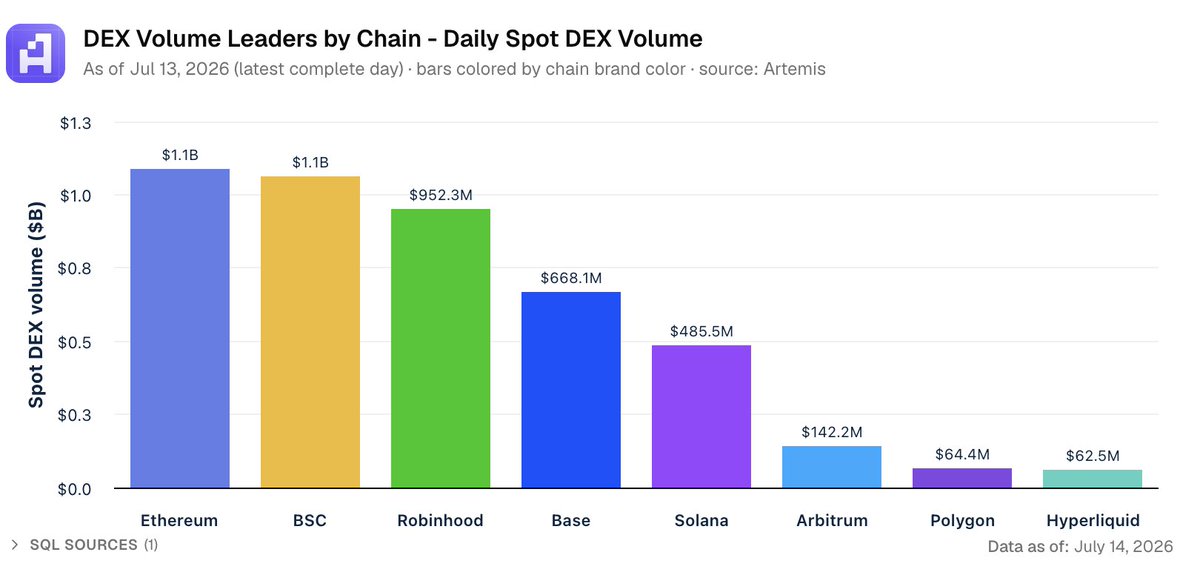
It's undeniable that Robinhood currently ranks third in spot DEX trading volume across all networks.


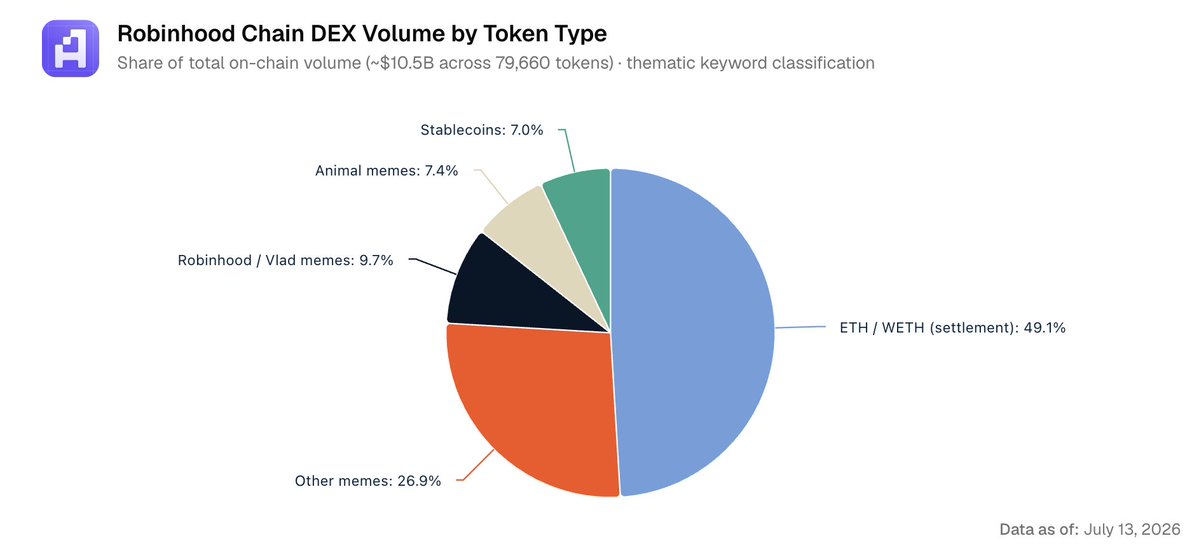
However, the vast majority of this trading volume currently comes from various Meme coins — animal-themed Memes, Memes derived around Vlad (Vlad Tenev, Robinhood Co-founder and CEO) and Robinhood, and a myriad of generic Meme tokens. I sincerely urge Robinhood: please do not turn this public chain into a dedicated Meme coin chain.


Coinbase's Base chain developed earlier and has a larger scale. There is a wealth of experience in Robinhood's crypto business worth learning from.


Brian Armstrong (Coinbase Co-founder and CEO) has repeatedly emphasized in public responses the need to guide users towards real, sustainable, and value-driven applications:
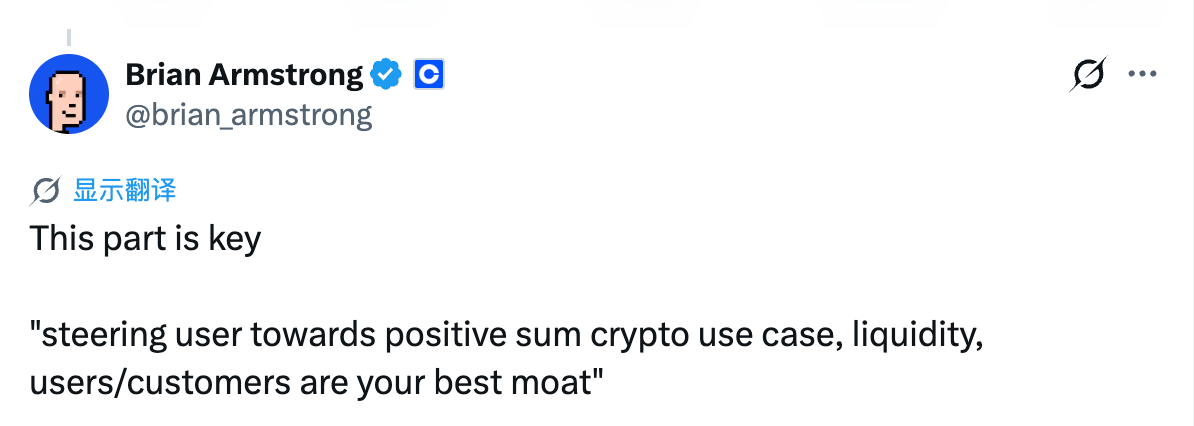

Source: https://x.com/brian_armstrong/status/2076506839953629445?s=20


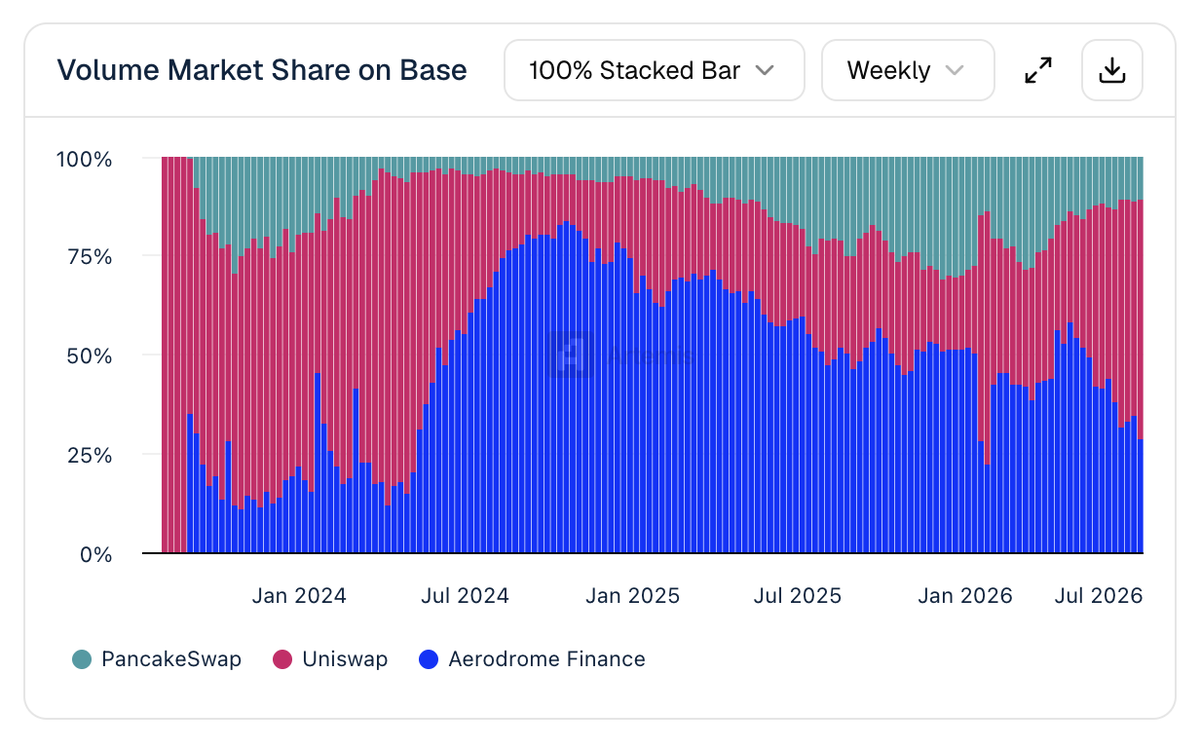
I understand the platform's difficulty in resisting the allure of Meme coins: such tokens are a shortcut to acquiring early users, attracting market makers, and boosting liquidity and trading volume. Many believe in "come for the Meme, stay for the real application." Just like Aerodrome on Base chain, which dominates the chain's trading volume and has built a sustainable business model.


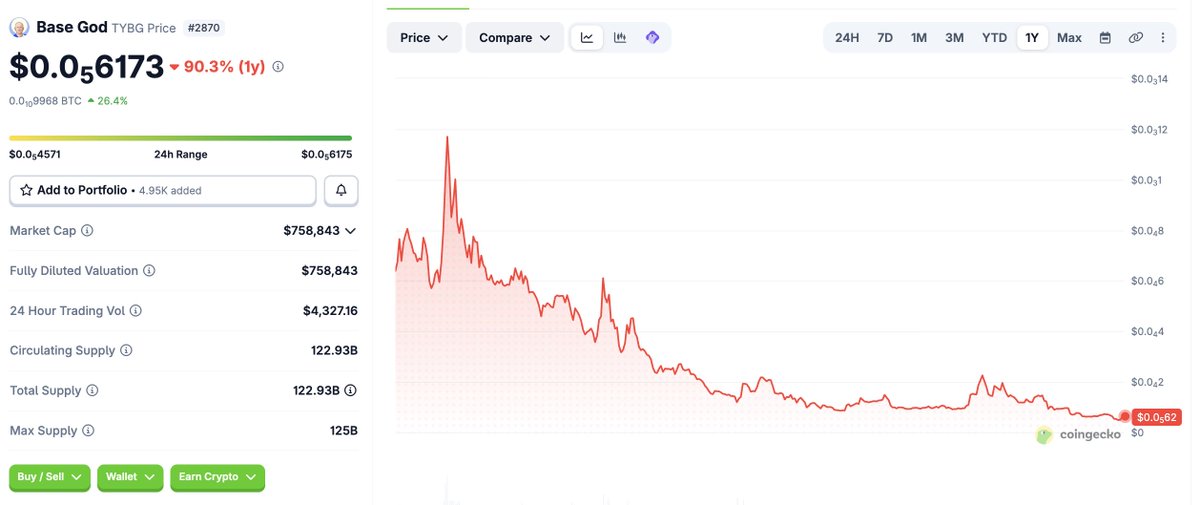
However, Meme coins can cause significant losses for many users, eroding trust in the industry. Look at the Meme coins launched on Base chain in early 2024 as a cautionary tale: their prices plummeted another 90% this year, with a maximum drop of up to 99% from their peaks.
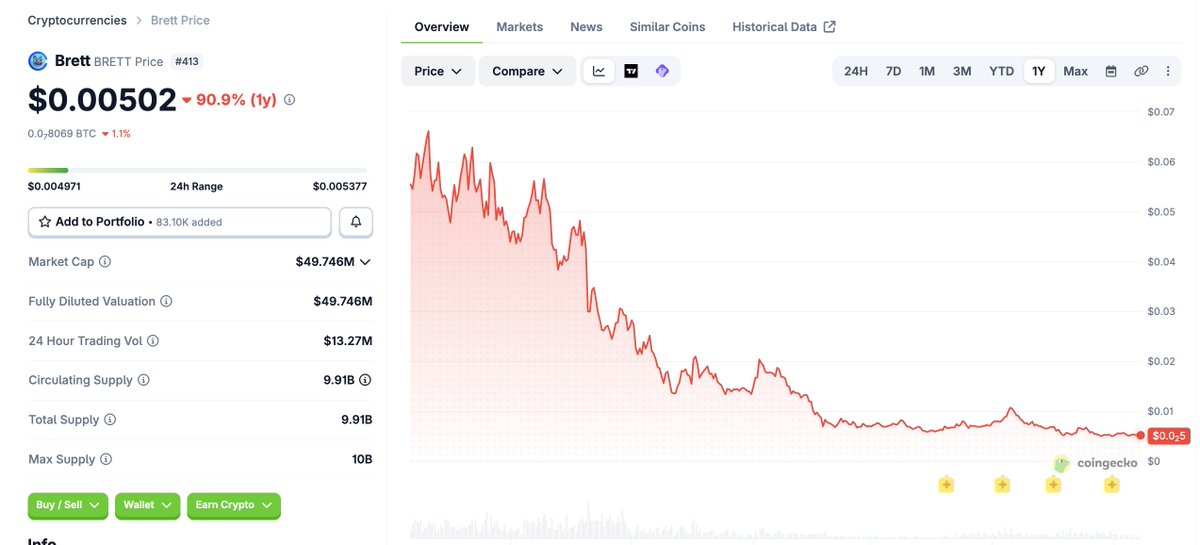


Meme coins lack long-term vitality. They not only harm ordinary investors but also make retail investors increasingly averse to blockchain. Furthermore, if Robinhood Chain continues to be flooded with Meme coins, it will reinforce the existing perception on Wall Street and among major hedge funds: Robinhood is merely a speculative trading app that rose to prominence on the back of the 2021 GME (GameStop stock ticker, the famous Meme stock) and Meme stock frenzy.
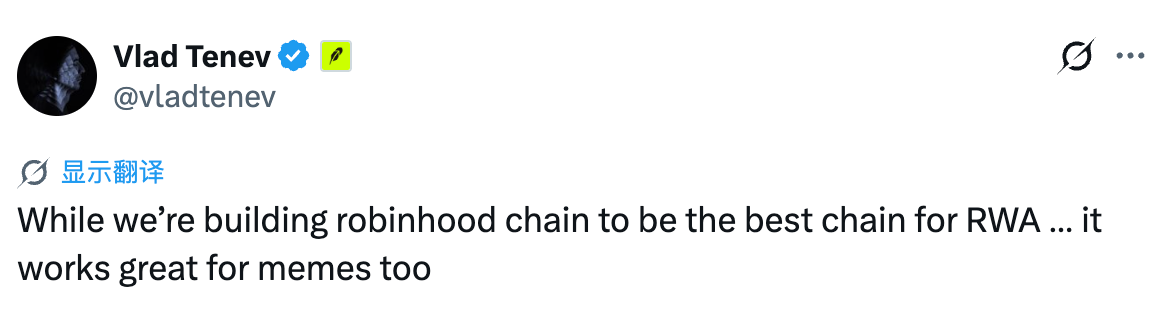

Source: https://x.com/vladtenev/status/2074695821896065360?s=20


Wall Street already struggles to view Robinhood objectively. Do not repeat the mistakes of 2021 that damaged the brand's reputation.


On the contrary, Robinhood Wallet and its ecosystem should direct liquidity and resources towards Arcus (built by the former dYdX team, a veteran top-tier perpetual contracts DEX) and the tokenized stock sector. I am very optimistic about Arcus's vision: enabling anyone globally to trade spot tokenized stocks.


These types of stocks have only emerged in the past decade.
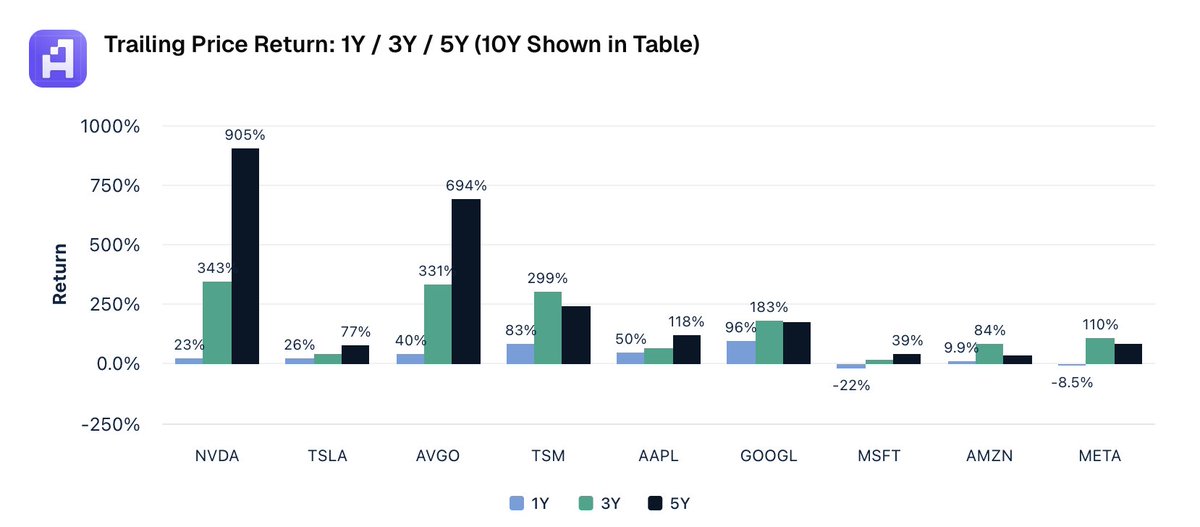


Please have Robinhood Chain genuinely focus on the real-world asset tokenization (RWA) sector, broaden the boundaries of financial services, and allow more investors to trade stocks and shares of pre-IPO companies.


Robinhood faces its biggest potential downside risk: the US domestic market is nearing saturation. The platform currently has 27 million funded accounts, with institutional forecasts predicting account growth to only 31-32 million by fiscal year 2028, indicating limited room for expansion.
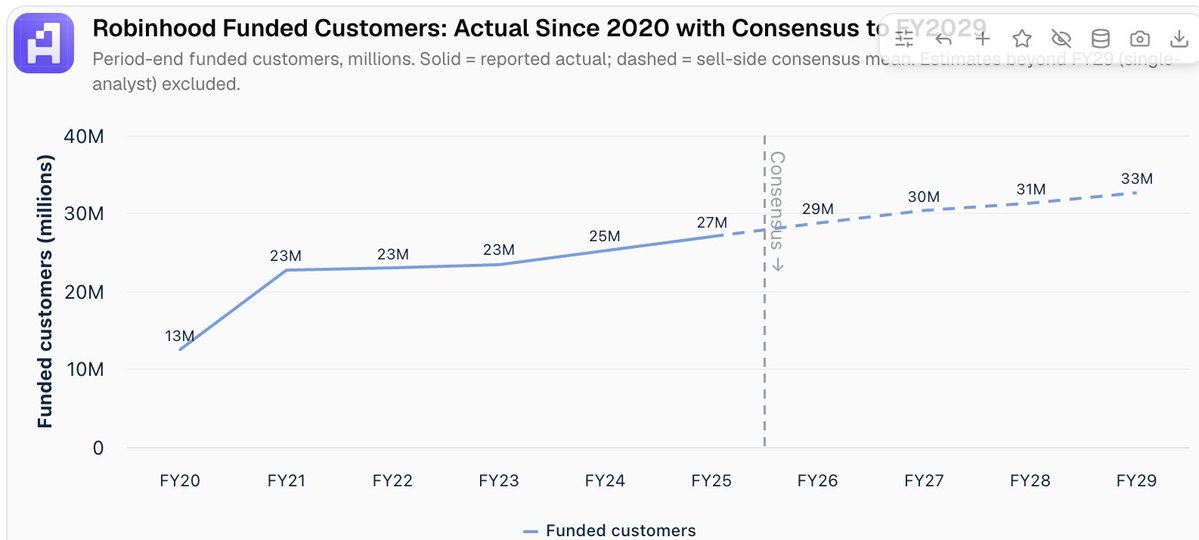


The core logic of my bullish view on Robinhood is: leveraging Robinhood Chain to reach over 100 million new overseas investors. Users can participate in RWA, prediction markets, stablecoins, and investments in listed and Pre-IPO assets via the public chain, while continuously feeding upstream traffic to the public chain App.


Tokenized stocks, traded around the clock, have genuine market demand. Referring to the trade.xyz platform, users primarily trade assets corresponding to real-world enterprises like SKHY, which has annual real revenue as high as $68 billion.
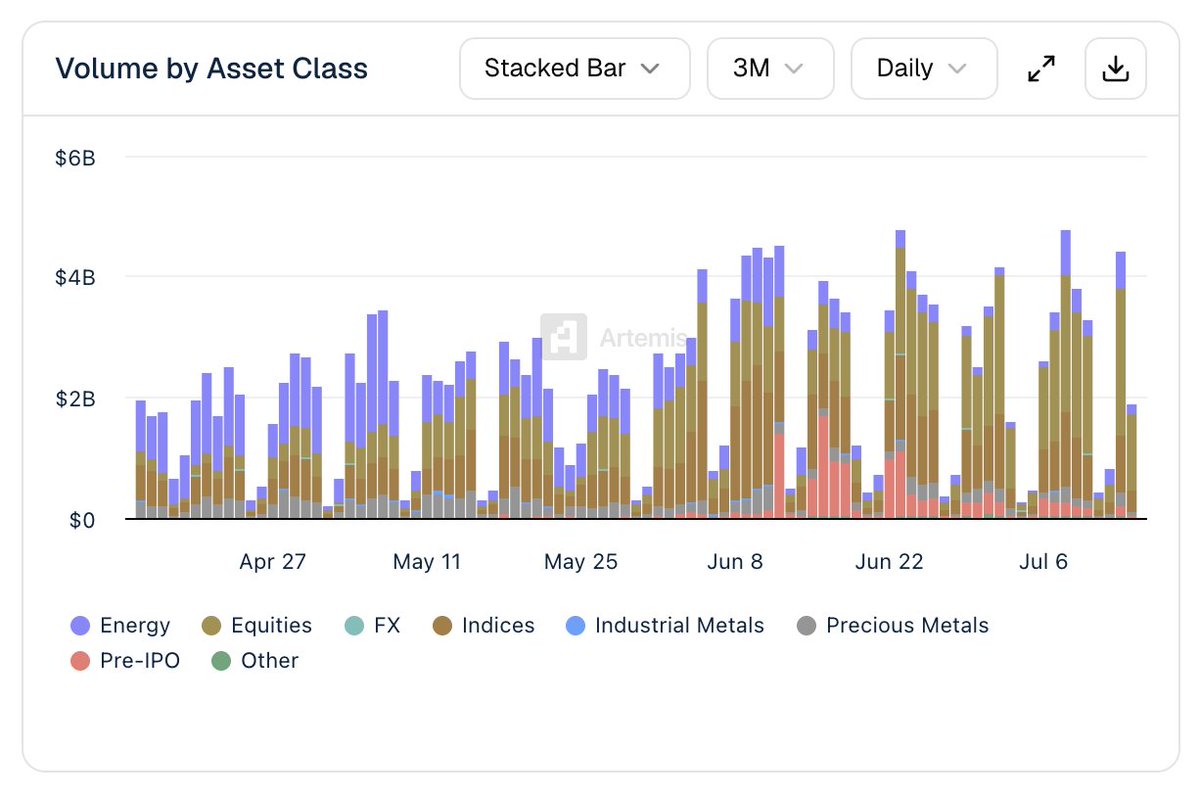
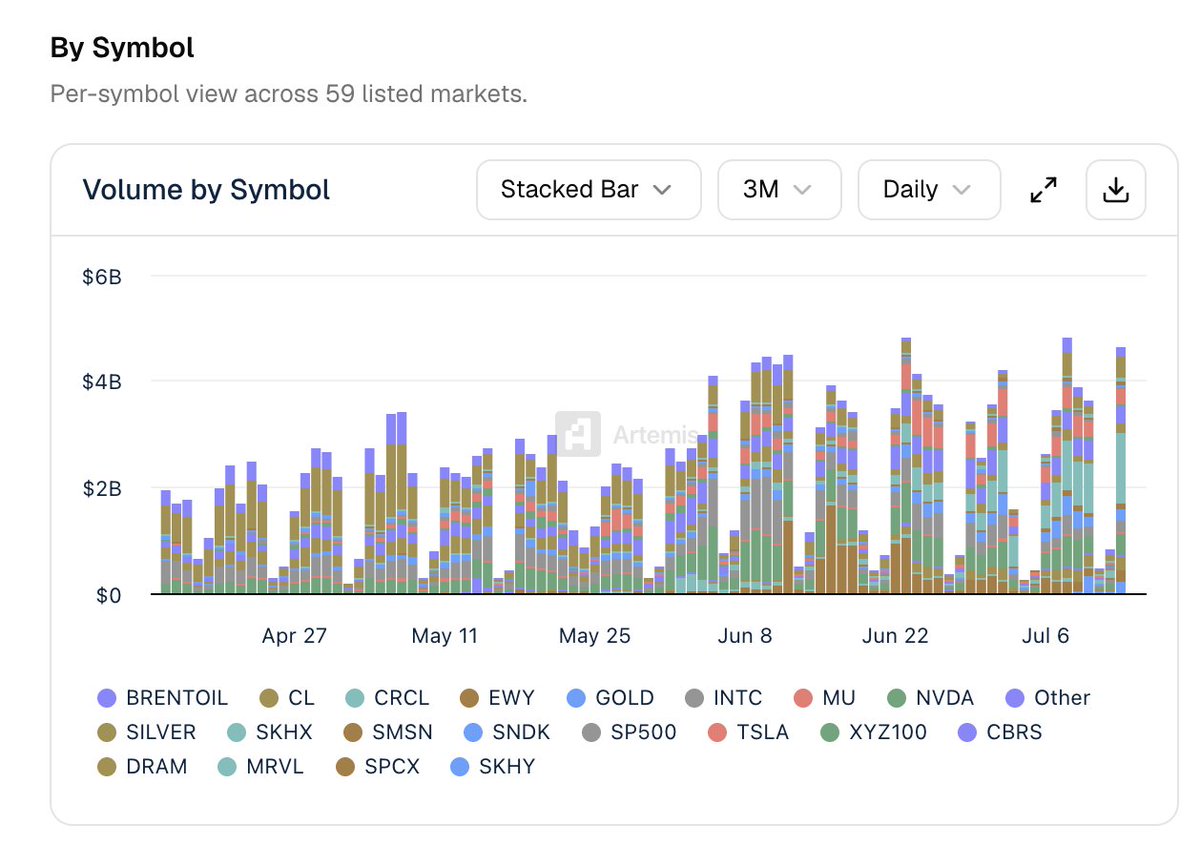


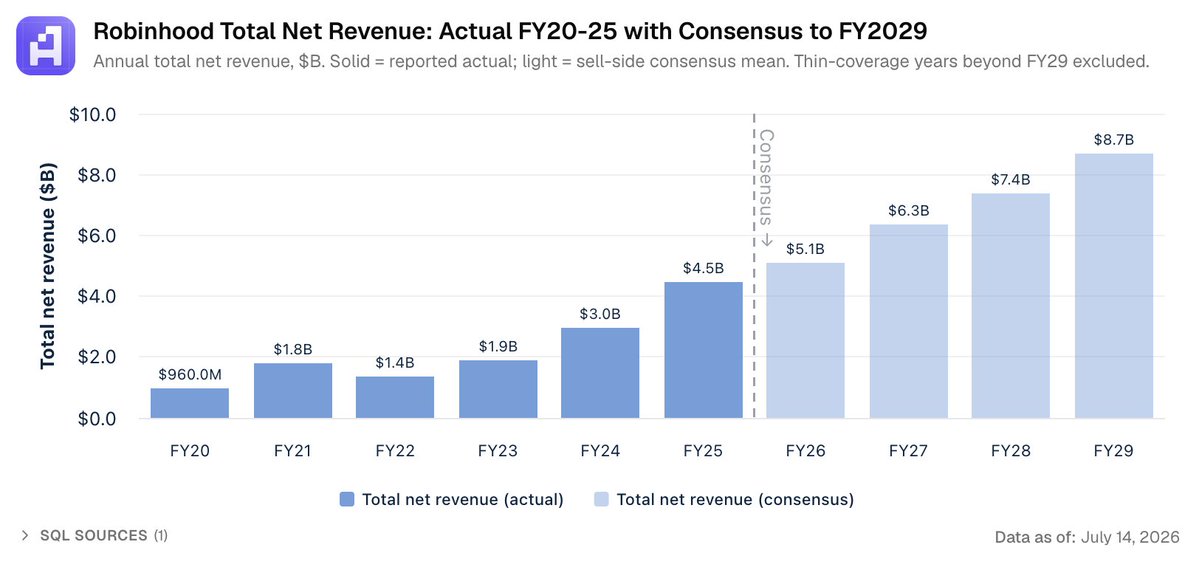
Here's a projection: leveraging Robinhood Chain, assuming the company reaches 100 million monthly active users by 2030. The current platform ARPU (Average Revenue Per User) is about $171; overseas users are more likely to pay on-chain transaction fees rather than trade via the App with higher commission rates. Conservatively assuming an ARPU of $100 for overseas users, just the C-side business could generate $10 billion in revenue by 2030, surpassing Wall Street's forecast of $8.78 billion for fiscal year 2029.


Vlad Tenev (Robinhood Co-founder and CEO), Johann Kerbrat (Robinhood SVP, Head of Crypto and International Business), you have an exceptional opportunity: leverage asset tokenization to fulfill crypto's original promise — providing equal access to financial services for everyone worldwide.


Do not squander this opportunity by turning Robinhood's public chain into a Meme coin chain. If you choose the right direction, Wall Street, hundreds of millions of users, and the whole world will recognize you for it.


Пов'язані питання

QAccording to the author, what is the current situation with most of the trading volume on Robinhood Chain?

AAccording to the author, the vast majority of trading volume on Robinhood Chain currently comes from various types of Meme coins, including animal-themed Meme coins, Meme coins derived from Vlad Tenev and Robinhood itself, and other miscellaneous generic Meme tokens.

QWhat are the key data points mentioned that highlight Robinhood Chain's promising start?

AThe key data points highlighting Robinhood Chain's promising start are: over 300,000 daily active addresses, a spot DEX daily trading volume exceeding $1 billion (ranking second among public chains), a stablecoin circulation of approximately $300 million, annualized on-chain fee revenue surpassing $40 million, and a TVL exceeding $300 million driven by projects like Morpho, Ethena, and Uniswap.

QWhat does the author view as the biggest bearish risk for Robinhood's platform?

AThe author views the biggest bearish risk for Robinhood as the near saturation of the US domestic market, with growth projections showing limited expansion from the current 27 million funded accounts to only 31-32 million by fiscal year 2028.

QWhat alternative development path does the author propose for Robinhood Chain instead of focusing on Meme coins?

AThe author proposes that Robinhood Chain should focus on the tokenization of real-world assets (RWA), specifically by directing liquidity and resources to projects like Arcus (a decentralized perpetual exchange) and the tokenized stock sector. This would broaden financial services access and allow investors globally to trade stocks and pre-IPO assets.

QWhat core bullish thesis does the author present for Robinhood's future potential?

AThe author's core bullish thesis is that Robinhood can leverage Robinhood Chain to reach over 100 million new overseas investors. These users can participate in RWA, prediction markets, stablecoins, and investments in public and pre-IPO assets via the chain, which in turn feeds upstream traffic back to the Robinhood app.

Пов'язані матеріали

Gold Rush Handbook | Rialto Teams Up with Robinhood Crypto, Targeting Order Routing Rights

**Summary** Rialto is positioning itself as an on-chain spot exchange focused on order routing and execution quality for a range of assets, including cryptocurrencies and tokenized stocks/ETFs. It operates primarily on the Robinhood Chain network. Its core mechanism revolves around **propAMMs** – on-chain market makers that use proprietary inventory and pricing logic, referencing external markets (like underlying stock exchanges for tokenized equities) rather than relying solely on automated market maker (AMM) formulas. For each user order, Rialto's aggregator solicits real-time quotes from multiple liquidity sources, including its own propAMM (Rivo Altus) and traditional DEX pools. It then selects and atomically executes the path offering the best net output after costs, potentially splitting orders across sources. Rialto's key competitive claim is turning **order routing control into a service for better execution**. Instead of users manually finding the best liquidity, the system automatically compares and routes to the optimal source(s) for each trade. It has launched a partner program for integrations and its swap API is already used by several protocols. Challenges ahead include expanding the asset base on Robinhood Chain, ensuring Rivo Altus's price competitiveness, attracting diverse external liquidity, and consistently delivering superior net execution compared to manual routing. Success in these areas would see Rialto competing for the crucial "order routing right" in the emerging on-chain market for tokenized real-world assets.

Foresight News18 хв тому

Gold Rush Handbook | Rialto Teams Up with Robinhood Crypto, Targeting Order Routing Rights

Foresight News18 хв тому

Bitwise: RWA and Prediction Markets Continue to Gain Momentum, Crypto is Bottoming Out

Bitwise's Q2 2026 report highlights a challenging crypto market. The Bitwise 10 Crypto Index fell 15.4%, and spot Bitcoin ETFs saw a record $4.9 billion in quarterly outflows as Bitcoin dropped below $60,000. Overall sentiment is described as one of the worst in eight years. Despite the downturn, key sectors show resilience and growth. Real-World Asset (RWA) tokenization reached a record $33 billion, up 45% year-to-date. Prediction markets also hit new highs, with open interest at $1.8 billion and quarterly volume hitting $43 billion, driven partly by political events. Crypto equities outperformed, with the Bitwise Crypto Innovators 30 Index rising 30.6%, largely fueled by AI-related Bitcoin miners. These stocks exhibited low correlation with other major asset classes. Major DeFi protocols like Aave demonstrated strong revenue generation, with the top ten crypto applications collectively earning $5.9 billion over the past year. The report notes that while prices and on-chain activity are down from peaks, fundamental metrics like stablecoin supply (~$300B) and Ethereum transaction activity are significantly higher than at the 2022 bear market bottom. Key Q3 factors include the fate of the CLARITY Act, final rules for the GENIUS stablecoin act, and policy signals from the new Fed Chair. The conclusion is that the industry is building a stronger foundation—with greater adoption, institutional involvement, and real utility—even at depressed prices, setting the stage for the next cycle.

Odaily星球日报43 хв тому

Bitwise: RWA and Prediction Markets Continue to Gain Momentum, Crypto is Bottoming Out

Odaily星球日报43 хв тому

Bitcoin Shifts to Building a Bottom, with Selling Pressure from Long-Term Holders Significantly Easing

Bitcoin is transitioning into a basing phase, with significant selling pressure from long-term holders showing signs of easing. The market is testing overhead resistance, with Bitcoin responding more positively to favorable macro data like soft inflation reports than major equity indices. Its correlation with stocks is weakening while its inverse relationship with the US dollar strengthens, indicating a shift in primary drivers towards liquidity factors rather than risk sentiment. On-chain analysis reveals that long-term holder profit-taking has largely dried up, and the wave of capitulation selling from this cohort has peaked and begun to recede. Buyers successfully absorbed selling pressure at the June lows. Bitcoin currently trades between the network's average realized price (a support floor) and the short-term holder cost basis near $69k, which will be a key resistance level. A breakout above this level is needed to signal a more sustained recovery. In derivatives markets, traders are unwinding bearish bets, with put/call ratios falling and crash protection premiums declining. However, this futures and options positioning adjustment has not been accompanied by significant spot buying. US spot ETF outflows have slowed but not reversed. Volatility has compressed to low levels. In summary, the foundations for a bottom are forming: long-term holder selling is subsiding, demand absorbed the recent low, and the market is reacting to positive catalysts. However, confirmation is still lacking, requiring a spot-driven breakout and hold above the short-term holder cost basis around $69k.

Foresight News51 хв тому

Bitcoin Shifts to Building a Bottom, with Selling Pressure from Long-Term Holders Significantly Easing

Foresight News51 хв тому

Торгівля

Спот
活动图片