465% Growth in One Day: How a Memory Shortage Made CXMT China's Most Valuable Company

cryptonews.ruОпубліковано о 2026-07-28Востаннє оновлено о 2026-07-28

Анотація

Chinese memory chip maker CXMT (ChangXin Memory Technologies) saw its shares surge 465.82% on its debut on the Shanghai STAR Market on July 27, 2026, closing at 49 yuan. Its market capitalization reached over 3.2 trillion yuan (~$473-488B), making it mainland China's most valuable listed company. This explosive debut coincided with staggering industry-wide profit growth. China's major integrated circuit manufacturers saw profits soar 2579.5% year-on-year in H1 2026. Specific companies like Shenzhen Longsys Electronics and GigaDevice Semiconductor reported profit growth exceeding 62,000% and 1000%, respectively. The primary driver is the AI boom, which has triggered massive global data center construction. Major memory giants like Samsung, SK Hynix, and Micron shifted capacity to high-margin AI accelerator memory (HBM), creating a severe shortage of standard DRAM used in servers, PCs, and smartphones. Contract DRAM prices spiked 90-95% QoQ in Q1 2026 and another 50-60% in Q2. CXMT, as China's largest domestic DRAM producer, capitalized on this deficit. It ramped up standard DRAM supply, secured long-term contracts with clients like ByteDance and Tencent, and expanded capacity. It forecasts H1 2026 revenue of 110-120B yuan and net profit of 50-57B yuan. A low comparative base from 2025's industry downturn and domestic policy support further fueled growth. However, analysts note a significant constraint: U.S. export controls on advanced lithography and manufacturing equipmen...

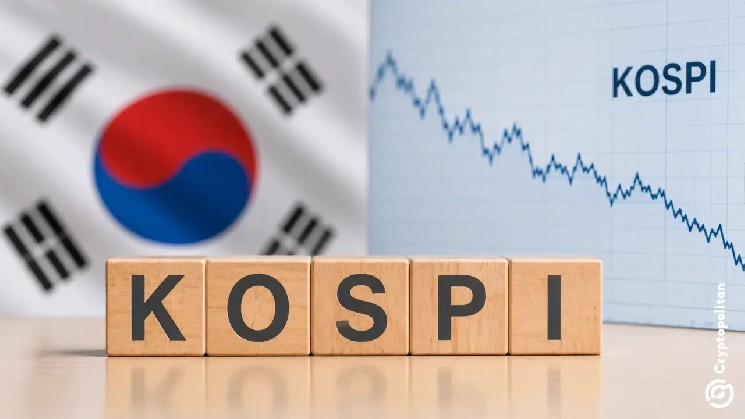
Shares of Chinese memory chip manufacturer CXMT (ChangXin Memory Technologies, 长鑫科技, ticker 688825) ended their first day of trading on the Shanghai Stock Exchange's STAR Market on July 27, 2026, with a gain of 465.82% — the closing price was 49 yuan per share compared to 8.66 yuan at the IPO.

After the trading session, the company's market capitalization reached over 3.2 trillion yuan (approximately $473–488 billion), making CXMT the most valuable company by market capitalization in mainland China. During the morning session, the figure reached 3.65–3.66 trillion yuan.

At the IPO issue price, the company was valued at approximately $85.5 billion (about 579 billion yuan). The start date of trading is confirmed by the official listing notice from the Shanghai Stock Exchange.

Industry Profit Multiples Soar

CXMT's debut coincided with the publication of industry-wide statistics. According to data from China's National Bureau of Statistics (NBS), the profits of major integrated circuit manufacturers in the first half of 2026 grew by 2,579.5% year-on-year.

The same NBS report indicates that profits of China's overall electronics industry increased by 96.9% year-on-year in the first half of 2026. The country's integrated circuit output during this period reached about 280 billion units, which is 23.1% higher than a year earlier.

Individual market players are also recording profit growth:

  • Shenzhen Longsys Electronics (江波龙) in a preliminary report published on July 3, 2026, expects net profit attributable to shareholders in the range of 9.2 to 11 billion yuan — an increase of 62,204%–74,394% compared to the same period last year.

  • GigaDevice Semiconductor (兆易创新) in a report published on the Hong Kong Stock Exchange website on July 9, 2026, forecasts net profit of approximately 6.9 billion yuan, corresponding to growth of about 1,099% year-on-year.

Behind the Sharp Profit Growth

This growth is explained by several reasons. The main one is the rapid adoption of artificial intelligence across all sectors of the economy and the resulting sharp increase in demand for computing power.

It is precisely the AI boom that has triggered massive construction of data centers and servers worldwide. Major global memory manufacturers — Samsung, SK Hynix, and Micron — have redirected a significant portion of their capacity towards HBM memory with higher profitability for AI accelerators. This has led to a shortage of conventional DRAM (DDR5, LPDDR), which is used in general-purpose servers, personal computers, smartphones, and automobiles. Contract prices for DRAM rose 90–95% quarter-on-quarter in Q1 2026 and another 50–60% in Q2.

Chinese manufacturers, including CXMT, found themselves in a favorable position. The company — the largest domestic DRAM producer and the fourth largest globally by volume — increased shipments precisely in the segment of conventional memory, which had become scarce, signed long-term contracts with major clients like ByteDance and Tencent, and expanded production capacity. According to its own forecasts, the company's revenue for the first half of 2026 should be 110–120 billion yuan, with net profit of 50–57 billion yuan.

An additional effect came from a low base of comparison: in the first half of 2025, the memory industry was at the bottom of the cycle, and profits for many companies were minimal or negative. Government support also played a role — Chinese companies received priority access to the domestic AI infrastructure market, and restrictions on importing advanced memory from abroad boosted demand for domestic products.

The combination of global demand for AI solutions, the redirection of global giants' production capacity towards HBM, a significant increase in standard DRAM prices, and the low base from the previous year created unique conditions for record-breaking growth in the financial indicators of Chinese integrated circuit manufacturers. Further developments will depend on the industry's ability to maintain high rates of capacity expansion and adapt to the changing requirements of the global market.

AI Perspective

From the perspective of machine data analysis, CXMT's financial triumph coexists with a less visible constraint — U.S. export controls on advanced lithographic and manufacturing equipment. Western experts note that the company plays a key role in China's technology strategy precisely against the backdrop of these restrictions, and access to advanced equipment for producing HBM memory remains closed to it.

This duality resembles the situation in Japan's semiconductor industry in the 1980s, when rapid commercial growth was accompanied by increasing external political pressure. CXMT's future trajectory will depend not only on global DRAM demand but also on the Chinese industry's ability to replace imported equipment with its own developments.

Most interesting and important news on our Telegram channel

end-content

Трендові криптовалюти

Пов'язані питання

QWhat was the stock performance of CXMT on its first day of trading on the Shanghai STAR Market?

AThe stock of Chinese memory chip maker CXMT rose by 465.82% on its first day of trading on the Shanghai STAR Market on July 27, 2026, closing at 49 yuan per share compared to its IPO price of 8.66 yuan.

QAccording to the article, what is the primary driver behind the massive profit growth in the Chinese chip industry?

AThe primary driver is the rapid adoption of artificial intelligence across the economy, which has led to a sharp increase in demand for computing power. This AI boom triggered mass construction of data centers and servers, causing a global shortage of standard DRAM memory and a significant increase in its contract prices.

QWhat specific advantage did Chinese memory chip makers like CXMT have in the market situation described?

AChinese manufacturers, including CXMT, benefited by increasing supplies in the segment of standard DRAM memory which became scarce. They secured long-term contracts with major domestic clients (like ByteDance and Tencent), expanded production capacity, and received priority access to China's domestic AI infrastructure market due to import restrictions on advanced foreign memory.

QWhat is a key long-term constraint or challenge mentioned for CXMT's future growth?

AA key challenge is the U.S. export controls on advanced lithographic and manufacturing equipment, which restricts CXMT's access to the equipment needed for producing cutting-edge memory like HBM. Its future trajectory will depend on the Chinese industry's ability to replace imported equipment with domestic alternatives.

QWhat was the year-over-year profit growth for China's large integrated circuit manufacturers in the first half of 2026 according to NBS data?

AAccording to data from China's National Bureau of Statistics (NBS), the profit of large integrated circuit manufacturers in the first half of 2026 grew by 2579.5% year-over-year.

Пов'язані матеріали

Microsoft CEO Satya Nadella's Latest Warning: Betting Entirely on a Single AI Model Hands Over a Company's Lifeblood

Microsoft CEO Satya Nadella warns that companies relying solely on a single AI model could jeopardize their survival. He argues that over-dependence leads to "vendor lock-in," where businesses risk ceding control over their core data, memory, contextual history, and AI usage patterns. This dependence essentially outsources a company's critical thinking and operational know-how to an external provider. The deeper a company integrates with one AI system—feeding it prompts, internal data, and workflows—the more it reveals its unique business methods and competitive edge. This accumulated knowledge could become accessible to the AI supplier. Furthermore, switching providers becomes extremely costly and complex, as companies would need to rebuild their entire AI-augmented workflow, memory, and tool integrations from scratch. Nadella's solution is "decoupling." Companies should separate their proprietary data, memory, and control layer (or "harness") from the underlying AI models. By retaining metadata from every AI interaction, businesses can preserve their operational "brain" or institutional knowledge. This allows them to flexibly use different AI models (e.g., from OpenAI, Anthropic, Microsoft) for specific tasks without losing their accumulated expertise. The core idea: companies can rent the smartest models available, but they must keep their own "brain" and operational control firmly in-house.

marsbit13 хв тому

Microsoft CEO Satya Nadella's Latest Warning: Betting Entirely on a Single AI Model Hands Over a Company's Lifeblood

marsbit13 хв тому

Miners Advised Not to Buy GPUs for AI and to Focus on Infrastructure

A founder at an energy investment forum advises bitcoin miners not to purchase GPUs for AI themselves, but to instead focus on infrastructure like power and data center space. Mike Alfred of Alpine Fox stated that while AI infrastructure demand is a long-term, 20-30 year trend, it presents a key choice for miners. The first, riskier model involves owning and operating GPUs, which requires financing expensive hardware that quickly becomes obsolete. The second, more conservative model is akin to real estate: providing colocation services where clients bring their own servers, and the miner sells space, power, cooling, and water. Alfred noted this model is easier to finance. Most existing bitcoin mining sites are difficult and expensive to convert for AI, as AI data centers require far higher construction costs, redundant fiber connections, backup power, complex cooling, and near 100% uptime. A hybrid model, where mining acts as a flexible load to use excess power during AI data center construction or from generation facilities, was discussed. However, participants concluded this is only viable with very cheap power; otherwise, developers are better off focusing solely on AI. Miners are increasingly being evaluated for their available power capacity and project portfolios rather than just bitcoin output. Panelists also warned of risks in the AI sector, predicting at least one major default or contract breach among AI tenants, lenders, or landlords before bitcoin's next halving in 2028.

cryptonews.ru23 хв тому

Miners Advised Not to Buy GPUs for AI and to Focus on Infrastructure

cryptonews.ru23 хв тому

Millisecond 'Pay-to-Cut': How Did Hyperliquid's Priority Fee Turn into a Multi-Million Dollar Business?

"Millisecond 'Paid Queue-Jumping': How Hyperliquid's Priority Fee Became a Multi-Million Dollar Annual Business" In traditional finance, high-frequency trading firms spend millions on infrastructure for millisecond advantages. Hyperliquid has translated this race onto the blockchain with its "Priority Fee" system, creating an open economic game for speed. This system auctions two types of priority: **Gossip Priority** for faster data feeds (via a Dutch auction every 3 minutes), and **Order Priority** for front-of-queue trade execution (users bid a fee for lower latency). This converts a hardware race into a transparent, market-priced mechanism. Since launch, this feature has generated over $5M in protocol revenue. Projected annualized buybacks from this income exceed $30M, accounting for ~7% of total protocol revenue. The demand stems from large traders and market makers on Hyperliquid, for whom milliseconds can mean the difference between profit/loss or avoiding liquidation. Market makers pay these fees as "protection" to ensure their orders execute first, which in turn improves liquidity for all users. Crucially, Hyperliquid internalizes Maximum Extractable Value (MEV) that typically leaks to external validators or searchers, creating a new revenue stream beyond trading fees. The mechanism also strengthens HYPE's tokenomics. While 97% of trading fees fund secondary market buybacks (via the Assistance Fund), Priority Fees are **directly burned**, adding a second deflationary engine. Furthermore, fees for order priority are deducted from users' undelegated HYPE balances, encouraging large traders to hold and lock up tokens, reducing circulating supply. However, a key challenge remains: balancing the speed needs of institutional players with fair market access for retail users, as those who cannot pay high fees may suffer worse slippage during volatility. In summary, Hyperliquid's Priority Fee is a novel model that monetizes latency, captures MEV for the protocol, and enhances its native token's value through burning and lock-ups.

marsbit28 хв тому

Millisecond 'Pay-to-Cut': How Did Hyperliquid's Priority Fee Turn into a Multi-Million Dollar Business?

marsbit28 хв тому

Торгівля

Спот

Популярні статті

Як купити ONE

Ласкаво просимо до HTX.com! Ми зробили покупку Harmony (ONE) простою та зручною. Дотримуйтесь нашої покрокової інструкції, щоб розпочати свою криптовалютну подорож.Крок 1: Створіть обліковий запис на HTXВикористовуйте свою електронну пошту або номер телефону, щоб зареєструвати обліковий запис на HTX безплатно. Пройдіть безпроблемну реєстрацію й отримайте доступ до всіх функцій.ЗареєструватисьКрок 2: Перейдіть до розділу Купити крипту і виберіть спосіб оплатиКредитна/дебетова картка: використовуйте вашу картку Visa або Mastercard, щоб миттєво купити Harmony (ONE).Баланс: використовуйте кошти з балансу вашого рахунку HTX для безперешкодної торгівлі.Треті особи: ми додали популярні способи оплати, такі як Google Pay та Apple Pay, щоб підвищити зручність.P2P: Торгуйте безпосередньо з іншими користувачами на HTX.Позабіржова торгівля (OTC): ми пропонуємо індивідуальні послуги та конкурентні обмінні курси для трейдерів.Крок 3: Зберігайте свої Harmony (ONE)Після придбання Harmony (ONE) збережіть його у своєму обліковому записі на HTX. Крім того, ви можете відправити його в інше місце за допомогою блокчейн-переказу або використовувати його для торгівлі іншими криптовалютами.Крок 4: Торгівля Harmony (ONE)Легко торгуйте Harmony (ONE) на спотовому ринку HTX. Просто увійдіть до свого облікового запису, виберіть торгову пару, укладайте угоди та спостерігайте за ними в режимі реального часу. Ми пропонуємо зручний досвід як для початківців, так і для досвідчених трейдерів.

440 переглядів усьогоОпубліковано 2024.12.12Оновлено 2026.06.02

Як купити ONE

Обговорення

Ласкаво просимо до спільноти HTX. Тут ви можете бути в курсі останніх подій розвитку платформи та отримати доступ до професійної ринкової інформації. Нижче представлені думки користувачів щодо ціни ONE (ONE).

活动图片