Trends in US Stocks (June 22): Strait of Hormuz Agreement Changes Course, Thursday's PCE and Micron to Determine Chip Sector Direction

marsbitОпубліковано о 2026-06-22Востаннє оновлено о 2026-06-22

Анотація

U.S. Stock Market Outlook (June 22): Strait of Hormuz Deal Falters, Thursday's PCE & Micron to Set Chip Sector Direction. Geopolitical tensions resurged over the weekend as Iran's IRGC announced the closure of the Strait of Hormuz, and its negotiation team walked out after threats from Trump, pausing U.S.-Iran talks. This renewed risk premium is weighing on U.S. equity futures ahead of the open. Last week's market was driven by chip stocks, with the Philly Semiconductor Index hitting a record high. While the Fed's hawkish tone was overshadowed by initial deal optimism, the S&P 500 gained 0.9% for the week. SpaceX debuted strongly but ended with two down days. Key events this week: The status of U.S.-Iran negotiations remains the immediate variable for oil and energy stocks. Monday sees Marvell and Flex added to the S&P 500. Tuesday's MSCI reclassification could benefit South Korean semiconductors and memory stocks. **Thursday, June 25th, is the critical day**, featuring the May Core PCE report and Micron's earnings. Hotter PCE data could solidify expectations for two 2024 rate hikes, while softer data would rapidly reprice rate cut bets. Micron's report is a key test for the AI narrative; the market will scrutinize its 2027 HBM supply visibility, HBM4 progress, and its position in Nvidia's Vera Rubin supply chain. Nvidia's AGM and a potential OpenAI GPT-5.6 release will make Thursday a pivotal 24 hours for AI. Friday concludes with the Russell reconstitution, elevating sm...

Author: Tide Research
Over the weekend, the US-Iran agreement has already begun to falter. Iran's IRGC announced the closure of the Strait of Hormuz on Saturday, and the negotiation delegation walked out angrily on Sunday after Trump issued threats. The US-Iran talks in Switzerland are currently still suspended. US stock futures for the three major indices were all lower in pre-market trading, with geopolitical risk premiums starting to accumulate again. The direction of the negotiations is the most immediate pricing variable for today's market open.

Market Performance

Last week, chip stocks were the main theme. The Philadelphia Semiconductor Index hit a record high on Thursday, overshadowing the hawkish FOMC with the US-Iran deal signing. The S&P 500 gained 0.9% for the week. SpaceX finished its debut week up 37%, but ended with two consecutive down days; a $20 billion bond issuance plan was revealed, indicating its honeymoon period is over. Accenture plunged 18% on Thursday, making it the worst-performing large-cap blue-chip last week.

Macro & Outlook

Latest status of US-Iran talks: The Strait of Hormuz remains closed. The Iranian delegation left the venue on Sunday in protest of Trump's threatening remarks. US media reports indicate Iranian personnel are still in contact with the US, but talks are effectively suspended. Iran's condition is for Israel to halt military operations in Lebanon, while Trump publicly warned of potentially taking over the Strait to collect tolls and threatened more severe strikes. Both sides are applying pressure. Progress in negotiations before today's market open is the most direct pricing variable for oil and energy stocks.

Marvell and Flex are added to the S&P 500 effective Monday. Most passive fund weight alignment was completed by last Friday's close. Today's open will see residual position adjustments; watch for liquidity premiums in the first few minutes for these two stocks.

MSCI's annual market classification review is announced Tuesday. If South Korea enters the watchlist for developed markets, billions in passive funds could flow into semiconductor ETFs. SK Hynix ADR application is expected to receive SEC approval as early as this week. Both events share a beneficial direction, likely creating a resonance effect in the memory sector.

Thursday, June 25th is the heaviest day of the week, with May PCE and Micron's earnings report landing on the same day. Core PCE is expected to rise year-over-year from 3.3% to 3.4%. Deutsche Bank already predicts two rate hikes totaling 50 bps this year, with the first potentially in July. If PCE data comes in hot, a September hike moves from probability to consensus, giving the hawkish Waller a data-backed boost; if it softens, the repricing of rate cut expectations could be faster than anyone expects.

Micron's earnings are the most direct litmus test for the AI narrative this week. Wall Street currently expects Q3 revenue around $34.5B, EPS around $19.72, and gross margin around 81%. Its full-year HBM capacity is reportedly locked by customers through late 2026 and into early 2027. The market is most focused this time on 2027 HBM supply visibility, HBM4 mass production ramp progress, and whether Micron can maintain its share in Nvidia's Vera Rubin supply chain. Micron has confirmed being included as a certified HBM4 supplier for Vera Rubin, the biggest narrative upgrade last quarter. Any language suggesting capacity constraints or conservative guidance will be amplified by bears, as the Philly Semiconductor Index just hit a record high, leaving little room for error.

Nvidia's annual shareholders meeting is held at Beijing time early morning. Blackwell and Vera architecture ramp-up is the core focus; any below-expectations commentary will directly impact the AI capital expenditure narrative. OpenAI's GPT-5.6 is expected to debut this week, evolving from model to executable Agent. If its timing overlaps with Micron's earnings and Nvidia's meeting, Thursday will be the most intensive 24 hours for the AI narrative this week.

The Russell Reconstitution takes effect at Friday's close, systematically raising volatility for small-cap stocks.

Tide's Perspective

Last week's answer was temporary; this week is the real test for the pricing framework. Two lines are running simultaneously: the geopolitical line watches if US-Iran talks can restart, and the AI line watches Micron's guidance and Nvidia's capacity. Chip stocks hit a record high last week. Whether this level can hold depends on the outcome of two key reports landing simultaneously on Thursday. Deutsche Bank has already capitulated to Waller, predicting 50 bps of hikes within the year. If PCE comes in hot again and Micron offers conservative guidance, last week's biggest gainers could become this week's deepest decliners. If both deliver the answers the market wants, the pricing framework for the AI narrative will be re-established, and this week's volatility will present an entry window.

Трендові криптовалюти

Пов'язані питання

QWhat is the most direct pricing variable for the market opening on June 22nd, according to the article?

AThe most direct pricing variable for the market opening is the progress of US-Iran negotiations regarding the Strait of Hormuz, as the talks are currently paused and their direction will impact oil prices and energy stocks.

QWhat two major events are happening on Thursday, June 25th, that make it the heaviest day of the week?

ATwo major events on Thursday, June 25th are: 1) The release of the May Core PCE inflation data, and 2) Micron Technology's earnings report.

QWhat key information is the market focused on in Micron's upcoming earnings report?

AThe market is focused on Micron's visibility for HBM supply in 2027, the progress of HBM4 mass production ramp-up, and whether Micron can maintain its share in Nvidia's Vera Rubin supply chain.

QAccording to the article, what will be the consequence for the Russell 2000 small-cap stocks on Friday?

AOn Friday, the Russell Reconstitution will take effect at the market close, which will systematically increase volatility for small-cap stocks.

QHow does Deutsche Bank's forecast relate to the upcoming PCE data and Federal Reserve policy?

ADeutsche Bank has forecast two rate hikes totaling 50 basis points this year, possibly starting in July. If the upcoming PCE data comes in hotter than expected, this forecast would gain stronger support, solidifying market consensus for a September rate hike.

Пов'язані матеріали

A Company Once on the Brink of Bankruptcy Just Surpassed Bitcoin in Market Cap

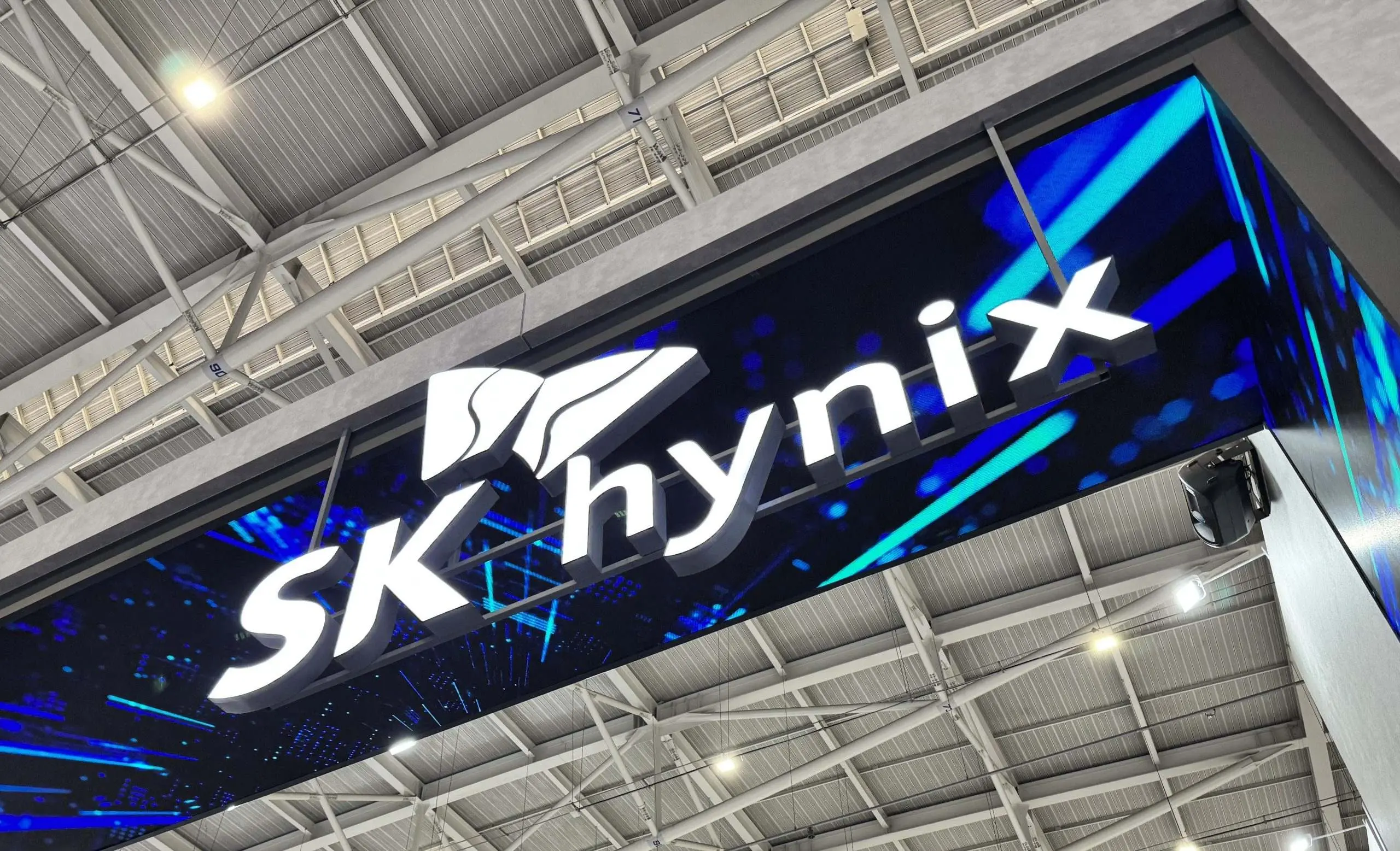
On June 22nd, driven by rising stock prices, SK Hynix’s market capitalization reached $1.35 trillion, surpassing Bitcoin's total market cap of approximately $1.29 trillion. This temporarily made it South Korea's highest-valued company. The core driver of this surge is HBM (High Bandwidth Memory), for which SK Hynix is the primary supplier to NVIDIA, holding over 60% market share. AI's demand for high memory bandwidth has translated into immense profitability, with SK Hynix reporting a 72% operating profit margin in Q1. The company's success follows a 13-year bet on HBM technology, beginning in 2009. It nearly failed after the 2001 dot-com bubble, was acquired by SK Group in 2012, and was subsequently recapitalized to continue its long-term HBM development. The article contrasts this with the Crypto AI narrative. Capital currently favors AI infrastructure players like SK Hynix due to "real orders, physical barriers, and quantifiable profit margins." In comparison, Crypto AI projects, promising decentralized compute and data markets, remain largely conceptual with limited tangible progress. Examples include Bittensor, whose core mechanisms are still under development, and Bitcoin miners transitioning to AI, who face significant funding gaps and execution challenges. The piece cites analysis suggesting the AI sector has absorbed nearly all new market liquidity since 2022, leaving little for crypto. It concludes that the current AI infrastructure红利 is captured by entities with proven technical barriers and supply capabilities, while crypto networks still need to define their concrete role in the value chain.

链捕手7 хв тому

A Company Once on the Brink of Bankruptcy Just Surpassed Bitcoin in Market Cap

链捕手7 хв тому

Bittensor Moves Towards Ultimate Decentralization: The Critical 18 Months for the TAO Ecosystem is Here?

Bittensor, a decentralized AI protocol, is accelerating its transition to full decentralization over the next 18 months, as outlined in a recent post by co-founder Const. The project currently operates in a "semi-decentralized" state: ownership and network participation are open and permissionless, with TAO distribution based on competitive contribution. However, protocol upgrades and governance have remained under core team control to enable rapid iteration in the fast-evolving AI sector. This strategic shift comes as the ecosystem matures, boasting 128 subnets and a large community. Const argues that continued centralization now poses risks, including single points of failure and regulatory scrutiny. The upcoming decentralization roadmap includes optimizing validator competition, opening liquidity pools, introducing governance rights for Alpha holders, and refining economic models. The move could fundamentally reshape TAO's value proposition, adding governance premiums to its existing valuation based on AI narrative and scarcity. It also signals a potential maturation of the AI crypto sector, where competition may shift from hype to sustainable protocol design and real economic activity. Bittensor positions itself not just as another AI token, but as foundational infrastructure aiming to decentralize intelligence production—analogous to Bitcoin's role in decentralizing money—with the goal of creating a resilient "Millennium Intelligence Federation."

marsbit19 хв тому

Bittensor Moves Towards Ultimate Decentralization: The Critical 18 Months for the TAO Ecosystem is Here?

marsbit19 хв тому

Japan's AI Dark Horse Emerges: How a 7B Small Model Challenges Fable and Mythos?

In June 2026, Sakana AI's new model Fugu caused a stir in the AI community. Its Fugu Ultra variant achieved scores of 73.7 on SWE-Bench Pro and 82.1 on TerminalBench 2.1, surpassing GPT-5.5 and Claude Opus 4.8, and was claimed to be comparable to export-restricted models like Fable 5 and Mythos Preview. Remarkably, the core of this high-performance system is not a massive model, but a small 7B-parameter RL Conductor model. Fugu operates as a multi-agent orchestrator: the 7B model acts as a "foreman," dynamically analyzing user tasks and delegating subtasks to a pool of top-tier global models (e.g., GPT-5, Gemini 3.1 Pro). It then synthesizes and verifies their outputs. This architecture represents a paradigm shift from monolithic models to an expert-team approach. It enhances performance in complex, multi-step engineering tasks like code review and security testing by enabling cross-validation from specialized models, improving long-session stability and token efficiency. However, Fugu's strengths come with trade-offs: it faces inherent latency due to multiple API calls, relies heavily on underlying US model APIs (creating dependency risks), and its benchmark comparisons with Fable/Mythos are based on reported scores, not head-to-head testing. For Japan's AI ecosystem, which lacks the massive compute and data resources of the US or China, Fugu exemplifies an "asymmetric breakthrough" strategy. Instead of competing directly in parameter scale, it focuses on intelligent orchestration of existing global models, offering a degree of AI sovereignty and resilience. While a significant system-level innovation, its ultimate capability is still bounded by the underlying models it coordinates.

marsbit19 хв тому

Japan's AI Dark Horse Emerges: How a 7B Small Model Challenges Fable and Mythos?

marsbit19 хв тому

Торгівля

Спот
Ф'ючерси

Популярні статті

Як купити CHIP

Ласкаво просимо до HTX.com! Ми зробили покупку USD.AI (CHIP) простою та зручною. Дотримуйтесь нашої покрокової інструкції, щоб розпочати свою криптовалютну подорож.Крок 1: Створіть обліковий запис на HTXВикористовуйте свою електронну пошту або номер телефону, щоб зареєструвати обліковий запис на HTX безплатно. Пройдіть безпроблемну реєстрацію й отримайте доступ до всіх функцій.ЗареєструватисьКрок 2: Перейдіть до розділу Купити крипту і виберіть спосіб оплатиКредитна/дебетова картка: використовуйте вашу картку Visa або Mastercard, щоб миттєво купити USD.AI (CHIP).Баланс: використовуйте кошти з балансу вашого рахунку HTX для безперешкодної торгівлі.Треті особи: ми додали популярні способи оплати, такі як Google Pay та Apple Pay, щоб підвищити зручність.P2P: Торгуйте безпосередньо з іншими користувачами на HTX.Позабіржова торгівля (OTC): ми пропонуємо індивідуальні послуги та конкурентні обмінні курси для трейдерів.Крок 3: Зберігайте свої USD.AI (CHIP)Після придбання USD.AI (CHIP) збережіть його у своєму обліковому записі на HTX. Крім того, ви можете відправити його в інше місце за допомогою блокчейн-переказу або використовувати його для торгівлі іншими криптовалютами.Крок 4: Торгівля USD.AI (CHIP)Легко торгуйте USD.AI (CHIP) на спотовому ринку HTX. Просто увійдіть до свого облікового запису, виберіть торгову пару, укладайте угоди та спостерігайте за ними в режимі реального часу. Ми пропонуємо зручний досвід як для початківців, так і для досвідчених трейдерів.

384 переглядів усьогоОпубліковано 2026.04.21Оновлено 2026.06.02

Як купити CHIP

Обговорення

Ласкаво просимо до спільноти HTX. Тут ви можете бути в курсі останніх подій розвитку платформи та отримати доступ до професійної ринкової інформації. Нижче представлені думки користувачів щодо ціни CHIP (CHIP).

活动图片