Farewell to Traditional Bull and Bear Markets, Deciphering the Logic of Today's Bubble Rotation

Foresight NewsОпубліковано о 2026-06-08Востаннє оновлено о 2026-06-08

Анотація

"Farewell to Traditional Bulls and Bears: Understanding Today's Market Logic of Bubble Rotation" The article draws a parallel between modern financial markets and a meteorological chain of thunderstorms, contrasting it with the past's slower-moving, more predictable 'layered cloud' systems of long bull/bear cycles and gradual sector rotations. The author argues that today's market has undergone a permanent structural shift, creating an environment where discrete, intense thematic bubbles (e.g., AI, GLP-1 drugs, crypto, robotics, quantum tech) sequentially form, swell, and burst. These 'storm cells' are triggered when capital fleeing a dying bubble acts like a meteorological 'cold air wedge,' forcing the warm, moist capital of latent interest in a new sector to rapidly rise and condense into the next speculative frenzy. This new 'convective' market regime is driven by eight fundamental changes: 1. Democratization of speculation via zero-commission trading, gamified apps, and heavy retail participation in instruments like 0DTE options. 2. Permanent, price-insensitive buying pressure from defined-contribution retirement plans (e.g., 401(k)s). 3. Passive investing creating inelastic market participants that amplify momentum, especially into mega-cap stocks. 4. The dominance of multi-strategy funds and high-frequency trading (HFT), weakening price discovery and creating fragile microstructure prone to synchronized sell-offs. 5. Artificially suppressed volatility that eventually...


Author: Smac, Partner at Compound VC

Translation: Saoirse, Foresight News


Editor's Note: Market hotspots are emerging one after another, with the AI frenzy sweeping across the board, while some question whether it will repeat the bubble of the metaverse. Amidst the clamor, people are often swept up by current trends, unable to see the long-term picture. To make rational judgments, one must learn to elevate their perspective. Smac, a partner at Compound, uses a meteorological analogy to dissect the market logic behind the rotating bubbles.


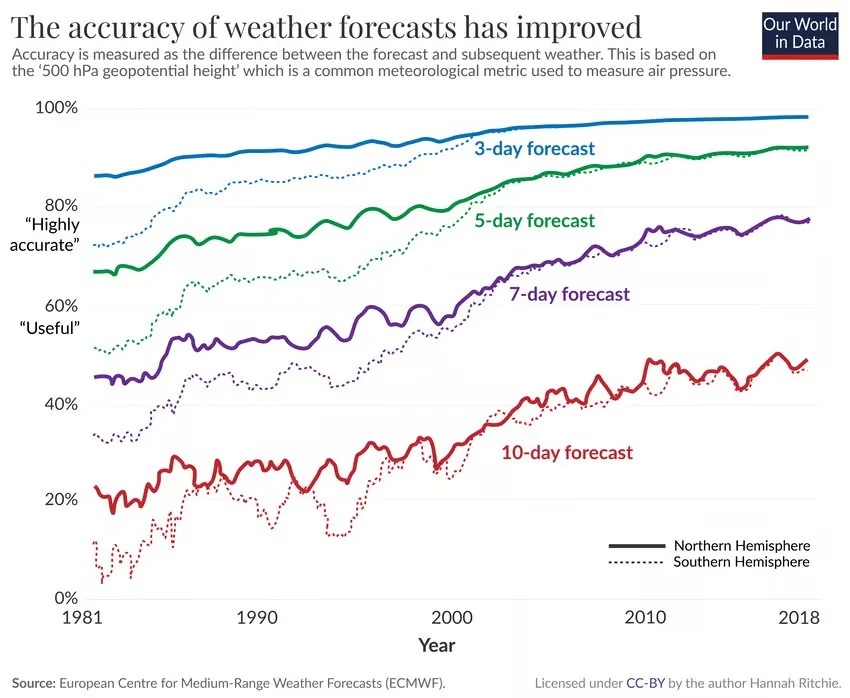
Meteorology is a fascinating field. Over the past fifty years, various forecasting tools have evolved, increasing the accuracy of weather predictions. Today's five-day forecast is as reliable as the single-day forecast from thirty years ago.


To most people, weather is a coherent, moving system: clouds roll in, rain falls, it stops, and it clears. Imagine a winter front arriving; the image that likely comes to mind is a vast, grey cloud cover stretching hundreds of miles, dumping heavy snow. Meteorologists call this stratiform weather, essentially like a layered cake, where the same weather experience unfolds across the covered area.


But weather isn't limited to this single form. If you've seen a summer thunderstorm in the plains, you'll notice it operates differently. First, an individual convective cell forms: warm, moist air near the ground rises, meets cold air aloft, condenses, and forms a towering, localized cumulonimbus cloud. Within an hour, hail, lightning, and torrential rain follow, visibility dropping to under a hundred meters.


Once the cell reaches its peak and releases its energy, it gradually dissipates. The storm's downdraft of cold air spreads outward at speeds up to 40 miles per hour. When this cold air collides with surrounding warm, moist air that hasn't yet formed a storm, it acts like a wedge, pushing the warm air upward again.


As long as sufficient atmospheric instability exists, this "cold air wedge" can trigger a new convective cell ten or more miles away from the original storm.
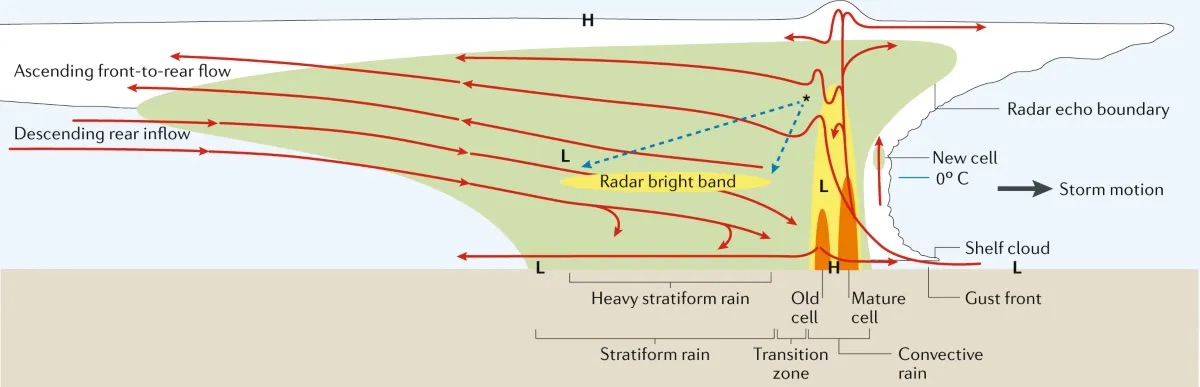


The new cell couldn't have formed on its own; the energy was already present in the atmosphere, lacking only a trigger, which the dying storm provided. Then, the new cell repeats the evolution of the previous storm.


When multiple convective cells form in sequence, they constitute a Mesoscale Convective System. From the ground, one only encounters each storm individually; each one feels like the entire weather system. On one side, all is calm, with people unaware of the coming storm; on the other side, the rain has already passed. But from a satellite's eye view, you see a series of separate cells linked in a line, each at a different stage of development, moving forward until it exhausts the warm, moist air along its path.
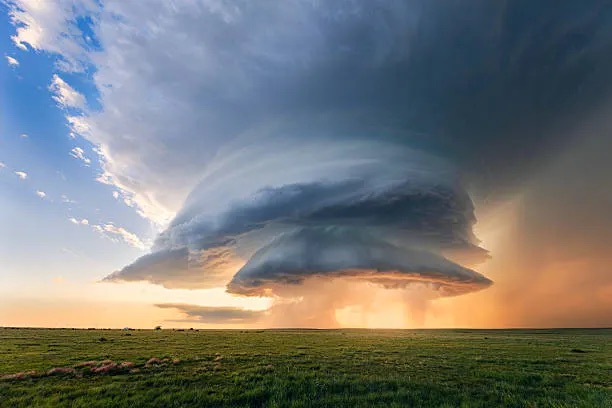

Supercell storm cloud near Amistad, New Mexico, at sunset


This sequential storm system requires vastly different atmospheric conditions than a single frontal system:

  • Warm, moist air near the surface acts as the storm's "fuel."
  • Dry, cold air aloft encourages the warm air to rise, creating atmospheric instability.
  • Winds varying with altitude cause the storm to rotate and move laterally, known as wind shear.


When these three conditions align, a parade of storms unfolds.


After all this meteorology, back to the point: the financial markets today operate almost exactly like this meteorological phenomenon.


The markets of the past were like stratiform weather systems: a multi-year bull market, followed by a multi-year bear market, with slow rotations of sector leadership. The 1982-2000 long bull market, followed by the internet bubble, then the 2003-2007 real estate and credit cycle. These cycles were long and clear. Even if investors' timing was off by years, understanding the major trend still led to profits.


But today's market is nothing like that. We are in a convective storm chain market: one hot sector after another hits like sequential storms. To those inside, each surge feels unstoppable and all-encompassing.


Capital flows out of fading narratives and ignites new frenzies in adjacent areas. The pace of leadership rotation has dramatically accelerated—AI infrastructure, GLP-1s (a class of diabetes drugs popular for weight loss, now a hot investment theme), stablecoins, quantum technology, nuclear energy, decentralized autonomous tech, robotics, space... Each undergoes a complete hype cycle, with its own cohort of true believers, a full narrative arc, and inevitably, a correction. The "cold air" from the dying bubble spreads out, igniting the next hotspot in a new area.


Refusing to acknowledge this fundamental market shift is self-delusion. People love to mock the phrase "this time is different," but ignoring permanent changes in the financial environment is either intellectual laziness or stubborn nostalgia for a market that no longer exists.


A Market Landscape Transformed


For a long time after WWII, financial markets moved at the pace of slow-moving weather systems. A bull market could last ten, fifteen, even twenty years, with rotations still anchored to long-term secular trends.
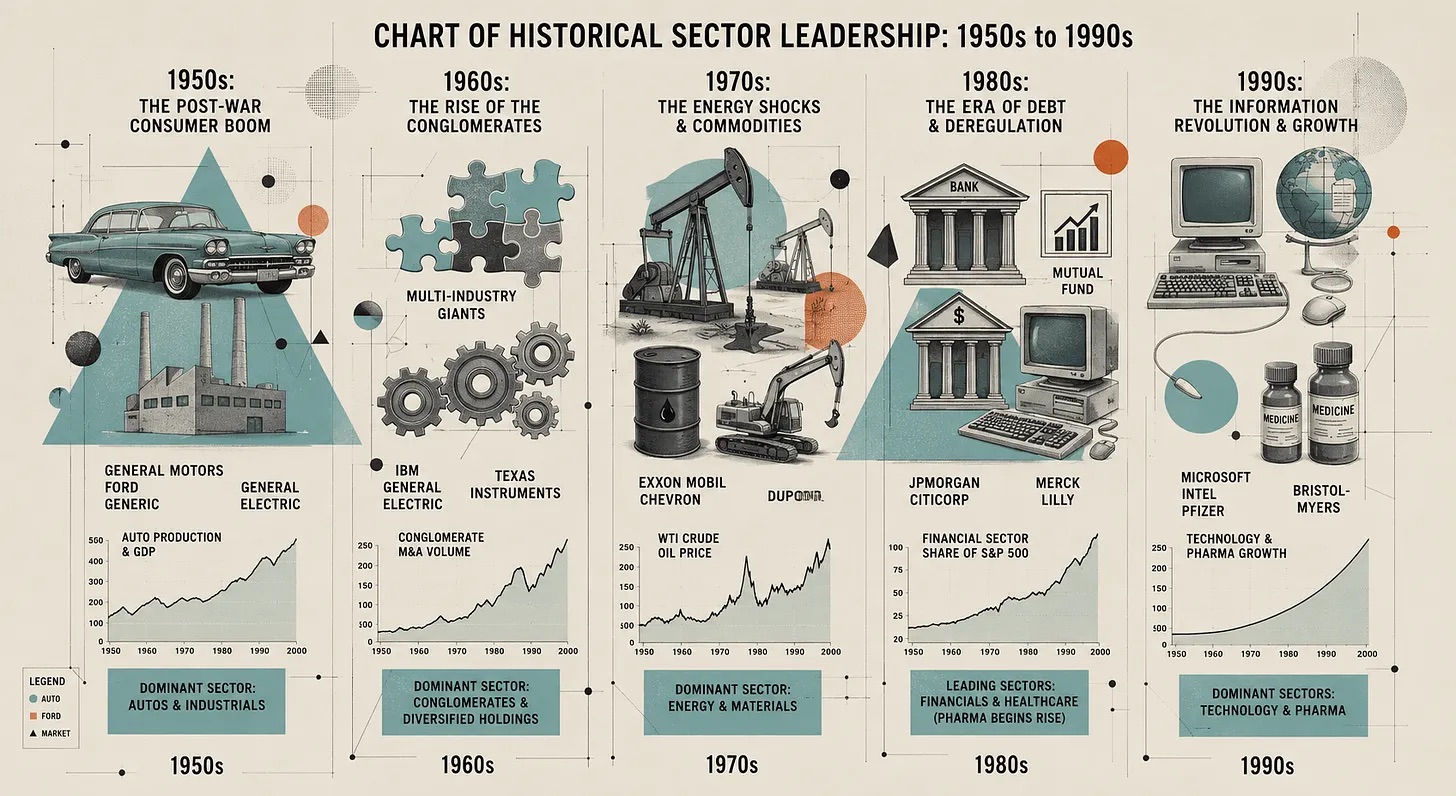

Approximate timeline of thematic sectors and leading market segments


Back then, sector rotations occurred within a unified macro backdrop. Only at major inflection points—the breakdown of Bretton Woods, Volcker's anti-inflation push, the peak of the dot-com bubble, the Global Financial Crisis—did the grand market regime truly shift.


This structure arose from many factors: high transaction costs, minimal retail participation forcing a long-term holding mindset, pension funds as the primary retirement vehicle. The S&P 500 was dominated by manufacturing, energy, banking, and retail—companies whose earnings grew roughly in line with the economy, stable and predictable. Information also moved slowly; an annual report might take weeks to be digested by most investors.


Volatility was also more symmetrical. Deep corrections followed bull markets, with leverage unwinding slowly over long periods. Rallies in bear markets were similarly gradual. The market lingered in different emotional states for long stretches, with regime changes measured in quarters or years.


In the weather analogy, the old market had: moderate fuel, high atmospheric stability, weak wind shear. Long, smooth waves. Investors could plan accordingly. Today, all environmental conditions have changed, some reversed, leading to a structural transformation.


Where Did the Change Come From?


Numerous shifts intertwine and amplify each other, each alone powerful enough to reshape markets. In summary, there are eight core transformations:


  1. The Democratization of Speculation
  2. The Formation of Perpetual Buyers
  3. Passive Investing Creates Inelastic Counterparties
  4. The Rise of Multi-Strategy & HFT, The Disappearance of the Middle
  5. Volatility Suppression
  6. A Complete Shift in Index Composition
  7. The End of Information Latency
  8. Fiscal & Monetary Regime Change


1. The Democratization of Speculation


The participant base has visibly changed. In the 1990s, retail trading accounted for only ~10% of US equity volume. High commissions meant retail mostly bought and held stocks, with little active speculation.


Robinhood pioneered zero-commission trades and payment for order flow. In Fall 2019, Schwab eliminated commissions, followed by Fidelity, TD Ameritrade, E*Trade—rewriting the rulebook.


Covid accelerated this: stimulus checks, idle time at home, gamified mobile trading apps. Retail's share of volume surged to ~25% in 2020-2021. Many thought it was temporary, but elevated retail participation persists. On April 29, 2025, amid market gyrations from tariff news, JPMorgan data showed retail order flow hitting a record 48% of volume. On normal days, it's over double pre-Covid levels; during big moves, it can reach 35%.


The deeper change is in *what* retail trades. Single-stock options dominate, with zero-day-to-expiration options exploding. The new cohort is younger, highly concentrated, trades narratives. Critically, they often use leverage not captured in margin data, and trade more on price action than fundamentals, heavily influenced by social signals.


In weather terms: the market's "warm, moist air" near the surface is more abundant than ever, with immense latent energy potential.


2. The Formation of Perpetual Buyers


I've written about this before. In short, the US retirement system shifted from Defined Benefit pensions to Defined Contribution plans. Individuals now must manage their own retirement savings. This translates to a massive, price-insensitive, passive flow of capital into equities every pay period—an automated, perpetual bid.


Traditional pensions operated differently: DB plans had to manage duration risk against liabilities. Managers made active judgments on valuation; if stocks were expensive, they could tilt towards bonds. Even if slow-moving, this was far more active than today's purely passive perpetual bid.


This is crucial: the marginal trading dollar today has far more price impact than before.


3. Passive Investing Creates Inelastic Counterparties


Passive index investing, by definition, buys and sells irrespective of price, purely based on index weight. The higher a stock's market cap, the more passive money flows in, and vice versa. This inherently embeds momentum into the market's plumbing. The Magnificent Seven's dominance is partly fueled by this.


Countless articles have detailed index concentration. Yes, these companies are exceptionally profitable and growing. But the core issue: there is no natural "sell" switch for passive flows.


4. The Rise of Multi-Strategy & HFT, The Disappearance of the Middle


While perpetual passive buyers formed, the active trading landscape also transformed. The hallmark is the rise of multi-strategy pod shops: Citadel, Millennium, Point72, Balyasny—housing hundreds of independent PMs running specific strategies under strict risk controls. AUM for these firms exploded, concentration mirroring index concentration.


Simultaneously, High-Frequency Trading now accounts for 50-60% of US equity volume, ~75% in futures. This combination creates a fragile market microstructure: funds trade against each other, weakening price discovery. Much of the volume is just capital churning within the system.


In normal times, bid-ask spreads are razor-thin—a good thing. But when a narrative breaks, positioning becomes extreme, or multiple firms' risk limits are breached, the microstructure fails. PMs' risk exposures are highly correlated, stop-loss rules similar. One firm's forced selling triggers others'. Think Feb 2018, Aug 2019, Mar 2020, Aug 2024. The structure enabling these events is now entrenched and will repeat.


Traditional fundamental long/short hedge funds are being squeezed out. These funds ran 20-40 stock books based on deep research, with investment horizons of quarters. Now, they're absorbed into larger platforms, move to private markets, family offices, or single-strategy funds. I believe there's still significant alpha in understanding narrative rotation and patience amidst short-term flows.


5. Volatility Suppression


Combining the above four points, today's volatility regime makes sense. Since 1990, the VIX has closed below 20 on about two-thirds of trading days. Volatility exhibits ~85% day-to-day correlation, meaning today's vol level heavily depends on yesterday's.


But regime shifts are extreme and asymmetrical. Numerous studies show suppressed volatility eventually breaks out violently over a few days, but decays back slowly over weeks.


The reasons are structural: a massive "short vol" industry exists. The rise of 0DTE options means market makers' hedging further suppresses intraday vol. Markets simmer at low volatility, risk builds, and when tail risks emerge, everyone rushes for the exits simultaneously.


Simply put, volatility distribution is now more pathological: long periods of compression lead to more violent decompressions.


6. A Complete Shift in Index Composition


The sixth change is the composition of the indices themselves. In 1980, the S&P 500 was dominated by manufacturers: Industrials, Materials, Energy, Financials, Staples. Their earnings grew roughly with GDP, stable, with valuation multiples mean-reverting. Forecasting P&G's earnings five years out wasn't wildly off.
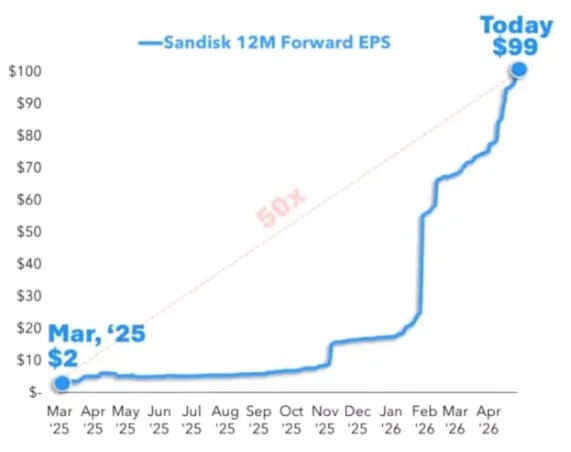


Today is different. Information Technology, Communication Services, plus tech-heavy names in Consumer Discretionary like Amazon and Tesla, comprise over 40% of the S&P 500. These companies' earnings aren't linear. Software has near-zero marginal distribution costs. AI is profoundly uncertain—will AI labs become the core infrastructure for the next half-century, or money-losing science projects? Opinions diverge wildly.


For such companies, forecasting near-term earnings is hard; long-term value is highly speculative, leading to massive valuation swings. Valuation relies less on financial statements, more on narrative. For investors who can anticipate technological frontiers, competitive moats, and nascent markets, this creates massive alpha opportunities.


Traditional manufacturers expand capacity gradually, DCF models are stable, multiples mean-revert. Now, valuation often hinges on the market's belief in a story. This isn't to say traditional valuation is dead; it's the reality for these new asset types.


Today's major indices are packed with these long-duration, narrative-driven assets. The steeper the temperature gradient in the atmosphere, the more potential energy. Similarly, more of these assets mean more potential market energy, leading to more violent moves when triggered.


7. The End of Information Latency


Everyone feels this intuitively, but its impact is underrated. For most of financial history, market-relevant information traveled with the speed of its distribution medium. Now, information is virtually latency-free.


Especially positioning information travels faster than ever. Investors see real-time reactions of known figures. More people publicize their positions. A torrent of real-time info fuels FOMO. Gain screenshots abound, stories of turning $1k into millions go viral. The fear of missing out is perpetual.


8. Fiscal & Monetary Regime Change


This needs little elaboration. The summary:

  • Persistently accommodative US monetary policy, low real rates.
  • Quantitative Easing expanding the Fed's balance sheet.
  • Low discount rates elevating prices of all long-duration assets.
  • Activist fiscal policy—stimulus checks, industrial policy bills.
  • Full employment alongside wartime-sized deficits.
  • A K-shaped economy, decoupling financial markets from Main Street.


How the Storms Form


Combine all the above, and rotating market bubbles become an inevitable outcome.
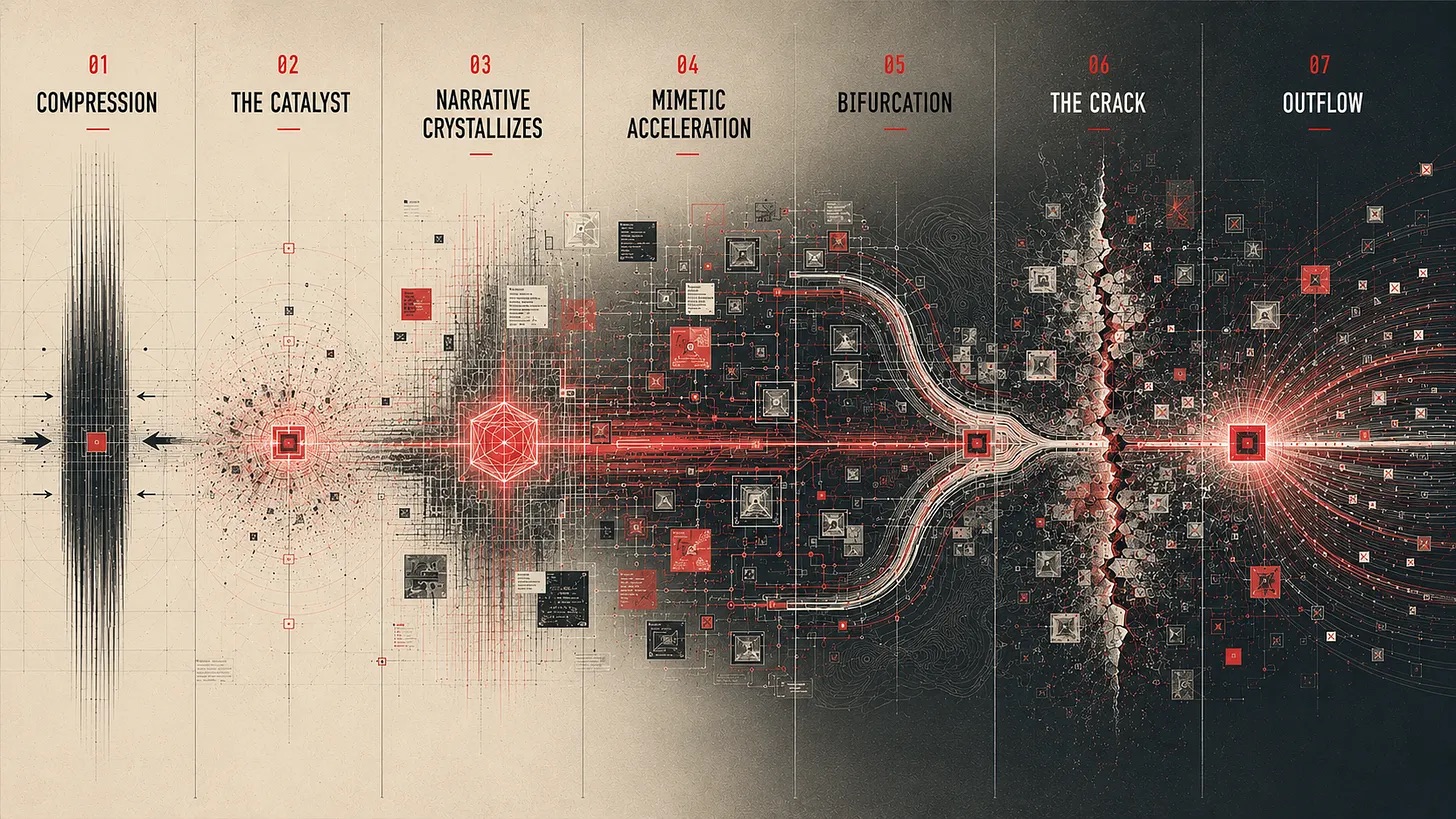


The lifecycle is multi-stage and logical:

  • Dormancy: Sectors fall out of favor, ignored. But work continues in obscurity.
  • Catalyst: A genuine breakthrough—technical, regulatory, earnings—noticed first by deep sector specialists.
  • Narrative Formation: A cohesive market narrative emerges, dramatically lowering the cognitive barrier to entry. Purists may hate the simplification, but simple stories enable mass participation.
  • Divergence of Opinion: Clear polarization occurs. Beyond true believers, the pool of potential marginal buyers shrinks. The gap between bulls' and bears' valuation estimates widens.
  • Break: In hindsight, the peak is always clear. Today's participants are eager to call tops, a natural outcome of the attention economy. Once the narrative cracks, concerted selling begins. Capital seeks a new home.
  • New Hotspot Emerges: The outflowing capital—the "cold air wedge"—triggers the next bubble in a new area.


Looking Ahead


The implications of this new regime are profound. We can predict the *shape* of the storm chain, but not the exact *location* of each cell.


Post-Covid, many believed market aberrations were temporary or unique to ZIRP. Some of that was true, but it's now clear the structural shift is permanent. None of the eight drivers are reversing:


  • Commissions aren't coming back.
  • Passive AUM isn't shrinking.
  • Traditional DB pensions are gone for good.
  • Social media and information speed will only increase.
  • Multi-strategy shops may evolve but, given their scale/profitability, aren't disappearing soon.
  • Information latency isn't getting longer.


This environment is the new "climate." Expecting a return to the slow, stratified markets of the 80s/90s is refusing to face reality.


Some argue the duration of each bubble will compress indefinitely. That's hard to say, as it becomes a game of anticipating others' anticipation. But one thing is certain: each cycle educates participants, potentially accelerating the next. Crypto traders now play by traditional market rules. However, narrative-driven cycles have a natural minimum duration; they can't accelerate infinitely.


This rotating bubble market primarily benefits two types of investors. First, **deep sector specialists** who understand the underlying tech, regulation, supply chains, unit economics, and can judge if the narrative can become reality. AI tools will make many think they belong here—a dangerous trap. Second, **regime observers**. Most investors fall here, tasked with identifying what the dominant sophisticated cohort is doing.


And the pipeline of future narratives is rich: AI infrastructure & apps, robotics, embodied AI, precision medicine, crypto, materials science, fusion & advanced fission, grid storage, space, brain-computer interfaces, quantum. Even within a megatrend, different segments (upstream/downstream, layers of the tech stack) will bubble sequentially.


Retail has innate advantages in this market: time flexibility, no investment committee meetings, no quarterly redemption pressures. The effective "buy the dip" strategy of recent years provided a baseline. With proper risk management, retail can thrive here.


Rising Above the Storm


Explaining the structure might sound like I'm making a value judgment. I have my opinions. In venture, we can choose not to fund projects with negative social externalities. But in public markets, the most common error is predicting the market you *wish* existed, not the one that does.


It's a human emotional bug; even Newton fell victim to it.


Emotion is the enemy of returns. Constantly, you see asset managers on TV calling for a crash, a recession. They are perma-bears, rarely right.


The market isn't going back. Is this storm-chain regime more pathological than the old one? I can't say. Objectively, many changes enabling it are positive: lower investment barriers, automated retirement savings, accessible passive vehicles, real-time information—democratizing finance.


On the ground, each storm feels all-encompassing, vision limited to the immediate squall. That's the experience inside each sector bubble: a gravitational pull absorbing all market attention. To see the full chain—one bubble dying, the next igniting—you must actively elevate your perspective. Participants in each cycle are lost in their own mania or despair.


Markets are fascinating because they constantly evolve, yet price discovery remains a human endeavor. Humans are emotional and repeat mistakes. This tension creates what we see: seeming chaos up close, but from a higher vantage, just a rolling sequence of bubbles.


The core intent here is to encourage stepping out of the immediate storm, observing from a higher plane, seeing where the chain is headed, and avoiding being swept away by the emotions of any single bubble.


Simple in theory, demanding immense discipline in practice. Easier said than done.

Пов'язані питання

QWhat core analogy does the author use to describe the modern financial market, and what are its key characteristics?

AThe author uses the meteorological analogy of a 'convective storm chain' or 'mesoscale convective system' to describe the modern market. Its key characteristics are the rapid, sequential formation of individual speculative 'bubbles' or 'storms' in different sectors (like AI, GLP-1s, crypto). Each storm feeds off market energy (capital/enthusiasm), reaches a peak, and then dissipates. The outflow from a fading bubble acts as a 'cold air wedge' that triggers the next bubble in an adjacent sector, creating a continuous chain of rolling speculation rather than a single, long-lasting 'front' of a traditional bull market.

QWhat are the three atmospheric conditions necessary for a convective storm chain, and how do they correspond to the author's view of the current market structure?

A1. Warm, moist air near the surface (Fuel) -> Corresponds to a massive, retail-driven speculative base using leverage and options. 2. Dry, cold air aloft (Instability) -> Corresponds to a market index full of long-duration, narrative-driven companies (like tech/AI) with high valuation uncertainty, creating potential energy. 3. Wind shear (directional wind change with altitude) -> Corresponds to the specific triggering mechanisms (e.g., a tech breakthrough, policy change) that force the warm speculative capital upward to initiate a new bubble, and the fast flow of information/capital that propels it sideways.

QList three of the eight fundamental market shifts the author identifies as creating the 'convective' environment.

A1. Democratization of Speculation: Zero-commission trading, gamified apps, and high retail participation (especially in options) have created a massive, energetic 'fuel' layer. 2. The Rise of Passive Perpetual Buying: The shift from defined-benefit pensions to defined-contribution plans (like 401(k)s) creates constant, price-insensitive inflows into the market, providing a persistent bid. 3. The Dominance of Multi-Strategy Funds and HFT: These actors, with correlated risk models, provide liquidity in calm times but can cause microstructural breakdowns during stress, as they all rush for exits simultaneously, amplifying volatility.

QAccording to the author, which two types of investors are best positioned to benefit in this new market regime?

A1. Deep Fundamental Analysts: Those who can truly understand the technology, regulatory landscape, supply chains, and unit economics behind a narrative to judge if expectations are realistic. 2. Flow/Trend Observers: Those who focus on identifying and following the momentum and actions of the dominant professional players and capital flows, rather than fighting the prevailing trend.

QWhy does the author believe the shift to this 'chain of rolling bubbles' market structure is permanent, not a temporary anomaly?

AThe author argues the eight underlying drivers are structural and unlikely to reverse: trading commissions won't go back up; passive investing will not shrink; defined-benefit pensions are gone for good; information flow will only get faster; large multi-strategy firms are entrenched; and low interest rates/fiscal deficits have become a persistent feature. Therefore, this new 'climate' is the enduring baseline for markets, not a transient weather pattern.

Пов'язані матеріали

Bitcoin Monthly Chart Adjustment Structure Established, HYPE Entry Opportunity Emerges | Exclusive Analysis

Bitcoin Monthly Correction Structure Confirmed, HYPE Entry Opportunity Emerges | Guest Analysis Last week's analysis correctly identified that the $60,000 level for Bitcoin was an intermediate point, not the bottom of the current correction. This was validated on June 5th when the price broke below this key support, dropping to around $59,100. The monthly-level a-b-c three-wave corrective structure from the October 2025 high of $126,200 is now fully established, with the market currently in the c-wave decline phase. The cumulative adjustment time is less than 35 days, indicating the structure is far from complete. This week's focus will be tracking the rebound's strength and resistance performance. The two key resistance zones of $65,000 and $69,500~$70,500 will be crucial observation points for determining the subsequent trend. For HYPE, last week's top warning signal was also validated, with the price falling up to 27% from its $75.87 high. The token has now entered a support zone, presenting a potential short-term entry opportunity. From a strategic standpoint, the medium-term outlook remains bearish, awaiting optimal timing to add short positions upon a rebound. **Key Trading Views Summary:** * **BTC:** The analysis maintains a bearish medium-term bias. Strategy involves building short positions on rebounds towards $65,000 or the $69,500~$70,500 resistance area. A break below the $59,000-$60,000 support could trigger additional short entries. Short-term trading (30% capital) focuses on range-bound opportunities. * **HYPE:** Following a confirmed correction from the $75.87 high, the short-term strategy shifts to "buying on dips." Consider light long positions (under 30%仓位) if the price finds support and shows stabilization signals in the $55-$57 or deeper $47-$49 support zones, contingent on confirming technical signals. The key resistance to watch is the $62.5-$64.57 area. **Risk Management Reminder:** Always set an initial stop-loss immediately upon opening a position. Move the stop-loss to breakeven upon achieving 1% profit, and subsequently trail it to lock in gains. Market conditions change rapidly; this analysis is for informational purposes only and not investment advice.

marsbit38 хв тому

Bitcoin Monthly Chart Adjustment Structure Established, HYPE Entry Opportunity Emerges | Exclusive Analysis

marsbit38 хв тому

Valuation Surpasses 200 Billion, Kimi Reportedly Raises 13.6 Billion More, Speeds Up Hong Kong IPO

Beijing-based AI unicoth MoonDark (Kimi) is reportedly in talks for a new funding round aiming to raise up to $20 billion (approximately RMB 136 billion), targeting a post-money valuation of $300 billion (approximately RMB 2.035 trillion). If successful, this would mark its third round in six months and a six-fold increase from its $43 billion valuation in December last year. Last month, the company completed a $20 billion funding round led by Meituan Longzhu, reaching a valuation exceeding $200 billion. According to reports, MoonDark has raised over RMB 376 billion across six rounds, making it the most funded large language model startup in China. Founded in 2023 by CEO Yang Zhilin, the company's core product is the Kimi AI Assistant. In April, it launched and open-sourced its flagship model, Kimi K2.6, which has demonstrated performance comparable to top models like GPT-5.4 in certain benchmarks. Recently, it began beta testing for Kimi Work, a local AI agent for knowledge workers. Commercially, the company's Annual Recurring Revenue (ARR) reportedly surpassed $2 billion in April. Regarding its IPO plans, Bloomberg reported in March that MoonDark is preparing for a listing in Hong Kong, though the process remains in early stages. The funding and IPO pace for leading Chinese AI firms has accelerated notably in 2026, mirroring global trends where companies like OpenAI and Anthropic are also setting new fundraising and valuation records. Securing substantial capital is becoming a critical factor in the competitive landscape alongside model capabilities.

marsbit41 хв тому

Valuation Surpasses 200 Billion, Kimi Reportedly Raises 13.6 Billion More, Speeds Up Hong Kong IPO

marsbit41 хв тому

Торгівля

Спот
Ф'ючерси

Популярні статті

Що таке $S$

Розуміння SPERO: Комплексний огляд Вступ до SPERO Оскільки ландшафт інновацій продовжує еволюціонувати, виникнення технологій web3 та криптовалютних проектів відіграє ключову роль у формуванні цифрового майбутнього. Один з проектів, який привернув увагу в цій динамічній сфері, — це SPERO, позначений як SPERO,$$s$. Ця стаття має на меті зібрати та представити детальну інформацію про SPERO, щоб допомогти ентузіастам та інвесторам зрозуміти його основи, цілі та інновації в рамках web3 та крипто-сектору. Що таке SPERO,$$s$? SPERO,$$s$ — це унікальний проект у криптопросторі, який прагне використати принципи децентралізації та технології блокчейн для створення екосистеми, що сприяє залученню, корисності та фінансовій інклюзії. Проект розроблений для полегшення взаємодії між користувачами новими способами, надаючи їм інноваційні фінансові рішення та послуги. У своїй основі SPERO,$$s$ прагне надати можливості індивідам, забезпечуючи інструменти та платформи, які покращують користувацький досвід у криптовалютному просторі. Це включає в себе можливість більш гнучких методів транзакцій, сприяння ініціативам, що підтримуються спільнотою, та створення шляхів для фінансових можливостей через децентралізовані додатки (dApps). Основна концепція SPERO,$$s$ обертається навколо інклюзивності, прагнучи зменшити розриви в традиційній фінансовій системі, використовуючи переваги технології блокчейн. Хто є творцем SPERO,$$s$? Особистість творця SPERO,$$s$ залишається дещо невідомою, оскільки є обмежені публічно доступні ресурси, що надають детальну інформацію про його засновників. Ця відсутність прозорості може бути наслідком зобов'язання проекту до децентралізації — етики, яку багато проектів web3 поділяють, ставлячи колективні внески вище за індивідуальне визнання. Зосереджуючи обговорення навколо спільноти та її колективних цілей, SPERO,$$s$ втілює суть наділення без виділення конкретних осіб. Таким чином, розуміння етики та місії SPERO є більш важливим, ніж ідентифікація єдиного творця. Хто є інвесторами SPERO,$$s$? SPERO,$$s$ підтримується різноманітними інвесторами, починаючи від венчурних капіталістів до ангельських інвесторів, які прагнуть сприяти інноваціям у крипто-секторі. Зосередження цих інвесторів зазвичай узгоджується з місією SPERO — пріоритет надається проектам, які обіцяють технологічний прогрес у суспільстві, фінансову інклюзію та децентралізоване управління. Ці інвесторські фонди зазвичай зацікавлені в проектах, які не лише пропонують інноваційні продукти, але й позитивно впливають на спільноту блокчейн та її екосистеми. Підтримка з боку цих інвесторів підкріплює SPERO,$$s$ як значного конкурента в швидко змінюваній сфері крипто-проектів. Як працює SPERO,$$s$? SPERO,$$s$ використовує багатогранну структуру, яка відрізняє його від традиційних криптовалютних проектів. Ось деякі ключові особливості, які підкреслюють його унікальність та інноваційність: Децентралізоване управління: SPERO,$$s$ інтегрує моделі децентралізованого управління, надаючи користувачам можливість активно брати участь у процесах прийняття рішень щодо майбутнього проекту. Цей підхід сприяє відчуттю власності та відповідальності серед членів спільноти. Корисність токена: SPERO,$$s$ використовує свій власний криптовалютний токен, розроблений для виконання різних функцій в екосистемі. Ці токени дозволяють здійснювати транзакції, отримувати винагороди та полегшувати послуги, що пропонуються на платформі, підвищуючи загальну залученість та корисність. Шарова архітектура: Технічна архітектура SPERO,$$s$ підтримує модульність та масштабованість, що дозволяє безперешкодно інтегрувати додаткові функції та додатки в міру розвитку проекту. Ця адаптивність є надзвичайно важливою для збереження актуальності в постійно змінюваному крипто-ландшафті. Залучення спільноти: Проект підкреслює ініціативи, що підтримуються спільнотою, використовуючи механізми, які стимулюють співпрацю та зворотний зв'язок. Підтримуючи сильну спільноту, SPERO,$$s$ може краще задовольняти потреби користувачів та адаптуватися до ринкових тенденцій. Фокус на інклюзію: Пропонуючи низькі комісії за транзакції та зручні інтерфейси, SPERO,$$s$ прагне залучити різноманітну базу користувачів, включаючи осіб, які раніше не брали участі в крипто-просторі. Це зобов'язання до інклюзії узгоджується з його загальною місією наділення через доступність. Хронологія SPERO,$$s$ Розуміння історії проекту надає важливі уявлення про його розвиток та етапи. Нижче наведено пропоновану хронологію, що відображає значні події в еволюції SPERO,$$s$: Етап концептуалізації та ідеації: Початкові ідеї, що стали основою SPERO,$$s$, були сформовані, тісно пов'язані з принципами децентралізації та фокусом на спільноті в індустрії блокчейн. Запуск білого паперу проекту: Після концептуального етапу був випущений комплексний білий папір, що детально описує бачення, цілі та технологічну інфраструктуру SPERO,$$s$, щоб залучити інтерес та зворотний зв'язок від спільноти. Створення спільноти та ранні залучення: Активні зусилля були спрямовані на створення спільноти ранніх прихильників та потенційних інвесторів, що полегшило обговорення цілей проекту та отримання підтримки. Подія генерації токенів: SPERO,$$s$ провів подію генерації токенів (TGE) для розподілу своїх рідних токенів серед ранніх прихильників та встановлення початкової ліквідності в екосистемі. Запуск початкового dApp: Перший децентралізований додаток (dApp), пов'язаний з SPERO,$$s$, став доступним, дозволяючи користувачам взаємодіяти з основними функціями платформи. Постійний розвиток та партнерства: Безперервні оновлення та вдосконалення пропозицій проекту, включаючи стратегічні партнерства з іншими учасниками блокчейн-простору, сформували SPERO,$$s$ у конкурентоспроможного та еволюціонуючого гравця на крипто-ринку. Висновок SPERO,$$s$ є свідченням потенціалу web3 та криптовалют для революціонізації фінансових систем та наділення індивідів. Завдяки зобов'язанню до децентралізованого управління, залучення спільноти та інноваційно спроектованих функцій, він прокладає шлях до більш інклюзивного фінансового ландшафту. Як і з будь-якими інвестиціями в швидко змінюваному крипто-просторі, потенційним інвесторам та користувачам рекомендується ретельно досліджувати та обдумано взаємодіяти з поточними подіями в SPERO,$$s$. Проект демонструє інноваційний дух крипто-індустрії, запрошуючи до подальшого дослідження його численних можливостей. Хоча подорож SPERO,$$s$ ще триває, його основні принципи можуть справді вплинути на майбутнє того, як ми взаємодіємо з технологією, фінансами та один з одним у взаємопов'язаних цифрових екосистемах.

73 переглядів усьогоОпубліковано 2024.12.17Оновлено 2024.12.17

Що таке $S$

Що таке AGENT S

Агент S: Майбутнє автономної взаємодії в Web3 Вступ У постійно змінюваному ландшафті Web3 та криптовалюти інновації постійно переосмислюють, як люди взаємодіють з цифровими платформами. Один з таких новаторських проектів, Агент S, обіцяє революціонізувати взаємодію людини з комп'ютером через свою відкриту агентну структуру. Прокладаючи шлях для автономних взаємодій, Агент S прагне спростити складні завдання, пропонуючи трансформаційні застосування в штучному інтелекті (ШІ). Це детальне дослідження заглиблюється в складності проекту, його унікальні особливості та наслідки для сфери криптовалюти. Що таке Агент S? Агент S є революційною відкритою агентною структурою, спеціально розробленою для вирішення трьох основних викликів в автоматизації комп'ютерних завдань: Набуття специфічних знань у галузі: Структура інтелектуально навчається з різних зовнішніх джерел знань та внутрішнього досвіду. Цей подвійний підхід дозволяє їй створити багатий репозиторій специфічних знань у галузі, покращуючи її продуктивність у виконанні завдань. Планування на довгих горизонтах завдань: Агент S використовує планування з підкріпленням досвіду, стратегічний підхід, який полегшує ефективний розподіл та виконання складних завдань. Ця функція значно підвищує її здатність ефективно та результативно управляти кількома підзавданнями. Обробка динамічних, неоднорідних інтерфейсів: Проект представляє Інтерфейс Агент-Комп'ютер (ACI), інноваційне рішення, яке покращує взаємодію між агентами та користувачами. Використовуючи багатомодальні великі мовні моделі (MLLMs), Агент S може безперешкодно орієнтуватися та маніпулювати різноманітними графічними інтерфейсами користувача. Завдяки цим новаторським функціям Агент S надає надійну структуру, яка вирішує складнощі, пов'язані з автоматизацією людської взаємодії з машинами, прокладаючи шлях для численних застосувань у ШІ та за його межами. Хто є творцем Агент S? Хоча концепція Агент S є фундаментально новаторською, конкретна інформація про його творця залишається невідомою. Творець наразі невідомий, що підкреслює або початкову стадію проекту, або стратегічний вибір зберегти засновників у таємниці. Незважаючи на анонімність, акцент залишається на можливостях та потенціалі структури. Хто є інвесторами Агент S? Оскільки Агент S є відносно новим у криптографічній екосистемі, детальна інформація про його інвесторів та фінансових спонсорів не задокументована. Відсутність публічно доступних відомостей про інвестиційні фонди або організації, що підтримують проект, викликає питання щодо його фінансової структури та дорожньої карти розвитку. Розуміння підтримки є критично важливим для оцінки стійкості проекту та потенційного впливу на ринок. Як працює Агент S? В основі Агент S лежить передова технологія, яка дозволяє йому ефективно функціонувати в різних умовах. Його операційна модель побудована навколо кількох ключових функцій: Взаємодія з комп'ютером, подібна до людської: Структура пропонує розширене планування ШІ, прагнучи зробити взаємодії з комп'ютерами більш інтуїтивними. Імітуючи людську поведінку при виконанні завдань, вона обіцяє підвищити досвід користувачів. Наративна пам'ять: Використовується для використання високорівневого досвіду, Агент S використовує наративну пам'ять для відстеження історій завдань, тим самим покращуючи свої процеси прийняття рішень. Епізодична пам'ять: Ця функція надає користувачам покрокові інструкції, дозволяючи структурі пропонувати контекстуальну підтримку в міру виконання завдань. Підтримка OpenACI: Завдяки можливості працювати локально, Агент S дозволяє користувачам зберігати контроль над своїми взаємодіями та робочими процесами, узгоджуючи з децентралізованою етикою Web3. Легка інтеграція з зовнішніми API: Його універсальність і сумісність з різними платформами ШІ забезпечують те, що Агент S може безперешкодно вписатися в існуючі технологічні екосистеми, роблячи його привабливим вибором для розробників та організацій. Ці функціональні можливості колективно сприяють унікальному положенню Агент S у крипто-просторі, оскільки він автоматизує складні, багатоступеневі завдання з мінімальним втручанням людини. У міру розвитку проекту його потенційні застосування в Web3 можуть переосмислити, як відбуваються цифрові взаємодії. Хронологія Агент S Розробка та етапи Агент S можуть бути узагальнені в хронології, яка підкреслює його значні події: 27 вересня 2024 року: Концепція Агент S була представлена в комплексній науковій статті під назвою “Відкрита агентна структура, яка використовує комп'ютери як людина”, що демонструє основи проекту. 10 жовтня 2024 року: Наукова стаття була опублікована на arXiv, пропонуючи детальне дослідження структури та її оцінки продуктивності на основі бенчмарку OSWorld. 12 жовтня 2024 року: Було випущено відеопрезентацію, що надає візуальне уявлення про можливості та особливості Агент S, ще більше залучаючи потенційних користувачів та інвесторів. Ці маркери в хронології не лише ілюструють прогрес Агент S, але й вказують на його прихильність до прозорості та залучення громади. Ключові моменти про Агент S У міру розвитку структури Агент S кілька ключових характеристик виділяються, підкреслюючи її новаторський характер та потенціал: Інноваційна структура: Розроблена для забезпечення інтуїтивного використання комп'ютерів, подібного до людської взаємодії, Агент S пропонує новий підхід до автоматизації завдань. Автономна взаємодія: Здатність автономно взаємодіяти з комп'ютерами через GUI означає стрибок до більш інтелектуальних та ефективних обчислювальних рішень. Автоматизація складних завдань: Завдяки своїй надійній методології він може автоматизувати складні, багатоступеневі завдання, роблячи процеси швидшими та менш схильними до помилок. Безперервне вдосконалення: Механізми навчання дозволяють Агенту S покращуватися на основі минулого досвіду, постійно підвищуючи свою продуктивність та ефективність. Універсальність: Його адаптивність до різних операційних середовищ, таких як OSWorld та WindowsAgentArena, забезпечує його здатність служити широкому спектру застосувань. Оскільки Агент S займає своє місце в ландшафті Web3 та криптовалюти, його потенціал покращити можливості взаємодії та автоматизувати процеси означає значний прогрес у технологіях ШІ. Завдяки своїй інноваційній структурі Агент S є прикладом майбутнього цифрових взаємодій, обіцяючи більш безперешкодний та ефективний досвід для користувачів у різних галузях. Висновок Агент S представляє собою сміливий крок вперед у поєднанні ШІ та Web3, з можливістю переосмислити, як ми взаємодіємо з технологією. Хоча проект все ще на ранніх стадіях, можливості для його застосування є величезними та переконливими. Завдяки своїй комплексній структурі, що вирішує критичні виклики, Агент S прагне вивести автономні взаємодії на передній план цифрового досвіду. У міру того, як ми заглиблюємося в сфери криптовалюти та децентралізації, проекти, подібні до Агент S, безсумнівно, відіграватимуть ключову роль у формуванні майбутнього технологій та співпраці людини з комп'ютером.

689 переглядів усьогоОпубліковано 2025.01.14Оновлено 2025.01.14

Що таке AGENT S

Як купити S

Ласкаво просимо до HTX.com! Ми зробили покупку Sonic (S) простою та зручною. Дотримуйтесь нашої покрокової інструкції, щоб розпочати свою криптовалютну подорож.Крок 1: Створіть обліковий запис на HTXВикористовуйте свою електронну пошту або номер телефону, щоб зареєструвати обліковий запис на HTX безплатно. Пройдіть безпроблемну реєстрацію й отримайте доступ до всіх функцій.ЗареєструватисьКрок 2: Перейдіть до розділу Купити крипту і виберіть спосіб оплатиКредитна/дебетова картка: використовуйте вашу картку Visa або Mastercard, щоб миттєво купити Sonic (S).Баланс: використовуйте кошти з балансу вашого рахунку HTX для безперешкодної торгівлі.Треті особи: ми додали популярні способи оплати, такі як Google Pay та Apple Pay, щоб підвищити зручність.P2P: Торгуйте безпосередньо з іншими користувачами на HTX.Позабіржова торгівля (OTC): ми пропонуємо індивідуальні послуги та конкурентні обмінні курси для трейдерів.Крок 3: Зберігайте свої Sonic (S)Після придбання Sonic (S) збережіть його у своєму обліковому записі на HTX. Крім того, ви можете відправити його в інше місце за допомогою блокчейн-переказу або використовувати його для торгівлі іншими криптовалютами.Крок 4: Торгівля Sonic (S)Легко торгуйте Sonic (S) на спотовому ринку HTX. Просто увійдіть до свого облікового запису, виберіть торгову пару, укладайте угоди та спостерігайте за ними в режимі реального часу. Ми пропонуємо зручний досвід як для початківців, так і для досвідчених трейдерів.

1.5k переглядів усьогоОпубліковано 2025.01.15Оновлено 2026.06.02

Як купити S

Обговорення

Ласкаво просимо до спільноти HTX. Тут ви можете бути в курсі останніх подій розвитку платформи та отримати доступ до професійної ринкової інформації. Нижче представлені думки користувачів щодо ціни S (S).

活动图片