Written by: Trend Research

Thursday witnessed the most schizophrenic scene on Wall Street in 2026.
The Dow surged 875 points (+1.73%) to close at 51,561.93, hitting a record high. The S&P 500 rose 0.41% to 7,584.31 points. However, the Nasdaq dipped slightly by 0.09% to 26,830.96 points, dragged down by the Technology sector (-1.46%), the only one of the S&P's 11 sectors to post a substantial decline. The Russell 2000 gained 1.59% to 2,939.41 points, with small-cap stocks beating mega-cap tech for once.
This kind of divergence last appeared around early March when the war first broke out.
Broadcom Plummets 14%: The 'Reckoning Day' for AI Chip Stocks
Broadcom (AVGO) was the trigger for this rotation.
The Q2 earnings reported after the market closed the previous day weren't bad themselves: AI semiconductor revenue of $10.8 billion (+143%), a record; adjusted EPS of $2.44, beating estimates. However, total revenue of $22.187 billion slightly missed the consensus of $22.27 billion, and the Infrastructure Software segment, which includes VMware, posted revenue of $7.178 billion, below the expected $7.32 billion. More crucially, management reiterated its long-term $100 billion target for the AI chip business but did not raise it.
For a stock already up 55% this quarter and trading at a P/E of 87, these minor 'not good enough' details were reason enough to sell. Broadcom plunged as much as 15% in pre-market trading and closed down about 14%, wiping over $320 billion off its market value.
The contagion spread immediately: Qualcomm and AMD each fell about 4%, Marvell and Micron dropped about 7%, and the Philadelphia Semiconductor Index (SOX) fell 2.8% overall. Marvell, which had soared the previous day on Jensen Huang's endorsement calling it a 'trillion-dollar company', surrendered part of those gains in a single session.
CrowdStrike (CRWD) did not escape unscathed either. Despite reporting Q1 results that beat expectations across the board (EPS $1.10 vs. expected $0.88), concerns about rising operating expenses caused its stock to close down 8.5%. When the market shifts to a 'sell the news' mode, even good news gets re-priced.
The Winners of the Rotation: Healthcare, Financials, and Real Estate Pick Up the Baton
Among the S&P 500's 11 sectors, eight closed higher and three lower, a picture completely reversed from the previous day.
Healthcare: +3.14%, the day's champion. UnitedHealth (UNH) rose 5.7%, contributing significantly to the Dow's gains. The catalyst was Bank of America upgrading its rating to 'Buy'. Healthcare, as a classic defensive sector, became a natural safe haven for funds as the AI chip tide receded.
Financials: +2.67%. Goldman Sachs (GS) gained 4.7%, the second-largest contributor to the Dow's rise. Goldman's uptick had a specific catalyst: the SpaceX IPO. As the lead underwriter for this $75 billion deal, Goldman stands to earn a substantial underwriting fee. JPMorgan Chase (JPM) rose 3%, and American Express (AXP) gained 4.4%.
Real Estate: +1.87%. The 10-year Treasury yield fell 1.4 basis points to 4.477%, allowing interest-rate-sensitive sectors to rebound. The 30-year yield also dropped to 4.977%, continuing to hover below the 5% threshold.
Technology: -1.8%, the day's weakest. The semiconductor subsector was the hardest hit. Broadcom's crater was too deep, and even Nvidia and Apple couldn't pull the Technology sector back into positive territory.
SpaceX IPO Countdown: $75 Billion, $1.75 Trillion Valuation
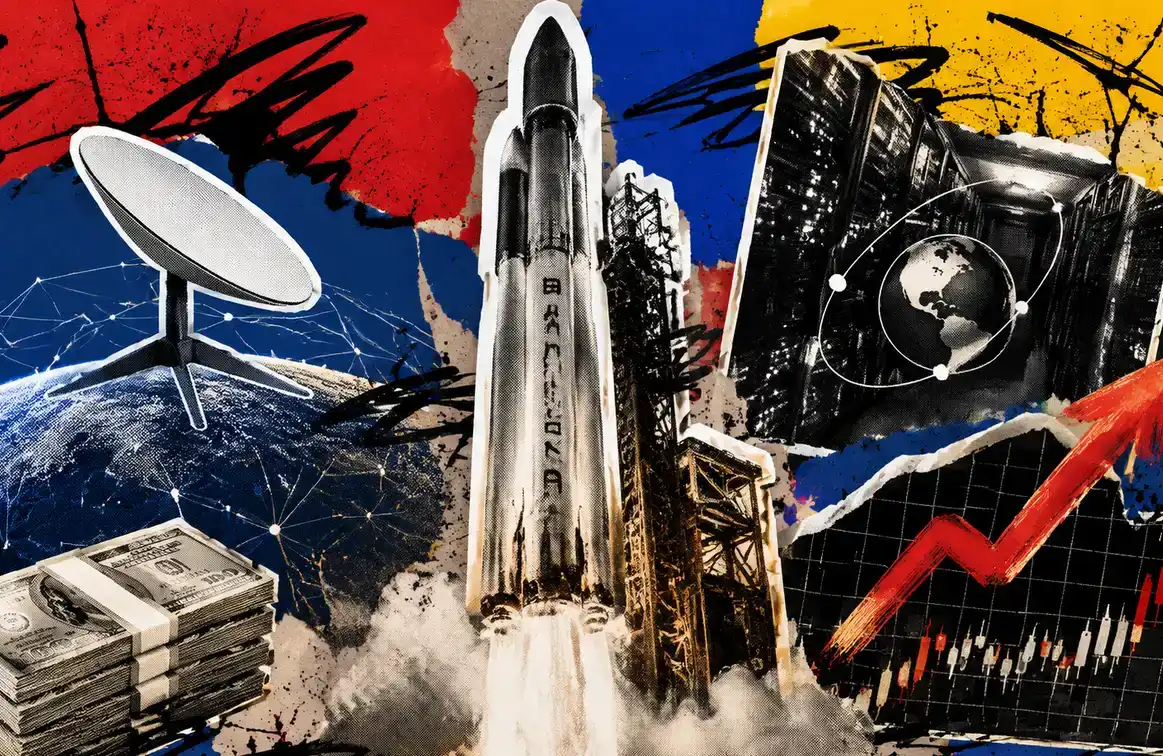
Another market-moving story on June 4th: SpaceX confirmed its IPO for June 12th, targeting to raise $75 billion at a valuation of approximately $1.75 trillion. If successful, this would be the largest IPO in U.S. history, propelling SpaceX directly into the top ten U.S. companies by market capitalization.
Investor roadshows began that day. Retail investors can already submit indications of interest (IOIs) on platforms like Robinhood and SoFi, with the tentative stock price set at $135 per share. Goldman Sachs is leading the underwriting.
Notably, regulators have relaxed rules regarding index inclusion. This means SpaceX could be added to major index funds shortly after its listing, and Americans might find Elon Musk's rocket company in their 401(k) retirement accounts without even realizing it.
The sheer scale of the SpaceX IPO is enough to become the pricing anchor for the entire capital market in June. How much on-market liquidity it will absorb and whether it will create a 'crowding-out' effect for other tech stocks are questions the market will need to digest in the coming week.
While SpaceX grabbed headlines, Honeywell's quantum computing company, Quantinuum, also completed its Nasdaq listing on June 4th, opening at $68 per share, a 13% premium to its offering price.
The significance of Quantinuum's listing is more about the signal than the price itself: quantum computing is moving from the lab to the capital markets. Investor interest in the 'post-AI' narrative is budding, a trend worth watching closely.
Labor Market: Initial Jobless Claims Rise to a Four-Month High
Initial jobless claims announced on Thursday came in at 225,000 (expected 215,000), the highest since February 7th. On the eve of Friday's non-farm payrolls report, this data point added a crack to the narrative of labor market resilience.
But don't over-interpret a single week's data. The JOLTS report showed job openings in April jumped to 7.6 million, a near two-year high. The overall labor market picture remains 'many openings, less hiring'—companies want to hire, but the actual pace of hiring is slowing. The Fed will need to see more data to determine the direction of interest rate policy.
The ultimate arbiter of all narratives this week, the May non-farm payrolls report, will be released Friday at 8:30 AM ET.
Trend Perspective
The market on June 4th sent a clear signal: AI chips aren't bad, they're just too expensive.
Broadcom's AI semiconductor revenue grew 143% year-over-year, with a free cash flow margin of 46%—fantastic figures in any industry. But an 87 P/E ratio means all the good news was already priced in; even a 0.4% revenue miss could trigger a 14% plunge. This is the danger of 'pricing to perfection'.
Capital hasn't left the market; it's just changed residences. It moved from semiconductors to healthcare, financials, and real estate. The Dow's 875-point surge to a new high is the receipt for this relocation. UnitedHealth, Goldman Sachs, JPMorgan Chase—these names have hardly been the protagonists in the three-year AI narrative, but on June 4th, they proved their value doesn't rely on GPUs.
The question is: Is this rotation a trend that will last weeks, or a one-day impulse? The answer depends on two things. First, Friday's non-farm payrolls. If the employment data is strong, fueling expectations of a Fed rate hike, the rebound in interest-rate-sensitive sectors (real estate, utilities) could halt abruptly, sending funds back to tech. Second, the pricing and subscription situation for the SpaceX IPO on June 12th; a $75 billion funding demand itself is a massive liquidity vacuum.
Short-term, the semiconductor sector needs a 'cooling-off period' to digest valuation froth. Medium-term, the fundamentals of AI haven't changed; it's just that the market is finally realizing that between a good company and a good stock lies the distance of valuation.
Data sources: CNBC, Yahoo Finance, Reuters, TheStreet, BLS, Schwab
Disclaimer: This article represents only the author's views and does not constitute investment advice. Markets are risky, invest with caution.