Bitcoin's Decline Marks the Metamorphosis of Crypto

marsbitОпубліковано о 2026-06-04Востаннє оновлено о 2026-06-04

Анотація

Bitcoin's decline signifies a structural transformation within the crypto industry. Its two traditional core functions are being usurped: AI has absorbed speculative capital that once flowed into Bitcoin, while dollar stablecoins have replaced it as the foundational on-chain currency. This decoupling is not a sign of crypto's demise but of its maturation. Projects are now valued based on fundamentals like revenue and user growth, independent of Bitcoin's price movements. Examples include the on-chain exchange Hyperliquid, with transaction volumes surpassing Coinbase, and the prediction market Polymarket, valued at $200 billion. Privacy has emerged as a critical new sector, with assets like Zcash surging and protocols like NEAR enabling private, cross-chain transfers without requiring users to hold a new token. The landscape is shifting toward a multi-chain ecosystem anchored by stablecoins. A new layer of infrastructure for cross-chain coordination, privacy, and AI-agent interaction is emerging to connect this fragmented world, a role once implicitly held by Bitcoin. The era where all altcoins moved in lockstep with Bitcoin is over. The industry's health should now be gauged by project fundamentals and the underlying infrastructure enabling private, dollar-settled, and interconnected crypto-economy.

Written by: nikshep

Compiled by: Luffy, Foresight News

AI has taken away Bitcoin's risk-speculation attribute, and USD stablecoins have replaced Bitcoin as the universal circulating currency in the crypto market; the anchor that once silently held the fragmented crypto world together is no longer Bitcoin. This is the most bullish structural change for the crypto industry in years, yet few understand the logic behind it.

This week, Bitcoin fell below $70,000, plummeting about 45% from its high last October, plunging the market into despair. Spot ETFs have experienced historic and sustained large-scale outflows, marking the longest redemption cycle since the products launched; the price of Bitcoin, hailed as "digital gold," remains sluggish, while physical gold surges ahead.

But the market's lament is misguided.

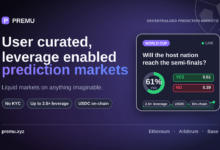
Just as Bitcoin continues its decline, a largely unknown on-chain exchange surpassed Coinbase in trading volume last year; a prediction market platform's valuation surged to $20 billion, with annualized fee revenue reaching $365 million; privacy coins, once viewed skeptically by the market, rose 70% in a single week, charting an independent course while Bitcoin traded sideways; and a long-undervalued underlying network enabled private cross-chain transfers, allowing users to move assets without even needing to purchase its native token.

The crypto industry is not sinking with Bitcoin. Crypto no longer needs Bitcoin.

This statement may seem bearish at first glance, but the reality is quite the opposite. Crypto is maturing, moving beyond the wild era where all altcoins were tied to Bitcoin's price movements and speculation-driven rallies, evolving into a USD-denominated real economy ecosystem. Projects now succeed or fail based on their own fundamentals. A new set of underlying interconnection infrastructure is replacing Bitcoin, linking the entire crypto world together.

This year, Bitcoin has lost two core functions, replaced by two new types of entities, and the resulting vacancies are nurturing entirely new opportunities.

AI Has Seized Bitcoin's Risk-Speculation Capital

Bitcoin itself does not generate cash flow; it has no profits, dividends, or interest. Its price fluctuations are almost entirely determined by the amount of speculative capital, making it a typical capital reservoir: prices soar when liquidity is loose and correct deeply when capital tightens. In 2026, the AI sector has risen powerfully, continuously diverting speculative hot money that once flowed into Bitcoin.

Global AI infrastructure investment this year is estimated to be in the range of $700 billion to $830 billion, roughly equivalent to half the size of the US investment-grade bond market, with projections reaching $7 trillion by 2030; the AI industry contributes about 5% to US GDP, surpassing consumer spending as a driver of US economic growth. NVIDIA alone accounts for 8% of the S&P 500 index weight. AI is no longer an ordinary sector; it has formed a super-strong gravitational field for capital, reshaping pricing logic across the entire market.

AI drains Bitcoin's capital from three key dimensions:

1) AI has captured the core narrative. Bitcoin's past core selling point was "betting on future asymmetric opportunities," but AI has verifiable revenue, explosively growing market demand, and policy support from various countries. Investors can gain exposure through index funds. Institutions now classify Bitcoin alongside other speculative, non-earnings-backed stocks as the same type of risky asset. Within the same risk pool, where one side has profit realization and the other relies purely on expectation, capital naturally continues to exit Bitcoin. This is the root cause of the consecutive ETF redemptions.

2) AI requires capital. AI expansion relies heavily on debt financing. Cloud giants' bond issuance has already surpassed last year's total, and private credit for the AI industry has exceeded $200 billion. High-quality issuers absorbing vast amounts of top-tier capital through massive debt issuance leave less capital available to flow into high-risk assets like Bitcoin.

3) AI forces a high-interest-rate environment. The AI industry drives up production costs for resources like electricity, water, and storage chips, with related category price increases generally in the 5% to double-digit range, anchoring US inflation around 3.8%. The Federal Reserve is compelled to maintain a high benchmark rate of 3.50%-3.75%, with the market having almost no rate-cut expectations for the year. AI not only competes with Bitcoin for capital but also locks down loose liquidity from the macroeconomic environment.

Beyond this, the computing power side is also being disrupted. Bitcoin mining and AI computing power are essentially about converting electricity into computational power, competing for the same power resources. The economic benefit per unit of electricity for NVIDIA servers is far higher than that for mining rigs. Last quarter, the comprehensive cost for leading listed mining companies to mine one Bitcoin was about $80,000, but the Bitcoin market price was only $70,000, resulting in a loss of $19,000 per coin. Numerous mining firms are transitioning to AI computing power: the industry has signed over $70 billion in AI supercomputing cooperation orders, with leading miners' AI business revenue potentially reaching up to 70% by year-end. Core Scientific spent $10.2 billion converting a 300-megawatt Bitcoin mining farm into an AI data center; Riot sold its own Bitcoin and leased land to AMD. These entities, once guardians of Bitcoin's network security, are collectively exiting.

Compared to the widely feared risk of quantum computing, AI brings permanent structural change. Even if future quantum computers could crack Bitcoin's encryption algorithm, the industry could patch the protocol through post-quantum cryptography standards and soft forks. However, AI's capture of narrative, capital, and power resources is irreversible; no protocol upgrade can挽回. Bitcoin's first core value is彻底落空.

USD Stablecoins Replace Bitcoin as the Crypto Market's Base Currency

This is the most easily overlooked critical change. Throughout crypto's development history, Bitcoin has long served as the industry's reserve asset and on/off-ramp intermediary: fiat was first converted to Bitcoin, then exchanged for various altcoins, with all coins priced in BTC. Inbound capital had to buy Bitcoin first, which was the root cause of the联动涨跌 across the entire market.

Stablecoins have severed this chain. USDC transaction volume surpassed USDT in 2019 for the first time since then, with global stablecoin annual transaction volume exceeding $30 trillion. The current user on-ramp path is now: fiat → USDC → various assets. Bitcoin has been completely踢出 the circulation chain. Polymarket revamped and launched its platform-native dollar stablecoin (pegged 1:1 to USDC reserves) this year. Hyperliquid settles entirely in USD across its platform. As summarized within the industry: stablecoins have become the underlying universal reserve currency for applications, with various platforms merely attaching their own label on top.

Therefore, when market risk-aversion sentiment rises, dominance charts show Bitcoin's share declining while stablecoins' share increases. Capital is not flowing out of the crypto market; it's merely switching within the industry to USD-denominated assets. Investors looking to allocate to the crypto sector no longer need to hold Bitcoin; USD stablecoins have assumed this function. On-chain transactions all operate on USD, and on-chain capital flows can no longer generate buy-side pressure for Bitcoin. Bitcoin's second core function has正式落幕.

With Bitcoin Detached, the Crypto Economy Thrives

Setting Bitcoin aside, the products being realized today are no longer speculative chips tied to coin prices but commercialized projects with real cash flows.

The existence of Hyperliquid alone debunks the narrative that "cryptocurrency is dying." This on-chain spot/derivatives exchange matches leading CEXs in matching depth and transaction speed, with user assets self-custodied; its total transaction volume last year was $2.6 trillion, higher than Coinbase's $1.4 trillion, with annualized revenue between $8-13 billion. The platform uses 97% of its fees for secondary market buybacks and burning of its native HYPE token, with an annual buyback volume of around $13 billion, accounting for 7% of the token's total market cap. The burn rate is 4-5 times that of Ethereum and 14 times that of Solana. The project received no VC funding, achieving a value闭环 through community airdrops and fee buybacks. Trading volume fluctuations depend entirely on trader demand, unrelated to Bitcoin's price movements. The platform's scale grew逆势 during Bitcoin's bear market.

Another protagonist is the prediction market leader Polymarket, valued at $20 billion, with annual transaction volume of $250-300 billion, annualized fees of $365 million, and daily active users increasing 2.5倍 in five months; it issues a platform dollar stablecoin, with its token即将上线. Polymarket's product revolves around betting on elections, sports events, and global affairs, with demand unrelated to Bitcoin price fluctuations.

Such projects now employ traditional corporate valuation logic: revenue, user scale, valuation multiples—a hallmark of the industry's maturation.

New Sector Dividends: Privacy Becomes a Scarce Resource

If Bitcoin's transparent and monitored ledger was the default option of the past, then privacy is the new upgrade option. It's a currency with self-sovereignty and untraceability only obtainable on-chain. But the method of acquiring this currency is截然不同, and this difference is key.

Self-Held Privacy. Zcash (ZEC) surged 70% in a single week, with its total market cap approaching $10 billion, up over 45倍 from its 2024 low, charting an independent course while Bitcoin traded sideways. Its fundamental支撑 is solid: the proportion of private transaction volume increased from 11% last November to 30%, most private assets are not transferred back to public chains, causing circulating supply to持续收缩叠加 rising demand. Regulatory pressure that once打压 privacy compliance反而助推 privacy币 value落地: Robinhood listed ZEC spot, and Grayscale filed for the industry's first privacy币现货 ETF. Privacy has升级 from a single application scenario to a long-term investment logic. However, ZEC requires单独买入代币 and switching公链 to use.

Cross-Chain Universal Privacy. NEAR does not require purchasing a privacy token or跨链 migrating assets. Leveraging on-chain signature technology, a single NEAR account can directly control native assets on Bitcoin, Ethereum, and Solana, with no wrapped tokens or跨链桥 risks, relying on a decentralized multi-party secure computation network for key custody. Combined with confidential intent protocols, users can privately transfer assets on any公链, with counterparty and routing information全程隐匿, executed via private shards. User assets remain on their original公链; privacy becomes a universally附加的 underlying service.

Compared to单一隐私币种, this model is more颠覆性. Users don't need to hold ZEC or leave native ecosystems like Ethereum or Bitcoin. Privacy evolves from being an asset-specific attribute to a built-in function for all transactions across scenarios.

The Underlying Coordination Layer for the Multi-Chain Era Replaces Bitcoin's Hub Role

Looking at the broader crypto landscape: the industry is no longer converging towards unity but rather operating with多链并行 and continuously expanding ecosystems. USD stablecoins have become the underlying universal currency, and AI agents autonomously holding credentials, calling interfaces, and transferring funds have become全新参与主体.

The vast multi-chain + agent ecosystem urgently needs interconnected infrastructure, a role Bitcoin played for the past decade. Now, this vacancy is being filled by a new coordination and privacy layer: cross-chain signatures, USD settlement, private transactions, and agent自动执行.

NEAR is targeting this sector. It supports AI agents using USDC for private settlement, leverages hardware security enclaves for confidential computation, and aims to turn its signature network into the key management hub for the agent economy, providing链-agnostic cross-chain and private services for users and bots.

Another落地 product in the same赛道 is Venice. It focuses on AI applications with private interaction, attracting a large number of native Web2 users; staking its platform token VVV allows sharing in AI inference revenue. The project has bought back and burned over 40% of its代币 circulating supply through product revenue, with demand driven by AI usage volume. The代币 price movement is脱钩 from Bitcoin.

The new industry focus has already taken shape: it's no longer a单一币种 but rather the underlying infrastructure upon which various实体项目依附 to create real value.

Conclusion

Combining them: USD is the全行业流通 cash. Project tokens like HYPE, POLY, ZEC, NEAR, VVV correspond to corporate equity. The privacy跨链 layer is the基建串联全行业. Bitcoin is just one板块 within the ecosystem. With AI seizing the macro speculative pie, physical gold absorbing避险 demand, and stablecoins monopolizing the reserve currency function, Bitcoin's glory days are over under this三重挤压.

For the past decade, the entire industry watched Bitcoin's price movements, with all altcoin trends following Bitcoin. That era has彻底落幕. Evaluating projects now aligns with traditional实体公司 standards: whether they have real revenue, active users, and whether their代币 can capture project growth收益.

Do not judge the warmth or coldness of the crypto industry based on Bitcoin's涨跌 anymore. Focus on项目营收, user增量, and the underlying基建串联全链: infrastructure enabling全链隐私转账, USD settlement, and human/machine通用的跨链 functionality.

AI has taken away macro speculative capital, USD has taken away the reserve currency status, and new underlying protocols have taken on the重任 of interconnecting the entire industry. Bitcoin falling below $70,000 is not the末日 of the crypto industry but the历史性拐点 where crypto彻底摆脱 Bitcoin's束缚.


Пов'язані питання

QWhat are the two core functions that Bitcoin has lost in 2024 according to the article, and what has replaced them?

ABitcoin has lost its function as the primary vehicle for risk speculation, which has been taken over by the AI sector. It has also lost its role as the foundational currency for the crypto market, which has been replaced by US dollar stablecoins.

QHow has the AI sector structurally impacted Bitcoin's position, according to the analysis?

AThe AI sector has siphoned off speculative capital from Bitcoin by offering a more compelling narrative with tangible revenue, absorbing significant debt financing, and contributing to a higher interest rate environment that limits liquidity for high-risk assets like Bitcoin. Additionally, AI compute is outcompeting Bitcoin mining for electricity resources due to higher economic efficiency.

QWhich two platforms are cited as examples of crypto projects thriving independently of Bitcoin's price movements, and what are their key metrics?

AThe two platforms are Hyperliquid and Polymarket. Hyperliquid, an on-chain exchange, had a trading volume of $2.6 trillion in 2023, surpassing Coinbase. Polymarket, a prediction market, is valued at $200 billion with an annualized fee revenue of $365 million. Both generate revenue based on user demand unrelated to Bitcoin's price.

QWhat two main approaches to 'privacy' as a new value proposition are discussed in the article?

AThe two approaches are: 1) Self-custodied privacy coins like Zcash (ZEC), which require buying a specific token. 2) Universal, chain-agnostic privacy layers like the one being built on NEAR, which allow users to privately transfer native assets across chains (e.g., Bitcoin, Ethereum) without needing to hold a separate privacy token.

QWhat does the article conclude is the new foundational structure replacing Bitcoin's historical role of connecting the crypto ecosystem?

AThe article concludes that a new layer of interoperable infrastructure is replacing Bitcoin's historical connective role. This new layer provides cross-chain functionality, privacy, dollar-based (stablecoin) settlement, and support for AI agent interactions, effectively becoming the coordination layer for a multi-chain, multi-agent crypto economy.

Пов'язані матеріали

What Are Some Good Paths for Chinese Web3 Entrepreneurship? (Part 5)

This article explores pathways for Chinese Web3 teams to pivot toward AI, building on a previous discussion. It focuses on two specific team profiles: **Security & Risk Control Teams:** These teams, skilled in smart contract auditing, wallet security, and on-chain monitoring, can transition to providing **Agent behavior auditing and AI security governance**. As AI Agents automate tasks, access data, and trigger payments, enterprises will need solutions to monitor permissions, audit logs, control data access, and prevent anomalies—creating a strong B2B demand. **Application & Community-Focused Teams:** Instead of completely rebranding as AI companies, these teams should use AI to **enhance their existing products**. For example, research platforms can use AI to summarize information and identify signals; community tools can automate user support and analysis; and educational products can create personalized learning paths. The key is integrating AI to solve existing user pain points, like information overload or high operational costs. The article also advises against certain AI directions for Chinese Web3 teams, such as building general-purpose large language models (too resource-intensive), creating overly broad Agent platforms (hard to monetize), developing AI traders/automated yield products (high regulatory and risk sensitivity), or simply adding superficial AI features without genuine value. The core conclusion: Successful migration depends not on chasing AI hype, but on **identifying how a team's existing Web3 capabilities—be it in data, payments, security, or user operations—can address real needs in new AI application scenarios.**

marsbit19 хв тому

What Are Some Good Paths for Chinese Web3 Entrepreneurship? (Part 5)

marsbit19 хв тому

Торгівля

Спот
Ф'ючерси

Популярні статті

Що таке BITCOIN

Розуміння HarryPotterObamaSonic10Inu (ERC-20) та його позиції у крипто-просторі Останніми роками ринок криптовалют спостерігав за зростанням популярності мем-коінів, які привертають інтерес не тільки трейдерів, але й тих, хто шукає спілкування та розважальну цінність. Серед цих унікальних токенів є HarryPotterObamaSonic10Inu (ERC-20), інтригуючий проект, що поєднує культурні посилання з тканинами криптовалюти. Ця стаття досліджує ключові аспекти HarryPotterObamaSonic10Inu, вивчаючи його механізми, спільноту та його взаємодію з ширшим крипто-ландшафтом. Що таке HarryPotterObamaSonic10Inu (ERC-20)? Як випливає з його назви, HarryPotterObamaSonic10Inu є мем-коіном, побудованим на блокчейні Ethereum, класифікованим за стандартом ERC-20. На відміну від традиційних криптовалют, які можуть підкреслювати практичну корисність або інвестиційний потенціал, цей токен процвітає завдяки розважальній цінності та силі своєї спільноти. Проект спрямований на створення середовища, де зацікавлені користувачі можуть об'єднуватися, ділитися ідеями та брати участь у заходах, натхненних різноманітними культурними явищами. Однією з примітних особливостей HarryPotterObamaSonic10Inu є нульовий податок на транзакції. Цей привабливий елемент має на меті заохочувати торгівлю та участь у спільноті, позбавлену додаткових витрат, які можуть відлякувати дрібних трейдерів. Загальна пропозиція монет становить один мільярд токенів, що позначає намір підтримувати суттєву циркуляцію в межах спільноти. Творець HarryPotterObamaSonic10Inu (ERC-20) Походження HarryPotterObamaSonic10Inu дещо окутане таємницею; деталі про творця залишаються невідомими. Розвиток цього токена позбавлений впізнаваної команди або чіткої стратегії, що не є рідкістю в секторі мем-коінів. Натомість проект виник органічно, а його розвиток значною мірою залежить від ентузіазму та участі його спільноти. Інвестори HarryPotterObamaSonic10Inu (ERC-20) Щодо зовнішніх інвестицій та підтримки, HarryPotterObamaSonic10Inu також залишається невизначеним. Токен не зазначає жодних відомих інвестиційних фондів або значної організаційної підтримки. Натомість життєва сила проекту полягає в його базовій спільноті, яка інформує про його зростання та стійкість через колективні дії та залученість у крипто-просторі. Як працює HarryPotterObamaSonic10Inu (ERC-20)? Як мем-коін, HarryPotterObamaSonic10Inu функціонує передусім поза традиційними рамками, що часто регулюють вартість активів. Є кілька відмінних аспектів, що визначають, як працює проект: Транзакції без податку: Завдяки відсутності податкових зборів на транзакції, користувачі можуть вільно купувати та продавати токен, не турбуючись про приховані витрати. Залучення спільноти: Проект процвітає завдяки взаємодії спільноти, використовуючи соціальні медіа для створення шуму та сприяння залученню. Обговорення, обмін контентом та залученість є ключовими елементами, що допомагають розширити його охоплення та зміцнити лояльність серед прихильників. Відсутність практичної корисності: Слід зазначити, що HarryPotterObamaSonic10Inu не пропонує конкретної корисності в рамках фінансової екосистеми. Натомість він класифікується як токен, що призначений в основному для розваги та спільнотних активностей. Культурне посилання: Токен кмітливо вплітає елементи популярної культури, щоб привернути інтерес, зв'язуючи з ентузіастами мемів та крипто-стежками. HarryPotterObamaSonic10Inu ілюструє, як мем-коіни функціонують інакше, ніж традиційні криптовалютні проекти, увійшовши на ринок як інноваційні соціальні конструкти, а не утилітарні активи. Хронологія HarryPotterObamaSonic10Inu (ERC-20) Історія HarryPotterObamaSonic10Inu відзначена кількома значними етапами: Створення: Токен виник з вірусного мему, захопивши уяву багатьох крипто-ентузіастів. Конкретні дати створення недоступні, що підкреслює його органічний розвиток. Лістинг на біржах: HarryPotterObamaSonic10Inu з'явився на різних біржах, дозволяючи зручніший доступ і торгівлю спільноти. Ініціативи залучення спільноти: Ведення діяльності, спрямованої на покращення взаємодії спільноти, включаючи конкурси, кампанії в соціальних мережах та створення контенту від фанатів та прихильників. Плани на майбутнє: Дорожня карта проекту включає запуск колекції NFT, мерчандайзинг та електронну комерцію, пов'язану з його культурними темами, що далі залучає спільноту та намагається додати більше вимірів до його екосистеми. Ключові моменти про HarryPotterObamaSonic10Inu (ERC-20) Спільнотний підхід: Проект надає пріоритет колективному внеску та креативності, забезпечуючи, щоб участь користувачів була в центрі його розвитку. Класифікація як мем-коін: Це є його епігенез розважальної криптовалюти, що відрізняється від традиційних інвестиційних інструментів. Жодного прямого відношення до Bitcoin: Незважаючи на схожість у назві, HarryPotterObamaSonic10Inu є відмінним і не має жодного зв’язку з Bitcoin або іншими усталеними криптовалютами. Зосередженість на співпраці: HarryPotterObamaSonic10Inu створено для того, щоб надати простір для співпраці та обміну історіями серед його власників, забезпечуючи шлях для творчості та спільного зв'язку. Перспективи на майбутнє: Амбіція розширитися за межі початкової концепції в NFT та мерчандайз відкриває шлях для проекту потенційно потрапити в більш мейнстрімні сфери цифрової культури. Оскільки мем-коіни продовжують захоплювати уяву спільноти криптовалют, HarryPotterObamaSonic10Inu (ERC-20) вирізняється своїми культурними зв'язками та орієнтованим на спільноту підходом. Хоча він може не відповідати типовій моделі утилітарного токена, його суть полягає в радощах і товариськості, що підтримуються серед його прихильників, підкреслюючи еволюційну природу криптовалют в усе більш цифрову епоху. Оскільки проект продовжує розвиватися, важливо спостерігати за тим, як динаміка спільноти вплине на його траєкторію в постійно змінюваному ландшафті технології блокчейн.

2.0k переглядів усьогоОпубліковано 2024.04.01Оновлено 2024.12.03

Що таке BITCOIN

Як купити BTC

Ласкаво просимо до HTX.com! Ми зробили покупку Bitcoin (BTC) простою та зручною. Дотримуйтесь нашої покрокової інструкції, щоб розпочати свою криптовалютну подорож.Крок 1: Створіть обліковий запис на HTXВикористовуйте свою електронну пошту або номер телефону, щоб зареєструвати обліковий запис на HTX безплатно. Пройдіть безпроблемну реєстрацію й отримайте доступ до всіх функцій.ЗареєструватисьКрок 2: Перейдіть до розділу Купити крипту і виберіть спосіб оплатиКредитна/дебетова картка: використовуйте вашу картку Visa або Mastercard, щоб миттєво купити Bitcoin (BTC).Баланс: використовуйте кошти з балансу вашого рахунку HTX для безперешкодної торгівлі.Треті особи: ми додали популярні способи оплати, такі як Google Pay та Apple Pay, щоб підвищити зручність.P2P: Торгуйте безпосередньо з іншими користувачами на HTX.Позабіржова торгівля (OTC): ми пропонуємо індивідуальні послуги та конкурентні обмінні курси для трейдерів.Крок 3: Зберігайте свої Bitcoin (BTC)Після придбання Bitcoin (BTC) збережіть його у своєму обліковому записі на HTX. Крім того, ви можете відправити його в інше місце за допомогою блокчейн-переказу або використовувати його для торгівлі іншими криптовалютами.Крок 4: Торгівля Bitcoin (BTC)Легко торгуйте Bitcoin (BTC) на спотовому ринку HTX. Просто увійдіть до свого облікового запису, виберіть торгову пару, укладайте угоди та спостерігайте за ними в режимі реального часу. Ми пропонуємо зручний досвід як для початківців, так і для досвідчених трейдерів.

4.7k переглядів усьогоОпубліковано 2024.12.12Оновлено 2026.06.02

Як купити BTC

Що таке $BITCOIN

ЦИФРОВЕ ЗОЛОТО ($BITCOIN): Комплексний аналіз Вступ до ЦИФРОВОГО ЗОЛОТА ($BITCOIN) ЦИФРОВЕ ЗОЛОТО ($BITCOIN) — це проект на основі блокчейну, що працює в мережі Solana, який має на меті поєднати характеристики традиційних дорогоцінних металів з інноваціями децентралізованих технологій. Хоча він має таку ж назву, як і Bitcoin, який часто називають “цифровим золотом” через його сприйняття як засобу збереження вартості, ЦИФРОВЕ ЗОЛОТО є окремим токеном, розробленим для створення унікальної екосистеми в ландшафті Web3. Його мета — позиціонувати себе як життєздатний альтернативний цифровий актив, хоча деталі щодо його застосувань і функціональностей все ще розробляються. Що таке ЦИФРОВЕ ЗОЛОТО ($BITCOIN)? ЦИФРОВЕ ЗОЛОТО ($BITCOIN) — це токен криптовалюти, спеціально розроблений для використання в блокчейні Solana. На відміну від Bitcoin, який виконує широко визнану роль зберігання вартості, цей токен, здається, зосереджується на більш широких застосуваннях і характеристиках. Помітні аспекти включають: Інфраструктура блокчейну: Токен побудований на блокчейні Solana, відомому своєю здатністю обробляти швидкі та низьковартісні транзакції. Динаміка постачання: ЦИФРОВЕ ЗОЛОТО має максимальне постачання, обмежене 100 квадрильйонами токенів (100P $BITCOIN), хоча деталі щодо його обігового постачання наразі не розголошуються. Утиліта: Хоча точні функціональності не викладені, є вказівки на те, що токен може бути використаний для різних застосувань, потенційно пов'язаних з децентралізованими додатками (dApps) або стратегіями токенізації активів. Хто є творцем ЦИФРОВОГО ЗОЛОТА ($BITCOIN)? На даний момент особа творців і команди розробників, що стоять за ЦИФРОВИМ ЗОЛОТОМ ($BITCOIN), залишається невідомою. Ця ситуація є типовою для багатьох інноваційних проектів у сфері блокчейну, особливо тих, що пов'язані з децентралізованими фінансами та феноменом мем-коінів. Хоча така анонімність може сприяти культурі, орієнтованій на спільноту, вона посилює занепокоєння щодо управління та підзвітності. Хто є інвесторами ЦИФРОВОГО ЗОЛОТА ($BITCOIN)? Доступна інформація вказує на те, що ЦИФРОВЕ ЗОЛОТО ($BITCOIN) не має жодних відомих інституційних спонсорів або помітних венчурних капіталовкладень. Проект, здається, працює за моделлю “рівний до рівного”, зосереджуючись на підтримці та прийнятті спільноти, а не на традиційних шляхах фінансування. Його активність і ліквідність переважно розташовані на децентралізованих біржах (DEX), таких як PumpSwap, а не на встановлених централізованих торгових платформах, що ще більше підкреслює його підхід знизу вгору. Як працює ЦИФРОВЕ ЗОЛОТО ($BITCOIN) Операційні механізми ЦИФРОВОГО ЗОЛОТА ($BITCOIN) можна детальніше розглянути на основі його дизайну блокчейну та характеристик мережі: Механізм консенсусу: Використовуючи унікальний proof-of-history (PoH) Solana в поєднанні з моделлю proof-of-stake (PoS), проект забезпечує ефективну валідацію транзакцій, що сприяє високій продуктивності мережі. Токеноміка: Хоча конкретні дефляційні механізми не були детально описані, велике максимальне постачання токенів вказує на те, що воно може задовольняти мікротранзакції або нішеві випадки використання, які ще потрібно визначити. Інтероперабельність: Існує потенціал для інтеграції з більш широкою екосистемою Solana, включаючи різні платформи децентралізованих фінансів (DeFi). Однак деталі щодо конкретних інтеграцій залишаються невизначеними. Хронологія ключових подій Ось хронологія, яка підкреслює значні віхи, пов'язані з ЦИФРОВИМ ЗОЛОТОМ ($BITCOIN): 2023: Початкове розгортання токена відбувається на блокчейні Solana, позначене його адресою контракту. 2024: ЦИФРОВЕ ЗОЛОТО набуває видимості, оскільки стає доступним для торгівлі на децентралізованих біржах, таких як PumpSwap, що дозволяє користувачам торгувати ним проти SOL. 2025: Проект спостерігає спорадичну торгову активність і потенційний інтерес до ініціатив, очолюваних спільнотою, хоча на даний момент не зафіксовано жодних значних партнерств або технічних досягнень. Критичний аналіз Сильні сторони Масштабованість: Основна інфраструктура Solana підтримує високі обсяги транзакцій, що може підвищити утиліту $BITCOIN у різних сценаріях транзакцій. Доступність: Потенційно низька торгова ціна за токен може привабити роздрібних інвесторів, сприяючи більш широкій участі завдяки можливостям дробового володіння. Ризики Відсутність прозорості: Відсутність публічно відомих спонсорів, розробників або процесу аудиту може викликати скептицизм щодо стійкості та надійності проекту. Волатильність ринку: Торгова активність сильно залежить від спекулятивної поведінки, що може призвести до значної волатильності цін і невизначеності для інвесторів. Висновок ЦИФРОВЕ ЗОЛОТО ($BITCOIN) постає як цікавій, але неоднозначний проект у швидко розвиваючійся екосистемі Solana. Хоча він намагається використати наратив “цифрового золота”, його відхід від встановленої ролі Bitcoin як засобу збереження вартості підкреслює необхідність чіткішого розмежування його передбачуваної утиліти та структури управління. Майбутнє прийняття та адаптація, ймовірно, залежатиме від вирішення поточної непрозорості та більш чіткого визначення його операційних та економічних стратегій. Примітка: Цей звіт охоплює синтезовану інформацію, доступну станом на жовтень 2023 року, і можуть відбутися події, що виходять за межі дослідницького періоду.

75 переглядів усьогоОпубліковано 2025.05.13Оновлено 2025.05.13

Що таке $BITCOIN

Обговорення

Ласкаво просимо до спільноти HTX. Тут ви можете бути в курсі останніх подій розвитку платформи та отримати доступ до професійної ринкової інформації. Нижче представлені думки користувачів щодо ціни BTC (BTC).

活动图片