Vote on CLARITY Act in US Senate Scheduled for September 15

cryptonews.ruОпубліковано о 2026-08-08Востаннє оновлено о 2026-08-08

Анотація

The U.S. Senate is scheduled to hold a key procedural cloture vote on the Digital Asset Market Clarity Act (CLARITY Act) on September 15. The motion was filed by Senate Majority Leader John Thune, aiming to advance the bill for floor consideration after lawmakers failed to reach an agreement before the August recess. The vote requires 60 votes to proceed, meaning Republican support from Democrats is necessary. The landmark crypto regulatory bill aims to establish a federal market structure for digital assets, clarify whether crypto assets qualify as securities or commodities, and delineate regulatory authority between the SEC and CFTC. However, negotiations have been stalled by disagreements over proposed ethics provisions, which would restrict government officials and their families from profiting from digital assets while in office, and rules governing stablecoin yields. To break the impasse, lawmakers are reportedly working on a bipartisan ethics amendment, partly addressing Democratic concerns about former President Trump's crypto-related financial interests. The outcome of the September 15 vote and the ability to resolve disputes over ethics and stablecoin rules before then will determine the bill's future. Passage would significantly shape U.S. digital asset regulation for years to come, though aligning SEC and CFTC operational standards post-enactment is expected to be a lengthy process.

US Senate Majority Leader John Thune has filed a cloture motion on the question of bringing the Digital Asset Market Clarity Act, known as the CLARITY Act, to the floor — a procedural vote on the digital asset market structure bill is scheduled for September 15.

The vote will take place after the Senate reconvenes on September 15: lawmakers still have a few weeks left to resolve the remaining disagreements on the document.

Senate Daily Press confirmed that Thune filed a motion to bring the CLARITY Act to the Senate floor. Overcoming the procedural hurdle requires 60 votes, so Republicans will need Democratic support.

What is Hindering the Law's Passage

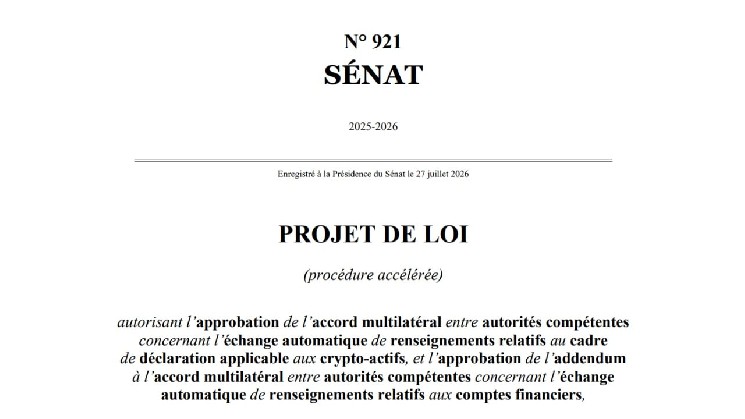
Thune's move puts the CLARITY Act on track for consideration in the Senate after lawmakers failed to reach agreement before the August recess. Negotiations are complicated by disagreements over ethics provisions and rules governing stablecoin rewards, among other issues.

This was reported by journalist Eleanor Terrett on social media platform X.

Advancing the bill does not guarantee that the CLARITY Act will receive a final vote or be passed by the Senate: the cloture vote pertains only to bringing the document to the floor, not to its passage.

The CLARITY Act is considered a landmark crypto regulation bill in the US. It is intended to establish a federal market structure for digital assets, define when crypto assets fall under securities or commodities legislation, and delineate authority between the Securities and Exchange Commission (SEC) and the Commodity Futures Trading Commission (CFTC).

Ethical Question as a Stumbling Block

So far, negotiations have stalled over proposed ethics provisions that would restrict government officials and their families from issuing digital assets or profiting from them while in public service.

To overcome this impasse, lawmakers are working on a bipartisan ethics amendment aimed at addressing Democrats' concerns about President Trump's cryptocurrency-related financial interests. According to Bloomberg, the amendment would require the President to divest from a number of cryptocurrency businesses.

Thus, the future of the CLARITY Act will depend on the outcome of the September 15 vote and whether the parties manage to reconcile the contentious provisions on ethics and stablecoins before that date.

The bill remains a key element in shaping the federal digital asset regulatory system in the US, and its passage will affect the division of authority between the SEC and the CFTC for years to come.

AI Opinion

From the perspective of machine data analysis, the situation around the CLARITY Act resembles the path already taken by the GENIUS Act: the stablecoin bill also got stuck on procedural hurdles before receiving Senate approval 68 to 30 in June 2025. The historical parallel shows: even contentious crypto-regulatory initiatives can overcome partisan differences if market pressure and business lobbying become strong enough.

The technical aspect that remains behind the scenes: delineating authority between the SEC and the CFTC will require not only the passage of the law but also the development of joint operational standards between the two agencies — a process that could stretch for years even after the act is signed. Should the market price in the September vote as a guarantee of imminent clarity, or is this just another stage in a long procedural marathon?

end-content

Пов'язані питання

QWhat procedural vote is scheduled for September 15th regarding the CLARITY Act?

AA cloture vote is scheduled for September 15th. This is a procedural vote to end debate and bring the CLARITY Act to the floor of the U.S. Senate for consideration.

QWhat are two of the main sticking points causing negotiations on the CLARITY Act to stall?

ATwo main sticking points are disagreements over proposed ethics provisions that would restrict officials and their families from profiting from digital assets, and rules governing rewards for stablecoins.

QWhy does the September 15th cloture vote require significant bipartisan support?

AThe cloture vote requires 60 votes to overcome the procedural hurdle. Given the closely divided Senate, this means Republicans will need support from Democrats to advance the bill.

QWhat is the primary regulatory goal of the CLARITY Act according to the article?

AThe primary goal is to establish a federal market structure for digital assets. This includes defining when crypto assets are securities or commodities and clarifying the jurisdictional divide between the SEC and the CFTC.

QWhat does the article's 'AI Opinion' section suggest about the bill's potential passage, drawing a historical parallel?

AIt suggests that passage is possible despite partisan disputes, drawing a parallel to the GENIUS Act which passed after overcoming procedural barriers. However, it also cautions that even if passed, implementing jurisdictional clarity between the SEC and CFTC could be a multi-year process.

Пов'язані матеріали

Bitcoin's ECX Hard Fork to Introduce Three New Versions Throughout October

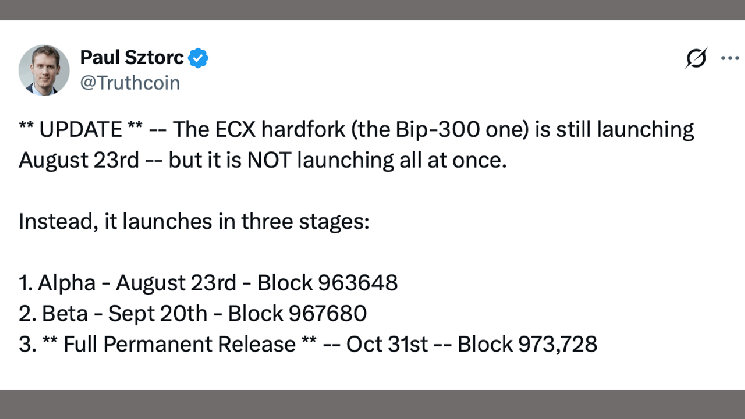
Bitcoin developer Paul Stortz, behind the Drivechain and BIP 300 proposals, has announced a hardfork for a new blockchain called ECX. Scheduled for October 31st (the 18th anniversary of the Bitcoin whitepaper), ECX will copy Bitcoin's full transaction history at a specific block height, crediting nearly all Bitcoin holders with an equal amount of ECX coins without altering the Bitcoin network itself. The launch will be executed in three phases. An "alpha" version is set for August 23rd (block 963,648), followed by a "beta" version on September 20th (block 967,680). The final mainnet launch is planned for October 31st (block 973,728). Coins accumulated during the alpha and beta phases can later be burned or swapped for real ECX. Stortz cites several reasons for the phased rollout: to address potential software bugs (including those possibly found by AI), allow an early market price to form for ECX before mining difficulty stabilizes, and let traders test and speculate. He described it as a "safety net" to manage any major issues and to demonstrate the chain's functionality. A key detail is that replay protection—a mechanism to prevent a transaction from being valid on both the Bitcoin and ECX chains—will remain optional, not automatic. The official ECX wallet software will apply this protection and warn users; Stortz warned that transactions ignoring this warning will be replayed on ECX, effectively tracking a user's spent bitcoins to their new owner unless a deliberate split is made. Stortz has given holders and exchanges 12 weeks from the alpha launch to prepare, during which they must decide on practical matters like running the wallet software to split their BTC and ECX holdings and how exchanges will credit the new asset to clients. The announcement comes as Bitcoin also faces another potential fork related to BIP-110.

cryptonews.ru2 год тому

Bitcoin's ECX Hard Fork to Introduce Three New Versions Throughout October

cryptonews.ru2 год тому

Торгівля

Спот
活动图片