Sam Bankman-Fried Wants A New Token To Repay FTX Victims, But Could It Happen?

bitcoinistОпубліковано о 2026-06-17Востаннє оновлено о 2026-06-17

Анотація

Sam Bankman-Fried (SBF) is reportedly expressing a personal hope for a new token project to repay FTX victims. However, this claim is heavily caveated by his legal reality. A US appeals court recently upheld his 25-year prison sentence, creating significant barriers to him launching any such project. The article frames these comments as subjective and not an active, credible plan. While the idea attracts attention due to FTX's massive collapse and the broader question of using tokens for restitution, the story emphasizes the legal and practical hurdles. The core narrative is the tension between SBF's reported personal aspiration and the established legal proceedings governing victim repayment.

Sam Bankman-Fried is back in the headlines after reportedly discussing hopes for a new token project that could repay FTX victims, a claim that is likely to draw attention precisely because it sits so far from the legal reality surrounding the convicted founder.

TL;DR

  • SBF’s reported comments should be framed as a personal hope, not an active plan.
  • The source packet says his 25-year sentence was recently upheld on appeal.
  • There is no verified legally viable token project.

A Clickable Claim With Heavy Caveats

The core of the story is simple and extremely clickable: Sam Bankman-Fried reportedly wants a new token to repay victims. But the article cannot treat that as a viable product announcement. The verified source packet says the comments are subjective and should be contrasted immediately with the legal barriers facing him.

That framing matters. SBF remains one of the most controversial figures in crypto, and any suggestion of a new token will trigger skepticism from former users, creditors and market participants. A clean article can cover the comments while making clear that there is no active, approved or legally credible token launch plan.

Legal Reality Comes First

The source packet notes that a US appeals court upheld Bankman-Fried’s 25-year sentence on June 12, 2026. That context should appear early. It anchors the story in reality and prevents the article from reading like a comeback narrative.

A convicted felon serving a long prison sentence faces obvious barriers to running companies, raising capital, issuing securities or managing a token project. Even if he personally believes a new structure could repay victims, that does not mean courts, regulators, creditors or bankruptcy administrators would allow it.

Why The Idea Still Gets Attention

The reason the comments matter is that FTX remains one of the defining collapses in crypto history. Any mention of victim repayment, new tokens or a possible post-prison plan will attract attention because the market still remembers the scale of the losses and the damage to trust.

It also taps into a broader crypto question: can failed platforms ever use tokens to repair damage? In FTX’s case, the legal and reputational barriers are far higher than in ordinary restructuring stories. That is why the article should lean into skepticism rather than speculation.

The Safer Editorial Angle

The strongest angle is not that SBF is launching a token. It is that he reportedly still imagines a token-based path to repayment even as the legal system has moved in the opposite direction. That tension is the story.

The piece should close by making clear that any actual repayment process remains tied to legal proceedings, bankruptcy structures and creditor recovery mechanisms, not a prison-cell token idea.

This report is based on information from NYMag X post

This article was written by the News Desk and edited by Samuel Rae.

Пов'язані питання

QWhat is the core claim made about Sam Bankman-Fried in the article, and how should it be framed?

AThe core claim is that Sam Bankman-Fried reportedly wants to create a new token to repay FTX victims. However, the article states this should be framed as his personal hope, not as an active, viable, or legally credible plan.

QWhat recent legal development regarding Sam Bankman-Fried is highlighted as key context?

AThe article highlights that a U.S. appeals court upheld his 25-year sentence on June 12, 2026. This legal reality is crucial context that anchors the story and prevents it from being seen as a comeback narrative.

QAccording to the article, why do SBF's comments about a new token still attract attention?

AThey attract attention because FTX was a defining collapse in crypto history, and any mention of victim repayment taps into the market's memory of the massive losses and damaged trust. It also connects to a broader question about using tokens to repair damage from failed platforms.

QWhat is described as the 'safer editorial angle' or the real story tension in the article?

AThe safer editorial angle is the tension between SBF reportedly still imagining a token-based path to repayment and the legal system moving in the opposite direction, with his long prison sentence being upheld. The story is about this contradiction, not a viable token launch.

QWhat does the article say any actual repayment to FTX victims is tied to?

AThe article states that any actual repayment process remains tied to official legal proceedings, bankruptcy structures, and creditor recovery mechanisms, not to SBF's personal idea for a token project conceived in prison.

Пов'язані матеріали

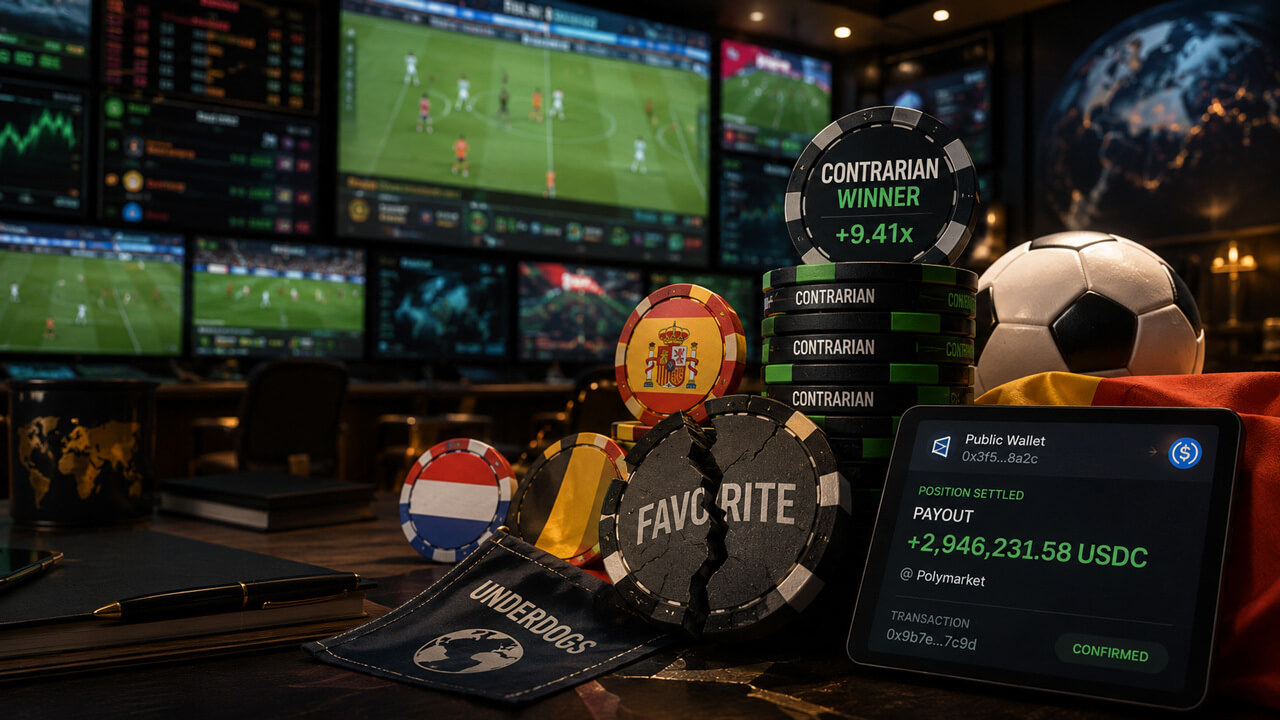
Football Draw Harvests Whales: Extreme Profit-Loss Divergence on Polymarket's World Cup

A bettor known as "fishalive" made a stunning profit of nearly $9 million on the Polymarket prediction platform by correctly wagering against favorites during the 2026 FIFA World Cup group stage. The account, registered just before the tournament, risked roughly $400,000 on two contracts for a Spain vs. Cape Verde match: one that Spain would *not* win, and another on a Cape Verde +2.5 goal handicap. The resulting 0-0 draw triggered both payouts. This single event, with a total market volume of $64 million, highlighted extreme profit-and-loss divergence. Other traders, like "betoor619" and "leeeeroyjenkins," lost millions by betting heavily on favorites Spain and Belgium to win outright—contracts that become worthless in a draw. The article explains that while markets heavily favored strong teams, the "team to win" contracts are binary and do not account for the common outcome of a draw. This creates high-risk, low-reward scenarios for favorite backers, while asymmetric profits flow to those betting on underdogs or against outright wins. The transparency of Polymarket's on-chain ledger publicly documents these massive wins and losses, driving mainstream media coverage. As the tournament progresses, the author suggests traders may shift towards hedging strategies that account for draws. The piece also notes growing regulatory scrutiny in the US and Europe, questioning whether such large-scale, anonymous sports prediction markets should be regulated as gambling or financial derivatives.

Foresight News2 хв тому

Football Draw Harvests Whales: Extreme Profit-Loss Divergence on Polymarket's World Cup

Foresight News2 хв тому

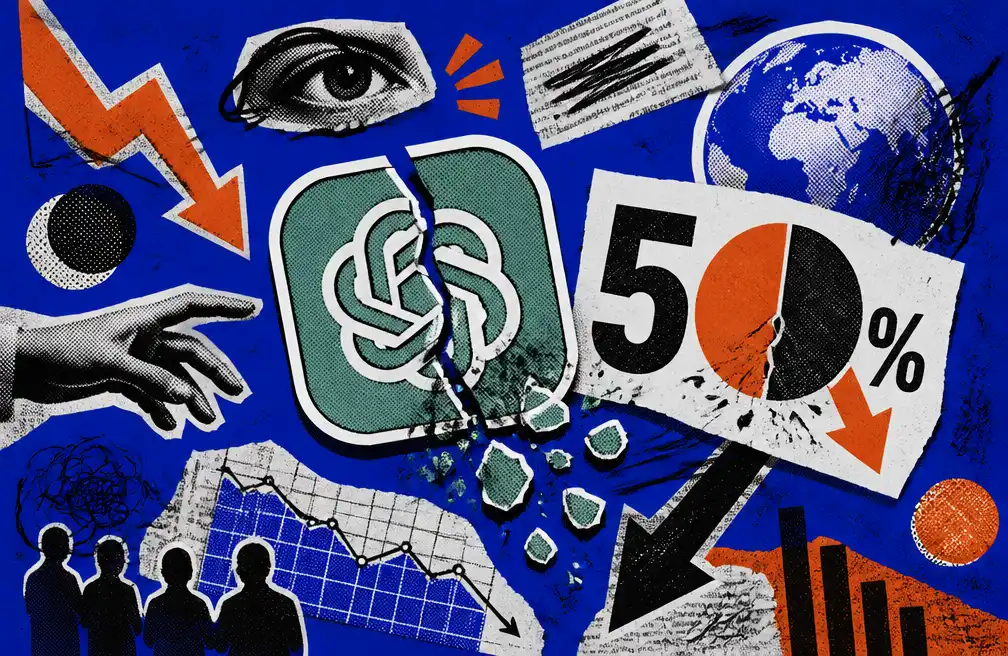
ChatGPT Loses Half Its Market: From Monopoly to Shared Market in Three and a Half Years

In a landmark shift three and a half years after its debut, ChatGPT's global market share in the AI assistant market has fallen below 50% for the first time, dropping to 46.4% as of May 2026. This signals the end of its initial dominance, with the market now diversifying among competitors like Gemini (27.7%) and Claude (10.3%). The report from Sensor Tower indicates the AI assistant landscape has matured from a phase of awe and experimentation into one of product comparison, ecosystem integration, and monetization. Users are increasingly pragmatic, readily switching between assistants based on specific use cases, brand trust, and value propositions. The industry is moving past the "free lunch" era, with users demonstrating a willingness to pay for premium features, driving significant in-app expenditure. Major players are adopting varied monetization strategies: Claude boasts a high subscription conversion rate, while ChatGPT is increasingly testing ads and shopping integrations to complement its subscription revenue. However, this growth comes with immense costs, as exemplified by OpenAI's soaring cash burn for model training and infrastructure. While ChatGPT remains the largest single player, its declining share symbolizes a broader normalization of AI. The technology is no longer a novelty but an integral, scrutinized part of daily digital life, judged on practical utility, price, and seamless integration. The battle has shifted from proving AI's potential to competing in a crowded field where no single product holds a permanent monopoly.

marsbit12 хв тому

ChatGPT Loses Half Its Market: From Monopoly to Shared Market in Three and a Half Years

marsbit12 хв тому

Торгівля

Спот
Ф'ючерси
活动图片