Quantum Threat Becomes Key Narrative, Privacy Coin Sector Defies Trend with Capital Siphon

比推Опубліковано о 2026-01-29Востаннє оновлено о 2026-01-29

Анотація

Quantum Threat Emerges as Key Narrative, Privacy Coins Defy Market Downturn with Capital Inflow Privacy coins like ZEC, XMR, and DASH have surged significantly since September 2025, outperforming the broader crypto market. ZEC rose from around $50 to over $700 in two months, a 12x return, despite a post-halving correction. Monero (XMR) climbed from $300 to a record $800, bolstered by its decentralized nature and real-world usage, even after being delisted from 73 exchanges. Dash also saw a 7x increase, peaking at $150 before settling around $62. A major catalyst is growing concern over quantum computing threats to Bitcoin. Although experts believe quantum computers cannot yet break Bitcoin's ECDSA algorithm by 2026, fears have driven institutional and whale investors toward privacy coins, which use zero-knowledge proofs and ring signatures to resist quantum attacks. Reports indicate large-scale fund shifts from BTC to privacy assets, with ZEC and XMR attracting significant hedging interest. Market dynamics and high-profile endorsements, such as from Arthur Hayes, have amplified the trend. Additionally, privacy coins are being used to launder stolen funds, with one day seeing $282 million in mixed Bitcoin transactions. While Bitcoin market remains stagnant around $85,000, privacy coins continue to benefit from both quantum anxiety and practical demand for anonymity. The sector's future may depend on broader market recovery and macroeconomic factors, including Fed policy and...

Author: Ma He, Foresight News

Original Title: Under the Quantum Threat, Are Privacy Coins About to Break the "Last Dance" Curse?


Privacy coins use zero-knowledge proofs, ring signatures, or coin mixing technology to ensure untraceable transactions. Against the backdrop of increasing global regulation, they have become the preferred choice for investors seeking refuge and privacy.

Starting from September 2025, the privacy coin sector began to break away from the broader market's slump and entered an accelerated upward trend.

Taking ZEC, the leading coin in the privacy sector surge, as an example, its price was around $50 in October 2025. Within just 2 months, it broke through $700, yielding a return of over 12 times.
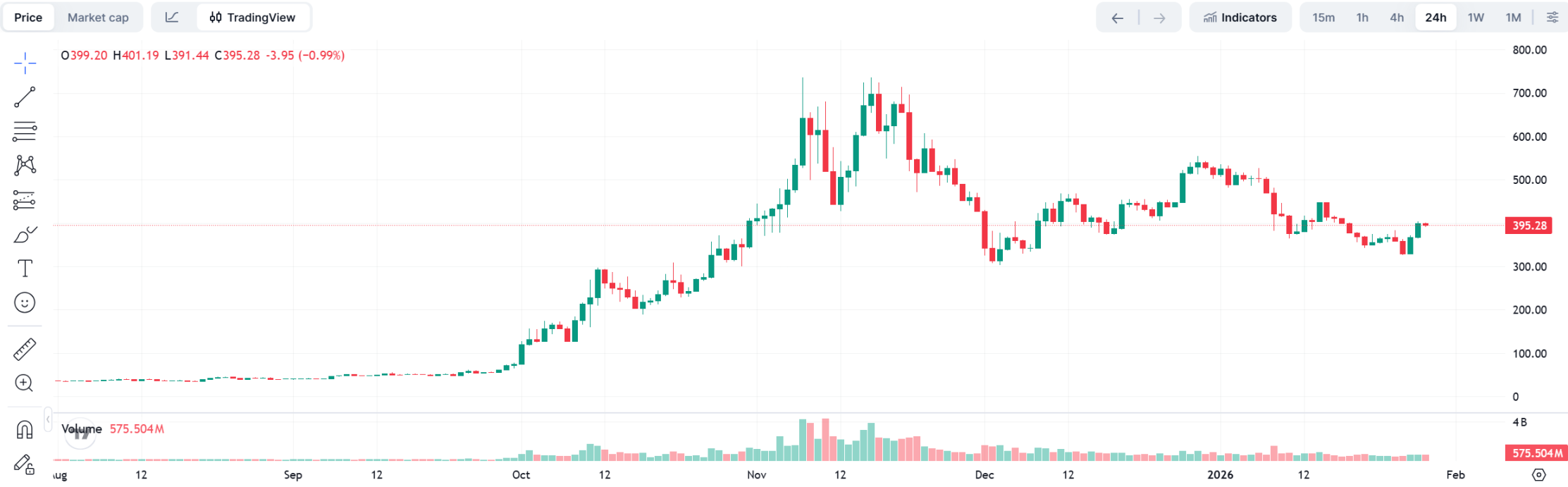
This trend is not an isolated case but a sector-wide explosion.

On November 18th, after the ZEC halving event, which reduced the block reward from 3.125 coins to 1.5625 coins, the price experienced short-term fluctuations before starting to decline and hover erratically.

Monero (XMR), the "big brother" of privacy coins, also showed a strong performance. From around $300 at the end of 2025, it skyrocketed to a high of $800, setting a new historical record.
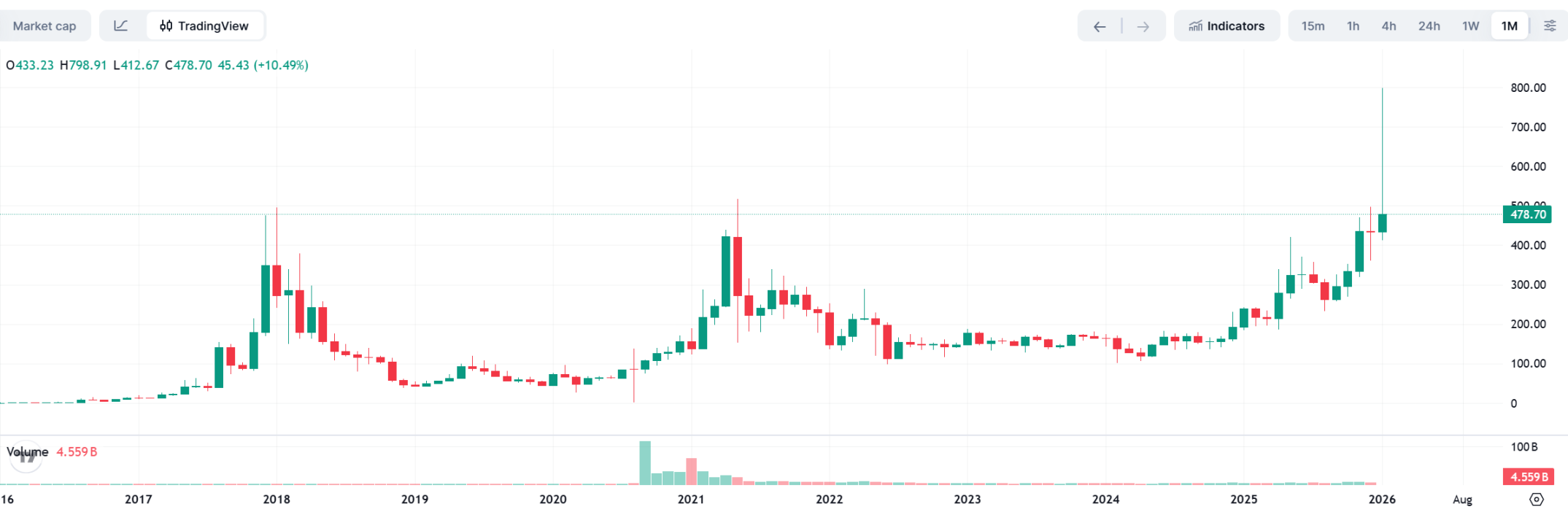
Unlike ZEC's halving-driven rise, XMR's increase relies more on its inherent decentralized nature and actual adoption rate. Despite being delisted from 73 exchanges previously, XMR's transaction volume grew against the trend, with a single-day mixing volume of stolen BTC reaching $282 million, proving the reliability of its privacy technology.

Another privacy coin, DASH, rose from nearly $20 to a high of $150, an increase of over 7 times, and has currently pulled back to $62.
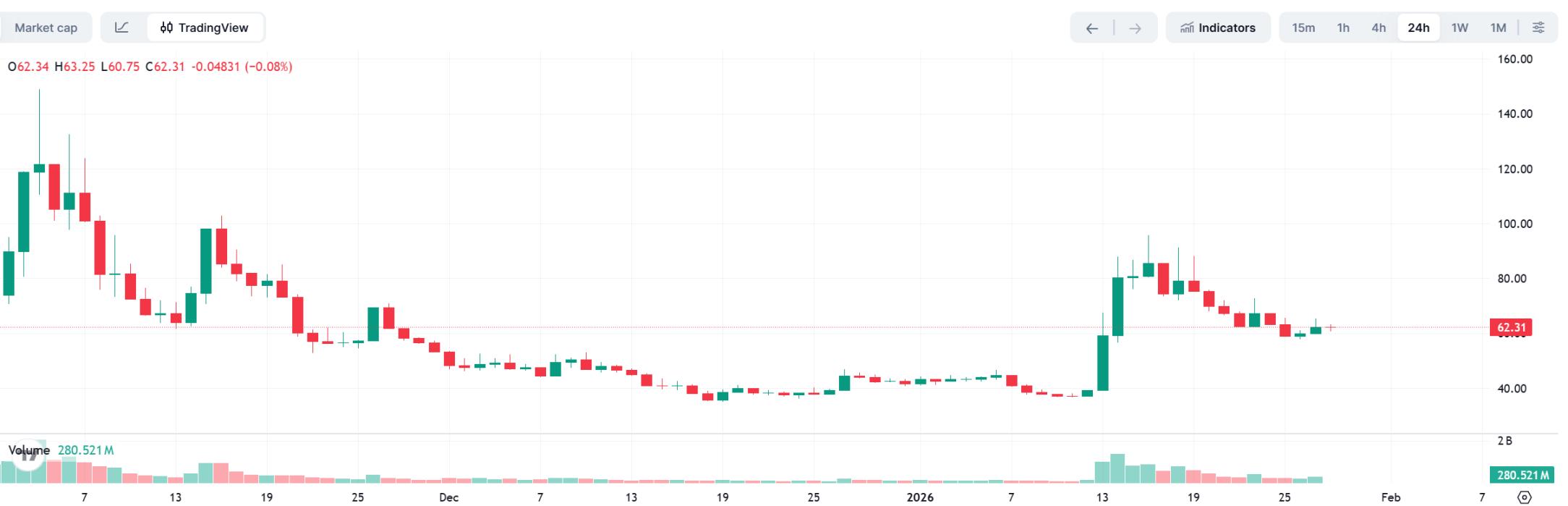
Quantum Computing Threat and the Rise of the Privacy Narrative

The potential threat of quantum computing to Bitcoin became a significant catalyst for the surge in privacy coins from late 2025 to early 2026. Although experts generally believe that quantum computers cannot practically crack Bitcoin's ECDSA signature algorithm by 2026, this risk has already sparked market panic, driving capital away from BTC and towards privacy coins with better quantum resistance.

According to a report by Grayscale Research, although quantum computing is seen as a "false threat to the 2026 market," it amplified investors' concerns about exposed Bitcoin public keys in Q4 2025, leading institutional funds to reassess risk exposure and shift towards coins like ZEC and XMR. These privacy coins use zero-knowledge proofs and ring signature technology, which can better resist Shor's algorithm attacks and theoretically provide higher long-term security.

A CoinDesk report showed that the quantum upgrade discussed at the Bitcoin developer conference in December 2025 would take 5-10 years. During this window, whale investors moved hundreds of millions of dollars from BTC to privacy coins.

Secondly, market rotation and the amplification effect of capital inflows. In Q4 2025, the overall crypto market corrected, but privacy coins rose against the trend, attracting whales and large funds. BitMEX co-founder Arthur Hayes heavily invested in ZEC through the Maelstrom fund, calling it the "next BTC."

Additionally, multiple hacking incidents in 2025 (involving billions of dollars in theft) prompted funds to turn to privacy coins: stolen BTC was quickly converted to XMR, with a single-day mixing volume reaching $282 million. A CoinDesk report pointed out that 80% of privacy coins rose in 2026, with 14 out of 18 coins doubling in market capitalization.

Arthur Hayes warned that the "quantum ghost" would accelerate the privacy supercycle, predicting that ZEC and XMR would attract more hedging funds in 2026.

With the strong rise of privacy coins, some investors are happy while others are worried. Past market trends have often seen privacy coins gradually fade after their "last dance."

Wintermute stated that BTC's current price range shows fatigue, but the market structure is not bearish; instead, it is in a stalemate. The $85,000 support level has been tested multiple times—it is either a solid bottom or a trap waiting to be sprung. Although U.S. fund flows show net outflows and volatility continues to compress, this support level has held, indicating buying interest below (albeit mild). Gold is playing the role that Bitcoin should be playing. The stock market is waiting for earnings reports to validate valuation rationality. Bitcoin is stuck in "no man's land"—not weak enough to break support, nor strong enough to regain upward momentum. The macro environment is poised for a trending move, but the crypto market has been slow to follow.

This situation could change due to a reversal in ETF fund flows or shifts in the U.S. dollar's movement. If the Federal Reserve intervenes in the yen exchange rate and the dollar continues to weaken, it will become a clear catalyst for risk assets. If the "Magnificent Seven" tech stocks report better-than-expected earnings and the AI narrative continues to develop, it will drive the Nasdaq index higher, thereby boosting the crypto market. Conversely, if Powell sends hawkish signals or tariff conflicts escalate, the $85,000 support level will face severe tests. A 60-day consolidation period combined with such密集的事件风险, the market will eventually choose a direction.

If BTC's trend can stabilize and recover, privacy coins may perform well driven by the broader market.


Twitter:https://twitter.com/BitpushNewsCN

Bitpush TG Discussion Group:https://t.me/BitPushCommunity

Bitpush TG Subscription: https://t.me/bitpush

Original link:https://www.bitpush.news/articles/7607020

Пов'язані питання

QWhat is the main reason for the recent surge in privacy coins like ZEC and XMR according to the article?

AThe surge is primarily driven by concerns over quantum computing threats to Bitcoin's security, leading investors to shift funds to privacy coins which offer better quantum resistance through technologies like zero-knowledge proofs and ring signatures.

QHow much did ZEC's price increase from October 2025 to its peak, as mentioned in the article?

AZEC's price increased over 12 times, from around $50 in October 2025 to over $700 within two months.

QWhat event specifically impacted ZEC's price in November 2025, causing short-term volatility?

AZEC underwent a halving event in November 2025, which reduced the block reward from 3.125 to 1.5625 coins, leading to price fluctuations.

QWhy did XMR's value rise despite being delisted from many exchanges, as per the article?

AXMR's value rose due to its strong decentralized attributes and practical adoption, evidenced by increased transaction volumes, including a single-day mixing volume of $282 million for stolen BTC, proving the reliability of its privacy technology.

QWhat broader market condition is suggested as necessary for privacy coins to maintain their positive performance?

AThe article suggests that if Bitcoin's price stabilizes and recovers, privacy coins could perform well under the broader market's upward momentum.

Пов'язані матеріали

Why Do You Always Lose Money on Polymarket? Because You're Betting on News, While the Pros Read the Rules

Why do you always lose money on Polymarket? Because you bet on news, while the pros study the rules. This article explains how top traders ("che tou") profit by meticulously analyzing market rules, not just predicting events. Polymarket, a prediction market platform, often sees disputes over event outcomes due to ambiguous rule wording. For instance, a market asking "Who will be the leader of Venezuela by the end of 2026?" was misinterpreted by many who bet on Delcy Rodríguez, assuming she held power. However, the rules specified "officially holds" as the formally appointed, sworn-in individual. Since Nicolás Maduro was still recognized as president officially, he won the market—even being in prison. To resolve such disputes, Polymarket uses a decentralized arbitration system via UMA protocol. The process involves: 1. Proposal: Anyone can propose a market outcome by staking 750 USDC, earning 5 USDC if unchallenged. 2. Dispute: A 2-hour window allows challenges with a 750 USDC stake; successful challengers earn 250 USDC. 3. Discussion: A 48-hour period on UMA Discord for evidence and debate. 4. Voting: UMA token holders vote in two 24-hour phases (blind then public). Outcomes require >65% consensus and 5M tokens voted; otherwise, four re-votes occur before Polymarket intervention. 5. Settlement: Results are final and automatic. Unlike traditional courts, Polymarket’s system lacks separation between arbitrators and stakeholders—voters often hold market positions, creating conflicts of interest. This leads to herd mentality in discussions and non-transparent outcomes without explanatory rulings, preventing precedent formation. Thus, success on Polymarket hinges on deep rule interpretation, not just event prediction, exploiting gaps between reality and contractual wording.

marsbit2 год тому

Why Do You Always Lose Money on Polymarket? Because You're Betting on News, While the Pros Read the Rules

marsbit2 год тому

DeepSeek Funding: Liang Wenfeng's 'Realist' Pivot

DeepSeek, a leading Chinese AI company, has initiated its first external funding round, aiming to raise at least $300 million at a valuation of no less than $10 billion. This move marks a significant shift from its founder Liang Wenfeng’s previous idealistic stance of rejecting external capital to maintain independence. Despite strong financial backing from its parent company, quantitative trading firm幻方量化 (Huanfang Quant), which provided an estimated $700 million in revenue in 2025 alone, DeepSeek faces mounting challenges. Key issues include a 15-month gap in major model updates, delays in its flagship V4 release, and the loss of several core researchers to competitors offering significantly higher compensation. The company is also undergoing a strategic pivot by migrating its infrastructure from NVIDIA’s CUDA to Huawei’s Ascend platform, a move aligned with China’s push for technological self-reliance amid U.S. export controls. However, DeepSeek lags behind rivals like智谱AI and MiniMax—both now publicly listed—in areas such as product ecosystem, multimodal capabilities, and commercialization. The funding round, though relatively small in scale, is seen as a way to establish a market-validated valuation anchor, making employee stock options more competitive and facilitating talent retention. It also signals DeepSeek’s transition from a pure research-oriented organization to a commercially-driven player in the global AI ecosystem.

marsbit2 год тому

DeepSeek Funding: Liang Wenfeng's 'Realist' Pivot

marsbit2 год тому

Торгівля

Спот
Ф'ючерси
活动图片