Author: Nancy, PANews
The narrative of on-chain finance is rapidly moving towards the global market.
In less than a week, multiple mainstream media outlets have turned their attention to Hyperliquid. This Perp DEX, which once focused on crypto derivatives, is having its "breakout moment," with decentralized pricing power becoming a focal point of discussion on Wall Street. However, as the volume of on-chain transactions continues to expand, the balance between decentralized innovation and compliance regulation is becoming an unavoidable challenge.
HIP-3 Invades Mainstream Finance, Hyperliquid is a Playground for Whales
As a leading Perp DEX, Hyperliquid is continuously widening the gap with its competitors and gradually becoming an emerging infrastructure force in the mainstream financial market.
According to data from DeFiLlama, as of March 16, Hyperliquid's monthly trading volume reached $173.42 billion, far surpassing similar platforms.
RWA (Real World Asset) trading is a significant growth driver for Hyperliquid recently. Platform data shows that in just the past 24 hours, its perpetual contract trading volume reached $5.4 billion, with the HIP-3 sector contributing approximately 21.3% (about $1.15 billion).
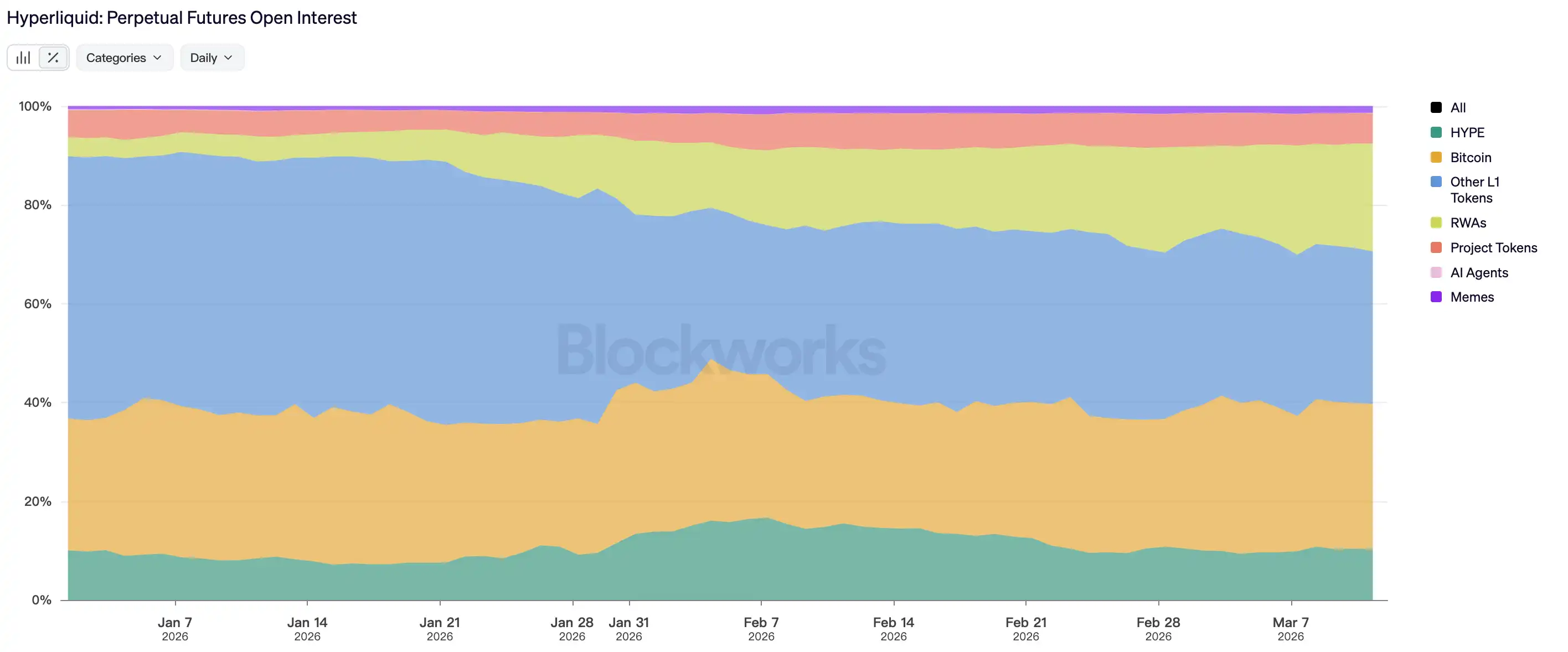
HIP-3 deploys perpetual futures markets for various assets like commodities, stock indices, etc. Among these traditional assets on HIP-3, WTI crude oil, silver, Brent crude oil, and XYZ100 currently show the most significant demand and activity, with WTI crude oil's daily trading volume accounting for over 35% of the total.
Behind the rapid expansion in trading scale is a large influx of whale players into Hyperliquid, whose global user base has exceeded 1.729 million. Further analysis by Hyperliquid Hub, an ecosystem data analysis service, points out that Hyperliquid's total trading volume has reached a staggering $411 trillion, with the top 100 addresses contributing over $334 trillion, accounting for 81.3% of all trading volume. The top 200 addresses account for 98.81%, leaving only about 1.19% of the volume for the remaining addresses.
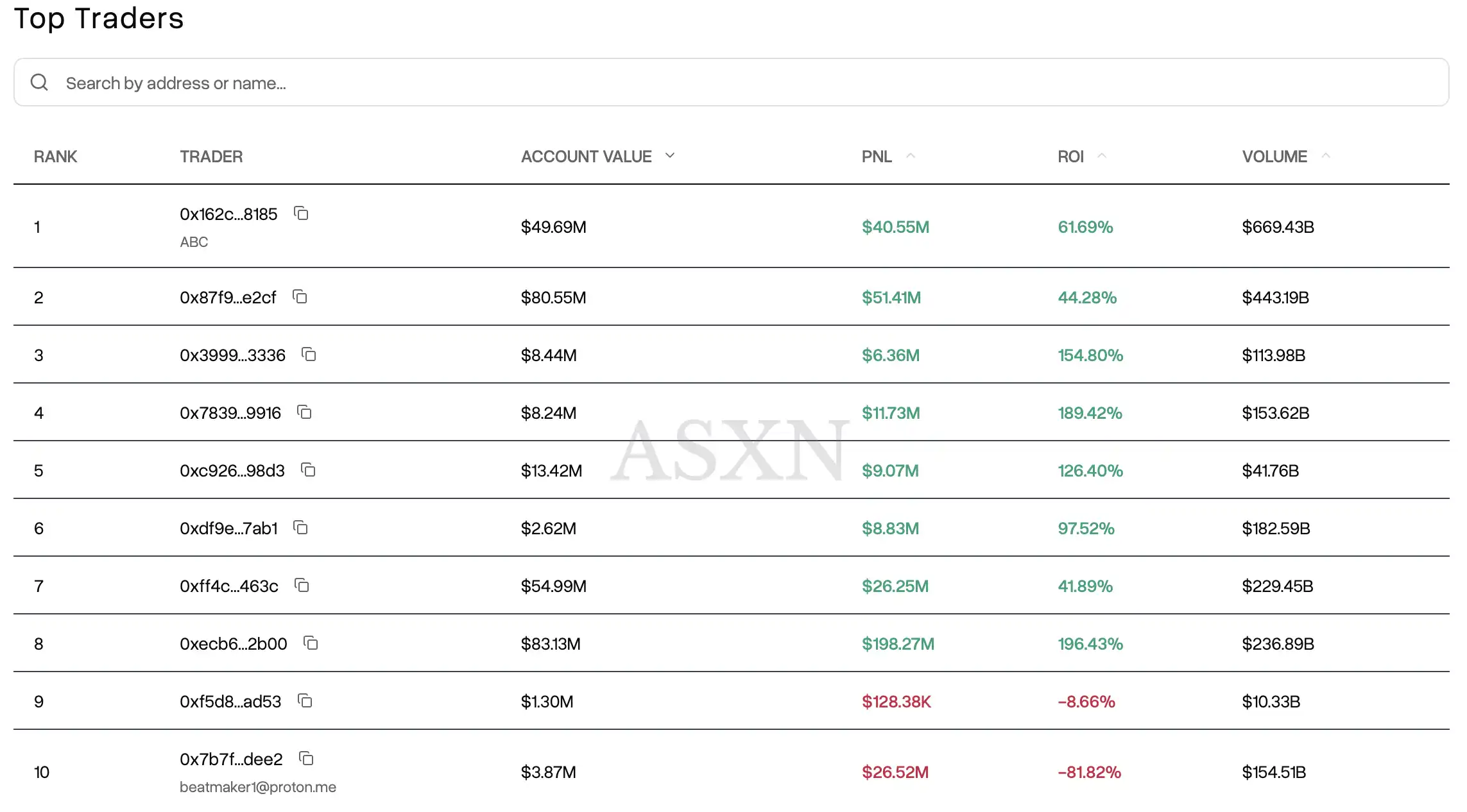
Clearly, Hyperliquid is not a playground for retail investors but is dominated by a small number of well-funded, highly active traders, such as institutions, whales, high-frequency traders, and professional market makers.
Looking further, the number of unique traders on HIP-3 has cumulatively exceeded 1.85 million (Note: the same wallet connecting on different days is counted as two separate wallets), with over 810,000 new traders added in the past month alone, further confirming the demand for trading tokenized assets.
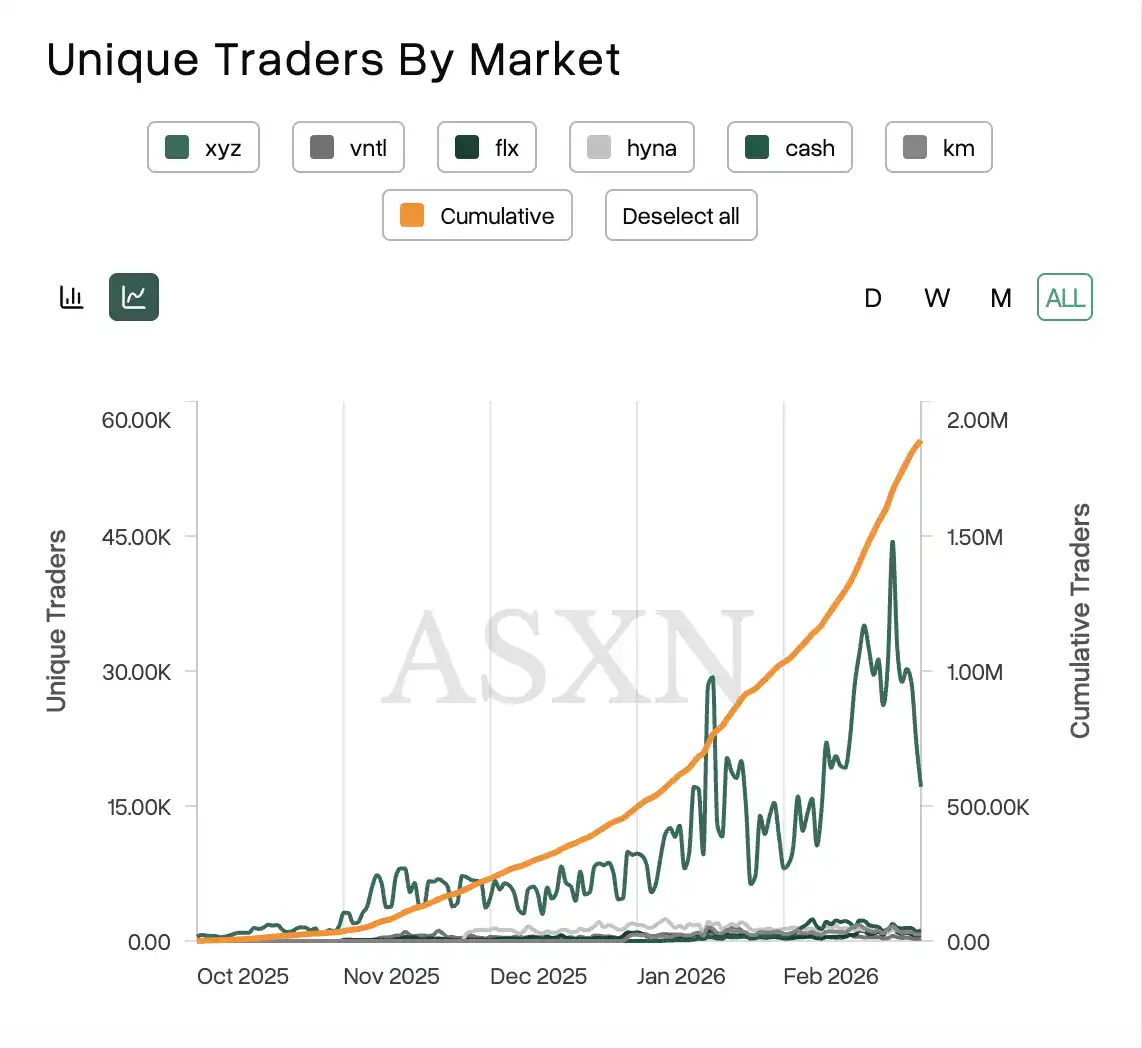
The recent significant growth in HIP-3 business is directly linked to the US-Iran conflict event, making Hyperliquid a new hub for global macro trading. Mainstream media like Bloomberg, Wall Street News, and Fortune, in recent reports, directly referenced Hyperliquid's crude oil contracts as a price reference, noting that before the CME (Chicago Mercantile Exchange) opened on Monday, Hyperliquid had already completed price discovery over the weekend, becoming a real-time window for global macro assets.
It is by seizing TradFi pricing power, liquidity vacuums, and macro hedging demand that Hyperliquid has begun to truly "invade" the mainstream financial market.
Matt Hougan, Chief Investment Officer of Bitwise, also stated that the US-Iran event has brought the 24/7 crypto market into focus. In the past, if a major geopolitical shock occurred on a Sunday morning, investors typically had to wait for the US futures market to open on Sunday at 6 PM ET to understand its impact. Now, they can directly turn to 24/7 on-chain trading platforms to execute trades in real-time. The shift of the financial industry to on-chain is an irreversible trend, like a ball rolling down a hill, unstoppable and much faster than imagined. However, there are still barriers to participating in on-chain markets, including familiarity with wallets, stablecoins, and platforms like Hyperliquid and Uniswap. (Related reading: Outside Wall Street Hours, Traditional Asset Pricing Power Shifts On-Chain)
Faced with this rapidly developing trend of on-chain finance, traditional financial players like Nasdaq and CME have also begun to lay out tokenized trading businesses to seize future market opportunities.
Crypto Perpetual Futures May Land in the US Next Month, Hyperliquid Faces Compliance Challenges Head-On
Since last year, the Perp DEX market has experienced a significant liquidity explosion.
A recent CoinGecko report pointed out that DEX perpetual contracts surged to $6.7 trillion in 2025, an increase of about 346% compared to the previous year, while CEX open interest fell by 20.8% during the same period. Behind this trend is the rise of perpetual DEXs like Hyperliquid and Lighter, also reflecting a large-scale migration of funds from CEXs to DEXs.
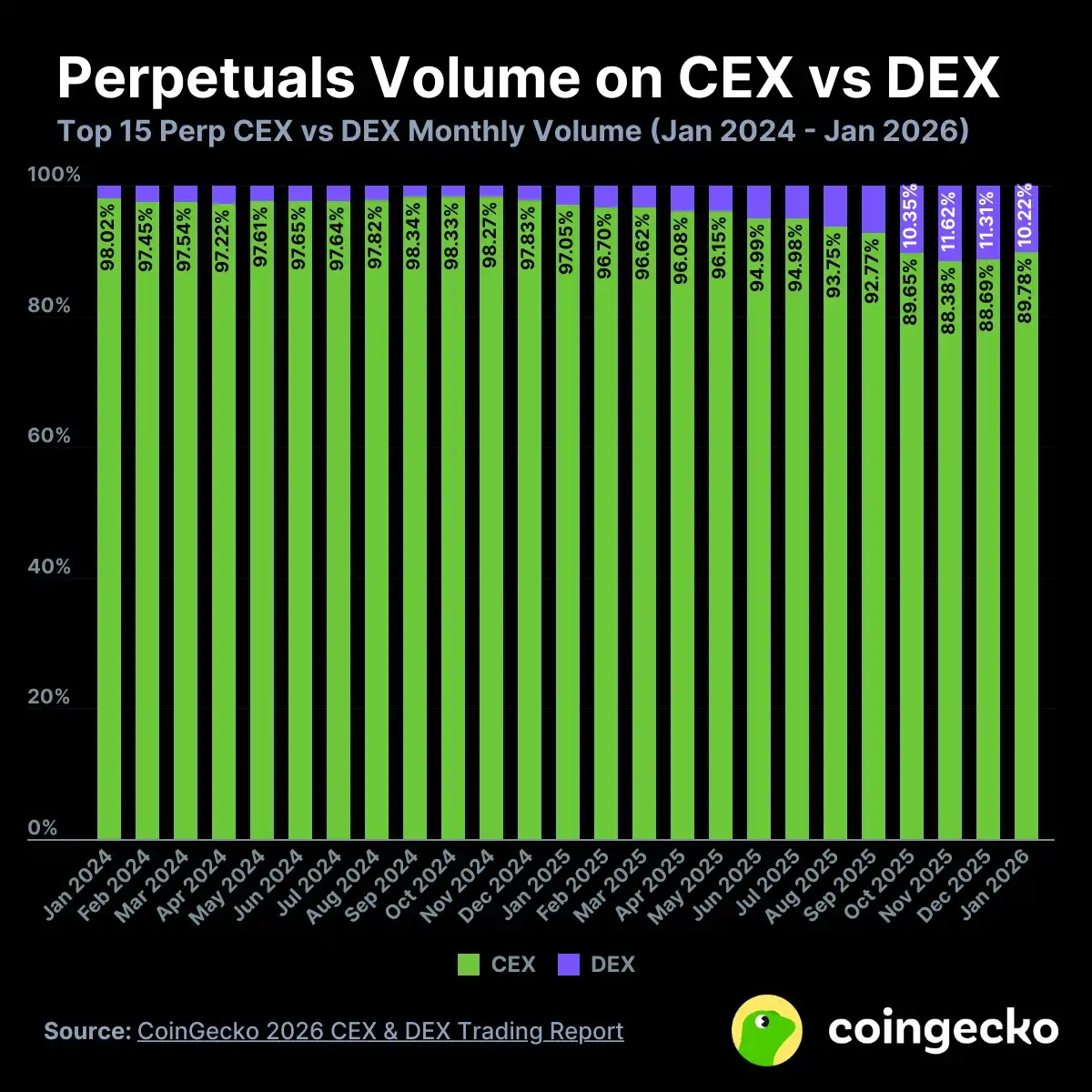
The gradual clarification of the regulatory environment is further amplifying the development space of the perpetual contract market, making more mainstream funds willing to enter this field. Recently, Mike Selig, Chairman of the U.S. Commodity Futures Trading Commission (CFTC), also discussed the regulatory progress of crypto perpetual futures and prediction markets in a public statement. He said the CFTC is working to launch true perpetual futures in the US and expects to announce related policies in about a month to attract liquidity back to the US while providing better protection for investors. Selig also pointed out that due to regulatory uncertainty in the past, a large amount of liquidity flowed overseas, and the CFTC is working with US SEC Chairman Paul Atkins to advance Project Crypto to coordinate digital asset regulatory reforms.
However, regulatory clarity could also lead to another outcome. Once the permissionless, intermediary-free on-chain trading path is broken due to compliance requirements, the core appeal of Perp DEXs could be significantly diminished, and they would directly face competition from compliant crypto platforms and traditional financial institutions.
In fact, for many users, besides factors like incentive mechanisms, self-custody needs, capital efficiency, and hedging demand, the lack of KYC is also an important reason attracting funds to on-chain trading.
For example, on-chain analyst Eye previously posted that some institutional trading parties active on Hyperliquid showed obvious discomfort after their on-chain trading wallets were identified, even actively contacting the analyst to pressure them to stop disclosing information, often related to the possibility of losing trades being known to the outside world.
If Hyperliquid hopes to be seen as a legitimate participant in the new financial system, it may have to accept and comply with corresponding regulatory rules. Especially against the background of previous controversial cases involving token manipulation and insider trading on the platform, its compliance pressure may further increase.
To address regulatory challenges, Hyperliquid formally established the Hyperliquid Policy Center in Washington, D.C. in February, with veteran crypto lawyer Jake Chervinsky as its first CEO. The center aims to create a legal path for the widespread adoption of DeFi in the US, help Congress and federal agencies understand the underlying technology of DeFi, and provide professional support for regulatory rule-making.
Chervinsky stated that the current regulatory framework was formed in the "analog era" and struggles to encompass new trading forms like decentralized protocols. A primary task of the policy center is to develop a legal framework for perpetual contracts. To support its operation, the associated Hyperliquid Foundation has donated 1 million native platform tokens HYPE (currently worth about $28 million) to support the center's operations.
Hyperliquid co-founder Jeff Yan emphasized in a recent interview that he wants the platform to "be used forever," not to fade away quickly with market hype. He also aims to distinguish Hyperliquid Labs from the Hyperliquid platform and ecosystem, and is committed to building Hyperliquid into a financially neutral platform, providing sustainable infrastructure for the development of on-chain perpetual contracts and decentralized finance.
As DeFi attempts to challenge traditional finance, compliance has become a prerequisite for accessing larger markets. This is not only a test for Hyperliquid but also a reality that other DEXs and even the entire DeFi track must face head-on.