From selling models to building products, Anthropic is moving faster than anyone anticipated.
In 2010, a small company called Instagram was acquired by Facebook for $1 billion. At the time, many didn't understand why so much money was spent on a filter app. The rest, as we know, is history—Facebook wasn't just buying a product; it was acquiring a potential threat and turning it into a weapon.
Mike Krieger, the co-founder who helped grow Instagram from zero to hundreds of millions of users, joined the rising Anthropic in May 2024 as Chief Product Officer.
On April 14, 2026, Krieger resigned from Figma's board. Three days later, Anthropic announced the launch of Claude Design.
That timing doesn’t seem like a coincidence.
01 In Three Days, an Industry's Landscape Changed
Figma's stock fell more than 7% that day, dropping from $20.32 to $18.84. The market’s reaction is always more honest than press releases.
Claude Design is an experimental product powered by Anthropic’s latest flagship model, Opus 4.7, developed by the internal Anthropic Labs team. What can it do? Prototypes, slides, one-pagers, and various visual content—exactly what designers and product managers open Figma or Canva to do every day.
But if you see Claude Design as just "another AI design tool," you’re underestimating its significance.
What really alarmed industry insiders is the "handoff" mechanism between Claude Design and Claude Code.
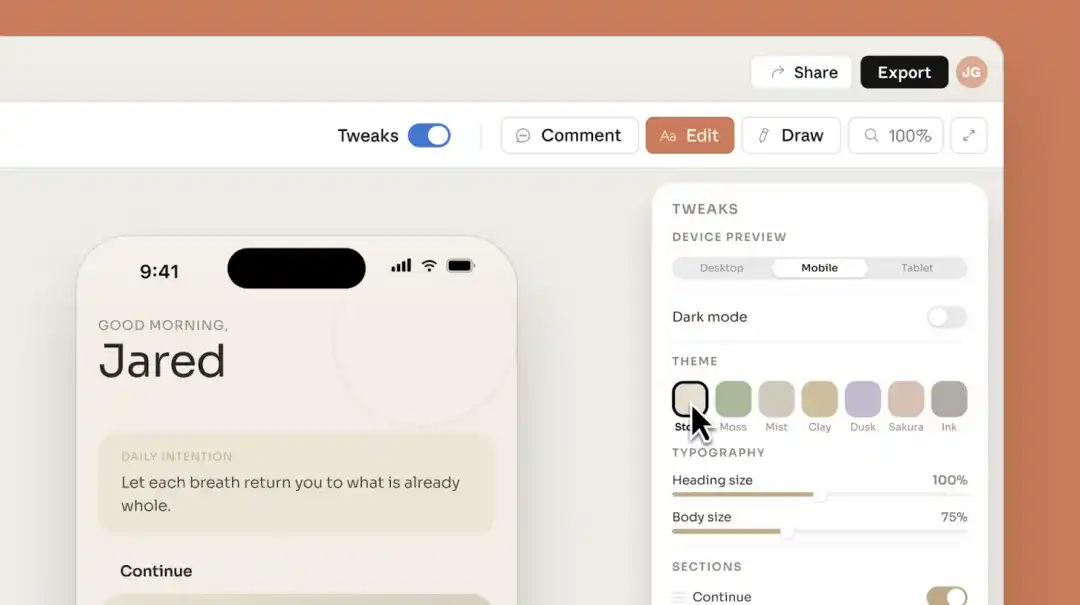
When you finish a interface prototype with Claude Design, the system automatically packages the complete design specifications into a "handoff package" that can be directly passed to Claude Code for further development.
More crucially, when enabled, Claude Design reads your codebase and existing design files, automatically building a design system tailored to your team—fonts, colors, layout standards, brand governance rules. Read once, applied throughout.
A developer commented on Reddit that this solves the "most annoying part" of using AI design tools—having to re-explain your brand guidelines to the AI for every new project.
Design to development used to involve two tools, two processes, two groups of people. Now Anthropic wants to turn this pipeline into a closed loop.
02 A Clear Strategic Rhythm
Placing Claude Design on the timeline of recent weeks reveals an Anthropic moving at an increasingly rapid pace.
In early April, Anthropic announced the limited release of Claude Mythos Preview. This model can discover and exploit vulnerabilities hidden for decades in critical software systems. The security risks are so high that the company decided not to release it publicly—instead offering access in the form of "Project Glasswing" to over 50 top-tier organizations like Amazon, Apple, Microsoft, Google, and JPMorgan Chase, each gifted $100 million in usage credits specifically for defensive cybersecurity research.
On April 14th, Opus 4.7 was officially released, bringing stronger coding capabilities, clearer visual understanding, and new "self-checking" abilities. Anthropic itself admitted that Opus 4.7's performance is inferior to Mythos—but Mythos hasn't been publicly released due to security concerns.
On April 17th, CEO Dario Amodei met with White House officials, the topic being the cybersecurity concerns raised by the Mythos model. On the same day, Claude Design was released.
Also on April 17th, foreign media reported that Anthropic's valuation had reached $800 billion, and it was in early preliminary discussions with Goldman Sachs, JPMorgan Chase, and Morgan Stanley for an IPO, potentially going public as early as October this year.
This is no longer just a "model-selling company" doing its thing. This is a company preparing for an IPO, needing to explain to capital markets "why we are worth this price," systematically building out its product matrix.
From Claude Code disrupting the developer tools market to Claude Design entering the design workflow, Anthropic's logic is very clear: find the high-frequency tool scenarios used by professional populations daily, remake them in an AI-native way, and use "model capability" as a moat, making it hard for competitors to catch up.
03 Challenging Figma, But Also Facing Reality
However, there's often a gap between the ideal closed loop and practical use.
Some testers found in actual experience with Claude Design that merely building a design system, setting up a prototype website, and making a few adjustments consumed over 50% of the weekly quota. Exceeding the quota requires additional token fees. For design scenarios requiring frequent iteration, this cost pressure is not negligible.
There are also obvious bugs currently, such as the design system preview sandbox failing to correctly read image files, causing broken image links.
Claude Design's current positioning is more like an accelerator for internal demos and rapid prototyping, rather than a production-ready design tool for direct delivery.
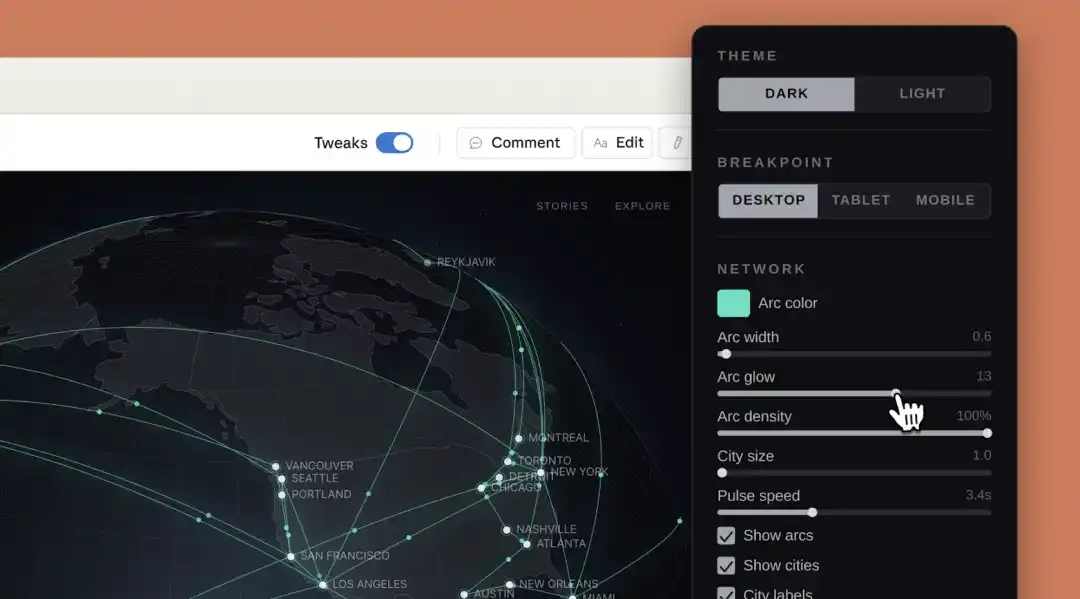
This also means Canva and Figma are not without recourse. Figma has a moat built over years in collaboration features, fine-grained management of design systems, and professional designer workflows; Canva's advantage lies in its template ecosystem and ease of use for non-professional users. In the short term, production-grade content still requires manual fine-tuning.
But the word "short-term" is getting shorter and shorter in the AI field.
Anthropic's real ambition this time might not be to directly replace Figma—but to redefine "who Figma's target users are." When an independent developer, a small team's product manager, or an entrepreneur needing to quickly create a demo can use Claude Design to build a "good enough" prototype in minutes, then seamlessly hand it off to Claude Code for implementation, will they still need to spend time learning Figma?
This is the real reason Figma's stock fell 7%.
04 From Selling Shovels to Digging the Mine
There's a long-standing metaphor in Silicon Valley: during a gold rush, the ones who make the most money aren't the gold prospectors, but the ones selling shovels. In the early days of the AI wave, OpenAI and Anthropic played the role of "shovel sellers"—providing APIs for developers and companies to build applications.
But now, Anthropic is starting to dig the mine itself.
Claude Code, Claude Design—these are two shovels, but also two entry points occupying user time. When Anthropic directly makes developer tools and design tools, its relationship with ecosystem companies that built products based on its API shifts from "partners" to "competitors."
Microsoft has walked this path, Google has walked it, Apple walks it most thoroughly. The difference is, those companies built platforms first and then applications, while Anthropic is using model capability to build trust first, then spreading upstream into the application layer.
Mike Krieger once made Instagram into a platform, then watched firsthand as Facebook used that platform to suppress competitors. Two years ago, he joined Anthropic and started working on product.
History doesn't repeat itself simply, but sometimes, the participants do.
Anthropic's IPO could land as early as October this year. Before then, it will likely "announce" a few more times, letting the capital markets see clearly what this company wants to become.