Variant: Three L1 Assets That Could Become Primary Stores of Value

链捕手Опубліковано о 2026-06-02Востаннє оновлено о 2026-06-02

Анотація

The core belief at Variant is that individuals should own their money, identity, and data. A key framework for evaluating first-layer blockchain (L1) networks is viewing their native tokens as potential stores of value (SOV). A good SOV asset is defined by several key attributes: technical durability (its likelihood to exist and function in 5-10 years), scarcity and predictable inflation, censorship resistance, economic productivity (its utility in facilitating economic activity), memetic strength (widespread social consensus on its value), and liquidity. Based on this framework, three L1 assets are highlighted as leading contenders for becoming major SOVs, each excelling in different dimensions: * **Bitcoin (BTC)** is dominant in memetic strength, widely recognized as "digital gold." Its growing belief network among individuals and institutions reinforces its SOV status. * **Ethereum (ETH)** excels in technical durability and adaptability. Its ability to upgrade and a transparent roadmap provide confidence in its long-term resilience against future challenges. * **Zcash (ZEC)** offers superior censorship resistance and privacy through its shielded pools. This provides individuals with a long-term option to protect assets from confiscation or surveillance. The total market for SOV assets like gold is immense (gold's market cap is ~$31T). Despite often surpassing traditional SOVs on these fundamental metrics, digital assets currently capture only a small fraction of t...

Author:Alana Levin,Variant

Compiler:Hu Tao,ChainCatcher

At the core of our investment philosophy at Variant is the belief that people should be able to own their own money, identity, and data.

We look for large markets that support and expand access to and ownership of the resources individuals and organizations need for daily life. Our investments in crypto networks have turned many of these ideas into reality. These networks are coordination protocols built around sovereignty and self-custody.

However, questions remain about how to value these networks. Different protocols and projects have vastly different goals, so the important fundamental metrics for tracking success and predicting growth vary greatly.

We believe all tokens can be classified into one of two categories: Store of Value (SOV) assets or equity-like instruments. In particular, we find the store of value framework very useful for evaluating Layer 1 (L1) blockchains—the largest and most important money coordination protocols in the modern financial system.

Through deep exploration, we have identified a series of fundamental metrics for understanding, evaluating, and tracking the future development of these networks. This article aims to share part of our thought process, hoping to provide a useful reference for others thinking about these assets.

L1 Assets Can Act as Stores of Value

One of our core frameworks is that L1s can be analyzed and modeled as stores of value.

So, what makes an asset a good store of value? Our key fundamentals are as follows (roughly ordered by importance):

Technical Durability: Will this asset still exist in 5-10 years? To what extent will its appearance/function remain unchanged?

Scarcity: Is this asset widely available and easy to acquire? How easy is it to inflate this asset? How predictable is its inflation curve?

Censorship Resistance: How easy is it for a single entity to seize this asset? To what extent can economic activity associated with this asset be blocked or shut down?

Economic Productivity: Can this asset be used to facilitate economic activity? How useful is it in finance, for example, does it have collateral value?

Memetics: Do others perceive this asset as a store of value? An important feature of any currency is that society reaches consensus on its value and utility.

Liquidity: Is this asset widely accessible to everyone who wants it in their portfolio (regardless of size)? We place this last because it is often a downstream effect of mimetic behavior; liquidity tends to beget more liquidity, and the greater the interest in an asset, the more likely its scale (relative to inflationary currencies) is to grow. Bitcoin wasn't very liquid in its first few years, but now it's one of the world's most liquid assets.

Few markets have a larger Total Addressable Market (TAM) than stores of value. Gold—the largest and most widely recognized store of value—has a market capitalization of $31 trillion. Silver's market cap is also $4 trillion. We believe some L1s have the potential to become superior stores of value.

Sovereign Wealth Fund Assets

Currently, three L1 assets stand out as strong candidates to become primary stores of value: Bitcoin (BTC), Ethereum (ETH), and ZEC. In our framework, they each excel in different dimensions.

Bitcoin dominates the memetic mindshare, famously known as 'digital gold.' The strong reflexive nature of the meme is a powerful force and a crucial fundamental consideration for any store of value contender: the more people believe Bitcoin is a store of value, the more likely it is for those on the fringes to believe it is a store of value. Over the past fifteen years, individuals, funds, companies, institutions, and even nations have invested in this belief.

Ethereum may be more technically durable than Bitcoin. It is easier to upgrade, and its roadmap provides transparent, trackable, and verifiable insight into what the developer community is planning for the future. Looking ahead—and at new risks presented by innovations like quantum computing—we view this adaptability as a strength, not a flaw. At the heart of any quality sovereign asset is the belief it will still exist in a decade. Ethereum has already demonstrated strong resilience, weathering significant technical and social challenges—such as The DAO hack, the Merge, and more—and we believe it will continue to thrive in this regard.

ZCash excels in censorship resistance and privacy. The mere option provided by its shielded pool (ZCash's private transaction feature) gives individuals a way to potentially avoid future wealth confiscation or pervasive state surveillance. This is a durable advantage for ZCash, providing individuals a long-term path to protect their assets.

Overall, the value of stores of value amounts to tens of trillions of dollars. This is evident just from the status quo. We believe this space will continue to grow at a high speed, and multiple stores of value can coexist.

However, looking at today's market landscape, despite digital sovereign stores of value (SOV) outperforming gold or silver on many of the fundamental metrics mentioned above, they still represent only a small fraction of the total SOV market. For us, this represents an ambitious and exciting opportunity.

Пов'язані питання

QWhat are the two main categories that the author suggests all tokens can be classified into?

AThe author suggests all tokens can be classified into two categories: store of value (SOV) assets or equity-like instruments.

QAccording to the article, what are the key fundamental elements that make an asset a good store of value?

AThe key fundamental elements are (in rough order of importance): technical durability, scarcity, censorship resistance, economic productivity, memetics, and liquidity.

QWhich three L1 assets does the article identify as most likely to become primary stores of value, and what is the primary strength of each?

AThe three L1 assets are Bitcoin (BTC), Ethereum (ETH), and Zcash (ZEC). Their primary strengths are: Bitcoin's dominance in memetics, Ethereum's technical durability and adaptability, and Zcash's superior censorship resistance and privacy.

QWhy does the author consider Ethereum's adaptability an advantage for its role as a store of value?

AThe author believes Ethereum's ease of upgrade and transparent roadmap provide an advantage. This adaptability allows it to better face future challenges and technological innovations (like quantum computing), strengthening the belief that it will still exist and function well in a decade, which is a core requirement for a sovereign asset.

QWhat is the author's view on the current market share of digital SOVs compared to traditional stores of value like gold?

AThe author believes that despite digital SOVs performing better on many fundamental metrics, they still represent a very small proportion of the total store of value market (citing gold's $31 trillion market cap). This small market share is seen as a significant and exciting opportunity for growth.

Пов'язані матеріали

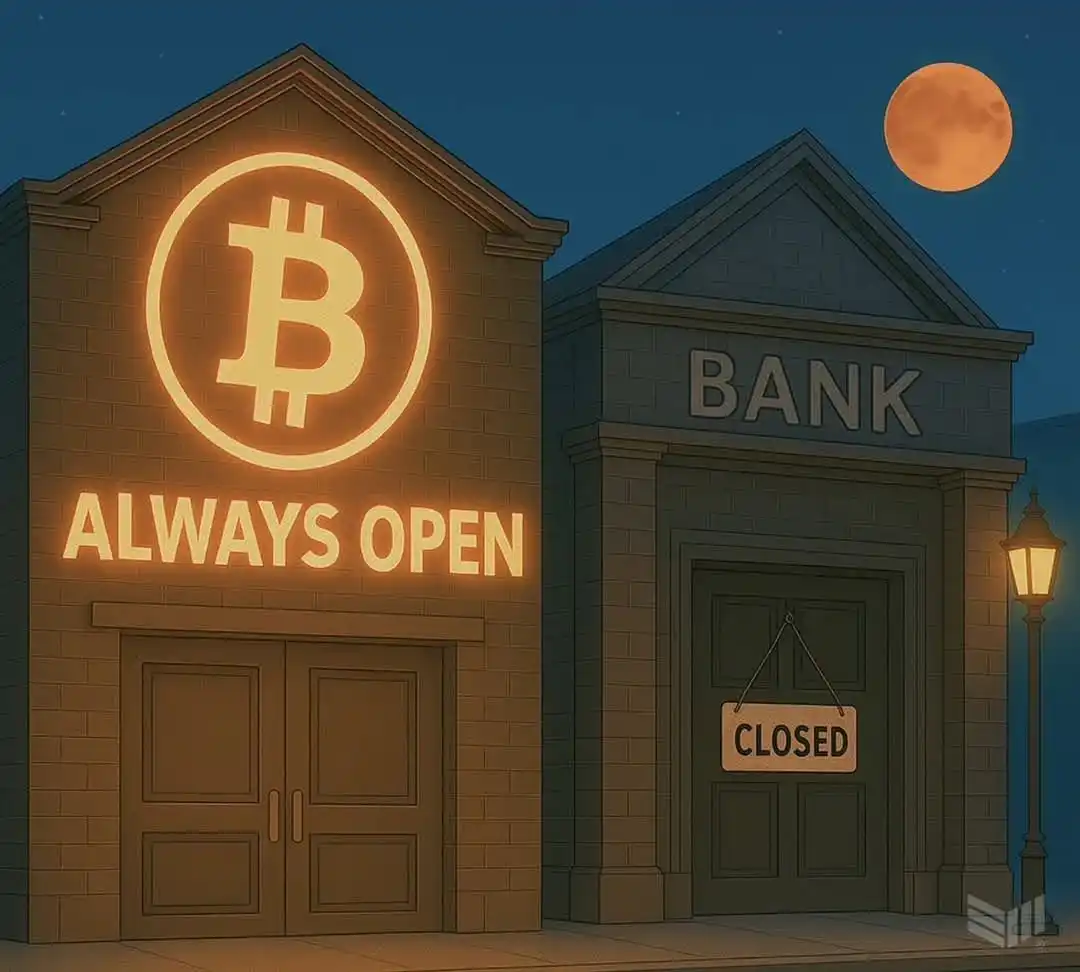
For Hedging, Buy Gold and Oil; For Explosive Growth, Buy AI; Bitcoin, the 'Outdated' Asset, Enters a Bear Market

Bitcoin’s price has recently fallen sharply, hitting a two-month low near $66,000, with Ethereum also dropping to a three-month low. While surface explanations point to ETF outflows, geopolitical tensions, and corporate selling, a deeper issue is emerging: Bitcoin is losing a crucial asset competition. For years, Bitcoin thrived in a low-rate environment where investors sought alternatives amid inflation fears and dissatisfaction with traditional options. Now, the market landscape has shifted, leaving Bitcoin stuck in an "awkward middle ground," facing challenges on three fronts: 1. **As an inflation hedge, gold is winning.** Investors worried about persistent inflation are turning to tangible assets like gold, energy stocks, and commodity producers, which offer more direct pricing power and physical backing. 2. **For growth exposure, AI is winning.** Those seeking high growth now favor AI-related companies with actual revenues and profits, an area where Bitcoin's lack of cash flow puts it at a disadvantage. 3. **Within crypto, infrastructure and stablecoins are winning.** Even investors wanting crypto exposure have alternatives like exchanges, stablecoin issuers, and tokenization firms, whose performance is directly tied to real-world adoption and offers clearer operational leverage. The recent market reaction to inflation warnings highlights this shift. Instead of boosting Bitcoin as "digital gold," such news now drives flows toward traditional inflation-sensitive assets. Therefore, recent events like ETF outflows and corporate selling are seen not as causes, but as symptoms of this new reality. Capital has more compelling options, and investors are becoming more selective. The emerging bear case for Bitcoin is no longer about it being a fraud or failed technology, but rather that **scarcity alone is no longer enough**. It is no longer seen as the best hedge, the best growth asset, or the only crypto play.

marsbit3 хв тому

For Hedging, Buy Gold and Oil; For Explosive Growth, Buy AI; Bitcoin, the 'Outdated' Asset, Enters a Bear Market

marsbit3 хв тому

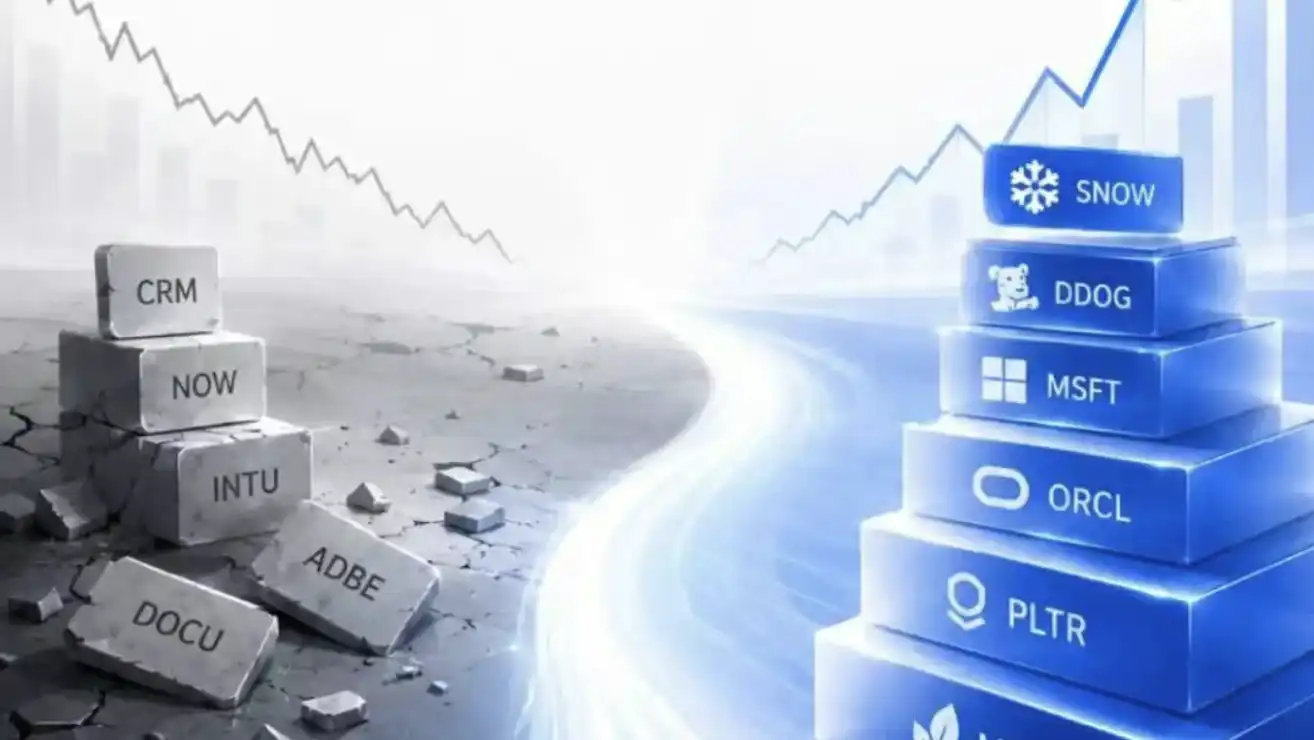
SaaS Battle Royale: The Survivors Who Win All Share One Common Trait

**Summary** The AI revolution has triggered a "SaaS apocalypse," forcing a brutal market shakeout. The key dividing line is the pricing model. Companies like Snowflake and Datadog, which charge based on consumption (e.g., data processed or compute used), are thriving. AI workloads actively *generate* more demand for their services, fueling growth. Datadog's accelerating revenue is a prime example. Microsoft and Palantir, as platform/ecosystem players, also benefit by acting as essential channels for AI deployment. In contrast, traditional SaaS firms built on per-seat or per-task licensing (e.g., Intuit, Adobe) face direct pressure, as AI threatens to automate the very human tasks their software supports. Companies like Salesforce, a per-seat giant, are caught in the middle. While showing strong AI monetization (e.g., its Agentforce platform) and experimenting with consumption-based "Flex Credits," its stock remains under pressure, illustrating that the market rewards *completed* transitions, not just the intent. The recent Microsoft Build conference underscored key trends: AI is evolving from an assistant to an autonomous "agent," and platform providers like Microsoft are consolidating their control. The market's recovery is highly selective, focused on identifying which companies are "fed by AI" versus "eaten by AI." Future focus will be on the diffusion of this recovery to transforming companies and the real-world adoption data of AI agents like Microsoft Copilot.

marsbit20 хв тому

SaaS Battle Royale: The Survivors Who Win All Share One Common Trait

marsbit20 хв тому

Торгівля

Спот
Ф'ючерси

Популярні статті

Як купити CORE

Ласкаво просимо до HTX.com! Ми зробили покупку CORE (CORE) простою та зручною. Дотримуйтесь нашої покрокової інструкції, щоб розпочати свою криптовалютну подорож.Крок 1: Створіть обліковий запис на HTXВикористовуйте свою електронну пошту або номер телефону, щоб зареєструвати обліковий запис на HTX безплатно. Пройдіть безпроблемну реєстрацію й отримайте доступ до всіх функцій.ЗареєструватисьКрок 2: Перейдіть до розділу Купити крипту і виберіть спосіб оплатиКредитна/дебетова картка: використовуйте вашу картку Visa або Mastercard, щоб миттєво купити CORE (CORE).Баланс: використовуйте кошти з балансу вашого рахунку HTX для безперешкодної торгівлі.Треті особи: ми додали популярні способи оплати, такі як Google Pay та Apple Pay, щоб підвищити зручність.P2P: Торгуйте безпосередньо з іншими користувачами на HTX.Позабіржова торгівля (OTC): ми пропонуємо індивідуальні послуги та конкурентні обмінні курси для трейдерів.Крок 3: Зберігайте свої CORE (CORE)Після придбання CORE (CORE) збережіть його у своєму обліковому записі на HTX. Крім того, ви можете відправити його в інше місце за допомогою блокчейн-переказу або використовувати його для торгівлі іншими криптовалютами.Крок 4: Торгівля CORE (CORE)Легко торгуйте CORE (CORE) на спотовому ринку HTX. Просто увійдіть до свого облікового запису, виберіть торгову пару, укладайте угоди та спостерігайте за ними в режимі реального часу. Ми пропонуємо зручний досвід як для початківців, так і для досвідчених трейдерів.

239 переглядів усьогоОпубліковано 2024.12.13Оновлено 2026.06.02

Як купити CORE

Обговорення

Ласкаво просимо до спільноти HTX. Тут ви можете бути в курсі останніх подій розвитку платформи та отримати доступ до професійної ринкової інформації. Нижче представлені думки користувачів щодо ціни CORE (CORE).

活动图片