Former Bankless Member Lucas: Why I Still Bullish on Ethereum

foresightnews_apiОпубліковано о 2026-06-05Востаннє оновлено о 2026-06-05

Анотація

Former Bankless member Lucas explains why he remains bullish on Ethereum despite widespread pessimism. He acknowledges ETH's poor price performance over the past five years compared to Bitcoin and traditional markets, but draws parallels to historical multi-year consolidations seen in tech giants like Amazon and NVIDIA before major breakouts. Fundamentally, Ethereum is stronger than ever: record-high daily transactions (2.27 million in May 2026), significantly lower average gas fees ($0.27), over 400 million total addresses, and more than 32% of ETH staked, securing the network. Lucas's core thesis remains unchanged: all valuable assets will eventually be tokenized, Ethereum will become the primary settlement layer for these assets, and ETH will capture the resulting value. This transition is already underway. Stablecoins, the first proven tokenized real-world asset (RWA), have a $300+ billion market cap, with 54% settled on Ethereum. The broader RWA sector has surpassed $30 billion, with over 53% deployed on Ethereum. He compares the current RWA adoption phase to early DeFi in 2019-20, suggesting immense growth potential. Key catalysts like the potential passage of the U.S. CLARITY Act in 2026 could accelerate institutional adoption. While other blockchains will share the market, Lucas argues that traditional finance prioritizes Ethereum's security, stability, and established ecosystem for trillion-dollar asset tokenization. He concludes that as global assets migrate on-c...


Author:Lucas, former Bankless member

Compiled by:Saoirse, Foresight News


Core Summary:


  • All assets will be tokenized in the future;
  • Ethereum becomes the settlement layer for various tokenized assets;
  • ETH is used for network security staking, capturing all value generated by settlement business;
  • The global financial system is transitioning towards asset tokenization;
  • Relying on security, stability, and long-accumulated ecosystem barriers, Ethereum will capture a significant market share in the tokenization track.


The ‘Ethereum is Dead’ Narrative is Rampant


Currently on crypto social platforms, market pessimism towards Ethereum has hit a historical low. Many colleagues I've worked with for years have gradually faded from the Ethereum scene, some have even left the crypto industry entirely, and the vast majority no longer hold significant ETH positions. The core reason is they no longer recognize its investment value. This is not targeting any individual or circle, but a common phenomenon I've personally witnessed within the industry.


The large-scale capital outflow is partly because cryptocurrency is no longer cutting-edge hot technology, with AI, robotics, and longevity research taking over as capital darlings; but the poor returns from ETH's weak price action are the key driver for market bearishness. To put it bluntly, holding ETH over the past few years has been a terrible experience.


However, I remain steadfastly bullish on Ethereum and ETH, with even more confidence than at any previous stage, and I recommend readers to be bullish together. In fact, Ethereum is entering the most promising adoption and growth cycle in its own history.


Talking About the Poor Price Performance


First, let's address the most obvious issue: the price performance of ETH has been quite poor over the past nearly five years. Investors who entered and held positions in 2021 are, at best, breaking even, with most being deeply underwater. Even with the recent market correction, Bitcoin's current price still stands firm above the 2021 bull market high, with its 2025 peak directly doubling that high; in contrast, ETH's current price has plummeted about 60% from its previous all-time high, failed to set a new all-time high in 2025, and couldn't even break through the $5,000 mark.


During the same period, the S&P 500 index almost hit new all-time highs daily, with hot Wall Street sectors like AI, semiconductors, and energy seeing stocks surge across the board, making ETH's performance even more embarrassing in comparison.


The good news, however, is that when looking at a longer cycle, ETH's chart is merely stuck in a multi-year range-bound consolidation. Ethereum's current market cap exceeds $200 billion, with its price holding the $2,000 level for years, firmly placing it among the top 100 global assets by market cap. Looking at the development patterns of capital markets, it's quite normal for high-quality growth assets to experience years of sideways consolidation and bottom grinding before launching a long bull run.
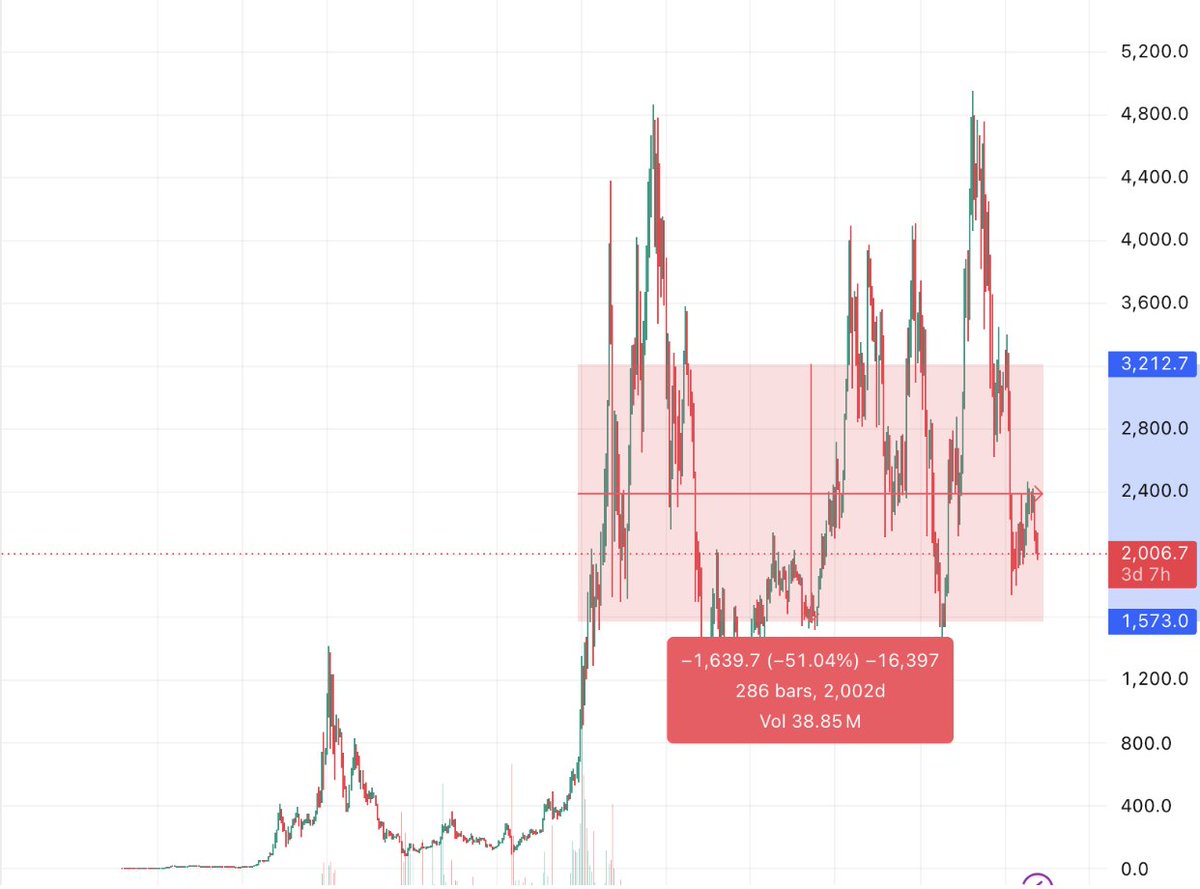

Ignore the percentage change values; focus mainly on measuring the length of time the price stayed within that range.


Global giants like Amazon, NVIDIA, Apple, and Microsoft have all walked the same path:


  • Amazon: Led by Bezos, the company consolidated sideways for nearly a decade in the 2000s after the dot-com bubble burst, weathered the industry winter, and grew into a global top-tier enterprise;
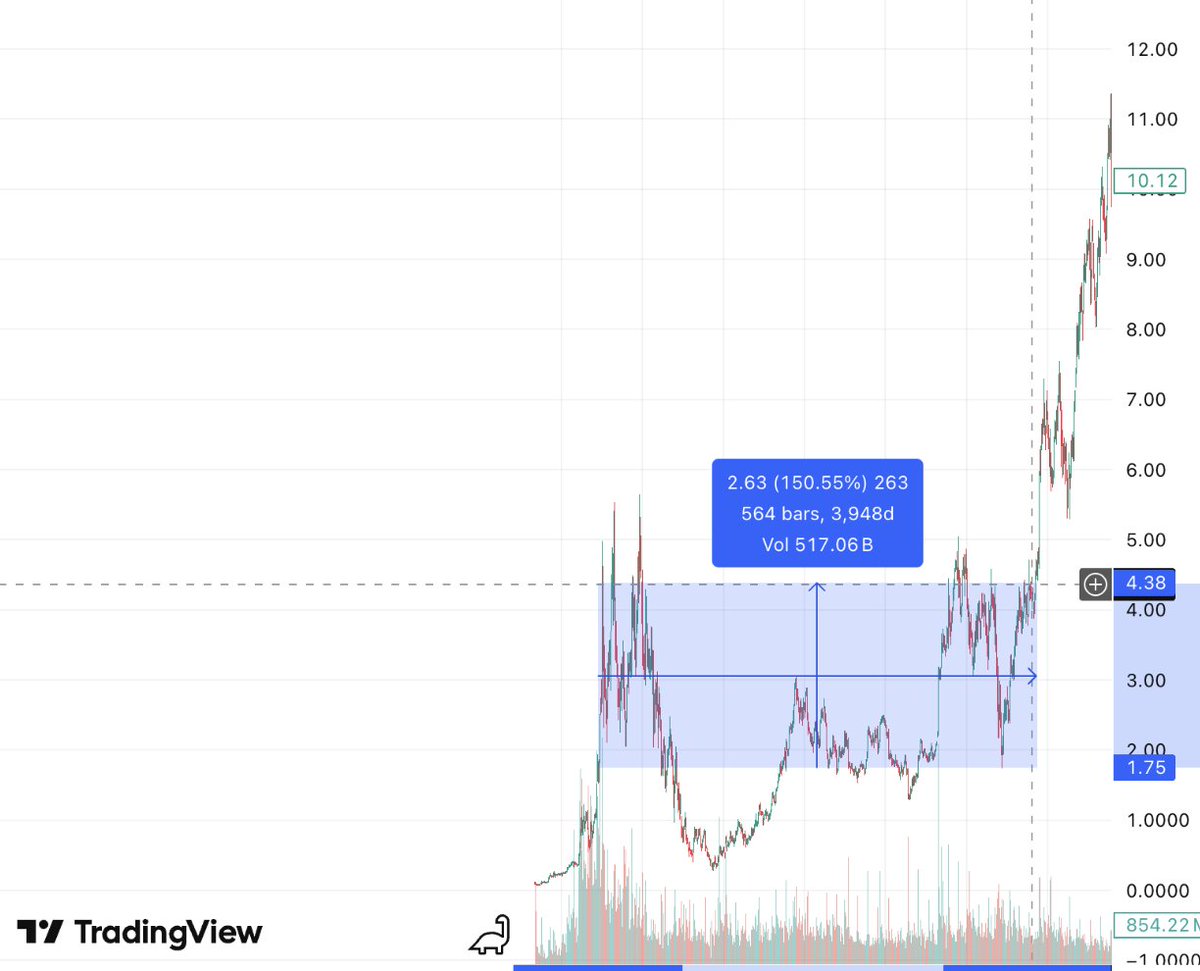


  • NVIDIA: Experienced seven long years of consolidation in the 2010s, then saw an epic stock price surge riding the AI wave, joining the global top tier by market cap;
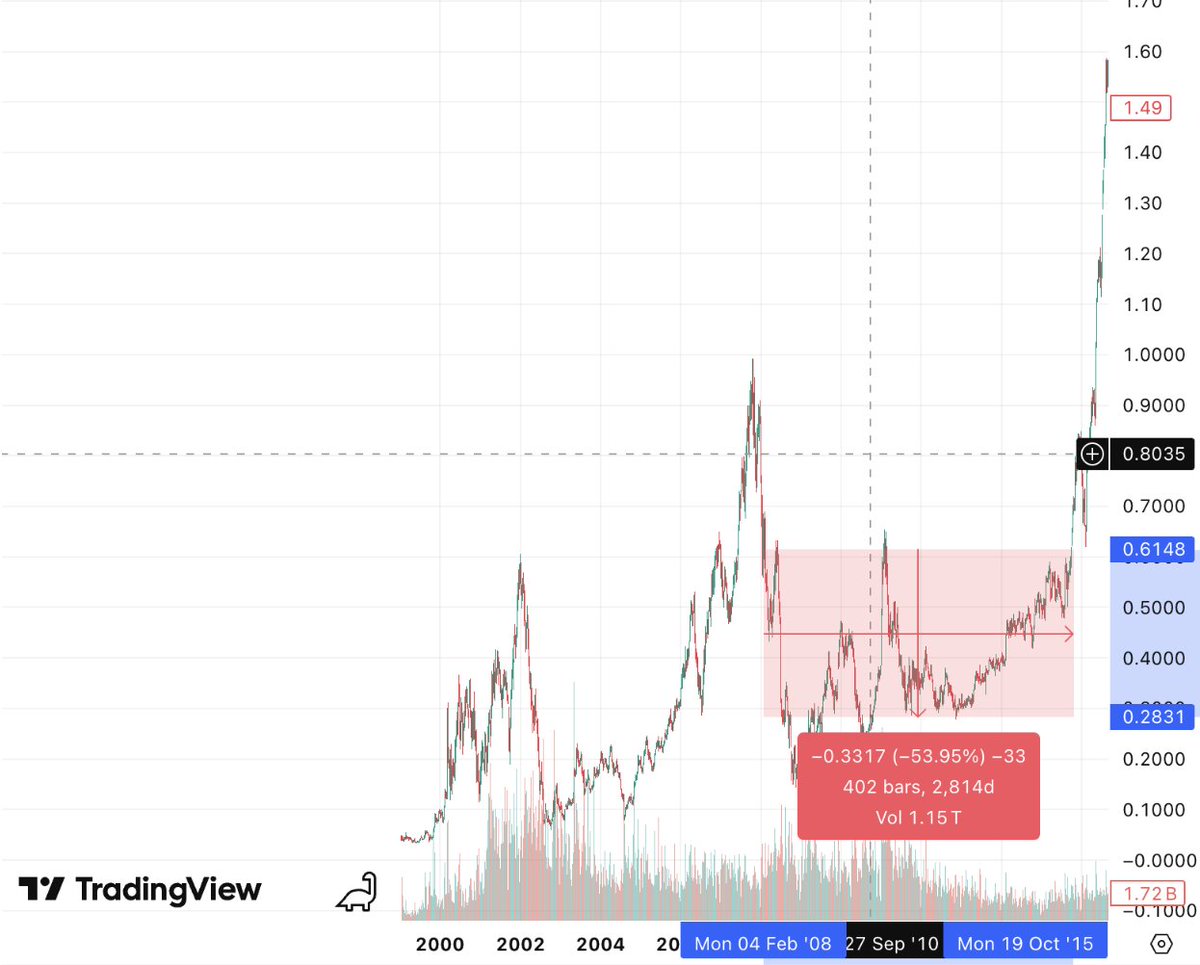


  • Apple: Was in long-term迷茫 (confusion/consolidation) throughout the 80s and 90s, only taking off after Jobs returned to the company in 1997;
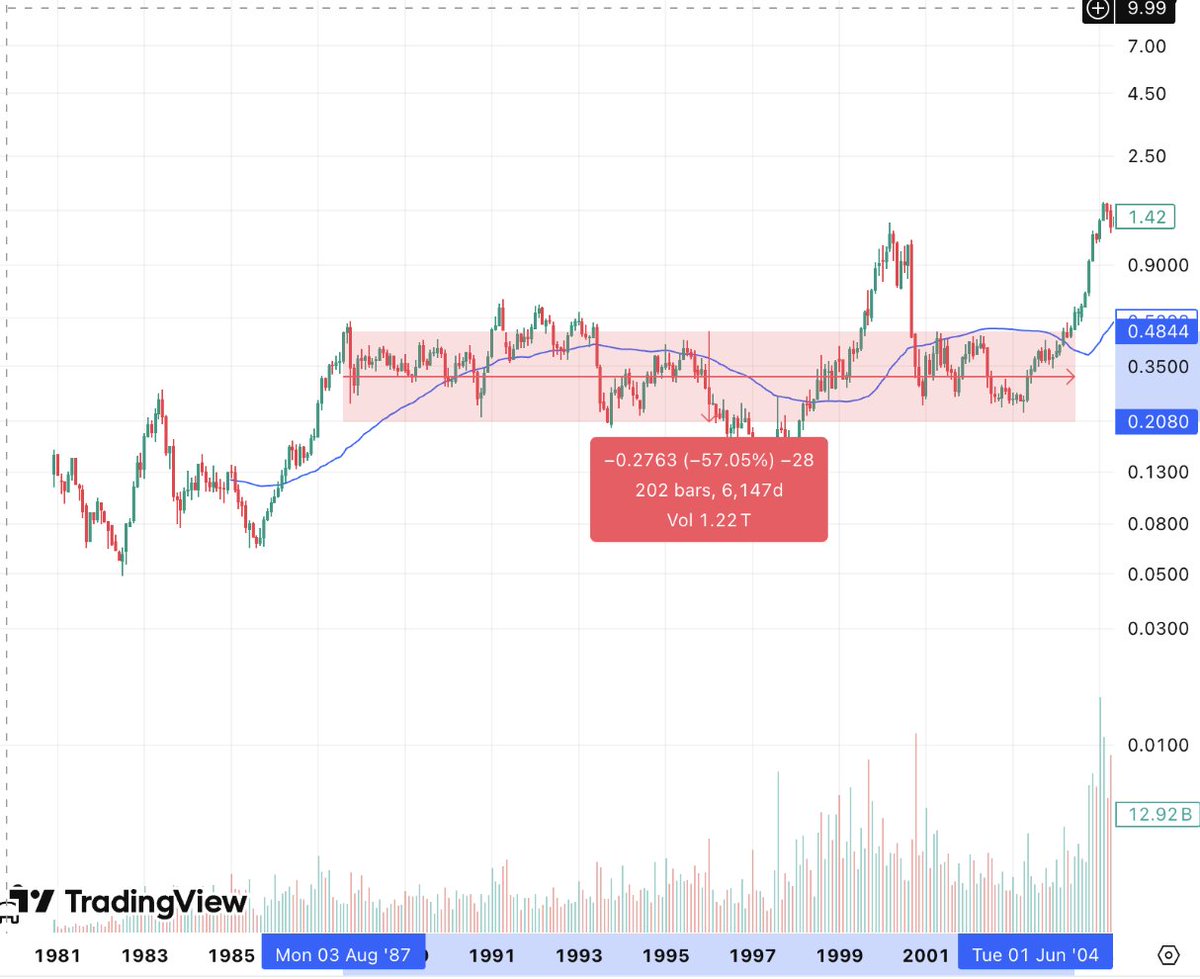


  • Microsoft: Its stock price consolidated sideways for about 15 years after 2000; investors who entered in 2000 didn't break even until 2015, and now it's the world's second-largest company by market cap.
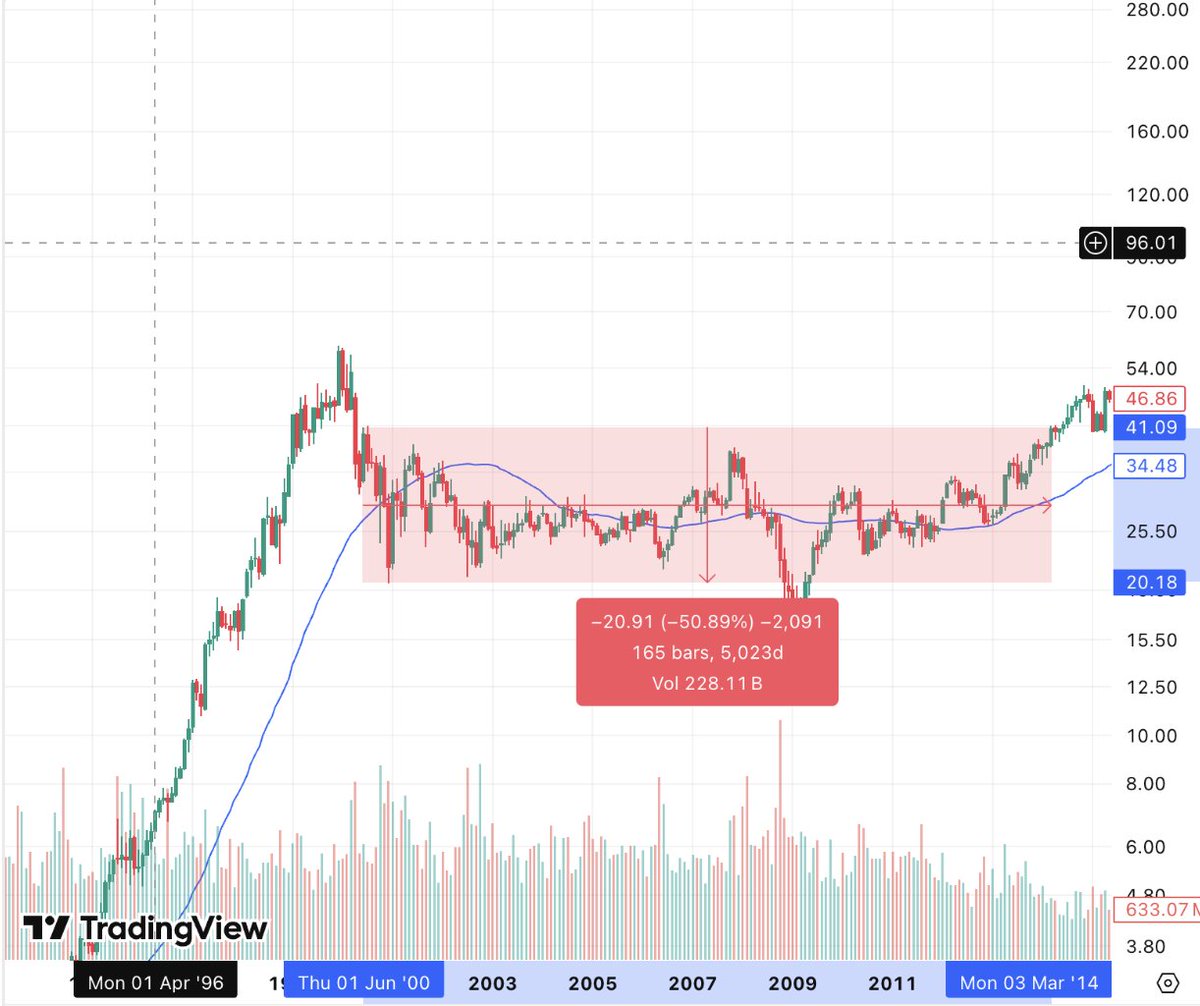


It's not hard to summarize the pattern: most of the world's top-tier assets undergo long, boring consolidation periods. Some assets briefly spike to new highs before pulling back again, then wait for industry catalysts to start a new bull cycle. Moreover, during the consolidation/bottom-grinding phases of these companies, the broader US stock market was often still making new highs. Within this logic, ETH's weak performance over the past five years is not abnormal in financial history.


Setting aside the chart price, Ethereum's current fundamentals are actually at their historical best.


On-Chain Ecosystem Data Continues to Improve


According to the market's bearish narrative, weak price action must be accompanied by a decline in on-chain activity: decreasing transaction volume, high fees, and stalled practical applications. However, the actual data is completely opposite. Ethereum's on-chain transaction volume is steadily climbing, fees are hitting new lows, and the pace of asset tokenization is continuously accelerating.
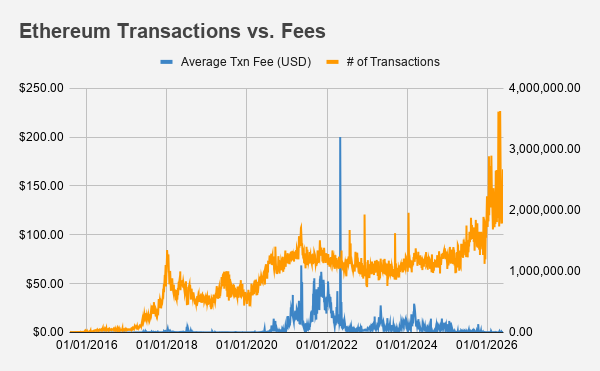

Data source: Etherscan


Based on Etherscan data: In May 2026, Ethereum's average daily transaction count reached 2.27 million, setting a new historical peak for the network. During the same period, the average transaction fee per transaction was only $0.27. Compared to the high gas fees of $50~$100 during the 2021 bull market, costs have significantly decreased despite transaction volume doubling.


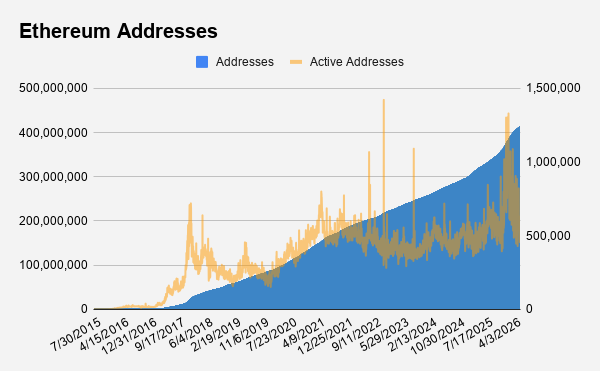
The total number of on-chain addresses has exceeded 400 million, with a daily growth rate of about 0.08% in 2026. Daily active users on-chain have stabilized above 1 million in recent months. At the current growth rate, without major industry catalysts, Ethereum's total address count may break 1 billion around mid-2029.


Staking is also continuously setting new records: over 32% of ETH supply is staked and locked, continuously underpinning network security.
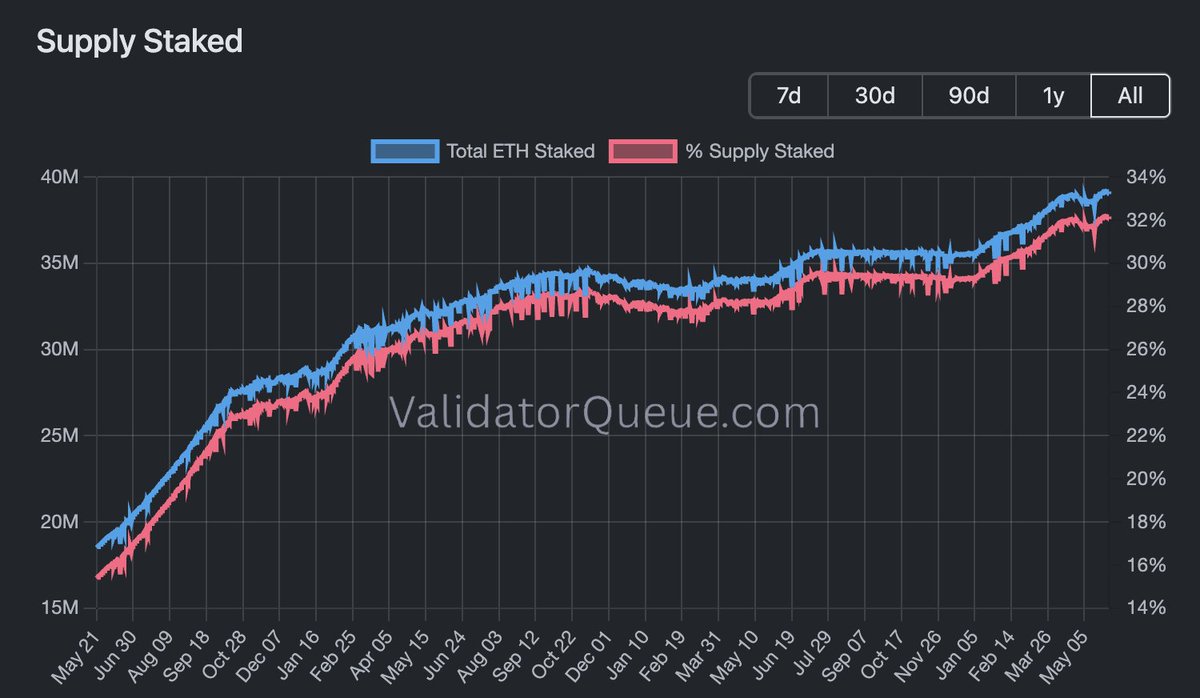

Data source: validatorqueue.com


In summary, Ethereum has completed its scaling iteration while maintaining the bottom line of decentralization and security. It has never experienced a full network outage in over a decade of operation. Relying on its extremely neutral, secure, and programmable block space, it has secured the core chips to compete as the underlying infrastructure for global finance, which is also a prerequisite for subsequently hosting the massive tokenization of traditional assets.


Becoming the Underlying Infrastructure of the Global Financial System


Since entering the industry in 2017, my long-term logic for Ethereum has never changed:


  • Eventually, all valuable assets in the world will be tokenized;
  • Ethereum becomes the unified settlement layer for all types of tokenized assets;
  • ETH captures the entire value increment brought by the settlement layer's business.


In its first decade, Ethereum primarily served as a testing ground for crypto-native assets, with sectors like DeFi, NFTs, and meme coins born and developed on it, solidifying its foundational ecosystem. In the upcoming development phase, Ethereum will embark on a new journey towards a trillion-dollar market cap.


For veteran crypto-native players, traditional finance going on-chain might seem somewhat dull, but it is an indispensable step for blockchain to go mainstream, worthy of the entire industry's promotion. In the future, the vast majority of the world's $700 trillion worth of traditional physical assets will ultimately be tokenized on-chain, and Ethereum will become the preferred hosting network.


Many counter: Ethereum's scaling capacity is insufficient to handle massive assets; other public chains will carve up the market. But current implementation data already disproves this view: traditional financial institutions are onboarding the Ethereum ecosystem in large batches.
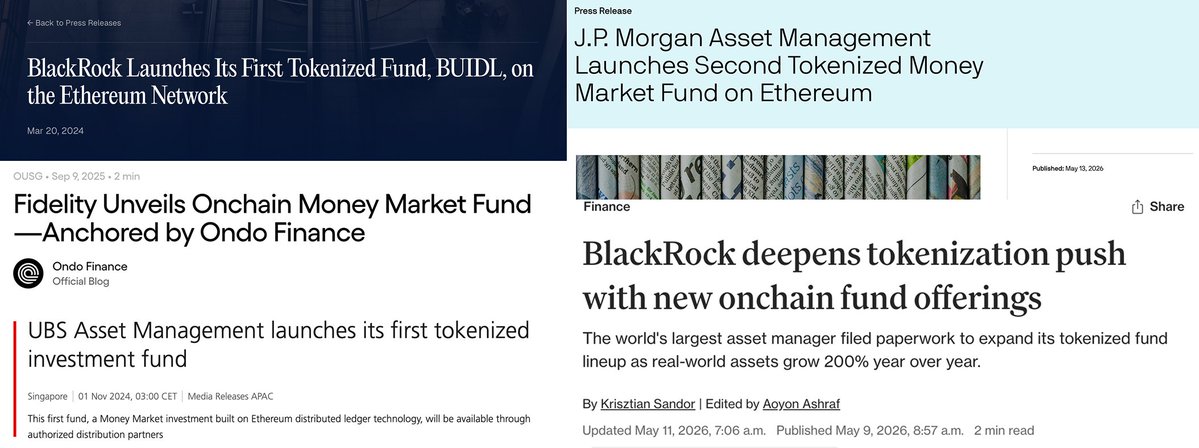

A series of news headlines from the past ~2 years, notice they have one thing in common.


The core demand of institutions entering is certainty: for banks, asset managers, and clearinghouses, choosing a blockchain to custody trillions in assets is a major strategic decision. They need to capture the tokenization红利 (dividend/benefit) while avoiding career risks from decision-making mistakes.


Of course, public chains like Hyperliquid and Solana can also get a piece of the pie. The tokenization track is large enough to accommodate multiple public chains developing together; it cannot be monopolized by one. However, traditional institutions pursuing stability will prioritize Ethereum when implementing RWA.


Implementation data supports the view: Stablecoins are the first tokenized real-world asset to achieve product-market fit, with a total circulating market cap exceeding $300 billion. Tom Lee called stablecoins the "ChatGPT moment" for the crypto industry, with Ethereum holding a 54% market share of the total stablecoin market cap.
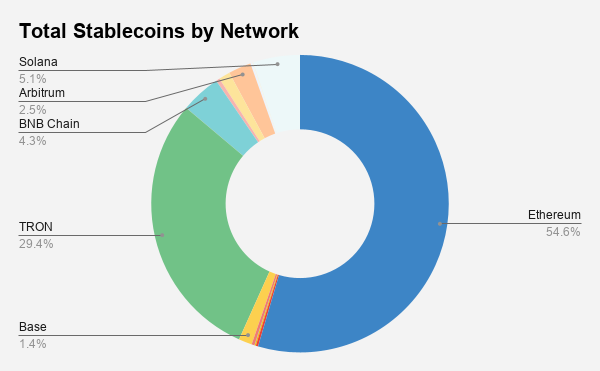

Data source: rwa.xyz


As of June 1, 2026, the total scale of all-category Real-World Asset (RWA) tokenization has exceeded $30 billion, with the growth curve steeply rising; over 53% of these RWA assets are deployed on the Ethereum chain. Even if other public chains start from scratch to compete for non-stablecoin RWA份额 (market share), Ethereum still firmly holds the dominant position.
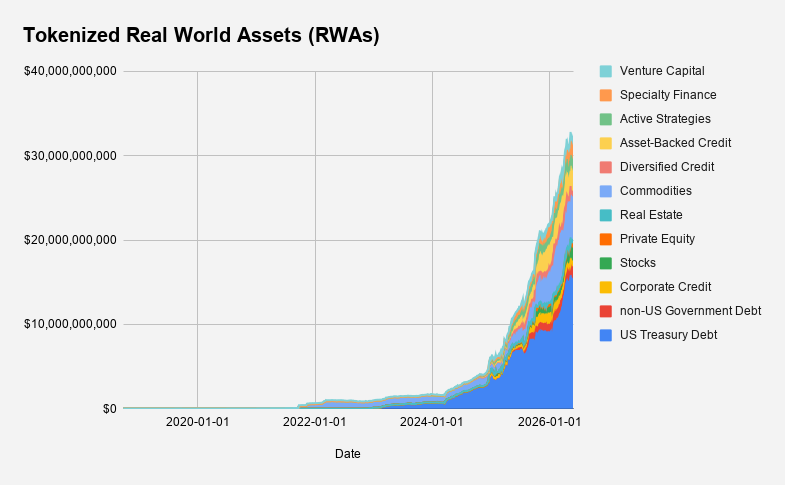
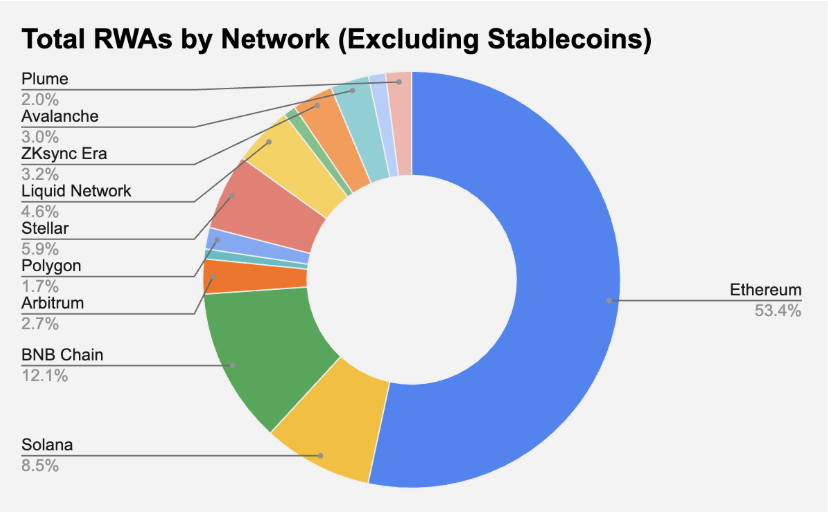

Data source: rwa.xyz


The current development stage of the RWA track is comparable to DeFi in its萌芽期 (germination/early stage) of 2019~2020: the logic of the new track is clear, and early data is steadily rising. Looking back at DefiLlama's past data, DeFi's total value locked (TVL) saw exponential growth in the first half of 2020, while ETH's chart was also in long-term sideways consolidation at that time.
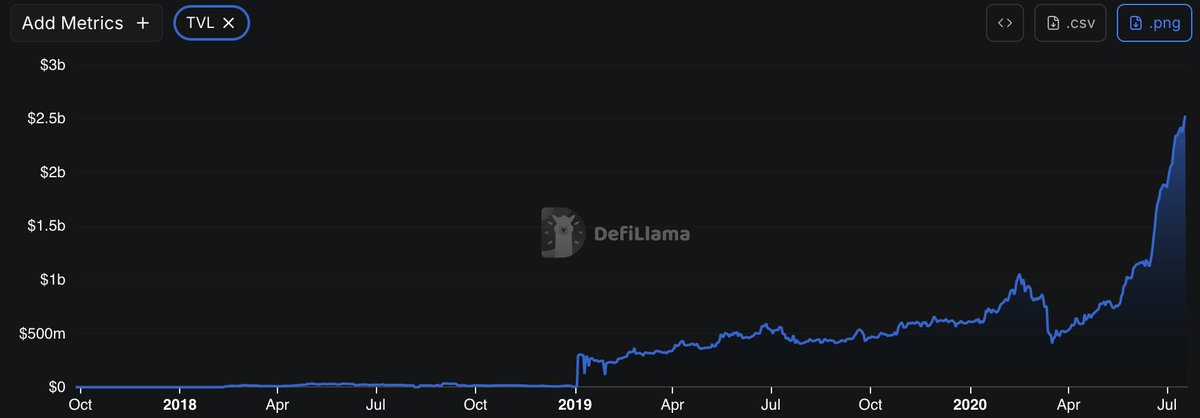


When the DeFi bull market fully erupted and liquidity mining swept the network, ETH, dragged down by the Covid行情 (market situation), had a market cap of only $20~25 billion, ten times smaller than its current $230 billion market cap. Meanwhile, the newly born BNB Chain once threatened Ethereum's position with its advantage of low fees. It wasn't until the DeFi asset scale reached about 20% of Ethereum's total market cap that ETH launched from $300 to $4000 by year-end, experiencing a super bull run.


Comparing to the present: Excluding stablecoins, the total scale of non-stablecoin RWA on Ethereum is about $16 billion, accounting for only 7% of ETH's total market cap, positioning it similarly to DeFi's early germination stage, but with an overall scale ten times larger than back then: early DeFi started at $3 billion, now RWA starts at $30 billion; early ETH bottom at $200, now ETH bottom at $2,000; early competitor was BNB Chain, now the competitor is Hyperliquid.


Additional note: Early DeFi催生 (spawned/generated)大量 (a large amount of) ETH buy pressure through抵押需求 (collateral demand), and NFTs further strengthened the "ETH as Digital Gold" narrative. However, Ethereum had not yet implemented Proof-of-Stake (PoS) staking and the EIP-1559 burn mechanism at that time. Now both rules are fully implemented, and every on-chain transaction can directly bring deflation and value support to ETH.


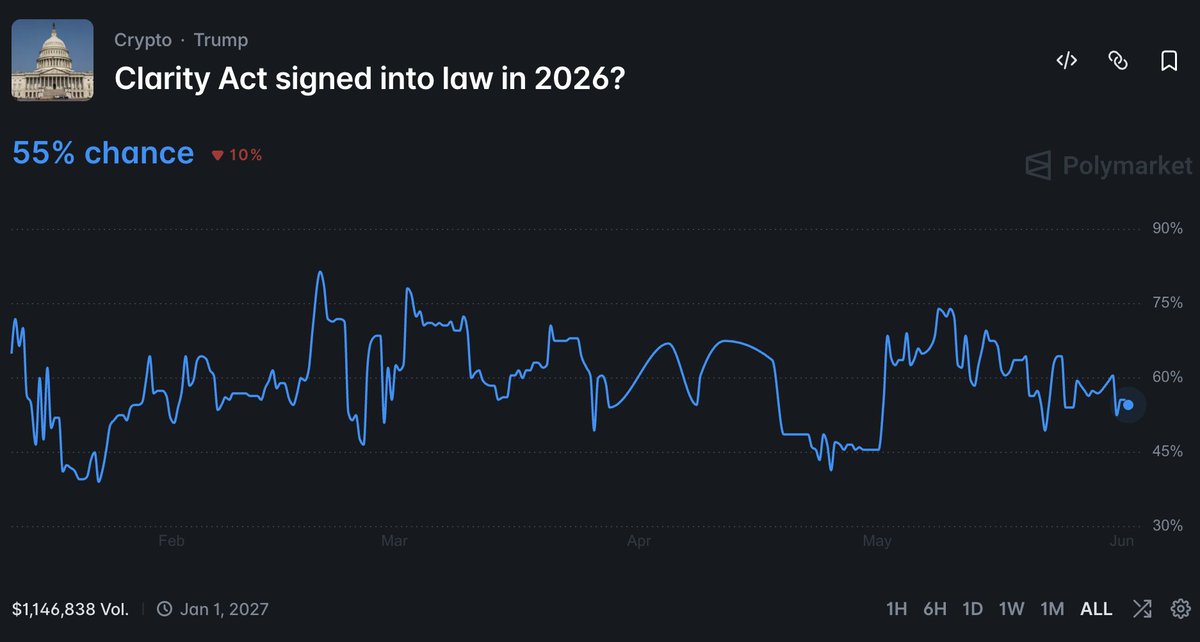
Projecting with a ten-fold space, the overall RWA (excluding stablecoins) scale in this cycle is expected to突破 (break through) $1 trillion. The U.S. "CLARITY Act" becomes a key catalyst. According to Polymarket data, the probability of the法案 (bill/act) being signed into law within 2026 is about 55%. Its passage will open channels for compliant on-chain listing of all U.S. financial assets, becoming a超级利好 (super positive catalyst) for Ethereum.


Ethereum's Vitality Remains Strong


Stocks, bonds, commodities, real estate, art, intellectual property—everything of value will ultimately move towards tokenization. This is the next major innovation in the global financial sector.


The first twenty years of the crypto industry focused on the issuance and innovation of crypto-native assets; the next twenty years will shift the industry's focus towards bringing traditional physical assets on-chain.


Even though the current crypto舆论圈 (discourse/opinion circle) is generally bearish on Ethereum, I am still convinced: Ethereum will become the承载底层 (hosting base layer) for the vast majority of the world's tokenized assets. Relying on its accumulated security, reliability, and liquidity barriers over the years, Ethereum's advantages cannot be短期复刻 (short-term replicated). Once massive global assets land on Ethereum, the market will finally reprice ETH, replicating the past valuation surge行情 (market trend).


Пов'язані питання

QWhat is Lucas's core thesis regarding Ethereum's future role in finance?

ALucas's core thesis is that all assets will eventually be tokenized, Ethereum will become the universal settlement layer for all tokenized assets, and ETH will capture all the value generated by this settlement activity by securing the network through staking.

QWhat does Lucas cite as the main reason for the market's bearish sentiment towards Ethereum in recent years?

ALucas cites ETH's poor price performance over the past five years, where it has failed to meaningfully surpass its 2021 all-time high, as the main reason for the market's widespread bearish sentiment and loss of conviction in its investment value.

QWhat positive on-chain data points does Lucas highlight to counter the bearish narrative about Ethereum's fundamentals?

ALucas highlights that Ethereum's daily transactions hit a new all-time high of 2.27 million in May 2026, average transaction fees have dropped significantly to $0.27, total addresses are growing (over 400 million), daily active users are consistently over 1 million, and over 32% of ETH is staked.

QAccording to the article, why do traditional financial institutions prefer to build tokenized asset (RWA) projects on Ethereum?

ATraditional financial institutions prefer Ethereum because they prioritize certainty and security for their trillion-dollar decisions. Ethereum offers proven, long-term stability, security, and reliability, which helps institutions mitigate career risk associated with strategic decisions on newer or less established chains.

QHow does Lucas compare the current stage of the RWA (Real World Asset) sector to the early days of DeFi, and what potential does he see?

ALucas compares the current RWA stage to the early DeFi phase of 2019-2020. He notes that non-stablecoin RWA on Ethereum has a $16 billion market cap (7% of ETH's market cap), similar to DeFi's early scale relative to ETH. He projects this sector could grow tenfold to over $1 trillion, potentially catalyzed by legislation like the US CLARITY Act.

Пов'язані матеріали

Anthropic Cries Wolf: Is the AGI Threat Real, or Just an IPO Story?

Anthropic has published an article titled "When AI builds itself," discussing the emerging concept of "recursive self-improvement," where AI begins to actively participate in designing, training, testing, and optimizing its own subsequent versions. The company presents internal data showing that by May 2026, over 80% of code merged into its codebase was written by Claude, its AI model. Claude's capabilities have expanded to handling complex, open-ended engineering tasks, achieving a 76% success rate in such areas, and even contributing to research processes, such as optimizing code performance and conducting AI safety experiments. Anthropic outlines an evolution from human-driven development to AI-assisted workflows, culminating in the current stage where AI agents can autonomously write, run, and delegate code. The company cautions that the path toward a "closed loop," where AI continuously improves itself, is becoming visible. It calls for coordinated global mechanisms to potentially slow or pause frontier AI development to allow safety research and societal structures to catch up. However, the timing of this warning coincides with Anthropic's preparations for an IPO, framing the narrative not just as a safety concern but also as a demonstration of Claude's advanced capabilities and its integral role in accelerating Anthropic's own R&D—creating a potential "flywheel" effect for competitive advantage. This contrasts with OpenAI's recent, more policy-oriented discussion of the same risks, highlighting the competitive dynamics in the AI industry as companies position themselves in both the technological and regulatory landscape.

marsbit10 хв тому

Anthropic Cries Wolf: Is the AGI Threat Real, or Just an IPO Story?

marsbit10 хв тому

BIT Research: ETF Purchases Have Slowed, Strategy (MicroStrategy) Has Slowed, What Else Can Drive Bitcoin's Rise?

Market Refocus on Inflation and Rate Expectations Weighs on Bitcoin Currently, the market is in a phase of macro-repricing dominated by inflation and interest rate expectations. Bitcoin, which previously benefited from easy liquidity and low inflation, is seeing its core bullish drivers weaken. These drivers were market expectations for interest rate cuts and strong inflows from Bitcoin ETFs and institutions like MicroStrategy (referred to as "Strategy" in the text). The logic has shifted. Recent high inflation data (e.g., CPI hitting 3.8% in a May 2026 report) has caused the market to sharply reduce its rate cut expectations for 2025 and even price in potential hikes. This is a key constraint for Bitcoin, as it lacks cash flows and is highly sensitive to rate expectations. Concurrently, institutional capital flows have slowed significantly. Following the hot CPI data, Bitcoin ETFs saw accelerated outflows, with around $4.3 billion leaving over a period. MicroStrategy's ability to keep adding substantial Bitcoin to its balance sheet is also diminishing. Together, ETF and MicroStrategy holdings total roughly $110 billion, but their momentum as growth engines is cooling. In summary, Bitcoin's current pressure stems not from its own fundamentals but from a changing macro environment. As long as inflation stays elevated, Bitcoin is likely to remain in a consolidating phase. However, historically, inflation eventually peaks. Once it recedes and rate cut expectations rebuild, institutional capital could return, potentially fueling a new and more robust recovery phase for Bitcoin.

marsbit18 хв тому

BIT Research: ETF Purchases Have Slowed, Strategy (MicroStrategy) Has Slowed, What Else Can Drive Bitcoin's Rise?

marsbit18 хв тому

Earning 1000 Trillion in Half a Year, 'Pocketing' 20 Million per Capita: This Round of Wealth Creation in the Korean Stock Market is Unprecedented in Scale

The South Korean stock market is experiencing an unprecedented wealth surge in 2026, with household equity and fund asset values soaring by over 1,000 trillion KRW (~$730bn) year-to-date. This translates to an average per capita wealth increase of roughly 20 million KRW, fueled by a historic 109% rally in the KOSPI index. The boom is driven by three converging forces: an AI-driven semiconductor supercycle boosting giants like Samsung and SK Hynix; the government's "Value-Up" market reforms addressing long-standing corporate governance issues; and aggressive real estate regulations that have locked capital within financial markets, preventing profits from flowing back into property. This has triggered a wealth effect, boosting high-end consumption significantly. However, the gains are highly concentrated. The two semiconductor behemoths account for over half the index's value, but retail investors own relatively low stakes in them, systematically missing the biggest rallies. Wealth and consumption benefits are skewed towards luxury goods and imported cars, bypassing mainstream retail. Further risks stem from excessive leverage, with high trading volume in leveraged ETFs, and a market sentiment heavily reliant on the AI sector's fortunes and speculative rumors. While this cycle marks a potential shift from real estate to equities as a primary wealth generator for Koreans, its sustainability, amid structural imbalances and leverage, remains a critical test.

marsbit23 хв тому

Earning 1000 Trillion in Half a Year, 'Pocketing' 20 Million per Capita: This Round of Wealth Creation in the Korean Stock Market is Unprecedented in Scale

marsbit23 хв тому

Behind ZEC's Over 30% Plunge: An 'Unlimited Minting' Vulnerability with No Way to Prove if It Was Ever Exploited

A critical vulnerability was discovered in Zcash's Orchard privacy pool, allowing for the theoretical creation of undetectable counterfeit ZEC. Researcher Taylor Hornby found the flaw on May 29th, 2024, within the Orchard circuit's cryptographic constraints, which could let an attacker bypass asset conservation rules. Although a rapid emergency fix was deployed within days via a coordinated soft and hard fork, a core uncertainty remains: due to Orchard's privacy features, it is impossible to cryptographically prove whether this "unlimited mint" flaw was exploited in the nearly four years since the pool's 2022 launch. This uncertainty, rather than the patched flaw itself, triggered a market panic, causing ZEC's price to drop over 30%. While the Zcash Foundation stated no evidence of exploitation was found, independent entity Shielded Labs emphasized the impossibility of definitively proving no counterfeit ZEC was ever created. The incident highlights the unique trust challenge in privacy systems. To address this, developers are proposing a new network upgrade with enhanced auditing to allow verifiable proof of supply integrity. Notably, the researcher utilized the newly released AI model Claude Opus 4.8 as a tool during the security review, signaling the growing role of advanced AI in uncovering complex cryptographic vulnerabilities.

marsbit25 хв тому

Behind ZEC's Over 30% Plunge: An 'Unlimited Minting' Vulnerability with No Way to Prove if It Was Ever Exploited

marsbit25 хв тому

Торгівля

Спот
Ф'ючерси

Популярні статті

Що таке ETH 2.0

ETH 2.0: Нова ера для Ethereum Вступ ETH 2.0, широко відомий як Ethereum 2.0, є величезним оновленням для блокчейну Ethereum. Ця трансформація не є лише косметичною зміною; вона має на меті фундаментально покращити масштабованість, безпеку та сталий розвиток мережі. З переходом від енергомісткого механізму консенсусу Proof of Work (PoW) до більш ефективного Proof of Stake (PoS), ETH 2.0 обіцяє трансформаційний підхід до екосистеми блокчейнів. Що таке ETH 2.0? ETH 2.0 — це збірка особливих, взаємопов’язаних оновлень, спрямованих на оптимізацію можливостей та продуктивності Ethereum. Це перетворення розроблене для вирішення критичних викликів, з якими стикалося існуюче механізм Ethereum, зокрема щодо швидкості транзакцій та заторів у мережі. Мета ETH 2.0 Основні цілі ETH 2.0 зосереджені на покращенні трьох ключових аспектів: Масштабованість: Мета — значно підвищити кількість транзакцій, які мережа може обробити за секунду; ETH 2.0 прагне вийти за межі поточного обмеження приблизно в 15 транзакцій на секунду, потенційно досягнувши тисяч. Безпека: Підвищені заходи безпеки є невід’ємною частиною ETH 2.0, зокрема через покращену стійкість до кібератак і збереження децентралізованої етики Ethereum. Сталий розвиток: Новий механізм PoS розроблений не тільки для підвищення ефективності, але й для різкого зменшення споживання енергії, що узгоджує операційну структуру Ethereum з екологічними міркуваннями. Хто є творцем ETH 2.0? Створення ETH 2.0 можна віднести до Ethereum Foundation. Ця неприбуткова організація, яка відіграє важливу роль у підтримці розвитку Ethereum, очолюється відомим співавтором Віталіком Бутеріним. Його бачення більш масштабованого та стійкого Ethereum стало рушійною силою цього оновлення, залучаючи внески зі всього світу від розробників і ентузіастів, які прагнуть покращити протокол. Хто є інвесторами ETH 2.0? Хоча подробиці про інвесторів ETH 2.0 не були оприлюднені, відомо, що Ethereum Foundation отримує підтримку від різних організацій та осіб у сфері блокчейну та технологій. Ці партнери включають венчурні капітальні компанії, технологічні компанії та філантропічні організації, які мають спільний інтерес у підтримці розвитку децентралізованих технологій та інфраструктури блокчейну. Як працює ETH 2.0? ETH 2.0 відзначається введенням низки ключових функцій, які відрізняють його від попередника. Proof of Stake (PoS) Перехід до механізму консенсусу PoS є одним із знакових змін ETH 2.0. На відміну від PoW, який покладається на енергомісткий видобуток для перевірки транзакцій, PoS дозволяє користувачам підтверджувати транзакції та створювати нові блоки відповідно до кількості ETH, яку вони ставлять у мережі. Це призводить до підвищення енергоефективності, зменшуючи споживання приблизно на 99,95%, завдяки чому Ethereum 2.0 стає значно більш екологічною альтернативою. Шардові ланцюги Шардові ланцюги є ще одним ключовим нововведенням ETH 2.0. Ці менші ланцюги працюють паралельно з основним ланцюгом Ethereum, що дозволяє обробляти кілька транзакцій одночасно. Це підходи покращує загальну ємність мережі, усуваючи проблеми масштабованості, які переслідували Ethereum. Beacon Chain У центрі ETH 2.0 знаходиться Beacon Chain, яка координує мережу і управляє протоколом PoS. Вона виконує роль організатора: контролює валідаторів, забезпечує з’єднання шард з мережею і моніторить загальний стан екосистеми блокчейнів. Хронологія ETH 2.0 Шлях ETH 2.0 характеризується кількома ключовими етапами, які відображають еволюцію цього значного оновлення: Грудень 2020: Запуск Beacon Chain ознаменував введення PoS, проклавши шлях до міграції на ETH 2.0. Вересень 2022: Завершення "Злиття" є знаковим моментом, коли мережа Ethereum успішно перейшла з PoW на PoS, відкриваючи нову еру для Ethereum. 2023: Очікуване розгортання шардових ланцюгів має на меті подальше покращення масштабованості мережі Ethereum, закріплюючи ETH 2.0 як надійну платформу для децентралізованих додатків і послуг. Ключові особливості та переваги Покращена масштабованість Однією з найзначніших переваг ETH 2.0 є його покращена масштабованість. Поєднання PoS та шардових ланцюгів дозволяє мережі розширити свою ємність, що дозволяє їй обробляти набагато більший обсяг транзакцій в порівнянні з класичною системою. Енергоефективність Запровадження PoS є величезним кроком до енергоефективності в технології блокчейн. Значно зменшуючи споживання енергії, ETH 2.0 не тільки знижує операційні витрати, але також ближче узгоджується з глобальними цілями сталого розвитку. Підвищена безпека Оновлені механізми ETH 2.0 сприяють підвищенню безпеки по всій мережі. Впровадження PoS, поряд з інноваційними контрольними заходами, встановленими через шардові ланцюги та Beacon Chain, забезпечує вищий рівень захисту від потенційних загроз. Зниження витрат для користувачів З покращенням масштабованості вплив на витрати на транзакції також стане очевидним. Збільшена ємність і зменшені затори, як очікується, призведуть до зниження зборів для користувачів, що зробить Ethereum більш доступним для повсякденних транзакцій. Висновок ETH 2.0 є значною еволюцією в екосистемі блокчейну Ethereum. Оскільки він вирішує важливі питання, такі як масштабованість, споживання енергії, ефективність транзакцій і загальна безпека, важливість цього оновлення не можна недооцінювати. Перехід до Proof of Stake, введення шардових ланцюгів і фундаментальна робота Beacon Chain свідчать про майбутнє, в якому Ethereum може задовольнити зростаючі вимоги децентралізованого ринку. В індустрії, що рухається вперед завдяки інноваціям та прогресу, ETH 2.0 є підтвердженням можливостей технології блокчейн у прокладенні шляху до більш сталого та ефективного цифрового економіки.

168 переглядів усьогоОпубліковано 2024.04.04Оновлено 2024.12.03

Що таке ETH 2.0

Що таке ETH 3.0

ETH3.0 та $eth 3.0: Глибоке дослідження майбутнього Ethereum Вступ У швидко змінюваному світі криптовалют та технології блокчейн, ETH3.0, часто позначуваний як $eth 3.0, став темою значного інтересу та спекуляцій. Цей термін охоплює два основні концепти, які потребують уточнення: Ethereum 3.0: Це потенційне майбутнє оновлення, яке має на меті покращення можливостей існуючого блокчейну Ethereum, зокрема, фокусуючись на поліпшенні масштабованості та продуктивності. ETH3.0 Мем Токен: Цей окремий криптовалютний проект прагне використовувати блокчейн Ethereum для створення екосистеми, орієнтованої на меми, сприяючи залученню до криптовалютної громади. Розуміння цих аспектів ETH3.0 є важливим не лише для криптоентузіастів, але й для тих, хто спостерігає за широкими технологічними тенденціями у цифровому просторі. Що таке ETH3.0? Ethereum 3.0 Ethereum 3.0 пропонується як оновлення вже існуючої мережі Ethereum, яка стала основою багатьох децентралізованих додатків (dApps) та смарт-контрактів з моменту свого виникнення. Передбачувані удосконалення зосереджені в основному на масштабованості — інтегруючи передові технології, такі як шардінг та нульові знання (zk-докази). Ці технологічні нововведення націлені на забезпечення безпрецедентної кількості транзакцій на секунду (TPS), потенційно досягаючи мільйонів, тим самим вирішуючи одну з найзначніших обмежень, з якими стикається сучасна технологія блокчейн. Покращення є не лише технічним, а й стратегічним; воно спрямоване на підготовку мережі Ethereum до широкого прийняття та корисності в майбутньому, позначеному збільшеним попитом на децентралізовані рішення. ETH3.0 Мем Токен На відміну від Ethereum 3.0, ETH3.0 Мем Токен пропонує легшу та грайливішу домену, поєднуючи культуру інтернет-мемів із динамікою криптовалют. Цей проект дозволяє користувачам купувати, продавати та обмінювати меми на блокчейні Ethereum, надаючи платформу, яка сприяє залученню громади через креативність та спільні інтереси. ETH3.0 Мем Токен має на меті продемонструвати, як технологія блокчейн може перетинатися з цифровою культурою, створюючи випадки використання, які є водночас розважальними та фінансово життєздатними. Хто є творцем ETH3.0? Ethereum 3.0 Ініціатива щодо Ethereum 3.0 переважно підтримується консорціумом розробників та дослідників у межах громади Ethereum, зокрема, до складу якого входить Джастін Дрейк. Відомий своїми думками та внеском у розвиток Ethereum, Дрейк є помітною особистістю в обговореннях щодо переходу Ethereum на новий рівень консенсусу, який називається «Beam Chain». Цей колабораційний підхід до розробки свідчить про те, що Ethereum 3.0 не є продуктом єдиного творця, а скоріше втіленням колективної винахідливості, спрямованої на просування технології блокчейн. ETH3.0 Мем Токен Деталі про творця ETH3.0 Мем Токена наразі не відстежуються. Природа мем-токенів часто призводить до більш децентралізованої та громартової структури, що може пояснити відсутність специфічної атрибуції. Це узгоджується з етикою ширшої крипто-спільноти, де інновації часто виникають з колективних, а не індивідуальних зусиль. Хто є інвесторами ETH3.0? Ethereum 3.0 Підтримка Ethereum 3.0 переважно надходить від Фонду Ethereum поряд з ентузіастичною спільнотою розробників та інвесторів. Це базове співробітництво надає значний градус легітимності та підвищує ймовірність успішної реалізації, оскільки воно використовує довіру та авторитет, накопичені за роки роботи мережі. У швидко змінюваному кліматі криптовалют підтримка громади займає важливу роль у розвитку та прийнятті, позиціонуючи Ethereum 3.0 як серйозного конкурента для майбутніх блокчейн-інновацій. ETH3.0 Мем Токен Хоча наразі доступні джерела не надають явної інформації щодо інвестиційних фондів або організацій, що підтримують ETH3.0 Мем Токен, це свідчить про типову модель фінансування для мем-токенів, яка часто спирається на підтримку знизу та залучення громади. Інвестори в такі проекти зазвичай складаються з осіб, які мотивовані потенціалом інновацій, що керуються спільнотою, та духом співпраці, притаманним крипто-спільноті. Як працює ETH3.0? Ethereum 3.0 Відмінні риси Ethereum 3.0 полягають у його запропонованій реалізації технології шардінгу та zk-proof. Шардінг — це метод розподілу блокчейну на менші, керовані частини чи «шарди», які можуть обробляти транзакції одночасно, а не послідовно. Це децентралізоване оброблення допомагає запобігти заторам та забезпечити оперативність мережі навіть під великим навантаженням. Технологія нульових доказів (zk-proof) надає ще один рівень складності, дозволяючи валідацію транзакцій без розкриття підпорядкованих даних. Цей аспект не лише підвищує конфіденційність, а й збільшує загальну ефективність мережі. Також обговорюється включення нульової Ефірної віртуальної машини (zkEVM) в це оновлення, що ще більше підвищить можливості та корисність мережі. ETH3.0 Мем Токен ETH3.0 Мем Токен виділяється завдяки використанню популярності культури мемів. Він створює ринок, на якому користувачі можуть брати участь у торгівлі мемами не лише для розваги, але й для потенційного економічного вигоди. Інтегруючи функції, такі як стейкінг, забезпечення ліквідності та механізми управління, проект сприяє створенню середовища, яке заохочує взаємодію та участь громади. Пропонуючи унікальне поєднання розваг та економічних можливостей, ETH3.0 Мем Токен прагне залучити різну аудиторію, яка охоплює від криптоентузіастів до casual-консумерів мемів. Хронологія ETH3.0 Ethereum 3.0 11 листопада 2024: Джастін Дрейк натякає на майбутнє оновлення ETH 3.0, яке зосереджене на поліпшеннях масштабованості. Це оголошення означає початок формальних обговорень щодо майбутньої архітектури Ethereum. 12 листопада 2024: Очікується, що запропоновану пропозицію для Ethereum 3.0 буде представлено на Devcon у Бангкоку, що готує ґрунт для більш широкого зворотного зв'язку від громади та потенційних наступних кроків у розвитку. ETH3.0 Мем Токен 21 березня 2024: ETH3.0 Мем Токен офіційно потрапляє у список на CoinMarketCap, що означає його дебют у публічному крипто-просторі та підвищує видимість для його меморієнтованої екосистеми. Ключові моменти На завершення, Ethereum 3.0 представляє значну еволюцію в межах мережі Ethereum, зосереджуючись на подоланні обмежень щодо масштабованості та продуктивності через передові технології. Його запропоновані оновлення відображають проактивний підхід до майбутніх вимог і корисності. Натомість ETH3.0 Мем Токен втілює суть культури, керованої громадою, у сфері криптовалют, використовуючи культуру мемів для створення привабливих платформ, які заохочують творчість і участь користувачів. Розуміння окремих цілей і функцій ETH3.0 та $eth 3.0 є надзвичайно важливим для кожного, хто цікавиться поточними подіями в крипто-просторі. З обома ініціативами, які прокладають унікальні шляхи, вони разом підкреслюють динамічну та багатогранну природу інновацій у блокчейн-технологіях.

158 переглядів усьогоОпубліковано 2024.04.04Оновлено 2024.12.03

Що таке ETH 3.0

Як купити ETH

Ласкаво просимо до HTX.com! Ми зробили покупку Ethereum (ETH) простою та зручною. Дотримуйтесь нашої покрокової інструкції, щоб розпочати свою криптовалютну подорож.Крок 1: Створіть обліковий запис на HTXВикористовуйте свою електронну пошту або номер телефону, щоб зареєструвати обліковий запис на HTX безплатно. Пройдіть безпроблемну реєстрацію й отримайте доступ до всіх функцій.ЗареєструватисьКрок 2: Перейдіть до розділу Купити крипту і виберіть спосіб оплатиКредитна/дебетова картка: використовуйте вашу картку Visa або Mastercard, щоб миттєво купити Ethereum (ETH).Баланс: використовуйте кошти з балансу вашого рахунку HTX для безперешкодної торгівлі.Треті особи: ми додали популярні способи оплати, такі як Google Pay та Apple Pay, щоб підвищити зручність.P2P: Торгуйте безпосередньо з іншими користувачами на HTX.Позабіржова торгівля (OTC): ми пропонуємо індивідуальні послуги та конкурентні обмінні курси для трейдерів.Крок 3: Зберігайте свої Ethereum (ETH)Після придбання Ethereum (ETH) збережіть його у своєму обліковому записі на HTX. Крім того, ви можете відправити його в інше місце за допомогою блокчейн-переказу або використовувати його для торгівлі іншими криптовалютами.Крок 4: Торгівля Ethereum (ETH)Легко торгуйте Ethereum (ETH) на спотовому ринку HTX. Просто увійдіть до свого облікового запису, виберіть торгову пару, укладайте угоди та спостерігайте за ними в режимі реального часу. Ми пропонуємо зручний досвід як для початківців, так і для досвідчених трейдерів.

3.1k переглядів усьогоОпубліковано 2024.12.10Оновлено 2026.06.02

Як купити ETH

Обговорення

Ласкаво просимо до спільноти HTX. Тут ви можете бути в курсі останніх подій розвитку платформи та отримати доступ до професійної ринкової інформації. Нижче представлені думки користувачів щодо ціни ETH (ETH).

活动图片