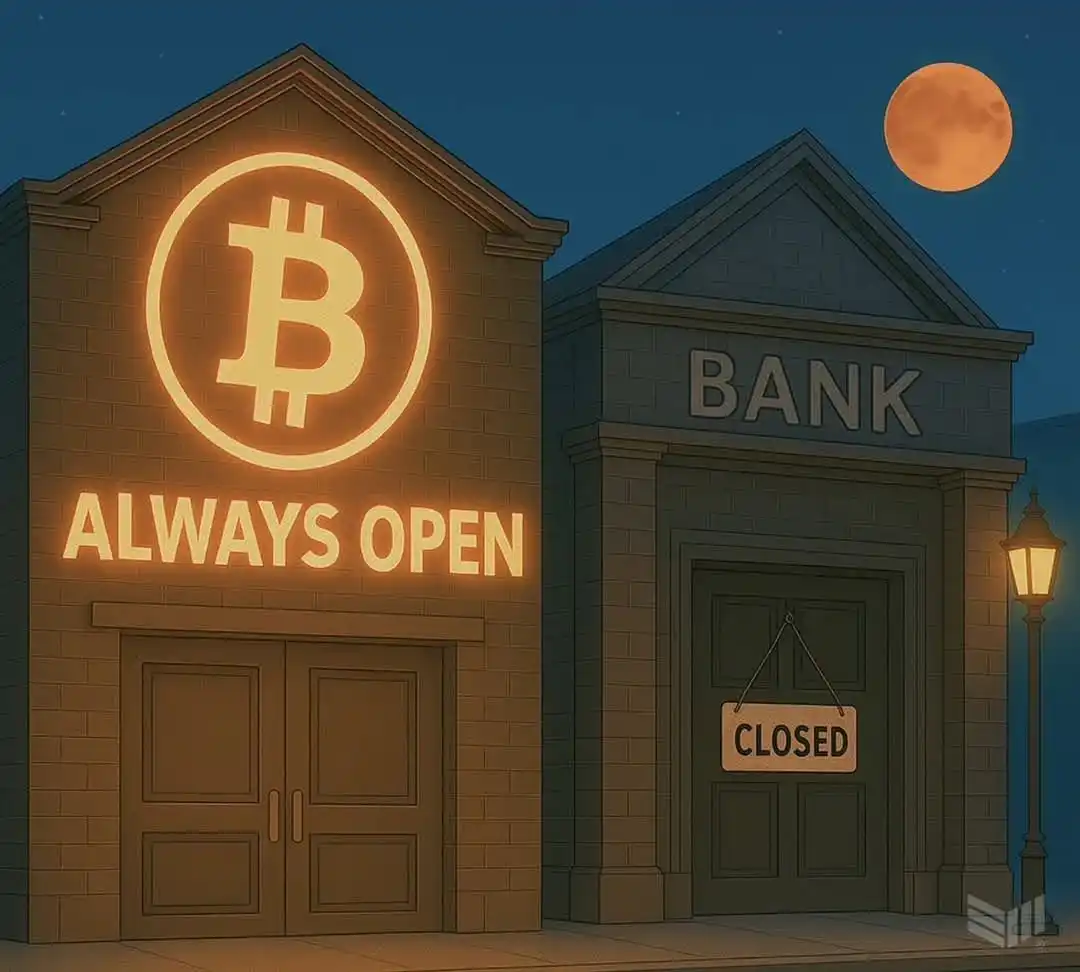
A $300 Used Mining Rig Mined a $230,000 Bitcoin Block

marsbitОпубліковано о 2026-06-02Востаннє оновлено о 2026-06-02

Анотація

A $300 used desktop Bitcoin miner, the Avalon Nano 3S, defied astronomical odds—roughly 1 in 149 million—by solo mining a block worth approximately $232,000 in May 2026. This occurred amidst a mining landscape dominated by industrial-scale operations with exahash-level computing power, where the tiny miner's share of the global network hash rate was a minuscule 0.00000067%. The miner achieved this not by connecting directly to the Bitcoin network, but through a solo mining pool service like Braiins Solo, which handles technical logistics while allowing individual miners to claim the full block reward if their machine succeeds. The event highlights the extreme lottery-like nature of solo mining today, where the expected return for most participants is deeply negative. However, it also demonstrates that Bitcoin's original Proof-of-Work design principle—where any participant, regardless of size, has a non-zero chance to validate a block and earn the reward—remains technically intact. This preserves a symbolic, though highly improbable, "back door" for individual miners in an era otherwise defined by centralized industrial mining power.

Author: Hashrate Insights

A $300 desktop mining rig, quiet enough to sit directly on a desk.

But on the afternoon of May 30, it suddenly mined a Bitcoin block worth $230,000.

The odds were 1 in 149 million, on par with winning the lottery jackpot.

Yet, when major mining pools dominate the hashrate, this exception precisely proves that Satoshi Nakamoto's design is still alive.

I. A Hand Warmer That Mined $230,000

At 4:27 PM Eastern Time on May 30, 2026, Bitcoin block height 951,771 was mined by an unknown address.

The block reward was 3.1404 Bitcoin, worth approximately $232,000 at the time.

The machine that mined it was a Canaan Avalon Nano 3S, with a hashrate of 6.68 TH/s, power consumption of 140 watts, and a retail price of $250 to $300.

It's so small it can fit in a desk drawer, and its noise level is similar to a desktop computer.

Many people buy it for fun, turning it on in winter to both mine a bit of coin and warm their hands, earning it the nickname "Bitcoin hand warmer" in the industry.

But the winning miner didn't actually have just one machine.

He had a "small fleet": 2 Avalon Mini 3s plus 12 Avalon Nano 3S units, with a total hashrate of about 147 TH/s.

Based on this total hashrate, the expected winning cycle for his entire fleet should have been 127 years.

Who could have imagined winning now, and the winner being that most unremarkable single machine with 6.68 TH/s?

That single machine, accounting for only about 4.5% of the fleet's total hashrate, carried away 100% of the reward.

It's like someone holding a handful of lottery tickets, and the winning one turns out to be the one they casually gave to someone on the street.

But how can a little toy on a desk outperform industrial mining farms?

II. Facing an Aircraft Carrier

First, it must be clarified that this event made the news precisely because it's almost impossible to happen.

Because Bitcoin mining in 2026 is long past the era of "playable with a single computer."

The hashrate battlefield today consists of warehouses, hydropower stations, and massive mining farms sprawling across the deserts of Texas.

Industrial-grade mining rigs start at 200 TH/s per unit, and a large mining farm can easily stack 100 EH/s (EH is one million times TH).

The total network hashrate is currently about 1,000 EH/s.

That $300 small machine accounted for only about 0.00000067% of the total network hashrate.

In contrast, publicly listed companies directly dwarf it, with Bitdeer's self-mining hashrate around 65.5 EH/s and MARA Holdings around 72.2 EH/s.

For example, a MARA data center is equivalent to about 10.8 million Nano 3S units running simultaneously.

Comparing a retail miner to these giants isn't like an ant versus an elephant; it's an ant versus an aircraft carrier.

So why do some people still mine solo (not pooling, mining alone)?

"If you join a large pool to split rewards, your tiny hashrate might earn less in a day than the electricity cost," an industry insider said. "So you might as well gamble: either go to zero or get rich overnight."

It's not that they don't want to earn steadily; it's that the door to steady earnings has long been closed.

But since the probability of a solo miner finding a block is so incredibly low, who left a path for retail miners to still sit at the table?

III. A Backdoor Left for Retail Miners

There's a point many people get wrong that needs clarification here.

This lucky winner wasn't truly "connecting a single machine directly to the Bitcoin network"; he used Braiins Solo, a mining pool specifically serving solo miners.

Traditional mining pools are like "crowdfunding": everyone contributes their hashrate, and when a block is found, the reward is split according to contribution.

Solo pools are like "custody": the pool handles connecting you to the network and technical details, but if your machine happens to solve the block, the entire reward goes to you, with the pool taking only a small service fee.

In essence, solo pools set up a ring for retail miners, giving you the qualification to stand in the same arena as the giants. Even though your punch is the size of their fingernail.

Platforms like CKPool, Braiins Solo, and Public Pool are, to some extent, the last "civilian passage" in the Bitcoin world.

However, over the past year, solo miners have mined approximately 22 blocks, with a total reward of about 69.24 Bitcoin. On average, that's less than 2 blocks per month.

So scarce that every win floods Reddit and Twitter.

Therefore, some industry insiders have a cold view of this passage.

Solo mining is essentially buying a lottery ticket, meaning the vast majority of people will end up with nothing.

So, is this backdoor left for retail miners safeguarding decentralization, or is it creating an illusion of "everyone has a chance"?

IV. How Much of Satoshi's Original Vision Remains

In 2008, Satoshi Nakamoto wrote a sentence in the Bitcoin whitepaper: "One CPU one vote."

The idea was that this system should give every ordinary participant a voice.

Seventeen years later, "one CPU one vote" has become "one EH/s one vote."

An ordinary player's CPU can't even afford the admission ticket.

But now, this $300 machine's win precisely proves that Satoshi's design isn't dead.

Bitcoin's Proof of Work mechanism, in simple terms, means whoever calculates the answer that meets the rules first gets the reward.

It doesn't recognize identity, capital, or scale; it only recognizes the result.

Whether you're a multi-million-dollar mining farm or a single small machine in some geek's bedroom, the rules are impartial.

If your answer hits the target first, the $230,000 is yours.

Yet, looking at the probability, buying a $300 machine for solo mining results in a negative expected return, and a significantly negative one at that.

The winner is merely at the most extreme tail end of the probability distribution, a point almost invisible.

▌▌▌▌▌▌▌▌▌▌

If a million people imitated him, 999,999 would lose their investment.

But the existence of that 0.0001% is precisely the most fascinating aspect of the Bitcoin system.

It doesn't promise returns to ordinary people, but it also doesn't shut ordinary people out.

The door is still open. It's just that behind the door lies a cliff, and also the starry sky.

Пов'язані питання

QWhat is the central paradox highlighted by the story of the $300 mining rig?

AThe story highlights the paradox between the extreme centralization of modern Bitcoin mining, dominated by industrial-scale operations, and the core design principle of Satoshi Nakamoto's Proof of Work, which theoretically still gives even the smallest miner a non-zero chance to win a block reward.

QHow did the solo miner with the small $300 machine actually connect to the Bitcoin network to have a chance at mining a block?

AThe miner did not connect directly to the Bitcoin network. He used a solo mining pool service, specifically Braiins Solo. This service handles the technical complexities of connecting to the network, but if the miner's own machine successfully solves a block, the full reward (minus a small fee) goes entirely to that individual miner, unlike traditional pooled mining where rewards are shared.

QAccording to the article, what is the primary economic reality for most individuals who try solo Bitcoin mining with small rigs?

AFor the vast majority of individuals, solo mining with small, low-hashrate rigs is economically irrational. The expected return is negative and a significant loss, akin to buying a lottery ticket with extremely long odds. The article states that if a million people imitated the lucky miner, 99.9999% of them would lose their investment.

QWhat key shift in Bitcoin's consensus mechanism does the article describe, from Satoshi Nakamoto's original vision to the present day?

AThe article describes a shift from Satoshi Nakamoto's original principle of 'one CPU one vote' to the current reality of 'one Exahash (EH/s) one vote.' This means influence and reward probability are now overwhelmingly concentrated in the hands of those with massive, industrial-scale computing power (hashrate), rather than distributed among average participants with standard CPUs.

QWhat symbolic role does the 'solo mining pool' play in the contemporary Bitcoin ecosystem, as suggested by the article?

ASolo mining pools like Braiins Solo are portrayed as a symbolic 'backdoor' or the last 'commoner's path' for individual enthusiasts. They technically allow anyone to participate directly in block discovery, thereby preserving a token link to Bitcoin's decentralized ideals. However, the article questions whether they truly safeguard decentralization or merely create an illusion of opportunity, given the vanishingly low odds of success.

Пов'язані матеріали

Why Not Short Even When Bearish? Munger Did the Math on a 'Losing Trade'

Why Not Short Even When Bearish? Charlie Munger's Calculated "Loss-Making Account" Many traders, drawn to speculative tools like futures contracts, often face repeated failures. As the article notes, unless one is a genius, such instruments should be avoided for long-term profit-seeking. Similarly, the practice of short selling is viewed with caution. The author firmly states a policy of not shorting, even when bearish, preferring to simply wait. The core reason? Successful short selling requires exceptionally difficult conditions to profit. Legendary investors Warren Buffett and Charlie Munger have themselves reflected on painful short-selling experiences. Munger highlights two critical flaws in the mathematical logic of shorting: 1. Asymmetrical Risk/Reward: A long position has a maximum loss of 100% but unlimited upside. A short position caps profit at 100% (if a stock falls to zero) but carries theoretically unlimited loss potential. 2. The "Promoter" Problem: Fraudulent or struggling companies can prolong their decline. As Munger said, "You can run out of money before the promoter runs out of ideas," meaning short sellers may be forced to cover positions at a loss before the company's true fate unfolds. The article cites Stanley Druckenmiller, a famed hedge fund manager. He once shorted 12 companies that all eventually went bankrupt. However, intense market rallies forced him to cover his positions within three weeks, resulting in massive losses—$200 million of his capital plus an additional $600 million. He concluded he likely never made money shorting in his career. His experience perfectly illustrates Munger's points: facing unlimited losses and being wiped out before being proven right. The conclusion is clear: for most investors, complex instruments like short selling and derivatives are not viable paths to stable, long-term gains. Self-reflection is advised before repeatedly wasting time and capital on such speculative strategies.

marsbit22 хв тому

Why Not Short Even When Bearish? Munger Did the Math on a 'Losing Trade'

marsbit22 хв тому

For Hedging, Buy Gold and Oil; For Explosive Growth, Buy AI; Bitcoin, the 'Outdated' Asset, Enters a Bear Market

Bitcoin’s price has recently fallen sharply, hitting a two-month low near $66,000, with Ethereum also dropping to a three-month low. While surface explanations point to ETF outflows, geopolitical tensions, and corporate selling, a deeper issue is emerging: Bitcoin is losing a crucial asset competition. For years, Bitcoin thrived in a low-rate environment where investors sought alternatives amid inflation fears and dissatisfaction with traditional options. Now, the market landscape has shifted, leaving Bitcoin stuck in an "awkward middle ground," facing challenges on three fronts: 1. **As an inflation hedge, gold is winning.** Investors worried about persistent inflation are turning to tangible assets like gold, energy stocks, and commodity producers, which offer more direct pricing power and physical backing. 2. **For growth exposure, AI is winning.** Those seeking high growth now favor AI-related companies with actual revenues and profits, an area where Bitcoin's lack of cash flow puts it at a disadvantage. 3. **Within crypto, infrastructure and stablecoins are winning.** Even investors wanting crypto exposure have alternatives like exchanges, stablecoin issuers, and tokenization firms, whose performance is directly tied to real-world adoption and offers clearer operational leverage. The recent market reaction to inflation warnings highlights this shift. Instead of boosting Bitcoin as "digital gold," such news now drives flows toward traditional inflation-sensitive assets. Therefore, recent events like ETF outflows and corporate selling are seen not as causes, but as symptoms of this new reality. Capital has more compelling options, and investors are becoming more selective. The emerging bear case for Bitcoin is no longer about it being a fraud or failed technology, but rather that **scarcity alone is no longer enough**. It is no longer seen as the best hedge, the best growth asset, or the only crypto play.

marsbit38 хв тому

For Hedging, Buy Gold and Oil; For Explosive Growth, Buy AI; Bitcoin, the 'Outdated' Asset, Enters a Bear Market

marsbit38 хв тому

SaaS Battle Royale: The Survivors Who Win All Share One Common Trait

**Summary** The AI revolution has triggered a "SaaS apocalypse," forcing a brutal market shakeout. The key dividing line is the pricing model. Companies like Snowflake and Datadog, which charge based on consumption (e.g., data processed or compute used), are thriving. AI workloads actively *generate* more demand for their services, fueling growth. Datadog's accelerating revenue is a prime example. Microsoft and Palantir, as platform/ecosystem players, also benefit by acting as essential channels for AI deployment. In contrast, traditional SaaS firms built on per-seat or per-task licensing (e.g., Intuit, Adobe) face direct pressure, as AI threatens to automate the very human tasks their software supports. Companies like Salesforce, a per-seat giant, are caught in the middle. While showing strong AI monetization (e.g., its Agentforce platform) and experimenting with consumption-based "Flex Credits," its stock remains under pressure, illustrating that the market rewards *completed* transitions, not just the intent. The recent Microsoft Build conference underscored key trends: AI is evolving from an assistant to an autonomous "agent," and platform providers like Microsoft are consolidating their control. The market's recovery is highly selective, focused on identifying which companies are "fed by AI" versus "eaten by AI." Future focus will be on the diffusion of this recovery to transforming companies and the real-world adoption data of AI agents like Microsoft Copilot.

marsbit55 хв тому

SaaS Battle Royale: The Survivors Who Win All Share One Common Trait

marsbit55 хв тому

Торгівля

Спот
Ф'ючерси

Популярні статті

Що таке BITCOIN

Розуміння HarryPotterObamaSonic10Inu (ERC-20) та його позиції у крипто-просторі Останніми роками ринок криптовалют спостерігав за зростанням популярності мем-коінів, які привертають інтерес не тільки трейдерів, але й тих, хто шукає спілкування та розважальну цінність. Серед цих унікальних токенів є HarryPotterObamaSonic10Inu (ERC-20), інтригуючий проект, що поєднує культурні посилання з тканинами криптовалюти. Ця стаття досліджує ключові аспекти HarryPotterObamaSonic10Inu, вивчаючи його механізми, спільноту та його взаємодію з ширшим крипто-ландшафтом. Що таке HarryPotterObamaSonic10Inu (ERC-20)? Як випливає з його назви, HarryPotterObamaSonic10Inu є мем-коіном, побудованим на блокчейні Ethereum, класифікованим за стандартом ERC-20. На відміну від традиційних криптовалют, які можуть підкреслювати практичну корисність або інвестиційний потенціал, цей токен процвітає завдяки розважальній цінності та силі своєї спільноти. Проект спрямований на створення середовища, де зацікавлені користувачі можуть об'єднуватися, ділитися ідеями та брати участь у заходах, натхненних різноманітними культурними явищами. Однією з примітних особливостей HarryPotterObamaSonic10Inu є нульовий податок на транзакції. Цей привабливий елемент має на меті заохочувати торгівлю та участь у спільноті, позбавлену додаткових витрат, які можуть відлякувати дрібних трейдерів. Загальна пропозиція монет становить один мільярд токенів, що позначає намір підтримувати суттєву циркуляцію в межах спільноти. Творець HarryPotterObamaSonic10Inu (ERC-20) Походження HarryPotterObamaSonic10Inu дещо окутане таємницею; деталі про творця залишаються невідомими. Розвиток цього токена позбавлений впізнаваної команди або чіткої стратегії, що не є рідкістю в секторі мем-коінів. Натомість проект виник органічно, а його розвиток значною мірою залежить від ентузіазму та участі його спільноти. Інвестори HarryPotterObamaSonic10Inu (ERC-20) Щодо зовнішніх інвестицій та підтримки, HarryPotterObamaSonic10Inu також залишається невизначеним. Токен не зазначає жодних відомих інвестиційних фондів або значної організаційної підтримки. Натомість життєва сила проекту полягає в його базовій спільноті, яка інформує про його зростання та стійкість через колективні дії та залученість у крипто-просторі. Як працює HarryPotterObamaSonic10Inu (ERC-20)? Як мем-коін, HarryPotterObamaSonic10Inu функціонує передусім поза традиційними рамками, що часто регулюють вартість активів. Є кілька відмінних аспектів, що визначають, як працює проект: Транзакції без податку: Завдяки відсутності податкових зборів на транзакції, користувачі можуть вільно купувати та продавати токен, не турбуючись про приховані витрати. Залучення спільноти: Проект процвітає завдяки взаємодії спільноти, використовуючи соціальні медіа для створення шуму та сприяння залученню. Обговорення, обмін контентом та залученість є ключовими елементами, що допомагають розширити його охоплення та зміцнити лояльність серед прихильників. Відсутність практичної корисності: Слід зазначити, що HarryPotterObamaSonic10Inu не пропонує конкретної корисності в рамках фінансової екосистеми. Натомість він класифікується як токен, що призначений в основному для розваги та спільнотних активностей. Культурне посилання: Токен кмітливо вплітає елементи популярної культури, щоб привернути інтерес, зв'язуючи з ентузіастами мемів та крипто-стежками. HarryPotterObamaSonic10Inu ілюструє, як мем-коіни функціонують інакше, ніж традиційні криптовалютні проекти, увійшовши на ринок як інноваційні соціальні конструкти, а не утилітарні активи. Хронологія HarryPotterObamaSonic10Inu (ERC-20) Історія HarryPotterObamaSonic10Inu відзначена кількома значними етапами: Створення: Токен виник з вірусного мему, захопивши уяву багатьох крипто-ентузіастів. Конкретні дати створення недоступні, що підкреслює його органічний розвиток. Лістинг на біржах: HarryPotterObamaSonic10Inu з'явився на різних біржах, дозволяючи зручніший доступ і торгівлю спільноти. Ініціативи залучення спільноти: Ведення діяльності, спрямованої на покращення взаємодії спільноти, включаючи конкурси, кампанії в соціальних мережах та створення контенту від фанатів та прихильників. Плани на майбутнє: Дорожня карта проекту включає запуск колекції NFT, мерчандайзинг та електронну комерцію, пов'язану з його культурними темами, що далі залучає спільноту та намагається додати більше вимірів до його екосистеми. Ключові моменти про HarryPotterObamaSonic10Inu (ERC-20) Спільнотний підхід: Проект надає пріоритет колективному внеску та креативності, забезпечуючи, щоб участь користувачів була в центрі його розвитку. Класифікація як мем-коін: Це є його епігенез розважальної криптовалюти, що відрізняється від традиційних інвестиційних інструментів. Жодного прямого відношення до Bitcoin: Незважаючи на схожість у назві, HarryPotterObamaSonic10Inu є відмінним і не має жодного зв’язку з Bitcoin або іншими усталеними криптовалютами. Зосередженість на співпраці: HarryPotterObamaSonic10Inu створено для того, щоб надати простір для співпраці та обміну історіями серед його власників, забезпечуючи шлях для творчості та спільного зв'язку. Перспективи на майбутнє: Амбіція розширитися за межі початкової концепції в NFT та мерчандайз відкриває шлях для проекту потенційно потрапити в більш мейнстрімні сфери цифрової культури. Оскільки мем-коіни продовжують захоплювати уяву спільноти криптовалют, HarryPotterObamaSonic10Inu (ERC-20) вирізняється своїми культурними зв'язками та орієнтованим на спільноту підходом. Хоча він може не відповідати типовій моделі утилітарного токена, його суть полягає в радощах і товариськості, що підтримуються серед його прихильників, підкреслюючи еволюційну природу криптовалют в усе більш цифрову епоху. Оскільки проект продовжує розвиватися, важливо спостерігати за тим, як динаміка спільноти вплине на його траєкторію в постійно змінюваному ландшафті технології блокчейн.

2.0k переглядів усьогоОпубліковано 2024.04.01Оновлено 2024.12.03

Що таке BITCOIN

Як купити BTC

Ласкаво просимо до HTX.com! Ми зробили покупку Bitcoin (BTC) простою та зручною. Дотримуйтесь нашої покрокової інструкції, щоб розпочати свою криптовалютну подорож.Крок 1: Створіть обліковий запис на HTXВикористовуйте свою електронну пошту або номер телефону, щоб зареєструвати обліковий запис на HTX безплатно. Пройдіть безпроблемну реєстрацію й отримайте доступ до всіх функцій.ЗареєструватисьКрок 2: Перейдіть до розділу Купити крипту і виберіть спосіб оплатиКредитна/дебетова картка: використовуйте вашу картку Visa або Mastercard, щоб миттєво купити Bitcoin (BTC).Баланс: використовуйте кошти з балансу вашого рахунку HTX для безперешкодної торгівлі.Треті особи: ми додали популярні способи оплати, такі як Google Pay та Apple Pay, щоб підвищити зручність.P2P: Торгуйте безпосередньо з іншими користувачами на HTX.Позабіржова торгівля (OTC): ми пропонуємо індивідуальні послуги та конкурентні обмінні курси для трейдерів.Крок 3: Зберігайте свої Bitcoin (BTC)Після придбання Bitcoin (BTC) збережіть його у своєму обліковому записі на HTX. Крім того, ви можете відправити його в інше місце за допомогою блокчейн-переказу або використовувати його для торгівлі іншими криптовалютами.Крок 4: Торгівля Bitcoin (BTC)Легко торгуйте Bitcoin (BTC) на спотовому ринку HTX. Просто увійдіть до свого облікового запису, виберіть торгову пару, укладайте угоди та спостерігайте за ними в режимі реального часу. Ми пропонуємо зручний досвід як для початківців, так і для досвідчених трейдерів.

4.7k переглядів усьогоОпубліковано 2024.12.12Оновлено 2026.06.02

Як купити BTC

Що таке $BITCOIN

ЦИФРОВЕ ЗОЛОТО ($BITCOIN): Комплексний аналіз Вступ до ЦИФРОВОГО ЗОЛОТА ($BITCOIN) ЦИФРОВЕ ЗОЛОТО ($BITCOIN) — це проект на основі блокчейну, що працює в мережі Solana, який має на меті поєднати характеристики традиційних дорогоцінних металів з інноваціями децентралізованих технологій. Хоча він має таку ж назву, як і Bitcoin, який часто називають “цифровим золотом” через його сприйняття як засобу збереження вартості, ЦИФРОВЕ ЗОЛОТО є окремим токеном, розробленим для створення унікальної екосистеми в ландшафті Web3. Його мета — позиціонувати себе як життєздатний альтернативний цифровий актив, хоча деталі щодо його застосувань і функціональностей все ще розробляються. Що таке ЦИФРОВЕ ЗОЛОТО ($BITCOIN)? ЦИФРОВЕ ЗОЛОТО ($BITCOIN) — це токен криптовалюти, спеціально розроблений для використання в блокчейні Solana. На відміну від Bitcoin, який виконує широко визнану роль зберігання вартості, цей токен, здається, зосереджується на більш широких застосуваннях і характеристиках. Помітні аспекти включають: Інфраструктура блокчейну: Токен побудований на блокчейні Solana, відомому своєю здатністю обробляти швидкі та низьковартісні транзакції. Динаміка постачання: ЦИФРОВЕ ЗОЛОТО має максимальне постачання, обмежене 100 квадрильйонами токенів (100P $BITCOIN), хоча деталі щодо його обігового постачання наразі не розголошуються. Утиліта: Хоча точні функціональності не викладені, є вказівки на те, що токен може бути використаний для різних застосувань, потенційно пов'язаних з децентралізованими додатками (dApps) або стратегіями токенізації активів. Хто є творцем ЦИФРОВОГО ЗОЛОТА ($BITCOIN)? На даний момент особа творців і команди розробників, що стоять за ЦИФРОВИМ ЗОЛОТОМ ($BITCOIN), залишається невідомою. Ця ситуація є типовою для багатьох інноваційних проектів у сфері блокчейну, особливо тих, що пов'язані з децентралізованими фінансами та феноменом мем-коінів. Хоча така анонімність може сприяти культурі, орієнтованій на спільноту, вона посилює занепокоєння щодо управління та підзвітності. Хто є інвесторами ЦИФРОВОГО ЗОЛОТА ($BITCOIN)? Доступна інформація вказує на те, що ЦИФРОВЕ ЗОЛОТО ($BITCOIN) не має жодних відомих інституційних спонсорів або помітних венчурних капіталовкладень. Проект, здається, працює за моделлю “рівний до рівного”, зосереджуючись на підтримці та прийнятті спільноти, а не на традиційних шляхах фінансування. Його активність і ліквідність переважно розташовані на децентралізованих біржах (DEX), таких як PumpSwap, а не на встановлених централізованих торгових платформах, що ще більше підкреслює його підхід знизу вгору. Як працює ЦИФРОВЕ ЗОЛОТО ($BITCOIN) Операційні механізми ЦИФРОВОГО ЗОЛОТА ($BITCOIN) можна детальніше розглянути на основі його дизайну блокчейну та характеристик мережі: Механізм консенсусу: Використовуючи унікальний proof-of-history (PoH) Solana в поєднанні з моделлю proof-of-stake (PoS), проект забезпечує ефективну валідацію транзакцій, що сприяє високій продуктивності мережі. Токеноміка: Хоча конкретні дефляційні механізми не були детально описані, велике максимальне постачання токенів вказує на те, що воно може задовольняти мікротранзакції або нішеві випадки використання, які ще потрібно визначити. Інтероперабельність: Існує потенціал для інтеграції з більш широкою екосистемою Solana, включаючи різні платформи децентралізованих фінансів (DeFi). Однак деталі щодо конкретних інтеграцій залишаються невизначеними. Хронологія ключових подій Ось хронологія, яка підкреслює значні віхи, пов'язані з ЦИФРОВИМ ЗОЛОТОМ ($BITCOIN): 2023: Початкове розгортання токена відбувається на блокчейні Solana, позначене його адресою контракту. 2024: ЦИФРОВЕ ЗОЛОТО набуває видимості, оскільки стає доступним для торгівлі на децентралізованих біржах, таких як PumpSwap, що дозволяє користувачам торгувати ним проти SOL. 2025: Проект спостерігає спорадичну торгову активність і потенційний інтерес до ініціатив, очолюваних спільнотою, хоча на даний момент не зафіксовано жодних значних партнерств або технічних досягнень. Критичний аналіз Сильні сторони Масштабованість: Основна інфраструктура Solana підтримує високі обсяги транзакцій, що може підвищити утиліту $BITCOIN у різних сценаріях транзакцій. Доступність: Потенційно низька торгова ціна за токен може привабити роздрібних інвесторів, сприяючи більш широкій участі завдяки можливостям дробового володіння. Ризики Відсутність прозорості: Відсутність публічно відомих спонсорів, розробників або процесу аудиту може викликати скептицизм щодо стійкості та надійності проекту. Волатильність ринку: Торгова активність сильно залежить від спекулятивної поведінки, що може призвести до значної волатильності цін і невизначеності для інвесторів. Висновок ЦИФРОВЕ ЗОЛОТО ($BITCOIN) постає як цікавій, але неоднозначний проект у швидко розвиваючійся екосистемі Solana. Хоча він намагається використати наратив “цифрового золота”, його відхід від встановленої ролі Bitcoin як засобу збереження вартості підкреслює необхідність чіткішого розмежування його передбачуваної утиліти та структури управління. Майбутнє прийняття та адаптація, ймовірно, залежатиме від вирішення поточної непрозорості та більш чіткого визначення його операційних та економічних стратегій. Примітка: Цей звіт охоплює синтезовану інформацію, доступну станом на жовтень 2023 року, і можуть відбутися події, що виходять за межі дослідницького періоду.

75 переглядів усьогоОпубліковано 2025.05.13Оновлено 2025.05.13

Що таке $BITCOIN

Обговорення

Ласкаво просимо до спільноти HTX. Тут ви можете бути в курсі останніх подій розвитку платформи та отримати доступ до професійної ринкової інформації. Нижче представлені думки користувачів щодо ціни BTC (BTC).

活动图片