$3.2 Million Transferred to FalconX-Linked Bitcoin Wallet Inactive Since 2011

cryptonews.ruОпубліковано о 2026-08-07Востаннє оновлено о 2026-08-07

Анотація

A Bitcoin wallet inactive since 2011 and linked to the brokerage FalconX moved $3.2 million worth of BTC. According to Galaxy Research, the wallet originally received 49.97 BTC in July 2011 when Bitcoin traded around $10 and had remained dormant since. The coins were moved on August 6th, consolidating several old inputs. Exactly 50 BTC were sent to a SegWit address that blockchain analytics platform Arkham identifies as having previously sent funds to addresses labeled as FalconX deposits. The transferred BTC remained at that destination address as of Friday morning, with no on-chain evidence yet of a sale or further transfer to an exchange. The movement of such "sleeping" coins from Bitcoin's early years often draws attention. While the specific reason for this transfer is unknown—it could range from a wallet upgrade to a change of ownership or preparatory steps for a sale—it occurs amid a broader context of hardware wallet security concerns. Recently, the hardware wallet maker Coldcard urged users to move funds after a firmware vulnerability, leading to thefts of up to $114 million. Though there's no evidence linking this 2011 wallet to the Coldcard issue, such security alerts have prompted long-term holders to re-examine their storage methods, contributing to a recent spike in movements of dormant Bitcoin.

According to Galaxy Research, the wallet received the coins on July 16, 2011, when bitcoin traded for roughly $10, and had not moved them since. The position of 49.97 $BTC is now worth approximately $3.2 million, having survived more than a decade of bitcoin crashes, price plunges, and exchange failures.

A transaction, included in block 961,331 at 20:14 UTC on August 6, consolidated four incoming transactions from the dormant address totaling 49.97 $BTC with two smaller incoming transactions from other addresses. Exactly 50 $BTC were sent to a SegWit address, with the second output receiving roughly 0.00116 $BTC after fees.

SegWit is a new bitcoin address format that makes transactions more space-efficient and typically cheaper to send. It is used by addresses starting with bc1.

However, the destination address is not a new wallet. Arkham data shows this address has been active for several years and previously sent 6.336 $BTC and 16.131 $BTC to addresses that the analytics platform labels as FalconX deposits.

Funds also arrived from wallets that Arkham calls the Nexo hot wallet and the Prime Trust vault.

The newly received 50 $BTC remained at this address as of Friday morning. This means there is no evidence on the blockchain that the dormant coins themselves have been sent to FalconX, another exchange, or sold.
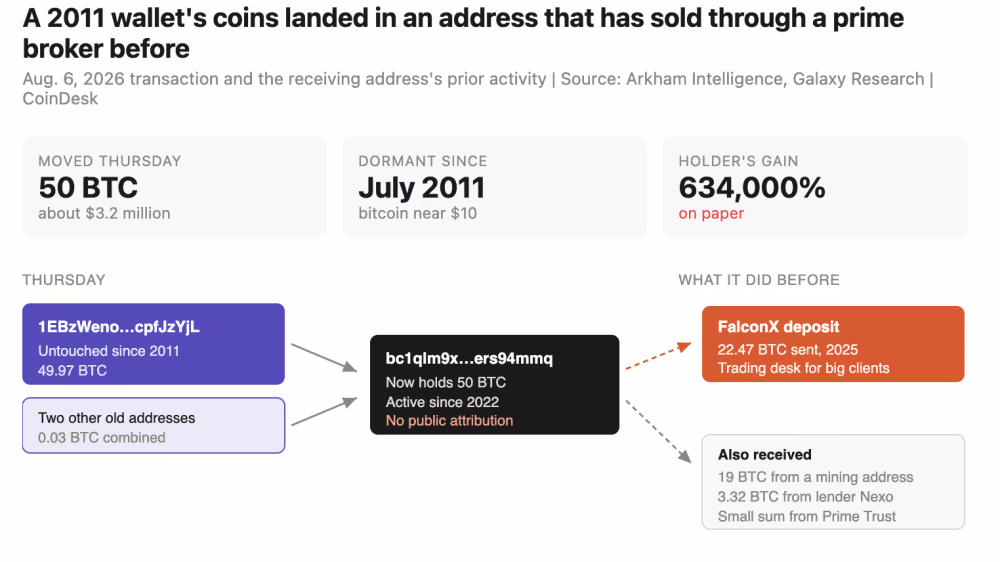
Coins from the 2011 wallet ended up at an address that has previously sent to a major broker. Source: Shaurya Malwa.

Movement of funds from dormant wallets that existed in bitcoin's earliest years typically draws attention, as their owners accumulated coins when the asset's value was a fraction of today's price.

While the movement itself says little about the owner's next plans, transfers can reflect anything from wallet upgrades and changes in ownership to preparations for a sale.

In recent years, such movements have occurred against a backdrop of one of the most serious attacks on bitcoin cold storage. It serves as a reminder that coins can be safely held for over a decade and still become vulnerable when the software guarding their keys falters.

Coinkite, the maker of the Coldcard hardware wallet, on Tuesday urged users to transfer funds after discovering a vulnerability in firmware released as far back as 2021 that can reveal keys generated by affected devices. According to the firm, attackers have stolen up to $114 million from vulnerable wallets since July 30 in four waves of thefts.

There is no evidence linking the 2011 wallet to the Coldcard issue, and the address existed long before the device. But the news prompted longtime holders to review old storage setups, providing yet another reason for sudden movements of dormant bitcoin on-chain.


Пов'язані питання

QWhat was the value of Bitcoin when the inactive wallet received its coins in July 2011, according to the article?

ABitcoin was trading at approximately $10 when the inactive wallet received the coins on July 16, 2011.

QHow many Bitcoins were moved from the inactive wallet, and what is their approximate current value in US dollars?

A49.97 Bitcoins (effectively 50 BTC) were moved from the inactive wallet, with an approximate current value of $3.2 million.

QWhat is SegWit, and what is its primary benefit as described in the article?

ASegWit (Segregated Witness) is a new format for Bitcoin addresses that makes transactions more space-efficient and generally cheaper to send.

QTo which type of address were the 50 BTC sent, and does the article indicate the funds have been sold or sent to an exchange?

AThe 50 BTC were sent to a SegWit address. The article states there is no evidence in the blockchain that the inactive coins have been sent to FalconX, another exchange, or sold as of Friday morning.

QWhat recent security issue mentioned in the article has prompted some long-term Bitcoin holders to re-examine their storage setups?

AA vulnerability was discovered in firmware for the Coldcard hardware wallet released in 2021, which could leak keys generated by affected devices. Hackers have stolen up to $114 million from vulnerable wallets since July 30, prompting holders to check old storage setups.

Пов'язані матеріали

Торгівля

Спот
活动图片