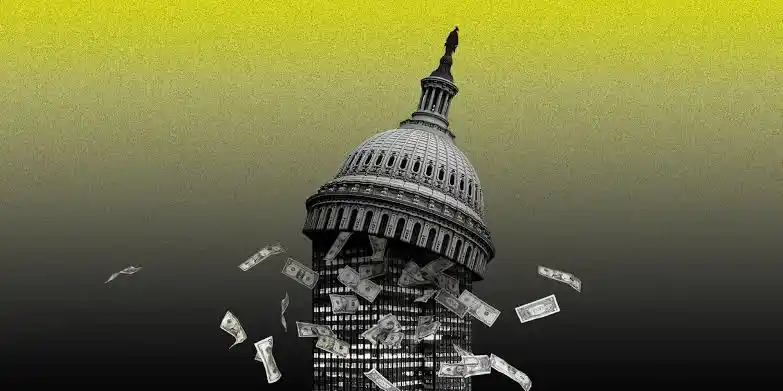
Ex-US defense secretary calls CLARITY Act a ‘national security bill’

cointelegraphОпубліковано о 2026-08-10Востаннє оновлено о 2026-08-10

Анотація

Former U.S. Secretary of Defense Mark Esper has called on the Senate to urgently pass the CLARITY Act, framing it as a critical national security bill. In a Financial Times op-ed, Esper argued that current weak digital asset regulations create vulnerabilities exploited by adversaries like China and North Korea. He stated China is developing state-directed payment systems to bypass U.S. oversight and erode the dollar's dominance, calling China the "greatest strategic threat." The Act would empower the U.S. Treasury to close crypto loopholes used by groups like North Korea's Lazarus to evade financial controls, including by extending special-measures authority. The Senate is expected to vote on the legislation on September 15.

A former US defense secretary has urged the Senate to pass the CLARITY Act, arguing that weak digital asset rules create openings for North Korea and China to undermine American financial power.

In an op-ed in the Financial Times on Saturday, former US Secretary of Defense Mark Esper said Beijing is already investing in state-directed payment systems to sidestep American supervision and erode the US dollar’s central role.

“I have long argued that China is the greatest strategic threat of our lifetime,” said Esper, who also serves as a member of the Coinbase Global Advisory Council.

He also said the act would give the US better tools to cut off crypto-specific loopholes that can be used by North Korean actors such as the Lazarus Group to avoid US financial controls.

“The Act also extends the Treasury’s potent special-measures authority under section 311 of the USA Patriot Act — one of our sharpest weapons against rogue actors,” he said.

The Senate is expected to vote on the CLARITY Act on Sept. 15. On Saturday, Senate Majority Leader John Thune filed cloture to bring the CLARITY Act to the Senate floor for consideration.

“This is why the Clarity Act, now before the Senate, is not merely a financial services bill. It is also a national security bill, and it should be understood as such and passed with urgency,” said Esper.

Related: CLARITY Act delay gives Asian financial hubs an opening: First Digital CEO

Трендові криптовалюти

Пов'язані питання

QWho is calling the CLARITY Act a 'national security bill' and urging the Senate to pass it?

AFormer US Secretary of Defense Mark Esper is calling the CLARITY Act a 'national security bill' and urging the Senate to pass it.

QAccording to the former defense secretary, which two countries are exploiting weak digital asset rules to undermine American financial power?

AAccording to Mark Esper, North Korea and China are exploiting weak digital asset rules to undermine American financial power.

QWhat specific action by China does Esper cite as an effort to erode the US dollar's central role?

AEsper cites that China is investing in state-directed payment systems to sidestep American supervision and erode the US dollar's central role.

QWhat is the expected date for the Senate to vote on the CLARITY Act?

AThe Senate is expected to vote on the CLARITY Act on September 15.

QWhich specific authority under the Patriot Act would the CLARITY Act extend to help combat rogue actors?

AThe CLARITY Act would extend the Treasury's special-measures authority under section 311 of the USA Patriot Act.

Пов'язані матеріали

Everyone Is Eyeing EUV Lithography Machines

The article "Everyone Has Their Eyes on EUV Lithography Machines" explores the ongoing expansion of EUV (Extreme Ultraviolet) lithography in semiconductor manufacturing. While EUV was once exclusive to giants like TSMC, Samsung, Intel, SK Hynix, and Micron, it's now appearing on the roadmaps of second-tier foundries like Nanya Technology and Winbond Electronics. This shift is driven by the diffusion of EUV into DRAM production, the economic boost from the AI boom making such investments viable, and the maturation of Low-NA EUV as a standard tool. Meanwhile, the "five-member club" of primary EUV users is seeing new entrants like Japan's Rapidus, a state-backed startup aiming for 2nm production. Concurrently, a wave of startups is challenging the traditional EUV model with alternative technologies. These challengers are categorized into four groups: those seeking to replace the light source (e.g., xLight's Free Electron Laser), those aiming to shorten the wavelength (e.g., Inversion Semiconductor, Substrate with BEUV/X-ray approaches), those promoting Nanoimprint Lithography (e.g., Canon), and those exploring maskless particle-based methods (e.g., Multibeam's multi-column e-beam, Lace's helium atom lithography). While these alternatives struggle with the throughput and stability required for high-volume manufacturing, they collectively signal a potential diversification of the future lithography landscape. The conclusion is that while EUV's technical and economic barriers remain high, its user base is broadening. The future may see a more competitive ecosystem, with Low-NA EUV serving mainstream needs, High-NA EUV for cutting-edge nodes, and novel technologies finding niches in specific applications.

marsbit7 хв тому

Everyone Is Eyeing EUV Lithography Machines

marsbit7 хв тому

Chip Stocks 'Hit a Wall,' But the Market Has Not

Chip stocks face volatility, driven by the blowup of an AI hedge fund (Situational Awareness), which briefly dragged the Philadelphia Semiconductor Index down 29%. However, the market has defied concerns, treating the sell-off as a buying signal. Investors injected over $11 billion into semiconductor ETFs in two days, fueling strong rallies in leveraged and non-leveraged funds. This dynamic is part of a broader surge in risk appetite: the S&P 500 hit a record high, high-yield bond funds saw their largest weekly inflow in two years, and Bitcoin ETFs attracted significant capital. Bank of America's Bull & Bear Index has risen to its highest level since 2021. Market strategists note the momentum-driven "tsunami" in buying, though concentration remains in mega-cap tech stocks. Despite the optimism, a key risk persists: elevated Treasury yields, with the 30-year yield near two-decade highs, pose a headwind. A weak July jobs report, however, eased near-term Fed hike fears and supported markets. Analysts suggest the economic backdrop remains solid, with AI infrastructure demand underpinning growth, though potential bottlenecks like power supply could emerge. The prevailing investor psychology is that recent pullbacks have been brief, reinforcing confidence to buy dips, as evidenced by a sharp drop in semiconductor volatility. The overarching narrative is one of resilient money flows toward risk assets despite a lengthening list of worries.

marsbit9 хв тому

Chip Stocks 'Hit a Wall,' But the Market Has Not

marsbit9 хв тому

Divergence in Regulated Token Protocol Standards: Issuance, Compliance, and Integration Each Assume Their Roles

Regulated token standards on EVM chains are diverging not towards a single unified standard, but into a modular, complementary architecture by function. Key examples include ERC-1450 (centered on a Registered Transfer Agent), ERC-3643 (a modular stack for policy), and ERC-7943 (a minimal integration layer). This reflects a broader industry trend: instead of bundling all regulatory functions into one standard, the ecosystem is separating **recurring, universal execution functions** (pre-transfer checks, freezing, forced transfers) from **product/jurisdiction-specific policies** (KYC providers, holding limits). Beyond EVM, other chains integrate comparable features at different architectural levels. Solana's Token Extensions provide hooks and controls at the program library level. Stellar and XRPL embed authorization and freezing natively in the ledger. Sui and Aptos place common controls in their Move frameworks. Networks like Canton and Avalanche L1 extend functionality to market operations and validator-level compliance. The competitive edge for regulated token standards will likely depend on **flexibility to adapt to regulatory changes** and the clarity of embedded controls for external integrators, rather than the sheer number of features. The future points towards a **compliance stack**: a base layer of standardized execution functions supporting interchangeable modules for identity, jurisdictional rules, and product-specific policies. This approach balances operational consistency with the necessary flexibility for diverse regulatory requirements across assets and regions.

marsbit1 год тому

Divergence in Regulated Token Protocol Standards: Issuance, Compliance, and Integration Each Assume Their Roles

marsbit1 год тому

$1.8 Million? Even Amazon Can't Afford to Burn Claude Anymore

Amazon was reportedly hit with a $1.8 million bill—860% over budget—after a five-month attempt to use Claude Sonnet AI to generate author information for its site. The project, which ultimately failed to deploy, consumed an estimated 6000 billion tokens, equivalent to twice GPT-3's training data. This incident highlights the hidden and often unpredictable costs of AI, even for tech giants. Despite such setbacks, Amazon is aggressively investing in automation, planning a record $2200 billion capital expenditure in 2026, primarily for AWS, AI chips, and infrastructure. This push is paying off: AWS saw a 37% revenue jump and contributes 60% of operating profit. Concurrently, Amazon aims to automate 75% of warehouse operations by around 2033, potentially reducing hundreds of thousands of jobs. Amazon's cost overrun is not isolated. Companies like Meta and Uber have faced similar AI spending spirals, leading to internal "token usage" rankings and, eventually, strict budgets and spending caps. Meta, for instance, once faced a potential monthly bill of $221 million before implementing limits. OpenAI's CEO Sam Altman noted that AI cost control, ignored earlier, has now become a major concern. The risks of unchecked automation echo past disasters like Knight Capital's 2012 $440 million loss from a faulty automated trading system. While automation promises efficiency, its failures can be amplified at the same scale and speed. For Amazon and others, managing these costs and risks is a critical, ongoing lesson.

marsbit1 год тому

$1.8 Million? Even Amazon Can't Afford to Burn Claude Anymore

marsbit1 год тому

Торгівля

Спот

Популярні статті

Як купити BILL

Ласкаво просимо до HTX.com! Ми зробили покупку Billions Network (BILL) простою та зручною. Дотримуйтесь нашої покрокової інструкції, щоб розпочати свою криптовалютну подорож.Крок 1: Створіть обліковий запис на HTXВикористовуйте свою електронну пошту або номер телефону, щоб зареєструвати обліковий запис на HTX безплатно. Пройдіть безпроблемну реєстрацію й отримайте доступ до всіх функцій.ЗареєструватисьКрок 2: Перейдіть до розділу Купити крипту і виберіть спосіб оплатиКредитна/дебетова картка: використовуйте вашу картку Visa або Mastercard, щоб миттєво купити Billions Network (BILL).Баланс: використовуйте кошти з балансу вашого рахунку HTX для безперешкодної торгівлі.Треті особи: ми додали популярні способи оплати, такі як Google Pay та Apple Pay, щоб підвищити зручність.P2P: Торгуйте безпосередньо з іншими користувачами на HTX.Позабіржова торгівля (OTC): ми пропонуємо індивідуальні послуги та конкурентні обмінні курси для трейдерів.Крок 3: Зберігайте свої Billions Network (BILL)Після придбання Billions Network (BILL) збережіть його у своєму обліковому записі на HTX. Крім того, ви можете відправити його в інше місце за допомогою блокчейн-переказу або використовувати його для торгівлі іншими криптовалютами.Крок 4: Торгівля Billions Network (BILL)Легко торгуйте Billions Network (BILL) на спотовому ринку HTX. Просто увійдіть до свого облікового запису, виберіть торгову пару, укладайте угоди та спостерігайте за ними в режимі реального часу. Ми пропонуємо зручний досвід як для початківців, так і для досвідчених трейдерів.

600 переглядів усьогоОпубліковано 2026.05.07Оновлено 2026.06.02

Як купити BILL

Обговорення

Ласкаво просимо до спільноти HTX. Тут ви можете бути в курсі останніх подій розвитку платформи та отримати доступ до професійної ринкової інформації. Нижче представлені думки користувачів щодо ціни BILL (BILL).

活动图片