95-Year-Old Buffett Said 7 Things: Now Is Not the Time to Bottom-Fish, Nuclear Weapons Will Eventually Be Used

marsbitОпубліковано о 2026-04-01Востаннє оновлено о 2026-04-01

Анотація

Warren Buffett, at 95 and recently stepped down as CEO of Berkshire Hathaway, remains actively involved, still going to the office daily and consulting on investments, though he defers final decisions to his successor, Greg Abel. He admitted selling Apple stock too early but still holds a significant stake, emphasizing he would buy more only if the price drops sufficiently, not at current levels. Despite recent market declines, he remains calm, recalling far steeper drops in Berkshire’s history. Buffett criticized the Fed’s 2% inflation target, advocating for zero inflation to preserve savings value, and praised Chair Powell’s crisis management. He announced the return of his charity lunch, now alongside Stephen Curry and his wife, with proceeds split between Glide Foundation and the Currys' charity. He addressed his severed contact with Bill Gates post-Epstein files release, avoiding commentary due to potential legal implications. On global threats, he expressed grave concern over nuclear proliferation, especially involving Iran and North Korea, stating nuclear use is inevitable within centuries as more nations acquire them. Throughout, Buffett focused forward, avoiding nostalgia, still engaged with future economic and geopolitical shifts.

Author: Curry, Deep Tide TechFlow

Yesterday, Buffett gave an exclusive interview to CNBC.

This is the first time he has sat down for such a long chat since stepping down as CEO of Berkshire Hathaway on January 1 this year. At 95 years old, having steered the company for sixty years and handed over the reins to Greg Abel, he could have chosen not to speak.

But he talked about Apple, the Federal Reserve, Bill Gates and Epstein, Iran's nuclear weapons, and also announced that his charity lunch, paused for four years, is coming back.

There was a lot of information; let's go through it point by point.
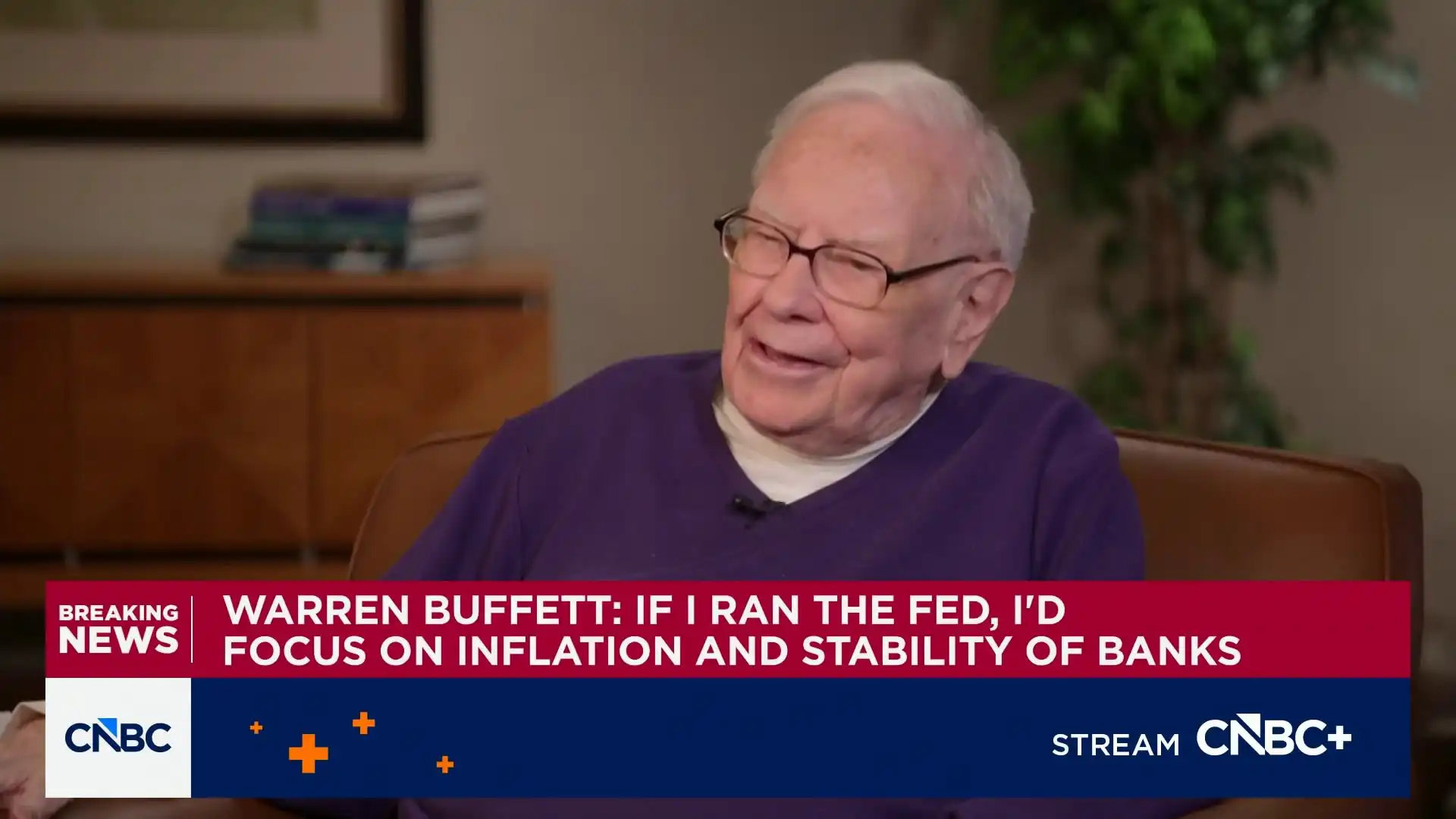
1. Went to Work on the First Day of Retirement

Buffett said he still goes to the office every day.

Before the market opens each day, he calls Mark Millard, Berkshire's Director of Financial Assets, to discuss market dynamics and trading. Millard's office is about six meters away from his; after the call, he goes to execute. When asked if there have been any new moves recently, Buffett said yes, a "tiny" (small) one was made, but he didn't reveal what it was.

He also drew a line: he will not make any investment that Abel disagrees with, and Abel receives a daily summary of investment activities.

This arrangement sounds like "the final decision-making power lies with the new CEO," but interpreted another way, it also means the 95-year-old predecessor is present every day, participates every day, trades every day, and the successor works six meters away from him.

Buffett praised Abel repeatedly in the interview, saying Abel does more work in a day than he did in a week at his peak, and that he would rather trust Abel with his money than any top investment advisor in the US.

Nominally, he has stepped down. But this "step down" seems more like moving from CEO to the person sitting next to him.

2. Sold Apple Too Early, But Not Buying Now Either

In this interview, Buffett admitted one thing: Berkshire reduced its Apple position too early.

His exact words were: "I sold it too soon. But, I bought it even sooner, so."

Translated, it means he sold too early, but bought even earlier, so he still made a profit. According to him, Berkshire made over $100 billion in pre-tax profit from this single Apple investment.

The timeline is roughly this: Berkshire started buying Apple around 2016, and the position grew to over $170 billion at its peak, making it the largest single holding in Berkshire's history.

Between 2023 and 2024, Berkshire cut its Apple position by about two-thirds. As of the end of last year, according to SEC filings, Berkshire held about 227.9 million Apple shares, worth approximately $62 billion, still accounting for about 22.6% of the entire investment portfolio and remaining the largest holding.

Buffett said Apple is better than any business Berkshire owns outright.

Berkshire's railroad company BNSF has a market cap higher than the Apple holding, but Apple still ranks first in the holdings list. He also praised Apple CEO Tim Cook as a "fantastic manager," saying he doesn't know how Cook manages to get along with everyone in the world.

But when asked if he would add to the position again, Buffett gave a conditional answer: it's not impossible; if Apple's price drops to a certain level, Berkshire would buy heavily. But not now, "not in this market."

Apple has fallen more than 14% from its high this year, but in Buffett's view, it hasn't reached a price he's willing to pay.

3. Three 50% Drops, What's This Little Dip?

The US stock market hasn't looked great this year. As of the interview day, the Dow was down about 5% year-to-date, the S&P 500 down about 6%, and the Nasdaq down about 9%. Apple itself has pulled back more than 14% from its yearly high.

Buffett's reaction to this: nothing to get excited about.

He said that since he took over Berkshire, the company's stock price has fallen by more than 50% at least three times. Compared to those, this current幅度 (extent) is nothing.

He also didn't show any intention of making major moves. For him, the current market is far from those historical moments that "created great opportunities."

In just a few sentences, he was both saying don't panic and don't expect me to bottom-fish now.

4. Inflation Target Should Be Zero

When asked whether the Fed is currently more worried about inflation or employment, Buffett didn't directly pick a side but made a broader statement: he wishes the Fed's inflation target were zero.

His logic is that once you say you can tolerate 2% inflation, that number becomes very significant when compounded over the long term. And for ordinary people, if you earn 2% interest on your savings and have to pay taxes on that 2%, it means your purchasing power is actually declining.

Buffett also said that compared to employment data, he is more concerned about the status of the dollar as the global reserve currency and the stability of the banking system.

He praised Fed Chair Powell for his decisive actions in March 2020 when the pandemic broke out, saying that if it had been two or three weeks later, it would have been a disaster. "Once the dominoes start to fall, they fall faster than anyone thinks." In Buffett's mind, Powell and Paul Volcker, who brutally raised interest rates to tame inflation in the 1980s, are the two most respected figures in Fed history.

However, he does have criticisms of the Fed. The 2% inflation target is a mistake in his view; you're essentially telling everyone that saving is worse than spending.

5. The Charity Lunch Is Back

What changed Buffett's mind was the death of one person.

Glide Foundation founder Cecil Williams passed away in 2024. Glide is a San Francisco charity that helps the homeless. Buffett's late wife, Susan, was a long-time volunteer there. Starting in 2000, Buffett auctioned off a lunch with himself annually, with all proceeds going to Glide. The lunch was held for 22 years; after the last one in 2022, Buffett said he would stop.
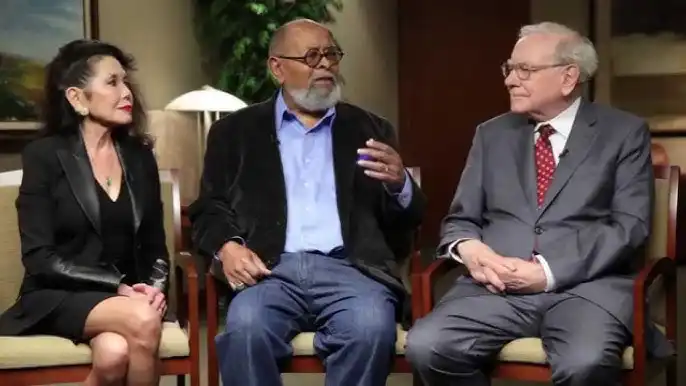
Image: The person in the middle is Cecil Williams

But Cecil's death made him change his mind. Buffett said Cecil passed away believing that Glide should not die out.

This new lunch has a changed format.

Buffett will not attend alone; his partners are four-time NBA champion Stephen Curry and his wife Ayesha Curry. The auction starts on eBay on May 7th with a starting bid of $50,000. The winner can bring up to seven guests to have lunch with the three of them in Omaha on June 24th. The auction proceeds will be split equally between Glide and the Eat. Learn. Play. Foundation founded by the Currys, a non-profit organization helping youth in Oakland.

The last auction related to the crypto circle was in 2019, when Tron founder Justin Sun spent $4.57 million. After that, Buffett donated the Bitcoin Sun gave him.

6. No Longer in Contact with Gates

This is the first time Buffett has publicly talked about Bill Gates since stepping down.

He said he hasn't spoken to Gates since the relevant files about Epstein were made public. His exact words were: "I don't want to be in a position where I know things ... to be called as a witness." He doesn't want to know too much; he doesn't want to be subpoenaed to testify.

The relationship between Buffett and Gates lasted for decades. The two co-founded "The Giving Pledge" in 2010, calling on the world's wealthiest individuals to pledge the majority of their wealth to philanthropy. Since 2006, Buffett has donated over $43 billion to the Gates Foundation.

Gates's association with Epstein began in 2011, which was three years after Epstein pleaded guilty to sex crimes in Florida in 2008. Since late last year, the US Department of Justice and Congress have陆续 (progressively) released a large number of related documents, and emails and photos between Gates and Epstein have been exposed.

According to a previous Wall Street Journal report, Gates apologized to Gates Foundation staff in February of this year, admitting to having associated with Epstein and also admitting to an extramarital affair. Gates has accepted an invitation from the US House Oversight Committee to testify on the matter, but a date has not yet been set.

When asked if he is still good friends with Gates, Buffett's tone was restrained. He mentioned their past collaboration in founding the Giving Pledge but then said:

"I don't think there's any need to say much until things are figured out."

7. Nuclear Weapons Will Eventually Be Used

At the end of the interview, the topic turned to Iran.

Buffett said there are now nine countries with nuclear weapons globally. During the Cold War, there were only two, the US and the Soviet Union, and everyone was already extremely nervous. But at least the decision-makers on both sides could be considered rational then. Now, the situation is completely different.

He specifically mentioned Iran and North Korea. He said the most dangerous situation is when the person with the nuclear button is themselves dying or facing immense disgrace. In such a predicament, no one can predict what decision a person will make.

When asked what advice he would give the US President on handling Iran's uranium enrichment issue if he were an advisor, Buffett didn't offer specific suggestions but said something that sounded like fatalism: in the next hundred years, maybe two hundred, nuclear weapons will be used. He doesn't know exactly how it will happen, but he believes it's a probability issue; the more countries that have nuclear weapons, the higher the probability.

On whether Iran should have nuclear weapons, he only said one thing: if Iran gets the bomb, things will be more difficult than if it didn't have it.

A 95-year-old man, who has seen the end of WWII, the entire Cold War, the Cuban Missile Crisis, the dissolution of the Soviet Union... left a thought-provoking judgment at the end of the interview.

The interview lasted about an hour; he talked about everything he could.

But the detail that stood out the most to this writer throughout the process was: Buffett is 95 years old, has been卸任 (stepped down) for three months, and didn't utter a single word in front of the camera about "looking back" or "summarizing his life."

Everything he said was looking forward.

Should Apple be bought again, how should the Fed's target be set, how will the situation in Iran develop, how will the new charity lunch be run... The host sitting opposite him, Becky Quick, gave him many opportunities to reminisce; he didn't take any of them.

You rarely see someone who has already handed over power still more interested in the future than the past.

The Oracle of Omaha might still be the Oracle even in old age. It's just that before, he voted with money; now, he votes with his judgment.


Пов'язані питання

QWhat did Warren Buffett admit about Berkshire Hathaway's sale of Apple stock?

AHe admitted that they sold it too early, but noted that they bought it even earlier, resulting in over $100 billion in pre-tax profits.

QWhat is Buffett's view on the current market downturn compared to historical declines?

AHe stated that the current market decline is not significant compared to the three times Berkshire's stock price fell by more than 50% in the past, and it doesn't present a major opportunity yet.

QWhat change did Buffett announce regarding his charity lunch, and why?

AHe announced the revival of his charity lunch auction, with proceeds split between Glide Foundation and Stephen Curry's Eat. Learn. Play. Foundation, prompted by the death of Glide's founder Cecil Williams.

QHow has Buffett's relationship with Bill Gates changed recently, and why?

ABuffett has not spoken to Gates since the release of documents related to Jeffrey Epstein, as he wants to avoid knowing details that might lead to being called as a witness.

QWhat is Buffett's grim prediction about nuclear weapons?

AHe believes that nuclear weapons will likely be used within the next 100 to 200 years, citing the increased probability as more countries possess them and the unpredictability of leaders in extreme situations.

Пов'язані матеріали

South Korean Exchanges 'Battle' Regulators, Challenging the Boundaries of Enforcement and Legislation

South Korea's cryptocurrency industry is engaged in a rare, direct confrontation with regulators. The Financial Intelligence Unit (FIU), the primary anti-money laundering (AML) watchdog, has recently imposed heavy penalties on major exchanges like Upbit and Bithumb for alleged violations involving unregistered overseas VASPs and AML procedures. However, exchanges are now actively challenging these actions in court and through industry associations. In a significant shift, the Seoul Administrative Court ruled in favor of Upbit's operator, Dunamu, overturning part of an FIU-ordered business suspension. The court found the FIU's penalty criteria and justification insufficiently clear. Similarly, the court suspended the enforcement of a six-month business suspension against Bithumb pending a final ruling, citing potential irreversible harm to the exchange. Beyond legal battles, the industry is contesting proposed legislative amendments. The Digital Asset eXchange Alliance (DAXA) strongly opposes a draft rule that would mandate Suspicious Transaction Reports (STRs) for all crypto transfers over 10 million KRW (~$6,800). DAXA argues this "poison pill" clause violates legal principles and would overwhelm the STR system, increasing reports from 63,000 to an estimated 5.45 million annually for major exchanges, thereby crippling effective AML monitoring. This conflict highlights a structural tension in South Korea's crypto governance: comprehensive digital asset laws are still developing, while regulators rely heavily on AML enforcement. The industry's move from passive compliance to active legal and legislative challenges signifies a new phase, pressing for clearer rules and more proportionate enforcement. While short-term disputes may intensify, this clash could ultimately lead to a more mature and sustainable regulatory framework for South Korea's vibrant crypto market.

marsbit17 хв тому

South Korean Exchanges 'Battle' Regulators, Challenging the Boundaries of Enforcement and Legislation

marsbit17 хв тому

After 50x Storage Surge, Justin Sun Always Looks to the Next Decade

Sun Yuchen, known for his controversial stunts like a $30 million lunch with Warren Buffett (canceled due to a kidney stone) and eating a $6.2 million duct-taped banana, is often overshadowed by a significant fact: his decade-long track record of spotting major investment trends. In 2016, he famously advised young people to invest in Bitcoin, Nvidia, Tesla, and Tencent instead of buying property. A hypothetical $20,000 investment in Nvidia and Tesla from that list would now be worth over 50 million RMB. His latest major call was on November 6, 2025, predicting a "50x storage opportunity" tied to the AI boom, which materialized with Sandisk's stock surging nearly 50-fold by 2026. Looking ahead, Sun now focuses on the next frontier: Physical AI. He identifies four key areas: 1. **Embodied AI/Robotics**: He sees this reaching its "iPhone moment," with companies like UBTech and Galaxy General leading in commercialization. 2. **Drones**: Viewed as the first commercially viable form of Physical AI, revolutionizing sectors from warfare (e.g., AeroVironment's Switchblade) to logistics. 3. **Spatial Computing**: Beyond VR, it's about AI understanding physical space, a foundational technology for robotics and autonomous systems, exemplified by Apple's Vision Pro. 4. **Space Exploration**: After a 2025 suborbital flight with Blue Origin, Sun advocates for space as the ultimate frontier, discussing blockchain's potential role in space asset management and data transactions. His investment philosophy involves betting on entire, inevitable trends rather than single companies. For robotics, he sees Tesla (the body/manufacturer) and Nvidia (the brain/AI platform) as complementary plays. In defense drones, he highlights companies making tanks obsolete (AeroVironment) and those augmenting fighter jets (Kratos). For space, he participated in Blue Origin's flight and anticipates SpaceX's potential IPO to redefine the sector's valuation. Sun Yuchen's vision frames the next two decades not as a revolution in information flow (like the internet), but in the fundamental operation of the physical world through AI-powered robots, autonomous systems, and spatial intelligence, ultimately extending human and AI activity into space. While many still focus on conventional assets, he continues to look toward the next technological horizon.

marsbit1 год тому

After 50x Storage Surge, Justin Sun Always Looks to the Next Decade

marsbit1 год тому

The Billionaires Behind the Most Expensive Midterm Election in History

"The Most Expensive Midterm Elections and Their Billionaire Backers" This analysis details the unprecedented scale of spending in the 2026 midterm elections, highlighting the key billionaire donors shaping the political landscape. Jeff Yass, founder of Susquehanna International Group, has contributed over $81 million, ranking third among individual donors behind George Soros ($102.6M) and Elon Musk ($84.8M). Yass is a major donor to Trump's MAGA Inc. and supports school choice and various candidates. Overall, federal committees have raised over $4.7 billion this cycle, with political ad spending projected to reach $10.8 billion. Republican-aligned groups are significantly out-raising their Democratic counterparts. "Dark money" from undisclosed sources continues to grow. The core stakes involve control of Congress and policy direction for Trump's final term. Donors are also motivated by specific issues: Sergey Brin and Chris Larsen are funding opposition to a proposed California wealth tax and supporting crypto-friendly policies. Other top donors include OpenAI's Greg Brockman and his wife Anna ($50M total to MAGA Inc. and an AI-focused PAC), Richard Uihlein ($45.3M to conservative causes), venture capitalists Marc Andreessen and Ben Horowitz (each over $44M to crypto/AI PACs and MAGA Inc.), Miriam Adelson ($42.6M to GOP leadership PACs), Paul Singer ($33.9M), and Diane Hendricks ($25.8M to MAGA Inc.). The article notes that the peak fundraising period is still ahead, with major primaries approaching.

marsbit1 год тому

The Billionaires Behind the Most Expensive Midterm Election in History

marsbit1 год тому

The Largest IPO in History Is Approaching, Surpassing SpaceX, 28 Years of AI Self-Iteration, Countdown to Intelligence Explosion

"Anthropic Nears Trillion-Dollar IPO, Fueled by Explosive Growth and 2028 'Intelligence Explosion' Warning Anthropic is considering a deal valuing the AI company near $1 trillion, potentially leading to one of the largest IPOs ever and surpassing SpaceX. Its revenue has skyrocketed, with Annual Recurring Revenue (ARR) reaching $45 billion in May 2026—a 500% increase in just five months. This vertical growth curve is attributed to its key products, Claude Code and Cowork, dominating AI coding and enterprise collaboration. Beyond commercial success, co-founder Jack Clark issued a pivotal warning in an interview: there is a greater than 50% chance that by the end of 2028, AI systems will achieve recursive self-improvement—the ability to autonomously build a 'better version' of themselves, initiating an 'intelligence explosion.' This prophecy underpins the company's astronomical valuation, as the market prices in the potential for transformative and disruptive AI. Further signaling its ambition, Anthropic formed a $1.5 billion joint venture with Goldman Sachs and Blackstone, aiming to disrupt traditional consulting firms like McKinsey by deploying Claude AI for complex strategic work. This move tests AI's capacity to replace high-level cognitive labor, a precursor to its predicted autonomous evolution. The narrative presents a dual future: unprecedented economic opportunity alongside significant risks like economic restructuring and security threats. Anthropic's meteoric rise and Clark's 2028 prediction frame the coming years as a countdown to a potential technological singularity."

marsbit1 год тому

The Largest IPO in History Is Approaching, Surpassing SpaceX, 28 Years of AI Self-Iteration, Countdown to Intelligence Explosion

marsbit1 год тому

Торгівля

Спот
Ф'ючерси
活动图片




