发现NFT的艺术:如何通过数据找到艺术家?

The SeeDAOОпубліковано о 2022-12-14Востаннє оновлено о 2022-12-14

Анотація

本文探讨了如何通过对 NFT 数据的分析和整理来实现对艺术家更合理的推荐机制以及更艺术化的呈现形式。
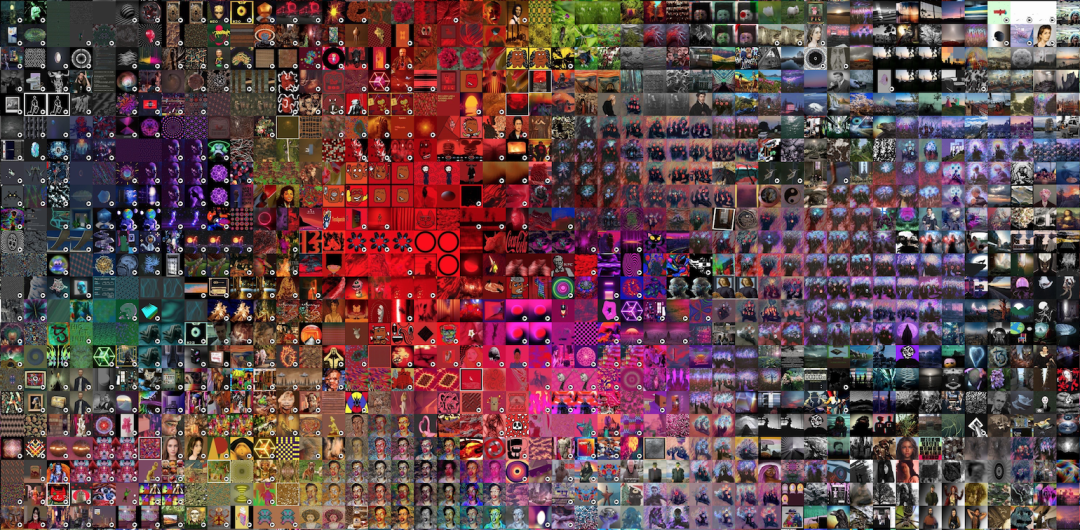
本文探讨了如何通过对 NFT 数据的分析和整理来实现对艺术家更合理的推荐机制以及更艺术化的呈现形式。

创作者:Mario Klingemann、Hic et Nunc - State of the Art - 2021 年 3 月 18 日(细节)、2021 年。由艺术家本人提供。

如今,数百万种 NFT、数万份 ERC-721 智能合约和数十个交易平台横跨多个区块链。结果,NFT 生态中到处都是噪音和碎片。无论你是刚入圈的收藏者还是经验丰富的加密老炮,想找到吸引人的新作品都不容易。但内容推荐并不是Web3所独有的问题。

多亏他们积累的数据、多年的测试和训练,像 Netflix 和 Spotify 之类的 Web2 公司已经精通了发现的艺术。但对 NFT 这种为「发现」带来独特新挑战的东西,他们的做法可以移植吗?

我在此研究了几种发现 NFT 的可选方法。
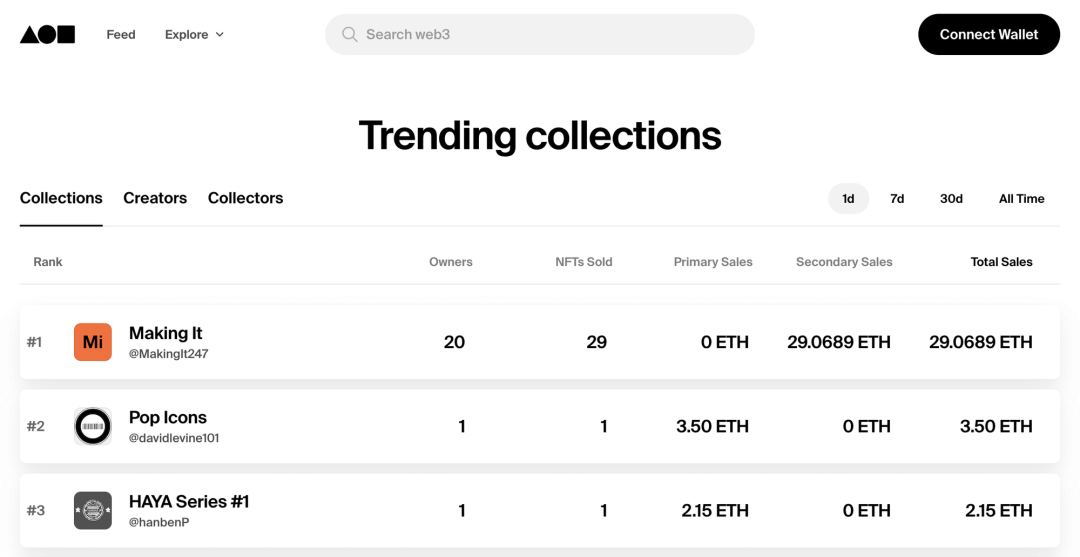
图片由Foundation.app 提供

1、跟踪数据‍

根据销量来发现 NFT 可能是最简单的方法。无论如何,排名和排行榜都是确定最流行收藏品的实用数据点。它们也是收藏者自然侧重的数据,这些人经常根据销量来进行筛选。这种做法的好处之一就是它有可验证性 —— 区块链数据轻易就能获取,通过运行以太坊节点,任何人都可以独立验证排名并亲自收集数据。

排行榜天生就是一个排序的机制,只是没有根据个人的喜好做微调。

毕竟,区块链数据让我们得以一窥艺术家和收藏者的复杂网络。网络科学家立刻意识到了 NFT 数据在揭示这种新兴所有权模式上的力量。

然而,刷量(收藏者通过把作品卖给自己来让它们看起来有销量并受人欢迎)仍然是 NFT 交易市场的棘手问题。一些独立加密研究者,比如 takenstheorem ,会通过可视化的方式呈现出相互交易的账号间的联系。
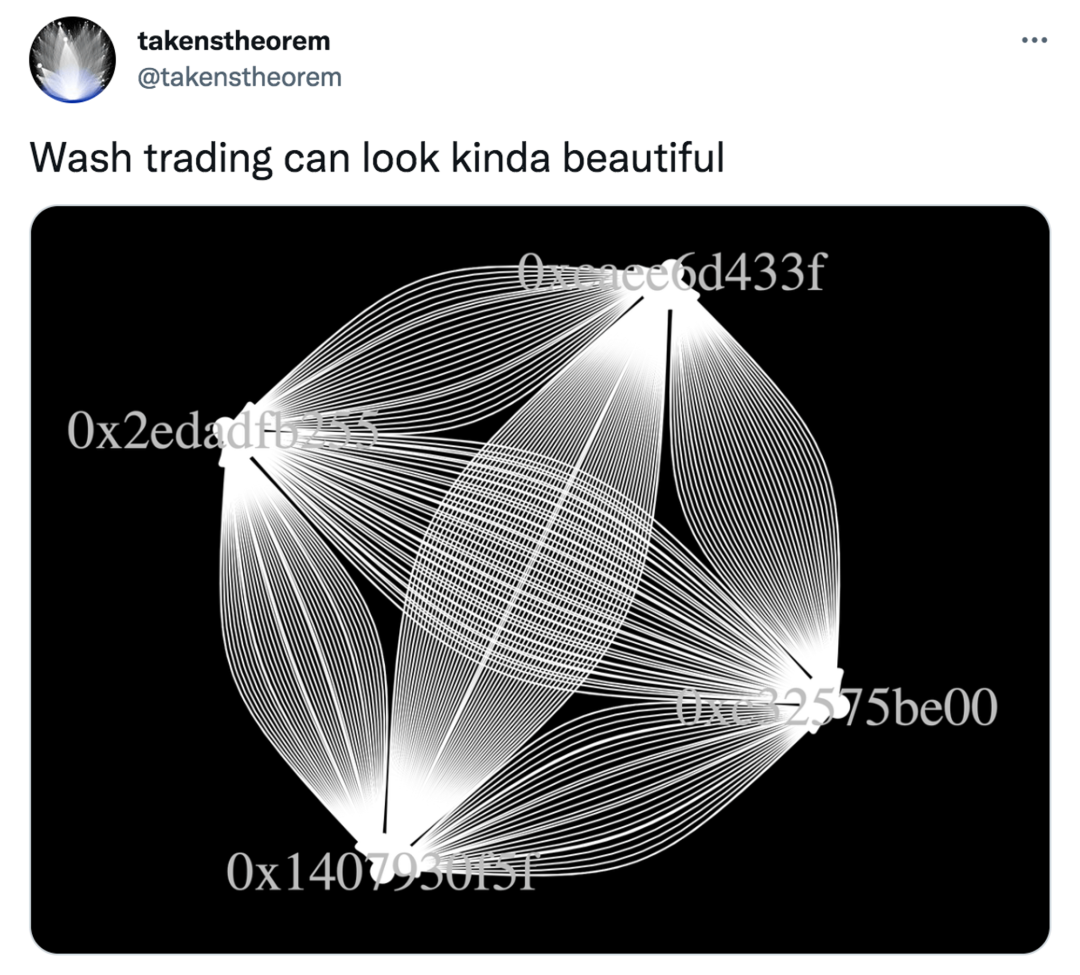
takenstheorem:刷量行为有时看着还挺漂亮

2、其他收藏者也喜‍欢

另一种发现 NFT 的方法是分析和你相似的收藏者。这种做法假设,如果两个收藏者拥有同一组艺术家的作品,那么他们就很可能就有着相似的品味,也许会从其中一人收藏而另一人没有收藏的艺术家那里发现新大陆。这用的是 Facebook「共同好友」的逻辑。

通过透明、分布式、实时的「谁拥有啥」的记录,区块链丰富的数据尤其适合做成网络分析图。任何时候 NFT 被转移,它的数据就被写入相关公链的公共账本,在两个加密钱包间建立起新的联系。这个数据随后就能被用于拓展收藏者的社交图谱。下图是我使用网络可视化工具分析 SuperRare 上 Jason Bailey 的收藏者网络。这个工具也可以把艺术家的收藏者社区可视化,所以我把生成艺术家 Manoloide 的社交图谱也加入进来。
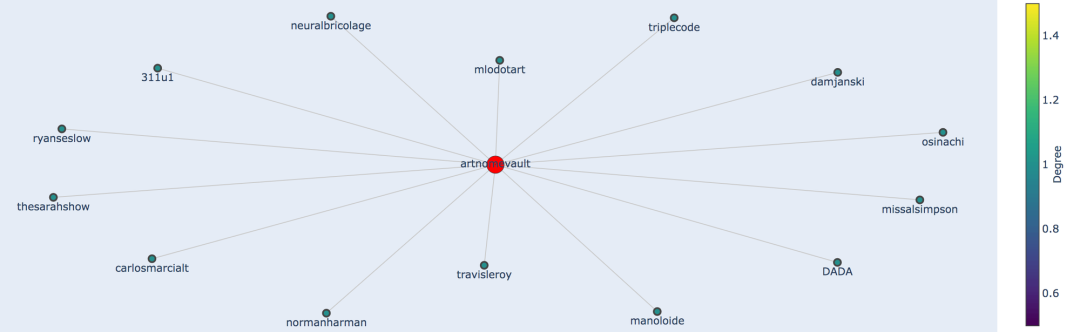
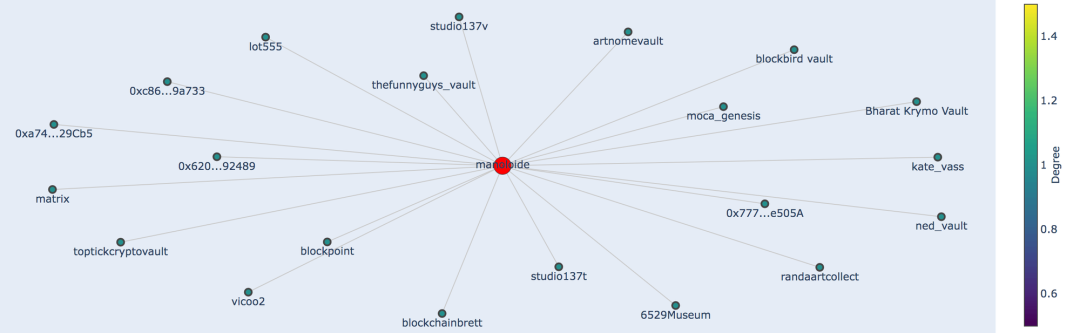
与 Jason Bailey (artnomevault) 和 Manoloide 有联系的 SuperRare 用户。2022 年 8 月 6 日的数据。由 Kyle Waters 提供

图一展示了 Jason 收藏的艺术家,图二展示了 Jason 在 SuperRare 上的「共同收藏者」, 他们共同的特征就在于拥有 Manoloide 创作的作品。如果我们放大 Manoloide 的某个收藏者,就能够搜寻 Jason 尚未收藏的艺术家。让我们以化名 punk6529 的收藏者的藏品 6529Museum 为例。下图展示了一大堆 Jason 可以考虑的新艺术家。基于这份网络分析,他可能会愿意了解一下 Seerlight。
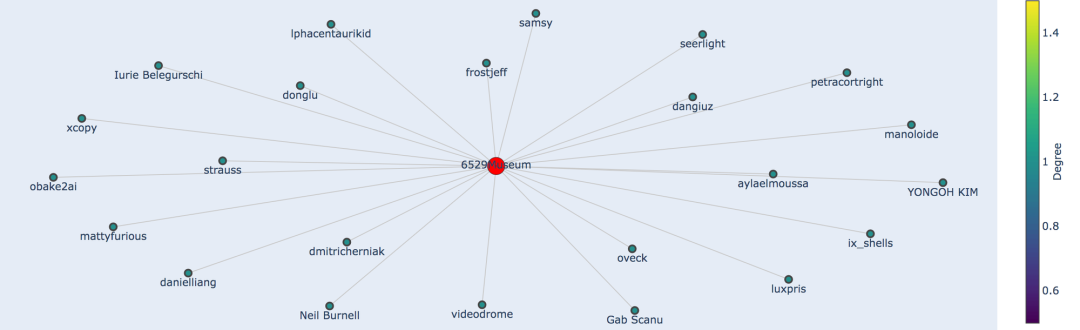
与 6529Museum 有联系的 SuperRare 用户。2022 年 8 月 6 日的数据。由 Kyle Waters 提供。

尽管这是个过度简化的大致模型,但它展示了这种基于网络的方法的力量。更精细的模型可能会基于 Jason 的共同收藏者中有多少人拥有某个特定艺术家的作品的准确数据来排名。将这种做法在多条链上拓展开来(比如以太坊和 Tezos),会需要把艺术家的钱包链接起来以掌握跨链出处的轨迹。

ClubNFT 的探索工具是第一个纯粹基于区块链网络数据做推荐的工具。然而,通过合并额外网络层、代币元数据甚至超越区块链本身,还有把该算法从当前范围进一步拓展的空间。
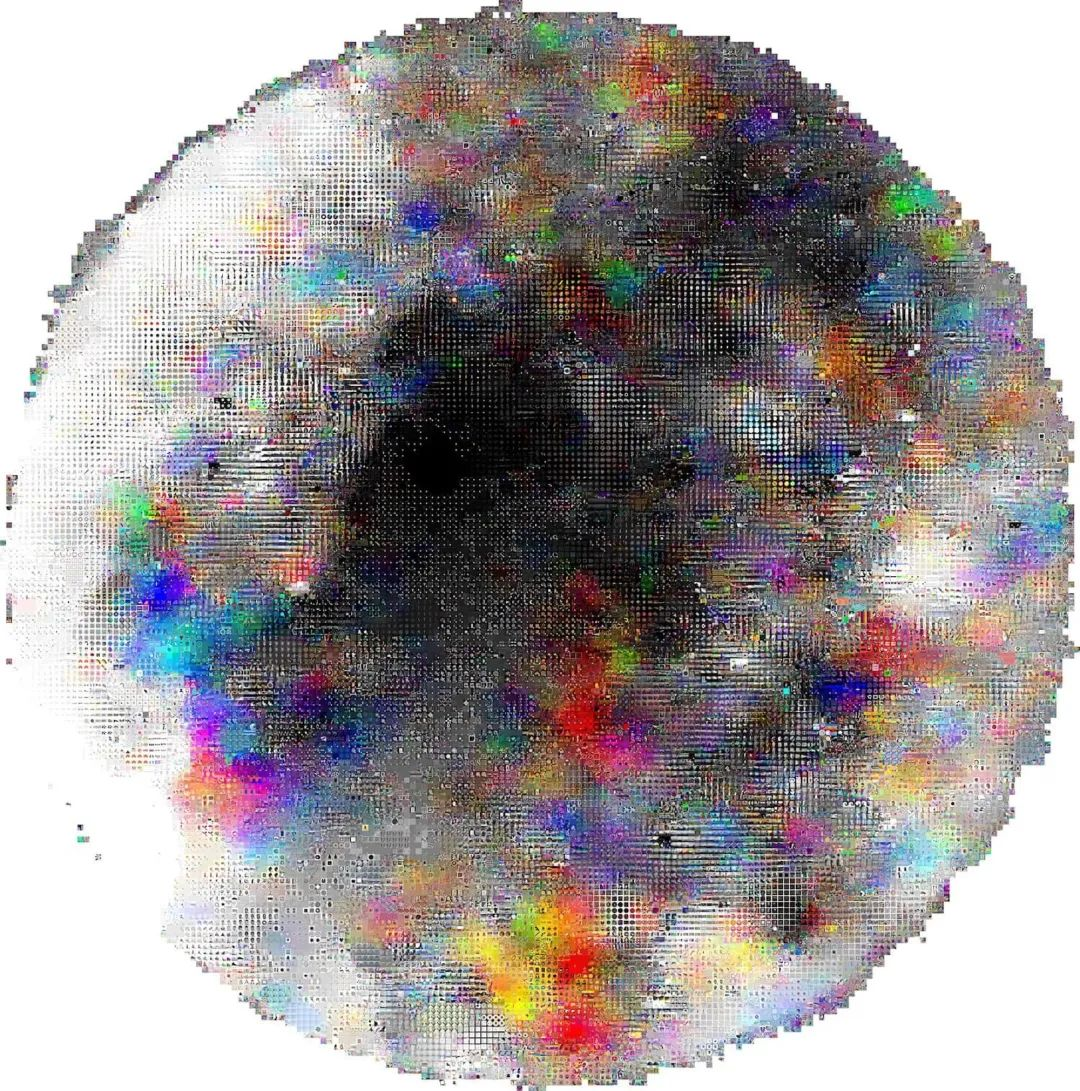
Mario Klingemann、Hic et Nunc - State of the Art - 2021 年 3 月 18 日、2021年。由艺术家本人提供。

3、给我更多这样的艺作

还有一种方法则是从 NFT 层面本身来处理这类问题。上图是艺术家 Mario Klingemann 于 2021 年 4 月所作,基于颜色相似度,他将来自 Tezos Hic Et Nunc 交易市场上的超过 25,000 份 NFT 汇集到了一起。还有很多高级计算机视觉技术也能用来基于主题寻找好的匹配作品。

NFT 元数据(代币指向的任何信息块)也有可能给推荐帮上忙。对于加密艺术,元数据一般包括一个托管在 IPFS(星际文件传输系统)上的 JSON 文件。元数据通常包含标签、描述和其他与作品内容有关的属性。对这类元数据进行分析或许会帮助收藏者发现新作品。然而,没有清晰的标准会让这类信息的统一规范极其困难。

元数据能够提供详细的描述、标签和其他信息,但有时无法提供同样的信息丰富度,这可能削弱 Web3 推荐引擎的效力。

另一个问题是「抄袭挖矿」,即某人通过复制和铸造别人的内容来假冒真正的创作者。这个问题最近已经升级到让 OpenSea 使用图像识别技术来防止伪作的程度。任何视觉推荐引擎都可能需要确保艺术家的作品出处以避免推荐抄袭的 NFT。尽管 ClubNFT 的探索工具没有将移除抄袭作品作为明确诉求,但它的确要求这些作品需要有真实的收藏者,以此为恶意的推荐结果提供某种程度的防范。欲了解「抄袭挖矿」的作品都有哪些迹象,请观看 ClubNFT 安全课程中关于欺诈的 短视频。

Seerlight、High-Rise、2022年。由艺术家本人提供。

结论

成功的推荐引擎的共同点在于拥有海量的数据。基于 NFT 生态中的可用数据,显然有机会构建出能够帮助收藏者纵横市场的各种发现系统,也可以开发出让艺术家崭露头角(或重振雄风)的各类工具。无论选择哪种方式,我们都必须留意 Web2 带来的教训,防止产生算法偏见,避免再次制造出独霸一方的权力结构。Web3 工具也必须避免对某些艺术家厚此薄彼式的反复推荐,这只会让一部分人轻而易举地获得特权。站在一名数据分析师的角度,发现藉藉无名的艺术家是一项巨大的挑战,但只要我们通过对新艺术家的支持来代替追星文化,这个问题就能够得以解决。


Пов'язані матеріали

Has BTC's 'Digital Gold' Narrative Failed?

The article discusses Bitcoin's "digital gold" narrative, its recent price drop, and long-term outlook through the perspective of "Jason". It argues the narrative is not a failure but that Bitcoin represents a superior, new asset class due to its fixed supply (21 million), portability, and auditability. The piece compares its current ~3-4% global adoption rate to early internet/e-commerce, suggesting significant growth potential. Regarding the 2025-2026 price decline (from ~$126k to briefly under $61k), the author views it as a predictable, consensus-driven sell-off within Bitcoin's ~4-year cycle post-halving, exacerbated by a major "handover" from early, low-cost holders to new institutional buyers via ETFs. A key observation is that historical peak-to-trough drawdowns have lessened over time (e.g., 93% in 2011 to ~50% in 2026), indicating maturing volatility as holder structure changes. For the long term, the author uses a simple framework: Bitcoin's total market cap (~$1.4T at $70k) is only about 7% of gold's (~$20T). Even capturing 30-50% of gold's value would imply substantial upside. However, the article strongly cautions against viewing this as investment advice, emphasizing extreme volatility and the critical importance of risk management, position sizing, and deep fundamental understanding to survive severe drawdowns. It concludes by drawing a parallel to Amazon's 95% crash in 2000 and subsequent 42x recovery, stressing that the key is surviving market cycles to realize long-term potential.

链捕手4 хв тому

Has BTC's 'Digital Gold' Narrative Failed?

链捕手4 хв тому

From Code to Cognition: A Ten-Thousand-Word Guide to the Evolution of the Robot Brain

"From Code to Cognition: The Evolution of Robot Brains" The journey of robotic intelligence has shifted dramatically from manually coded systems to AI-driven brains. For decades, robots relied on layered software stacks—perception, state estimation, planning, control—each handcrafted. While predictable, they lacked adaptability. The 2010s saw deep learning revolutionize perception (e.g., object detection) and control (via reinforcement learning), but learned skills remained narrow. The arrival of Large Language Models (LLMs) marked a turning point. LLMs acted as high-level planners, interpreting natural language instructions and generating sequences of actions for traditional robotic systems to execute. However, true integration came with Visual-Language-Action (VLA) models, which fused vision, language, and motion prediction into a single network. Pioneered by models like RT-2 and open-source projects like OpenVLA, VLAs enable robots to reason and act directly from visual input and commands. The most advanced humanoid robots now employ a "dual-brain" architecture: a slow-thinking, large VLA (System 2) for reasoning and planning, and a fast-reacting, small network (System 1) for high-frequency motion control, sometimes with an even lower-level System 0 for balance. This split balances cognition with the physics of real-time movement. Computation is split between onboard hardware (e.g., NVIDIA Jetson) for safety-critical control loops and cloud/edge servers for non-critical tasks like learning and interfaces. A crucial driver is the open-source ecosystem—models like GR00T and OpenVLA allow startups to build upon pre-trained brains and fine-tune them with their own data, accelerating development. Despite progress, current systems struggle with recovery from errors, sample inefficiency, and long-horizon tasks. This has spurred the rise of **World Models**—neural networks that predict the consequences of actions. By simulating possible futures before acting (like NVIDIA Cosmos or Meta V-JEPA), robots can plan, recover, and generalize better. This represents the next frontier: shifting intelligence from learned reactions to an internal model of physics and cause-and-effect. The field is rapidly evolving. While not yet at its "ChatGPT moment," the convergence of cheaper hardware, scalable simulation, and world models points toward robots that are increasingly capable, adaptive, and useful. The question is shifting from "what can robots do?" to "what *should* they do?"

marsbit33 хв тому

From Code to Cognition: A Ten-Thousand-Word Guide to the Evolution of the Robot Brain

marsbit33 хв тому

AI Bubble Is Bursting

The AI Bubble is Bursting: A Necessary Purge on the Path to Ubiquitous Intelligence Market volatility has reignited debates about an AI bubble, with figures like Ray Dalio pointing to high valuations. However, this parallels the dot-com bubble, which, despite its crash, laid the physical infrastructure for today's internet era. The current AI investment frenzy, with tech giants planning trillions in infrastructure spending far outstripping current AI application revenues, appears similarly imbalanced. This 'bubble' is seen as an inevitable phase for a disruptive technology, paying the "innovation tax." Critically, AI inference costs have plummeted over 99.7% since 2023, making intelligence nearly free at the margin. This hasn't reduced spending but has instead unlocked massive new demand, as seen in enterprise AI cloud expenditure tripling. This follows the Jevons Paradox: efficiency gains lead to greater total consumption. The market is now entering a cleansing phase, weeding out speculative ventures lacking real moats. The deeper shift is a move from capital expenditure (CapEx) on hardware to value creation in operational expenditure (OpEx) through AI applications that solve real industry problems. While infrastructure valuations are high, rapid earnings growth from widespread AI adoption across sectors—from manufacturing and finance to law and healthcare—may digest these valuations over time. Ultimately, this creative destruction will leave behind robust infrastructure and optimized models, cheaply powering an AI-augmented future for all industries, much as the internet became indispensable after its own bubble burst. The core productive potential remains undiminished.

链捕手43 хв тому

AI Bubble Is Bursting

链捕手43 хв тому

Торгівля

Спот
Ф'ючерси

Популярні статті

Як купити XTZ

Ласкаво просимо до HTX.com! Ми зробили покупку Tezos (XTZ) простою та зручною. Дотримуйтесь нашої покрокової інструкції, щоб розпочати свою криптовалютну подорож.Крок 1: Створіть обліковий запис на HTXВикористовуйте свою електронну пошту або номер телефону, щоб зареєструвати обліковий запис на HTX безплатно. Пройдіть безпроблемну реєстрацію й отримайте доступ до всіх функцій.ЗареєструватисьКрок 2: Перейдіть до розділу Купити крипту і виберіть спосіб оплатиКредитна/дебетова картка: використовуйте вашу картку Visa або Mastercard, щоб миттєво купити Tezos (XTZ).Баланс: використовуйте кошти з балансу вашого рахунку HTX для безперешкодної торгівлі.Треті особи: ми додали популярні способи оплати, такі як Google Pay та Apple Pay, щоб підвищити зручність.P2P: Торгуйте безпосередньо з іншими користувачами на HTX.Позабіржова торгівля (OTC): ми пропонуємо індивідуальні послуги та конкурентні обмінні курси для трейдерів.Крок 3: Зберігайте свої Tezos (XTZ)Після придбання Tezos (XTZ) збережіть його у своєму обліковому записі на HTX. Крім того, ви можете відправити його в інше місце за допомогою блокчейн-переказу або використовувати його для торгівлі іншими криптовалютами.Крок 4: Торгівля Tezos (XTZ)Легко торгуйте Tezos (XTZ) на спотовому ринку HTX. Просто увійдіть до свого облікового запису, виберіть торгову пару, укладайте угоди та спостерігайте за ними в режимі реального часу. Ми пропонуємо зручний досвід як для початківців, так і для досвідчених трейдерів.

173 переглядів усьогоОпубліковано 2024.12.10Оновлено 2026.06.02

Як купити XTZ

Обговорення

Ласкаво просимо до спільноти HTX. Тут ви можете бути в курсі останніх подій розвитку платформи та отримати доступ до професійної ринкової інформації. Нижче представлені думки користувачів щодо ціни XTZ (XTZ).

活动图片












