Sad Story Behind Bankruptcy of Alameda Research and FTX

u.todayОпубліковано о 2022-11-23Востаннє оновлено о 2022-11-23

Анотація

Alameda Research became insolvent and was bailed out by FTX, marking beginning of major meltdown on cryptocurrency market

Without a doubt, November is proving to be the darkest month on the cryptocurrency market. Drama ensued between Bitcoin (BTC) and the altcoins shortly after the CEO of Binance announced that the exchange would divest itself of the FTX token.

However, the big problem with this story is Alameda Research, Sam Bankman-Fried’s (SBF) trading company. This is because, in early November, there was a complaint that Alameda was experiencing insolvency problems.

Coindesk released a report, shared by Binance, which said that Alameda may not have enough funds to cover its outstanding debts. SBF's trading company had a sizable portion of its funds in illiquid tokens based on the Solana blockchain, and the largest proportion of its assets were concentrated in FTT.

In this scenario, the company would have entered the bankruptcy list alongside Terraform Labs, Celsius Network and Three Arrows Capital (3AC). This problem would have hit FTX, so FTX asked for help from major crypto exchange Binance, and its CEO Changpeng Zhao (CZ) said it would step in with help and buy the younger exchange.

Shortly after doing its due diligence on FTX, Binance made the decision to no longer purchase the crypto trading platform. However, this is not the only scandal FTX has been involved in. Although SBF wanted to pass security and report that everything was in order, he had to borrow $1 billion in new capital from Wall Street and Silicon Valley billionaires.

An interesting point in this story is that this action by SBF occurred just a few hours before FTX filed its distress call with Binance.

Furthermore, the exchange’s problems cannot be solved with just $1 billion. After all, it needs at least $8 billion to stay afloat.

Therefore, the belief that FTX was not experiencing a liquidity problem is false. Furthermore, Alameda Research is not as honest as it claims. It would have filed for bankruptcy long before everything collapsed.

Collapse of SBF’s ecosystem

Idolized by the cryptocurrency market, SBF managed to attract attention by accumulating a net worth that surpassed the $16 billion mark.

FTX, his flagship company until then, had been leading the crypto industry for some time. SBF was even proud to say that he managed to exceed the turnover of Coinbase, even with fewer customers and being a relative newcomer to the industry.

“We have excellent numbers. We trade 6 times more volume than Coinbase while. We have 20 times less users. When you look at these numbers you can see there’s a lot of potential.”

Despite being involved in controversies related to project launches, SBF managed to be highlighted in many of them, and the most recent one was the APT token.

Of course, we cannot fail to mention that FTX made a million-dollar rescue of BlockFi, and SBF held a large bid for the assets of Voyager Capital shortly after the collapse of the Terra ecosystem (LUNA). This act certainly helped bolster FTX’s image as a solvent company. This was not without reason. FTX won a dispute with Binance itself for Voyager's assets.

But not everything was going as smoothly as it seemed

Something was not quite right at Alameda Research. For instance, Sam Trabucco decided to step down as CEO of the platform at the end of August.

As the decision seemed quite random at the time, some corners of the market no longer paid attention to it.

Shortly after, FTX’s former president, Brett Harrison, decided it was time to leave office — another big warning sign. After all, why would two great executives leave companies that were doing so well? That sounded even more suspicious.

After these exits, SEC pressure fell on FTX. The Texas Securities Regulator launched an investigation into FTX and SBF.

As Texas State Securities Board executive director Joe Rotunda reported in October, accounts FTX offered that paid investors income in exchange for depositing their cryptocurrencies with the company were under investigation.

Bankruptcy of Alameda Research

All of these facts already indicated that something was wrong, but the real bankruptcy of Alameda would certainly have come before that.

According to the tweet shared by Lucas Nuzzi, Head of R&D at CoinMetrics, the trading company went bankrupt in the second quarter of 2022. Nuzzi informed everyone that Alameda only survived because FTX reportedly offered funds to them. The Coinmetrics researcher said on his Twitter profile that the hoax ended 40 days ago, when 173 million FTT, priced at $4 billion, suddenly became active on-chain.

That same day, $8 billion worth of FTT was moved on-chain. That was the biggest daily move for FTX token in its existence.

But that is not the end of the story. Nuzzi found a transaction that interacted with an FTT token ICO contract in 2019. According to the researcher, the only recipient of the value of $4 billion was Alameda Research.

In Nuzzi’s conception, Alameda’s bankruptcy came at the same time as Three Arrows Capital — that is, in the second quarter of this year.

Without a doubt, FTX decided to protect the trading company so that things did not get any worse for FTT.

If in May Alameda had died, the FTT ICO contract would have been executed and brought down a big sale for all tokens that were purchased in September.

Knowing that, we now understand that when FTX said it was helping Voyager Digital, it was really committed to saving Alameda.

FTX may bring more negative impacts to cryptocurrencies

Bitcoin and the altcoins were extremely affected by the Big Money resolution between Binance and the FTX.

What was already not going well due to macroeconomic pressures got worse with the chaotic scene among major cryptocurrency trading companies.

In fact, FUD has intensified among FTX investors, who now express concern about the amount invested.

Venture investors, on the other hand, fear that their investments will be completely wiped out.

In addition, FTX-backed lending company BlockFi announced it would shut down withdrawals from its customers.

Genesis Block, also affected by the FTX drama, will cease trading and close its website on Dec. 10.

But this does not mean that these projects are the only ones affected by the fall of the old market giants. Solana is one of the altcoins that proves this.

Without a doubt, Nov. 8, 2022, will go down in the history of the crypto market as the craziest in its existence.

Трендові криптовалюти

Пов'язані матеріали

The Semiconductor Industry's Most Obscure Chokepoint Material: It Has Multiplied in Price Unnoticed, and China Just Banned Its Export

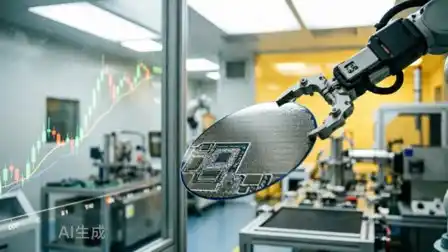
"Helium: The Silent Choke Point in Semiconductors" Helium, despite being the universe's second most abundant element, is critically scarce on Earth. It cannot be synthesized artificially and escapes Earth's gravity once released, making it a non-renewable resource. Yet, it is indispensable for advanced semiconductor manufacturing, requiring ultra-high purity (99.9999%) for processes like wafer etching, leak detection, and thermal management in lithography tools, with no viable substitutes. This low-profile resource, whose price has doubled unnoticed, suddenly gained attention when China imposed an export ban on July 10th. The ban is a response to a severe global shortage triggered months earlier. In March, missile attacks damaged the world's largest helium production hub in Qatar's Ras Laffan, halting a third of global supply with repairs expected to take 3-5 years. Concurrently, Russia tightened export controls, and the US sold off its federal helium reserve. Approximately 200 specialized transport containers, each worth ~$1 million, were stranded with perishable cargo. Global spot prices skyrocketed, and chipmakers like TSMC warned of potential impacts. China, which imports over 84% of its helium (primarily from Qatar and Russia), faces a severe squeeze. Despite being helium-poor, China has developed domestic extraction technology over five years, processing byproduct gases from LNG plants to produce ultra-pure helium. Domestic output, while still only covering less than 20% of demand, enabled the recent export ban aimed at securing domestic supply for its own expanding chip industry. The industry now faces "Helium Shortage 5.0." With key global sources constrained for years, this invisible gas—once wasted on party balloons—has become a critical, geopolitically charged bottleneck for chips, healthcare (MRI machines), and beyond, forcing the world to finally treat it as the finite strategic resource it is.

marsbit29 хв тому

The Semiconductor Industry's Most Obscure Chokepoint Material: It Has Multiplied in Price Unnoticed, and China Just Banned Its Export

marsbit29 хв тому

Early Investor of Unitree Bets on a Brain-Computer Interface Company

"Wabo Technologies, a brain-computer interface (BCI) startup, has secured new funding from Vertex Ventures (under Temasek), Hongtai Fund, Chengdu Future Industry Fund, and Huifengda Capital. Vertex Ventures is known for its early bet on Unitree Robotics. Inspired by the sci-fi film "Avatar," founder Zhang Xingzhi has pursued human-machine interaction for over a decade. He established Wabo in late 2025, coinciding with China's push for BCI as a future industry. Unlike companies focused solely on medical hardware, Wabo positions itself as a model company. Its core mission is to develop a "Human Neural Intent Model" that decodes EEG, EMG, and behavioral signals to understand a user's goals, confirmations, corrections, and stop intentions before physical action, translating them into standardized control signals for machines, robots, or smart devices. The young, full-stack team, backed by academic collaborators from Tianjin University and Fudan University, quickly attracted investors. The company had previously raised a seed round from Ceyuan Capital. Investors were impressed by Wabo's systematic capabilities in data collection, signal processing, and engineering, seeing potential beyond a single hardware product toward a reusable layer of human intent interpretation. Applications span medical rehabilitation, smart homes, embodied AI, and even space exploration, with Wabo partnering with Tianjin University on pioneering "space BCI" research. Wabo plans a dual-headquarters strategy, with Shanghai focusing on high-end R&D and model development, and Chengdu handling hardware, product development, and supply chain. The BCI sector in China is heating up, with over 30 financing deals in early 2026. Zhang believes future competition will center on who can build a sustainable data-model-scenario loop. He predicts industry consolidation within three years, with only companies that master this闭环 surviving. The vision from "Avatar" is inching closer to reality."

marsbit44 хв тому

Early Investor of Unitree Bets on a Brain-Computer Interface Company

marsbit44 хв тому

ChangXin Technology: A Cyclical Stock Standing Atop the Cycle Peak

Changxin Technology: A Cyclical Stock at the Peak On July 27, 2026, Changxin Technology topped the A-share market with a market capitalization of 3.28 trillion yuan, surging 465% on its first trading day. The company, which lost 16.3 billion yuan in 2023, reported an estimated net profit of 50-57 billion yuan for the first half of 2026. Its dramatic reversal mirrors the volatile DRAM (Dynamic Random Access Memory) cycle. The DRAM industry is inherently cyclical, with booms and busts every 3-4 years. This is due to product standardization and a significant time lag in supply adjustment. When prices rise, manufacturers expand capacity, but new production takes 2-3 years to come online, often leading to oversupply and price crashes when demand cools. Changxin's performance perfectly tracks this cycle. It recorded deep losses in 2023-2024 during the industry downturn, turned its first annual profit in 2025, and saw profits skyrocket in Q1 2026. This surge is primarily price-driven. The AI boom has led major players like Samsung and SK Hynix to shift 70-80% of new capacity to high-margin HBM (High Bandwidth Memory), creating a severe shortage and price explosion in general-purpose DRAM markets where Changxin competes. However, a massive global capacity expansion is underway. The top three manufacturers have announced nearly $70 billion in capital expenditure for 2026. Changxin itself plans to expand from three to seven 12-inch wafer fabs. This investment will translate into significant new supply in 2-3 years. While DRAM prices are expected to remain high through 2026-2027, price growth is already slowing, and a potential downturn is forecast for around 2028 as new capacity ramps up. A key challenge for Changxin is catching up in the critical HBM segment. While it has delivered HBM3 samples, leaders are already mass-producing more advanced HBM3E. Success in HBM is crucial for gaining true cyclical resilience. In conclusion, Changxin is a commendable company that has broken foreign monopolies in DRAM. Its long-term growth narrative—driven by import substitution and AI—is valid. Yet, its current valuation of 5-6x forward P/E, typical for a cyclical stock at its peak, suggests much future growth is already priced in. AI may extend the current cycle but cannot eliminate the industry's inherent volatility. For investors, the critical question is preparedness for the inevitable downturn when the cycle turns.

marsbit49 хв тому

ChangXin Technology: A Cyclical Stock Standing Atop the Cycle Peak

marsbit49 хв тому

Торгівля

Спот

Популярні статті

Як купити FTT

Ласкаво просимо до HTX.com! Ми зробили покупку FTX Token (FTT) простою та зручною. Дотримуйтесь нашої покрокової інструкції, щоб розпочати свою криптовалютну подорож.Крок 1: Створіть обліковий запис на HTXВикористовуйте свою електронну пошту або номер телефону, щоб зареєструвати обліковий запис на HTX безплатно. Пройдіть безпроблемну реєстрацію й отримайте доступ до всіх функцій.ЗареєструватисьКрок 2: Перейдіть до розділу Купити крипту і виберіть спосіб оплатиКредитна/дебетова картка: використовуйте вашу картку Visa або Mastercard, щоб миттєво купити FTX Token (FTT).Баланс: використовуйте кошти з балансу вашого рахунку HTX для безперешкодної торгівлі.Треті особи: ми додали популярні способи оплати, такі як Google Pay та Apple Pay, щоб підвищити зручність.P2P: Торгуйте безпосередньо з іншими користувачами на HTX.Позабіржова торгівля (OTC): ми пропонуємо індивідуальні послуги та конкурентні обмінні курси для трейдерів.Крок 3: Зберігайте свої FTX Token (FTT)Після придбання FTX Token (FTT) збережіть його у своєму обліковому записі на HTX. Крім того, ви можете відправити його в інше місце за допомогою блокчейн-переказу або використовувати його для торгівлі іншими криптовалютами.Крок 4: Торгівля FTX Token (FTT)Легко торгуйте FTX Token (FTT) на спотовому ринку HTX. Просто увійдіть до свого облікового запису, виберіть торгову пару, укладайте угоди та спостерігайте за ними в режимі реального часу. Ми пропонуємо зручний досвід як для початківців, так і для досвідчених трейдерів.

142 переглядів усьогоОпубліковано 2024.12.12Оновлено 2025.03.21

Як купити FTT

Обговорення

Ласкаво просимо до спільноти HTX. Тут ви можете бути в курсі останніх подій розвитку платформи та отримати доступ до професійної ринкової інформації. Нижче представлені думки користувачів щодо ціни FTT (FTT).

活动图片