SHIB price prediction for December 31, 2022 - Can Shiba Inu rebound?

FinboldОпубліковано о 2022-11-13Востаннє оновлено о 2022-11-13

Анотація

SHIB has been characterized by sustained sell-offs in 2022, aligning with the general trajectory of the digital assets market. However, with no signs of a possible bullish trigger in the short term, the SHIB community is still betting the token would end the year on a high.

Meme cryptocurrency Shiba Inu (SHIB) has been characterized by sustained sell-offs in 2022, aligning with the general trajectory of the digital assets market. However, with no signs of a possible bullish trigger in the short term, the SHIB community is still betting the token would end the year on a high.

“”

In this line, the SHIB community on CoinMarketCap estimates the token would be valued at an average price of $0.000011 by December 31, 2022, representing gains of 17.53% from the asset’s price at the time of publishing. The estimates are based on votes by 2,924 members leveraging the price estimate feature, according to data retrieved by Finbold on November 12.
“”

Notably, the bet by community members aligns with SHIB’s increasing number of holders, an indicator that investors still believe the token would rally in the future and possibly regain the highs of 2021. 
“”

In this line, SHIB has witnessed a steady increase in holders, with the figure standing at 1,243,497 as of November 11. The holders represent a growth of 3% or 37,225 over the last three months. 
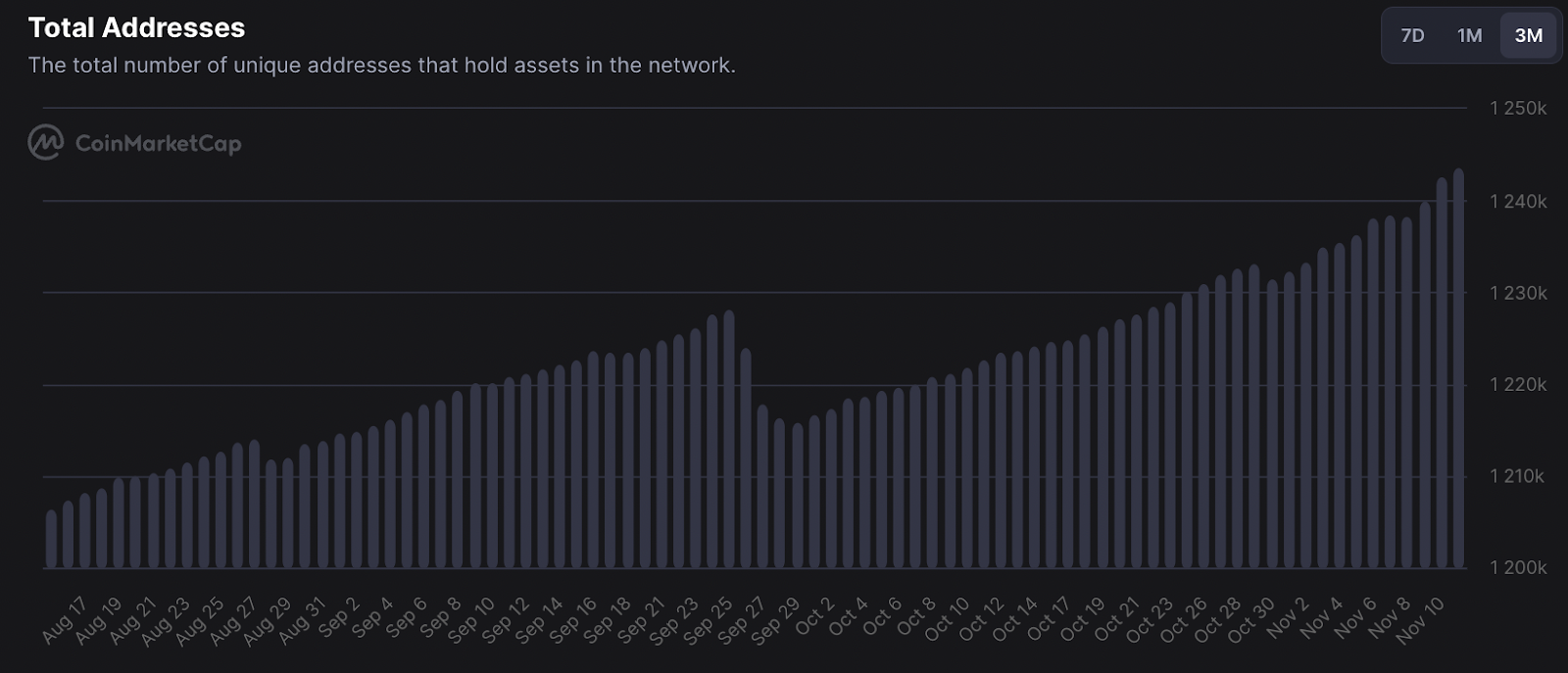
SHIB 3-month holders chart. Source: CoinMarketCap

“”

SHIB technical analysis
“”

Elsewhere, the SHIB technical analysis remains bearish at a point the decentralized finance (DeFi) token is feeling the effects of the FTX crypto exchange liquidity crunch. Indeed, a summary of the technicals aligns with “sell” at 14, with the moving averages favoring a “strong sell” at 13, while oscillators are “neutral” at nine on the daily gauges.
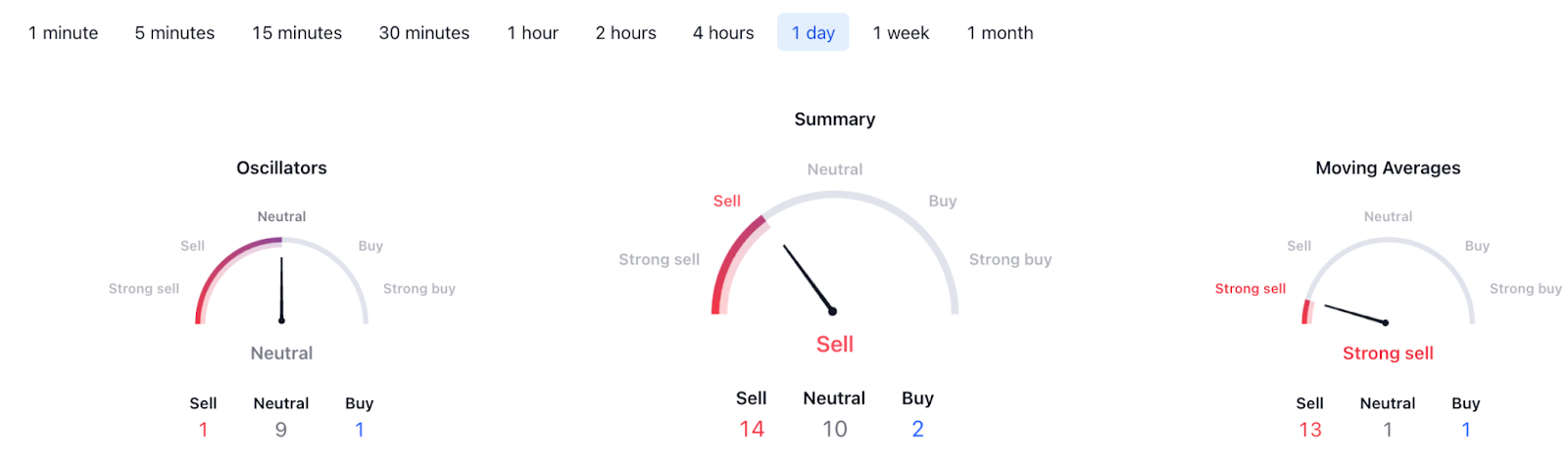
SHIB technical analysis. Source: TradingView

“”

In the meantime, SHIB has extended its week-long losses, trading at $0.0000096 by press time, dropping by over 23% in the last seven days. The asset has made less than 1% gains on the daily chart. 
“”

SHIB fails to maintain gains 
“”

It is worth noting that SHIB recently found some relief in the wake of Elon Musk’s acquisition of social media giant Twitter (NYSE: TWTR). Notably, the purchase of Twitter by Musk acted as a short-term catalyst for dog-themed cryptocurrencies like SHIB and Dogecoin (DOGE).

“”

In general, SHIB has failed to hold on to the gains after the FTX crisis hit the crypto sector. Amid the collapse, the SHIB community continues with network development in a bid to improve the asset’s utility.

“”

At the same time, SHIB appears to remain popular among traders. For instance, it emerged that SHIB forms about 20% of the $2.9 billion worth of assets held in the reserves of the crypto exchange Crypto.com. Notably, the platform published the results amid increased pressure on crypto entities to show proof of reserves after FTX’s liquidity crunch.

“”

Overall, for SHIB to make solid gains, the asset’s prospects largely depend on the price trajectory of the general cryptocurrency market.

Пов'язані матеріали

What If the CLARITY Act Ultimately Fails to Pass?

This article examines the potential consequences if the CLARITY Act, a major US crypto market structure bill, fails to pass in the Senate. Having cleared the House in July 2025 and a key committee in May 2026, the bill's passage into law this year is now considered uncertain, with prediction markets showing its probability dropping from 82% in February to 35%. The article analyzes three main areas of impact should the bill fail. First, for the crypto market, analysts believe a negative reaction is limited and partially priced in already, with Bitcoin's recent weakness attributed more to macro factors. The specific details of the failed bill would matter more than its failure alone. Second, for US stocks, Coinbase (COIN) could see short-term pressure, with analysts citing a potential drop to the $140-$160 range, though its long-term thesis is not solely tied to the bill. For Circle, failure might be neutral or even positive long-term, as a passed bill could invite more stablecoin competition. Bitcoin-treasury firms like Strategy (MSTR) are seen as more directly tied to Bitcoin's price than the legislation. Third, in Washington, the failure is framed within a broader political struggle. Democratic resistance is partly linked to concerns over former President Trump's crypto holdings, making the bill a political tool. If it fails in 2026, the industry would likely rely on existing frameworks like the GENIUS Act and agency-level rules. Missing the August window likely pushes any significant progress to 2027, a period of political reshuffling after midterm elections, making consensus harder to achieve.

Odaily星球日报5 хв тому

What If the CLARITY Act Ultimately Fails to Pass?

Odaily星球日报5 хв тому

SK Hynix Q2 Profit Soars Sixfold, Still 'Misses Expectations'; Secures Long-Term Agreements with 10 Clients, HBM4 to Accelerate Volume Ramp in Second Half

SK Hynix reported record-breaking Q2 2026 financial results, with operating profit soaring 557% year-over-year to 60.5 trillion won and revenue increasing 257% to 79.3 trillion won, driven by strong demand for AI server memory, HBM, and enterprise SSDs. The operating profit margin reached 76.3%. However, both figures fell short of analyst expectations, leading to a drop in its share price. The company attributed the earnings miss to three factors: a high sales mix of HBM, which limited upside from surging prices of general-purpose DRAM; a deceleration in memory price increases compared to Q1; and long-term supply agreements (LTAs) with major customers that lock in prices, reducing sensitivity to spot market gains. SK Hynix has signed LTAs with about 10 clients, covering roughly half of its sales. Despite the miss, the company remains optimistic about AI-driven demand. Its net profit of 93.9 trillion won was significantly boosted by a one-time gain from the partial sale of its Kioxia stake. Financially, it strengthened its cash position, ending the quarter with a net cash position of 69.4 trillion won. Looking ahead, SK Hynix plans capital expenditures at the high end of its 40-50 trillion won range for 2026 to expand capacity for HBM and advanced NAND products, including accelerating the mass production of HBM4 in the second half of the year.

marsbit25 хв тому

SK Hynix Q2 Profit Soars Sixfold, Still 'Misses Expectations'; Secures Long-Term Agreements with 10 Clients, HBM4 to Accelerate Volume Ramp in Second Half

marsbit25 хв тому

Behind the 67,000 Semiconductor Talent Shortage: U.S. Industrial Policy Game and Implications for China

The U.S. push to reshore semiconductor manufacturing faces a core challenge: a significant talent shortage. While over $770 billion in investments are planned across 160 projects, a key hurdle is finding enough people to run the new fabs. According to industry projections, the U.S. could face a shortage of approximately 67,000 technicians, engineers, and computer scientists by 2030. This shortage is multi-faceted. It includes not only high-level chip design engineers requiring advanced degrees but also a substantial need for technicians to operate and maintain fab equipment. Technician roles, while often requiring less formal education, are hard to fill due to factors like shift work, factory locations, and local community infrastructure. Conversely, for high-end engineers, the issue is less about salary—which is already competitive—and more about intense competition for specialized skills from other tech sectors and the long lead time to develop such expertise. The geographic dispersion of new investments complicates recruitment, as fabs need large numbers of local, stable employees. In response, U.S. policy emphasizes building workforce development as critical infrastructure. Strategies include expanding community college programs for technician training, fostering industry-education partnerships, and pursuing immigration reforms for high-skilled talent, aiming to balance immediate needs with long-term domestic pipeline development. For China, the key takeaway is the need to integrate talent supply planning with factory construction from the outset. This involves requiring companies to submit workforce plans, strengthening vocational education aligned with industry needs, and building supportive local ecosystems to retain talent. Ultimately, a sustainable semiconductor industry depends not just on building fabs, but on cultivating a continuous, local talent pipeline capable of keeping them running and advancing.

marsbit1 год тому

Behind the 67,000 Semiconductor Talent Shortage: U.S. Industrial Policy Game and Implications for China

marsbit1 год тому

Торгівля

Спот
活动图片