【重磅解读】BTC空头大回血,LINK酝酿反弹

火币资讯Опубліковано о 2022-11-08Востаннє оновлено о 2022-11-10

Анотація

BTC多空比大幅度回撤,下跌酝酿中。

1、BTC破位下跌

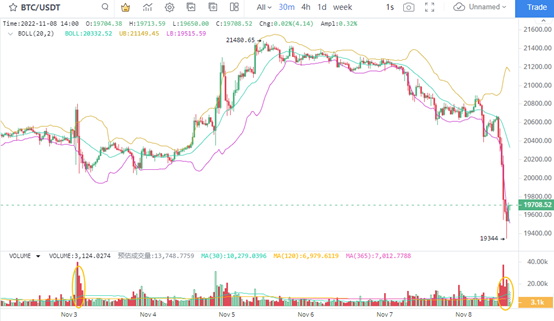
短期的30分钟K线图显示,BTC的下跌速度很快,并且持续放量时间较长,超过了3个小时,使得价格轻松回撤到2万美元以下。实际上,本次BTC短线回撤相比11月3日的价格回调更为明显,预示着短线多空平衡正在被快速打破。这说明,BTC或将在短期内打破2个月内的多空平衡,向下确认突破方向。

2、BTC多空比显著下降

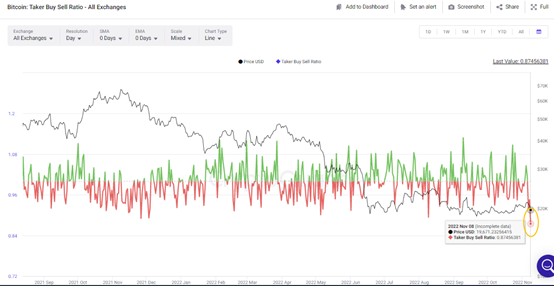
BTC多空比显著下降到了11月8日的0.882以后,数值为近期低点,同时也是2021年11月3日以后的最低数值。多空实力变化较快,同时与BTC价格的破位下跌联动,预示着价格短期向下的倾向更为显著。

消息面,受FTT11月7日的提币挤兑潮影响,111月8日 FTT 一度闪崩,未来 FTX 可能还要面临考验。同时,BTC受利空影响,合约多空比下降和币价大幅度回撤,都体现了投资者短期交易倾向的重大变化。

3、ETH多头爆仓增加

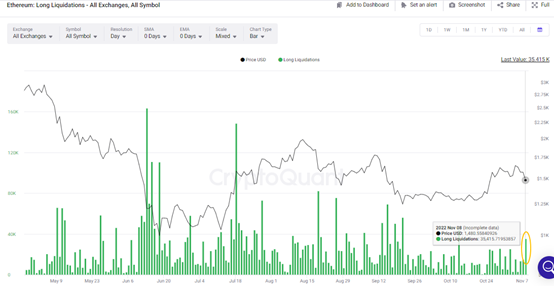
仅从多头爆仓的规模来看,近期ETH多头的爆仓数量持续减少的过程中,在11月8日达到了短线峰值3.54万枚ETH。这表明,行情突然加速回落后,多头爆仓达到了5300万美元以上,预示着ETH价格以较快速度走弱。接下来的交易日中,还需要注意价格回调风险,关注1200美元上方的支撑效果。

4、LINK主力交易增长

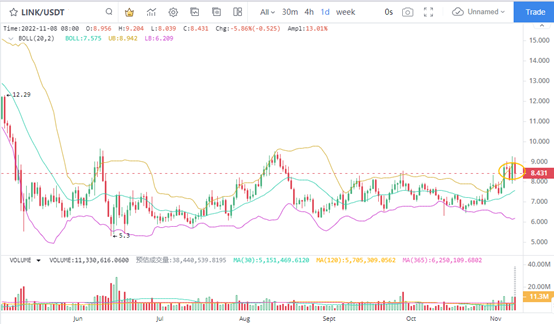
LINK近期价格表现相对强势,横盘期间并未持续明显的回撤表现。日K线图显示,LINK价格达到了5月份以来的峰值水平。虽然价格并未向上突破,但是价格表现明显强于多数主流币。据此判断,可关注近期价格的表现较好。

5、LINK主力交易占比较大

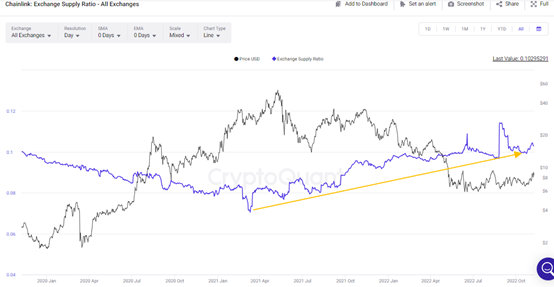
LINK在交易所的交易数量稳定增长,使得占比总代币供应量的比值持续回升。数值上,从2021年3月开始,LINK的交易占比从低水平的0.07附近回升到2022年11月的0.1附近。同时,2022年峰值交易占比最高达到了0.11。从这个意义上看,LINK的换手相当充分,尤其近半年来的交易占比高位运行,LINK换手率增加,低成本或可支撑LINK价格稳定回升。

Пов'язані матеріали

Coin Stock Barometer丨BitMine's Total Assets and Investment Reach $10.7 Billion, Exceeding ~$9.3 Billion Floating Loss; Strategy Buys Only 520 BTC, Strive Adds Positions Against the Trend (June 23)

This article provides a weekly market update on "coin-equity" trends, focusing on listed companies holding major cryptocurrencies. Key highlights include: **General Market Trends:** Global equities, particularly in the US, Japan, and South Korea, faced significant sell-offs, led by large tech and AI-related stocks. Analysts cite profit-taking and a shift from hype-driven to performance-driven valuation for AI companies. Market focus is on upcoming Micron Technology's earnings. **Cryptocurrency Treasury Updates:** * **Bitcoin (BTC):** Net weekly BTC purchases by listed companies (excluding miners) totaled approximately $86 million, down 13.97% from the prior week. Strategy (formerly MicroStrategy) purchased only 520 BTC for ~$34.9 million, while Strive Asset Management increased its holdings by 759 BTC for ~$50 million. Other notable actions include Mara Holdings adding 1,000 BTC and Capital B shareholders approving a massive financing plan (up to ~$1.2 trillion) to potentially expand its Bitcoin reserves. * **Ethereum (ETH):** BitMine emerged as the largest corporate ETH treasury, holding 5.67 million ETH (4.7% of supply). It purchased an additional 52,203 ETH ($92 million) in the past week. Sharplink completed a $75 million private placement to fund further ETH accumulation and stock buybacks. * **Solana (SOL):** The top five listed companies hold over 15.7 million SOL combined. However, Solmate Infrastructure, a SOL treasury firm, faces a lawsuit from its largest external shareholder alleging board misconduct and self-dealing. * **Other:** Updates include Canton Strategic's $50 million stock buyback plan and Lite Strategy's $1 million strategic investment in LitVM, a Layer-2 network for Litecoin. The article notes that while crypto treasury firms continue fundraising and accumulation, their stocks may struggle to rise against the broader market downturn until Q4.

marsbit9 хв тому

Coin Stock Barometer丨BitMine's Total Assets and Investment Reach $10.7 Billion, Exceeding ~$9.3 Billion Floating Loss; Strategy Buys Only 520 BTC, Strive Adds Positions Against the Trend (June 23)

marsbit9 хв тому

OpenAI Partners with PE Firms, Investing $4 Billion. Let's Talk About Silicon Valley's Hottest New Role: FDE.

The hottest new role in Silicon Valley is the Forward Deployment Engineer (FDE), a hybrid of engineer and business consultant whose core mission is to transform AI demos into native, practical workflows within client organizations. The recent surge in demand is driven by a strategic shift from leading AI companies. OpenAI, partnering with 19 private equity firms in a $4 billion investment, formed a Deployment Company and acquired Tomoro along with its 150 FDEs. Anthropic also announced a $1.5 billion joint venture with financial institutions like Blackstone. The article, based on interviews with industry experts Jove (FDE lead at Cresta) and Oliver (VP at Invisible Technologies, ex-McKinsey), explores the FDE role and the rise of deployment-focused companies. Key insights include: **The FDE Role:** Jove describes an FDE as a "Forward Deployed CTO"—a technically strong engineer who works intimately with clients to implement AI solutions, learn from the process, and feed those insights back to improve the core product. They require expertise in AI agents, client-facing experience, resilience, and the ability to handle complex, imperfect systems. While AI tools enhance their efficiency, the role's complexity makes full automation a distant prospect. **Industry Shift:** Model companies are moving beyond selling tools to ensuring real-world adoption. This blurs the line between model and application companies. Collaborations with private equity (PE) firms are key, providing access to large portfolios of traditional businesses needing AI transformation. For PE firms, these partnerships offer signal value to LPs, create tangible value in portfolio companies, and provide exposure to high-growth AI assets. **Consulting & Transformation:** AI deployment involves deep, customized workflow redesign, moving beyond simple tool augmentation. Companies like Invisible Technologies build modular platforms to create bespoke, AI-native workflows for clients. While traditional consulting will see growth in helping businesses rethink their models for AI, the real value is captured by firms that leave behind transformed, operational systems. Critical success factors include building robust data foundations and strategically deciding which workflow steps should be deterministic versus AI-driven. The ultimate goal shifts from pure cost-cutting to unlocking new revenue opportunities previously impossible without AI-scale capabilities.

marsbit21 хв тому

OpenAI Partners with PE Firms, Investing $4 Billion. Let's Talk About Silicon Valley's Hottest New Role: FDE.

marsbit21 хв тому

Why Is DeFi Insurance Unpopular?

The article explores the core reasons why DeFi insurance remains largely unutilized despite its potential to eliminate traditional insurance inefficiencies and malicious claim denials through automated smart contracts. Key points include: 1. **Low Adoption & Minimal Payouts:** Leading provider Nexus Mutual has paid only ~$18M in claims since 2019, dwarfed by single hack losses (e.g., Kelp DAO's $292M loss). 2. **High Correlation Risk:** Unlike traditional insurance (e.g., house fires), DeFi risks (oracle failures, bridge hacks) are systemic and can simultaneously impact multiple protocols, threatening to drain entire insurance pools. 3. **Prohibitive Cost vs. Reward:** For many protocols (Aave, Morpho, Compound), insurance premiums (1.5%-6%) consume a significant portion or even all of the native yield (3%-4%), leaving investors with meager returns. In some cases (Maple Finance, Ethena), premiums can even result in net-negative yields. 4. **Inadequate Capacity:** The total DeFi insurance pool (e.g., Nexus Mutual's $81.56M) is minuscule compared to the hundreds of billions in total value locked (TVL), creating a massive supply-demand gap. 5. **Structural Flaws:** The claims assessment model (e.g., Nexus Mutual's member voting) creates a conflict of interest, as voters bear the loss if a claim is paid. There is also no regulatory mandate forcing DeFi protocols to obtain insurance. The industry is adapting by focusing on preventative measures (e.g., bug bounty coverage) and seeking external capital via reinsurance. However, the fundamental issues of small pool size, correlated risk, and misaligned economic incentives persist. The article concludes that DeFi insurance, like a public lighthouse, provides shared security benefits, but if everyone relies on others to pay for it, no one will, leaving the ecosystem vulnerable.

Foresight News36 хв тому

Why Is DeFi Insurance Unpopular?

Foresight News36 хв тому

Торгівля

Спот
Ф'ючерси
活动图片