Сравнение Aptos с Solana и EVM-совместимыми блокчейнами

Block-chain 24Опубліковано о 2022-11-08Востаннє оновлено о 2022-11-08

Анотація

Сравним перспективный новый блокчейн первого уровня Aptos с более известными Solana и EVM-совместимыми блокчейнами по производительности, надежности и токеномике.

Сравним перспективный новый блокчейн первого уровня Aptos с более известными Solana и EVM-совместимыми блокчейнами по производительности, надежности и токеномике.

1. Производительность

Aptos

Aptos (APT) продвигает инновацию под названием «Параллельная обработка». Она позволяет обрабатывать несколько транзакций одновременно, в отличие от традиционного способа обработки транзакций по одной. В результате блокчейн может иметь неограниченную масштабируемость.

Традиционный способ требует, чтобы каждый узел многократно обрабатывал все транзакции, по одному блоку за раз, и каждый блок содержал несколько транзакций. Хотя блок содержит множество транзакций, каждый узел выбирает эти транзакции из одного и того же пула ожидающих транзакций. При таком подходе удвоение количества узлов не дает прироста производительности, поскольку каждый узел обрабатывает одно и то же.

При параллельной обработке, которую использует Aptos, каждый узел независимо обрабатывает другой пакет ожидающих транзакций. При таком подходе по мере роста числа узлов увеличивается пропускная способности сети – обрабатывается большее количество транзакций в секунду. Параллельная обработка масштабируется по горизонтали за счет предоставления большего количества узлов.

Результат недавно проведенного нагрузочного тестирования Aptos – примерно 130 000 транзакций в секунду. При правильной реализации Aptos может обрабатывать неограниченное количество транзакций в секунду относительно количества работающих узлов.

Solana

Другие сети в основном используют Proof-of-stake, но разработчики Solana (SOL) считают, что основная причина проблемы масштабируемости – именно консенсус. Поэтому Solana изобретает новый консенсус Proof-of-History вместе с Tower BFT, оптимизированной для PoH версией PBFT. Solana также использует другие методы и инструменты, чтобы получить статус блокчейна, который может обрабатывать большее количество транзакций в секунду с использованием самых дешевых комиссий за газ.

Solana способна обрабатывать до 65 000 транзакций в секунду. Однако Solana может испытывать трудности с дальнейшим масштабированием из-за своей надежности и сложности. В настоящее время Solana активно обрабатывает 3000 транзакций в секунду с комиссией за газ 0,00025 доллара США за транзакцию.

Fantom

Fantom (FTM) — это улучшенная версия EVM, в которой каждый узел не обрабатывает один и тот же пакет транзакций. Глубокая технология Fantom обеспечивает параллельную обработку в цепочке EVM с использованием механизма направленного ациклического графа (DAG).

Fantom использует специализированный консенсус, Lachesis, асинхронный алгоритм консенсуса Byzantine Fault Tolerance (aBFT), разработанный в первую очередь для обеспечения параллельной обработки в собственной архитектуре.

Fantom показывает значительный прирост производительности как по пропускной способности транзакций в секунду, так и по низкой плате за газ. Fantom достигает примерно 20 000 транзакций в секунду.

Другие EVM

Другие EVM в основном обрабатывают транзакции последовательно. Как упоминалось выше в разделе Aptos, каждый узел обрабатывает один и тот же пакет транзакций. Несмотря на то, что количество узлов удваивается, производительсность не растет, поэтому производительность в других EVM очень низкая. Например, Ethereum может обрабатывать только около 20 транзакций в секунду. В противном случае плата за газ будет подскакивать.

2. Надежность

Aptos

Aptos совсем недавно запустил свою основную сеть, поэтому данных для измерения надежности этого блокчейна пока недостаточно. Однако есть основания полагать, что он должен быть надежнее, чем Solana.

Solana

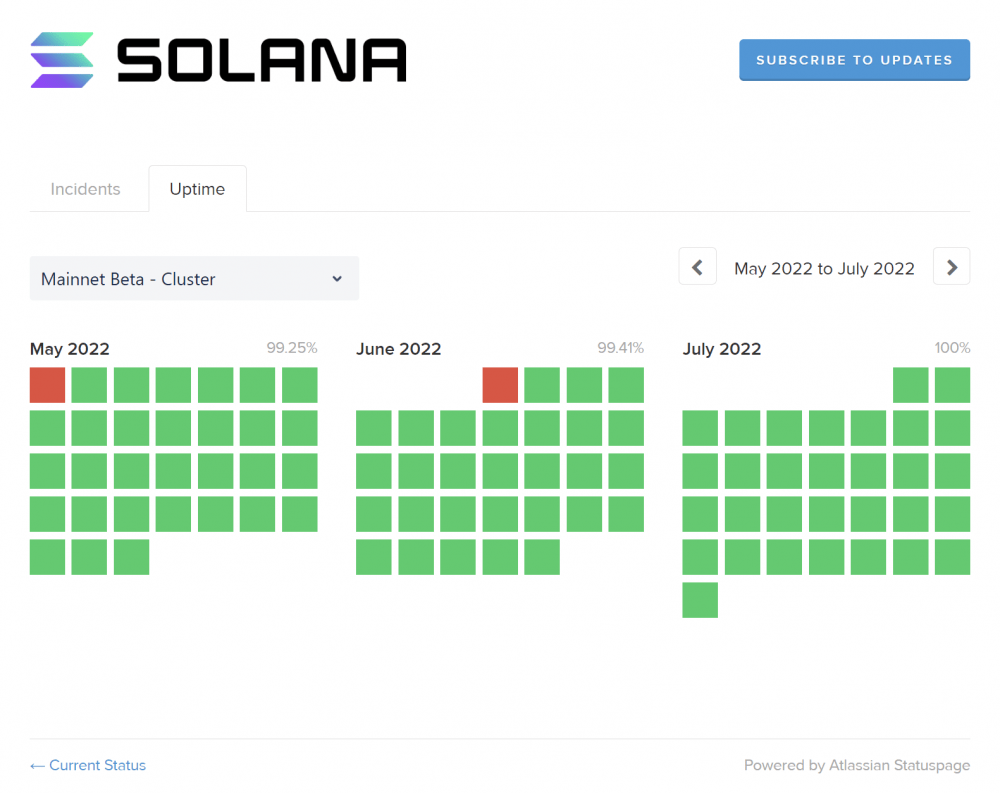
Solana известна своей ненадежностью. Многие говорят, что убийцей Solana является сама Solana, поскольку она сильно падает в течение года. При желании вы можете посмотреть время безотказной работы и простоя Solana на странице https://status.solana.com/uptime.
Ethereum

Ethereum — самая надежная сеть, несмотря на ее низкую производительность и чувствительную плату за газ. С блокчейном Ethereum работают несколько валидаторов по всему миру. Даже если один из них временно не работает, это не влияет на блокчейн, так как вместо него эту работу выполняют другие валидаторы. У Ethereum никогда не бывает простоев, он работает безотказно.

Другие EVM

Другие EVM не так надежны, как Ethereum. Обычно они используют свои новые индивидуальные методы для увеличения производительности и снижения затрат на газ. Эти методы являются новыми и не проверенными на практике. При большой нагрузке эти блокчейны иногда выходят из строя.

В качестве примера можно привести недавнее отключение Fantom.

3. Токеномика

Aptos

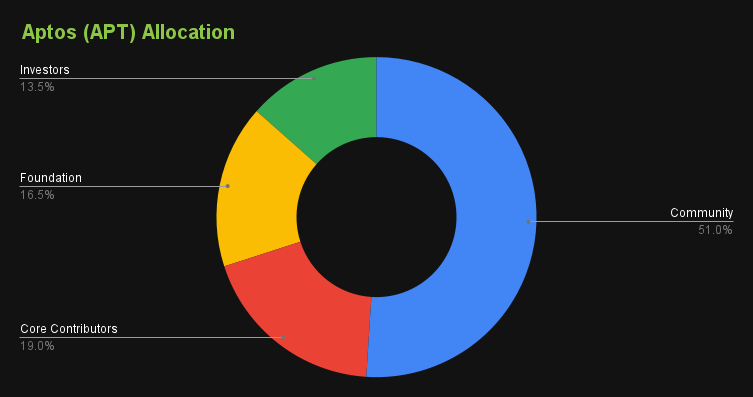
Токеномика Aptos подразумевает распределение токенов между инвесторами (13,48%), фондом (16,5%), основными участниками/командой (19%) и сообществом (51,02%). При этом Aptos уже раздал первым пользователям 20 миллионов токенов (2%), и сообщество запрашивает отчет о прозрачности того, как используются оставшиеся 49,02% доли его фонда.
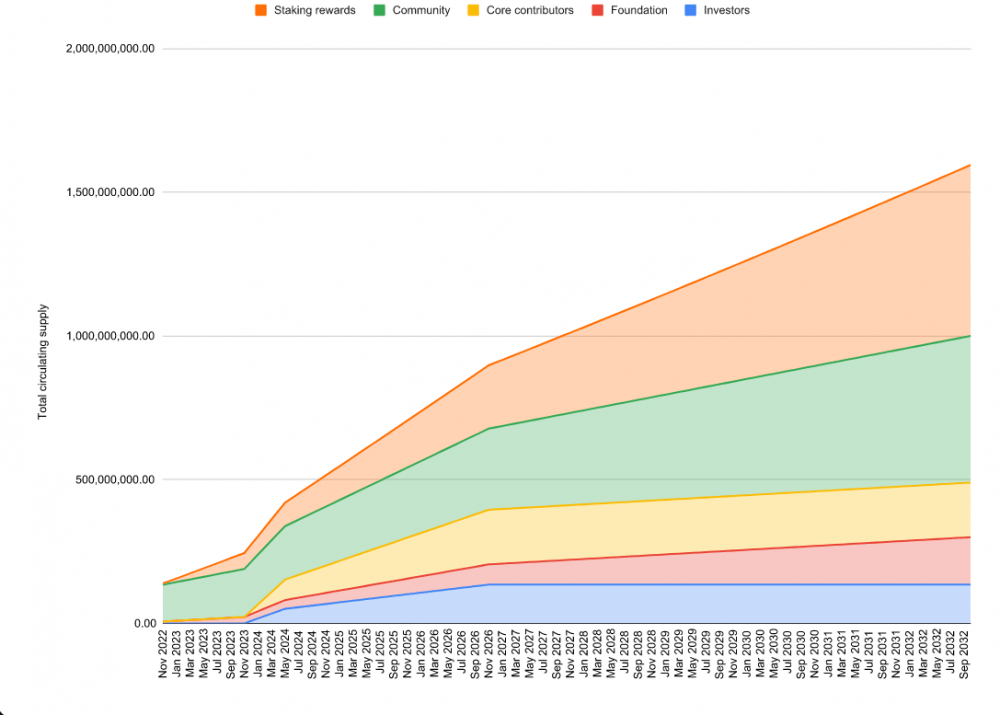
Aptos использует Proof-of-stake с вознаграждением валидатора от инфляции. Количество оборотных средств Aptos достигнет 1 миллиарда в 2024 году и 1,5 миллиарда в 2032 году.
Solana, Fantom, Polygon и большинство PoS блокчейнов

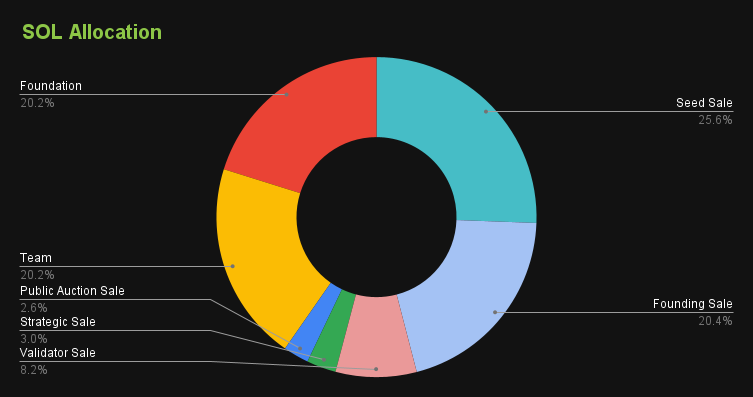
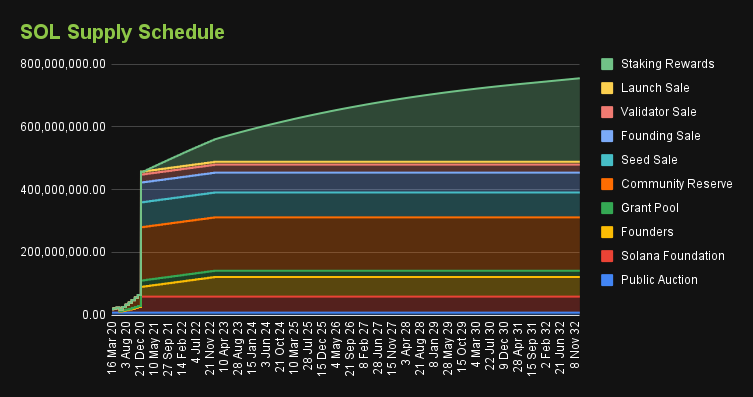
Токеномика обычно распространяется на команду, фонд, частную продажу и публичную продажу. Сеть, использующая консенсус Proof-of-Stake, скорее всего, также получит вознаграждение валидатора от инфляции.
Ethereum

Ethereum предназначен для неограниченного количества токенов. У Ethereum есть фонд, который распределяет токены ETH среди разработчиков, помогающих развивать экосистемы.

Перед слиянием Ethereum использовал консенсус Proof-of-work (POW), при котором токен ETH выдается майнеру в качестве вознаграждения. Это не лучший дизайн токеномики в наши дни, но. Ethereum старый игрок на рынке, и рыночная капитализация криптовалюты на момент запуска была недостаточна, поэтому у Ethereum не было другого выбора, кроме Proof-of-work. Однако теперь, после слияния, Ethereum принимает Proof-of-Stake, как и большинство новых сетей.

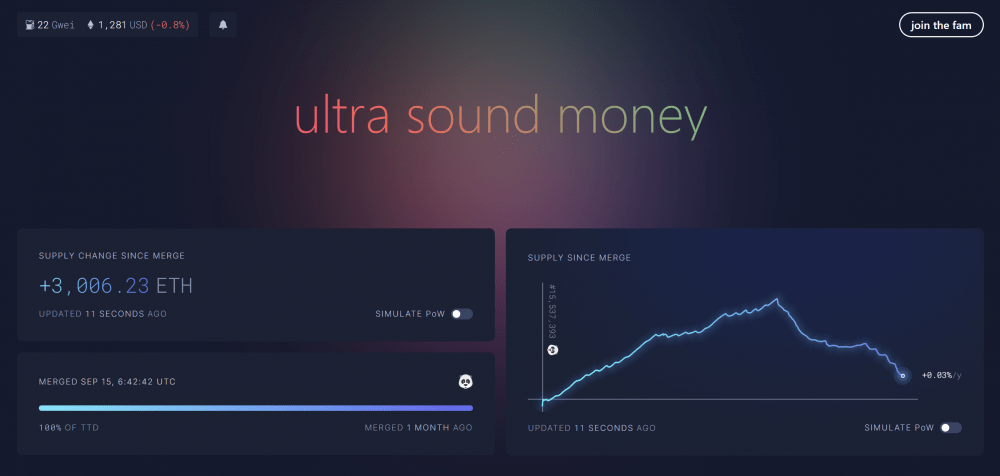
Инфляция Ethereum после слияния снижается, обещая, что в будущем ETH станет дефляционным токеном. Вы можете отслеживать инфляцию Ethereum на https://ultrasound.money/.
Binance Smart Chain

Binance Smart Chain (BNB) использует одноразовый минтинг. Токены BNB чеканятся при генезисе. Токеномика подразумевает распределение токенов среди покупателей ICO и Binance, а также вознаграждение первых участников. BNB использует консенсус Proof-of-staked-authority (PoSA). Вознаграждение валидатора полностью зависит от комиссий за транзакции. BNB — это дефляционный токен, поскольку Binance активно использует свои торговые комиссии для сжигания BNB.

Optimism

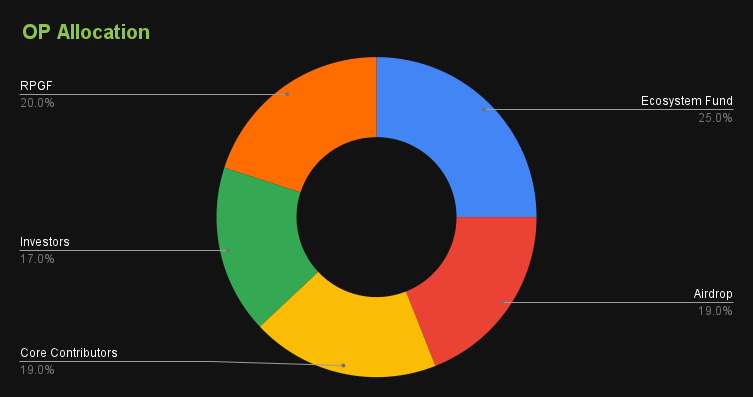
Токеномика Optimism (OP) похожа на ту, что применяют Solana, Fantom и большинство сетей. Отличие в том, что у Optimism есть новый механизм раздачи и предоставления. Optimism — это первая сеть с несколькими аирдропами и прозрачным DAO, которое решает, какие проекты должны получить грант. Это привлекает к блокчейну Optimism как разработчиков, так и пользователей, обеспечивая идеальное соответствие между этими двумя сторонами.

Пов'язані матеріали

Tidal Investment: We Remain Bullish on the AI Industry Chain, But the Reasons Have Changed

Tidal Investment remains optimistic about the AI industry chain, but the rationale has shifted. The market narrative has changed. While recent large-scale IPOs (e.g., SpaceX) and major fundraising plans by tech giants like Alphabet and Meta have caused some nervousness, this isn't a sign of an AI peak. The focus has moved from the initial question of AI's viability to the sustainability of massive investment cycles. The key players—primarily the major cloud providers—are not slowing down; their capital expenditure (Capex) guidance for 2026 has been increased across the board (e.g., Alphabet to $180B, Amazon to $200B). This investment cycle is proving resilient and difficult to stop. Unlike traditional hardware cycles, current AI Capex is distributed across multiple physical layers—computing, memory, networking, and critically, power infrastructure. Bottlenecks are shifting from chips to elements like electricity, transformers, and cooling systems, which have much longer lead times and cannot be easily pre-built like fiber optics during the dot-com bubble. Supply chain data (e.g., Eaton's 240% YoY data center orders) confirms this broad-based, project-driven expansion. Market concerns are acknowledged but viewed differently. First, while Capex growth currently outpaces revenue growth, raising ROI questions, this mirrors the early scaling phase of cloud computing itself. A change in view would require concrete signals like downward Capex revisions or missed AI product targets, which haven't materialized by mid-2026. Second, comparisons to the 2000 dot-com bust are flawed. That crash was driven by a massive, parallel oversupply of cheap capacity (fiber). The current cycle faces *supply constraints* in critical, capital-intensive physical infrastructure that cannot be overbuilt as easily. In conclusion, the wave of fundraising reflects the next, more complex act of the AI story. Physical bottlenecks and sustained high Capex plans suggest this is not the finale but an ongoing, capital-intensive build-out phase. The script has changed, but the play is far from over.

marsbit1 год тому

Tidal Investment: We Remain Bullish on the AI Industry Chain, But the Reasons Have Changed

marsbit1 год тому

Tidal Investment: We Remain Bullish on the AI Industry Chain, But for Different Reasons Now

Tidal Investments remains optimistic about the AI industry chain, but the rationale has shifted. The market is concerned about massive concurrent fundraising by tech giants like SpaceX, OpenAI, Alphabet, and Meta, fearing an AI peak. However, the authors argue this signals the next act of AI development, not its end. Capital expenditure (Capex) from major cloud providers (Alphabet, Amazon, Meta, Microsoft, Oracle) continues to surge aggressively into 2026. This investment cycle is more resilient than past hardware cycles due to its scale and complexity. Bottlenecks have shifted from chips to critical physical infrastructure like power grids, transformers, cooling, and data center construction—areas with long lead times and limited capacity for rapid expansion. Supply chain data (e.g., Eaton's orders) confirms substantial, tangible progress. Key market concerns are addressed: 1. **ROI vs. Capex Growth**: While Capex growth outpaces revenue, the authors note cloud giants have historically overcome similar phases through scale. The cycle will only be in danger if Capex guidance is cut, orders are canceled, or AI product demand falters—none of which are currently observed. 2. **Comparison to the 2000 Dot-com Bubble**: Unlike the telecom bubble, where cheap, oversupplied fiber crashed prices, AI infrastructure (especially power) is constrained, customized, and subject to lengthy approvals, making a similar supply glut and crash unlikely. In conclusion, the wave of fundraising reflects the immense, ongoing capital needs for AI's next phase, constrained by slow-moving physical bottlenecks. The AI cycle is not over; the script has simply changed.

链捕手1 год тому

Tidal Investment: We Remain Bullish on the AI Industry Chain, But for Different Reasons Now

链捕手1 год тому

Grayscale: These 15 Profitable Crypto Protocols Are Severely Undervalued

Grayscale Research identifies 15 top-revenue crypto protocols trading at significant valuation discounts, with many at single-digit or even 1x revenue multiples. Protocols like Pump.fun, PancakeSwap, and Meteora have market capitalizations roughly equal to their annual revenue. The report argues these financially-focused protocols (DEXs, lending, staking) are fundamentally undervalued and could benefit from the potential passage of the CLARITY Act, expected as soon as next month. This legislation aims to clarify digital asset regulation, potentially reducing institutional barriers and driving on-chain activity. The analysis breaks down the protocols into three groups: the "1x Club" (market cap ≈ revenue), mid-tier protocols with 3-9x multiples (e.g., Aave, Lido, Jupiter), and high-multiple protocols like Hyperliquid (15x) and Uniswap (37x), where valuation reflects future potential rather than current cash flows. Grayscale applies a traditional DCF model to Aave, suggesting a one-year price target of ~$175, representing ~130% upside from current levels. The report notes a risk-off macro environment since the Iran conflict has further compressed valuations, creating a potential entry window. The conclusion highlights that while the valuation data presents an intriguing opportunity, the investment thesis is contingent on the CLARITY Act's passage and subsequent institutional capital flows. Investors are cautioned to consider Grayscale's inherent conflict of interest as a crypto asset manager with products tied to these assets.

marsbit1 год тому

Grayscale: These 15 Profitable Crypto Protocols Are Severely Undervalued

marsbit1 год тому

Sam Altman's Personal Alchemy of Wealth: Investing in 400 Companies, Over 10 Deeply Tied to OpenAI

The article investigates Sam Altman's personal wealth strategy, centered around his investments in approximately 400 companies while serving as OpenAI's CEO. Despite not holding direct equity in OpenAI, Altman has built a vast portfolio, with at least 10 of his investments having commercial ties or ongoing negotiations with OpenAI. This creates a complex network of potential conflicts of interest, drawing scrutiny from U.S. congressional committees and state attorneys general. Key investments highlighted include the anti-aging startup Retro Biosciences (valued at $258 million for his stake as of late last year) and the chipmaker Cerebras, whose value soared following an OpenAI procurement deal. His most significant financial gain is linked to the nuclear fusion company Helion, where a recent funding round reportedly increased his stake's value to at least $4.1 billion. The article details a decade-long relationship between Altman, Helion, and OpenAI, including a controversial non-binding power purchase agreement and Altman's efforts to secure investments from OpenAI and its backer SoftBank for Helion. Other points include internal investigations at Tools for Humanity (developer of Worldcoin) and OpenAI's massive contracts with tech giants like Nvidia. According to Forbes, Altman's net worth is around $3.4 billion, ranking him 1251st globally—a rise of over 1400 places since 2024. OpenAI's board states that Altman's external dealings are transparent and potential conflicts are carefully managed.

Odaily星球日报2 год тому

Sam Altman's Personal Alchemy of Wealth: Investing in 400 Companies, Over 10 Deeply Tied to OpenAI

Odaily星球日报2 год тому

Торгівля

Спот
Ф'ючерси
活动图片