Apple Takes Flak For Restrictive New NFT Rules

BitcoinistОпубліковано о 2022-10-26Востаннє оновлено о 2022-10-26

Анотація

Apple is known to take advantage of it’s power positioning in the mobile software world. However, Apple has been quietly restrictive with limited public-facing perspective around blockchain-related technology including crypto and NFTs.

Apple is known to take advantage of it’s power positioning in the mobile software world. However, Apple has been quietly restrictive with limited public-facing perspective around blockchain-related technology including crypto and NFTs. The NFT momentum has changed that in recent months, despite a broad crypto bear market, and has led Apple to include policy changes to address NFTs directly – and those changes aren’t especially NFT-friendly.

Apples Policy Additions… Restrictions May Apply

Speculation began in late September that the dominant tech company was opening its doors to NFT-based apps in the App Store. That led to mixed reviews: it’s undoubtedly positive for NFT enthusiasts to see major tech companies addressing them, but Apples exorbitant ~30% fee was largely believed within NFT communities to be unsustainable, undesirable and unreasonable.

Now that official policy changes are coming into effect, we’ll highlight three major pillars from the policy changes that summarize all you need to know:

NFTs are approved for “minting, listing and transferring:” Yes, you read that right. Apple has directly approved app utilization of NFTs, a major win for blockchain-based ecosystems that are building mobile platforms and services.

NFTs will be restricted to in-app purchases only: Now the less exciting part. As was believed in our report last month on the matter, Apple is restricting any sort of financial transactions to live within it’s in-app functionality – which means that it’s ~30% collection fees will apply. No external links, no buttons routing to external sources, and no directing consumers for purchases outside the app. This has been a long point of contention for major parties even in web2, such as Epic Games, who disputed that Fortnite purchases should be exempt from the exorbitant Apple fees (albeit with limited success).

NFT ownership in-app cannot “unlock features or functionality” within any app: The restrictions continue. One of the biggest selling points around many NFT collections and projects will be left to the wayside. With this policy adjustment, there are no mobile features or functionality that can be gated through NFTs in-app, as Apple likely looks to limit NFT impacts within apps.

In all, while we can praise Apple for their willingness to address NFTs directly, most community members throughout the NFT landscape are left with a lot to be desired out of the company’s latest policy changes.
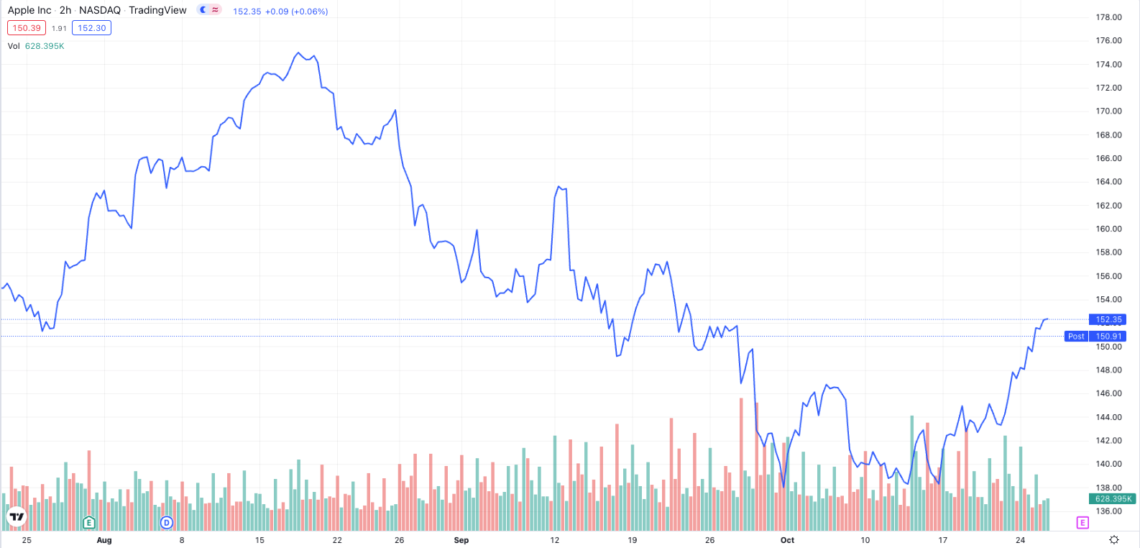
The Big Picture

Despite a heavy hand, seeing Apple acknowledge NFTs in this fashion is still noteworthy. It comes in the midst of substantial tech and social media dialogue around crypto and NFTs; across social, buzz has been floating around with major channels this past week, most particularly around Twitter and Reddit.

Twitter is reportedly working on a crypto wallet product for users, while Reddit has been making headlines for the momentum surrounding its pillar NFT project, ‘Collectible Avatars.’ Without leaning into the NFT aspect of Reddit’s NFTs (powered by Polygon), the social channel has found a way to ‘mainstream’ NFTs with substantial success that has largely been unmatched. All of this to say that there is plenty of action in tech and social.

Elsewhere in social and tech, Meta (formerly Facebook) has found similar points of criticism that we see today with Apple; the platform charges a similar “hardware platform fee” for it’s VR product, Meta Quest, that Apple charges for in-app transactions (roughly 30%), and then adds nearly a 20% for it’s Horizon Worlds transactions.

Beyond social, however, plenty of traditional tech players have looked to engage in the crypto space – but it’s been a slow burn with little engagement from Apple to date. Beyond their restrictive perspective surrounding new NFT-related policies, Apple recently had to fend off a class action lawsuit surround ‘dupe’ apps, and has had to deal with Senate scrutiny in the U.S. surround crypto app fraud at large.

In all, there are plenty of frontline fights for Apple, which makes their insistence on such substantial in-app fees even more highlighted. The issue hasn’t just been a web3 one either – even web2 brands have expressed disdain for the “Apple tax” and their restrictive tendencies. We’ll see how it shakes out – for web3 and beyond – in due time.


Пов'язані матеріали

Microsoft CEO Satya Nadella's Latest Warning: Betting Entirely on a Single AI Model Hands Over a Company's Lifeblood

Microsoft CEO Satya Nadella warns that companies relying solely on a single AI model could jeopardize their survival. He argues that over-dependence leads to "vendor lock-in," where businesses risk ceding control over their core data, memory, contextual history, and AI usage patterns. This dependence essentially outsources a company's critical thinking and operational know-how to an external provider. The deeper a company integrates with one AI system—feeding it prompts, internal data, and workflows—the more it reveals its unique business methods and competitive edge. This accumulated knowledge could become accessible to the AI supplier. Furthermore, switching providers becomes extremely costly and complex, as companies would need to rebuild their entire AI-augmented workflow, memory, and tool integrations from scratch. Nadella's solution is "decoupling." Companies should separate their proprietary data, memory, and control layer (or "harness") from the underlying AI models. By retaining metadata from every AI interaction, businesses can preserve their operational "brain" or institutional knowledge. This allows them to flexibly use different AI models (e.g., from OpenAI, Anthropic, Microsoft) for specific tasks without losing their accumulated expertise. The core idea: companies can rent the smartest models available, but they must keep their own "brain" and operational control firmly in-house.

marsbit40 хв тому

Microsoft CEO Satya Nadella's Latest Warning: Betting Entirely on a Single AI Model Hands Over a Company's Lifeblood

marsbit40 хв тому

Miners Advised Not to Buy GPUs for AI and to Focus on Infrastructure

A founder at an energy investment forum advises bitcoin miners not to purchase GPUs for AI themselves, but to instead focus on infrastructure like power and data center space. Mike Alfred of Alpine Fox stated that while AI infrastructure demand is a long-term, 20-30 year trend, it presents a key choice for miners. The first, riskier model involves owning and operating GPUs, which requires financing expensive hardware that quickly becomes obsolete. The second, more conservative model is akin to real estate: providing colocation services where clients bring their own servers, and the miner sells space, power, cooling, and water. Alfred noted this model is easier to finance. Most existing bitcoin mining sites are difficult and expensive to convert for AI, as AI data centers require far higher construction costs, redundant fiber connections, backup power, complex cooling, and near 100% uptime. A hybrid model, where mining acts as a flexible load to use excess power during AI data center construction or from generation facilities, was discussed. However, participants concluded this is only viable with very cheap power; otherwise, developers are better off focusing solely on AI. Miners are increasingly being evaluated for their available power capacity and project portfolios rather than just bitcoin output. Panelists also warned of risks in the AI sector, predicting at least one major default or contract breach among AI tenants, lenders, or landlords before bitcoin's next halving in 2028.

cryptonews.ru50 хв тому

Miners Advised Not to Buy GPUs for AI and to Focus on Infrastructure

cryptonews.ru50 хв тому

Millisecond 'Pay-to-Cut': How Did Hyperliquid's Priority Fee Turn into a Multi-Million Dollar Business?

"Millisecond 'Paid Queue-Jumping': How Hyperliquid's Priority Fee Became a Multi-Million Dollar Annual Business" In traditional finance, high-frequency trading firms spend millions on infrastructure for millisecond advantages. Hyperliquid has translated this race onto the blockchain with its "Priority Fee" system, creating an open economic game for speed. This system auctions two types of priority: **Gossip Priority** for faster data feeds (via a Dutch auction every 3 minutes), and **Order Priority** for front-of-queue trade execution (users bid a fee for lower latency). This converts a hardware race into a transparent, market-priced mechanism. Since launch, this feature has generated over $5M in protocol revenue. Projected annualized buybacks from this income exceed $30M, accounting for ~7% of total protocol revenue. The demand stems from large traders and market makers on Hyperliquid, for whom milliseconds can mean the difference between profit/loss or avoiding liquidation. Market makers pay these fees as "protection" to ensure their orders execute first, which in turn improves liquidity for all users. Crucially, Hyperliquid internalizes Maximum Extractable Value (MEV) that typically leaks to external validators or searchers, creating a new revenue stream beyond trading fees. The mechanism also strengthens HYPE's tokenomics. While 97% of trading fees fund secondary market buybacks (via the Assistance Fund), Priority Fees are **directly burned**, adding a second deflationary engine. Furthermore, fees for order priority are deducted from users' undelegated HYPE balances, encouraging large traders to hold and lock up tokens, reducing circulating supply. However, a key challenge remains: balancing the speed needs of institutional players with fair market access for retail users, as those who cannot pay high fees may suffer worse slippage during volatility. In summary, Hyperliquid's Priority Fee is a novel model that monetizes latency, captures MEV for the protocol, and enhances its native token's value through burning and lock-ups.

marsbit55 хв тому

Millisecond 'Pay-to-Cut': How Did Hyperliquid's Priority Fee Turn into a Multi-Million Dollar Business?

marsbit55 хв тому

Торгівля

Спот
活动图片