「偏科」的欧洲元宇宙

MetaPostОпубліковано о 2022-10-24Востаннє оновлено о 2022-10-24

Анотація

当下,围绕元宇宙的国际竞争已初露端倪,这场博弈不仅仅是技术的竞争,也是各国制度和政策环境的竞争。

当下,围绕元宇宙的国际竞争已初露端倪,这场博弈不仅仅是技术的竞争,也是各国制度和政策环境的竞争。

鉴于在 web2.0 时代欧盟的数字化应用发展相对滞后于美国和中国,欧盟委员会今年发布了新的数字战略,希望通过千亿欧元的扶持资金,着力加强数字化基础设施和企业数字化转型。

在移动互联网时代掉队的欧洲,能在元宇宙浪潮下弯道超车吗?

目前,欧洲的互联网市场基本被美国巨头占领,欧盟首要推动虚拟世界的监管,防范数字龙头企业利用垄断地位扼杀本土企业。同时还要结合元宇宙概念,维持其制造和消费领域的优势。

在此狭缝中成长的欧洲元宇宙,便出现了「偏科」现象。

擅长科目:优势明显的奢侈品元宇宙

截至目前,还没有一家欧洲大型科技公司布局元宇宙,但欧洲的企业、投资者和人才都视图喝到元宇宙的「头啖汤」,其中跑在前面的是一些拥有百年历史的时尚品牌。

已经 101 岁的意大利品牌 Gucci,是全球奢侈品品牌之一,也是开云集团的营收「贡献大户」。

今年年中,开云集团发布 2022 年上半年财报,Gucci 销售额同比增长 15% 至 51.73 亿欧元,占集团总收入的近 60%。作为开云集团的重点品牌,Gucci 通过跨界与游戏、艺术品等产生联系,推开了元宇宙的大门。

截至目前,Gucci 最贵的一款 NFT 产品是为庆祝其 100 周年而推出的首个 NFT 视频作品。该 NFT 产品在佳士得以 2 万美元起拍,最终以 2.5 万美元成交。

图 | SuperGucci 系列 NFT 玩偶

NFT 之外,Gucci 也推出了虚拟运动鞋,每双售价 12.99 美元,消费者购买鞋之后可以在 GucciAPP 和特定社交平台中使用,也可以在游戏平台 Roblox 中试穿,并可在多种虚拟场合展示自己拥有的鞋。同时,Gucci 还与游戏厂商合作,提供独家服饰、打造特约锦标赛等,玩家通过虚拟换装,可以穿上 Gucci 的鞋履、时装等。

与 Gucci 同属一个集团的知名品牌巴黎世家 Balenciaga 也是时尚界和元宇宙合作的先锋。

此前,Balenciaga 与堡垒之夜 Fortnite 合作,为游戏里广受欢迎的 4 位角色设计了数款虚拟服装与游戏道具。

此外,Balenciaga 还在游戏里的「StrangeTimes」创意中心开了一家虚拟商店,同步售卖与游戏角色同款的实体产品,有效地为线下销售引流。

LVMH 旗下品牌 Louis Vuitton 在进军元宇宙行业的积极性上也丝毫不逊色于其「宿敌」Gucci,联合了集团高层及多名艺术家、创意总监等专家,合力打造了 LV 的 AR 元宇宙,并受到了广泛好评。

图 | Louis Vuitton NFT 游戏总下载量超过 200 万

据摩根士丹利研报,奢侈品公司迎来了一个在元宇宙中销售虚拟商品的新浪潮,到 2030 年,该市场规模最高可达 500 亿欧元(约 3532 亿元人民币),有望帮助奢侈品公司把收入提高 10% 以上,息税前利润出现 25% 的增长。

短板科目:贫瘠的元宇宙土壤

与奢侈品企业相比,欧洲的科技企业地位就弱了很多。

在美国,Meta、微软和苹果等科技巨头已成为元宇宙领域的主角,Roblox 和 Decentraland 等新晋科技企业则提供了广受欢迎的元宇宙平台。在国内,字节、华为、腾讯等在元宇宙布局的强劲势头,同样不容小觑。

相比之下,到了欧洲,元宇宙在很大程度上仅限于小众运营商和初创企业。造成这种局面的原因有很多,其中之一就是贫瘠的元宇宙土壤。

法国民调机构 IFOP 近日发布一份民调报告称,对于元宇宙,法国公众普遍不清楚,只有 8% 的受访民众希望进入元宇宙,但 75% 的受访民众对元宇宙感到恐惧,他们不相信 Meta 能够创建并管理好元宇宙。

法国民众对元宇宙的看法并非个例。有媒体在「欧盟之都」比利时布鲁塞尔的街头随机采访,问民众对元宇宙了解多少,很多人一脸茫然地反问道:「什么是元宇宙?」其中,采访对象来自欧盟许多成员国,他们的反应在一定程度上也能代表欧洲许多民众。

「数字欧洲」是欧洲信息技术及消费电子产品协会的简称,代表着 36000 多家公司。「数字欧洲」总干事塞西莉亚·博内费尔德 - 达尔说,欧洲企业的数字化水平相对比较低,只有 12% 的中小企业使用数据分析。如果希望中小企业在未来能具有强大的竞争力,目标至少应该是有 50% 的中小企业可以应用数据分析。

比利时新鲁汶大学经济、社会、政治和传播学院副教授佩琳·布罗科内对媒体表示,新冠疫情使欧洲的「数字贫困」现象更加凸显。疫情期间,人们对数字空间越来越依赖,但与数字空间相关的关键技术和大型科技公司都不是欧盟的;在已经能够充分利用数字环境潜力的企业与尚未完全数字化的企业之间也出现数字鸿沟。欧洲急需加快数字化建设,尽快弥合日益扩大的数字鸿沟。

左右为难的政策监管

现在的欧洲缺乏元宇宙基因,没有大型互联网公司,其市场基本都被美国科技巨头占领。

这种局面让欧洲各国的政府,想到了通过监管的手段防范大型企业利用垄断地位扼杀市场活力。

欧盟《人工智能法案》、《数字服务法案》、《数字市场法案》等立法说明了欧洲的监管机构在处理元宇宙时可能采取的立场和倾向,包括增加透明度、尊重用户选择权、严格保护隐私、限制一些高风险应用。这些立法预示着欧盟试图在元宇宙治理和规则上占据先发优势,进而保护欧洲内部市场。
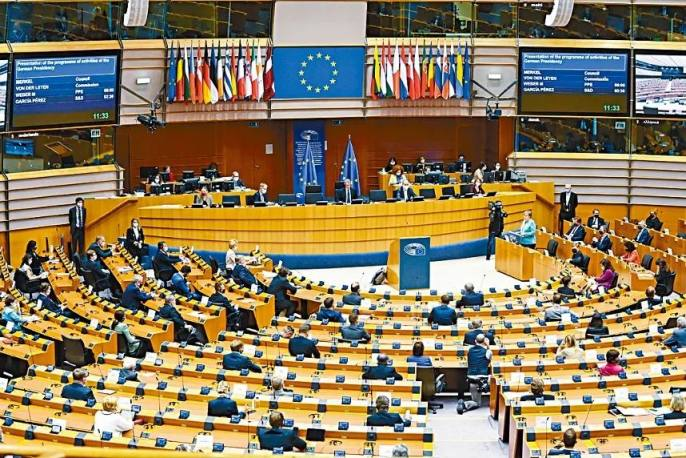
图 | 欧洲议会

然而,一些元宇宙企业、开发者和投资人担心欧盟的监管会阻碍创新。

FOV Ventures 创始人 Rajahalme 分享了一个人工智能发展讨论会上的趣闻:与会的欧盟代表表示,他们的目标是成为人工智能的最佳监管者。Rajahalme 开玩笑地说:「这就好比当你开始生产汽车时,欧洲人说他们要成为制造停车标志的最佳厂商。」

业界担忧,这些监管不仅会阻碍创新,而且会将人才推向亚洲或美国。

Трендові криптовалюти

Пов'язані матеріали

Foundation Steps Back, Ethlabs Steps Forward: Ethereum Undergoes Its Largest Restructuring in History

On June 23rd, the Ethereum ecosystem witnessed two major shifts, signaling a significant governance realignment. First, former Ethereum Foundation researchers established Ethlabs, a new independent non-profit. Backed by major ETH holders like Bitmine and SharpLink, Ethlabs aims to address practical needs for institutional adoption, including faster settlement, native asset issuance, cross-chain transactions, and mainnet scaling. Secondly, the Ethereum Foundation announced a major restructuring, laying off 54 employees (20% of its staff) to become a leaner entity focused on protocol governance and maintenance rather than being the primary builder. This move represents a pivotal correction. Criticisms had mounted over the Foundation's perceived slowness, lack of clear strategy, and over-reliance on Vitalik Buterin's influence. Ethlabs emerges as a more execution-oriented, "industrialized" layer focused on market adoption—bridging the gap between research and real-world use. Notably, Vitalik Buterin is absent from its list of supporters, interpreted as an intentional step to avoid excessive personal endorsement and allow the organization to build independent credibility. The Ethereum Foundation's downsizing and redefinition mark a retreat from its former central coordinating role. It now aims to share the "privilege of stewarding Ethereum" with other emerging groups like Ethlabs, the Ethereum Applications Guild, and The Ethereum Economic Zone. Analysts frame this dual shift as the Foundation ensuring Ethereum remains "correct" (credibly neutral), while Ethlabs must prove it remains "effective" (competitive and attractive for capital and adoption). This addresses community "shareholder-like anxiety" about ETH's market performance. While risks exist—such as concerns over shifting from Foundation centrality to large-holder influence—the consensus is that the greater risk for Ethereum was inaction, caught between technical idealism and organizational inertia. These steps aim to create a more multi-stakeholder, execution-driven future for the network.

链捕手6 год тому

Foundation Steps Back, Ethlabs Steps Forward: Ethereum Undergoes Its Largest Restructuring in History

链捕手6 год тому

Second Half of U.S. Crypto Policy: The Clarity Act Aims for 60 Votes, CFTC's "One-Person Commission" Becomes Biggest Variable

In a pivotal year for US crypto policy, the "CLARITY Act" is advancing in the Senate but faces a high hurdle, needing 60 votes to pass. Key challenges include bridging partisan divides on ethics and swaying undecided Republican senators within a tight legislative calendar of only about 40 working days. The policy "second half" involves intense negotiations on a broader framework for Web3 and DeFi, including crypto tax reforms and the Blockchain Regulatory Certainty Act. A significant uncertainty is the understaffed CFTC, operating with four commissioner vacancies, which complicates regulatory clarity. Meanwhile, the departure of key "crypto champions"—SEC Commissioner Hester Peirce and Senator Cynthia Lummis—will impact ongoing policy efforts. Industry experts are cautiously optimistic but realistic. Sara K. Weed notes that while progress is being made, CLARITY is unlikely to pass this Congress, pushing agencies like the SEC and CFTC to provide more guidance. Sulolit Mukherjee suggests meaningful crypto tax legislation is more likely to be attached to larger must-pass bills. Rashan Colbert discusses the jurisdictional debate over prediction markets, emphasizing the need for a regulatory framework that fosters their development as financial tools rather than treating them broadly as gambling. The clock is ticking, but opportunities remain for substantive progress through continued bipartisan dialogue and pragmatic efforts.

marsbit8 год тому

Second Half of U.S. Crypto Policy: The Clarity Act Aims for 60 Votes, CFTC's "One-Person Commission" Becomes Biggest Variable

marsbit8 год тому

Dan Koe's New Essay: Escaping the Fate of the Wage Slave, How to Survive the AI Replacement Wave?

Dan Koe argues that the true threat in the AI era isn't technology itself, but a reliance on others for one's livelihood and happiness. The core problem is "wage slavery"—spending life on unfulfilling work. To survive and thrive, one must escape this by building their own enterprise. The key is developing five elements: Agency (initiative), Taste (discernment), Persuasion, Persistence, and Iteration. These boil down to problem-solving skills and experiential knowledge, which cannot be learned passively but only through doing your own projects. The solution is to become "unemployable" by shifting your identity. This requires: 1) Radically changing your environment to force growth, 2) Choosing a medium (like content creation) that provides real feedback through trial and error, and 3) Mastering either code or, preferably, media (content). Content creation is more valuable because its subjective nature and need for human perspective create a durable advantage over generic AI output. To start, define your life's work by answering foundational questions about your innate knowledge, unique abilities, and contrarian beliefs. Then, immediately act by publishing your first piece of content. The cycle of creating, receiving feedback, and iterating is the essential path to developing the skills needed for an independent, meaningful career and financial resilience.

marsbit9 год тому

Dan Koe's New Essay: Escaping the Fate of the Wage Slave, How to Survive the AI Replacement Wave?

marsbit9 год тому

Research Report Analysis: Morgan Stanley Details SanDisk SNDK, The Truth About Cloud Data Center Pricing Power and AI Inference Benefits

Morgan Stanley raised its price target for SanDisk (SNDK) from $1100 to $1750 on June 22, maintaining an Overweight rating. The upgrade is driven by AI inference demand reshaping the NAND market, particularly for KV Cache and context window storage in cloud data centers. These cloud clients exhibit price inelasticity and sign long-term contracts, granting SanDisk significant pricing power. SanDisk's New Business Model (NBM) agreements, covering over one-third of FY27 bit shipments with 3-5 year terms and fixed price/price collar structures, are crucial. They are projected to sustain gross margins around 80% even at floor prices, providing a buffer against cyclical downturns. Morgan Stanley forecasts gross margins to surge from 30.3% in FY25 to 86.7% in FY27e. With NAND supply expected to remain tight into 2026/2027 and cloud/data centers becoming the largest end-market, SanDisk holds supply-side pricing power. The company targets 15-19% bit growth via technology transitions, not capacity expansion. Revenue is projected to grow ~6.6x from FY25 to FY27, with EPS rising from $2.74 to $14.73, driven by high-margin cloud business. Key upside catalysts include faster enterprise SSD adoption and edge AI growth. Downside risks involve slower industry growth, competitor capex increases, market share loss, and competition from Chinese players like YMTC. The investment thesis rests on AI-driven structural demand, NBM's margin protection, and sustained supply tightness. The $1750 target implies ~28x FY27e P/E.

marsbit9 год тому

Research Report Analysis: Morgan Stanley Details SanDisk SNDK, The Truth About Cloud Data Center Pricing Power and AI Inference Benefits

marsbit9 год тому

Торгівля

Спот
Ф'ючерси

Популярні статті

Як купити AR

Ласкаво просимо до HTX.com! Ми зробили покупку Arweave (AR) простою та зручною. Дотримуйтесь нашої покрокової інструкції, щоб розпочати свою криптовалютну подорож.Крок 1: Створіть обліковий запис на HTXВикористовуйте свою електронну пошту або номер телефону, щоб зареєструвати обліковий запис на HTX безплатно. Пройдіть безпроблемну реєстрацію й отримайте доступ до всіх функцій.ЗареєструватисьКрок 2: Перейдіть до розділу Купити крипту і виберіть спосіб оплатиКредитна/дебетова картка: використовуйте вашу картку Visa або Mastercard, щоб миттєво купити Arweave (AR).Баланс: використовуйте кошти з балансу вашого рахунку HTX для безперешкодної торгівлі.Треті особи: ми додали популярні способи оплати, такі як Google Pay та Apple Pay, щоб підвищити зручність.P2P: Торгуйте безпосередньо з іншими користувачами на HTX.Позабіржова торгівля (OTC): ми пропонуємо індивідуальні послуги та конкурентні обмінні курси для трейдерів.Крок 3: Зберігайте свої Arweave (AR)Після придбання Arweave (AR) збережіть його у своєму обліковому записі на HTX. Крім того, ви можете відправити його в інше місце за допомогою блокчейн-переказу або використовувати його для торгівлі іншими криптовалютами.Крок 4: Торгівля Arweave (AR)Легко торгуйте Arweave (AR) на спотовому ринку HTX. Просто увійдіть до свого облікового запису, виберіть торгову пару, укладайте угоди та спостерігайте за ними в режимі реального часу. Ми пропонуємо зручний досвід як для початківців, так і для досвідчених трейдерів.

505 переглядів усьогоОпубліковано 2024.12.11Оновлено 2026.06.02

Як купити AR

Обговорення

Ласкаво просимо до спільноти HTX. Тут ви можете бути в курсі останніх подій розвитку платформи та отримати доступ до професійної ринкової інформації. Нижче представлені думки користувачів щодо ціни AR (AR).

活动图片