V神在Rollup Day的演讲:当前Rollup仍只是“辅助轮”,并未实现信任最小化

FОпубліковано о 2022-10-12Востаннє оновлено о 2022-10-12

Анотація

鉴于在中短期之内,Rollup 代码很难实现完全没有漏洞,Vitalik 列举了3个替代方案以促进 Rollup 更加信任最小化甚至去信任化。

鉴于在中短期之内,Rollup 代码很难实现完全没有漏洞,Vitalik 列举了3个替代方案以促进 Rollup 更加信任最小化甚至去信任化。

Vitalik 认为目前几乎所有 Rollup 解决方案都仍处于使用 「辅助轮」,也即现阶段的 Rollup 还没实现去信任或者信任最小化。

北京时间 2022 年 10 月 12 日,Vitalik Buterin 参加了由以太坊扩容项目 Scroll举办的 Rollup Day 活动,这场活动作为波哥大 Devcon VI 的周边活动之一,主要专注于以太坊 Rollup 话题。

在 Rollup Day 中,Vitalik 做了一场以多证明机制为主题的演讲 ——「采用多证明机制加固 Rollup 系统」(Hardening rollups with multi-proofs)。
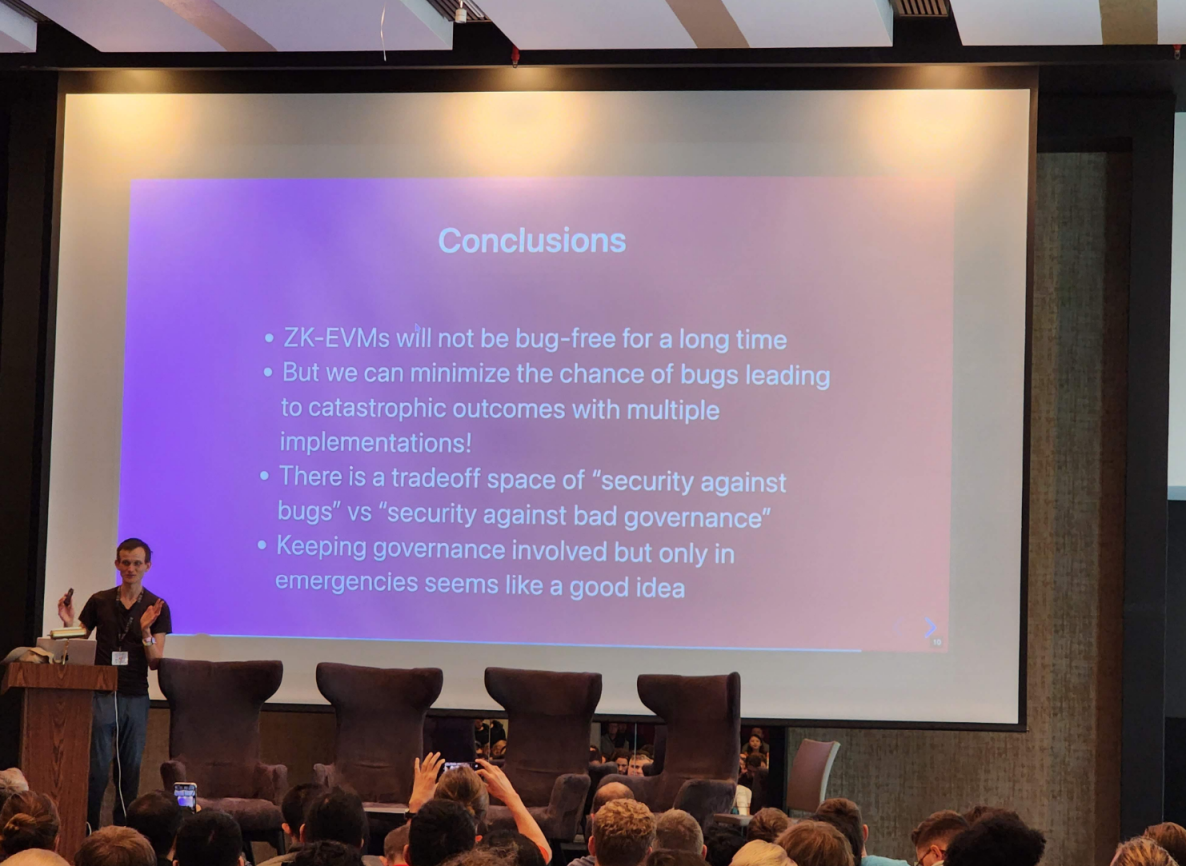
Vitalik 认为目前几乎所有 Rollup 解决方案都仍处于使用 「辅助轮」(training wheels) 的阶段,这意味着现阶段的 Rollup 还没实现去信任或者信任最小化。
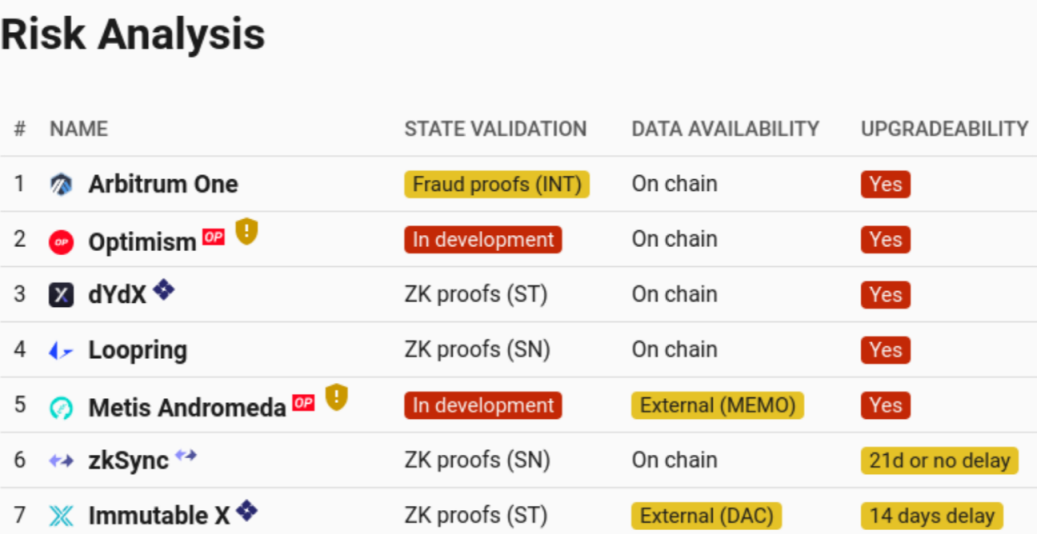
而这些 Rollup 仍保留使用「辅助轮」 的一个很重要的原因,就是过于复杂的代码会增加其系统的攻击面,举 PSE 团队所开发的 ZK-EVM 电路为例,它的代码有 34469 行。

鉴于在中短期之内,Rollup 代码很难实现完全没有漏洞,Vitalik 列举了几个替代方案以促进 Rollup 更加信任最小化甚至去信任化。

高阈值治理的重写

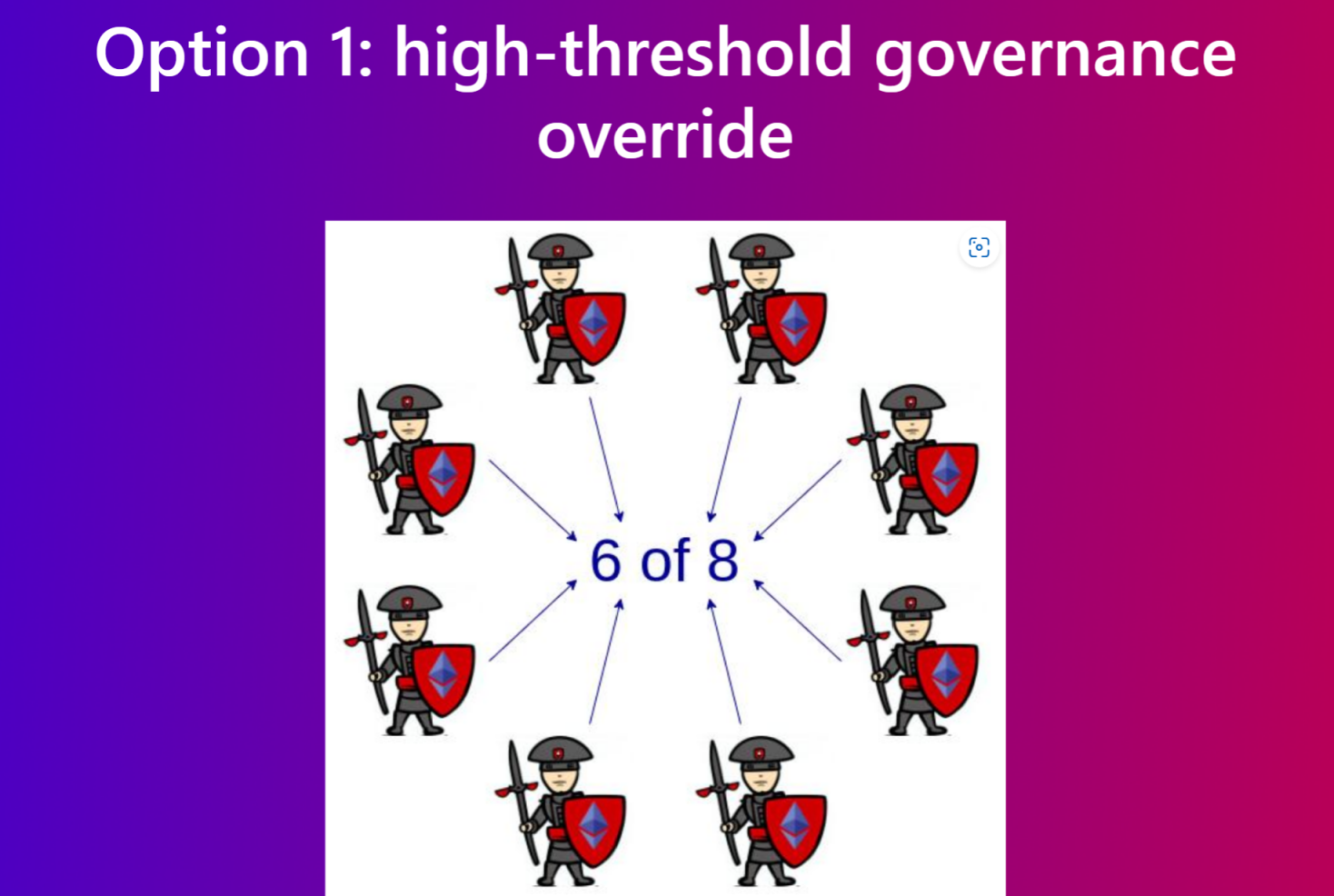
方案一是借助高阈值的治理机制,来决定对代码的重写(override)。

譬如通过 6/8 的多签方案来决定是否对代码中出现的某个 Bug 进行重写,这种高阈值的治理方案可以达到一定的信任最少化,但仍存在共谋的风险。
多个证明人

方案二是多个证明人(multi-provers)。

借鉴以太坊上的多客户端机制,采用多证明系统(欺诈证明的多种实现,或者 zkEVM 的多种实现),以预防网络的宕机情况。

如果任何人向证明程序提交两个冲突的状态根,并且都通过,则关闭该证明程序;如果 7 天内没有成功的消息通过特定的证明程序传递,则关闭该证明程序(灵感来自智能合约钱包设计)。
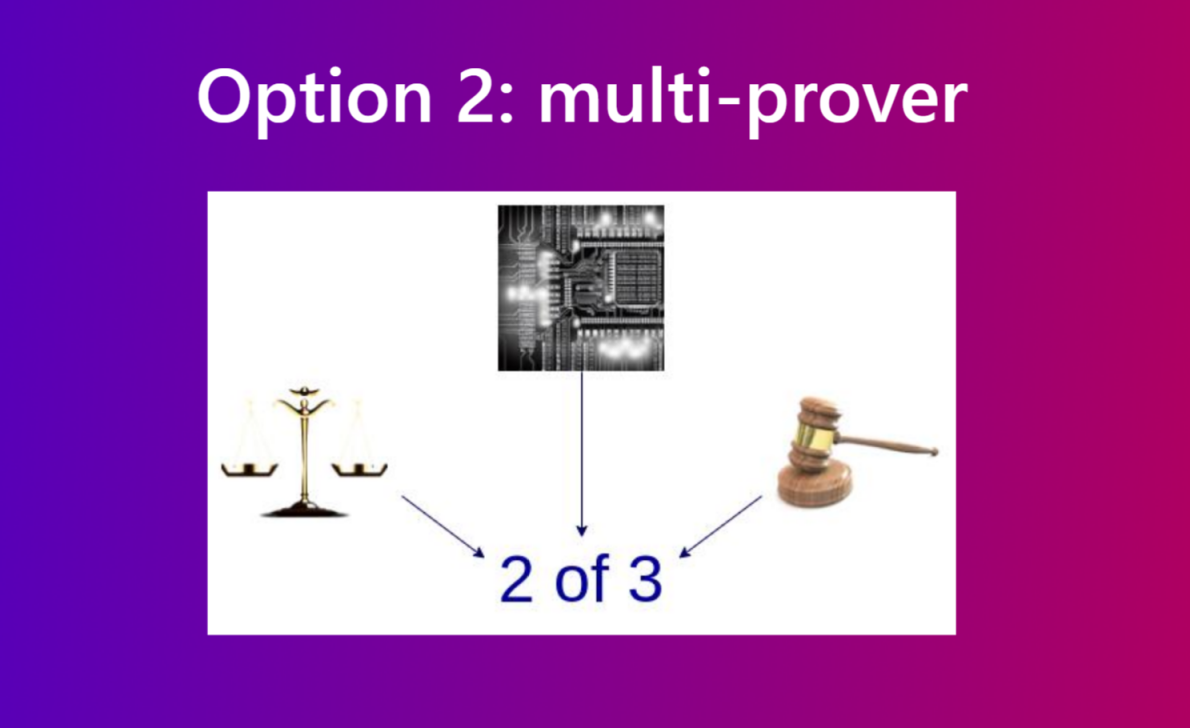
两个证明人 + 治理小组

方案三是两个证明人(欺诈证明 vs. zk 证明)再加上治理小组,实行 2/3 保证机制(two-provers plus governance tie break)。

它的好处有:

不必信任治理(它不能与证明相矛盾);

当一个证明系统出现漏洞,另一个系统不受影响;

理想情况下,两个证明程序应该具有非常不同的结构,以最小化同时出现漏洞的机会;

Vitalik 还表示「现在 ZK-Proving EVM 区块需要几个小时,但未来技术会改进,我相信你们,我们(将来)会在 12 秒内得到 ZK Snarks 证明」。
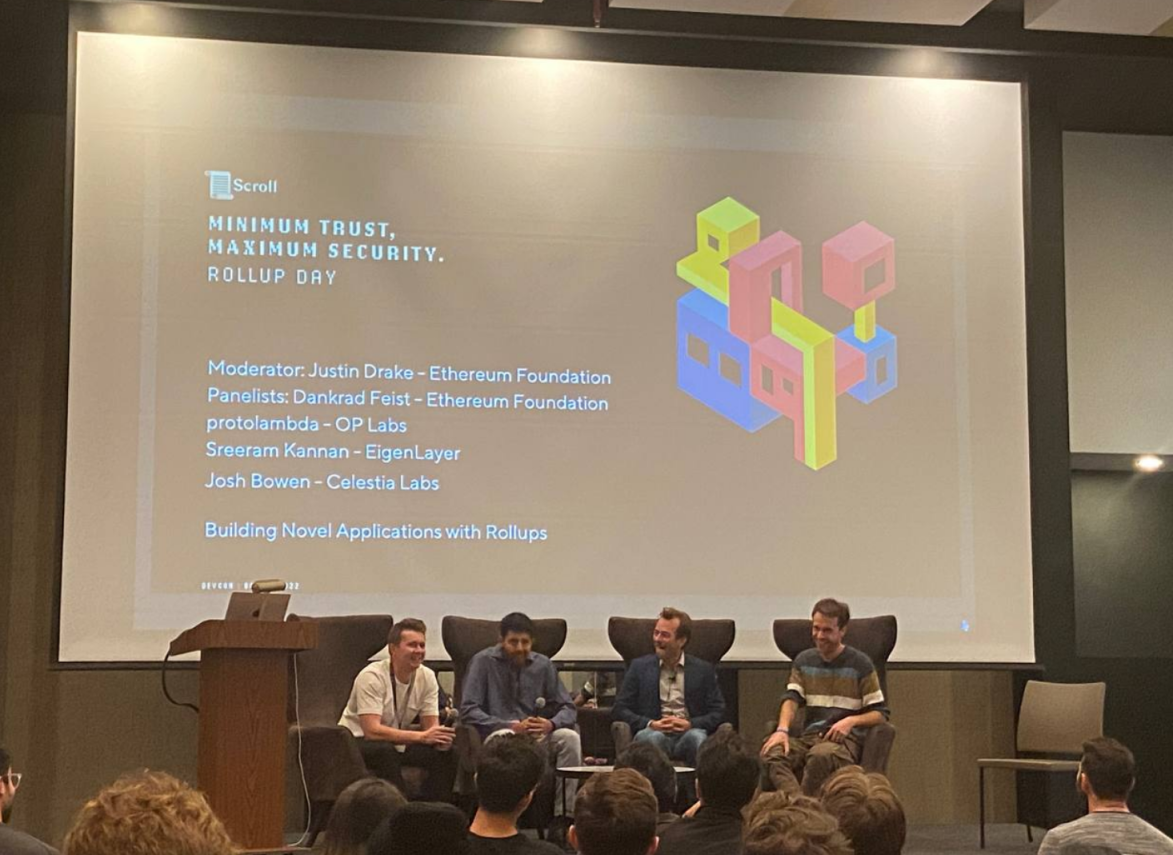
此外,还有一些其他业内人士参与了此次 Rollup Day 活动,分享了自己的看法。

其中 Optimism 联合创始人 Mark Tyneway 称「目前没有一个 Rollup 是抗审查的,这意味着 Rollup 具有无许可的领导者选举和不可升级的智能合约」。

对饱受关注的 MEV 问题,Gauntlet Networks 创始人 Tarun Chitra 表示,「在考虑如何转向去中心化 Rollup 和特定去中心化排序器时,一个未被讨论的问题是从多叉选择规则协调中创建大量 MEV」。

Flashbots 研究员 Alex Obadia 表示,「目前还不清楚是否应该在以太坊协议中实现嵌入的构建者分离(proposer-builder separation,PBS),关于 PBS 将如何与其他潜在的协议变化交互,仍有一些悬而未决的问题」。

关于以太坊与数据可用性(DA)的关系,的以太坊基金会研究员 Dankrad Feist 认为,「在以太坊上可以实现无限的数据可用性(DA),但并不需要。为了实现无限的 DA,以太坊必须牺牲长期数据保存的质量,并在一段时间后丢弃未使用的数据或经济价值低的数据」。

而 EigenLayer 创始人 Sreeram Kannan 则认为「DA 层应该使其收入模型多样化,这样它们就不会受制于用户需求,而只会以交易费用的形式收取拥堵成本,运营和资本成本是 DA 层应考虑的另外两个收入领域」。


Трендові криптовалюти

Пов'язані матеріали

Chip Stocks Lead U.S. Market Decline: Is AI Trading Being Hit by Both Interest Rates and Returns?

Chip stocks led a broad decline in US markets, with the Nasdaq dropping 2.2% and the S&P 500 falling 1.4%. This selloff reflects a dual challenge for the once-high-flying AI hardware trade: rising interest rate expectations and growing investor impatience for clear returns from massive AI capital expenditures. The pressure was most acute on hardware leaders. Nvidia fell about 4%, dipping below a $5 trillion market cap, while Micron plunged 13.2% ahead of its earnings report. Declines across memory, storage, AI, and mobile chips indicated a sector-wide retreat. The selloff spread globally, with South Korea's KOSPI index dropping nearly 10% as key suppliers SK Hynix and Samsung recorded double-digit losses. Investors appeared to be taking profits from the most crowded trades first. Macro headwinds intensified as market expectations shifted toward a more aggressive Federal Reserve. Forecasts for multiple rate hikes in 2026 pressured high-valuation tech stocks, which rely on long-term growth projections that become less attractive as discount rates rise. Concurrently, investors are scrutinizing the profit potential of the immense AI spending by cloud giants like Alphabet, Amazon, and Meta. While these expenditures drive demand for chips and hardware, the market is now questioning whether AI services will generate sufficient returns to justify the ongoing costs. This adjustment is not necessarily a bubble burst but a recalibration. AI demand fundamentals remain, but the narrative of endless growth can no longer fully offset concerns over higher interest rates and a longer path to profitability. Near-term direction may hinge on Micron's upcoming earnings guidance and incoming inflation data, which will influence both the AI demand outlook and the Fed's policy path. The market is transitioning from blindly buying growth to demanding clearer visibility on returns.

marsbit50 хв тому

Chip Stocks Lead U.S. Market Decline: Is AI Trading Being Hit by Both Interest Rates and Returns?

marsbit50 хв тому

OpenAI's New Paper: How to Train an AI that "Doesn't Deteriorate Under Pressure"?

OpenAI's new paper "Reinforcement Learning Towards Broadly and Persistently Beneficial Models" explores training AI to maintain safe, helpful, and honest behavior even under pressure, in unseen scenarios, or after being fine-tuned for harmful purposes. Moving beyond simple rule-based "don'ts," the research focuses on cultivating "beneficial traits" like honesty, risk-awareness, corrigibility, and transparency. It investigates if reinforcement learning (RL), often prone to "reward hacking" where models exploit loopholes, can instead be used to instill robust, generalized positive behaviors. Researchers created a multi-domain synthetic dialogue dataset covering areas like healthcare and law. They trained a model by replacing 5% of standard RL data with "beneficial trait" data. This model outperformed the baseline in 83% of 53 evaluations, showing average gains of 9.1% in alignment, safety, and helpfulness. Crucially, improvements generalized: a model trained only on healthcare "good behavior" data also performed better in 17 out of 19 non-healthcare alignment tests. The paper also tests "alignment persistence." When subjected to adversarial prompts or harmful fine-tuning, the beneficial trait model showed greater resilience, with smaller performance drops and less "spillover" of bad behavior to unrelated tasks. While not a complete solution, this work suggests a shift from post-hoc correction to proactively shaping robust, principled AI behavior, a critical step for deploying models in high-stakes, complex decision-making scenarios.

marsbit53 хв тому

OpenAI's New Paper: How to Train an AI that "Doesn't Deteriorate Under Pressure"?

marsbit53 хв тому

Semiconductor Stock Rebound: Is the Technical Correction Over or a Trend Reversal?

The core of recent semiconductor stock volatility is not about daily price swings, but rather the market questioning whether AI-driven semiconductor pricing has entered a new phase. Following a sharp sell-off in Korean stocks on June 23rd, led by Samsung and SK Hynix, a subsequent rebound is seen more as a technical positioning adjustment rather than a confirmed trend reversal. The key variable is HBM (High Bandwidth Memory), essential for AI chips. Its supply-demand imbalance granted memory makers significant pricing power. The current market focus is on whether this dynamic remains strong enough to justify elevated valuations. All eyes are on Micron's upcoming earnings report. The critical factor is not whether results meet already high expectations, but whether the company's guidance confirms that AI memory pricing power, order visibility, and future margins are still expanding. Micron's outlook will serve as a crucial test for the broader AI semiconductor chain, including Samsung, SK Hynix, and other infrastructure players. The recent bounce appears to be a pre-earnings positioning repair. For it to evolve into a sustained uptrend, concrete evidence is needed that the AI infrastructure expansion cycle's fundamentals—particularly for high-end memory—remain robust and can continue to surpass elevated market expectations. The risk is that strong demand alone may not be sufficient if future guidance hints at peaking momentum or increasing supply-side pressures.

marsbit1 год тому

Semiconductor Stock Rebound: Is the Technical Correction Over or a Trend Reversal?

marsbit1 год тому

Торгівля

Спот
Ф'ючерси

Популярні статті

Як купити OP

Ласкаво просимо до HTX.com! Ми зробили покупку Optimism (OP) простою та зручною. Дотримуйтесь нашої покрокової інструкції, щоб розпочати свою криптовалютну подорож.Крок 1: Створіть обліковий запис на HTXВикористовуйте свою електронну пошту або номер телефону, щоб зареєструвати обліковий запис на HTX безплатно. Пройдіть безпроблемну реєстрацію й отримайте доступ до всіх функцій.ЗареєструватисьКрок 2: Перейдіть до розділу Купити крипту і виберіть спосіб оплатиКредитна/дебетова картка: використовуйте вашу картку Visa або Mastercard, щоб миттєво купити Optimism (OP).Баланс: використовуйте кошти з балансу вашого рахунку HTX для безперешкодної торгівлі.Треті особи: ми додали популярні способи оплати, такі як Google Pay та Apple Pay, щоб підвищити зручність.P2P: Торгуйте безпосередньо з іншими користувачами на HTX.Позабіржова торгівля (OTC): ми пропонуємо індивідуальні послуги та конкурентні обмінні курси для трейдерів.Крок 3: Зберігайте свої Optimism (OP)Після придбання Optimism (OP) збережіть його у своєму обліковому записі на HTX. Крім того, ви можете відправити його в інше місце за допомогою блокчейн-переказу або використовувати його для торгівлі іншими криптовалютами.Крок 4: Торгівля Optimism (OP)Легко торгуйте Optimism (OP) на спотовому ринку HTX. Просто увійдіть до свого облікового запису, виберіть торгову пару, укладайте угоди та спостерігайте за ними в режимі реального часу. Ми пропонуємо зручний досвід як для початківців, так і для досвідчених трейдерів.

459 переглядів усьогоОпубліковано 2024.12.12Оновлено 2026.06.02

Як купити OP

Обговорення

Ласкаво просимо до спільноти HTX. Тут ви можете бути в курсі останніх подій розвитку платформи та отримати доступ до професійної ринкової інформації. Нижче представлені думки користувачів щодо ціни OP (OP).

活动图片