6th Man Ventures Founder: How to Find the Most Valuable Crypto Projects?

marsbitОпубліковано о 2026-01-08Востаннє оновлено о 2026-01-08

Анотація

Founder of 6th Man Ventures discusses the viability of the "dual-token + equity" structure, emphasizing that there is no one-size-fits-all answer. The key is backing an exceptional, long-term-focused team committed to building a founder-led, enduring enterprise, similar to Binance’s Changpeng Zhao. He argues that for application-layer projects requiring sustained leadership, tokens often underperform equity. Many DeFi 1.0 founders have departed, leaving DAOs and part-time contributors in "maintenance mode," struggling with slow and ineffective decision-making. In contrast, equity isn’t always superior—tokens enable unique utilities like fee discounts, staking for airdrops, and access rights, which equity cannot easily replicate. "Ownership tokens" currently face limitations in product integration and legal recognition in the U.S. due to regulatory gaps. However, a hybrid model is proposed: an equity entity operates on a "cost-plus" basis to serve a token-driven protocol, aiming to maximize token and ecosystem value rather than corporate profits. This structure benefits token holders with a well-funded Labs entity for development and a core team heavily incentivized via token holdings. Success hinges on trust in the team’s execution and vision, as token holders lack strong legal protections. Ultimately, team quality, credibility, and execution determine value. Over time, consistent delivery and clear value accrual to tokens—through buybacks, governance, and utility—will al...

Original link:https://x.com/mdudas/status/2008882665781612701

Compiled by: Ken, ChainCatcher

There is no simple or "one-size-fits-all" answer to whether the "dual-token + equity" structure is viable. But a core principle is that you must be confident that the team is not only absolutely excellent but also has a long-term mindset, committed to building a founder-led, enterprise-level business that can last for decades, like Changpeng Zhao did.

I believe that for application-layer projects requiring long-term leadership, token mechanisms are often inferior to equity structures in many cases. For example, you can see that many founders of DeFi 1.0 protocols have largely left their projects, many of which are struggling and essentially run in "maintenance mode" by DAOs and other part-time participants. It has proven that DAOs and token-weighted voting are not good mechanisms for making sound decisions for projects (especially at the application layer); they cannot make decisions quickly and lack the "founder-driven" level of knowledge and capability.

Of course, a pure equity model is not absolutely superior to tokens either. Binance is a powerful example—tokens enabled them to offer fee discounts, staking for airdrops, access rights, and other benefits related to their core business and blockchain, functionalities that equity ownership cannot clearly carry.

"Ownership tokens" also have their limitations and are currently difficult to apply directly within products or protocols. Distributed applications and networks are fundamentally different from traditional companies (otherwise, what's the point of being in this industry?), and pure equity is clearly less flexible than tokens. Future designs for "equity+" type tokens may certainly emerge, but this is not the current state (and moreover, the lack of market structure legislation in the U.S. currently makes issuing pure equity-like tokens with direct value capture and legal rights still risky).

In summary, you can envision a scenario (as depicted by Lighter): an equity entity operates on a "cost-plus" model, serving as an engine for a token-driven protocol. In this architecture, the goal of the equity entity is not profit maximization but rather maximizing the value of the protocol token and ecosystem. If this model works, it would be a huge boon for token holders. Because you have a well-funded Labs entity (e.g., Lighter has a token treasury available for long-term development), and the core team holds a significant amount of tokens, thus having a strong incentive to drive token appreciation (while maintaining the crypto-native and on-chain characteristics of the core token design, separating it from the structurally complex associated Labs entity).

Under this model, you do need a high degree of trust in the team, as in most current cases, token holders do not have strong legal rights protection. Conversely, if you don't believe the team can execute and create value for the tokens they are heavily invested in, why would you participate in the project in the first place?

Ultimately, it all comes down to the team's capability, credibility, execution, vision, and actions. The longer a great team stays in the market and delivers on their promises, the more their token will exhibit the "Lindy effect." As long as the team maintains good communication and clearly directs value to the token through buybacks, substantive governance, and utility within the underlying protocol, we will see the highest quality tokens—even those with equity/Labs entities—explode in 2026.


Трендові криптовалюти

Пов'язані питання

QAccording to the founder of 6th Man Ventures, what is the core principle when evaluating the feasibility of a 'token + equity' structure for a crypto project?

AThe core principle is that you must be confident the team is not only absolutely excellent but also has a long-term vision, committed to building a founder-led, enterprise-level business that can last for decades, similar to Changpeng Zhao's approach.

QWhy does the author believe that token mechanisms are inferior to equity structures for many application-layer projects requiring long-term leadership?

AThe author points out that many DeFi 1.0 protocol founders have left their projects, which are now struggling and largely maintained by DAOs and part-time contributors in 'maintenance mode.' DAOs and token-weighted voting are not effective mechanisms for good decision-making at the application layer, as they lack speed, founder-driven knowledge, and capability.

QWhat advantage does a token have over pure equity, as illustrated by the example of Binance?

ATokens enable functionalities that equity ownership cannot clearly carry, such as providing transaction fee discounts, staking for airdrops, access permissions, and other benefits tied to the core business and blockchain ecosystem.

QWhat is the envisioned scenario where an equity entity operates in a 'cost-plus' model to serve a token-driven protocol?

AIn this architecture, the equity entity's goal is not profit maximization but to maximize the value of the protocol token and ecosystem. The well-funded Labs entity (e.g., holding a token treasury for long-term development) and the core team holding significant tokens are highly incentivized to increase the token's value, benefiting token holders.

QWhat ultimately determines the success and 'Lindy Effect' of a token, according to the article?

AThe team's capability, credibility, execution, vision, and actions are ultimately decisive. The longer a strong team remains in the market and delivers on their promises, the more their token will exhibit the 'Lindy Effect,' especially if they maintain good communication, conduct buybacks, enable substantive governance, and direct value to the token through utility in the underlying protocol.

Пов'язані матеріали

Bitcoin Mining Farms Are Becoming AI Factories

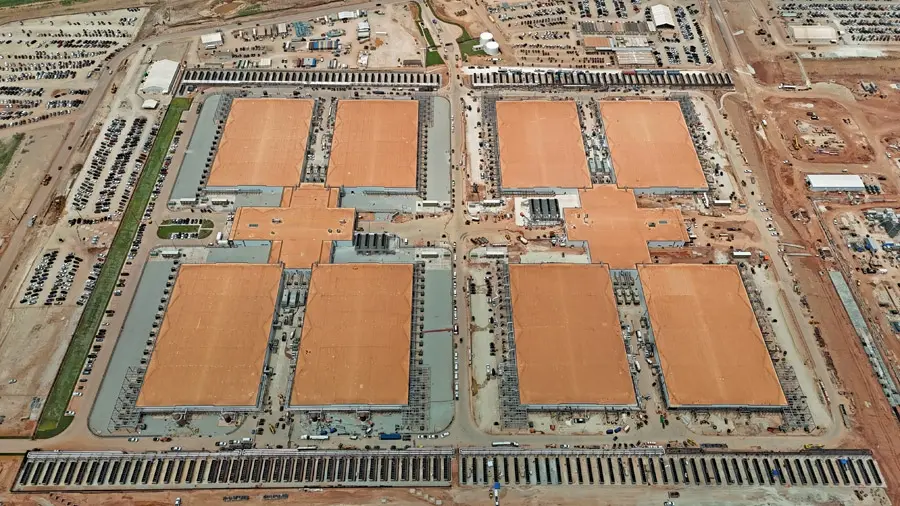
Bitcoin mines are transforming into AI factories. This shift is driven by the convergence of three key assets from the previous crypto cycle: infrastructure, talent, and capital. Crypto mining companies like Crusoe, CoreWeave, and Bitdeer are repurposing their core competency—securing power, land, and grid connections in remote locations—to build data centers for AI clients. These firms are signing multi-billion dollar, long-term contracts with companies like Anthropic, AWS, and Microsoft, as AI's demand for reliable, high-capacity compute surpasses the profitability of Bitcoin mining. Simultaneously, crypto entrepreneurs and engineers are applying their skills to new AI ventures. Examples include OpenSea's co-founder launching OpenRouter (an AI model aggregator), and former Coinbase engineers building Fal.ai (a generative media infrastructure platform). Their experience in building scalable, global software networks translates effectively to the AI space. Furthermore, capital accumulated during the crypto boom is now fueling AI. Figures like Jed McCaleb (co-founder of Ripple) funded Voltage Park, a large-scale GPU cloud provider. Notably, some crypto investments, like FTX's early bets on Anthropic and Cursor, have generated astronomical paper returns, demonstrating how high-risk crypto capital flowed into AI before it became mainstream. The transition is not just about repurposing hardware, but about redirecting critical resources—power infrastructure, distributed systems expertise, and venture funding—to the next technological frontier: artificial intelligence.

链捕手56 хв тому

Bitcoin Mining Farms Are Becoming AI Factories

链捕手56 хв тому

Morpho Launches Fixed-Rate Product Midnight: Lenders and Borrowers Set Their Own Rates, Ending the Era of Interest Rate Models

Morpho Launches Fixed-Rate Product Midnight: Lenders and Borrowers Set Their Own Rates, Ending the Era of Algorithmic Interest Models On-chain lending has grown to $60 billion but remains minuscule compared to traditional finance's $200 trillion annual credit volume. Morpho identifies the lack of fixed rates and maturity dates as key bottlenecks. Institutions need predictability, not the passive floating rates set by algorithmic models. Midnight allows lenders and borrowers to directly quote rates, set terms, and become price makers, not takers. Fixed-rate lending is now viable due to cheaper, faster blockchains and the entry of institutions demanding control and certainty over returns, costs, and duration. Morpho Blue previously gave users control over risk; Midnight adds control over interest rates. Past attempts at on-chain fixed-rate lending failed primarily because they were built on top of floating-rate pools (creating unpredictability) or lacked sufficient active participants. Midnight avoids these pitfalls as a standalone primitive with fixed rates at its core, built upon Morpho Blue's existing large and active user base. Midnight offers distinct value: institutions gain predictable term structures and full control; fintech companies can offer tailored fixed-rate products; lenders/borrowers achieve predictability and efficiency; and curators can now differentiate by configuring both risk and interest rates. Morpho Midnight is not a replacement for Morpho Blue. The Morpho network will now feature two complementary market structures: floating-rate/open-term (Blue) for flexibility and fixed-rate/fixed-term (Midnight) for predictability. Liquidity can flow between them. The launch will be gradual, prioritizing security. Initially, it will support direct lending on Base network with one trading pair (cbBTC/USDC) and limited maturity dates. Advanced features like auto-rollovers will be introduced later.

marsbit57 хв тому

Morpho Launches Fixed-Rate Product Midnight: Lenders and Borrowers Set Their Own Rates, Ending the Era of Interest Rate Models

marsbit57 хв тому

Торгівля

Спот

Популярні статті

Як купити LINK

Ласкаво просимо до HTX.com! Ми зробили покупку ChainLink (LINK) простою та зручною. Дотримуйтесь нашої покрокової інструкції, щоб розпочати свою криптовалютну подорож.Крок 1: Створіть обліковий запис на HTXВикористовуйте свою електронну пошту або номер телефону, щоб зареєструвати обліковий запис на HTX безплатно. Пройдіть безпроблемну реєстрацію й отримайте доступ до всіх функцій.ЗареєструватисьКрок 2: Перейдіть до розділу Купити крипту і виберіть спосіб оплатиКредитна/дебетова картка: використовуйте вашу картку Visa або Mastercard, щоб миттєво купити ChainLink (LINK).Баланс: використовуйте кошти з балансу вашого рахунку HTX для безперешкодної торгівлі.Треті особи: ми додали популярні способи оплати, такі як Google Pay та Apple Pay, щоб підвищити зручність.P2P: Торгуйте безпосередньо з іншими користувачами на HTX.Позабіржова торгівля (OTC): ми пропонуємо індивідуальні послуги та конкурентні обмінні курси для трейдерів.Крок 3: Зберігайте свої ChainLink (LINK)Після придбання ChainLink (LINK) збережіть його у своєму обліковому записі на HTX. Крім того, ви можете відправити його в інше місце за допомогою блокчейн-переказу або використовувати його для торгівлі іншими криптовалютами.Крок 4: Торгівля ChainLink (LINK)Легко торгуйте ChainLink (LINK) на спотовому ринку HTX. Просто увійдіть до свого облікового запису, виберіть торгову пару, укладайте угоди та спостерігайте за ними в режимі реального часу. Ми пропонуємо зручний досвід як для початківців, так і для досвідчених трейдерів.

1.1k переглядів усьогоОпубліковано 2024.12.13Оновлено 2026.06.02

Як купити LINK

Обговорення

Ласкаво просимо до спільноти HTX. Тут ви можете бути в курсі останніх подій розвитку платформи та отримати доступ до професійної ринкової інформації. Нижче представлені думки користувачів щодо ціни LINK (LINK).

活动图片