以太坊基本面数据稳中向好,已建立流动性“护城河”

深潮TechFlowОпубліковано о 2022-09-08Востаннє оновлено о 2022-09-09

Анотація

目前,整个 DeFi 生态系统的一半以上都存在于以太坊上,尽管受到了市场波动和宏观经济的不确定性的影响,以太坊的参与度仍然很高。

目前,整个 DeFi 生态系统的一半以上都存在于以太坊上,尽管受到了市场波动和宏观经济的不确定性的影响,以太坊的参与度仍然很高。

本文将带您一起了解以太坊生态系统是如何进行长期建设,并确保做好准备迎接网络增长的。

与任何高效的技术一样,以太坊的路线图充满了对其基础设施的升级,使其能够更好地面向未来。

第一个我们称之为“合并”的升级,将在 2022 年 9 月中旬发生。

对于新生的加密货币行业来说,这将是一个历史性的时刻,合并将为以太坊增加安全性、可持续性和可扩展性做好支撑。

目前,以太坊网络有两个并行运行的区块链层——运行工作证明(PoW)的层,称为执行层(以太坊的历史状态和区块生产),以及运行权益证明(PoS)的层,称为共识层。

合并是指将这两层合并的事件,有效地结束 PoW,并将以太坊主网完全过渡到 PoS。

为什么以太坊在 DeFi 中占主导地位?

今天的 DeFi 生态系统价值 626 亿美元,而以太坊占整个 DeFi 生态系统的大部分,总价值锁定(TVL)为 367 亿美元。

以太坊在 DeFi 中占主导地位的部分原因是:

- 大多数流行的 DeFi 应用都是在以太坊上建立的,如 MakerDAO、Aave、Uniswap 和 Curve 。

- 以太坊还受益于强大的开发者和用户社区,特别是以太坊 CoreDevs,他们致力于通过创建文档和定期推出网络更新来改善网络。

这些资源有助于维持一个强大的、去中心化的网络,并推动其进一步的采用。

该网络的采用率和利用率都出现了暴涨的数字,这是网络成熟度的强烈信号。

要了解以太坊的用户采用率如何增加,让我们看一下一些统计数据。

网络活动

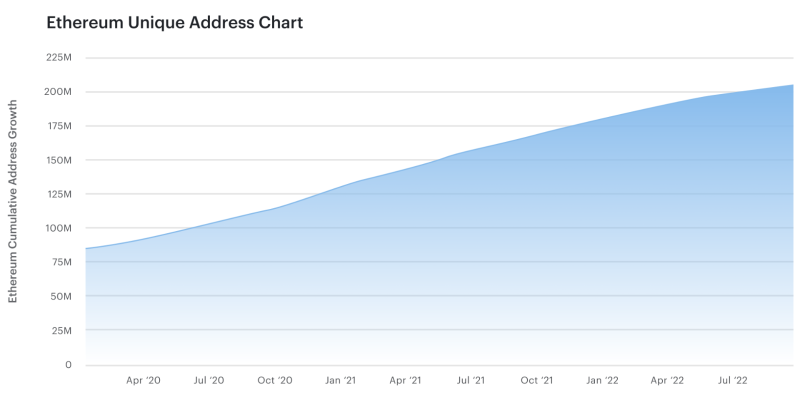
自 2020 年 1 月以来,以太坊网络上的唯一地址总数已经增加了一倍多,超过了 2 亿,这表明了以太坊网络在 Web3 用户中的受欢迎程度。
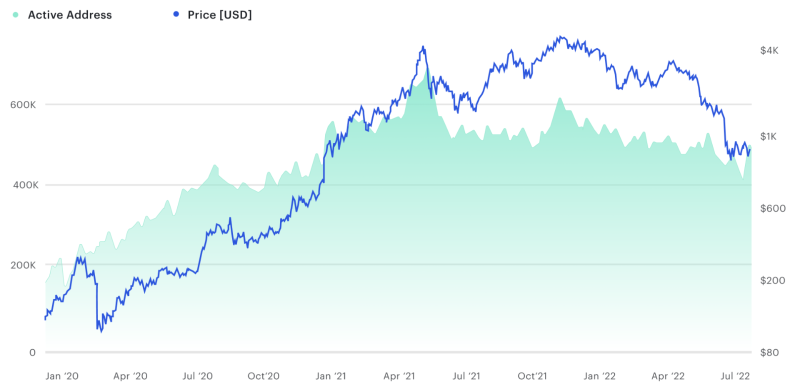
自 2020 年 1 月以来,活跃的以太坊地址数量也呈上升趋势,尽管最近市场低迷,目前仍在 504K 以上。

尽管市场剧烈波动,用户仍参与网络表明以太坊的用例超越了价格活动。

相比之下,自 5 月市场崩溃以来,Fantom 上的增长下降了 70%。
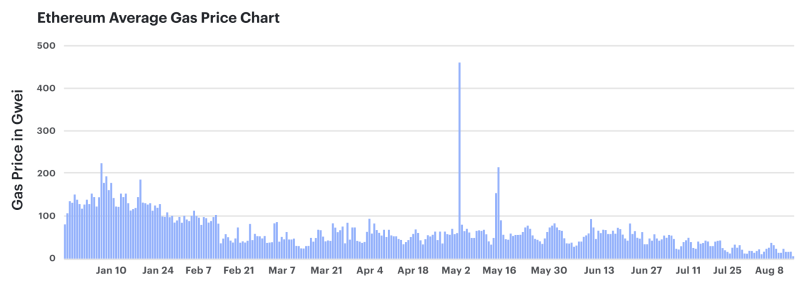
作为以太坊网络成熟的一个标志,Gas 费用自今年 1 月以来稳步下降。

即使网络活动增加,它们也变得更加可预测。

较低的 Gas 费用使以太坊交易具有成本效益,并且不受网络活动的影响。

因此,用户不需要担心在网络拥堵的时候支付 100 美元来完成交易。
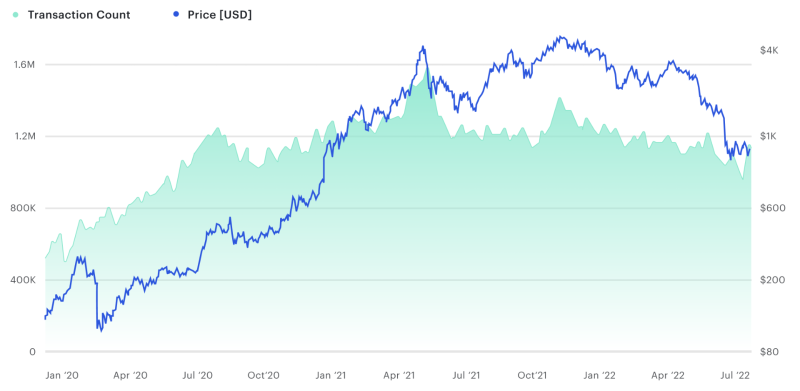
自 2020 年 1 月以来,以太坊的每日交易量呈上升趋势,并已趋于稳定。

在过去的 12 个月里,平均每天在以太坊上完成超过 100 万笔交易。

因此,尽管 Web3 和全球宏观市场波动,用户仍继续使用着网络。

这也是一个信号,表明具有现实世界用例的有意义的应用程序正在以太坊上构建。
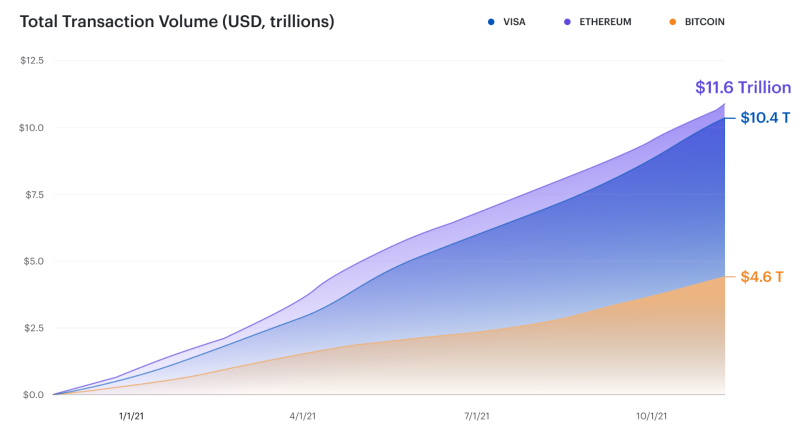
为了了解在以太坊上发生的交易数量的规模,我举了例子:2021 年,以太坊处理的交易量超过了世界上最大的支付处理器 Visa。

以太坊处理了价值 11.6 万亿美元的交易,而 Visa 处理了 10.4 万亿美元。
确定区块链网络需求的一个强有力的指标是协议收入——即用户愿意为在区块链上进行的交易而支付的金额。

区块链通过出售区块空间来赚取收入,矿工(或共识层的验证者)购买区块空间来完成交易。

另一方面,区块链的主要支出是围绕着它在巩固网络完整性和维护安全方面所花费的资源。

目前,几乎每一个区块链花在保障网络安全上的钱都比他们从出售区块空间获得的钱要多。

因此,收入比简单地依赖交易总数提供了更好的网络需求感知。

虽然使用 Tron 或 Solana 可能比以太坊便宜,但由于网络的安全性和可靠性更好等因素,用户可能愿意支付溢价来使用以太坊。

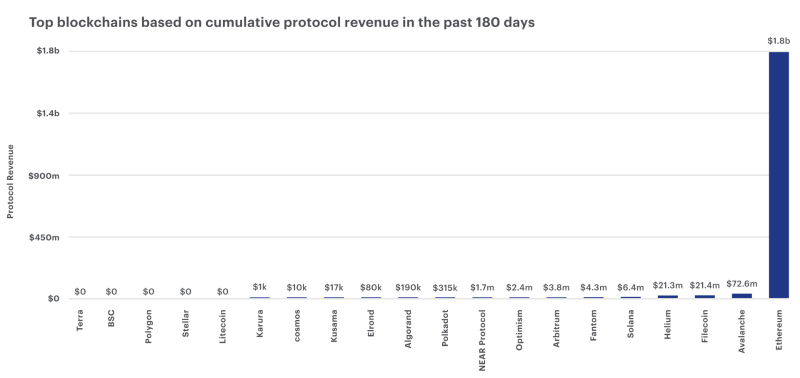
自今年 3 月中旬以来,ETH 产生了 18 亿美元的协议收入,是 Avalanche、Solana、Polkadot 和 Polygon 等 20 个顶级区块链中最高的。

作为比较,以 Avalanche 为例:它在同一时期产生了第二高的协议收入,也只产生了 7260 万美元。
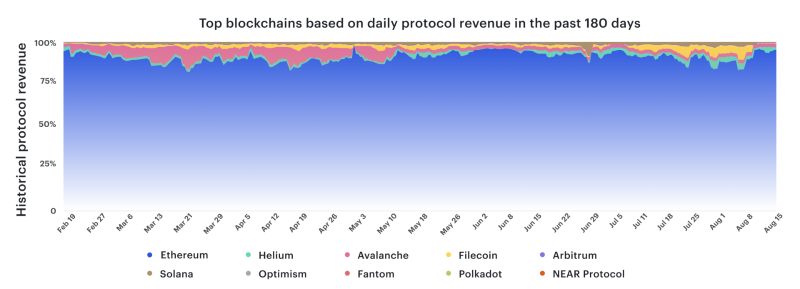
在同一时期,与其他第 1 层 (L1) 网络相比,以太坊占据了协议总收入的 90% 以上。
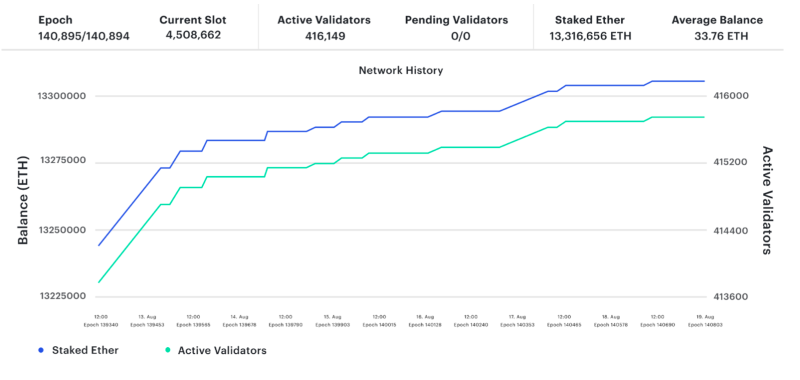
自 2020 年 12 月以来,对以太坊的质押获得了巨大的吸引力。

截至 2022 年 8 月 19 日,超过 1330 万个 ETH 被质押,占所有 ETH 供应量的近 11%。
总结

正如我们在上面看到的,来到以太坊的用户数量和流动性是其他 L1 网络无法比拟的。

由于这种高流动性和庞大的用户群,以太坊对那些在不同区块链之间选择建立的开发者来说变得很有吸引力。

这种受欢迎程度有助于为以太坊建立一条流动性的护城河。

大多数具有高 TVL 和 Web3 使用率的去中心化应用程序(dApps)都是以太坊上的原生产品。

因此,有大量的价值在网络中流动,机构参与者可以挖掘这些价值并从中获益。
Пов'язані матеріали

The War Without a Unified Name: The Domestic Tech Giants' World Model Landscape

The article outlines the diverse and fragmented landscape of "World Models" in China's tech industry, where major players are pursuing similar goals under different names like world foundational models, physical AI, or integrated within autonomous driving and embodied intelligence systems. The core aim is to enable AI to create an internal, dynamic environment for simulation, reasoning, and learning, reducing reliance on infinite real-world data. This "data engine" allows for unlimited generation, experimentation, and iteration. The report categorizes the approaches of different companies: * **Internet Giants:** Alibaba is developing models for linguistic, virtual, and physical worlds (Qwen-AgentWorld, HappyOyster, Qwen-RobotWorld). Tencent's HY-World focuses on 3D, game, and social scenarios. ByteDance leverages its vast video data for a potential "digital twin" model. Huawei integrates its model into industrial applications like smart cars and robotics without separately branding it. Baidu embeds world model capabilities within its Apollo autonomous driving and Ernie systems. * **Automakers:** Companies like NIO, Li Auto, XPeng, and Geely are using world models as virtual "driving schools" and "testing grounds." They generate complex scenarios (e.g., rain, snow) to train and validate autonomous driving systems in simulation, aiming for more capable and safer AI drivers. * **Autonomous Driving Suppliers:** Firms such as Momenta, Horizon Robotics, Haomo.ai, and DeepRoute.ai are building the underlying "world engines." They focus on large-scale video generation for simulation, reinforcement learning, and enhancing end-to-end autonomous driving models, often integrating these capabilities into commercial products. While startups bring focus and innovation, they face challenges like limited data, compute resources, and deployment channels. Large companies possess these advantages and are rapidly transitioning world models from research projects into core business infrastructure powering products in vehicles, games, and industry. The conclusion is that world models represent an evolution and convergence of existing AI fields into crucial industrial infrastructure, moving the competition from simply building a model to effectively deploying it to understand and interact with the physical world.

marsbit14 хв тому

The War Without a Unified Name: The Domestic Tech Giants' World Model Landscape

marsbit14 хв тому

The Crypto Industry Enters the 'Show Me' Era: Vision Alone Is No Longer Enough

The crypto industry has entered a "Show Me" era, where grand visions and white papers are no longer sufficient to gain traction. This shift is driven by increased skepticism, high-profile bad actors, and notably, the serious entry of traditional finance (TradFi) institutions like BlackRock, Fidelity, and JPMorgan Chase, which are launching real, scaled products such as tokenized funds and blockchain-based settlement. This raises the bar for what constitutes a credible project. The communication dynamic has fundamentally changed. The focus is no longer on "what you are building" but on "what you have built and who is using it." Startups must now provide a "proof stack": verifiable data like mainnet transaction volume and active wallets, genuine partnerships with signed contracts, and evidence of organic product-market fit from real users, not just investors. Announcements must be backed by concrete, chain-verifiable evidence. For communication strategies, this means leading with proven facts and hard data—even if modest—rather than speculative narratives. A compelling story must be grounded in demonstrated results. While vision remains important, the balance has inverted from 80% vision/20% substance to the opposite. This higher threshold ultimately benefits builders with genuine traction, filtering out noise and allowing their real signals to stand out clearly. The "Show Me" era is a permanent maturation, demanding that communication strategies prove value, not just promise it.

链捕手45 хв тому

The Crypto Industry Enters the 'Show Me' Era: Vision Alone Is No Longer Enough

链捕手45 хв тому

Meta Follows the Trend into Prediction Markets: Can It Avoid Repeating the Failure of the Metaverse?

Meta, the tech giant behind Facebook, has reportedly formed a team to develop "Arena," a new application focused on prediction markets. Users would use platform points to place bets on outcomes in politics, sports, and global events. This move follows Meta's massive, nearly $900 billion, losses from its heavily-invested metaverse division, Reality Labs. The prediction market industry is already showing strong demand, with leading platforms like Kalshi and Polymarket facilitating hundreds of billions in annual volume. Meta, with its 3.56 billion daily active users across its apps, possesses the unprecedented scale to bring this niche activity to a mainstream audience, similar to its past success in cloning features like Stories and Reels. However, Arena faces significant hurdles. Meta plans to start with a points-based system to avoid strict financial regulations, but this may dilute the core incentive of accurate prediction that real-money markets provide. More critically, Meta enters the space with a major trust deficit stemming from its past regulatory battles, notably the failed Libra/Diem stablecoin project, and its controversial history with political content and misinformation. The prediction market sector itself is under increasing regulatory scrutiny, with recent CFTC actions including fines and the first-ever insider trading case. While Meta's vast user base offers a unique opportunity to expand the market, its success hinges on navigating complex regulations and rebuilding the credibility necessary for a platform dealing with sensitive topics like elections. The outcome could range from Meta dramatically growing the industry to Arena becoming a high-profile regulatory target before it can scale.

Foresight News1 год тому

Meta Follows the Trend into Prediction Markets: Can It Avoid Repeating the Failure of the Metaverse?

Foresight News1 год тому

Торгівля

Спот
Ф'ючерси
活动图片