Ethereum subió un 31% en una semana, pero los indicadores de temporada de altcoins aún apuntan a lo contrario

cryptonews.ruОпубліковано о 2026-08-24Востаннє оновлено о 2026-08-24

Анотація

La criptomoneda Ethereum ha experimentado un notable aumento del 31% en su valor durante la última semana, cotizando actualmente alrededor de los 2.495 dólares. Sin embargo, a pesar de este crecimiento, los principales índices que rastrean el "altcoin season" o temporada de altcoins, como los de CoinMarketCap y BlockchainCenter, aún no confirman su inicio. Estos índices requieren que al menos el 75% de las principales criptomonedas superen a Bitcoin en 90 días, un umbral que aún no se alcanza. Mientras Bitcoin sigue dominando más del 59% del mercado total, otras altcoins como XRP y Zcash han tenido rendimientos porcentuales aún mayores que Ethereum en la misma semana. Aunque análisis como los de Glassnode apuntan a un creciente optimismo y altas tasas de financiamiento en las altcoins, otros datos muestran precaución. Por ejemplo, más del 84% de las altcoins cotizaban recientemente por debajo de su media móvil de 200 días, indicando una debilidad subyacente tras el mercado bajista de 2022. Destacados como Arthur Hayes de BitMEX han expresado confianza en Ethereum, sugiriendo que su potencial de apreciación es significativo si logra superar niveles clave como los 3.000 dólares. No obstante, la alta correlación actual entre las altcoins y Bitcoin, junto con la venta récord de altcoins y la falta de un crecimiento generalizado del mercado, indican que la llegada de una temporada sostenida de altcoins aún no es clara. Los traders se mantienen en un estado de espera, observando ...

En los últimos siete días, Ethereum ha demostrado una mejora en sus métricas: su valor ha aumentado casi un 31% y actualmente se negocia alrededor de los 2495 dólares.

Sin embargo, a pesar de este repunte semanal, los dos trac más populares que monitorean la temporada de altcoins aún no se han atrevido a declararla como tal. Por su parte, a los traders solo les queda comparar el rápido ascenso de $ETH con indicadores que permanecen en posición neutral.

El repunte es real, pero su escala es modesta

$ETH se negocia alrededor de $2494.68, con un aumento del 2.59% en el día y del 31.01% en la semana. Bitcoin, cuyo precio ronda los $78411, mostró un incremento semanal del 23.25%.

$XRP y Zcash ($ZEC) son solo algunas de las criptomonedas que han tenido un mejor desempeño que $ETH en los últimos siete días. $XRP subió aproximadamente un 49%, y $ZEC aproximadamente un 64% en el mismo período.

Sin embargo, Bitcoin sigue liderando el mercado en capitalización total, ocupando más del 59% del mismo. La participación de $ETH es de aproximadamente el 11.4%. Por lo tanto, no se observa una clara salida de capitales de BTC. En general, el sentimiento del mercado es tenso, y la métrica de Miedo y Codicia de CoinMarketCap se sitúa en 80 sobre 100.

¿Qué miden exactamente estos índices?

Dos índices de seasonality son los que más utilizan los traders. La temporada de altcoins, largamente esquiva, se define en base a ciertos criterios por las empresas CoinMarketCap y BlockchainCenter. Ambas compañías tienen índices que les ayudan a determinar si ha comenzado o no.

Según CoinMarketCap, la temporada de altcoins ocurre solo cuando al menos el 75% de las 100 principales criptomonedas superan a Bitcoin durante 90 días. Si esta cifra es del 25% o menos, el sitio llama a este período "Temporada de Bitcoin".

BlockchainCenter aplica una regla similar a las 50 criptomonedas más populares. Así, si al menos el 75% de las 50 mejores criptomonedas superan a Bitcoin durante 90 días, comienza la temporada de altcoins. Al momento de la verificación, esta cifra era de 43, por debajo del umbral necesario para iniciar la temporada de altcoins.

Según los propios cálculos de BlockchainCenter, han pasado más de 332 días desde la última temporada de altcoins. Ambas métricas excluyen stablecoins como Tether y envoltorios respaldados por activos como WBTC y stETH.

Glassnode escribió en X que el mercado de altcoins ha "entrado en un estado de optimismo", informando que el 85% de las altcoins han elevado sus tasas de financiamiento por encima del promedio, lo que, según la empresa, es el nivel más alto en esta métrica desde que Bitcoin alcanzó máximos históricos. "Durante la temporada de altcoins, estas condiciones pueden persistir durante muchas semanas", añadió Glassnode.

Hayes apuesta por el liderazgo de Ethereum

En una entrevista con Laura Shin, el cofundador de BitMEX, Arthur Hayes, declaró que Ethereum es ahora su segundo activo más grande después de Bitcoin, señalando que la incapacidad de $ETH para recuperar su máximo de 2021 le deja espacio para ponerse al día y que conlleva un riesgo de quiebra mucho menor que tokens más pequeños. Dijo que un impulso decidido por encima de los 3000 dólares podría llevar el precio más allá de los 5000 dólares.

En una entrevista con el podcast Altcoin Daily, Hayes fue aún más allá, prediciendo que $ETH superará a todos los demás activos de gran capitalización en esta recuperación impulsada por la liquidez, y que podría contribuir a reducir el dominio de Bitcoin a niveles cercanos al 40%.

Por qué es necesaria la precaución

La historia reciente explica esta vacilación. Cryptopolitan informó que las ventas de altcoins alcanzaron máximos históricos, con un índice de temporada de 49, y que el 30 de junio más del 84% de las altcoins se negociaban por debajo de su media móvil de 200 días, siendo este el período más largo de este tipo desde el mercado bajista de 2022.

El analista de CryptoQuant, Darkfrost, señaló que las altcoins han permanecido estrechamente correlacionadas con Bitcoin, por lo que un Bitcoin fuerte ya no arrastra automáticamente a todo el resto del mercado. Este patrón ha favorecido pequeños y estrechos rallies "mini" en algunos activos líquidos, en lugar de subidas amplias y generalizadas que los índices están diseñados para detectar.


Трендові криптовалюти

Пов'язані питання

Q¿Qué porcentaje de crecimiento semanal experimentó Ethereum (ETH) según el artículo?

AEthereum (ETH) experimentó un crecimiento de aproximadamente 31% durante la última semana, cotizando alrededor de 2495 dólares.

Q¿Cuáles son las dos principales empresas o índices mencionados que definen y rastrean un 'altcoin season' (temporada de altcoins)?

ALas dos principales empresas mencionadas que definen y rastrean un 'altcoin season' son CoinMarketCap y BlockchainCenter. Ambas utilizan índices basados en el rendimiento de las principales criptomonedas en comparación con Bitcoin durante un período de 90 días.

QSegún el análisis de Arthur Hayes, cofundador de BitMEX, ¿cuál es el posible precio objetivo para Ethereum si logra un 'breakout decisivo' por encima de cierto nivel?

AArthur Hayes predijo que si Ethereum logra un 'breakout decisivo' por encima de los 3000 dólares, su precio podría subir hasta superar los 5000 dólares.

Q¿Qué porcentaje de las 50 principales criptomonedas debe superar a Bitcoin durante 90 días, según el índice de BlockchainCenter, para que se declare un 'altcoin season'?

ASegún el índice de BlockchainCenter, para que se declare un 'altcoin season', al menos el 75% de las 50 principales criptomonedas deben superar el rendimiento de Bitcoin durante un período de 90 días. En el momento del artículo, esta cifra era del 43%, por debajo del umbral necesario.

Q¿Qué métrica de Glassnode, mencionada en el artículo, sugiere que el mercado de altcoins ha entrado en un estado de 'optimismo'?

AGlassnode informó que el mercado de altcoins ha entrado en un estado de 'optimismo' porque el 85% de las altcoins han elevado sus 'tasas de financiamiento' (funding rates) por encima del promedio. Esta es la métrica más alta desde que Bitcoin alcanzó máximos históricos.

Пов'язані матеріали

U.S. Aims at Iran's Crypto Sector Due to Oil Payments Exceeding $100 Billion

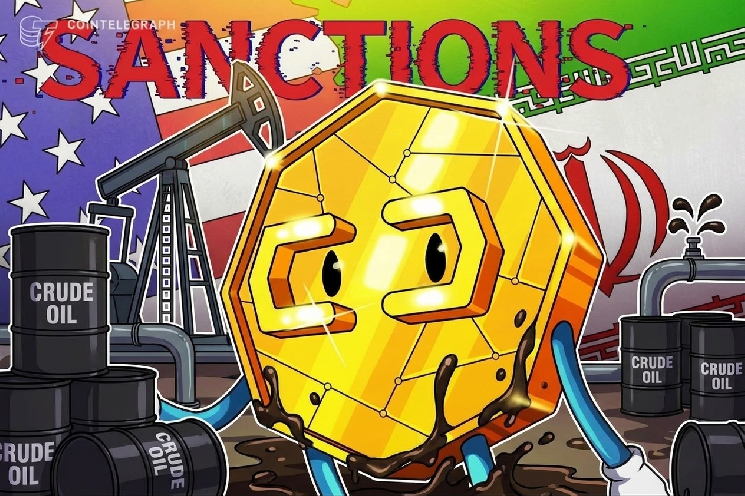
The U.S. Treasury Department has expanded sanctions on Iran to target its digital asset sector, citing over $100 million in cryptocurrency payments allegedly used to facilitate Iranian oil sales. The Treasury’s Office of Foreign Assets Control (OFAC) announced new sectoral sanctions covering digital assets, technology, gold, aviation, and shipping, alongside sanctions against nearly 60 entities, individuals, and vessels linked to nuclear, missile, cyber, and oil networks. The move allows OFAC to sanction foreign persons and firms operating in or supporting Iran’s crypto sector, which the Treasury stated is increasingly used as a "tool of choice" to circumvent sanctions, including by the Islamic Revolutionary Guard Corps (IRGC). Specific targets include Ukrainian broker Ivan Obukhov and his UAE-registered firm Foscom FZE, accused of processing over $100 million in crypto payments to facilitate oil sales for the IRGC’s Quds Force. This follows recent U.S. actions against Iran-linked crypto exchanges, including sanctions against UK-based Zedcex and Zedxion in January, four Iranian exchanges including Nobitex in June, and exchanges Shelbit and Aban Tether in August. Unlike previous targeted sanctions, the new measures establish a framework to penalize broader involvement in Iran’s crypto sector, significantly expanding OFAC’s authority under Executive Order 13902. Designated persons’ U.S.-linked property will be blocked, and foreign banks facilitating significant transactions for them may face U.S. account restrictions.

cryptonews.ru3 хв тому

U.S. Aims at Iran's Crypto Sector Due to Oil Payments Exceeding $100 Billion

cryptonews.ru3 хв тому

Conversation with Charles Zhang: Amidst the AI Frenzy, Why Pursue 'Anti-Efficiency' Content?

Dialogue with Charles Zhang: In the Era of AI's Sprint, Why Create "Anti-Efficiency" Content Standing out among China's early internet pioneers, Charles Zhang, founder and CEO of Sohu, maintains a distinct personal identity. He keeps a consistent public presence and embodies traits of high-energy individuals: sleeping only 4-5 hours daily, running 5km or marathons, and hosting frequent offline tech forums and dialogues with Nobel laureates. He has shifted focus from external business expansion to internal self-reconstruction, adhering to his own pace. "People aren't afraid of being busy; the busier you are, the better your health. Having nothing to do can lead to emotional issues and poor health." Marking the 10th anniversary of his live-streamed "Charles Zhang's English Class," he recently took it offline for a real-world classroom session. Following this, he discussed the course's decade-long journey, Sohu Video's content ecosystem, and the value of content in the AI era. **Pen and Mouth Diligence: A Class Against Instant Mastery** His English class began in August 2016 on "Qianfan Live." He spends about 40 minutes daily preparing, reviewing dozens of news headlines, reading five in detail, and selecting three for the lesson. Over ten years, he has completed over 2000 live sessions totaling more than 110,000 minutes, with over 52 million views. Initially, the stream was a way to "talk more" and combat emotional struggles. He started by repeating after TV news anchors, then moved to live-streaming with the launch of Qianfan Live. It was 40% for personal emotional regulation ("like a monk chanting sutras"), 30% to deliver authentic news, and 30% to promote the new platform. This daily "ritual" helped him overcome depression, leading to what he calls his "peak life state." From a product perspective, it was counter-intuitive—launched without prior market research or growth strategies, based on the founder's personal need that resonated with users. Yet, his content creation follows a strict routine. The decade of covering geopolitics, economics, tech, health, and society has built a vast "knowledge compound interest" system. In an age of AI summaries and algorithmic content, Zhang insists on "hard work": meticulous reading, handwritten notes, and manually created teaching materials, refusing AI-generated content. The English class is now a fixed daily rhythm; preparing for his weekly physics class requires a full day of solitary deduction on a blackboard. In his live streams, Zhang positions himself as a "content creator," not a CEO or teacher. He sees physics as extreme brain training and English as a "sensor" to understand the world. This explains why a top entrepreneur persists for a decade in seemingly "unprofessional" pursuits—it's the information input and psychological healing method he found during a low point. It's fundamentally an "anti-efficiency" commitment. He believes the meaning of reading lies in finding community and spiritual support, not just fleeting conversation points. For today's media, he states: "Reading news isn't the goal. As humans with many confusions, we need reference points, to find a group, find kindred spirits, or seek support and spiritual nourishment. Large language models can't satisfy these starting points; they only give you information." This offers solace and a value defense for media professionals impacted by AI summaries. **"Don't Think Earth Stops Turning Because AI Arrived"** A content creator expressed anxiety: after feeding their article to AI, it produced a more comprehensive, profound version, making their work feel valueless. Zhang responded with an analogy: "Carrots from the market, with a bit of soil, not glossy, taste delicious and flavorful. Tomatoes forced by chemical fertilizer have no taste at all." He sees AI giving world content a "plastic feel," but acknowledges its significant role in improving information access efficiency, especially in physics and social science research where he often queries AI for quick professional answers. The key, Zhang stresses, is that the outside world still needs to guide our perspective. LLMs provide "information," while the outside world offers "viewpoints." He cares deeply about *what* that external viewpoint is and *how* someone thinks about an issue. "Don't think the Earth stops turning because AI arrived," he analyzes. AI currently replaces rule-based work, noting significant impact on the software industry with many programmers laid off as even less experienced people can now write decent code. However, AI cannot yet replace arts, social sciences, emotions, and creative content. "Hollywood remains thriving, producing great works. Oscars will continue, Nobel Literature Prizes will still be awarded—all by real people, with works conceived by real people." While wary of AI, Zhang isn't anti-technology and is open to its applications. Sohu itself has launched AI assistants. In Sohu's AI practice, Zhang defines his role as a "large language model corpus provider." He believes LLM training is inseparable from human-original content as its data foundation, so original content retains irreplaceable value. "The era of self-media indeed offers everyone new ways to discover their strengths and achieve growth." He suggests every young person should consider self-media. Most importantly, the bottom line of content creation should be "authenticity." If using AI avatars, they must be clearly labeled; not doing so and misleading viewers wastes their time, especially when people still prefer real human content. Behind AI's sprint lie unavoidable realities. As AI quickly provides seemingly perfect answers, people grow accustomed to accepting "summarized" results, omitting processes of questioning, deduction, and trial-and-error, leading to a decline in deep thinking. Zhang's "anti-efficiency" practice with his two live-streamed classes is his answer to AI's狂奔: In an algorithm-driven era chasing ultimate efficiency, don't expect AI to fill inner voids. Read books, speak in front of a camera, sweat on a running track, and build connections with real people.

marsbit13 хв тому

Conversation with Charles Zhang: Amidst the AI Frenzy, Why Pursue 'Anti-Efficiency' Content?

marsbit13 хв тому

Zcash's ETF Gilding: How a Privacy Coin Was Packaged by Wall Street into a Compliant Asset

The article traces the decade-long path of Zcash (ZEC), a privacy-focused cryptocurrency, to its potential launch as the first privacy coin spot ETF, with Grayscale's ZCSH filing in August 2026. It argues ZEC's suitability stemmed not from regulatory acceptance of its privacy technology, but from its centralized, institutional structure from inception—a commercial company (ECC) with venture capital backing and a Founder's Reward—making it easier to package than decentralized alternatives. Three key institutions, intertwined in a network, drove the process: Grayscale (owned by DCG, an early ZEC investor), which had held ZEC in a trust since 2017; Coinbase, providing custody, prime brokerage, derivatives, and venture investment; and ZODL, a new for-profit entity formed in 2026 when ECC's core development team split from the non-profit foundation. The major regulatory hurdle was SEC scrutiny (2023-2026) over ZEC's historical structure, which resembled an unregistered investment contract due to automatic block rewards to ECC and the Foundation. This was resolved through governance changes (NU6 upgrade in 2024) that ended direct funding and shifted control to community voting, coinciding with a broader shift in SEC enforcement policy. Notably, the law firm Davis Polk represented both the Zcash Foundation in its SEC defense and Grayscale in the ETF filing. The push is also driven by DCG's dire financial needs amid Genesis bankruptcy lawsuits, seeking high-fee products (the ZEC ETF charges 2.5%). Concurrently, major mining operations by entities like Cypherpunk Technologies (backed by Winklevoss Capital) and DCG's Fortitude Mining expanded, motivated by profitability and aiming to influence the network. The article concludes with irony: to become a compliant ETF asset, ZEC must shed its core privacy feature for the fund's holdings, which will be held in transparent, auditable addresses. Wall Street is not adopting privacy technology but packaging the *concept* of privacy into a tradable, fee-generating financial product. The transformation was not a single master plan but the result of a network of aligned interests capitalizing on regulatory, governance, and market shifts over ten years.

marsbit23 хв тому

Zcash's ETF Gilding: How a Privacy Coin Was Packaged by Wall Street into a Compliant Asset

marsbit23 хв тому

Bitcoin Core Developer Warns That Bitcoin Payments Are Disappearing at 'Bitcoin Beach'

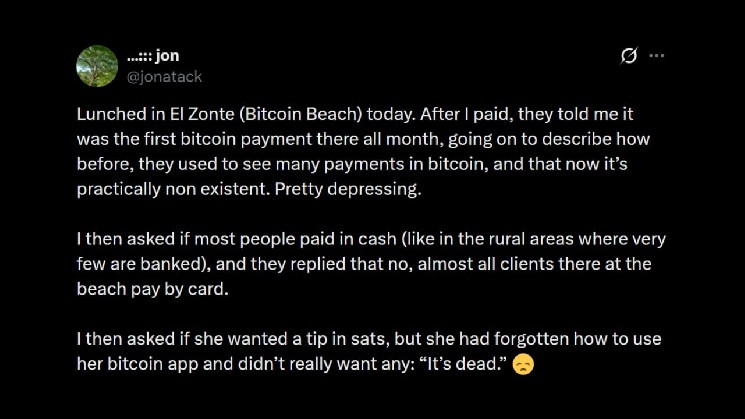
A Bitcoin Core developer, John Atack, who has lived in El Salvador since 2022, shared a concerning anecdote about Bitcoin adoption in the country. While dining at El Zonte, a region known as "Bitcoin Beach," he paid with Bitcoin and was told it was the first such payment the establishment had received in a month. Staff explained Bitcoin payments, once common, have now virtually disappeared, with nearly all customers using cards. An employee even declined a Bitcoin tip, stating she had forgotten how to use her wallet and declaring "It's already dead." Atack emphasized this was a single observation but noted the employee had witnessed the payment evolution over three years. His comments sparked mixed reactions. Some disputed his experience, with one user confirming successful Bitcoin payments in the same area. However, Bitcoin reporter Juan Galt acknowledged an underlying "economic problem," arguing that expecting price appreciation makes using Bitcoin for everyday transactions counterintuitive to economic incentives needed for a circular crypto economy. Despite the concerning report, Atack also reflected that El Salvador remains a global leader in cryptocurrency adoption and progressive legislation, sometimes causing locals to take these advancements for granted. The story highlights the ongoing challenges of mainstream Bitcoin adoption for daily commerce, even in pioneering nations.

cryptonews.ru25 хв тому

Bitcoin Core Developer Warns That Bitcoin Payments Are Disappearing at 'Bitcoin Beach'

cryptonews.ru25 хв тому

Торгівля

Спот

Популярні статті

Що таке ETH 2.0

ETH 2.0: Нова ера для Ethereum Вступ ETH 2.0, широко відомий як Ethereum 2.0, є величезним оновленням для блокчейну Ethereum. Ця трансформація не є лише косметичною зміною; вона має на меті фундаментально покращити масштабованість, безпеку та сталий розвиток мережі. З переходом від енергомісткого механізму консенсусу Proof of Work (PoW) до більш ефективного Proof of Stake (PoS), ETH 2.0 обіцяє трансформаційний підхід до екосистеми блокчейнів. Що таке ETH 2.0? ETH 2.0 — це збірка особливих, взаємопов’язаних оновлень, спрямованих на оптимізацію можливостей та продуктивності Ethereum. Це перетворення розроблене для вирішення критичних викликів, з якими стикалося існуюче механізм Ethereum, зокрема щодо швидкості транзакцій та заторів у мережі. Мета ETH 2.0 Основні цілі ETH 2.0 зосереджені на покращенні трьох ключових аспектів: Масштабованість: Мета — значно підвищити кількість транзакцій, які мережа може обробити за секунду; ETH 2.0 прагне вийти за межі поточного обмеження приблизно в 15 транзакцій на секунду, потенційно досягнувши тисяч. Безпека: Підвищені заходи безпеки є невід’ємною частиною ETH 2.0, зокрема через покращену стійкість до кібератак і збереження децентралізованої етики Ethereum. Сталий розвиток: Новий механізм PoS розроблений не тільки для підвищення ефективності, але й для різкого зменшення споживання енергії, що узгоджує операційну структуру Ethereum з екологічними міркуваннями. Хто є творцем ETH 2.0? Створення ETH 2.0 можна віднести до Ethereum Foundation. Ця неприбуткова організація, яка відіграє важливу роль у підтримці розвитку Ethereum, очолюється відомим співавтором Віталіком Бутеріним. Його бачення більш масштабованого та стійкого Ethereum стало рушійною силою цього оновлення, залучаючи внески зі всього світу від розробників і ентузіастів, які прагнуть покращити протокол. Хто є інвесторами ETH 2.0? Хоча подробиці про інвесторів ETH 2.0 не були оприлюднені, відомо, що Ethereum Foundation отримує підтримку від різних організацій та осіб у сфері блокчейну та технологій. Ці партнери включають венчурні капітальні компанії, технологічні компанії та філантропічні організації, які мають спільний інтерес у підтримці розвитку децентралізованих технологій та інфраструктури блокчейну. Як працює ETH 2.0? ETH 2.0 відзначається введенням низки ключових функцій, які відрізняють його від попередника. Proof of Stake (PoS) Перехід до механізму консенсусу PoS є одним із знакових змін ETH 2.0. На відміну від PoW, який покладається на енергомісткий видобуток для перевірки транзакцій, PoS дозволяє користувачам підтверджувати транзакції та створювати нові блоки відповідно до кількості ETH, яку вони ставлять у мережі. Це призводить до підвищення енергоефективності, зменшуючи споживання приблизно на 99,95%, завдяки чому Ethereum 2.0 стає значно більш екологічною альтернативою. Шардові ланцюги Шардові ланцюги є ще одним ключовим нововведенням ETH 2.0. Ці менші ланцюги працюють паралельно з основним ланцюгом Ethereum, що дозволяє обробляти кілька транзакцій одночасно. Це підходи покращує загальну ємність мережі, усуваючи проблеми масштабованості, які переслідували Ethereum. Beacon Chain У центрі ETH 2.0 знаходиться Beacon Chain, яка координує мережу і управляє протоколом PoS. Вона виконує роль організатора: контролює валідаторів, забезпечує з’єднання шард з мережею і моніторить загальний стан екосистеми блокчейнів. Хронологія ETH 2.0 Шлях ETH 2.0 характеризується кількома ключовими етапами, які відображають еволюцію цього значного оновлення: Грудень 2020: Запуск Beacon Chain ознаменував введення PoS, проклавши шлях до міграції на ETH 2.0. Вересень 2022: Завершення "Злиття" є знаковим моментом, коли мережа Ethereum успішно перейшла з PoW на PoS, відкриваючи нову еру для Ethereum. 2023: Очікуване розгортання шардових ланцюгів має на меті подальше покращення масштабованості мережі Ethereum, закріплюючи ETH 2.0 як надійну платформу для децентралізованих додатків і послуг. Ключові особливості та переваги Покращена масштабованість Однією з найзначніших переваг ETH 2.0 є його покращена масштабованість. Поєднання PoS та шардових ланцюгів дозволяє мережі розширити свою ємність, що дозволяє їй обробляти набагато більший обсяг транзакцій в порівнянні з класичною системою. Енергоефективність Запровадження PoS є величезним кроком до енергоефективності в технології блокчейн. Значно зменшуючи споживання енергії, ETH 2.0 не тільки знижує операційні витрати, але також ближче узгоджується з глобальними цілями сталого розвитку. Підвищена безпека Оновлені механізми ETH 2.0 сприяють підвищенню безпеки по всій мережі. Впровадження PoS, поряд з інноваційними контрольними заходами, встановленими через шардові ланцюги та Beacon Chain, забезпечує вищий рівень захисту від потенційних загроз. Зниження витрат для користувачів З покращенням масштабованості вплив на витрати на транзакції також стане очевидним. Збільшена ємність і зменшені затори, як очікується, призведуть до зниження зборів для користувачів, що зробить Ethereum більш доступним для повсякденних транзакцій. Висновок ETH 2.0 є значною еволюцією в екосистемі блокчейну Ethereum. Оскільки він вирішує важливі питання, такі як масштабованість, споживання енергії, ефективність транзакцій і загальна безпека, важливість цього оновлення не можна недооцінювати. Перехід до Proof of Stake, введення шардових ланцюгів і фундаментальна робота Beacon Chain свідчать про майбутнє, в якому Ethereum може задовольнити зростаючі вимоги децентралізованого ринку. В індустрії, що рухається вперед завдяки інноваціям та прогресу, ETH 2.0 є підтвердженням можливостей технології блокчейн у прокладенні шляху до більш сталого та ефективного цифрового економіки.

340 переглядів усьогоОпубліковано 2024.04.04Оновлено 2024.12.03

Що таке ETH 2.0

Що таке ETH 3.0

ETH3.0 та $eth 3.0: Глибоке дослідження майбутнього Ethereum Вступ У швидко змінюваному світі криптовалют та технології блокчейн, ETH3.0, часто позначуваний як $eth 3.0, став темою значного інтересу та спекуляцій. Цей термін охоплює два основні концепти, які потребують уточнення: Ethereum 3.0: Це потенційне майбутнє оновлення, яке має на меті покращення можливостей існуючого блокчейну Ethereum, зокрема, фокусуючись на поліпшенні масштабованості та продуктивності. ETH3.0 Мем Токен: Цей окремий криптовалютний проект прагне використовувати блокчейн Ethereum для створення екосистеми, орієнтованої на меми, сприяючи залученню до криптовалютної громади. Розуміння цих аспектів ETH3.0 є важливим не лише для криптоентузіастів, але й для тих, хто спостерігає за широкими технологічними тенденціями у цифровому просторі. Що таке ETH3.0? Ethereum 3.0 Ethereum 3.0 пропонується як оновлення вже існуючої мережі Ethereum, яка стала основою багатьох децентралізованих додатків (dApps) та смарт-контрактів з моменту свого виникнення. Передбачувані удосконалення зосереджені в основному на масштабованості — інтегруючи передові технології, такі як шардінг та нульові знання (zk-докази). Ці технологічні нововведення націлені на забезпечення безпрецедентної кількості транзакцій на секунду (TPS), потенційно досягаючи мільйонів, тим самим вирішуючи одну з найзначніших обмежень, з якими стикається сучасна технологія блокчейн. Покращення є не лише технічним, а й стратегічним; воно спрямоване на підготовку мережі Ethereum до широкого прийняття та корисності в майбутньому, позначеному збільшеним попитом на децентралізовані рішення. ETH3.0 Мем Токен На відміну від Ethereum 3.0, ETH3.0 Мем Токен пропонує легшу та грайливішу домену, поєднуючи культуру інтернет-мемів із динамікою криптовалют. Цей проект дозволяє користувачам купувати, продавати та обмінювати меми на блокчейні Ethereum, надаючи платформу, яка сприяє залученню громади через креативність та спільні інтереси. ETH3.0 Мем Токен має на меті продемонструвати, як технологія блокчейн може перетинатися з цифровою культурою, створюючи випадки використання, які є водночас розважальними та фінансово життєздатними. Хто є творцем ETH3.0? Ethereum 3.0 Ініціатива щодо Ethereum 3.0 переважно підтримується консорціумом розробників та дослідників у межах громади Ethereum, зокрема, до складу якого входить Джастін Дрейк. Відомий своїми думками та внеском у розвиток Ethereum, Дрейк є помітною особистістю в обговореннях щодо переходу Ethereum на новий рівень консенсусу, який називається «Beam Chain». Цей колабораційний підхід до розробки свідчить про те, що Ethereum 3.0 не є продуктом єдиного творця, а скоріше втіленням колективної винахідливості, спрямованої на просування технології блокчейн. ETH3.0 Мем Токен Деталі про творця ETH3.0 Мем Токена наразі не відстежуються. Природа мем-токенів часто призводить до більш децентралізованої та громартової структури, що може пояснити відсутність специфічної атрибуції. Це узгоджується з етикою ширшої крипто-спільноти, де інновації часто виникають з колективних, а не індивідуальних зусиль. Хто є інвесторами ETH3.0? Ethereum 3.0 Підтримка Ethereum 3.0 переважно надходить від Фонду Ethereum поряд з ентузіастичною спільнотою розробників та інвесторів. Це базове співробітництво надає значний градус легітимності та підвищує ймовірність успішної реалізації, оскільки воно використовує довіру та авторитет, накопичені за роки роботи мережі. У швидко змінюваному кліматі криптовалют підтримка громади займає важливу роль у розвитку та прийнятті, позиціонуючи Ethereum 3.0 як серйозного конкурента для майбутніх блокчейн-інновацій. ETH3.0 Мем Токен Хоча наразі доступні джерела не надають явної інформації щодо інвестиційних фондів або організацій, що підтримують ETH3.0 Мем Токен, це свідчить про типову модель фінансування для мем-токенів, яка часто спирається на підтримку знизу та залучення громади. Інвестори в такі проекти зазвичай складаються з осіб, які мотивовані потенціалом інновацій, що керуються спільнотою, та духом співпраці, притаманним крипто-спільноті. Як працює ETH3.0? Ethereum 3.0 Відмінні риси Ethereum 3.0 полягають у його запропонованій реалізації технології шардінгу та zk-proof. Шардінг — це метод розподілу блокчейну на менші, керовані частини чи «шарди», які можуть обробляти транзакції одночасно, а не послідовно. Це децентралізоване оброблення допомагає запобігти заторам та забезпечити оперативність мережі навіть під великим навантаженням. Технологія нульових доказів (zk-proof) надає ще один рівень складності, дозволяючи валідацію транзакцій без розкриття підпорядкованих даних. Цей аспект не лише підвищує конфіденційність, а й збільшує загальну ефективність мережі. Також обговорюється включення нульової Ефірної віртуальної машини (zkEVM) в це оновлення, що ще більше підвищить можливості та корисність мережі. ETH3.0 Мем Токен ETH3.0 Мем Токен виділяється завдяки використанню популярності культури мемів. Він створює ринок, на якому користувачі можуть брати участь у торгівлі мемами не лише для розваги, але й для потенційного економічного вигоди. Інтегруючи функції, такі як стейкінг, забезпечення ліквідності та механізми управління, проект сприяє створенню середовища, яке заохочує взаємодію та участь громади. Пропонуючи унікальне поєднання розваг та економічних можливостей, ETH3.0 Мем Токен прагне залучити різну аудиторію, яка охоплює від криптоентузіастів до casual-консумерів мемів. Хронологія ETH3.0 Ethereum 3.0 11 листопада 2024: Джастін Дрейк натякає на майбутнє оновлення ETH 3.0, яке зосереджене на поліпшеннях масштабованості. Це оголошення означає початок формальних обговорень щодо майбутньої архітектури Ethereum. 12 листопада 2024: Очікується, що запропоновану пропозицію для Ethereum 3.0 буде представлено на Devcon у Бангкоку, що готує ґрунт для більш широкого зворотного зв'язку від громади та потенційних наступних кроків у розвитку. ETH3.0 Мем Токен 21 березня 2024: ETH3.0 Мем Токен офіційно потрапляє у список на CoinMarketCap, що означає його дебют у публічному крипто-просторі та підвищує видимість для його меморієнтованої екосистеми. Ключові моменти На завершення, Ethereum 3.0 представляє значну еволюцію в межах мережі Ethereum, зосереджуючись на подоланні обмежень щодо масштабованості та продуктивності через передові технології. Його запропоновані оновлення відображають проактивний підхід до майбутніх вимог і корисності. Натомість ETH3.0 Мем Токен втілює суть культури, керованої громадою, у сфері криптовалют, використовуючи культуру мемів для створення привабливих платформ, які заохочують творчість і участь користувачів. Розуміння окремих цілей і функцій ETH3.0 та $eth 3.0 є надзвичайно важливим для кожного, хто цікавиться поточними подіями в крипто-просторі. З обома ініціативами, які прокладають унікальні шляхи, вони разом підкреслюють динамічну та багатогранну природу інновацій у блокчейн-технологіях.

352 переглядів усьогоОпубліковано 2024.04.04Оновлено 2024.12.03

Що таке ETH 3.0

Як купити ETH

Ласкаво просимо до HTX.com! Ми зробили покупку Ethereum (ETH) простою та зручною. Дотримуйтесь нашої покрокової інструкції, щоб розпочати свою криптовалютну подорож.Крок 1: Створіть обліковий запис на HTXВикористовуйте свою електронну пошту або номер телефону, щоб зареєструвати обліковий запис на HTX безплатно. Пройдіть безпроблемну реєстрацію й отримайте доступ до всіх функцій.ЗареєструватисьКрок 2: Перейдіть до розділу Купити крипту і виберіть спосіб оплатиКредитна/дебетова картка: використовуйте вашу картку Visa або Mastercard, щоб миттєво купити Ethereum (ETH).Баланс: використовуйте кошти з балансу вашого рахунку HTX для безперешкодної торгівлі.Треті особи: ми додали популярні способи оплати, такі як Google Pay та Apple Pay, щоб підвищити зручність.P2P: Торгуйте безпосередньо з іншими користувачами на HTX.Позабіржова торгівля (OTC): ми пропонуємо індивідуальні послуги та конкурентні обмінні курси для трейдерів.Крок 3: Зберігайте свої Ethereum (ETH)Після придбання Ethereum (ETH) збережіть його у своєму обліковому записі на HTX. Крім того, ви можете відправити його в інше місце за допомогою блокчейн-переказу або використовувати його для торгівлі іншими криптовалютами.Крок 4: Торгівля Ethereum (ETH)Легко торгуйте Ethereum (ETH) на спотовому ринку HTX. Просто увійдіть до свого облікового запису, виберіть торгову пару, укладайте угоди та спостерігайте за ними в режимі реального часу. Ми пропонуємо зручний досвід як для початківців, так і для досвідчених трейдерів.

3.7k переглядів усьогоОпубліковано 2024.12.10Оновлено 2026.06.02

Як купити ETH

Обговорення

Ласкаво просимо до спільноти HTX. Тут ви можете бути в курсі останніх подій розвитку платформи та отримати доступ до професійної ринкової інформації. Нижче представлені думки користувачів щодо ціни ETH (ETH).

活动图片