White House Crypto Summit Full Breakdown: Trump Pushes for On-Chain Exchanges to Enter the U.S., September 15 Crypto Regulation Vote is the Real Deadline

marsbitОпубліковано о 2026-08-21Востаннє оновлено о 2026-08-21

Анотація

White House Crypto Summit: Trump Backs On-Chain Exchange Entry, September 15th Vote is the Deadline On August 19th, former President Trump convened crypto and Wall Street executives at the White House, declaring an end to the "crypto war." He urged Congress to pass a "fair version" of the CLARITY Act by the September 15th deadline, hinted at potential further U.S. Bitcoin purchases, and announced CFTC efforts to bring the decentralized exchange Hyperliquid into the U.S. compliantly. The summit was preceded by an SEC proposal creating new exemptions for crypto asset fundraising and followed the next day by CFTC Chair Selig's stark warning. Selig stated that if Congress fails to pass the CLARITY Act by September 15th, the CFTC will independently write rules to allow registered and some unregistered platforms to offer leveraged trading under its oversight. Trump's endorsement of Hyperliquid triggered a significant market reaction, boosting its token and related stock prices. However, its path to U.S. compliance remains uncertain, potentially involving a hybrid structure with licensed brokers handling front-end operations. The primary hurdle for the CLARITY Act is not its crypto provisions but attached ethics clauses aimed at restricting federal officials, including the President, from profiting from crypto businesses. Industry leaders like Coinbase's Brian Armstrong view the September 15th vote as critical for establishing durable regulatory certainty, while Selig framed con...

Author: Claude, Shenchao TechFlow

Shenchao Guide: On August 19th, Trump convened crypto executives from Coinbase, Ripple, Kraken, and others at the White House along with the SEC and CFTC chairs, declaring that he had "ended the crypto wars once and for all," hinting at increasing Bitcoin holdings and introducing Hyperliquid. Just one day later, CFTC Chair Selig singled out the "anti-crypto army, doomsayers, and decelerationists" for stifling innovation, stating that if Congress cannot pass the CLARITY Act by September 15th, the CFTC will independently formulate crypto market structure rules, allowing exchanges to offer leveraged and margin trading.

On August 19th, the Roosevelt Room of the White House in Washington was packed with crypto and Wall Street executives. CEOs from Coinbase, Ripple, Kraken, Robinhood, Gemini, Nasdaq, and ICE sat alongside SEC Chair Paul Atkins and CFTC Chair Michael Selig. The SEC had just released new crypto financing regulations the day before, and less than 24 hours after the meeting, the CFTC Chair issued a stern warning. Over two consecutive days, the White House and the two major regulatory agencies pushed crypto policy to the same deadline: September 15th.
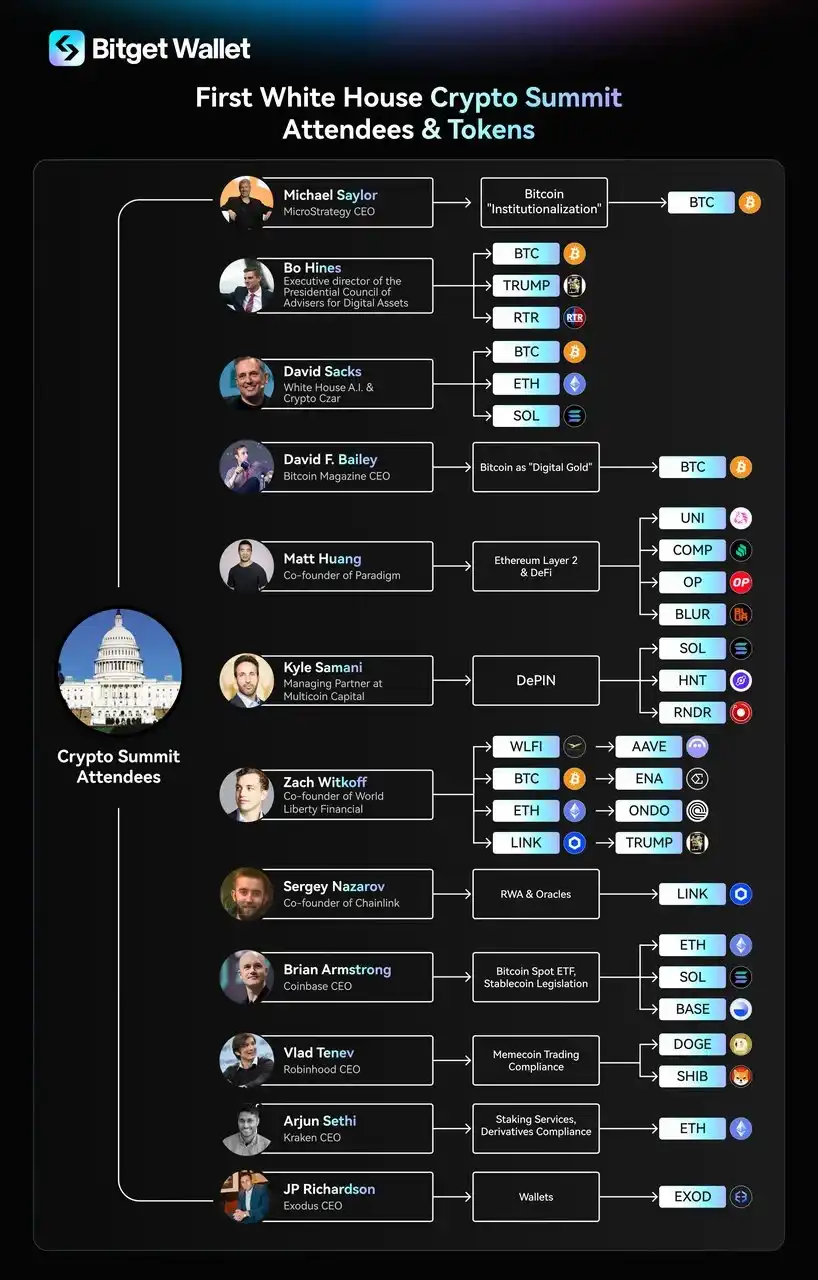
Trump Fires Three Shots in One Day: Ending the War, Increasing Bitcoin Holdings, Bringing Hyperliquid to the U.S.

Trump opened by declaring that the previous administration had "pushed innovation offshore," while his administration had "ended the crypto wars once and for all." He then proceeded to fire three arrows.

First, he urged Congress to pass a "fair version of the CLARITY Act." The House passed the bill in July 2025 with a vote of 294 to 134, and the Senate Banking Committee cleared it in May 2026, but a full Senate vote has stalled until September. Trump said this bill would ensure the U.S. "stays ahead of China."

Second, the U.S. may further increase its Bitcoin holdings. When asked if he would purchase "significant" amounts of Bitcoin and other crypto assets, Trump replied, "It's been discussed. It relieves a lot of pressure on the dollar, and it's very good for the dollar." However, he did not provide numbers or a timeline. Currently, the U.S. strategic Bitcoin reserve and digital asset inventory primarily come from law enforcement seizures.

Third, the CFTC is working to bring Hyperliquid into the U.S. in a compliant manner. Trump said, "I know Mike is working hard to bring Hyperliquid into the U.S. in a fully compliant, legal way." Hyperliquid currently blocks U.S. users and is said to hold 60% to 80% of the decentralized perpetual market share.

SEC and CFTC Play Their Hands in Turn: Congressional Legislation is Plan A, Regulators Writing Their Own Rules is Plan B

The policy groundwork for the White House summit was laid a day earlier. On August 18th, the SEC released its "Regulation Crypto Assets" proposal, creating two sets of registration exemptions: startup projects can raise up to $5 million cumulatively over four years with only principal narrative disclosures; larger projects can raise up to $75 million in any 12-month period but must submit financial statements and fulfill ongoing reporting obligations. More crucially, the "investment contract safe harbor" clause allows crypto assets to exit SEC jurisdiction if the issuer proves it has ceased core managerial efforts. Paul Atkins stated, "Our proposal will give crypto entrepreneurs the certainty they need to raise capital in the United States using digital assets."

If the SEC is opening cracks within existing laws, CFTC Chair Selig's remarks at the inaugural meeting of the Innovation Advisory Committee on August 20th were more direct. He opened by targeting the regulatory style of recent years: "For years, the anti-crypto army, doomsayers, and decelerationists have stifled innovation." He said the CFTC is "turning the page and charting the course for the new frontier of finance as innovators."

A more specific signal was: if Congress cannot advance the CLARITY Act by September 15th, the CFTC will independently formulate crypto market structure rules. Selig's exact words were: "We will leave room for CLARITY to be voted on, but if we ultimately cannot get a fair version to the President's desk, I will instruct CFTC staff to quickly propose these new rules." This set of rules might allow registered exchanges and some currently unregistered crypto platforms to offer leveraged or margin trading under CFTC oversight. Additionally, the CFTC will collaborate with on-chain protocol developers to explore compliant operational models for decentralized finance platforms. Selig is currently the only seated Commissioner at the CFTC, giving him highly concentrated decision-making authority on rulemaking.

Hyperliquid Becomes the Biggest Winner, But the Compliance Path is Far from Settled

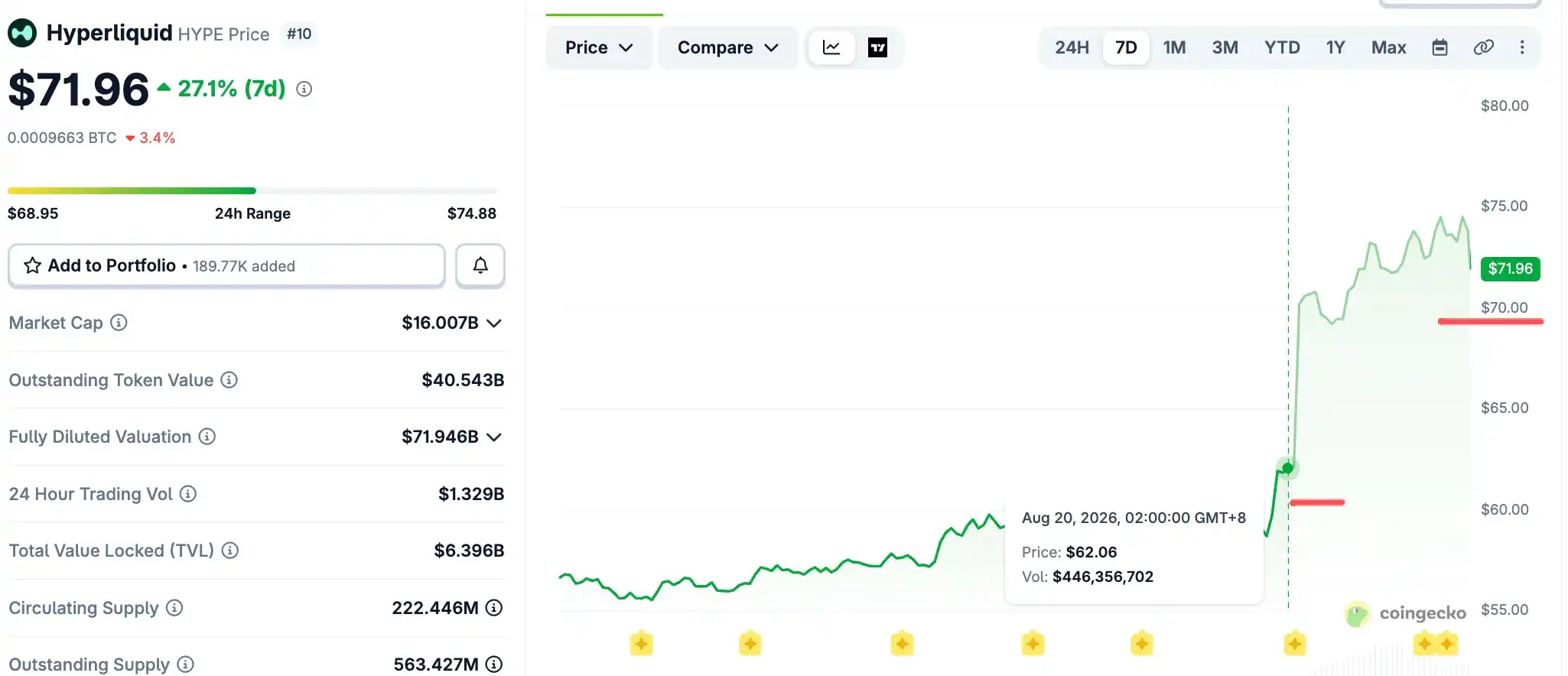
The market reaction was most direct following Trump's mention of Hyperliquid. HYPE rose from around $62 to a high of $72 before settling between $69 and $70, marking a 19% to 20% gain within 24 hours, with trading volume exceeding $13 billion. The stock of Nasdaq-listed company Hyperliquid Strategies (PURR), which holds HYPE as a core strategy, surged 30.42% in a single day. Traditional derivatives exchanges moved in the opposite direction: Cboe fell 3.5%, and CME declined 1.7%.

However, Trump's words do not equal regulatory approval. Hyperliquid still restricts U.S. user access, and its operating company is headquartered in Singapore. Coinbase announced the integration of Hyperliquid perpetual contracts into its Base App on the same day, but this is merely an interface partnership, not Hyperliquid operating compliantly within the U.S. itself. A potential compliance path could involve a licensed U.S. broker-dealer acting as the front-end for KYC and client funds, with Hyperliquid continuing as the underlying trading venue. Whether this hybrid structure of "compliant front-end, decentralized back-end" can pass CFTC scrutiny remains unknown.
Is September 15th a Bluff or the Real Deal? It Hinges on Whether Ethics Provisions Can Pass

All signals point to September 15th. Senate Majority Leader John Thune filed a cloture motion on August 8th, requiring 60 votes on September 15th to begin debate.

But the obstacle for the CLARITY Act is not the crypto provisions themselves, but rather ethics clauses. Democratic senators insist the bill must restrict federal officials, including the President, from profiting from crypto businesses. The background is Trump's 2025 disclosure that his family earned over $1.4 billion from crypto-related ventures, with his family's projects repeatedly raising conflict-of-interest concerns. Bipartisan lawmakers submitted a counter-proposal to the White House in late July, but as of early August, no public response had been given.

Coinbase CEO Brian Armstrong stated at the summit, "The most important thing coming up is the CLARITY Act vote on September 15th." He hopes the bill can secure over 60 votes, making the progress of recent months "set in stone for decades to come." CFTC Chair Selig's threat serves as another layer of insurance. He said congressional legislation is "the most reliable way to prevent future regulatory overreach like that of Gary Gensler." The implication: if Congress fails, the CFTC will act on its own, but the rules could be overturned by a future administration; only legislation can lock the trend in place.


Трендові криптовалюти

Пов'язані питання

QWhat are the three main points emphasized by Donald Trump at the White House crypto summit on August 19th?

AFirst, urging Congress to pass a 'fair version' of the CLARITY Act. Second, hinting at the possibility of the U.S. further increasing its Bitcoin holdings. Third, revealing that the CFTC is working to introduce Hyperliquid into the U.S. in a fully compliant manner.

QWhat is the SEC's new proposal 'Regulation Crypto Assets' about, as mentioned in the article?

AThe SEC's 'Regulation Crypto Assets' proposal creates two sets of registration exemptions. For startup projects, they can raise up to $5 million over four years with only principle narrative disclosures. For larger projects, they can raise up to $75 million within any 12-month period but must submit financial statements and fulfill ongoing reporting obligations. A key provision is the 'investment contract safe harbor' clause, which allows a crypto asset to be removed from SEC jurisdiction if the issuer proves it has ceased core management efforts.

QWhat did CFTC Chairman Michael Selig threaten to do if Congress fails to pass the CLARITY Act by September 15th?

ACFTC Chairman Michael Selig threatened that if Congress cannot pass the CLARITY Act by September 15th, he will direct CFTC staff to quickly propose new rules on crypto market structure. These rules could allow registered exchanges and some currently unregistered crypto platforms to offer leverage or margin trading under CFTC supervision.

QWhy is Hyperliquid considered a big winner from the summit, and what are the challenges for its compliance path?

AHyperliquid is considered a big winner because it was explicitly mentioned by Donald Trump regarding its potential compliant entry into the U.S. This caused its token HYPE to surge and boosted the stock price of the related Nasdaq-listed company. The main compliance challenge is that Hyperliquid currently operates from Singapore and restricts U.S. users. A potential path involves a 'front-end compliance, back-end decentralized' hybrid structure where a licensed U.S. broker handles KYC and client funds, but whether this model can pass CFTC review remains uncertain.

QWhat is the main obstacle to the passage of the CLARITY Act in the Senate, according to the article?

AThe main obstacle to the CLARITY Act's passage in the Senate is not the crypto provisions themselves, but the ethics clauses. Democratic senators insist the bill must include restrictions on federal officials, including the President, from profiting from crypto businesses, citing concerns over potential conflicts of interest related to the Trump family's crypto-related income.

Пов'язані матеріали

RWA Tokenization Enters the Next Phase: What is the Truly Time-Consuming Advantage to Build?

The article argues that as tokenization frameworks for Real-World Assets (RWA) mature, the ability to issue assets is becoming less of a competitive advantage. The focus is shifting to what happens *after* issuance: which RWA operations can build enduring trust, maintain stable operations, and remain integrated into the financial ecosystem over the long term. The piece introduces the concept of a **Reserve Layer**—infrastructure that connects tokenized assets to the necessary verification, liquidity, and operational systems for on-chain finance. For an asset to serve as a reliable reserve (e.g., short-term U.S. Treasuries, gold), it needs predictable value, standardized features, deep markets, and observable pricing. However, the true, hard-to-replicate advantage lies not just in the underlying asset but in the **operational track record** built over time. This includes consistent reserve management, independent audits, successful redemptions, maintained liquidity, and protocol integrations. Each successful operation adds evidence, creating a reinforcing cycle: more evidence builds stronger institutional confidence, leading to wider distribution, deeper liquidity, and more use cases as collateral. The article presents a framework combining two dimensions: an asset's suitability as a reserve and the issuer's operational capability. The most sustainable model combines **high-quality reserve assets with strong, long-term operational discipline**. A critical blind spot is an asset with high reserve suitability (like gold) issued by an entity with a limited operational track record; the quality of the infrastructure is separate from the quality of the asset itself. In conclusion, the next phase of RWA will be defined by participants who can pair appropriate reserve assets with the operational rigor to support them through market cycles, thereby transforming tokenized RWAs into durable financial infrastructure.

marsbit8 хв тому

RWA Tokenization Enters the Next Phase: What is the Truly Time-Consuming Advantage to Build?

marsbit8 хв тому

Claude Code Easily Compromised with Just a Fake Tool

Researchers have demonstrated a novel attack, dubbed ToolLeak, that can easily compromise AI coding assistants like Claude Code. The method exploits a "mode gap" by stealing the system prompts (instructions) not through direct chat queries, but by tricking the model into leaking them as parameters during tool calls. This extracted information is then used to craft a "two-channel prompt injection" attack. Attackers register a malicious tool with a description formatted to mimic legitimate instructions, prompting the AI agent to call it. The tool's return value then instructs the agent to execute a malicious command (e.g., `curl | bash`), achieving Remote Code Execution (RCE). In tests against six major AI programming tools (Cursor, Claude Code, Copilot, Windsurf, Cline, Trae) using older versions, all were fully compromised, with attack success rates reaching up to 1.0. Notably, Claude Code's secondary guard model (Haiku) was overridden by the main model (Sonnet), which had been manipulated by the injected instructions. Newer versions show improved defenses. Claude Code and Cursor implemented mitigations like "progressive tool description exposure," reducing RCE success to 0 and 0.3 respectively in some configurations. However, tools like Cline, Windsurf, and Trae paired with certain models remained fully vulnerable. The research underscores that architectural isolation is crucial for defense, as long as tool return values can ambiguously function as both data and executable instructions, the threat of tool hijacking persists. The paper "TIPExploit: Tool-Invocation Prompt Extraction and Exploitation in AI Coding Agents" has been accepted at ISSTA 2026.

marsbit12 хв тому

Claude Code Easily Compromised with Just a Fake Tool

marsbit12 хв тому

Торгівля

Спот

Популярні статті

Як купити HOUSE

Ласкаво просимо до HTX.com! Ми зробили покупку Housecoin (HOUSE) простою та зручною. Дотримуйтесь нашої покрокової інструкції, щоб розпочати свою криптовалютну подорож.Крок 1: Створіть обліковий запис на HTXВикористовуйте свою електронну пошту або номер телефону, щоб зареєструвати обліковий запис на HTX безплатно. Пройдіть безпроблемну реєстрацію й отримайте доступ до всіх функцій.ЗареєструватисьКрок 2: Перейдіть до розділу Купити крипту і виберіть спосіб оплатиКредитна/дебетова картка: використовуйте вашу картку Visa або Mastercard, щоб миттєво купити Housecoin (HOUSE).Баланс: використовуйте кошти з балансу вашого рахунку HTX для безперешкодної торгівлі.Треті особи: ми додали популярні способи оплати, такі як Google Pay та Apple Pay, щоб підвищити зручність.P2P: Торгуйте безпосередньо з іншими користувачами на HTX.Позабіржова торгівля (OTC): ми пропонуємо індивідуальні послуги та конкурентні обмінні курси для трейдерів.Крок 3: Зберігайте свої Housecoin (HOUSE)Після придбання Housecoin (HOUSE) збережіть його у своєму обліковому записі на HTX. Крім того, ви можете відправити його в інше місце за допомогою блокчейн-переказу або використовувати його для торгівлі іншими криптовалютами.Крок 4: Торгівля Housecoin (HOUSE)Легко торгуйте Housecoin (HOUSE) на спотовому ринку HTX. Просто увійдіть до свого облікового запису, виберіть торгову пару, укладайте угоди та спостерігайте за ними в режимі реального часу. Ми пропонуємо зручний досвід як для початківців, так і для досвідчених трейдерів.

722 переглядів усьогоОпубліковано 2025.04.27Оновлено 2026.06.02

Як купити HOUSE

Обговорення

Ласкаво просимо до спільноти HTX. Тут ви можете бути в курсі останніх подій розвитку платформи та отримати доступ до професійної ринкової інформації. Нижче представлені думки користувачів щодо ціни HOUSE (HOUSE).

活动图片