When Meme Traffic Meets RWA: The Financial Ambitions of Hyperliquid and Robinhood

marsbitОпубліковано о 2026-08-11Востаннє оновлено о 2026-08-11

Анотація

When Meme traffic meets RWA: Hyperliquid and Robinhood's Financial Ambitions This article explores the transformative role of speculation in financial market evolution, arguing it can provide the liquidity and capital foundation for mature, compliant businesses. The analysis draws parallels to historical examples, like 19th-century Chicago grain markets, where speculators provided necessary counterparty liquidity for farmers, eventually establishing a global pricing infrastructure. The author examines contemporary cases in crypto. The launch of Uniswap's Pools meme token platform on Robinhood Chain—originally built for tokenized stock trading—demonstrates how speculative meme trading can drive significant user adoption and liquidity. Despite initial volatility, this traffic can seed future, more substantial financial activities. Similarly, Hyperliquid, which began with high-leverage crypto trading, has successfully migrated its speculative model to real-world assets (RWAs) like equities, commodities, and indices. By July, RWA perpetual contract volumes on Hyperliquid surpassed its crypto trading for the first time, showcasing how speculation can build new, all-weather pricing layers. The core thesis is that speculation itself is neutral. Its long-term value and sustainability are determined by the underlying assets it engages with. While pure bubbles collapse, speculation anchored to valuable assets—be it wheat, gold, or equities—can evolve into foundational market infrast...

Author: Prathik Desai, Token Dispatch

Compiled by: Saoirse, Foresight News

"When the capital development of a country becomes a by-product of the activities of a casino, the job is likely to be ill-done." – John Maynard Keynes, 1936

The crypto industry is often criticized, with the common perception that it is entirely driven by speculation, and many label it as a casino with no fundamental support. But many fail to realize that speculation is often a leading signal of market evolution. A group of speculators, scorned by the mainstream, gather together to form liquidity, and the mature, compliant businesses of the future are built upon this very liquidity.

In this article, I will analyze this evolutionary path in light of recent phenomena in the crypto market: a public chain originally intended for stock trading launches a Meme coin issuance platform; a perpetual futures trading platform transforms into infrastructure for bulk commodity trading; and a brokerage firm, relying on funds from frog-themed tokens, supports the construction of its on-chain stock trading system.

The story unfolds......

In the crypto space, speculation has many names: market noise, bubbles, casinos. But one point is almost never acknowledged: in the industry's march towards maturity, speculation can become the foundation upon which upper-layer business models grow.

However, it must be clarified: not all bubbles can transform into foundations. Bubbles that remain purely speculative for too long will eventually burst quickly. But if a bubble can combine with a sustainable trading scenario and continuously generate trading activity, it can become the foundation, supporting the landing of more businesses.

This is not a new phenomenon; it has been repeated throughout the long history of finance.

Consider the Chicago grain market in the 1840s. The Chicago Board of Trade introduced futures markets with the original intention of helping farmers, whose harvests were highly uncertain, lock in selling prices in advance to minimize losses. But for every farmer wanting to sell grain forward, there needed to be a counterparty willing to take on the long side of the forward contract and bear the price risk. Speculators filled this gap. The essence of a functional risk transfer market is speculative capital voluntarily taking on the price risk that farmers wanted to shed.

The key to the birth of the futures market was the decoupling of "physical grain" and "grain as a traded commodity." American historian William Cronon termed this process the abstraction of grain. Once grain trading was simplified into warehouse receipt notes, ownership could be freely transferred, allowing speculators to participate in trading on a large scale. Massive speculative trading created sufficient liquidity, enabling farmers to always find counterparties. This ample liquidity ultimately allowed Chicago to grow into the global pricing center for wheat.

Interestingly, at the time, a large number of people resisted and despised this type of trading. The Grange Movement openly criticized exchange speculators, accusing them of profiting from farmers' labor. Yet this mechanism eventually evolved into indispensable price discovery infrastructure for the global agricultural economy. If there had been no speculators acting as counterparties in the 1870s, the global wheat market today would not have a mature pricing system.

Economist John Maynard Keynes's remarks on speculation are well-known, but his complete view more clearly reveals the dual role of speculation. Keynes divided market activities into two categories: enterprise investment, which forecasts the earnings an asset will produce over its full lifetime; and speculation, which forecasts the psychology of the market. He feared that in markets with ample liquidity, speculation would cannibalize enterprise investment.

A closer reading of his discourse shows speculation's dual nature.

"Speculators may do no harm as bubbles on a steady stream of enterprise. But the position is serious when enterprise becomes the bubble on a whirlpool of speculation. When the capital development of a country becomes a by-product of the activities of a casino, the job is likely to be ill-done."

Speculation that exists independently of underlying assets is highly risky; but if speculation is anchored to valuable underlying assets, it can play a positive role.

As early as the first known book on securities markets – Joseph de la Vega's "Confusion of Confusions" written in 1688 – the author noted that the Amsterdam Exchange attracted both investors and gamblers. Most existing exchanges started this way. But over time, this history faded, and a stereotype formed: that serious investment needs were the original purpose of exchanges. This is not the case.

Looking at the Present

On August 5th, the crypto industry's largest decentralized exchange, Uniswap, launched the Pools issuance platform, allowing users to issue and trade Meme coins on Robinhood Chain. This blockchain was built by the eponymous brokerage firm, initially aiming to serve its 30 million funded accounts for tokenized stock trading.

The story goes much further. Before the Pools platform officially launched, traders unearthed the yet-to-be-public smart contract, conducting over $150 million in trades through it. This forced Uniswap to simultaneously support both the test and official contract versions and delay the launch plan. The platform's top token, FRONG, named after the frog video filename used in Uniswap's pre-launch promotional material, was minted six days early via the same contract; on the day the platform officially opened, the token had 12,141 holders.

Interpret this as you will: approximately $150 million in capital traded a frog-themed token on infrastructure not yet officially operational, built on a public chain originally designed for securities trading. FRONG has now become the unofficial mascot of the Pools platform. It's hard not to suspect this was a deliberately orchestrated move to drive traffic to Uniswap's latest V4 version chain. Even if not planned, on-chain Uniswap V4 daily trading volume surged from $86.2 million to $228.3 million, nearly tripling.

But as stated at the article's outset, not all bubbles and speculation can foster sustainable business models. Whether a speculative activity can last long-term depends fundamentally on *what* it is speculating on. We can look at shturl.c.

For years, shturl.c has made speculation its core product and is now one of the largest Meme coin issuance platforms. Seventy percent of Meme coins on the platform have a lifespan of less than a day, with only a tiny fraction surviving over a month.
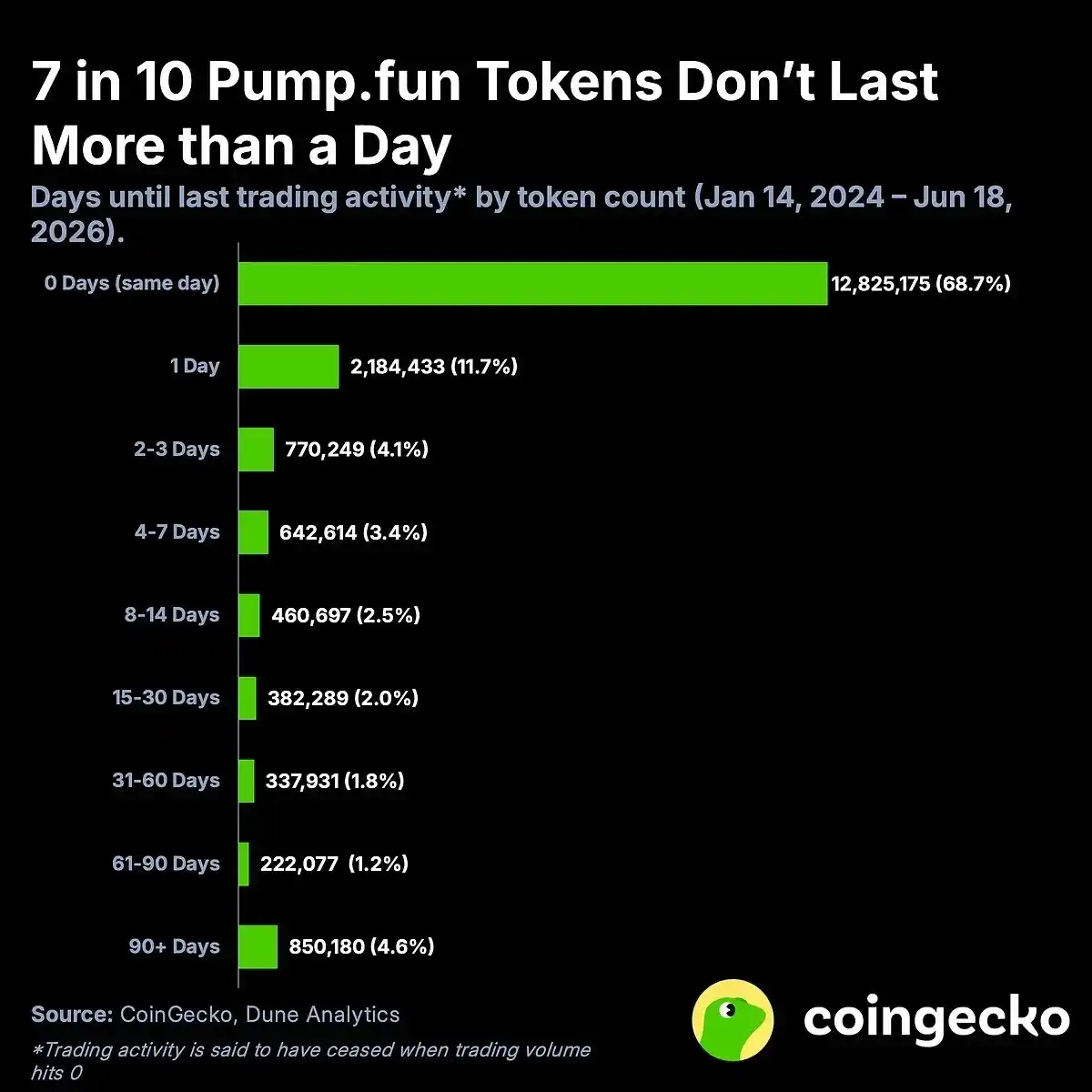
@Coingecko

From January–July 2026, the protocol's fee revenue nearly halved compared to the same period last year, reaching only $420 million. Despite this, it remains one of the crypto industry's most revenue-generating protocols, with annual revenue of $620 million and a net profit of $584 million last year.

Hyperliquid is another platform of this type. It initially focused on high-leverage cryptocurrency trading, catering to traders' directional bets. Later, it extended the leveraged trading model to various assets for round-the-clock trading, unrelated to crypto. Under the HIP-3 governance framework, the platform has now launched perpetual contracts for Nvidia, Tesla, Nasdaq tracking products, gold, crude oil, silver, stock indices, and more. When oil-related news breaks on a Sunday, traders can immediately take positions, while traditional markets wait until Monday to open.

In early July, the platform's real-world asset perpetual contract volume historically surpassed cryptocurrency trading for the first time, accounting for 52% of total volume.

Although Hyperliquid's overall trading volume has shrunk by nearly half from its 2025 peak, growth in real-world asset trading has offset the decline in crypto trading pairs. This is precisely the value speculation can create: Hyperliquid migrated the leverage trading model that attracts native crypto users to assets like gold, pre-IPO company equity, and stock indices, building a new round-the-clock pricing layer. Many traditional trading platforms are now emulating this model.

Robinhood Chain is replicating this development path in real-time.

Although the team positions this public chain as underlying infrastructure for on-chain stock trading, CEO Vlad Tenev is happy with the traffic brought by Meme coin traders.

"We built Robinhood Chain with the goal of being the best public chain for real-world asset trading... but it's also excellent for trading Meme coins."

Riding the wave of Meme coin trading, the chain surpassed Base chain in daily active users within three weeks of launch. The traffic and capital from Meme coin trading serve as the seed capital for the future development of the on-chain stock trading system.

Of course, this doesn't guarantee that speculation will inevitably upgrade into a mature business. Whether this transformation can be completed depends on the platform's own choices.

Robinhood, with 30 million funded users and multiple business lines, has strong distribution capabilities that could potentially convert the traffic from Meme coin trading into a user base for on-chain securities trading. We can see that its Q2 prediction market revenue skyrocketed over tenfold year-over-year to $156 million, accounting for 20% of the platform's total trading revenue.

The Nature of Speculation

Many still fail to understand speculation. Speculation itself is neither absolutely good nor bad. Stripped of all labels, speculation is simply one of humanity's oldest instincts.

When people convert their views into financial bets, speculation is naturally born.

In its most primitive form, speculation is the search for liquidity to price an asset; wherever liquidity flows, it prices that asset. The asset can be a sack of wheat, Nvidia stock, a frog video named frong.mp4, the outcome of a football match, or the probability of a presidential candidate winning.

The attributes of the underlying asset itself determine the direction and boundaries of speculation. Once speculation loses the support of a valuable underlying asset, the hype generated by the same capital ultimately struggles to precipitate long-term, valuable outcomes. This rule runs through the history of finance, and the crypto industry is treading the same path.

Hyperliquid tied leverage trading to assets like gold, building a new pricing system in just two years; Robinhood leverages the unexpected traffic from Meme coin speculation to simultaneously build the underlying channels for on-chain securities trading.

What kind of system speculation ultimately constructs depends on how much value the underlying asset can bear.


Трендові криптовалюти

Пов'язані питання

QAccording to the article, how does the author view the role of speculation in the evolution of financial markets?

AThe author argues that speculation can serve as a foundational layer for future, more mature financial infrastructure. While often criticized, speculation aggregates liquidity, which can later be leveraged to build sustainable and compliant business models, such as price discovery systems or asset trading platforms.

QWhat historical example does the author use to illustrate the positive function of speculation?

AThe author cites the 19th-century Chicago grain market. Speculators provided the necessary liquidity and counterparty risk-taking in the newly created futures market, which allowed farmers to hedge their price risks. This speculative activity was crucial in establishing Chicago as a global wheat pricing center.

QHow does the Hyperliquid platform demonstrate the transition from pure speculation to a valuable financial infrastructure?

AHyperliquid started as a high-leverage crypto trading platform. By extending its perpetual contract model to non-crypto assets like stocks (Nvidia, Tesla), indices, and commodities (gold, oil), it created a 24/7 pricing layer. The article notes that trading volume for these real-world assets now surpasses its crypto volume, showing how speculative crypto capital helped build a broader asset pricing system.

QWhat is the connection between Meme coin trading and Robinhood Chain's long-term ambitions?

ARobinhood Chain was initially built to facilitate tokenized stock trading for its users. However, the massive influx of users and liquidity from Meme coin trading (e.g., via the Uniswap Pools launch) provided unexpected seed capital and user traffic. Robinhood aims to channel this speculative activity to support the development of its core infrastructure for on-chain securities trading.

QWhat key factor determines whether speculative activity can lead to sustainable business development, according to the article's conclusion?

AThe decisive factor is the underlying asset or subject of the speculation. Speculation must be anchored to a valuable underlying asset to have a positive, lasting impact. The nature and value-carrying capacity of the underlying asset define the direction and boundaries of what the speculative activity can eventually build (e.g., gold vs. a fleeting meme).

Пов'язані матеріали

Bitcoin Price Drops to $62,470 as Sellers Retest $63,000 Support Level

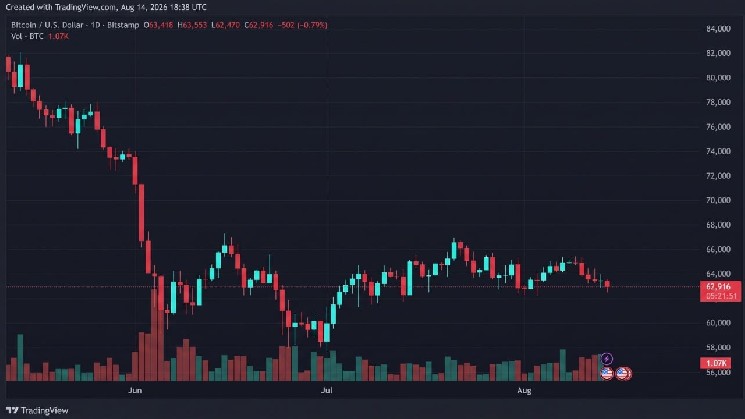
Bitcoin's price fell below $63,000 for a second consecutive day on Friday, hitting an intraday low of $62,470. The cryptocurrency later recovered to trade just above $63,000, leaving it nearly flat for the past 24 hours and for August overall, with a weekly loss of 2.6%. The volatility triggered significant liquidations, with $26 million of leveraged long Bitcoin positions liquidated over 24 hours. Market sentiment was further dampened by data showing over $131 million in outflows from spot Bitcoin ETFs for a second straight day, signaling a potential pullback by institutional investors. Adding to the negative pressure, index provider MSCI has proposed new criteria for "non-operating companies" in its global indexes, which could lead to the exclusion of firms holding significant digital assets like Bitcoin on their balance sheets. Companies such as Strategy and Metaplanet could be affected, potentially forcing index-tracking funds to sell their shares. Strategy publicly criticized the proposal, arguing digital assets are legitimate assets and index providers should not dictate what companies can own. Public consultations on MSCI's proposal end September 30, with a final decision expected by October 16. If approved, exclusions could begin in November, potentially triggering sustained institutional selling and damaging a key bridge for Bitcoin adoption in the corporate sector.

cryptonews.ru1 год тому

Bitcoin Price Drops to $62,470 as Sellers Retest $63,000 Support Level

cryptonews.ru1 год тому

Торгівля

Спот

Популярні статті

Що таке MEME 2.0

Memecoin 2.0: Поява $MEME 2.0 у світі криптовалюти Вступ У постійно змінному ландшафті криптовалюти з'явився новий претендент. Memecoin 2.0, що символізується як $MEME 2.0, підносить концепцію мем-криптовалют на захоплюючий новий рівень. Як побічний продукт оригінального Memecoin, цей проєкт привернув увагу крипто-спільноти, змістивши акцент з типової фінансової вигоди на захоплюючий і розважальний досвід. Працюючи на блокчейні Ethereum, Memecoin 2.0 сміливо переосмислює залучення спільноти у криптосфері. Що таке Memecoin 2.0, $MEME 2.0? У своїй основі, Memecoin 2.0 є криптовалютним проєктом, який надає пріоритет спільнотному духу і розвагам, пов'язаним з мем-культурою. На відміну від звичайних криптовалют, які зосереджені на практичних випадках використання та матеріальних вигодах, Memecoin 2.0 вирізняється тим, що обіймає легшу сторону цифрової валюти. Цей проєкт існує без обіцянок утиліти, структурованої дорожньої карти чи фінансових повернень, зосереджуючи увагу на створенні яскравої спільноти навколо мемів та спільних розваг. Зробивши це, він використовує зростаючу тенденцію мем-культури у онлайн-пробі, що робить його унікальним гравцем у світі цифрових активів. Творець Memecoin 2.0, $MEME 2.0 Не зважаючи на численні дослідження витоків Memecoin 2.0, чітка особистість його творця залишається невідомою. Ця анонімність не є рідкістю у крипто-спільноті, де багато проєктів очолюються особами або групами, які надають перевагу залишатися за лаштунками. Відсутність публічно доступної інформації про творця може розглядатися як стратегічний крок, що ставить в центр уваги залучення спільноти, а не індивідуальної популярності у цій сфері. Інвестори Memecoin 2.0, $MEME 2.0 Інформації щодо інвесторів або фінансової підтримки Memecoin 2.0 замало. Відсутність деталей може свідчити про те, що проєкт є самофінансованим або що його увага до спільноти, а не традиційних інвестиційних структур, привабила інший тип підтримки. Оскільки світ мем-криптовалют зазвичай передбачає більше участі низового рівня, а не інституційних інвестицій, цей підхід узгоджується з етосом проєктів, що управляються спільнотою. Як працює Memecoin 2.0, $MEME 2.0? Memecoin 2.0 повністю працює на блокчейні Ethereum, використовуючи його потужні функції безпеки та масштабованості. Використовуючи сильні сторони Ethereum, Memecoin 2.0 може запропонувати безпечне середовище для взаємодії користувачів, забезпечуючи при цьому, що транзакції є ефективними та економічними. Одна з унікальних характеристик Memecoin 2.0 полягає в його структурі, що керується спільнотою. Цінність та популярність токена $MEME 2.0 походять з активної участі його користувачів, а не з вродженої утиліти. Ця концепція підкреслює акцент проєкту на розважальному аспекті криптовалюти, натякаючи на те, що сміх та залучення спільноти є справжніми валютами, що ведуть до його успіху. Крім того, проєкт вписується в ширшу екосистему мем-криптовалют, де цінність кожної мем-криптовалюти коливається залежно від культури, тенденцій і участі спільноти, а не традиційних економічних принципів. Хронологія Memecoin 2.0, $MEME 2.0 Щоб краще зрозуміти еволюцію та віхи Memecoin 2.0, ось хронологія, що підкреслює значні події в його історії: 2024: Зародження Memecoin 2.0 вважається відгалуженням оригінального Memecoin, яке встановлює себе в процвітаючому контексті мем-криптовалют, працюючи на блокчейні Ethereum. 13 липня 2024: Memecoin 2.0 офіційно позиціонує себе як мем-криптовалюта, орієнтована на спільноту, в мережі Ethereum, підкреслюючи свій підхід, зосереджений на розвагах, який запрошує користувачів брати участь у його розвитку. Ключові моменти про Memecoin 2.0, $MEME 2.0 Кілька критичних характеристик визначають Memecoin 2.0: Спільнотно-центричний підхід: Основною метою Memecoin 2.0 є створення веселого, захоплюючого досвіду для спільноти, використовуючи колективне задоволення, що випливає з меметичної культури. Побудовано на Ethereum: Робота на блокчейні Ethereum надає проєкту важливу інфраструктуру, що забезпечує безпеку та масштабованість. Відсутність утиліти або дорожньої карти: У вражаючому відході від традиційних криптовалют, Memecoin 2.0 не обіцяє жодних утилітарних функцій або фінансових повернень, підтверджуючи свою прихильність до участі спільноти та соціального залучення. Акцент на меметичній культурі: Обіймаючи гумористичні та культурні аспекти мем-періоду, Memecoin 2.0 надає платформу для користувачів для залучення до крипти офлайн та онлайн. Додатковий контекст: Значення мем-криптовалют Мем-криптовалюти з'явилися як окрема класифікація криптовалюти, часто керуючись гумором та легким підходом до торгівлі. Ці валюти, як правило, не мають значної утиліти або розробницьких дорожніх карт, залучаючи користувачів обіцянкою розваг, взаємодії в спільноті та культурної значущості. В рамках ширшої екосистеми криптовалют, мем-криптовалюти відновлюють важливість залучення спільноти, протистоячи лише прибутковим підходам. Проєкти, такі як Memecoin 2.0, відкривають еру, в якій розваги можуть гармонізувати з фінансовими прагненнями, перетворюючи блокчейн на ігровий майданчик для творчості та соціальної взаємодії. Висновок Memecoin 2.0, або $MEME 2.0, втілює нову хвилю криптовалюти, яка надає пріоритет залученню спільноти над жорсткими фінансовими структурами. Зосереджуючись на гуморі та соціальній взаємодії, він використовує захоплення навколо мем-культури. Працюючи на блокчейні Ethereum, Memecoin 2.0 використовує можливості технології, залишаючись непохитним у своїй прихильності до розважальної цінності цифрової валюти. Коли простір навколо криптовалют продовжує еволюціонувати, Memecoin 2.0 служить доказом того, що майбутнє цифрових активів може значною мірою залежати від спільних досвідів, сміху та надійних зв'язків у спільноті. У непередбачуваному світі крипто, можливо, радість може бути такою ж цінною, як і традиційний фінансовий прибуток.

207 переглядів усьогоОпубліковано 2024.04.04Оновлено 2024.12.03

Що таке MEME 2.0

Як купити MEME

Ласкаво просимо до HTX.com! Ми зробили покупку Memeland (MEME) простою та зручною. Дотримуйтесь нашої покрокової інструкції, щоб розпочати свою криптовалютну подорож.Крок 1: Створіть обліковий запис на HTXВикористовуйте свою електронну пошту або номер телефону, щоб зареєструвати обліковий запис на HTX безплатно. Пройдіть безпроблемну реєстрацію й отримайте доступ до всіх функцій.ЗареєструватисьКрок 2: Перейдіть до розділу Купити крипту і виберіть спосіб оплатиКредитна/дебетова картка: використовуйте вашу картку Visa або Mastercard, щоб миттєво купити Memeland (MEME).Баланс: використовуйте кошти з балансу вашого рахунку HTX для безперешкодної торгівлі.Треті особи: ми додали популярні способи оплати, такі як Google Pay та Apple Pay, щоб підвищити зручність.P2P: Торгуйте безпосередньо з іншими користувачами на HTX.Позабіржова торгівля (OTC): ми пропонуємо індивідуальні послуги та конкурентні обмінні курси для трейдерів.Крок 3: Зберігайте свої Memeland (MEME)Після придбання Memeland (MEME) збережіть його у своєму обліковому записі на HTX. Крім того, ви можете відправити його в інше місце за допомогою блокчейн-переказу або використовувати його для торгівлі іншими криптовалютами.Крок 4: Торгівля Memeland (MEME)Легко торгуйте Memeland (MEME) на спотовому ринку HTX. Просто увійдіть до свого облікового запису, виберіть торгову пару, укладайте угоди та спостерігайте за ними в режимі реального часу. Ми пропонуємо зручний досвід як для початківців, так і для досвідчених трейдерів.

425 переглядів усьогоОпубліковано 2024.12.12Оновлено 2026.06.02

Як купити MEME

Обговорення

Ласкаво просимо до спільноти HTX. Тут ви можете бути в курсі останніх подій розвитку платформи та отримати доступ до професійної ринкової інформації. Нижче представлені думки користувачів щодо ціни MEME (MEME).

活动图片