China's 'Bio DeepSeek' Emerges: 4 Oxford Prodigies Let AI Take Over Life Science

marsbitОпубліковано о 2026-08-04Востаннє оновлено о 2026-08-04

Анотація

China's 'Biology DeepSeek' Emerges: Four Oxford Alumni Aim to Let AI Take Over Life Sciences Following DeepSeek-V4-Flash's global impact, a Chinese counterpart for life sciences has arrived. Jindu Bio, founded by four Oxford University alumni, has developed GeneLLM, a multi-omics large language model. Published in top journals *Nature Communications* and *Advanced Science*, GeneLLM is the first model pre-trained directly on raw omics data, aiming to understand the "language" and "system" of life. GeneLLM treats the four RNA bases (A, U, G, C) as fundamental tokens, learning from raw sequencing data without relying on pre-defined annotations. It uses a Transformer architecture to predict the next base, processing trillions of RNA reads. With versions ranging from 1.5 billion to 30 billion parameters, it achieves high accuracy in disease prediction with significantly lower-cost, shallow-depth sequencing, making precision medicine more accessible. Beyond the model, Jindu Bio is building BioFord Harness, an infrastructure to connect AI with physical labs. This system translates scientific intent into executable commands for various lab equipment, manages scheduling, and creates a data feedback loop. Its platform features five collaborative AI agents for literature review, experimental design, scientific reasoning, lab scheduling, and data analysis, drastically speeding up research cycles. Crucially, it turns all experimental data—including failures—into valuable learning mater...

Just as DeepSeek-V4-Flash's official release shook the global general-purpose large model community, China's life science version of DeepSeek followed closely behind.

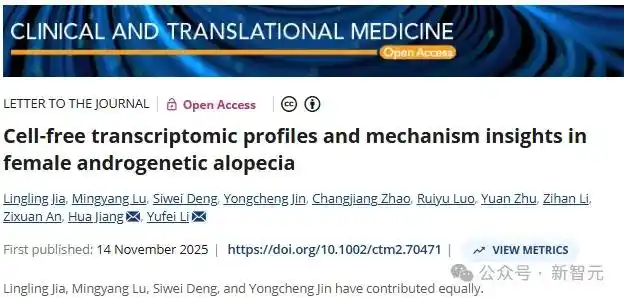
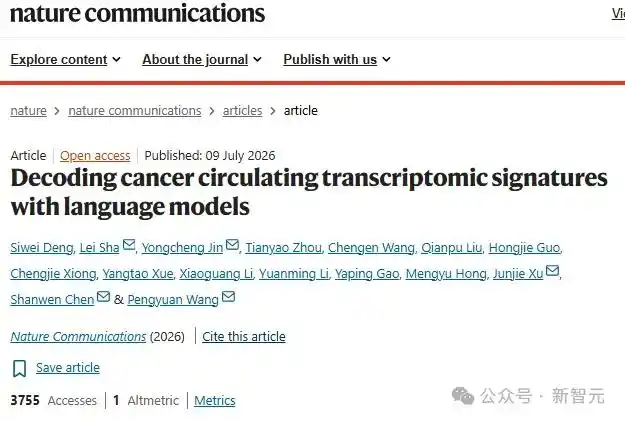
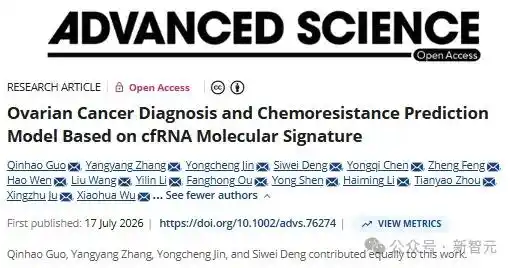
Recently, GeneLLM, a life science vertical multi-omics large model independently developed by Kindu Biology (founded by 4 Oxford University returnees), has been successively published in top-tier international academic journals – Nature Communications and Advanced Science.

As the world's first multi-omics large model pre-trained directly on raw omics data, GeneLLM is another heavyweight model following Google's AlphaFold and Stanford's EVO 2, filling the gap in China's life science foundational large models. It can be called China's life science version of DeepSeek, allowing AI to begin understanding the multiple 'languages' and the entire 'system' of life.
Predicting the Next Piece of Life Information Like Predicting the Next Token

Disease recognition is just one application scenario for GeneLLM. What Kindu Biology truly aims to do is build the "Claude Code" for the life science field.

The core of large language models like ChatGPT, Claude, and DeepSeek is next-token prediction.

GeneLLM adopts a similar approach, but what it predicts is not text, but life information.

The four bases in RNA sequences – Adenine (A), Uracil (U), Guanine (G), and Cytosine (C) – become the basic tokens for GeneLLM to understand the language of life.

Traditional bioinformatics analysis typically relies on gene annotation, sequence alignment, and manually defined labels. While accurate, this method prematurely limits the model's cognitive scope and may lose vast amounts of unknown biological signals hidden in raw data.

GeneLLM, however, charts a different path, learning life's patterns directly from unprocessed raw sequencing data.

It uses multi-omics raw data such as RNA-seq, proteomics, and metabolomics as training data, allowing the model to autonomously discover disease-related patterns.

Currently, GeneLLM has completed pre-training of a 1.5 billion parameter model with 3.5 trillion base sequences, and the XLarge version has achieved pre-training of a 30 billion parameter model, continuously expanding the technological barrier.

As the world's first multi-omics large model pre-trained on raw sequencing data, GeneLLM includes two main stages:

(1) Unsupervised Pre-training & Prototype Discovery

(2) Patient-level Disease Fine-tuning (Disease Tuning)
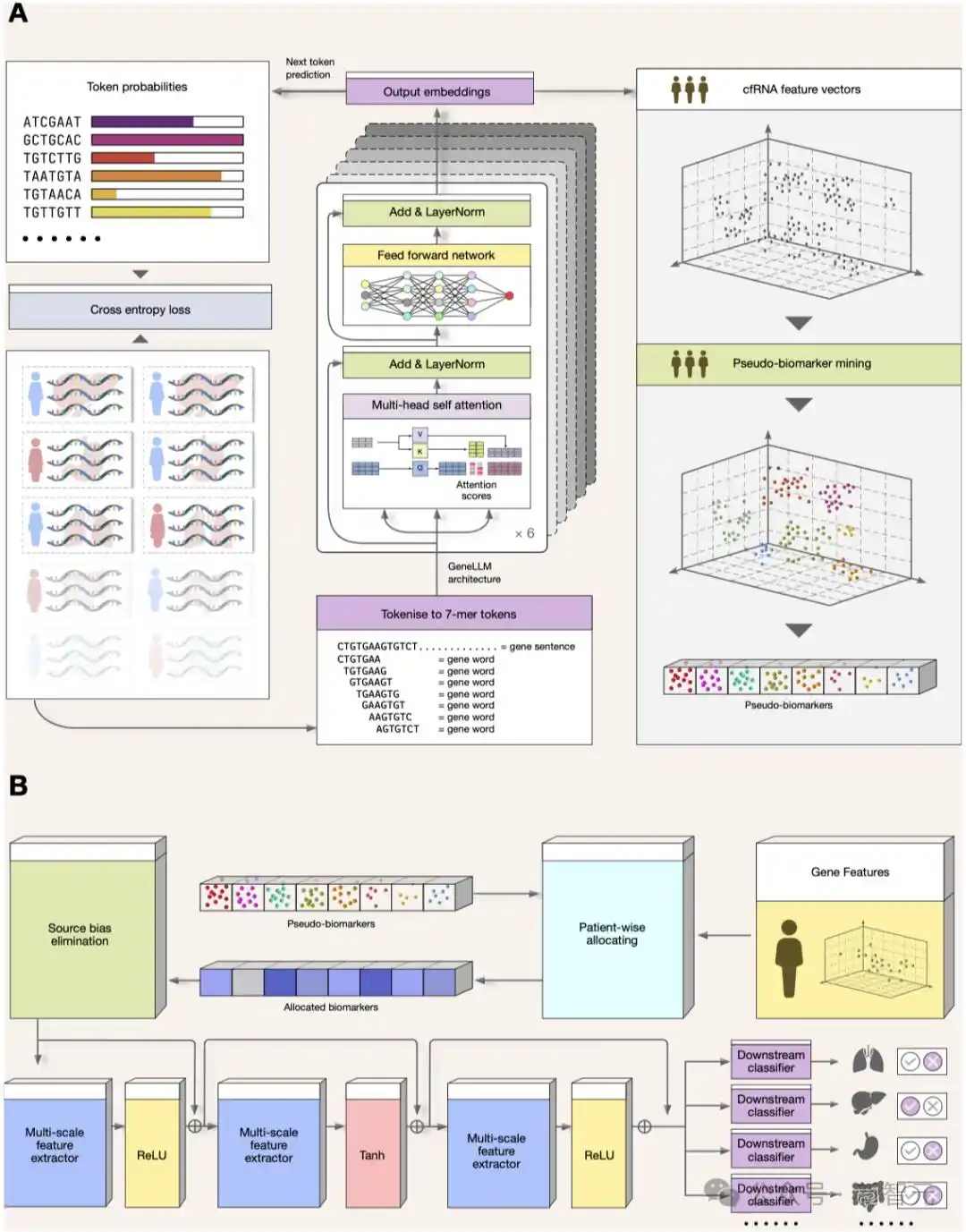
GeneLLM first needs to solve a problem:

How to transform complex life data into a language AI can understand?

In natural language processing, the BPE algorithm splits sentences into Tokens; GeneLLM, however, splits RNA sequencing fragments of about 150bp length into life Tokens using a sliding window of 7 bases (7-mer).

Subsequently, the model utilizes the Transformer architecture to directly predict the next base without gene annotation or human labels.

This means the AI is not first consulting a human-compiled "dictionary," but learning directly from the raw signals of life.

During training, GeneLLM processed approximately tens of trillions of RNA reads, trained on a hundred-card cluster of NVIDIA A100 GPUs.

At this point, GeneLLM's generalization and other capabilities began to "emerge."

As a major innovative breakthrough in the life science field, this domestically produced life science model, GeneLLM, can be applied to various fields including new drug R&D, precision medicine, synthetic biology, environmental monitoring, microbiology & bio-agriculture, and protein & molecule design. It is one of the few large models globally that has achieved real-world scenario deployment.
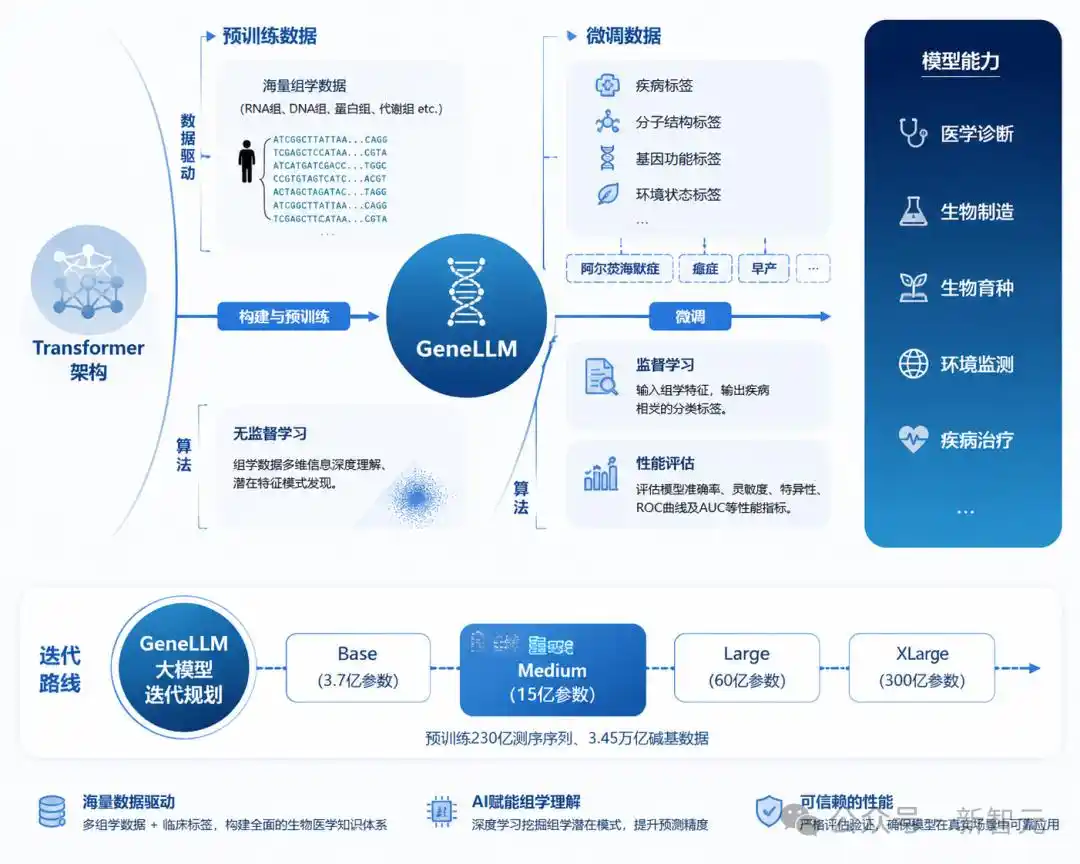
Only after examining the underlying innovations of GeneLLM in "data, architecture, training," can we truly understand: why it represents China's "Bio Version of DeepSeek."

Silicon Valley stacks tens of thousands of H100s for trillion-parameter models, DeepSeek improves computing efficiency through algorithmic innovation, and GeneLLM similarly moves massive life science data with a deft touch.

If AlphaFold allowed AI to see life's "structure" for the first time, and EVO2 allowed AI to begin understanding life's "code," then GeneLLM attempts to further understand life's "system."
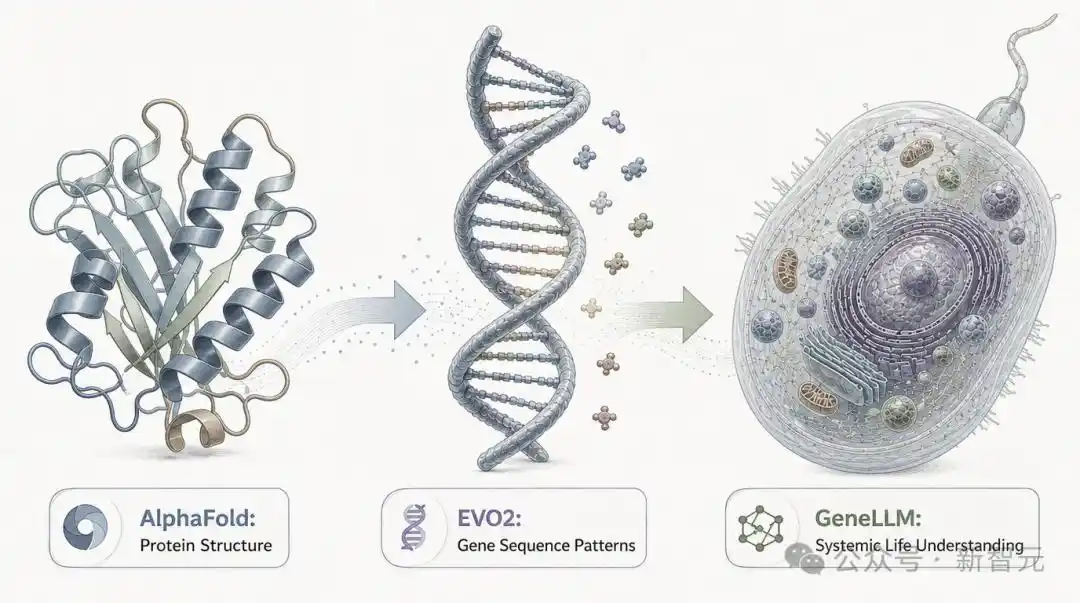
What's more remarkable is efficiency. Traditional methods rely on 6Gb deep sequencing, with high costs making deployment difficult. GeneLLM maintains AUC > 0.8 even at an extremely shallow depth of 1Gb (cost reduced by 83%).

This truly holds the promise of making affordable precision medicine a reality.

A new research paradigm begins to emerge: letting AI learn from life data, bringing life science into a new stage of predictable, computable, and scalable exploration.

Not Just a Model, but the "Last Mile" Intelligent Infrastructure

But Kindu Biology's strategy extends beyond the foundational model.

Using the GeneLLM multi-omics large model as the life cognition base, Kindu Biology further constructs an execution system connecting AI intelligence with the physical world. Through the Harness intelligent experiment execution layer and the DBTL (Design-Build-Test-Learn) data feedback loop, it achieves a complete AI for Science closed loop—from understanding life patterns and generating scientific hypotheses, to automated experimental validation and continuous iterative optimization.

As Liam Fedus, former OpenAI VP and head of post-training, said, current LLMs have exhausted the limited text and code on the internet. The next major advance in scientific discovery must rely on experimental iteration.
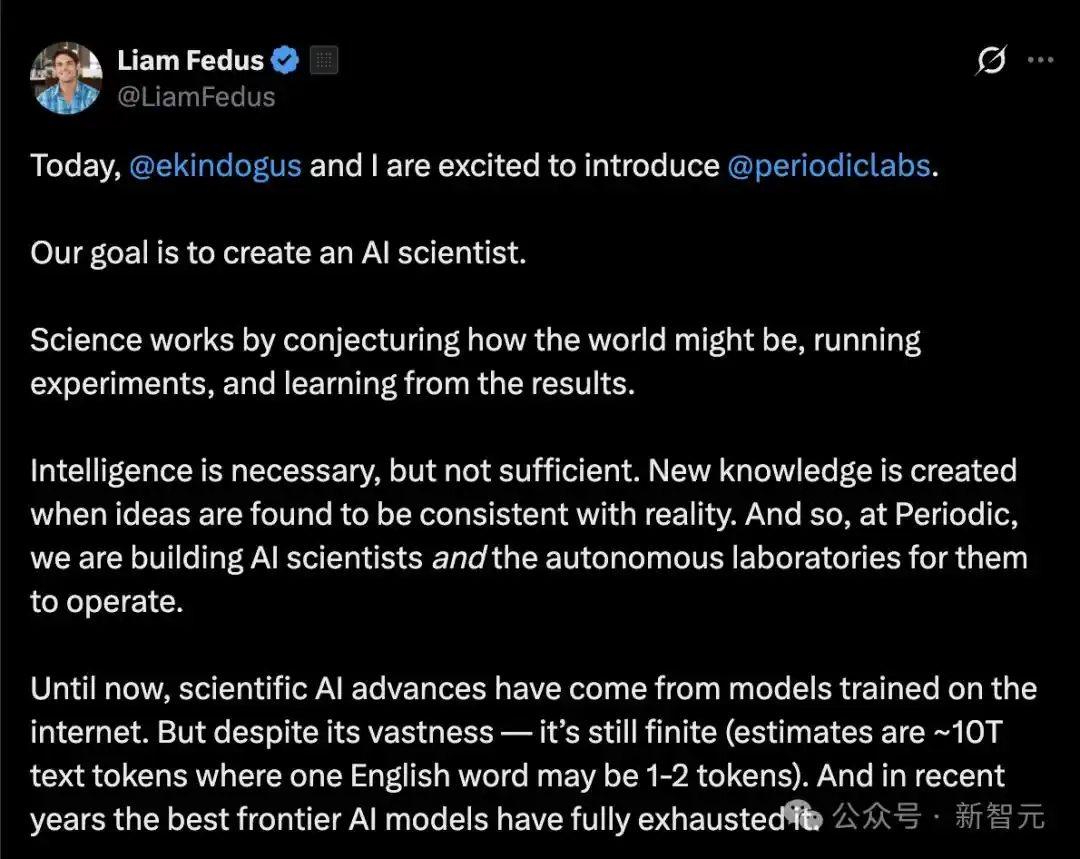
In other words, AI cannot discover new knowledge solely by reading what humans have already written; it must conduct experiments itself.

But here's the problem—

Internet services inherently have APIs; network information is inherently digital. But research equipment comes from different vendors with varying protocols, complex and expensive. No one can rebuild everything from scratch in a few months.

Most labs today are designed for humans: instrument panels, pipetting actions, sample states, on-the-spot judgments—the vast majority are not translated into machine-readable signals.

For AI to enter the lab, the current challenge is not just model capability; it requires a new set of infrastructure.

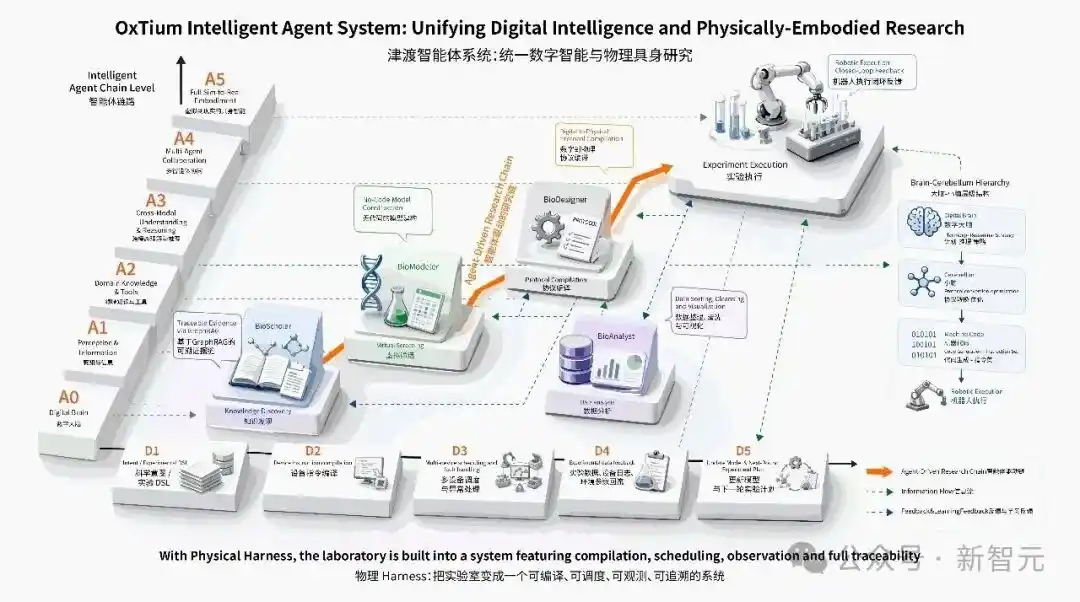
Therefore, for AI to enter the lab, the current issue is not just a model capability problem; it also requires a physical Harness: turning the lab into a system that can be compiled, scheduled, monitored, and traced.

This is the true last mile of AI4S.

BioFord Harness, Making the Lab Start "Running Itself"

For this purpose, Kindu developed a system called BioFord Harness.

This is an infrastructure that connects AI with the physical lab.

They are not making robotic arms imitate human hands, but transforming the lab into a system that can be compiled, scheduled, monitored, and traced.

In this process, the physical Harness must accomplish at least three things:

1. Compile scientific intent or experimental DSL into instructions executable by different devices;

2. Complete scheduling, resource and safety constraint management among multiple devices, and handle exceptions;

3. Let experimental results, device logs, and environmental parameters flow back, becoming inputs for the next round of model and experimental design.

Scientific question → AI understanding → experimental plan → device scheduling → execution → data feedback → model optimization → next round.

A flywheel for scientific experimental data is thus set in motion.
Five Intelligent Agents, Turning Research Workflow into an Assembly Line

The BioFord Agent embodied intelligent research platform connects downward to the physical lab layer and upward to the scientist's cognitive layer, bridging the gap between reasoning and execution with physical AI.

At the cognitive layer, BioFord Agent consists of a collaborative network of five intelligent agents, spanning the entire life science research workflow, potentially multiplying research efficiency.

Literature Retrieval Agent

Experimental Design Agent

Science Agent

Experiment Scheduling Agent

Data Analysis Agent

For example, the Literature Retrieval Agent can quickly help you search and read vast amounts of literature, complete literature reviews, and assist in hypothesis generation.
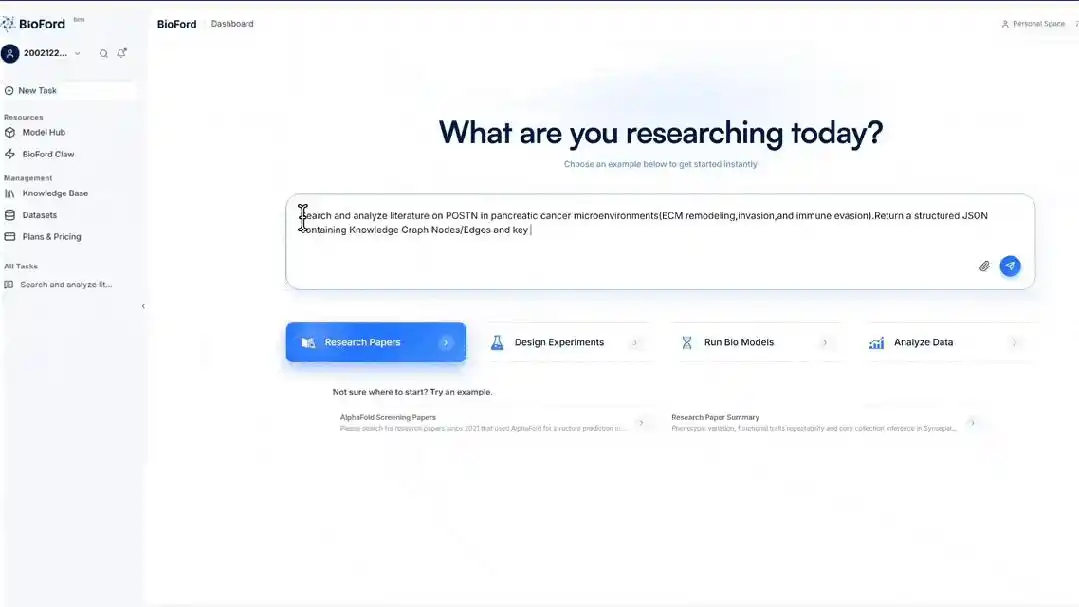
The Experimental Design Agent enabled the research team to shorten the experimental design cycle from several months to one week.

The Experiment Scheduling Agent launched by Kindu Biology, relying on the Universal Instrument Abstraction Layer, breaks protocol barriers between various heterogeneous devices.

Whether it's PCR machines, microplate readers, flow cytometers, or automated liquid handling workstations, they can all achieve unified management and scheduling. The system has built-in dynamic scheduling algorithms, enabling automatic batch scheduling, real-time conflict avoidance, and full recording of experimental parameters, forming a traceable audit trail.
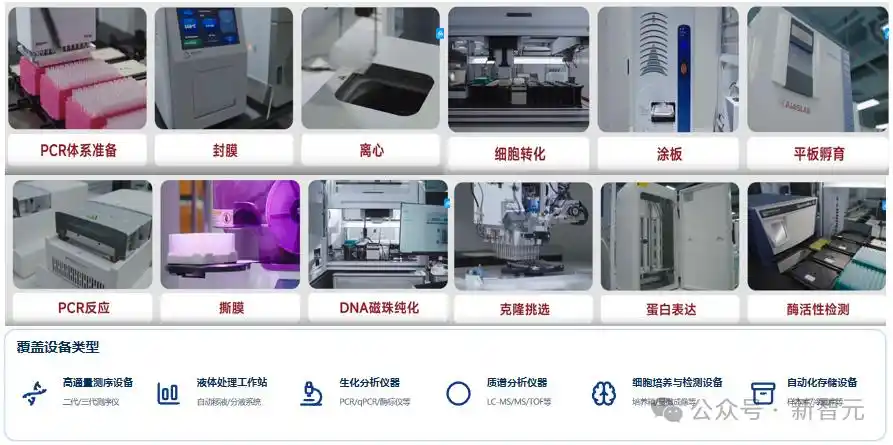
This means AI is no longer stuck in the "suggestions" stage, but truly enters the lab, operates equipment, executes tasks, and becomes a trustworthy "research assistant."

Failure Data Might Be More Valuable Than Success Data

The deeper value this system addresses is: making every experiment—whether successful or failed—data that the system can digest.

In a traditional lab, a failed record might just be a line saying "results not as expected." The experience resides in people's minds; when they leave, the experience is gone.

But in the BioFord system, every failure is valuable training data—the logic of parameter selection, records of environmental conditions, proofs of erroneous paths... all are deposited, becoming part of the system's "experience."

Next time, AI knows: this path is blocked.

Interestingly, in this field, it's not the one with the strongest computing power that wins, nor the one with the largest model.

Computing power can be bought, but research data cannot.

Jin Yongcheng, Founder & CEO of Kindu Biology, stated: "During the R&D process, we gradually realized that AI for BioScience is not simply about stacking models and data. For those doing experiments, the ultimate problem to solve remains the dilemma of not knowing how to proceed after calculation, and not getting it right when proceeding."

This is the most important, and hardest-to-replicate, moat in the AI4S field.

Four Oxford People, Including a Senior Fellow of Luo Fuli

In 2022, when Jin Yongcheng received his PhD in Bioengineering from the University of Oxford, he faced a choice.

His supervisor was Hagan Bayley, a Fellow of the Royal Society and founder of the UK-listed third-generation sequencing giant Oxford Nanopore. The lab had a strong tradition of "translating research into practice." Staying in the UK was a clear, smooth path.

But he chose another path—packing a "prototype technology" from the lab into his suitcase and bringing it back to China. Accompanying him were three Oxford alumni: Biology PhD Deng Siwei, Computer Science Associate Researcher Sha Lei (PhD in Computer Science from Peking University, senior fellow of Luo Fuli, head of Xiaomi's large model), and Zhou Tianyao, skilled in product commercialization. The four possess complementary backgrounds in bioengineering, AI, computational biology, and business operations, forming a perfect team for highly interdisciplinary research. They had previously collaborated on joint research projects, achieving disease prediction and detection by combining AI and transcriptomics technology.

The company name "Kindu Biology": "Kin" is taken from "Oxford," symbolizing their starting point from top-tier academic institutions like Oxford labs; "du" (渡) signifies ferrying or helping others, representing the destination they believe AI for Science should reach.

Currently, Kindu Biology's BioFord Agent physical AI research platform has been deployed in several prestigious domestic universities with significant results, reducing research cycles from several months to one week.

The Wind Rises: 4 Funding Rounds in 1 Year, A Capital "Enchantment" Scene

However, walking a path "untrodden by predecessors" inevitably comes with solitude.

The early days of entrepreneurship were full of difficulties. At that time, AI startups were booming, but "AI+" attempts in the biological sciences were rare. "Those who understand AI may not understand biological science, and most who understand biological science don't understand AI."

Jin Yongcheng admitted: "Investors once couldn't understand what we were doing."

The team chose the "hardest path": starting from a biological foundational large model, a direction pursued by only a handful of companies globally.

In 2025, a turning point emerged.

That year, the State Council issued the "Opinions on Deepening the Implementation of the 'AI+' Initiative," listing AI for Science among the key areas. The field began to gain momentum.

Kindu Biology achieved the feat of "completing 4 funding rounds in one year." The company's main funding timeline is a benchmark for the industry.

Angel+ Round: Led by Sequoia Capital China Seed Fund;

Pre-A+ Round: Led by Chuangdongfang Investment with tens of millions;

Pre-A+ Round: Received tens of millions in investment from Nanshan Zhanxintou;

Series A Round: Led by Gaotejia Investment with nearly 100 million RMB.

Teng Yuhang, Executive Partner at Gaotejia Investment, stated: "Kindu Biology has transformed life science basic research into a subscribable, scalable 'computing power + experiment' infrastructure."

Jin Yongcheng's goal is even more ambitious: "We are not satisfied with just selling software; we want to build the intelligent operating system for the life science field. Just as Intel defined computing power in the PC era, we hope to define the new R&D paradigm for life science in the AI era."

From Oxford labs to Shenzhen, from being misunderstood to receiving heavy investment from top-tier capital, the story of the four Oxford graduates is not just a startup legend, but a soul-searching inquiry about "what we can do for humanity."

When AI learns to "stay up all night" doing research on its own, scientific discovery may no longer rely on the serendipitous inspiration of geniuses, but become a predictable inevitability. This journey has just begun for them.

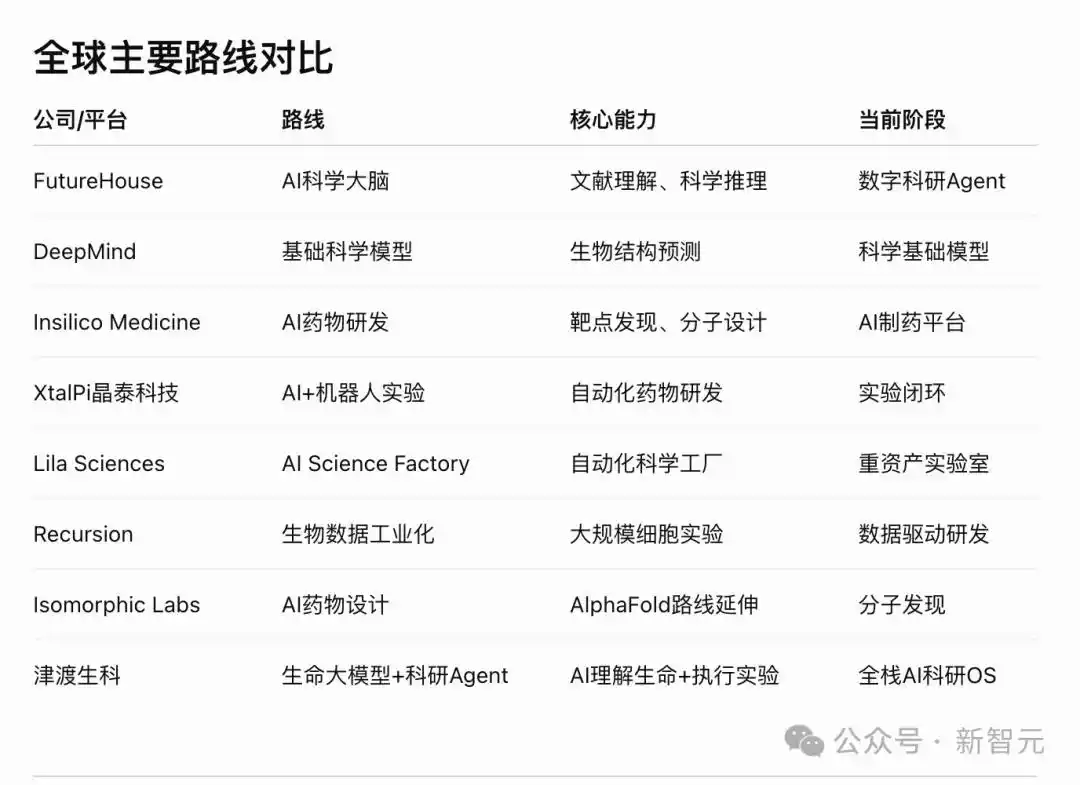
Industry Landscape: Kindu Charts a Lightweight Physical AI Path

In the broader AI for BioScience landscape, Kindu is not alone, but its entry point is distinctly different.

The first category is Digital AI Scientists.

Stanford-incubated Biomni (commercialized as Phylo) possesses over 150 specialized tools, capable of automatically performing literature review, hypothesis generation, and bioinformatics analysis.

FutureHouse, backed by Eric Schmidt, is dedicated to building AI scientists that can autonomously generate hypotheses and write papers.

However, while powerful, they remain confined to the digital world.

The second category is the Full-stack Autonomous route.

XtalPi deploys over 300 "AI + robotics" workstations globally.

Lila Sciences, incubated by Flagship Pioneering, with $550 million in funding, attempts to let AI completely take over the design, execution, and redesign of experiments, aiming for "scientific superintelligence."

But these approaches are extremely capital-intensive.

The third category is the End-to-end Pipeline route.

Insilico Medicine pushes AI directly into its own innovative drug pipelines, with its first AI-discovered drug entering Phase III clinical trials, but they are "car builders" rather than "road pavers."

Kindu Biology's choice is: focus on building the physical Harness, creating the "last mile" infrastructure between models and physical experimental systems.

Not engaging in the foundational model race, not pursuing end-to-end pipelines, not creating pure digital AI scientists. Focusing only on that last mile is undoubtedly a more lightweight approach.

Jin Yongcheng articulated this judgment clearly: "The true watershed for AI for Science is not how well the model mimics a scientist's answers, but whether the lab can start functioning like a continuously learning system."

Moreover, in the global AI for Science field, Kindu is not simply "only doing the last mile."

More accurately, it uses the last mile as an entry point to compete for the orchestration rights of the entire scientific workflow.

Compared to pure digital AI scientists, it can interact with the physical world; compared to building heavy-asset science factories from scratch, it has the opportunity to take over clients' existing labs; compared to end-to-end AI drug discovery companies, it doesn't have to bet its fate on a single clinical pipeline.
Its true moat will not be parameter count, but the continuously accumulated experimental trajectories, device interfaces, failure experiences, and cross-laboratory execution network.

As Jin Yongcheng said, the myriad signaling pathways within organisms and the reaction mechanisms full of unknowns are fascinating. "As rich as biology is, so is the prospect of AI for Science."

Exploring the mysteries of life with AI's intelligence—the vast universe for these Oxford prodigies has just begun to unfold.

This article is from the WeChat public account "Xinzhiyuan", author: Xinzhiyuan; Editor: Aeneas KingHZ


Трендові криптовалюти

Пов'язані питання

QWhat is GeneLLM, and how does it represent a significant advancement in China's life science AI field?

AGeneLLM is a multi-omics foundation model developed by Jindu Biotechnology, created by four Oxford University returnees. It is hailed as China's 'DeepSeek for Life Sciences.' Its significance lies in being the first multi-omics foundation model in the world trained directly on raw omics data (like RNA, proteomics, metabolomics) without relying on pre-defined gene annotations or labels. This allows it to autonomously learn patterns and 'understand' the language and systems of life from primary biological signals, filling a key gap in China's life science foundation model landscape. It has been published in top journals like Nature Communications and Advanced Science.

QHow does GeneLLM's core training approach mimic Large Language Models (LLMs) like ChatGPT?

AGeneLLM's core approach mirrors that of text-based LLMs. Just as LLMs predict the next 'token' (word piece) in a sequence, GeneLLM predicts the next 'life information token.' It treats the four RNA bases (A, U, G, C) as fundamental tokens. The model processes raw RNA sequencing data by splitting it into fragments using a sliding 7-mer window, creating these biological tokens. It then uses a Transformer architecture to predict the next base in a sequence, learning directly from the raw data without human-curated 'dictionaries' of biological knowledge.

QWhat is BioFord Harness, and what role does it play in the AI for Science (AI4S) ecosystem according to the article?

ABioFord Harness is a physical infrastructure system developed by Jindu Biotech. Its role is to bridge the gap between AI models and the physical laboratory—solving the 'last-mile' problem in AI4S. It transforms a lab into a 'compilable, schedulable, observable, and traceable' system. It does this by 1) compiling scientific intent into executable instructions for diverse lab equipment, 2) managing scheduling, resources, and safety constraints across multiple devices, and 3) ensuring experimental results, logs, and environmental data flow back to optimize the next round of AI models and experimental designs, creating a continuous learning loop.

QWhat distinguishes Jindu Biotech's strategic approach from other major players in the AI for BioScience field?

AJindu Biotech carves out a distinct, 'lightweight' strategic niche by focusing on the 'last mile' infrastructure (BioFord Harness) rather than competing directly in other established approaches. It does not aim to be a pure 'digital AI scientist' (like Biomni), build capital-intensive fully autonomous labs (like Lila Sciences or XtalPi), or develop end-to-end proprietary drug pipelines (like Insilico Medicine). Instead, it specializes in building the physical harness that connects AI models to existing laboratory equipment, allowing it to orchestrate the entire scientific workflow without the massive capital expenditure of rebuilding labs from scratch.

QHow did the founding team's background and the 2025 policy shift contribute to Jindu Biotech's development?

AThe founding team comprised four Oxford alumni with complementary expertise in bioengineering (CEO Jin Yongcheng), biology, computer science (a former colleague of DeepSeek's Luo Fuli), and business operations. This interdisciplinary 'puzzle' was crucial for tackling the highly cross-disciplinary AI for Science challenge. Despite initial investor skepticism, a major turning point came in 2025 when the Chinese State Council issued guidelines prioritizing 'AI+', including AI for Science. This policy tailwind helped validate the field, leading Jindu Biotech to secure an impressive four rounds of funding in one year from top-tier investors like Sequoia Capital China and Gaotejia Investment, fueling its rapid growth.

Пов'язані матеріали

Торгівля

Спот

Популярні статті

Що таке $S$

Розуміння SPERO: Комплексний огляд Вступ до SPERO Оскільки ландшафт інновацій продовжує еволюціонувати, виникнення технологій web3 та криптовалютних проектів відіграє ключову роль у формуванні цифрового майбутнього. Один з проектів, який привернув увагу в цій динамічній сфері, — це SPERO, позначений як SPERO,$$s$. Ця стаття має на меті зібрати та представити детальну інформацію про SPERO, щоб допомогти ентузіастам та інвесторам зрозуміти його основи, цілі та інновації в рамках web3 та крипто-сектору. Що таке SPERO,$$s$? SPERO,$$s$ — це унікальний проект у криптопросторі, який прагне використати принципи децентралізації та технології блокчейн для створення екосистеми, що сприяє залученню, корисності та фінансовій інклюзії. Проект розроблений для полегшення взаємодії між користувачами новими способами, надаючи їм інноваційні фінансові рішення та послуги. У своїй основі SPERO,$$s$ прагне надати можливості індивідам, забезпечуючи інструменти та платформи, які покращують користувацький досвід у криптовалютному просторі. Це включає в себе можливість більш гнучких методів транзакцій, сприяння ініціативам, що підтримуються спільнотою, та створення шляхів для фінансових можливостей через децентралізовані додатки (dApps). Основна концепція SPERO,$$s$ обертається навколо інклюзивності, прагнучи зменшити розриви в традиційній фінансовій системі, використовуючи переваги технології блокчейн. Хто є творцем SPERO,$$s$? Особистість творця SPERO,$$s$ залишається дещо невідомою, оскільки є обмежені публічно доступні ресурси, що надають детальну інформацію про його засновників. Ця відсутність прозорості може бути наслідком зобов'язання проекту до децентралізації — етики, яку багато проектів web3 поділяють, ставлячи колективні внески вище за індивідуальне визнання. Зосереджуючи обговорення навколо спільноти та її колективних цілей, SPERO,$$s$ втілює суть наділення без виділення конкретних осіб. Таким чином, розуміння етики та місії SPERO є більш важливим, ніж ідентифікація єдиного творця. Хто є інвесторами SPERO,$$s$? SPERO,$$s$ підтримується різноманітними інвесторами, починаючи від венчурних капіталістів до ангельських інвесторів, які прагнуть сприяти інноваціям у крипто-секторі. Зосередження цих інвесторів зазвичай узгоджується з місією SPERO — пріоритет надається проектам, які обіцяють технологічний прогрес у суспільстві, фінансову інклюзію та децентралізоване управління. Ці інвесторські фонди зазвичай зацікавлені в проектах, які не лише пропонують інноваційні продукти, але й позитивно впливають на спільноту блокчейн та її екосистеми. Підтримка з боку цих інвесторів підкріплює SPERO,$$s$ як значного конкурента в швидко змінюваній сфері крипто-проектів. Як працює SPERO,$$s$? SPERO,$$s$ використовує багатогранну структуру, яка відрізняє його від традиційних криптовалютних проектів. Ось деякі ключові особливості, які підкреслюють його унікальність та інноваційність: Децентралізоване управління: SPERO,$$s$ інтегрує моделі децентралізованого управління, надаючи користувачам можливість активно брати участь у процесах прийняття рішень щодо майбутнього проекту. Цей підхід сприяє відчуттю власності та відповідальності серед членів спільноти. Корисність токена: SPERO,$$s$ використовує свій власний криптовалютний токен, розроблений для виконання різних функцій в екосистемі. Ці токени дозволяють здійснювати транзакції, отримувати винагороди та полегшувати послуги, що пропонуються на платформі, підвищуючи загальну залученість та корисність. Шарова архітектура: Технічна архітектура SPERO,$$s$ підтримує модульність та масштабованість, що дозволяє безперешкодно інтегрувати додаткові функції та додатки в міру розвитку проекту. Ця адаптивність є надзвичайно важливою для збереження актуальності в постійно змінюваному крипто-ландшафті. Залучення спільноти: Проект підкреслює ініціативи, що підтримуються спільнотою, використовуючи механізми, які стимулюють співпрацю та зворотний зв'язок. Підтримуючи сильну спільноту, SPERO,$$s$ може краще задовольняти потреби користувачів та адаптуватися до ринкових тенденцій. Фокус на інклюзію: Пропонуючи низькі комісії за транзакції та зручні інтерфейси, SPERO,$$s$ прагне залучити різноманітну базу користувачів, включаючи осіб, які раніше не брали участі в крипто-просторі. Це зобов'язання до інклюзії узгоджується з його загальною місією наділення через доступність. Хронологія SPERO,$$s$ Розуміння історії проекту надає важливі уявлення про його розвиток та етапи. Нижче наведено пропоновану хронологію, що відображає значні події в еволюції SPERO,$$s$: Етап концептуалізації та ідеації: Початкові ідеї, що стали основою SPERO,$$s$, були сформовані, тісно пов'язані з принципами децентралізації та фокусом на спільноті в індустрії блокчейн. Запуск білого паперу проекту: Після концептуального етапу був випущений комплексний білий папір, що детально описує бачення, цілі та технологічну інфраструктуру SPERO,$$s$, щоб залучити інтерес та зворотний зв'язок від спільноти. Створення спільноти та ранні залучення: Активні зусилля були спрямовані на створення спільноти ранніх прихильників та потенційних інвесторів, що полегшило обговорення цілей проекту та отримання підтримки. Подія генерації токенів: SPERO,$$s$ провів подію генерації токенів (TGE) для розподілу своїх рідних токенів серед ранніх прихильників та встановлення початкової ліквідності в екосистемі. Запуск початкового dApp: Перший децентралізований додаток (dApp), пов'язаний з SPERO,$$s$, став доступним, дозволяючи користувачам взаємодіяти з основними функціями платформи. Постійний розвиток та партнерства: Безперервні оновлення та вдосконалення пропозицій проекту, включаючи стратегічні партнерства з іншими учасниками блокчейн-простору, сформували SPERO,$$s$ у конкурентоспроможного та еволюціонуючого гравця на крипто-ринку. Висновок SPERO,$$s$ є свідченням потенціалу web3 та криптовалют для революціонізації фінансових систем та наділення індивідів. Завдяки зобов'язанню до децентралізованого управління, залучення спільноти та інноваційно спроектованих функцій, він прокладає шлях до більш інклюзивного фінансового ландшафту. Як і з будь-якими інвестиціями в швидко змінюваному крипто-просторі, потенційним інвесторам та користувачам рекомендується ретельно досліджувати та обдумано взаємодіяти з поточними подіями в SPERO,$$s$. Проект демонструє інноваційний дух крипто-індустрії, запрошуючи до подальшого дослідження його численних можливостей. Хоча подорож SPERO,$$s$ ще триває, його основні принципи можуть справді вплинути на майбутнє того, як ми взаємодіємо з технологією, фінансами та один з одним у взаємопов'язаних цифрових екосистемах.

245 переглядів усьогоОпубліковано 2024.12.17Оновлено 2024.12.17

Що таке $S$

Що таке AGENT S

Агент S: Майбутнє автономної взаємодії в Web3 Вступ У постійно змінюваному ландшафті Web3 та криптовалюти інновації постійно переосмислюють, як люди взаємодіють з цифровими платформами. Один з таких новаторських проектів, Агент S, обіцяє революціонізувати взаємодію людини з комп'ютером через свою відкриту агентну структуру. Прокладаючи шлях для автономних взаємодій, Агент S прагне спростити складні завдання, пропонуючи трансформаційні застосування в штучному інтелекті (ШІ). Це детальне дослідження заглиблюється в складності проекту, його унікальні особливості та наслідки для сфери криптовалюти. Що таке Агент S? Агент S є революційною відкритою агентною структурою, спеціально розробленою для вирішення трьох основних викликів в автоматизації комп'ютерних завдань: Набуття специфічних знань у галузі: Структура інтелектуально навчається з різних зовнішніх джерел знань та внутрішнього досвіду. Цей подвійний підхід дозволяє їй створити багатий репозиторій специфічних знань у галузі, покращуючи її продуктивність у виконанні завдань. Планування на довгих горизонтах завдань: Агент S використовує планування з підкріпленням досвіду, стратегічний підхід, який полегшує ефективний розподіл та виконання складних завдань. Ця функція значно підвищує її здатність ефективно та результативно управляти кількома підзавданнями. Обробка динамічних, неоднорідних інтерфейсів: Проект представляє Інтерфейс Агент-Комп'ютер (ACI), інноваційне рішення, яке покращує взаємодію між агентами та користувачами. Використовуючи багатомодальні великі мовні моделі (MLLMs), Агент S може безперешкодно орієнтуватися та маніпулювати різноманітними графічними інтерфейсами користувача. Завдяки цим новаторським функціям Агент S надає надійну структуру, яка вирішує складнощі, пов'язані з автоматизацією людської взаємодії з машинами, прокладаючи шлях для численних застосувань у ШІ та за його межами. Хто є творцем Агент S? Хоча концепція Агент S є фундаментально новаторською, конкретна інформація про його творця залишається невідомою. Творець наразі невідомий, що підкреслює або початкову стадію проекту, або стратегічний вибір зберегти засновників у таємниці. Незважаючи на анонімність, акцент залишається на можливостях та потенціалі структури. Хто є інвесторами Агент S? Оскільки Агент S є відносно новим у криптографічній екосистемі, детальна інформація про його інвесторів та фінансових спонсорів не задокументована. Відсутність публічно доступних відомостей про інвестиційні фонди або організації, що підтримують проект, викликає питання щодо його фінансової структури та дорожньої карти розвитку. Розуміння підтримки є критично важливим для оцінки стійкості проекту та потенційного впливу на ринок. Як працює Агент S? В основі Агент S лежить передова технологія, яка дозволяє йому ефективно функціонувати в різних умовах. Його операційна модель побудована навколо кількох ключових функцій: Взаємодія з комп'ютером, подібна до людської: Структура пропонує розширене планування ШІ, прагнучи зробити взаємодії з комп'ютерами більш інтуїтивними. Імітуючи людську поведінку при виконанні завдань, вона обіцяє підвищити досвід користувачів. Наративна пам'ять: Використовується для використання високорівневого досвіду, Агент S використовує наративну пам'ять для відстеження історій завдань, тим самим покращуючи свої процеси прийняття рішень. Епізодична пам'ять: Ця функція надає користувачам покрокові інструкції, дозволяючи структурі пропонувати контекстуальну підтримку в міру виконання завдань. Підтримка OpenACI: Завдяки можливості працювати локально, Агент S дозволяє користувачам зберігати контроль над своїми взаємодіями та робочими процесами, узгоджуючи з децентралізованою етикою Web3. Легка інтеграція з зовнішніми API: Його універсальність і сумісність з різними платформами ШІ забезпечують те, що Агент S може безперешкодно вписатися в існуючі технологічні екосистеми, роблячи його привабливим вибором для розробників та організацій. Ці функціональні можливості колективно сприяють унікальному положенню Агент S у крипто-просторі, оскільки він автоматизує складні, багатоступеневі завдання з мінімальним втручанням людини. У міру розвитку проекту його потенційні застосування в Web3 можуть переосмислити, як відбуваються цифрові взаємодії. Хронологія Агент S Розробка та етапи Агент S можуть бути узагальнені в хронології, яка підкреслює його значні події: 27 вересня 2024 року: Концепція Агент S була представлена в комплексній науковій статті під назвою “Відкрита агентна структура, яка використовує комп'ютери як людина”, що демонструє основи проекту. 10 жовтня 2024 року: Наукова стаття була опублікована на arXiv, пропонуючи детальне дослідження структури та її оцінки продуктивності на основі бенчмарку OSWorld. 12 жовтня 2024 року: Було випущено відеопрезентацію, що надає візуальне уявлення про можливості та особливості Агент S, ще більше залучаючи потенційних користувачів та інвесторів. Ці маркери в хронології не лише ілюструють прогрес Агент S, але й вказують на його прихильність до прозорості та залучення громади. Ключові моменти про Агент S У міру розвитку структури Агент S кілька ключових характеристик виділяються, підкреслюючи її новаторський характер та потенціал: Інноваційна структура: Розроблена для забезпечення інтуїтивного використання комп'ютерів, подібного до людської взаємодії, Агент S пропонує новий підхід до автоматизації завдань. Автономна взаємодія: Здатність автономно взаємодіяти з комп'ютерами через GUI означає стрибок до більш інтелектуальних та ефективних обчислювальних рішень. Автоматизація складних завдань: Завдяки своїй надійній методології він може автоматизувати складні, багатоступеневі завдання, роблячи процеси швидшими та менш схильними до помилок. Безперервне вдосконалення: Механізми навчання дозволяють Агенту S покращуватися на основі минулого досвіду, постійно підвищуючи свою продуктивність та ефективність. Універсальність: Його адаптивність до різних операційних середовищ, таких як OSWorld та WindowsAgentArena, забезпечує його здатність служити широкому спектру застосувань. Оскільки Агент S займає своє місце в ландшафті Web3 та криптовалюти, його потенціал покращити можливості взаємодії та автоматизувати процеси означає значний прогрес у технологіях ШІ. Завдяки своїй інноваційній структурі Агент S є прикладом майбутнього цифрових взаємодій, обіцяючи більш безперешкодний та ефективний досвід для користувачів у різних галузях. Висновок Агент S представляє собою сміливий крок вперед у поєднанні ШІ та Web3, з можливістю переосмислити, як ми взаємодіємо з технологією. Хоча проект все ще на ранніх стадіях, можливості для його застосування є величезними та переконливими. Завдяки своїй комплексній структурі, що вирішує критичні виклики, Агент S прагне вивести автономні взаємодії на передній план цифрового досвіду. У міру того, як ми заглиблюємося в сфери криптовалюти та децентралізації, проекти, подібні до Агент S, безсумнівно, відіграватимуть ключову роль у формуванні майбутнього технологій та співпраці людини з комп'ютером.

865 переглядів усьогоОпубліковано 2025.01.14Оновлено 2025.01.14

Що таке AGENT S

Як купити S

Ласкаво просимо до HTX.com! Ми зробили покупку Sonic (S) простою та зручною. Дотримуйтесь нашої покрокової інструкції, щоб розпочати свою криптовалютну подорож.Крок 1: Створіть обліковий запис на HTXВикористовуйте свою електронну пошту або номер телефону, щоб зареєструвати обліковий запис на HTX безплатно. Пройдіть безпроблемну реєстрацію й отримайте доступ до всіх функцій.ЗареєструватисьКрок 2: Перейдіть до розділу Купити крипту і виберіть спосіб оплатиКредитна/дебетова картка: використовуйте вашу картку Visa або Mastercard, щоб миттєво купити Sonic (S).Баланс: використовуйте кошти з балансу вашого рахунку HTX для безперешкодної торгівлі.Треті особи: ми додали популярні способи оплати, такі як Google Pay та Apple Pay, щоб підвищити зручність.P2P: Торгуйте безпосередньо з іншими користувачами на HTX.Позабіржова торгівля (OTC): ми пропонуємо індивідуальні послуги та конкурентні обмінні курси для трейдерів.Крок 3: Зберігайте свої Sonic (S)Після придбання Sonic (S) збережіть його у своєму обліковому записі на HTX. Крім того, ви можете відправити його в інше місце за допомогою блокчейн-переказу або використовувати його для торгівлі іншими криптовалютами.Крок 4: Торгівля Sonic (S)Легко торгуйте Sonic (S) на спотовому ринку HTX. Просто увійдіть до свого облікового запису, виберіть торгову пару, укладайте угоди та спостерігайте за ними в режимі реального часу. Ми пропонуємо зручний досвід як для початківців, так і для досвідчених трейдерів.

1.9k переглядів усьогоОпубліковано 2025.01.15Оновлено 2026.06.02

Як купити S

Обговорення

Ласкаво просимо до спільноти HTX. Тут ви можете бути в курсі останніх подій розвитку платформи та отримати доступ до професійної ринкової інформації. Нижче представлені думки користувачів щодо ціни S (S).

活动图片