zcashd se apaga, Zcash entra en la era Ironwood: ¿Es la privacidad resistente a la cuántica el futuro?

ambcryptoОпубліковано о 2026-07-20Востаннє оновлено о 2026-07-20

Анотація

Zcash ha completado su transición de infraestructura, retirando el software original zcashd y adoptando Zebra y Zakura, lo que fortalece la mantenibilidad y prepara la red para la era Ironwood. A pesar de una vulnerabilidad en los fondos protegidos de Orchard, que contenía el 85% del valor blindado, la respuesta coordinada y una rápida solución de emergencia contuvieron la amenaza. La actividad de la red se mantuvo resiliente: aunque los saldos blindados disminuyeron un 14%, las transacciones privadas aumentaron un 11,1% trimestral y el conjunto de anonimato se expandió significativamente. El volumen diario de trading también creció un 33,8%. Con Ironwood, Zcash avanza hacia una seguridad a largo plazo reforzada mediante verificación formal y resistencia cuántica, consolidando la confianza en su infraestructura de privacidad.

La infraestructura de Zcash ha entrado en una nueva fase a medida que la red completa su transición, alejándose de su implementación de software original. Esta evolución tomó casi una década, comenzando con el lanzamiento de zcashd en 2016 antes de que la versión de Zebra en 2024 introdujera una alternativa basada en Rust.

Tras el aviso de desuso en 2024, los operadores de nodos tuvieron tiempo suficiente para cambiar antes del retiro planificado. El 18 de julio, zcashd alcanzó el fin del soporte en la altura de bloque 3417100.
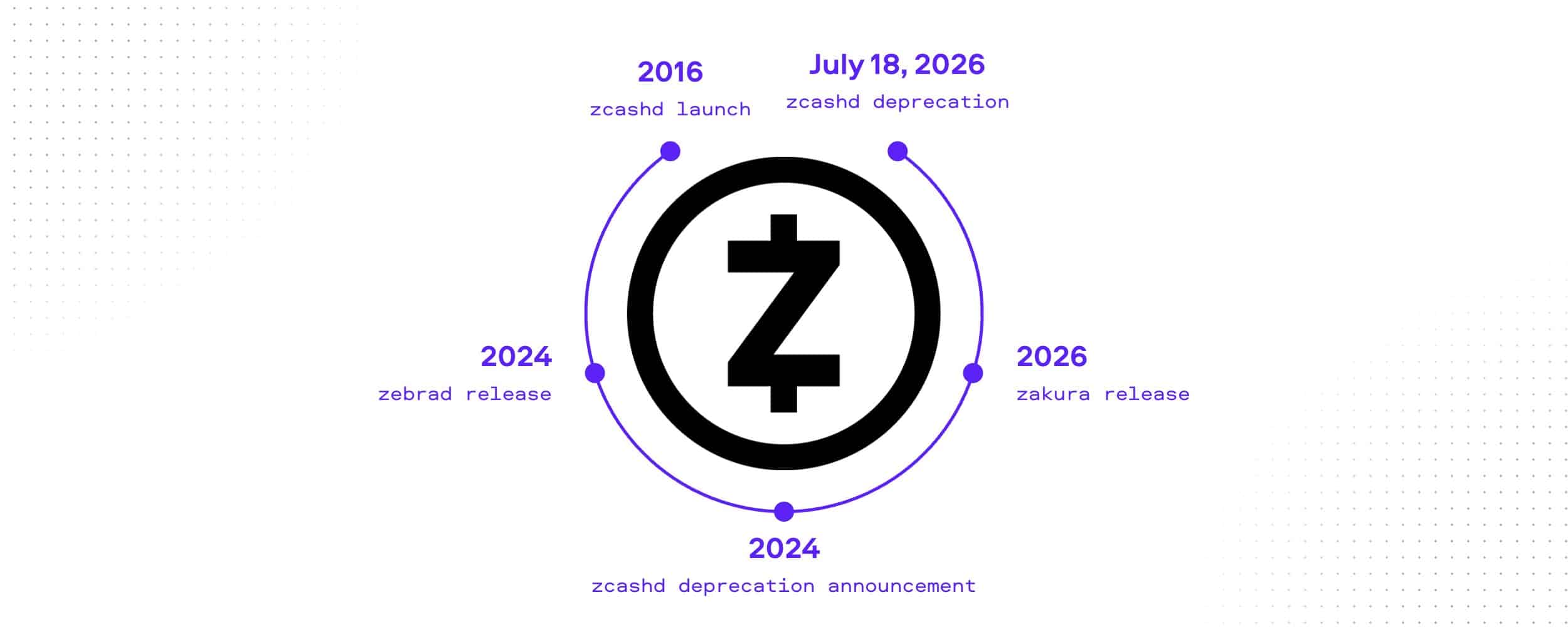
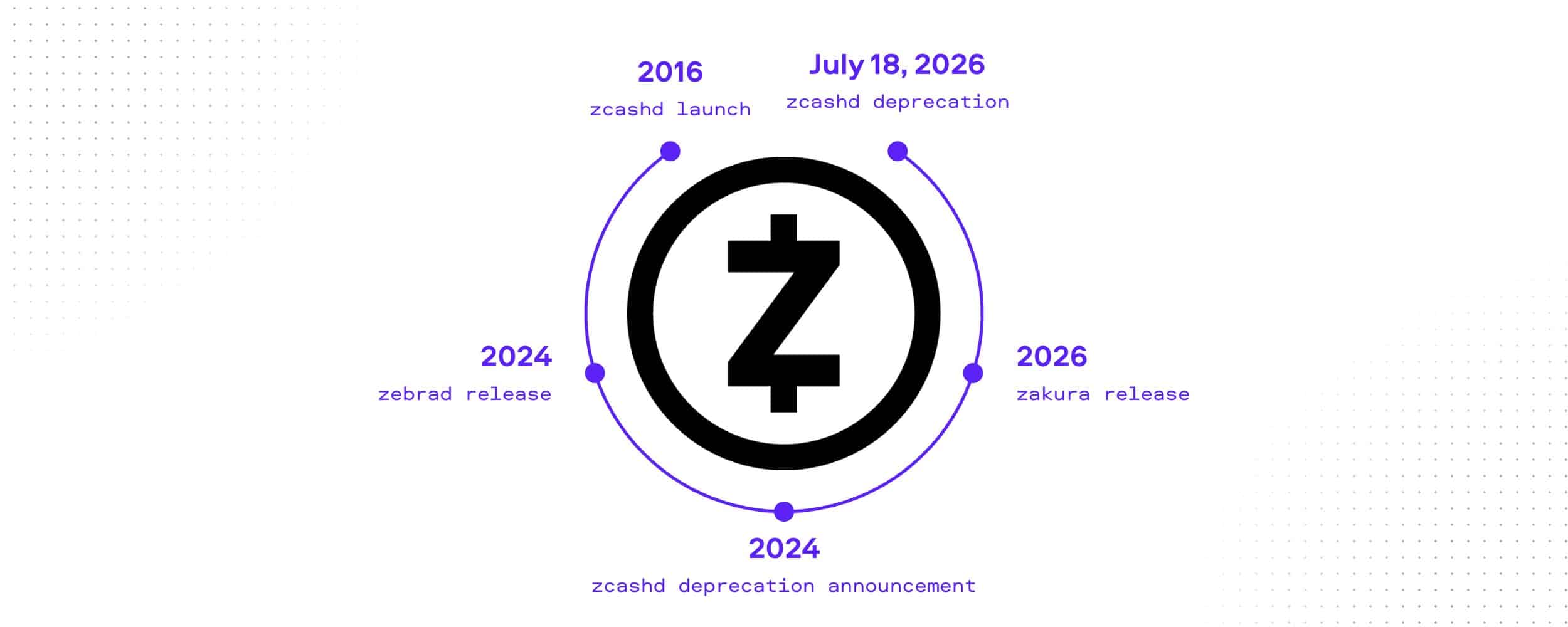
Fuente: X

Mientras tanto, Zakura completó el nuevo ecosistema de nodos. En lugar de simplemente reemplazar el software heredado, la transición fortalece la mantenibilidad, prepara la red para Ironwood y reduce el riesgo operativo a largo plazo.

La adopción de Zcash se mantiene intacta

Completar la transición de infraestructura de Zcash no eliminó la mayor pregunta del mercado. En cambio, cambió la atención a si los usuarios aún confiaban en la red después de la vulnerabilidad de Orchard. La actividad inicial sugiere que la confianza se mantuvo en gran medida.

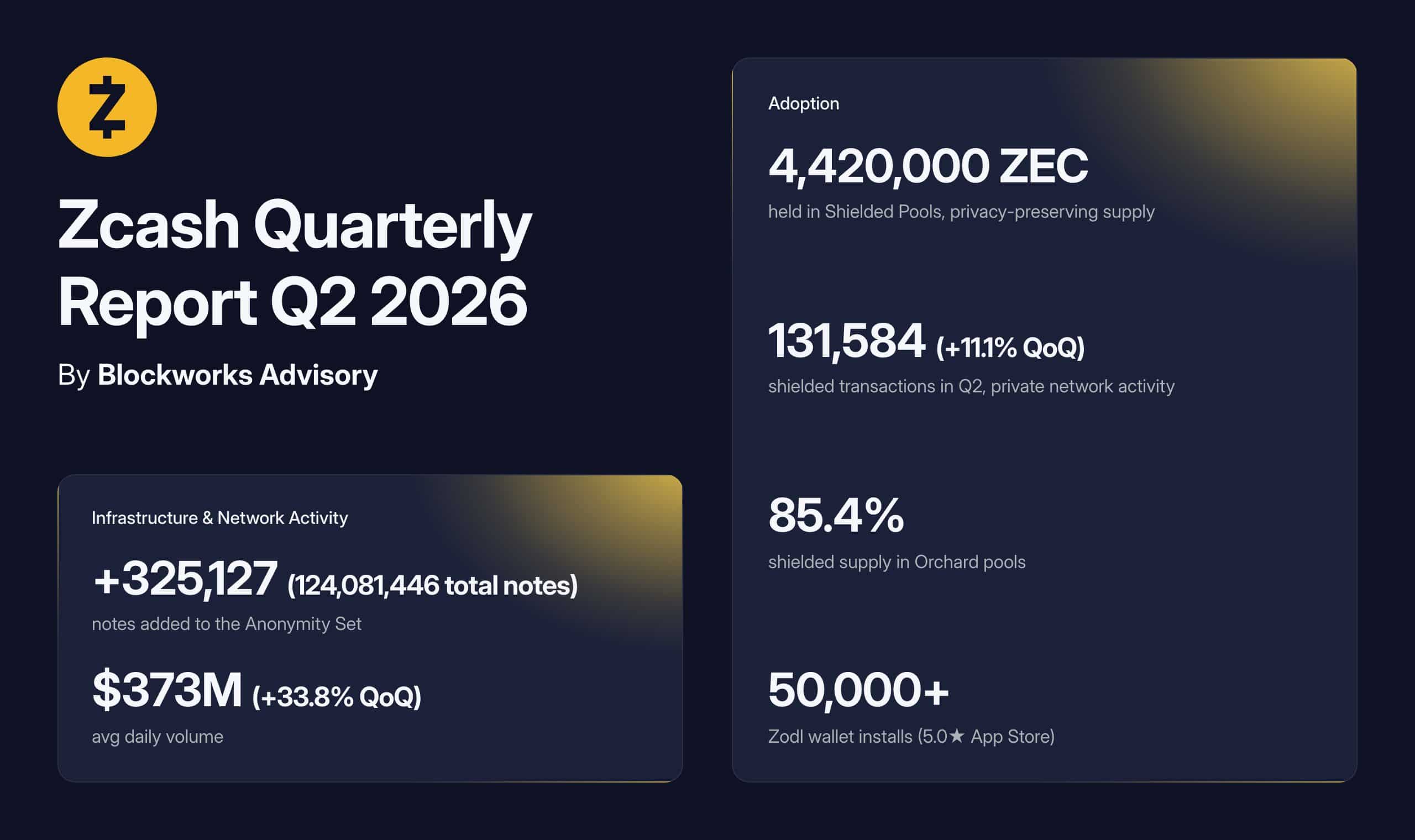
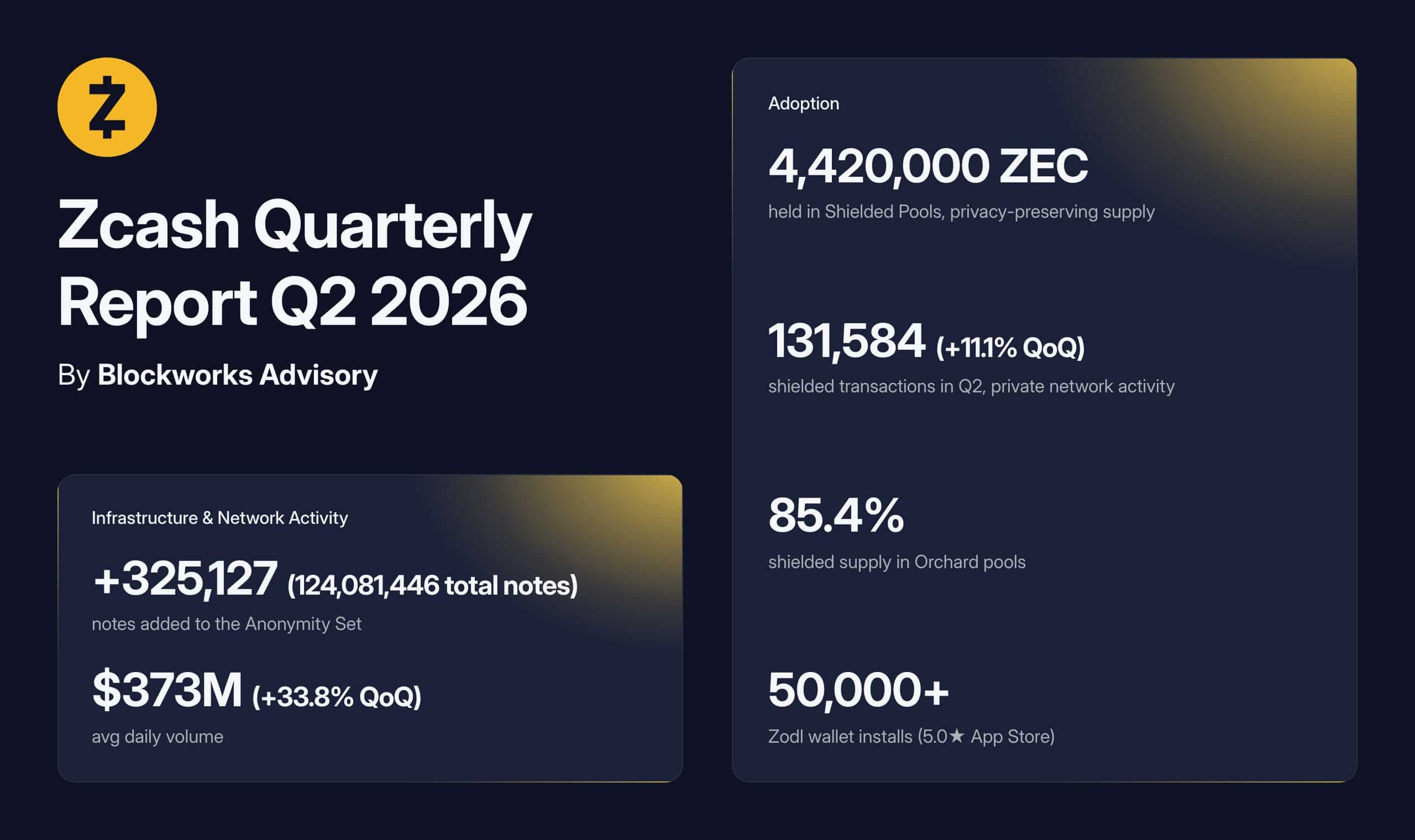
Aunque los saldos protegidos disminuyeron un 14% a 4.42 millones de ZEC, los usuarios continuaron dependiendo de transacciones privadas, las cuales aumentaron un 11,1% trimestralmente a 131,584.
Fuente: Zcash en X

Esta tendencia se volvió aún más significativa a medida que el conjunto de anonimato para ZCash se expandió en 325,127 unidades a 124.08 millones.

Esto indicó un aumento en los participantes que usan ZCash con fines de privacidad. Además, el volumen promedio diario de negociación aumentó un 33,8% trimestralmente a 373 millones de dólares. Esto refuerza aún más que el uso general de la red ha ido en aumento.

En lugar de reflejar una adopción debilitada, estas tendencias apuntan a una reposición cautelosa de capital mientras la confianza en la infraestructura de privacidad de Zcash se mantuvo intacta.

La verificación formal refuerza la integridad del protocolo

Incluso las redes de blockchain resilientes son juzgadas finalmente por cómo responden a amenazas críticas de seguridad. Zcash enfrentó tal prueba cuando investigadores encontraron una falla en los grupos protegidos Orchard que aseguraban aproximadamente el 85% del valor protegido.

Pero la falla se mantuvo contenida porque la divulgación fue coordinada, y los desarrolladores pudieron lanzar una solución de emergencia en cuestión de días. Más importante aún, esta falla permitía la falsificación dentro de Orchard en lugar de inflar el suministro total de ZEC.

El mecanismo de torniquete impidió que los fondos falsificados salieran del grupo, excepto los depósitos legítimos. De cara al futuro, Ironwood fortalece esta protección mediante verificación formal y recuperación cuántica también.

Juntas, estas actualizaciones mueven a Zcash desde correcciones reactivas hacia garantías más sólidas de seguridad a largo plazo y confianza dentro del ecosistema.


Resumen Final

  • Zcash [ZEC] completó su migración a Zebra y Zakura, fortaleciendo la infraestructura mientras mantenía una actividad de red resiliente.
  • Zcash entra en la era Ironwood con verificación formal y recuperación cuántica, reforzando la seguridad del protocolo a largo plazo.

Трендові криптовалюти

Пов'язані питання

Q¿Qué marca el cese de operaciones de zcashd y qué nuevo periodo inicia Zcash?

AEl cese de operaciones de zcashd, que alcanzó el fin de soporte en la altura de bloque 3417100, marca el final de la implementación de software original de Zcash y el inicio de la 'era Ironwood', que introduce capacidades de resistencia cuántica y verificación formal.

Q¿Cómo evolucionaron las transacciones privadas y el conjunto de anonimato de Zcash según el artículo?

ALas transacciones privadas aumentaron un 11.1% intertrimestral hasta 131,584, y el conjunto de anonimato (anonymity set) de Zcash se expandió en 325,127 unidades, alcanzando 124.08 millones, lo que indica un incremento en los participantes que utilizan la red para fines de privacidad.

Q¿Qué vulnerabilidad se descubrió en los fondos blindados de Orchard y cómo se manejó?

AInvestigadores descubrieron una falla en los fondos blindados de Orchard, que aseguraban aproximadamente el 85% del valor blindado. La vulnerabilidad permitía la falsificación dentro de Orchard, pero no la inflación de la oferta total de ZEC. Se manejó mediante una divulgación coordinada y los desarrolladores lanzaron un parche de emergencia en días, evitando que la fuga afectara el ecosistema más amplio.

Q¿Cuáles son los componentes clave de la nueva infraestructura de nodos de Zcash y qué beneficios aportan?

ALa nueva infraestructura consta de Zebra (una alternativa basada en Rust lanzada en 2024) y Zakura (que completó el ecosistema de nodos). Juntos fortalecen la capacidad de mantenimiento, preparan la red para Ironwood y reducen el riesgo operativo a largo plazo, reemplazando la implementación heredada zcashd.

Q¿Qué dos características principales refuerzan la seguridad a largo plazo en la era Ironwood de Zcash?

ALas dos características principales que refuerzan la seguridad a largo plazo en la era Ironwood son la 'verificación formal' (formal verification), que proporciona garantías matemáticas de la corrección del protocolo, y la 'recuperación cuántica' (quantum recovery), que prepara la red contra amenazas de la computación cuántica.

Пов'язані матеріали

After Three Consecutive Quarters of Decline, Can the Crypto Market Find a Window for Stabilization in Q3?

The cryptocurrency market has just concluded its worst-performing quarter since 2022, with total capitalization dropping 12.6% to $2.1 trillion. All core metrics indicate capital is leaving the sector, not just rotating within it. Bitcoin fell 14.2% and Ethereum dropped 25.4% in Q2, breaking their previous correlation with US tech stocks. A key driver is the reversal in US spot Bitcoin ETF flows, which saw a net outflow of approximately $4.67 billion in Q2, including a record monthly outflow near $4.5 billion in June. While recent data suggests long-term holders are accumulating again, sustained ETF outflows mean continued selling pressure. Market focus is now singularly on the Federal Reserve. The upcoming July FOMC meeting is seen as the most critical event for Q3. A dovish signal could support Bitcoin reclaiming a $68,000-$84,000 range, while a hawkish stance might establish a new trading band around $50,000-$56,000. Additionally, regulatory uncertainty persists, with the progress of the crucial *CLARITY Act* stalling in the Senate, reducing its perceived 2026 passage probability to 40-45%. Despite the broad downturn, a few sectors showed growth. Prediction markets saw nominal volume surge 48.7% year-over-year to $113.8 billion, and tokenized collectibles transaction volume rose 143% quarterly to $1.4 billion. The Real-World Asset (RWA) tokenization sector also continued steady growth, now representing ~$28.1 billion in on-chain value. The market's foundation for an extreme crash appears limited, with Bitcoin price hovering near its 200-week moving average. However, the trading paradigm has shifted from narrative-driven speculation to decisions based on price action, policy developments, and interest rate expectations, making a broad sentiment-driven rally unlikely in the near term.

marsbitВчора 08:36

After Three Consecutive Quarters of Decline, Can the Crypto Market Find a Window for Stabilization in Q3?

marsbitВчора 08:36

BIT Trading Moment: BTC Still Suppressed by Weekly 200 EMA, Rejection May Restart Decline; Storage and Semiconductors that Surged Last Night Begin Falling in Evening Trading

**Crypto & Stock Market Wrap: Bitcoin Tests Resistance, Stocks Retreat After AI Surge** Bitcoin consolidates around $66,000, facing key resistance near $68,000—an area seen as a major psychological and technical hurdle where previous rallies have failed. Analysts note the cryptocurrency is caught between its 200-week moving average (~$63,333) and 200-week EMA (~$68,328). A clear break above $68k is needed to signal a stronger bullish trend, while a rejection could lead to a retest of $63k support. Market sentiment remains cautious, with low futures open interest pointing to a low-liquidity rebound rather than a full bull market. Bitcoin spot ETFs saw another $203 million inflow. US stock futures pointed lower after a strong Tuesday session led by a massive rebound in semiconductors and memory stocks. The rally was fueled by renewed optimism about AI-driven hardware demand, with Micron, SanDisk, and SK Hynix surging. However, those gains reversed in pre-market trading. Super Micro Computer (SMCI) soared over 20% after hours on strong guidance and a record backlog. Other standouts included Rocket Lab and nuclear energy plays Oklo and X-Energy. Rising oil prices (Brent above $91) and climbing Treasury yields (10-year near 4.64%), however, are reigniting inflation concerns and acting as a headwind for equities. In Asia, markets were mixed. South Korea's KOSPI pared early gains to close slightly higher as semiconductor stocks like SK Hynix gave back initial surges. Japan's Nikkei edged lower as the yen hit a fresh 38-year low against the dollar, raising fears of potential market intervention. Key events to watch include the Samsung Galaxy launch, AMD's AI event, and a slew of major tech earnings from Alphabet, Tesla, and IBM after the close on Wednesday, followed by the ECB meeting and Intel's earnings on Thursday.

marsbitВчора 08:28

BIT Trading Moment: BTC Still Suppressed by Weekly 200 EMA, Rejection May Restart Decline; Storage and Semiconductors that Surged Last Night Begin Falling in Evening Trading

marsbitВчора 08:28

Former CFTC Chairman, Circle President Tarbert: Preaching Long-Termism While Cashing Out $30 Million Himself

Former CFTC Chairman and Circle President Heath Tarbert has consistently advocated for a long-term vision in public, urging patience from investors as Circle’s stock price has fallen significantly from its peak. However, it has been revealed that since Circle’s IPO, Tarbert has continuously sold his CRCL shares through pre-arranged trading plans, cashing out approximately $30 million, without making any public market purchases. This contrast between his public messaging and personal actions has drawn criticism. Tarbert joined Circle in July 2023 as Chief Legal Officer, leveraging his regulatory experience to help guide the company through its IPO and expansion. Despite promoting stablecoins as long-term infrastructure, he established a 10b5-1 trading plan just before Circle went public, leading to substantial stock sales over the following year. In March 2026, he initiated another plan to sell more shares. His career trajectory highlights a pattern of moving between high-level regulatory roles and influential positions in the financial sector. After resigning as CFTC Chairman in early 2021, he joined Citadel Securities as Chief Legal Officer just 27 days later, during a period of intense regulatory scrutiny for the firm. He later joined Circle, aiding its efforts to navigate regulatory challenges for its public listing. While Tarbert's expertise in policy and compliance is valuable to companies like Circle, his actions—advocating long-term confidence while personally divesting—raise questions about the alignment between his public statements and his private financial decisions, leaving investors who followed his advice to bear the market risks.

marsbitВчора 08:06

Former CFTC Chairman, Circle President Tarbert: Preaching Long-Termism While Cashing Out $30 Million Himself

marsbitВчора 08:06

Gate Research Institute: The 'Wall Street-ization' Wave of Crypto Financial Products – Competition or Integration?

The article titled "Gate Research Institute: Are Crypto Financial Products Sparking a 'Wall Street' Wave—Competition or Convergence?" explores the evolving relationship between the crypto ecosystem and traditional finance (TradFi). The piece begins by reflecting on Bitcoin's original 2009 vision of decentralization, disintermediation, and moving away from banks. It then contrasts this with the 2024 landscape, where key crypto assets like Bitcoin are increasingly held through Wall Street products like ETFs issued by giants like BlackRock. The article questions whether this signifies that TradFi is systematically taking over the rights to issue, price, custody, and distribute crypto financial assets. The core argument is that this is not a zero-sum takeover but rather a bidirectional convergence where each side addresses the other's weaknesses. Crypto offers 24/7 global markets, programmable settlement, and open access but lacks compliant channels, institutional-grade custody, deep fiat liquidity, and mainstream distribution. TradFi possesses these but is constrained by legacy systems, limited operating hours, and slow settlement. Two primary convergence paths are highlighted: * **Path A (CEX to TradFi):** Exemplified by Gate, which has progressed from offering tokenized stocks and CFDs to providing direct, real stock trading (US, Hong Kong, South Korea) within its platform, using USDT. * **Path B (TradFi to Crypto):** Exemplified by Robinhood, which has integrated crypto trading, acquired exchanges like Bitstamp, and is moving traditional assets like stocks onto the blockchain via tokenization and its own Layer 2. Both paths are ultimately competing to become the next-generation, unified financial account—a "super account" where users can seamlessly trade cryptocurrencies, stocks, ETFs, RWA (Real World Assets), and tokenized treasury products in one interface. The growth of RWA and tokenized treasuries (e.g., BlackRock's BUIDL) is presented as the asset-layer fusion, providing stable, yield-bearing assets on-chain and acting as a bridge between the two worlds. In conclusion, the "Wall Street-ization" of crypto is framed as a mutual transformation. Decentralized ideals persist in the protocol layer, while at the application layer, a more efficient, global, and accessible unified capital market is emerging from this convergence. The future competition lies not between crypto exchanges and stockbrokers, but between platforms vying to offer the most comprehensive asset coverage, liquidity, and user experience within a single account.

marsbitВчора 08:01

Gate Research Institute: The 'Wall Street-ization' Wave of Crypto Financial Products – Competition or Integration?

marsbitВчора 08:01

Торгівля

Спот

Популярні статті

Як купити ERA

Ласкаво просимо до HTX.com! Ми зробили покупку Caldera (ERA) простою та зручною. Дотримуйтесь нашої покрокової інструкції, щоб розпочати свою криптовалютну подорож.Крок 1: Створіть обліковий запис на HTXВикористовуйте свою електронну пошту або номер телефону, щоб зареєструвати обліковий запис на HTX безплатно. Пройдіть безпроблемну реєстрацію й отримайте доступ до всіх функцій.ЗареєструватисьКрок 2: Перейдіть до розділу Купити крипту і виберіть спосіб оплатиКредитна/дебетова картка: використовуйте вашу картку Visa або Mastercard, щоб миттєво купити Caldera (ERA).Баланс: використовуйте кошти з балансу вашого рахунку HTX для безперешкодної торгівлі.Треті особи: ми додали популярні способи оплати, такі як Google Pay та Apple Pay, щоб підвищити зручність.P2P: Торгуйте безпосередньо з іншими користувачами на HTX.Позабіржова торгівля (OTC): ми пропонуємо індивідуальні послуги та конкурентні обмінні курси для трейдерів.Крок 3: Зберігайте свої Caldera (ERA)Після придбання Caldera (ERA) збережіть його у своєму обліковому записі на HTX. Крім того, ви можете відправити його в інше місце за допомогою блокчейн-переказу або використовувати його для торгівлі іншими криптовалютами.Крок 4: Торгівля Caldera (ERA)Легко торгуйте Caldera (ERA) на спотовому ринку HTX. Просто увійдіть до свого облікового запису, виберіть торгову пару, укладайте угоди та спостерігайте за ними в режимі реального часу. Ми пропонуємо зручний досвід як для початківців, так і для досвідчених трейдерів.

502 переглядів усьогоОпубліковано 2025.07.17Оновлено 2026.06.02

Як купити ERA

Обговорення

Ласкаво просимо до спільноти HTX. Тут ви можете бути в курсі останніх подій розвитку платформи та отримати доступ до професійної ринкової інформації. Нижче представлені думки користувачів щодо ціни ERA (ERA).

活动图片