$100,000 a Month, Trump Starts Selling 'Alpha'

Odaily星球日报Опубліковано о 2026-07-18Востаннє оновлено о 2026-07-18

Анотація

Donald Trump's media company is reportedly planning to sell low-latency access to his Truth Social posts to institutional clients for up to $100,000 per month. This service would allow traders and investment firms to see his posts—often containing major policy announcements—a few seconds before the general public. In fast-moving financial markets, this brief time advantage is considered highly valuable, enabling subscribers to potentially profit from early reactions to market-moving statements. The report compares this "Trump Terminal" to traditional financial data services like Bloomberg Terminal, noting a key difference: while others aggregate and distribute information, Trump's service offers direct, privileged access to the source himself. This move is seen as the latest example of Trump commercializing his political influence and personal brand, following ventures into NFTs, meme coins, and other media products. The underlying premise is that his statements have repeatedly moved markets, making early access to them a tradable asset.

Original | Odaily Planet Daily(@OdailyChina)

Author | Azuma(@azuma_eth)
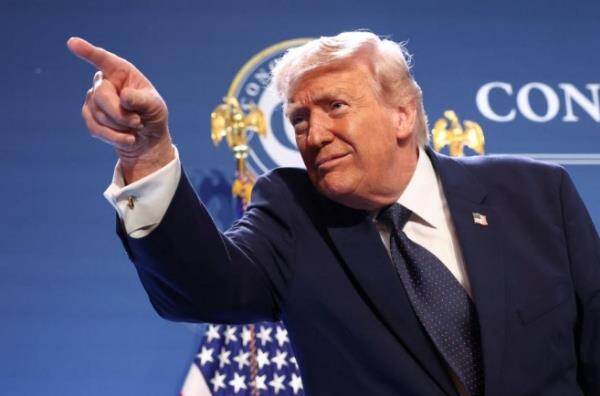
Trump has once again pulled off a "stunt" that defies public perception.

The Financial Times reports that Trump Media & Technology Group (TMTG) is exploring ways to commercialize the real-time news feed on its Truth Social platform, planning to offer low-latency data services to institutional clients for as much as $100,000 per month. Institutions purchasing this service will be able to access Trump's latest posts faster than regular users, to track policy signals, market sentiment, and the potential impact of political events.

The Time Advantage is the Most Valuable Thing in the Market

For investors focused on the U.S. market, Truth Social is not an ordinary social media platform. After the January 6th Capitol riot in 2021, Trump was banned from mainstream platforms like Twitter (now X) and Facebook. Subsequently, TMTG launched Truth Social, and Trump began using it as his primary channel for communication. Although Trump later regained his X account, his major policy statements on tariffs, trade, foreign affairs, regulation, and more are still often published first on Truth Social, gradually making it the primary source for global investors tracking Trump's movements.

Even so, this seems like an almost unbelievable business. After all, Truth Social is itself a public platform, and every post Trump makes becomes visible to everyone within seconds. Since the information is public, why would institutions be willing to pay such a high price for it?

The answer is actually quite simple. In financial markets, the most expensive thing has never been the information itself, but the time advantage of obtaining it earlier than others.

For the average user, seeing a post a few seconds earlier is almost meaningless. But for quantitative funds, high-frequency trading firms, and even some crypto trading teams, those few seconds can determine whether a trade results in profit or loss. When the market has become accustomed to repricing assets based on Trump's every move, whoever gets the information first has the chance to act first.

In other words, what TMTG is really selling is not a post, but a form of "Presidential Alpha."

The 'Trump Terminal' That Surpasses Bloomberg Terminal

In fact, TMTG is not the first to think of this business.

On Wall Street, selling real-time data is an extremely mature business model. Whether it's Bloomberg, Reuters, the New York Stock Exchange, or Nasdaq, they all have long provided paid data services to institutions. From corporate earnings reports and macroeconomic data to stock tick-by-tick trades and order book changes, these institutions can often access information earlier via dedicated lines or data interfaces with lower latency and higher stability.

Notably, what they sell is mostly not "exclusive news" — the vast majority of information is eventually made public to the entire market. What's truly valuable is that institutions can receive this information milliseconds, hundreds of milliseconds, or even seconds faster than others. This time advantage often translates to trading opportunities and can directly determine a strategy's profitability.

TMTG is doing the same thing, even taking it a step further — unlike traditional financial terminals like Bloomberg Terminal, which are merely collectors and distributors of information, Trump himself is the source. No matter how fast a Bloomberg Terminal is, it is essentially aggregating and transmitting market information; what TMTG is selling is exclusive priority access to every update Trump posts on Truth Social.

In other words, no matter how powerful the Bloomberg Terminal is, it's just a second-hand information broker, while the leader's "Trump Terminal" is absolute firsthand intelligence.

This Money, Only Trump Can Make

Theoretically, every U.S. president, as well as leaders of other major nations, possess a similar ability to influence markets.

From key official appointments to fiscal policies, from diplomatic maneuvers to war conflicts, a leader's words and actions can sway the pricing of global capital markets. But Trump is probably the only one to actually package this influence into a business and unabashedly sell it to Wall Street.

The crucial premise here is that Trump's firsthand information is truly valuable enough.

Over the past few years, Trump's Truth Social has become a critical information source for global investors. From tariff policies and trade negotiations to cryptocurrency regulation and Federal Reserve Chair selections, Trump's posts have repeatedly triggered sharp fluctuations in the stock market, the U.S. dollar, gold, and crypto markets. A series of trading strategies formed around expectations of Trump's policies, such as "Trump Trades" and "TACO Trades," further demonstrate that the market has long viewed his pronouncements as a tradable "market factor."

But the more important reason might be Trump himself. If past U.S. presidents largely viewed their political influence as a public resource, Trump is more accustomed to seeing influence as an asset that can be operated, amplified, and commercialized.

Looking back over recent years, from NFTs and meme coins to Truth Social, Truth.Fi, Trump Mobile, and now selling real-time Truth Social data services to institutions, the product forms have constantly changed, but the underlying logic has remained unchanged — continuously transforming the "Trump" IP into a commercial product that can be sold, subscribed to, and invested in.

For many traditional politicians, the presidency signifies power and necessitates maintaining a distance from commercial interests. In Trump's eyes, the two do not seem to have a natural boundary. As long as the market is willing to pay for influence, then influence itself can become a commodity.

In other words, Trump did not create the demand; rather, he realized earlier than anyone else that "presidential influence" itself is an asset that can be priced and sold.


Пов'язані питання

QWhat service is Trump Media & Technology Group (TMTG) reportedly exploring, and how much does it cost?

ATMTG is exploring the commercialization of Truth Social's real-time feed by offering low-latency data services to institutional clients, with a reported price of up to $100,000 per month.

QWhy would institutional clients be willing to pay a high fee for access to Trump's posts on Truth Social a few seconds earlier than the public?

ABecause in financial markets, the time advantage of receiving information even a few seconds earlier can be critical for trading decisions. For quant funds, high-frequency trading firms, and crypto trading teams, this head start can determine the profit or loss of a trade, as markets often react to Trump's policy signals.

QHow does the proposed 'Trump Terminal' service differ from traditional financial data terminals like Bloomberg Terminal?

ATraditional terminals like Bloomberg Terminal aggregate and distribute market information from various sources, acting as secondary information distributors. In contrast, the 'Trump Terminal' offers exclusive priority access to Trump's posts directly from the source (Truth Social), making it a primary information channel.

QAccording to the article, what is the underlying logic behind Trump's various business ventures like NFTs, meme coins, and now the data service?

AThe underlying logic is the continuous commercialization of the 'Trump' IP. The article states that Trump consistently transforms his influence and personal brand into sellable, subscribable, and investable commercial products.

QWhat does the article suggest is unique about Trump's approach to presidential influence compared to other politicians?

AThe article suggests that while traditional politicians often view presidential influence as a public resource to be kept separate from business, Trump sees it as a commercially viable asset. He recognizes that 'presidential influence' itself can be priced and sold as a commodity if the market is willing to pay for it.

Пов'язані матеріали

The Verdict in Choi Tae-won's Divorce Case: Revealing the Inheritance Undercurrent Behind SK Hynix's Trillion-Won Empire

SK Group Chairman Chey Tae-won's high-profile divorce case, involving a record 1.38 trillion won settlement, has drawn attention to the succession plans for Korea's second-largest conglomerate, especially its crown jewel, SK hynix. Unlike traditional chaebol scripts centered on the eldest son, Chey's three children from his marriage to former President Roh Tae-woo's daughter, Roh Soh-yeong, are carving distinct, non-traditional paths. Eldest daughter Chey Yun-jung (b. 1989) is seen as the most evident successor. With a scientific and consulting background, she holds executive roles at SK bioscience and SK Inc.'s growth support department, focusing on future strategy and biopharma. Her marriage is to an AI infrastructure entrepreneur, not a traditional business alliance. Second daughter Chey Min-jung (b. 1991) took a unique route, voluntarily serving as a South Korean naval officer, including an anti-piracy deployment. She later worked on policy and strategy for SK hynix in Washington D.C. before co-founding an AI-driven healthcare startup. She married a former U.S. Marine Corps officer, connecting her to U.S. defense and policy circles—networks crucial for a global semiconductor giant. The only son, Chey In-geun (b. 1995), who studied physics like his father, worked briefly at SK E&S before joining McKinsey. Despite fitting the traditional "heir" profile as the eldest son, he remains silent and holds no public position or shares in SK, suggesting the old succession playbook is obsolete. As SK hynix's valuation soars, becoming a geopolitical asset in the AI era, the heirs' legitimacy is no longer automatic. They must prove themselves in fields like AI biotech, global policy, and strategic consulting. Their marriages also reflect new elite networks in tech and defense, not old political alliances. Their inheritance is the complex challenge of navigating a globalized, tech-driven world, not just a corporate throne.

marsbit3 год тому

The Verdict in Choi Tae-won's Divorce Case: Revealing the Inheritance Undercurrent Behind SK Hynix's Trillion-Won Empire

marsbit3 год тому

From OpenSea to OpenRouter: Is Alex Atallah Repeating His 'Exit at the Peak' Playbook?

From OpenSea to OpenRouter: Is Alex Atallah Repeating His "Exit at the Peak" Playbook? According to the Wall Street Journal, payments giant Stripe is in talks to acquire the AI model aggregation platform OpenRouter in a potential deal valuing the company near $100 billion. This would mark founder Alex Atallah's second creation of a company reaching a $100 billion valuation, following his co-founding of NFT marketplace OpenSea. OpenRouter, founded just over three years ago, has grown rapidly by acting as a unified gateway for developers to access over 400 AI models. It currently has about 10 million users and processes over 200 trillion tokens monthly. While the platform's annualized revenue is around $50 million, its valuation has skyrocketed from $1.3 billion in March 2026. The potential acquisition by Stripe, a company OpenRouter's founder once likened it to, represents a major expansion into AI infrastructure for the payments leader. This move echoes Atallah's previous timing with OpenSea, where he departed before the NFT market's significant downturn. For OpenRouter, selling now may be strategic. Despite its scale, its business model—charging a 5-5.5% fee on AI inference calls—faces pressure from competition, open-source models, and potential price wars among model providers, limiting its profitability narrative for an IPO. A key asset for potential acquirers like Stripe is OpenRouter's vast repository of real-world AI usage data, which offers unique insights into model performance and developer preferences that are difficult to replicate. Whether this potential deal signifies a new valuation benchmark for AI infrastructure or another market peak signal remains to be seen.

链捕手3 год тому

From OpenSea to OpenRouter: Is Alex Atallah Repeating His 'Exit at the Peak' Playbook?

链捕手3 год тому

Торгівля

Спот
活动图片




