Mengapa Penjualan DEXE Pasca-ATH Bisa Menurunkan Harganya di Bawah $30

ambcryptoОпубліковано о 2026-07-16Востаннє оновлено о 2026-07-16

Анотація

Setelah mencapai rekor tertinggi baru (ATH) di $49,40 berkat peluncuran upgrade integrasi AI Dexelization, harga DEXE mengalami penurunan signifikan. Pada saat penulisan, DEXE diperdagangkan sekitar $34, turun 9,85% dengan volume yang melonjak 58%, mengindikasikan tekanan jual yang kuat. Analisis menunjukkan aktivitas penjualan agresif dari pemain besar (whale). Data Spot Taker CVD yang merah selama lima hari berturut-turut dan arus masuk bersih positif ke bursa ($6,8 juta) mengkonfirmasi dominasi pihak penjual. Indikator teknis seperti Stochastic Momentum Index (SMI) yang jatuh ke area jenuh jual (oversold) dan crossover bearish pada RSI semakin memperkuat momentum turun. Dengan tekanan jual yang terus berlanjut dari whale dan sinyal teknis yang bearish, harga DEXE berisiko untuk jatuh di bawah level $30. Namun, pandangan bearish ini dapat terbatal jika harga berhasil bertahan di kisaran $37 hingga $40.

Setelah terkonsolidasi dalam kisaran sempit awal Juli, DeXe [DEXE] melonjak ke rekor tertinggi baru (all-time high/ATH) sebesar $49,40. Rally ini didorong oleh peluncuran sukses peningkatan integrasi AI Dexelization, yang memicu pergerakan menuju ATH.

Peningkatan ini menanamkan agen AI khusus ke dalam infrastruktur protokol, memungkinkan AI dan pengguna berkolaborasi dalam operasi dan manajemen. Namun, buzz pasar seputarnya memudar setelah altcoin mencapai ATH, mengakibatkan penolakan. Sejak itu, altcoin tersebut mencetak empat lilin merah, ditutup pada level terendah baru setiap harinya.

Pada saat berita ini ditulis, DEXE diperdagangkan sekitar $34, turun 9,85% pada bagan harian. Pada periode yang sama, volume altcoin melonjak 58% menjadi $158 juta, menunjukkan tekanan jual yang intens.

Paus DEXE sedang bergerak

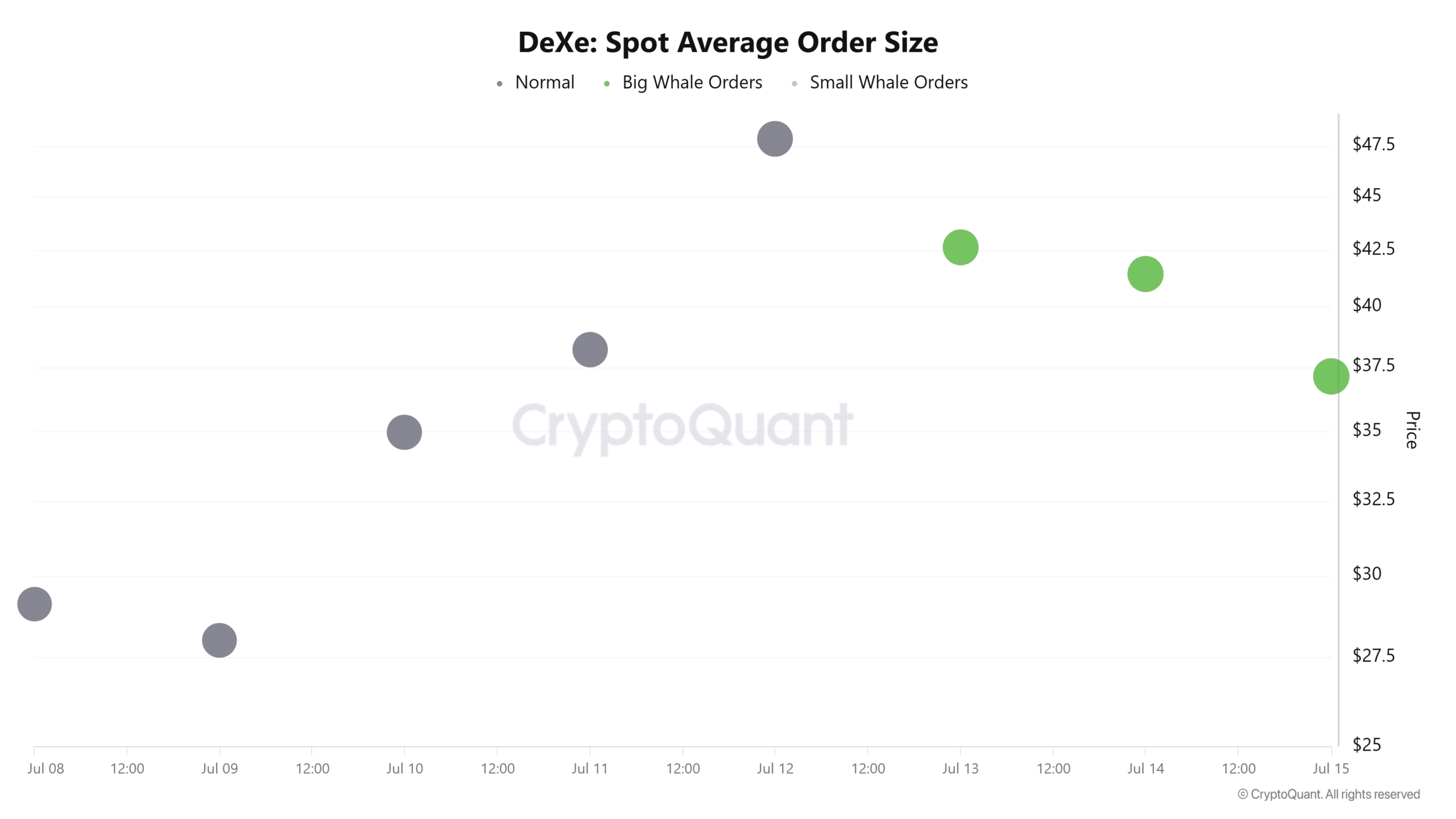
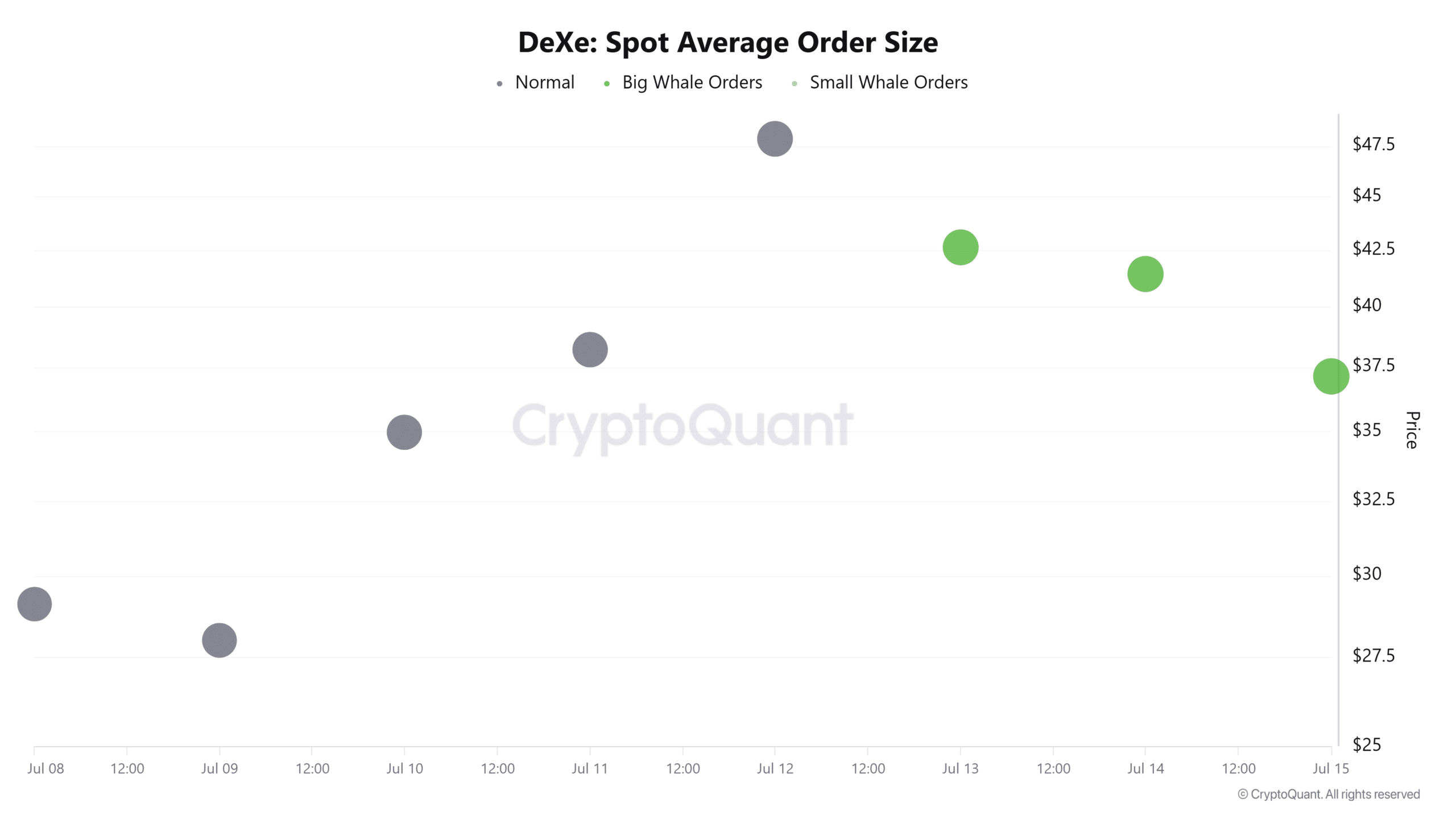
Yang menarik, setelah DEXE mulai menurun, paus masuk kembali ke pasar. Data Ukuran Pesanan Rata-rata Spot dari CryptoQuant menunjukkan Pesanan Paus Besar (Big Whale Orders) selama tiga hari berturut-turut.
Sumber: CryptoQuant

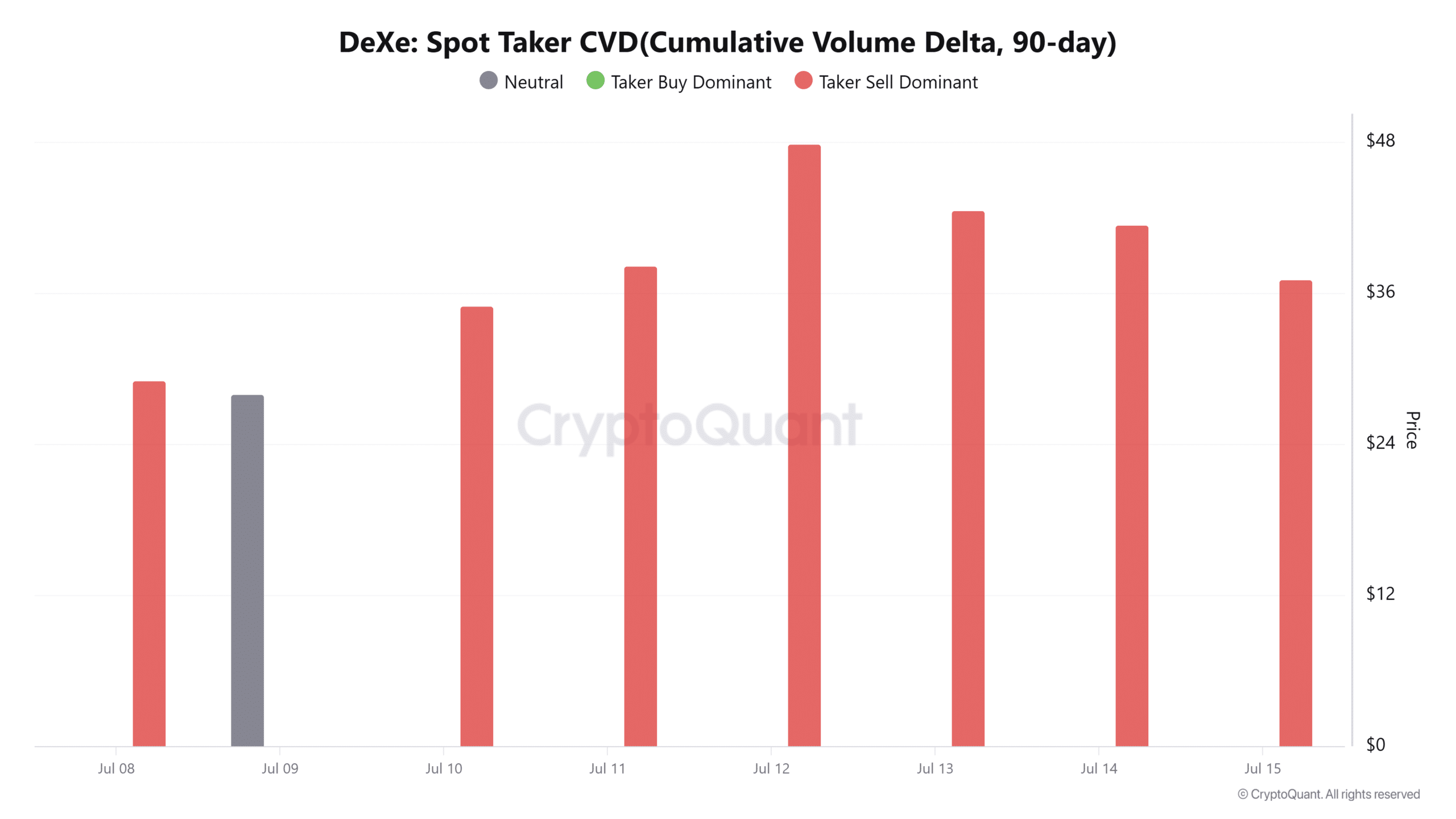
Ketika metrik ini menunjukkan pesanan paus, itu menandakan peningkatan partisipasi pasar dari kohort tersebut baik dalam menjual maupun membeli. Patut diperhatikan, metrik Spot Taker CVD menyoroti bahwa paus-paus ini telah aktif menguangkan.

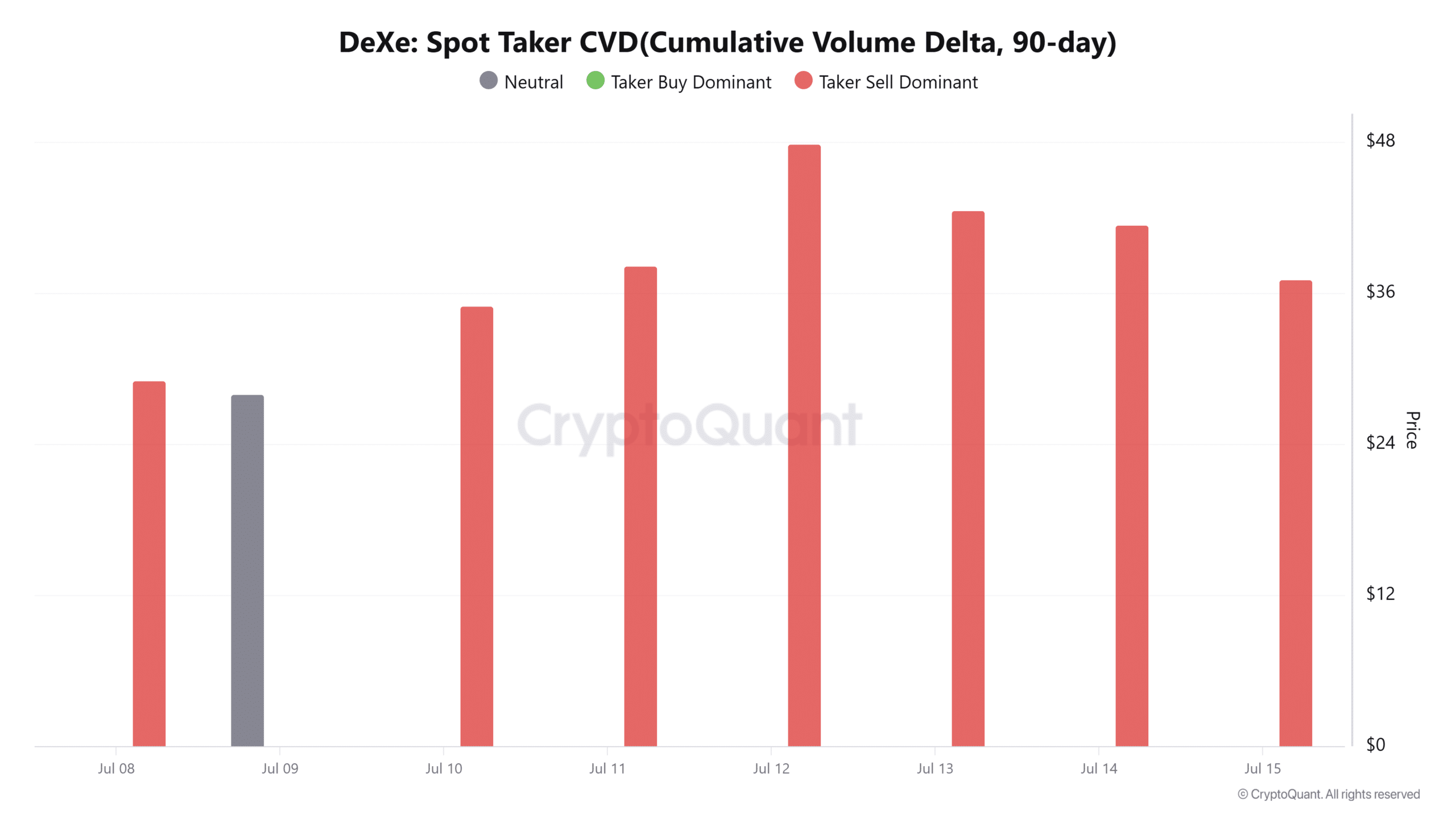
Metrik Spot Taker CVD tetap merah selama lima hari berturut-turut, menunjukkan bahwa lebih banyak pesanan jual yang baru-baru ini dieksekusi di pasar spot.
Sumber: CryptoQuant

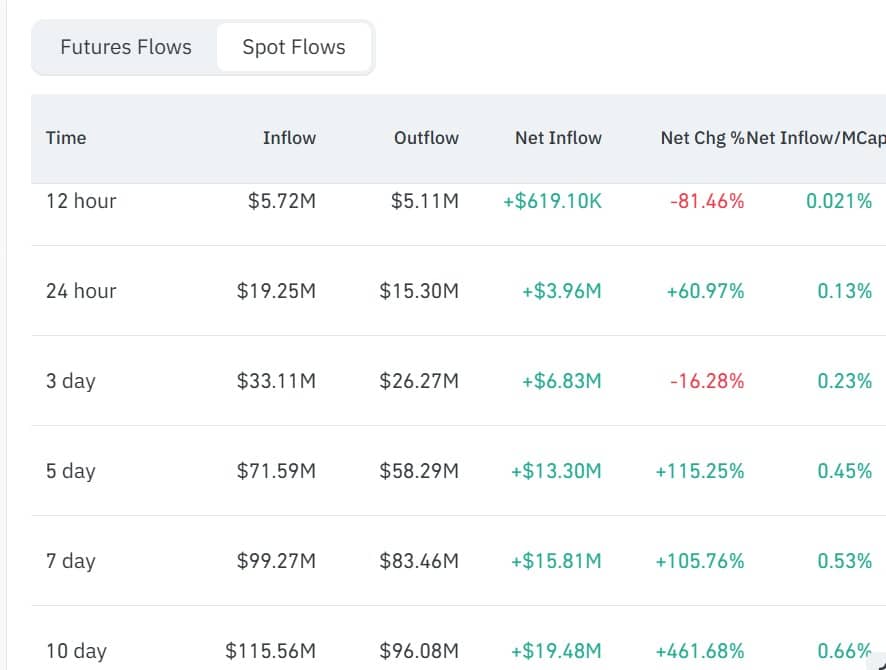
Oleh karena itu, sangat mungkin bahwa paus-paus ini sebagian besar telah menutup posisi mereka. Lebih lanjut, aliran pertukaran (exchange flow) juga menggema tren penjualan ini. Menurut data CoinGlass, netflow DEXE tetap positif selama seminggu terakhir.

Misalnya, selama tiga hari terakhir, $33,1 juta DEXE telah masuk ke bursa, sementara $26,27 juta telah keluar.
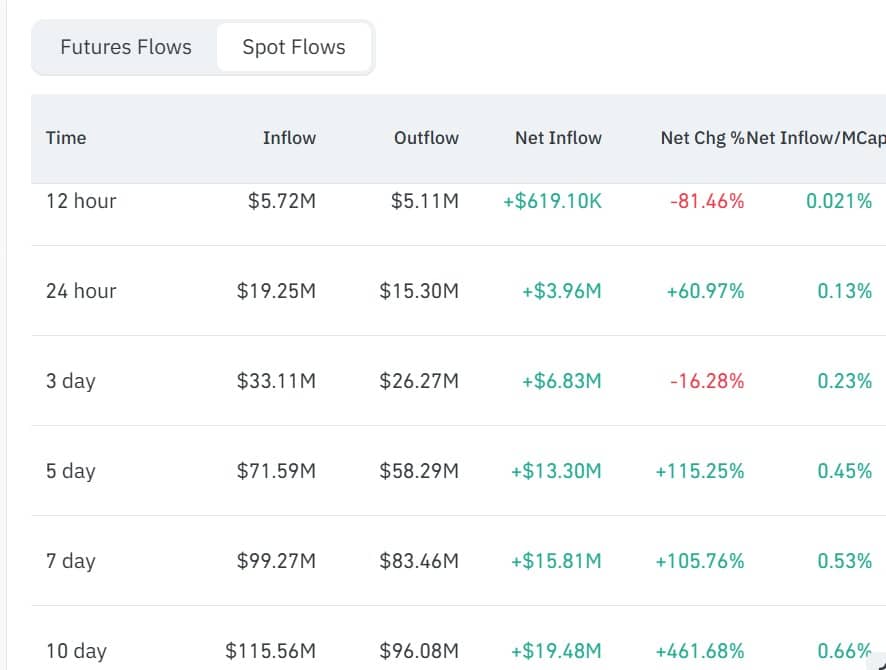
Sumber: Coinglass

Akibatnya, Spot Netflow naik ke $6,8 juta, sebuah tren yang berlanjut hingga tulisan ini dibuat. Periode berkelanjutan dari net flow positif menunjukkan bahwa penjual lebih terdorong untuk keluar dari pasar.

Seringkali, kondisi pasar seperti ini telah mendahului pelemahan pasar yang berkepanjangan, mengakibatkan lebih banyak kerugian pada bagan harga.

Apakah DEXE Berisiko Mengalami Kerugian Lebih Lanjut?

DEXE saat ini mengalami tekanan turun yang kuat, sebagian besar didorong oleh sentimen bearish paus. Akibatnya, momentum pasar turun menguat secara signifikan.

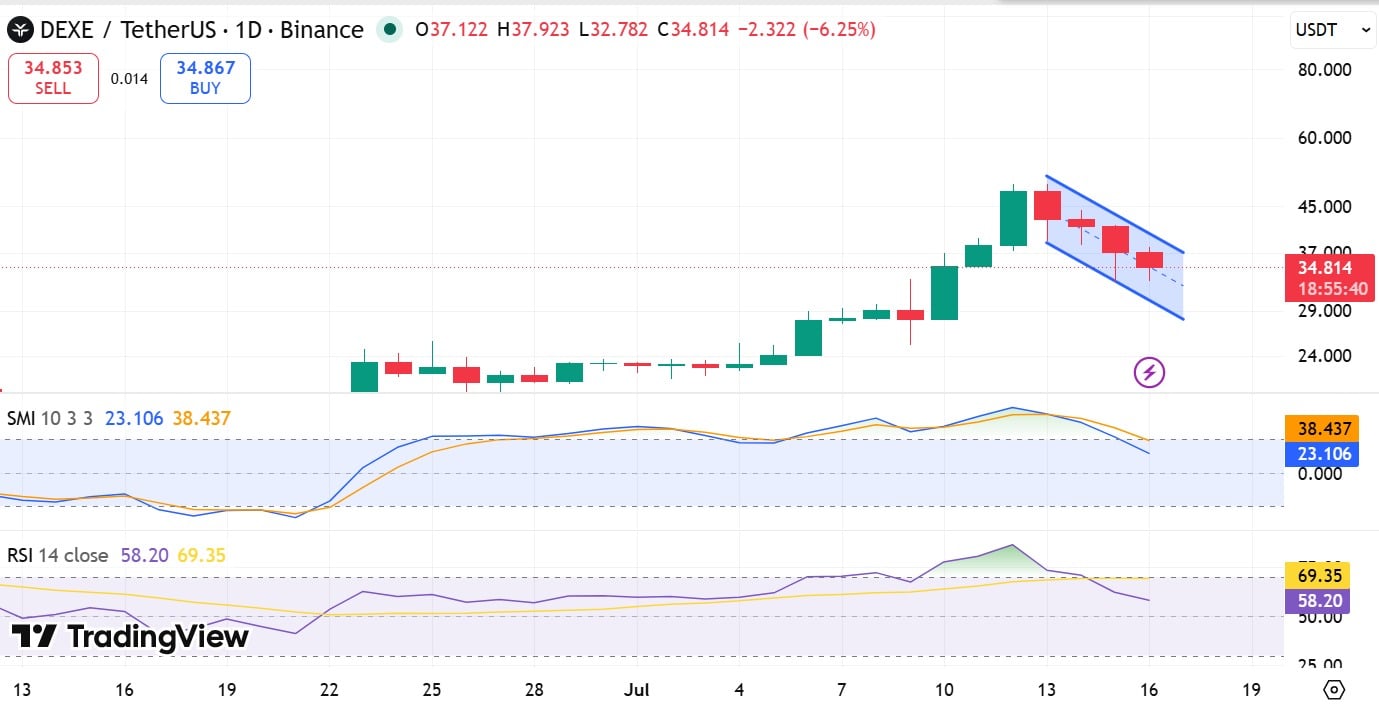
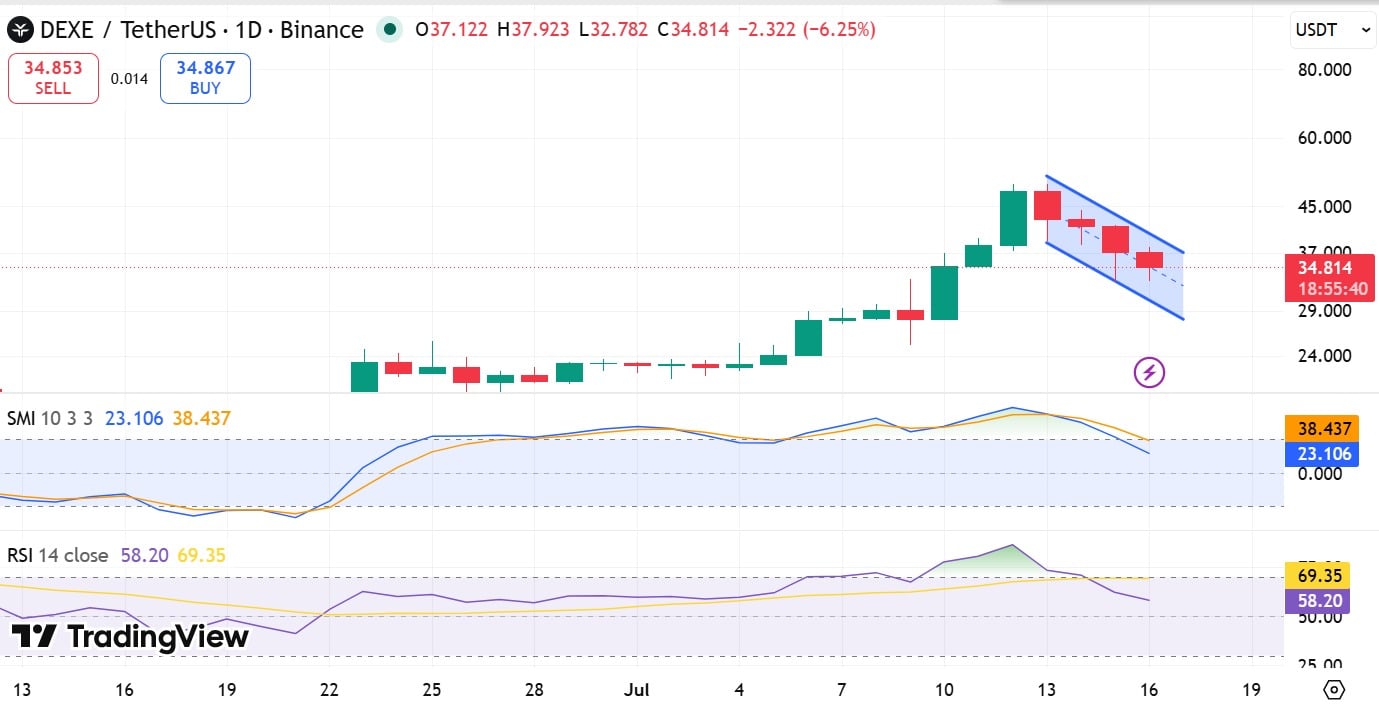
Pada saat berita ini ditulis, Stochastic Momentum Index (SMI) jatuh ke wilayah oversold, turun dari 77 ke 27. Pada level serendah itu, SMI menunjukkan momentum penurunan sangat kuat.
Sumber: TradingView

Pada saat yang sama, Relative Strength Index (RSI) membentuk persilangan bearish, turun dari 70 ke 58 pada saat berita ini ditulis. Ini menunjukkan bahwa meskipun pembeli tetap aktif, penjual berhasil merebut kembali pasar.

Biasanya, kondisi pasar seperti ini telah mendahului penurunan harga. Jadi, jika investor, terutama paus, terus melepas, DEXE bisa turun di bawah $30. Namun, jika pasar berhasil bertahan di antara $37 dan $40, pandangan bearish ini akan menjadi tidak berlaku.


Rangkuman Akhir

  • DeXe memperpanjang struktur bearishnya, turun 9,85% ke level terendah $32 sebelum sedikit rebound.
  • Pasar DEXE menunjukkan kelemahan, sebagian besar didorong oleh paus bearish yang telah menjual secara agresif.


Трендові криптовалюти

Пов'язані питання

QApa yang menyebabkan lonjakan harga DEXE ke rekor tertinggi baru pada Juli?

ALonjakan harga DEXE ke rekor tertinggi baru (ATH) sebesar $49.40 didorong oleh peluncuran sukses dari upgrade integrasi AI Dexelization, yang memicu pergerakan harga tersebut.

QApa indikasi dari data Spot Taker CVD yang tetap merah selama lima hari berturut-turut untuk DEXE?

AData Spot Taker CVD yang tetap merah selama lima hari berturut-turut menunjukkan bahwa lebih banyak order jual yang telah dieksekusi di pasar spot baru-baru ini, mengindikasikan tekanan jual yang kuat dari para whale.

QApa yang ditunjukkan oleh aliran masuk bersih (netflow) positif DEXE ke bursa selama seminggu terakhir?

AAliran masuk bersih (netflow) positif DEXE ke bursa selama seminggu terakhir menunjukkan bahwa lebih banyak token DEXE masuk ke bursa daripada yang keluar. Hal ini mengindikasikan bahwa penjual (seller) lebih termotivasi untuk keluar dari pasar, seringkali mendahului kelemahan pasar yang berkepanjangan.

QMenurut analisis teknis dalam artikel, kondisi pasar seperti apa yang dapat membatalkan prospek bearish untuk harga DEXE?

AMenurut analisis teknis dalam artikel, prospek bearish untuk harga DEXE akan menjadi tidak valid jika pasar berhasil mempertahankan level harga antara $37 dan $40.

QBerdasarkan artikel, apa dua faktor utama yang menyebabkan tekanan jual dan potensi penurunan harga DEXE di bawah $30?

ADua faktor utama yang menyebabkan tekanan jual dan potensi penurunan harga DEXE di bawah $30 adalah: 1) Aktivitas jual agresif dari whale (pemain besar), dan 2) Momentum pasar turun yang menguat, seperti yang ditunjukkan oleh indikator teknis Stochastic Momentum Index (SMI) yang jatuh ke wilayah jenuh jual (oversold) dan Relative Strength Index (RSI) yang melakukan perpotongan bearish.

Пов'язані матеріали

7 Months After the Collapse of Huiwang, Southeast Asia's Escrow Platforms Undergo a Major Reshuffle

Following the collapse of Huione Pay—dubbed the "Alipay of Southeast Asia"—seven months ago, the region's underground financial guarantee platform sector is undergoing a significant reshuffle. This power vacuum has been swiftly filled by emerging platforms such as XinBi, Tiger/Navigator, JinBei (renamed JinBo), Dali/Tiancheng, and FullyLight. These platforms, operating largely via Telegram and offering services like escrow for illicit transactions, have absorbed the vast user base and markets left behind by Huione. While positioning themselves as "trust intermediaries," their primary clientele consists of networks involved in online scams, money laundering, illegal gambling, and even human trafficking. For instance, the Tiger/Navigator platform explicitly provides "escrow" services for kidnapping-for-ransom operations ("强押车交易"). Data underscores the immense scale: Huione alone processed over $103 billion in cryptocurrency payments and facilitated over $31 billion through its escrow market before its downfall, linking it to Cambodia's notorious Prince Group. Since its collapse, competitors have seen explosive growth. For example, the XinBi platform has accumulated over $1.6 billion in total USDT revenue, while platforms like NewPay, OkPay (under Dali), and FullyLight Wallet collectively processed over $4.8 billion in USDT in a single year. This ecosystem thrives in regions like Cambodia and Myanmar, where regulatory gaps allow these platforms to act as critical financial infrastructure for sprawling cybercrime industries, from scam compounds to online casinos. The article concludes that the moniker "Southeast Asian Alipay" is a misnomer, obscuring the platforms' fundamental role in enabling serious criminal enterprises rather than representing legitimate financial innovation.

Odaily星球日报17 хв тому

7 Months After the Collapse of Huiwang, Southeast Asia's Escrow Platforms Undergo a Major Reshuffle

Odaily星球日报17 хв тому

The Changing Landscape: What Are Crypto VCs Experiencing?

Title: The Shifting Landscape of Crypto Venture Capital The era of dedicated crypto venture capital funds is undergoing a significant transformation. Once essential for navigating the sector's complexity and high risk, these specialized funds are now facing an identity crisis as the market matures. This shift mirrors historical patterns in other specialized investment classes like cleantech and SPACs, where initial information advantages dissipate as technologies become mainstream and integrated into existing industry frameworks. The article argues that crypto is reaching a critical inflection point, transitioning from a "building phase" to an "integration phase." Major players like Stripe, BlackRock, and Visa now engage with crypto not for its novel mechanics but as a foundational financial infrastructure. Their needs—regulatory compliance, banking partnerships, distribution channels—align with traditional fintech, a domain easily understood by large, generalist funds like Sequoia and Founders Fund. This evolution creates a "barbell effect" within the VC landscape. On one end are massive, diversified platforms that can incorporate crypto as one vertical among many. On the other are small, nimble funds focused on niche, experimental projects. The middle ground—medium-sized dedicated crypto funds—is being squeezed out. Their typical fund size makes it impossible to generate sufficient returns solely from early-stage crypto bets, yet they cannot compete with giants for later-stage deals. Consequently, leading crypto-native firms like Paradigm and Framework Ventures are expanding into AI, robotics, and other sectors, driven partly by LP pressure for better returns amid a broader VC DPI crisis. Others, like Dragonfly and a16z, have narrowed their crypto focus predominantly to financial infrastructure like stablecoins, reframing the sector's core narrative. For crypto entrepreneurs, this consolidation presents challenges. While generalist funds offer larger checks and broader resources, crypto projects now compete fiercely with AI for attention and capital within these firms. Furthermore, the long-term, non-commercial foundational work that built the ecosystem—funded by dedicated crypto VCs—is less likely to attract generalist capital focused on direct returns. The conclusion is that "crypto investor" as a standalone category is becoming obsolete, akin to "internet investor." Crypto is becoming a baseline infrastructure layer. The future will see a barbell structure: large-scale growth financing handled by generalist funds, while pioneering, speculative projects are funded by small, specialized vehicles. The dedicated crypto funds of the 2017-2021 boom, which incubated core infrastructure, are giving way to this new, bifurcated reality.

Foresight News34 хв тому

The Changing Landscape: What Are Crypto VCs Experiencing?

Foresight News34 хв тому

As Consensus Accelerates, What Are Young Investors Betting On?

Title: As Consensus Forms Faster, What Are Young Investors Betting On? In the rapid evolution of tech investment, a new generation of young investors is navigating a landscape where AI, robotics, commercial aerospace, and quantum computing are advancing simultaneously. Traditional investment logic based on financial models is giving way to a need for deep technical understanding and the ability to act before industry consensus forms. An analysis of trends from the "WAIC FUTURE TECH" list of young investment leaders reveals key shifts in focus. The first major trend is the movement of AI from the digital screen into the physical world. Investment is shifting from large language models and chatbots towards embodied AI, robotics, AI hardware, and edge computing. While demonstrations generate excitement, the real challenge lies in achieving scalable, reliable, and cost-effective delivery in complex real-world environments like factories and logistics. Success depends not just on algorithms but on the integration of sensors, actuators, and control systems. Second, the competitive focus for large models is moving beyond raw capability toward building an "intelligence flywheel." The goal is to create self-reinforcing systems where user interaction generates data, improving the model, which in turn enhances the user experience and attracts more engagement. Companies that successfully embed AI into workflows to create these closed-loop systems can build lasting value that isn't easily erased by the next model upgrade. Third, facing a potential bottleneck in high-quality human-generated data, investors are looking at new underlying technologies. Reinforcement learning and self-play, as demonstrated by AlphaGo Zero, offer paths for AI to generate its own experience. Scientific foundation models, which aim to build general AI capabilities for fields like life sciences and materials discovery, represent a non-consensus direction that could unlock new frontiers of knowledge and data. Finally, in deep-tech areas like quantum computing, commercial aerospace, and space-based infrastructure, patient capital is essential. These fields have long, uncertain development and validation cycles involving complex engineering, supply chains, and regulations. Investment here requires a long-term view, focusing on foundational team capabilities and the eventual emergence of market demand, even if commercial returns are distant. Collectively, these trends illustrate how young investors are adapting to a new era. They are learning to make earlier, technically-informed judgments, balance hype with real-world viability, and provide the patient capital needed to build the deep-tech foundations of the future.

marsbit1 год тому

As Consensus Accelerates, What Are Young Investors Betting On?

marsbit1 год тому

Торгівля

Спот

Популярні статті

Як купити DEXE

Ласкаво просимо до HTX.com! Ми зробили покупку DeXe (DEXE) простою та зручною. Дотримуйтесь нашої покрокової інструкції, щоб розпочати свою криптовалютну подорож.Крок 1: Створіть обліковий запис на HTXВикористовуйте свою електронну пошту або номер телефону, щоб зареєструвати обліковий запис на HTX безплатно. Пройдіть безпроблемну реєстрацію й отримайте доступ до всіх функцій.ЗареєструватисьКрок 2: Перейдіть до розділу Купити крипту і виберіть спосіб оплатиКредитна/дебетова картка: використовуйте вашу картку Visa або Mastercard, щоб миттєво купити DeXe (DEXE).Баланс: використовуйте кошти з балансу вашого рахунку HTX для безперешкодної торгівлі.Треті особи: ми додали популярні способи оплати, такі як Google Pay та Apple Pay, щоб підвищити зручність.P2P: Торгуйте безпосередньо з іншими користувачами на HTX.Позабіржова торгівля (OTC): ми пропонуємо індивідуальні послуги та конкурентні обмінні курси для трейдерів.Крок 3: Зберігайте свої DeXe (DEXE)Після придбання DeXe (DEXE) збережіть його у своєму обліковому записі на HTX. Крім того, ви можете відправити його в інше місце за допомогою блокчейн-переказу або використовувати його для торгівлі іншими криптовалютами.Крок 4: Торгівля DeXe (DEXE)Легко торгуйте DeXe (DEXE) на спотовому ринку HTX. Просто увійдіть до свого облікового запису, виберіть торгову пару, укладайте угоди та спостерігайте за ними в режимі реального часу. Ми пропонуємо зручний досвід як для початківців, так і для досвідчених трейдерів.

311 переглядів усьогоОпубліковано 2024.12.12Оновлено 2026.06.02

Як купити DEXE

Обговорення

Ласкаво просимо до спільноти HTX. Тут ви можете бути в курсі останніх подій розвитку платформи та отримати доступ до професійної ринкової інформації. Нижче представлені думки користувачів щодо ціни DEXE (DEXE).

活动图片












