Sui测试网更新v1.74.1通过协议版本128大幅降低交易Gas成本

bitcoinistОпубліковано о 2026-07-03Востаннє оновлено о 2026-07-03

Анотація

Sui区块链的开发公司Mysten Labs在测试网部署了v1.74.1版本更新,并启用了协议版本128。此次升级的核心在于显著降低了用户在测试网进行交易时的Gas费用。此举旨在优化网络性能,为将来在主网上的规模化部署做好准备。 文章强调,这一信息源自官方渠道(如GitHub上的发布记录),提供了基于事实的清晰进展,而非模糊的市场情绪。报道明确指出,当前更新仅适用于测试网环境,尚未部署至主网。因此,这应被视为一个具有明确范围的已确认技术进展,有助于评估Sui协议的发展动向,但并不能直接等同于未来的价格变动或广泛的市场趋势转变。对于市场参与者而言,这是一个需要结合流动性、市场结构以及其他官方后续信息来综合权衡的数据点。

这件事值得从平常的市场杂音中分离出来,自有其道理。《Sui测试网更新v1.74.1通过协议版本128大幅降低交易Gas成本》在市场正试图区分持久信号与短暂噪音的时刻,为Bitcoinist的读者提供了一个清晰的Sui观察视角。

根据为本报告查阅的原始资料,这个故事围绕一些具体细节展开,而非模糊的情绪。这很重要,因为加密货币的头条新闻变化很快,但往往能长久流传的部分,都是有文件备案、官方发布、数据仪表板或协议级记录支持的。

太长不看版

  • Mysten Labs在Sui区块链上部署了测试网更新v1.74.1,协议版本为128。
  • 此次升级降低了用户在测试网上的Gas费用。
  • 这些优化旨在为主网部署前的性能扩展做准备。

全局图景

其最直接的关联在于,这一进展契合了市场当日的主要主题之一:机构头寸布局、网络使用情况、监管压力、协议开发,或特定资产的轮动。在本例中,关键主题是Sui,这就是为什么它值得单独撰文阅读,而不是被埋没在更广泛的市场回顾中。

对于交易者而言,有用的部分不仅仅在于存在这条新闻。而在于事实如何与当前的市场背景相吻合。当官方消息源、市场数据或协议记录显示出新的动向时,读者能更好地判断这一动向仅仅是单日的反应,还是某种结构性变化的一部分。

原始资料显示了什么

本报道的核心来源是github.com,辅助数据来自github.com。这个信息来源链很重要,因为最终的文章不应依赖于仅为发现信息的媒体链接或二手摘要。

Mysten Labs在Sui区块链上部署了测试网更新v1.74.1,协议版本为128。

此次升级降低了用户在测试网上的Gas费用。

这些优化旨在为主网部署前的性能扩展做准备。

文中提到的数字性主张在撰写前已追溯至特定原始资料。‘v1.74.1’源自Mysten Labs的Sui测试网发布版本号;‘128’源自Sui测试网协议版本号。

故事的后续走向

对读者而言,实际的问题是应给予此次更新多大的权重。单一有信息来源支撑的发展可能有意义,但应结合流动性、市场结构以及相关发行人、协议方、监管机构或数据提供商后续的任何确认信息来解读。这在快节奏的加密货币市场中尤其重要,因为官方数据点可能在底层背景完全明朗之前,就在社交媒体上被激进行解读。

其中的告诫与新闻标题本身同等重要。务必要明确说明这是发生在测试网,而非主网。

这意味着更清晰的解读是,将其视为一个范围明确的已确认进展,而非价格必然上涨或市场全面转向的证据。在加密货币领域,这种区别至关重要。一个已验证的数据点可以强化一个论点,但它并不能消除执行风险、流动性风险、监管不确定性或交易者可能逆初始反应而动的可能性。

就目前而言,这个故事为市场提供了另一条可供权衡的证据。如果后续的文件备案、仪表板更新、协议记录或官方声明证实了进一步的推进势头,那么这个角度可能发展成更大的事件。如果没有,它仍然可以作为当前活动集中点的一个有用快照。

本报告基于来自github.com和github.com的信息。

本文由新闻部撰写,塞缪尔·雷编辑。

来源:Github

Трендові криптовалюти

Пов'язані питання

QSui 测试网更新 v1.74.1 通过哪个协议版本降低了交易 Gas 成本?

A通过协议版本 128 降低了交易 Gas 成本。

Q此次 Sui 测试网更新(v1.74.1)的主要目的是什么?

A主要目的是在部署到主网之前,通过优化来降低测试网上用户和开发者的交易 Gas 成本,从而扩展网络性能。

Q这篇文章提醒读者在理解此次更新时需要特别注意什么?

A需要特别注意这次更新目前仅部署在测试网(testnet)上,尚未部署到主网(mainnet)。

Q本文指出,一个单次、有来源支持的更新应该与哪些更广泛的因素结合来看?

A应该结合流动性、市场结构以及相关发行方、协议、监管机构或数据提供商后续的确认信息来综合考量。

Q这篇文章的核心信息源来自哪里?

A核心信息源来自 GitHub 上的相关仓库,具体是 Mysten Labs 的 Sui 测试网发布版本。

Пов'язані матеріали

MSTR Discloses Sale of 3,588 Bitcoins, Stock Price Drops Over 5% at One Point During Trading

MicroStrategy, the world's largest corporate holder of Bitcoin, has significantly shifted its business model. Between June 29 and July 5, the company sold 3,588 bitcoins for approximately $216 million to fund quarterly dividends for its preferred stock. This marks its largest-ever Bitcoin sale and signals a strategic pivot: Bitcoin is transitioning from a "buy-and-hold" reserve asset to a liquidity management tool for the company. This move follows a recent authorization allowing Bitcoin sales when equity fundraising is less attractive. The announcement contributed to a more than 5% intraday drop in MicroStrategy's stock price, while Bitcoin fell to around $61,800—below the company's average holding cost of roughly $75,700. The sale represents a major departure from MicroStrategy's long-standing "never sell" commitment, which saw its first minor breach in May with a $2.5 million sale. The latest, hundred-times-larger transaction underscores growing financial pressures. Analysts note the company faces about $1.5 billion in annual preferred dividend obligations, far exceeding cash flow from its software business. As of July 5, MicroStrategy holds 843,775 bitcoins. Its current operational logic involves buying Bitcoin during favorable financing conditions and selling portions to cover dividends when needed, creating a flexible capital management cycle amidst a challenging market environment.

华尔街日报4 год тому

MSTR Discloses Sale of 3,588 Bitcoins, Stock Price Drops Over 5% at One Point During Trading

华尔街日报4 год тому

Q-Day Countdown: Will Quantum Computing End Cryptocurrencies?

Quantum Computing's Threat to Cryptocurrency: A Countdown to Q-Day Quantum computing, specifically Shor's algorithm, poses a fundamental threat to the public-key cryptography (e.g., ECDSA, RSA) that secures blockchain networks like Bitcoin and Ethereum. This critical juncture, known as Q-Day, is estimated to occur potentially within the next 5-15 years. The core vulnerability stems from the public and immutable nature of blockchains. Assets in addresses where the public key is already exposed on-chain (e.g., spent outputs) are at direct risk, as a sufficiently powerful quantum computer could derive the private key. This threatens the very trust model of cryptocurrencies. The response lies in Post-Quantum Cryptography (PQC)—algorithms like lattice-based ML-DSA and hash-based SLH-DSA, which are resistant to quantum attacks. NIST has standardized key PQC algorithms (FIPS 203, 204, 205), providing a migration path. However, the primary challenge is not technical but socio-economic and involves complex governance: * **Bitcoin's** path is constrained by its conservative ethos. Migrating requires a soft-fork to new address types, facing hurdles like significantly larger signature sizes and, most critically, the divisive governance question of how to handle at-risk legacy UTXOs without violating core principles. * **Ethereum** is pursuing a "cryptographic agility" strategy, with a multi-layered roadmap. It leverages account abstraction for user accounts and is developing compressed hash-based signatures (e.g., leanXMSS) for its consensus layer, aiming for a full-stack upgrade over time. In conclusion, quantum computing does not spell an instant end for cryptocurrency but initiates a critical countdown. The industry has a limited "engineering comfort window" to orchestrate a coordinated, ecosystem-wide migration to PQC. The ultimate bottlenecks are the immense coordination efforts and governance decisions required for this foundational transition.

marsbit5 год тому

Q-Day Countdown: Will Quantum Computing End Cryptocurrencies?

marsbit5 год тому

Trump, the President Who Knows Best How to 'Trade Stocks'

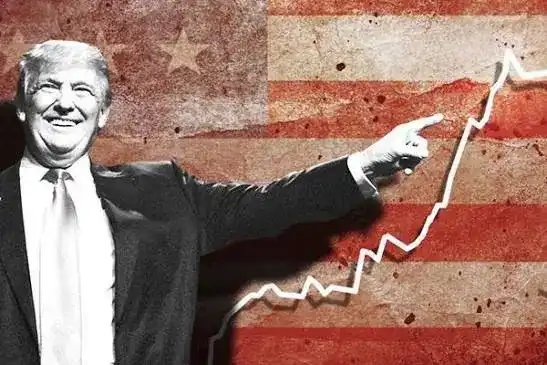
Former US President Donald Trump reported a record-breaking $2.2 billion in personal income for 2025, the highest annual income ever disclosed by a sitting president. This figure, from a 927-page government ethics filing, represented a 3.5-fold increase from his $600 million income in 2024 and boosted his net worth to $6.5 billion. The primary drivers were cryptocurrency (64% of income, approximately $1.4 billion) and real estate (26%, approximately $575 million). His crypto earnings stemmed largely from the launch of his personal meme coin, $TRUMP, generating over $600 million in licensing fees, and substantial profits from the WLFI token and its parent company. Despite a sluggish property market, his Mar-a-Lago resort and associated golf clubs saw revenue surges of 50% and 27%, respectively, attributed to their use as venues for presidential events. Trump's financial disclosure also revealed an unprecedented level of stock market activity, with over 22,000 trades executed in 2025, averaging 87 trades per market day. Media analyses noted several instances where significant trading coincided with major policy announcements, such as proposed tariffs, raising questions about potential conflicts of interest. While the White House stated these trades were handled by a family-managed trust fund and not Trump directly, critics highlighted this as a departure from the blind trusts traditionally used by presidents post-Watergate. The report has intensified debate over the commercialization of the presidency. Supporters view it as a success story of a businessman-president, while critics argue it demonstrates an unprecedented conversion of public influence into private wealth, with policy decisions potentially linked to personal financial gains. The controversy centers on whether Trump's earnings represent innovative entrepreneurship or a fundamental conflict of interest, sparking renewed calls for stricter ethics reforms in US governance.

marsbit5 год тому

Trump, the President Who Knows Best How to 'Trade Stocks'

marsbit5 год тому

Countdown to Q-Day: Will Quantum Computing End Cryptocurrencies?

The article explores the existential threat quantum computing poses to cryptocurrencies and the urgent need for "post-quantum" migration. It outlines that quantum computers, through Shor's algorithm, could break the elliptic-curve cryptography (ECC) underlying blockchain security, potentially allowing private keys to be derived from public keys. The core challenge is not a lack of post-quantum cryptography (PQC) standards—like NIST's ML-KEM and ML-DSA—but the immense complexity of upgrading entire ecosystems before "Q-Day" (when quantum computers become capable of such attacks, estimated around 2035-2045). Key points include: * **Bitcoin's** risk is concentrated in legacy UTXOs with exposed public keys (e.g., early P2PK outputs). Migration faces massive hurdles: PQC signatures are much larger, increasing transaction size and cost, and the governance dilemma of handling un-migrated assets threatens its "code is law" ethos. * **Ethereum's** strategy focuses on "cryptographic agility," using Account Abstraction for user accounts and developing compressed hash-based signatures (like leanXMSS with SNARK aggregation) for consensus. Its migration is a complex, full-stack overhaul of execution, consensus, and data layers. * The "security debt" is enormous. The comfortable engineering window for a coordinated, ecosystem-wide upgrade is only 5-8 years. High-value infrastructure (exchanges, bridges) may face pressure before mainnet protocols. In conclusion, quantum computing is not an instant "doomsday" event but a forcing function for systemic change. Bitcoin's ultimate test is social consensus and property rights governance, while Ethereum's is technical complexity. Failure to migrate in time could lead to a fundamental re-pricing of crypto assets.

链捕手5 год тому

Countdown to Q-Day: Will Quantum Computing End Cryptocurrencies?

链捕手5 год тому

Торгівля

Спот

Популярні статті

Як купити GAS

Ласкаво просимо до HTX.com! Ми зробили покупку GAS (GAS) простою та зручною. Дотримуйтесь нашої покрокової інструкції, щоб розпочати свою криптовалютну подорож.Крок 1: Створіть обліковий запис на HTXВикористовуйте свою електронну пошту або номер телефону, щоб зареєструвати обліковий запис на HTX безплатно. Пройдіть безпроблемну реєстрацію й отримайте доступ до всіх функцій.ЗареєструватисьКрок 2: Перейдіть до розділу Купити крипту і виберіть спосіб оплатиКредитна/дебетова картка: використовуйте вашу картку Visa або Mastercard, щоб миттєво купити GAS (GAS).Баланс: використовуйте кошти з балансу вашого рахунку HTX для безперешкодної торгівлі.Треті особи: ми додали популярні способи оплати, такі як Google Pay та Apple Pay, щоб підвищити зручність.P2P: Торгуйте безпосередньо з іншими користувачами на HTX.Позабіржова торгівля (OTC): ми пропонуємо індивідуальні послуги та конкурентні обмінні курси для трейдерів.Крок 3: Зберігайте свої GAS (GAS)Після придбання GAS (GAS) збережіть його у своєму обліковому записі на HTX. Крім того, ви можете відправити його в інше місце за допомогою блокчейн-переказу або використовувати його для торгівлі іншими криптовалютами.Крок 4: Торгівля GAS (GAS)Легко торгуйте GAS (GAS) на спотовому ринку HTX. Просто увійдіть до свого облікового запису, виберіть торгову пару, укладайте угоди та спостерігайте за ними в режимі реального часу. Ми пропонуємо зручний досвід як для початківців, так і для досвідчених трейдерів.

211 переглядів усьогоОпубліковано 2024.12.12Оновлено 2026.06.02

Як купити GAS

Обговорення

Ласкаво просимо до спільноти HTX. Тут ви можете бути в курсі останніх подій розвитку платформи та отримати доступ до професійної ринкової інформації. Нижче представлені думки користувачів щодо ціни GAS (GAS).

活动图片