Aave sube un 30% en una semana, ¿vuelve a estar en forma?

Foresight NewsОпубліковано о 2026-06-30Востаннє оновлено о 2026-06-30

Анотація

La semana pasada, el precio de AAVE subió más del 30%, pasando de unos 70 dólares a casi 100 dólares. Esta subida coincidió con rumores de una posible inversión por parte de Kraken en Aave Labs, que fueron desmentidos por el fundador Stani Kulechov. Sin embargo, Kulechov confirmó conversaciones con otros actores del mercado sobre la compra de tokens AAVE e informó sobre nuevos avances en el protocolo, como una revisión de la tokenómica (versión 3.0) que incluiría un mecanismo de recompra automática y planes para expandirse hacia activos del mundo real (RWA). A pesar del repunte del precio, el valor total bloqueado (TVL) de Aave sigue bajo tras el incidente de seguridad de Kelp DAO. No obstante, Aave mantiene su liderazgo en el sector de préstamos DeFi, con un TVL casi el doble que su competidor más cercano, Morpho, y superando en métricas clave como préstamos activos y ingresos. Morpho, respaldado por una gran ronda de financiación, se presenta como un fuerte competidor, con argumentos sobre mayor eficiencia de capital. Algunos analistas ven a ambos protocolos sirviendo a nichos diferentes: Aave atrae a grandes actores por su profundidad de liquidez, mientras que Morpho se enfoca en flexibilidad y mercados personalizados. Instituciones como Standard Chartered y Grayscale son optimistas sobre el futuro de AAVE, citando el potencial de DeFi y la tokenización de RWA. A pesar de los desafíos recientes, la posición de mercado consolidada de Aave tras años de operación sugiere u...


Autor: Eric, Foresight News


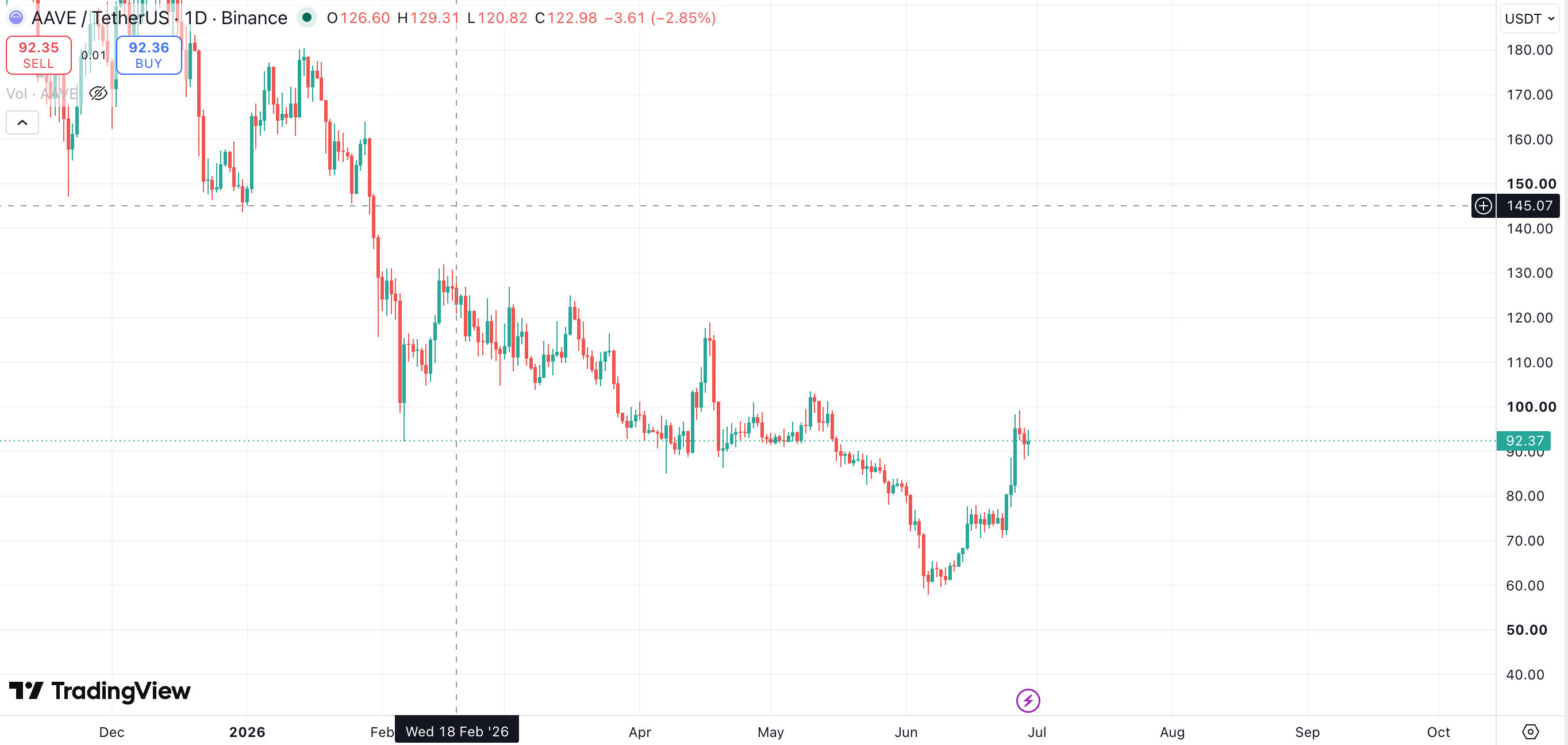
En el transcurso de la última semana, el precio de AAVE pasó de aproximadamente 70 dólares a casi 100 dólares, registrando un rebote de más del 30%.


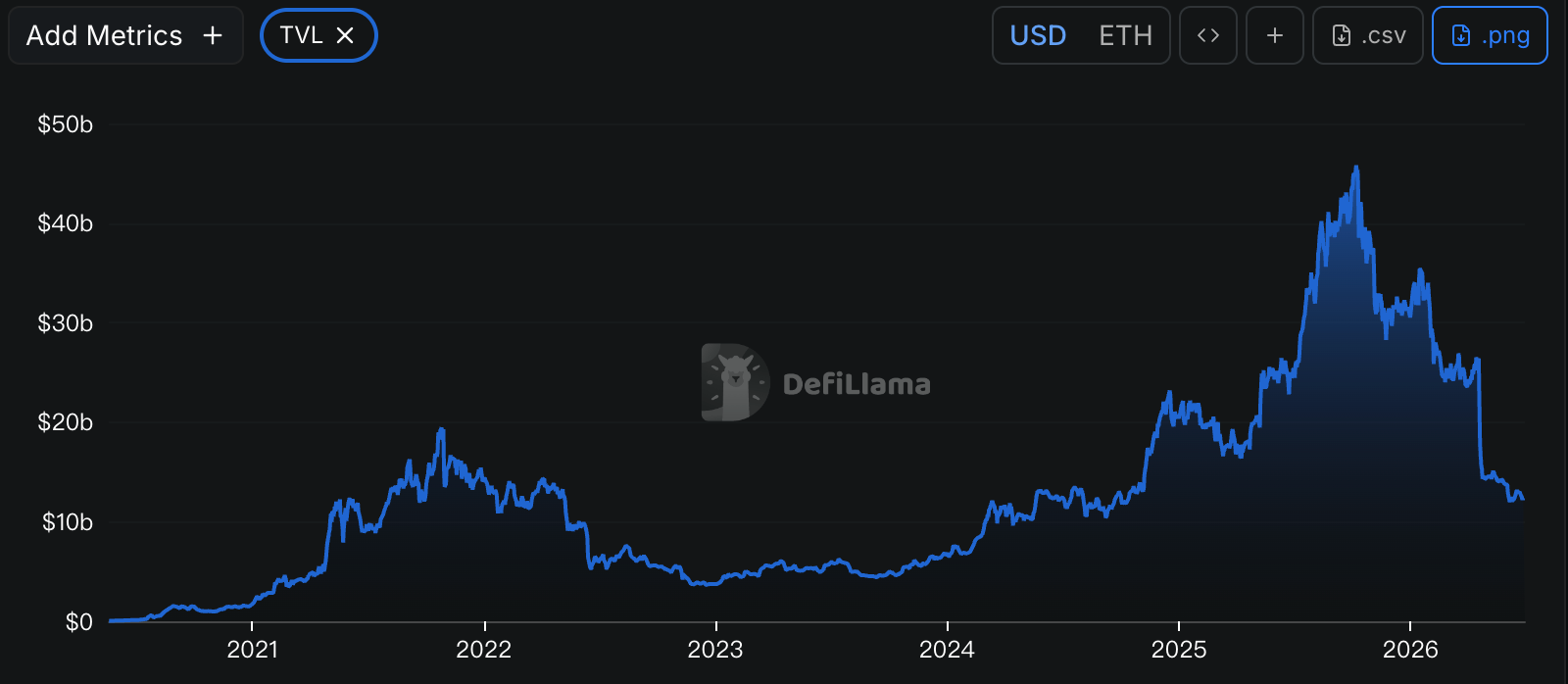
Si observamos únicamente los datos de TVL, Aave aún no se ha recuperado del incidente de ataque a Kelp DAO, e incluso ha experimentado una caída mayor en comparación con los datos registrados durante la fase de pánico en ese momento.


A pesar de los datos desfavorables, el capital sigue viendo con buenos ojos a Aave. En la madrugada del 26 de junio, CoinDesk, citando fuentes cercanas al asunto, informó de que Kraken está negociando la adquisición de una parte de las acciones de Aave. Los términos incluirían el intercambio de 35.000 ETH por 250.000 AAVE y un 15% de la participación en Aave Group, valorando toda la operación en 71 millones de dólares.


Esta información de fuentes anónimas fue rápidamente desmentida por Stani Kulechov, fundador de Aave, ya que, según la valoración mencionada en el informe, Kraken valoraría Aave en menos de un tercio de la capitalización de mercado del token AAVE. Stani negó que fueran a "vender tokens con un descuento del 70%". Sin embargo, reconoció que "varios participantes del mercado han discutido la compra directa o indirecta de tokens AAVE en poder de Aave Labs a través de una asociación más profunda a largo plazo".


Cuando alguien está dispuesto a comprar en mínimos, es natural que quienes lo saben quieran adelantarse. Aave subió durante tres días consecutivos los días 24, 25 y 26 de junio, con un aumento máximo el día 26 que superó el 20%. Además de las noticias sobre la posible adquisición, Stani, al tiempo que desmentía los rumores, reveló que están trabajando en la Tokenomics 3.0, que introducirá un mecanismo de recompra automática. Además, en la noche del 26, afirmó que Aave está expandiendo su mercado objetivo desde los activos cripto hasta todas las clases de activos, a través de préstamos respaldados por valores y el negocio de préstamo de valores.


Standard Chartered Bank dio una predicción extremadamente optimista de 3500 dólares para el precio de Aave en 2030, argumentando su confianza en el resurgimiento futuro de DeFi y el desarrollo de la tokenización de RWA (Activos del Mundo Real). Aunque más conservador, Grayscale también cree que el precio de AAVE, impulsado por la tokenización de RWA, podría alcanzar los 175 dólares en un año.


No abundan las opiniones claramente pesimistas sobre Aave en el mercado. Sin embargo, informes publicados este año por Eco, Fensory y Coinstancy señalan que Morpho Blue supera a Aave en optimización de tasas de interés, eficiencia de capital y personalización de mercados. Tiger Research fue aún más directo, argumentando que Morpho representa la tendencia "modular", mientras que Aave se parece más a los "fondos unificados tradicionales", quedando rezagado en flexibilidad.


Desde la filtración de fuentes anónimas, hasta el desmentido que de hecho confirmó la existencia de inversores interesados en los tokens AAVE, pasando por la sucesiva revelación de avances en el protocolo, todo tiene un sabor a golpes combinados. Dejando esto de lado y observando solo los fundamentales, después de experimentar divisiones en la comunidad, cuestionamientos sobre su seguridad, fugas de capital y otros contratiempos, el TVL de Aave sigue manteniendo firmemente el primer puesto entre los protocolos de préstamo DeFi. No solo es casi el doble que el del segundo clasificado, Morpho, sino que prácticamente equivale a la suma del TVL del segundo, tercer y cuarto puesto.
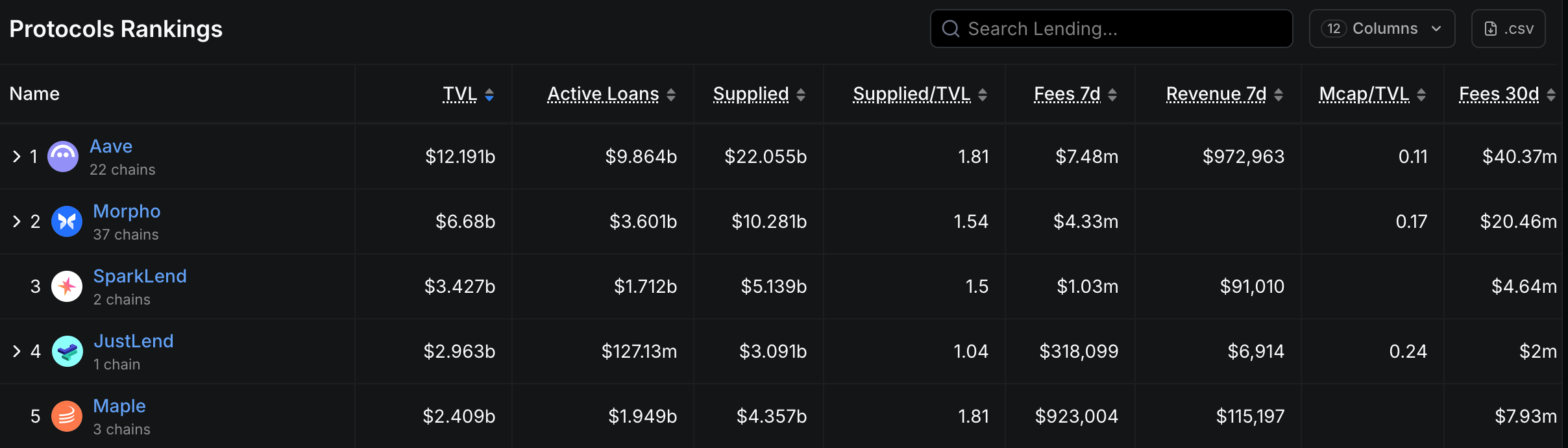


No solo en TVL, sino que también lidera por un amplio margen en datos como el volumen de préstamos en ejecución, la oferta total, los ingresos y las tarifas. Han pasado casi 9 años desde el lanzamiento de ETHLend. Los conflictos entre el equipo y la comunidad, los riesgos potenciales del protocolo y otros problemas no son imprevisibles, especialmente en un momento de contracción general del sector. Para un protocolo cuyo código está grabado en la cadena de bloques, mientras no haya un deterioro grave en sus fundamentales básicos, las ventajas acumuladas durante años son difíciles de agotar en poco tiempo.


Por otro lado, Morpho ciertamente muestra una tendencia ascendente como recién llegado. El 9 de junio, Morpho completó una ronda de financiación de 175 millones de dólares liderada por Paradigm, Ribbit Capital y a16z crypto, con una valoración de 2.000 millones de dólares, convirtiéndose en una de las mayores rondas de financiación única en la historia de DeFi. Sin embargo, también hay opiniones que sostienen que Morpho y Aave han tomado dos caminos diferentes, no compiten en la misma dimensión, y las fortalezas centrales de uno son difíciles de superar para el otro.


La profundidad de los préstamos de Aave lo convierte en la opción preferida de las ballenas (grandes inversores), y sus rendimientos no altos pero estables también son apreciados por muchos tenedores de stablecoins, al menos hasta lo ocurrido con Kelp DAO. Es inevitable que los proyectos tengan altibajos. En un mercado de criptomonedas donde los activos de calidad son cada vez más escasos, los proyectos que han superado la prueba del tiempo merecen una atención continua.


Трендові криптовалюти

Пов'язані питання

Q¿Por qué subió más del 30% el precio de AAVE en una semana?

AEl precio de AAVE subió debido a rumores de una posible adquisición de parte de sus acciones por Kraken, la confirmación de discusiones sobre compras de tokens AAVE por parte de participantes del mercado, y el anuncio del equipo sobre la investigación de una nueva tokenómica 3.0 y la expansión del negocio hacia la tokenización de RWA (Activos del Mundo Real).

Q¿Qué dijo el fundador de Aave, Stani Kulechov, sobre los rumores de adquisición por parte de Kraken?

AStani Kulechov negó los rumores específicos de que Kraken compraría acciones con un gran descuento, afirmando que no vendería tokens con un descuento del 70%. Sin embargo, admitió que varios participantes del mercado han discutido la compra de tokens AAVE propiedad de Aave Labs a través de asociaciones a largo plazo.

Q¿Cuáles son algunas predicciones de precio optimistas para AAVE mencionadas en el artículo?

AEl banco Standard Chartered hizo una predicción extremadamente optimista de 3.500 dólares para AAVE en 2030, basándose en un renacimiento de DeFi y el desarrollo de la tokenización RWA. Grayscale, más conservador, predijo que el precio de AAVE podría llegar a 175 dólares en un año, impulsado por la tokenización RWA.

Q¿Qué protocolo se menciona como un competidor potencial de Aave y por qué?

ASe menciona a Morpho (específicamente Morpho Blue) como un competidor potencial. Informes de firmas como Eco, Fensory y Tiger Research señalan que Morpho Blue supera a Aave en optimización de tasas de interés, eficiencia de capital y capacidad para crear mercados personalizados, representando una tendencia más 'modular' frente al modelo de 'grupo unificado' tradicional de Aave.

QA pesar de los reveses, ¿qué dato fundamental muestra que Aave sigue siendo líder en su categoría?

AA pesar de los problemas como el ataque a Kelp DAO, la fuga de capitales y las dudas sobre seguridad, el Valor Total Bloqueado (TVL) de Aave sigue siendo el más alto entre los protocolos de préstamos DeFi. Su TVL es casi el doble que el del segundo lugar (Morpho) y casi equivalente a la suma del TVL de los protocolos en segundo, tercer y cuarto puesto.

Пов'язані матеріали

Wall Street's Most Famous 'Cassandra' Now Has His Sights Set on Nvidia

Michael Burry, the famed "Big Short" investor, has once again captured Wall Street's attention with a series of short positions against major tech and semiconductor stocks, most notably Nvidia. In late June and July, through his "Cassandra Unchained" newsletter, Burry disclosed short bets against Nvidia, Tesla, Applied Materials, Caterpillar, the SOXX semiconductor ETF, and later, Micron Technology. His core thesis revolves around potential distortions in the AI infrastructure boom, specifically questioning whether extended depreciation schedules (e.g., 6 years vs. a realistic 2-3 years for AI chips) by cloud giants like Microsoft and Google artificially inflate profits. He also raises concerns about possible "off-balance-sheet circular financing," where chip demand might be propped up by vendor-backed funding to clients. Nvidia's stock experienced volatility following these disclosures, briefly dipping but largely holding near Burry's reported entry points, leaving his positions roughly flat or slightly underwater as of late July. This move is part of a pattern for Burry, whose track record since his legendary 2008 bet is mixed. He has faced notable losses, such as on Tesla in 2021, while scoring on broader market turns like the 2020 pandemic crash. His methodology focuses intensely on free cash flow and scrutinizing original financial documents to spot overvaluation and structural risks, but it often struggles with timing the market. The article contrasts Burry's stance with other prominent investors. Steve Eisman, another "Big Short" figure, is not shorting Nvidia, citing strong fundamentals but expressing nervousness about sustainability. Jim Chanos agrees with the broad "accounting mismatch" concern—comparing it to the dot-com bubble—but targets financial leverage in private equity firms rather than the chip stocks themselves. While Nvidia's short interest remains relatively low at 1.3-1.4% of float, the massive stock size means absolute short losses have been significant, exceeding $5 billion earlier this year. The piece concludes that for ordinary investors, the key takeaway is not replicating specific short bets but learning from the critical frameworks these investors use: questioning rosy accounting, identifying structural vulnerabilities, and maintaining skepticism during market euphoria, even if pinpointing the exact catalyst for a downturn remains elusive.

marsbit13 хв тому

Wall Street's Most Famous 'Cassandra' Now Has His Sights Set on Nvidia

marsbit13 хв тому

Weekly Selection丨Epic Stock Market Volatility, Changxin Tech's IPO Reshapes Storage Landscape, Saylor Aims to Re-Anchor STRC Around September 8th

PANews Weekly Digest: Market Turmoil, Tech Breakthroughs, and Crypto Developments. The week saw significant volatility across global markets. South Korea's KOSPI index experienced extreme turbulence, including multiple trading halts, largely driven by sharp declines in AI hardware stocks like SK Hynix. In contrast, China's Changxin Xinqiao (CXC) achieved a landmark IPO with a market cap surpassing 4 trillion yuan, marking a major success for the domestic DRAM industry after a decade of losses. In the crypto and Web3 space, several key narratives emerged. AI is driving demand for new infrastructure, with projects like AI agent wallets and programmable payments gaining traction, attracting interest from firms like Coinbase. The Bitcoin mining sector is pivoting, with companies like MARA focusing on energy management as electricity becomes a core AI-era asset. Meanwhile, the RWA (Real World Assets) sector faces a "utilization puzzle," with hundreds of billions in on-chain assets remaining dormant. Notable market movements included a historic single-day surge of over 17% for the KOSPI index and a significant migration of $16.5 billion in staked ETH within the Lido ecosystem. Michael Saylor announced a target to re-peg the STRC stablecoin around September 8th. Other highlights include discussions on Ethereum's ambitious 2030 roadmap for scaling and privacy, analysis showing high protocol revenues not always translating to token price gains, and warnings from Citi about potential extreme commodity price shocks by late 2026.

marsbit18 хв тому

Weekly Selection丨Epic Stock Market Volatility, Changxin Tech's IPO Reshapes Storage Landscape, Saylor Aims to Re-Anchor STRC Around September 8th

marsbit18 хв тому

When the Market Begins to Question AI Capex: A Full Analysis of Q2 Earnings Reports from Five Tech Giants

In late July 2026, five major US tech giants—Alphabet, Intel, Microsoft, Meta, and Apple—released their Q2 earnings reports. While all companies exceeded revenue and profit expectations, driven by strong AI-related business growth, investor reactions diverged sharply due to concerns over escalating AI capital expenditures (capex) and their impact on free cash flow. Alphabet reported strong revenue growth and a surging cloud business, but its stock fell after announcing a doubled year-on-year capex and negative quarterly free cash flow for the first time. Intel posted its strongest revenue growth in over 15 years, but its stock experienced volatile trading after significantly raising its full-year capex guidance. Microsoft saw its stock surge after beating estimates and, crucially, lowering its capex forecast while projecting positive free cash flow. Meta faced the most severe sell-off as its profits declined despite revenue beats, with free cash flow plunging over 90% and its capex guidance raised. Apple reported record June-quarter results, but its stock plummeted after providing Q4 revenue guidance that fell short of expectations, citing supply chain constraints and forex headwinds. The overall takeaway is that the market's focus has shifted from validating AI demand to scrutinizing the timeline for returns on massive AI investments. Companies demonstrating a clearer path to managing capex and preserving free cash flow, like Microsoft, were rewarded, while those signaling continued aggressive spending faced investor skepticism.

Odaily星球日报27 хв тому

When the Market Begins to Question AI Capex: A Full Analysis of Q2 Earnings Reports from Five Tech Giants

Odaily星球日报27 хв тому

a16z: From Companies to DAOs, DUNA May Become the Next Generation Organizational Form

This article, "From Companies to DAOs: How DUNA Could Become the Next Organizational Form," traces the 500-year evolution of business collaboration. It begins with medieval structures like the *commenda* and Florentine *compagnia*, which exposed partners to personal risk. The modern corporation, exemplified by the Dutch East India Company (VOC), was a revolutionary leap, enabling large-scale, capital-intensive ventures by offering limited liability and reducing coordination costs. However, corporations introduced new challenges like principal-agent problems and bureaucratic overhead. The piece argues that software and internet-native protocols are now reducing these traditional overheads. Decentralized Autonomous Organizations (DAOs) emerged as a new model for coordination without centralized management. Yet, DAOs face a significant legal vacuum: they lack legal recognition, leaving members exposed to unlimited personal liability, and their tokens are vulnerable to being classified as securities under unclear regulations (e.g., the Howey Test). This has forced projects into suboptimal workarounds like offshore foundations. The article identifies the Decentralized Unincorporated Nonprofit Association (DUNA) as a potential solution. Recently legalized in states like Wyoming, the DUNA provides a legal wrapper for decentralized networks. It grants key protections—legal personality, limited liability, and perpetual existence—to a group without imposing a traditional hierarchical management structure. This allows token-holder communities to govern, hold assets, and contract as a single legal entity, aligning with their decentralized nature. While DUNA doesn't solve all governance challenges or magically resolve securities law questions, it represents a crucial step. It fills the legal recognition gap, offering a native legal form for internet-scale, decentralized collaboration and extending the separation of personal risk from organizational venture into a new domain.

marsbit1 год тому

a16z: From Companies to DAOs, DUNA May Become the Next Generation Organizational Form

marsbit1 год тому

2026 Mid-Year Report On-Chain RWA: Tokenized Stock Market Cap Doubles in a Year, But 90% of Rights Are Hollow Shells

The 2026 Mid-Year Report on On-Chain RWA highlights a significant growth in tokenized stock market capitalization, which nearly doubled from $951 million in March to $1.89 billion by July. However, the report reveals a fundamental contradiction in this "layer 2.5" ecosystem: products with the strongest legal foundation (like regulated U.S. infrastructure) lack liquidity and distribution, while freely tradable offshored wrapper products often lack substantive ownership rights. The increase is driven largely by a few products (SECZ, FGRS, STRCx) and platforms (Ondo, xStocks, Securitize collectively hold over 85% share). While distributed value across networks like Ethereum, Solana, and BNB Chain has grown, the market remains fragmented. Products referencing the same underlying asset (e.g., Apple stock) are distinct legal liabilities with different intermediaries and jurisdictional rules, offering varying degrees of legal claim. The report cautions that headline numbers are misleading, as they reflect changes in distributed token value—driven by issuance, conversions, and price movements—not pure investor inflows. True "canonical shares" with legal ownership, wide wallet distribution, institutional liquidity, and independent on-chain price discovery do not yet exist at scale. Tokenized treasuries show stronger product-market fit, and ETFs may be easier to scale than single stocks. The core takeaway is a trade-off: legal certainty versus liquidity and composability.

marsbit2 год тому

2026 Mid-Year Report On-Chain RWA: Tokenized Stock Market Cap Doubles in a Year, But 90% of Rights Are Hollow Shells

marsbit2 год тому

Торгівля

Спот

Популярні статті

Як купити AAVE

Ласкаво просимо до HTX.com! Ми зробили покупку Aave Protocol (AAVE) простою та зручною. Дотримуйтесь нашої покрокової інструкції, щоб розпочати свою криптовалютну подорож.Крок 1: Створіть обліковий запис на HTXВикористовуйте свою електронну пошту або номер телефону, щоб зареєструвати обліковий запис на HTX безплатно. Пройдіть безпроблемну реєстрацію й отримайте доступ до всіх функцій.ЗареєструватисьКрок 2: Перейдіть до розділу Купити крипту і виберіть спосіб оплатиКредитна/дебетова картка: використовуйте вашу картку Visa або Mastercard, щоб миттєво купити Aave Protocol (AAVE).Баланс: використовуйте кошти з балансу вашого рахунку HTX для безперешкодної торгівлі.Треті особи: ми додали популярні способи оплати, такі як Google Pay та Apple Pay, щоб підвищити зручність.P2P: Торгуйте безпосередньо з іншими користувачами на HTX.Позабіржова торгівля (OTC): ми пропонуємо індивідуальні послуги та конкурентні обмінні курси для трейдерів.Крок 3: Зберігайте свої Aave Protocol (AAVE)Після придбання Aave Protocol (AAVE) збережіть його у своєму обліковому записі на HTX. Крім того, ви можете відправити його в інше місце за допомогою блокчейн-переказу або використовувати його для торгівлі іншими криптовалютами.Крок 4: Торгівля Aave Protocol (AAVE)Легко торгуйте Aave Protocol (AAVE) на спотовому ринку HTX. Просто увійдіть до свого облікового запису, виберіть торгову пару, укладайте угоди та спостерігайте за ними в режимі реального часу. Ми пропонуємо зручний досвід як для початківців, так і для досвідчених трейдерів.

338 переглядів усьогоОпубліковано 2024.12.11Оновлено 2026.06.02

Як купити AAVE

Обговорення

Ласкаво просимо до спільноти HTX. Тут ви можете бути в курсі останніх подій розвитку платформи та отримати доступ до професійної ринкової інформації. Нижче представлені думки користувачів щодо ціни AAVE (AAVE).

活动图片