'L'arrêt n'est pas acceptable' – Tout sur Base et son problème de consensus

ambcryptoОпубліковано о 2026-06-27Востаннє оновлено о 2026-06-27

Анотація

La chaîne Base, une solution de couche 2 (L2) pour Ethereum incubée par Coinbase, a été confrontée à un problème de consensus entraînant une interruption de près de 48 heures de ses services de dépôt et de retrait. L'incident, survenu le 25 juin, a été causé par le séquençage d'un bloc invalide. Bien que l'équipe ait isolé et corrigé le problème, le réseau principal restait considéré comme « malsain » le 26 juin, avec des dépôts particulièrement affectés. Jesse Pollak, co-fondateur de Base, a assuré que les fonds des utilisateurs étaient en sécurité et qu'un rapport détaillé serait publié. Il a déclaré qu'un arrêt de la chaîne était inacceptable et servirait de leçon pour renforcer la plateforme. Parallèlement, Base mise sur la tokenisation d'actifs, avec des projets de prêt et d'emprunt de type DeFi. Lancée fin 2023, Base a connu une croissance significative, générant plus de 184 millions de dollars de revenus et atteignant une valeur totale bloquée (TVL) de 4 milliards de dollars, dont la moitié sur la plateforme de prêt Morpho Blue. L'impact de cette panne sur la confiance des investisseurs reste à observer.

Base, une chaîne de couche 2 (L2) d'Ethereum incubée par Coinbase, est dans l'incapacité d'accepter les dépôts et les retraits depuis près de 48 heures.

Le 25 juin, la couche 2 a annoncé avoir rencontré un problème de consensus qui a entraîné le séquençage d'un bloc invalide. La déclaration a été faite le 25 juin à 17h21 UTC. Le problème a été isolé et débogué, et l'équipe a rapidement annoncé qu'une récupération plus large était en cours.

Cependant, au 26 juin, 10h36 UTC, le problème n'était pas entièrement résolu. En fait, l'état de la chaîne indiquait que la production de blocs sur le mainnet était « malsaine ».

Outre la production de blocs, les dépôts et les retraits étaient également affectés pour le deuxième jour consécutif. Il est à noter que les retraits n'étaient que partiellement dégradés, mais que les dépôts subissaient une « panne majeure ».
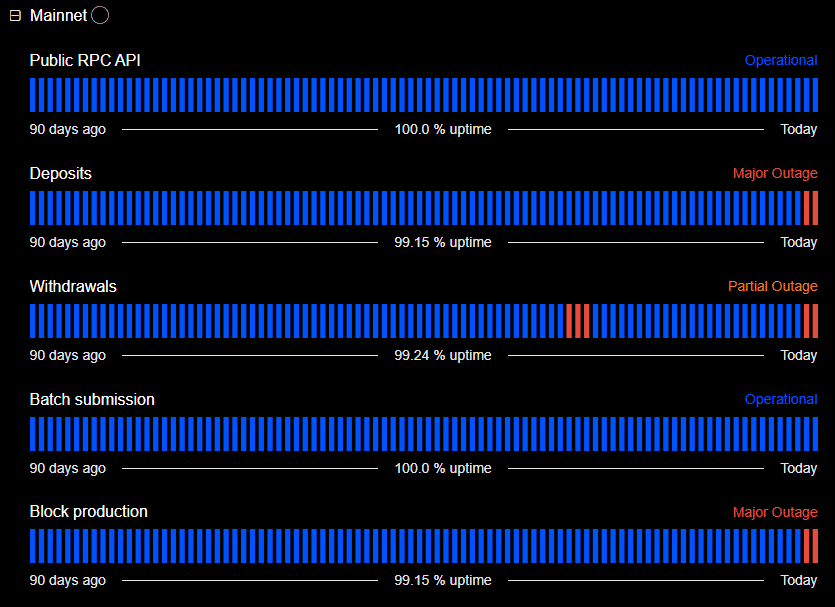
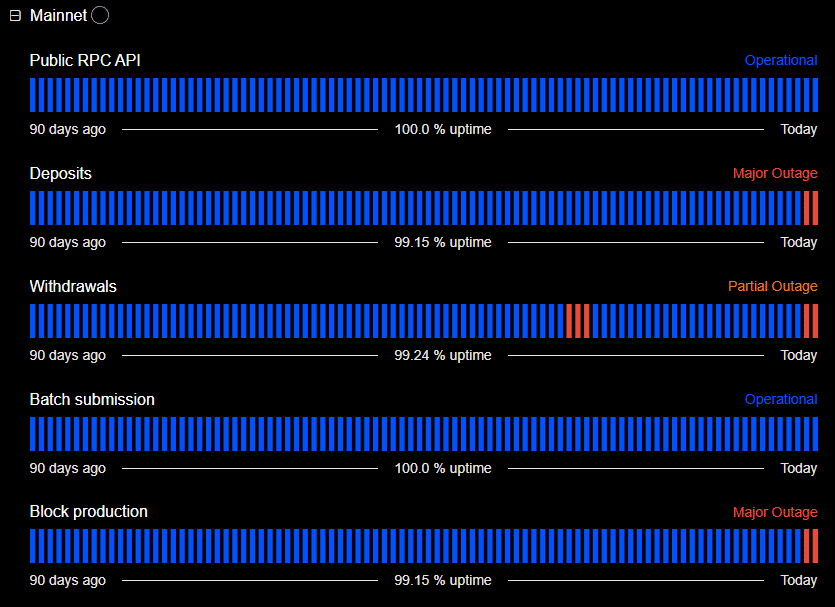
Source : Base Status

Pour sa part, Jesse Pollak, co-fondateur de Base, a assuré aux utilisateurs que les fonds étaient en sécurité et que l'équipe travaillait à un compte-rendu complet de l'incident.

Il a ajouté que l'arrêt de la chaîne pour remédier au problème n'était pas souhaitable et constituerait un défi à relever pour mieux faire à l'avenir.

Tous les fonds sont/étaient en sécurité. Mais un arrêt n'est pas acceptable, et nous utiliserons cet incident pour continuer à améliorer Base en tant que plateforme pour une finance mondiale, 24h/24 et 7j/7. Merci pour votre patience.

Le pari de Base sur la tokenisation

Par ailleurs, Pollak a indiqué que Base permettrait une option d'emprunt et de prêt de type DeFi pour les actifs tokenisés une fois qu'ils seront opérationnels sur la chaîne.
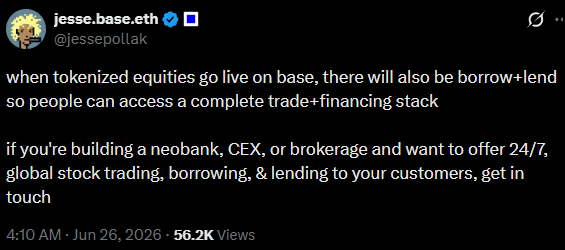
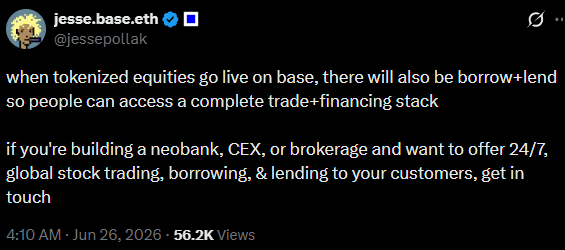
Source : X

Cela fait partie d'un pari plus large sur la tokenisation, alors que ce segment naissant gagne en popularité. Malheureusement, une perturbation de chaîne comme celle récente n'est pas une bonne publicité pour un tel objectif.

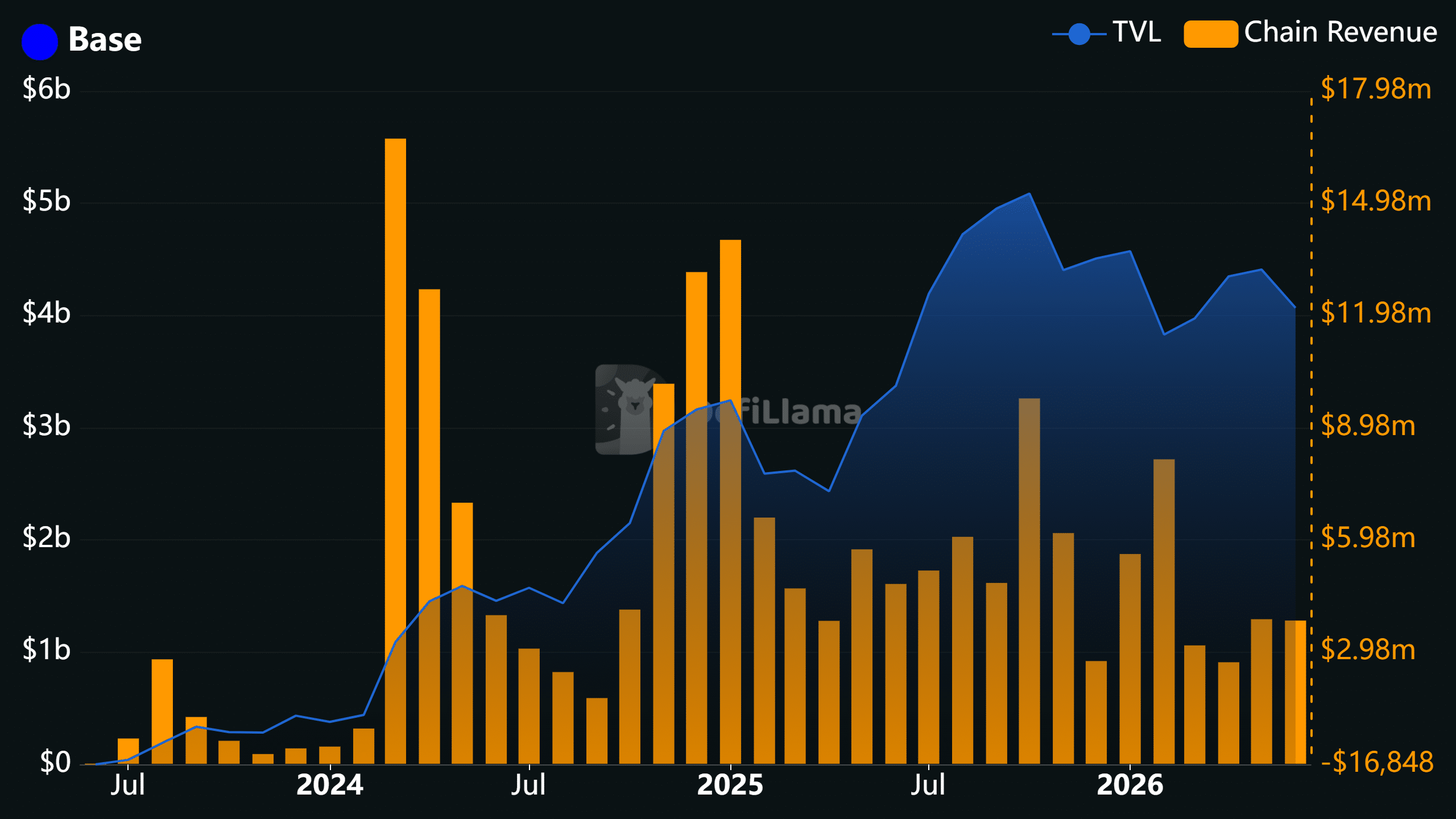
Cela dit, Base a fait ses débuts au second semestre 2023 et a connu une croissance immense ces derniers mois. Elle a réalisé un revenu cumulé de plus de 184 millions de dollars avec une valeur totale verrouillée (TVL) de 4 milliards de dollars.
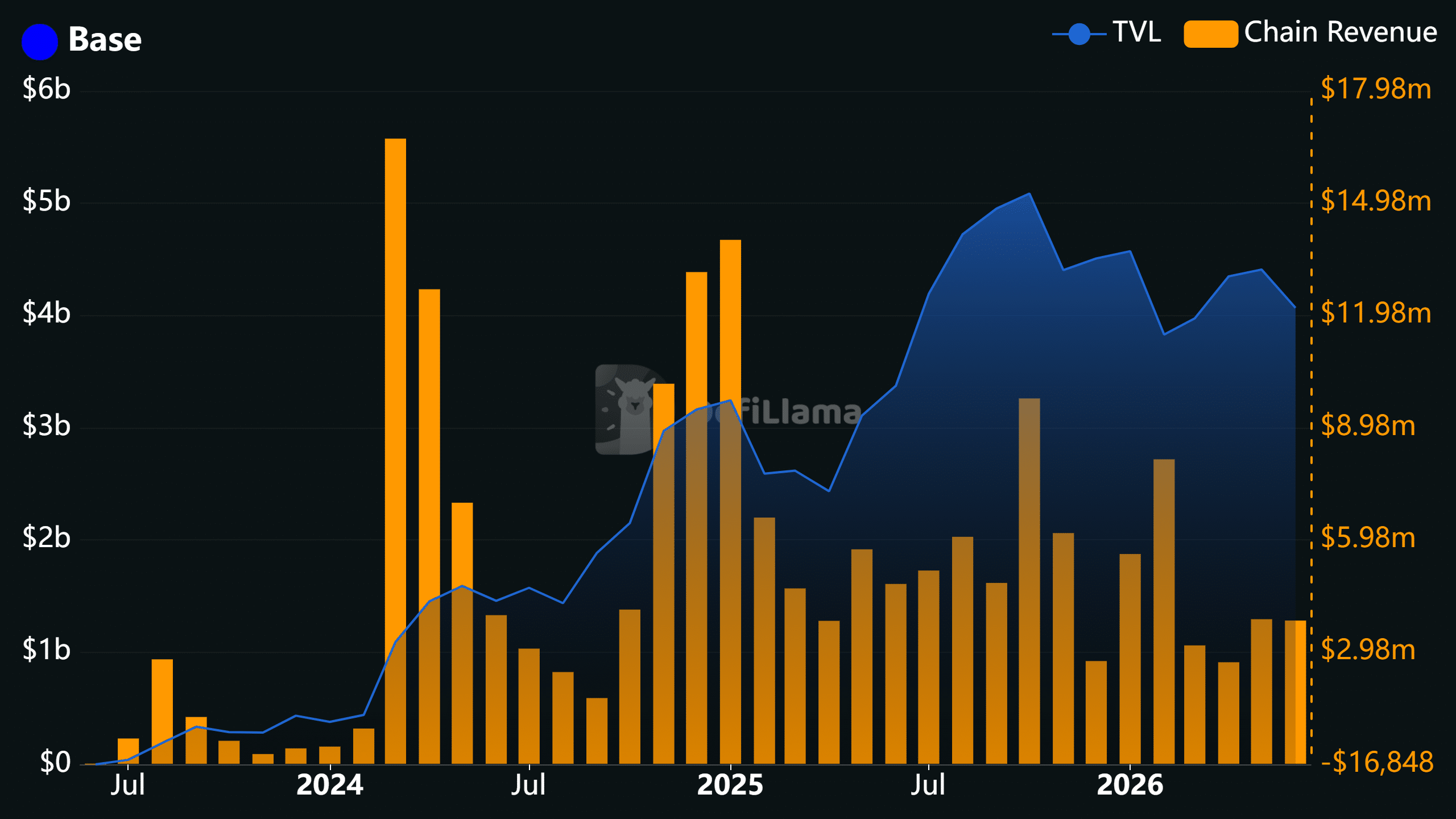
Source : DeFiLlama

Source : DeFiLlama

La moitié des 4 milliards de dollars verrouillés se trouve sur la plateforme de prêt DeFi Morpho Blue. Reste à voir si la panne en cours ébranlera la confiance des investisseurs et déclenchera des sorties de fonds.


Résumé final

  • La chaîne Base a rencontré un problème de consensus qui a partiellement dégradé les retraits et désactivé les dépôts.
  • Jesse Pollak, co-fondateur de Base, mise gros sur les actifs tokenisés avec des options de prêt et d'emprunt de type DeFi


Трендові криптовалюти

Пов'язані питання

QQuel est le problème principal rencontré par Base, la chaîne L2 d'Ethereum incubée par Coinbase ?

ABase a rencontré un problème de consensus qui a conduit au séquençage d'un bloc invalide, provoquant une interruption de la production de blocs et des dysfonctionnements des dépôts et des retraits.

QCombien de temps la chaîne Base a-t-elle été affectée par ce problème de consensus ?

ALa chaîne Base a été incapable d'accepter pleinement les dépôts et les retraits pendant près de 48 heures, l'incident ayant commencé le 25 juin.

QQue Jesse Pollak, co-fondateur de Base, a-t-il déclaré concernant l'arrêt de la chaîne ?

AJesse Pollak a déclaré qu'un arrêt de la chaîne n'était pas acceptable ('a halt is not okay') et que cet incident servirait de défi pour améliorer Base en tant que plateforme financière mondiale fonctionnant 24h/24 et 7j/7.

QQuel est l'objectif stratégique de Base concernant les actifs tokenisés ?

ABase parie sur la tokenisation et prévoit de proposer des options d'emprunt et de prêt de type DeFi pour les actifs tokenisés une fois qu'ils seront disponibles sur sa chaîne.

QQuelle est la valeur totale bloquée (TVL) sur Base et quelle est sa principale source ?

ALa valeur totale bloquée (TVL) sur Base est de 4 milliards de dollars, dont environ la moitié (2 milliards) est située sur la plateforme de prêt DeFi Morpho Blue.

Пов'язані матеріали

Q-Day Countdown: Will Quantum Computing End Cryptocurrencies?

Quantum Computing's Threat to Cryptocurrency: A Countdown to Q-Day Quantum computing, specifically Shor's algorithm, poses a fundamental threat to the public-key cryptography (e.g., ECDSA, RSA) that secures blockchain networks like Bitcoin and Ethereum. This critical juncture, known as Q-Day, is estimated to occur potentially within the next 5-15 years. The core vulnerability stems from the public and immutable nature of blockchains. Assets in addresses where the public key is already exposed on-chain (e.g., spent outputs) are at direct risk, as a sufficiently powerful quantum computer could derive the private key. This threatens the very trust model of cryptocurrencies. The response lies in Post-Quantum Cryptography (PQC)—algorithms like lattice-based ML-DSA and hash-based SLH-DSA, which are resistant to quantum attacks. NIST has standardized key PQC algorithms (FIPS 203, 204, 205), providing a migration path. However, the primary challenge is not technical but socio-economic and involves complex governance: * **Bitcoin's** path is constrained by its conservative ethos. Migrating requires a soft-fork to new address types, facing hurdles like significantly larger signature sizes and, most critically, the divisive governance question of how to handle at-risk legacy UTXOs without violating core principles. * **Ethereum** is pursuing a "cryptographic agility" strategy, with a multi-layered roadmap. It leverages account abstraction for user accounts and is developing compressed hash-based signatures (e.g., leanXMSS) for its consensus layer, aiming for a full-stack upgrade over time. In conclusion, quantum computing does not spell an instant end for cryptocurrency but initiates a critical countdown. The industry has a limited "engineering comfort window" to orchestrate a coordinated, ecosystem-wide migration to PQC. The ultimate bottlenecks are the immense coordination efforts and governance decisions required for this foundational transition.

marsbit4 хв тому

Q-Day Countdown: Will Quantum Computing End Cryptocurrencies?

marsbit4 хв тому

Trump, the President Who Knows Best How to 'Trade Stocks'

Former US President Donald Trump reported a record-breaking $2.2 billion in personal income for 2025, the highest annual income ever disclosed by a sitting president. This figure, from a 927-page government ethics filing, represented a 3.5-fold increase from his $600 million income in 2024 and boosted his net worth to $6.5 billion. The primary drivers were cryptocurrency (64% of income, approximately $1.4 billion) and real estate (26%, approximately $575 million). His crypto earnings stemmed largely from the launch of his personal meme coin, $TRUMP, generating over $600 million in licensing fees, and substantial profits from the WLFI token and its parent company. Despite a sluggish property market, his Mar-a-Lago resort and associated golf clubs saw revenue surges of 50% and 27%, respectively, attributed to their use as venues for presidential events. Trump's financial disclosure also revealed an unprecedented level of stock market activity, with over 22,000 trades executed in 2025, averaging 87 trades per market day. Media analyses noted several instances where significant trading coincided with major policy announcements, such as proposed tariffs, raising questions about potential conflicts of interest. While the White House stated these trades were handled by a family-managed trust fund and not Trump directly, critics highlighted this as a departure from the blind trusts traditionally used by presidents post-Watergate. The report has intensified debate over the commercialization of the presidency. Supporters view it as a success story of a businessman-president, while critics argue it demonstrates an unprecedented conversion of public influence into private wealth, with policy decisions potentially linked to personal financial gains. The controversy centers on whether Trump's earnings represent innovative entrepreneurship or a fundamental conflict of interest, sparking renewed calls for stricter ethics reforms in US governance.

marsbit13 хв тому

Trump, the President Who Knows Best How to 'Trade Stocks'

marsbit13 хв тому

Countdown to Q-Day: Will Quantum Computing End Cryptocurrencies?

The article explores the existential threat quantum computing poses to cryptocurrencies and the urgent need for "post-quantum" migration. It outlines that quantum computers, through Shor's algorithm, could break the elliptic-curve cryptography (ECC) underlying blockchain security, potentially allowing private keys to be derived from public keys. The core challenge is not a lack of post-quantum cryptography (PQC) standards—like NIST's ML-KEM and ML-DSA—but the immense complexity of upgrading entire ecosystems before "Q-Day" (when quantum computers become capable of such attacks, estimated around 2035-2045). Key points include: * **Bitcoin's** risk is concentrated in legacy UTXOs with exposed public keys (e.g., early P2PK outputs). Migration faces massive hurdles: PQC signatures are much larger, increasing transaction size and cost, and the governance dilemma of handling un-migrated assets threatens its "code is law" ethos. * **Ethereum's** strategy focuses on "cryptographic agility," using Account Abstraction for user accounts and developing compressed hash-based signatures (like leanXMSS with SNARK aggregation) for consensus. Its migration is a complex, full-stack overhaul of execution, consensus, and data layers. * The "security debt" is enormous. The comfortable engineering window for a coordinated, ecosystem-wide upgrade is only 5-8 years. High-value infrastructure (exchanges, bridges) may face pressure before mainnet protocols. In conclusion, quantum computing is not an instant "doomsday" event but a forcing function for systemic change. Bitcoin's ultimate test is social consensus and property rights governance, while Ethereum's is technical complexity. Failure to migrate in time could lead to a fundamental re-pricing of crypto assets.

链捕手17 хв тому

Countdown to Q-Day: Will Quantum Computing End Cryptocurrencies?

链捕手17 хв тому

Losing $55 Million to Sell Bitcoin, MicroStrategy's Faith Reaches Its Interest Payment Day

On July 6th, Michael Saylor's MicroStrategy announced the sale of 3,588 BTC for approximately $216 million, incurring a realized loss of around $55.45 million compared to its average cost basis. This move, contradicting Saylor's long-standing "never sell" Bitcoin philosophy, was executed to pay dividends on its digital credit securities. The article traces this shift from a small "desensitization test" sale of 32 BTC in late May to the board's authorization on June 30th to sell up to $1.25 billion in Bitcoin for corporate purposes like dividends and buybacks. Analysis reveals that MicroStrategy's previous growth "flywheel"—using stock premiums to fund more Bitcoin purchases—has stalled. With its stock trading near a critical threshold (1.22x its Bitcoin NAV), issuing new shares would dilute value. Simultaneously, its financing channels (preferred stock, common stock ATM, convertible notes) are constrained while facing rigid annual dividend/interest obligations of roughly $1.76 billion. Consequently, selling Bitcoin became the calculated "optimal solution" under its own financial model. This transforms MicroStrategy from crypto's most prominent steady buyer into a predictable seller, creating a potential overhead of ~2,400 BTC in monthly selling pressure if obligations are fully covered by sales. This shift challenges the valuation models of the entire Digital Asset Treasury (DAT) sector that emulated MicroStrategy. The company's path forward now hinges on Bitcoin's price recovery, which would allow its preferred stock to trade at par and reopen its financing flywheel, creating a cyclical dependency between the firm's financial model and the asset it holds.

链捕手45 хв тому

Losing $55 Million to Sell Bitcoin, MicroStrategy's Faith Reaches Its Interest Payment Day

链捕手45 хв тому

Торгівля

Спот

Популярні статті

Як купити LAYER

Ласкаво просимо до HTX.com! Ми зробили покупку Solayer (LAYER) простою та зручною. Дотримуйтесь нашої покрокової інструкції, щоб розпочати свою криптовалютну подорож.Крок 1: Створіть обліковий запис на HTXВикористовуйте свою електронну пошту або номер телефону, щоб зареєструвати обліковий запис на HTX безплатно. Пройдіть безпроблемну реєстрацію й отримайте доступ до всіх функцій.ЗареєструватисьКрок 2: Перейдіть до розділу Купити крипту і виберіть спосіб оплатиКредитна/дебетова картка: використовуйте вашу картку Visa або Mastercard, щоб миттєво купити Solayer (LAYER).Баланс: використовуйте кошти з балансу вашого рахунку HTX для безперешкодної торгівлі.Треті особи: ми додали популярні способи оплати, такі як Google Pay та Apple Pay, щоб підвищити зручність.P2P: Торгуйте безпосередньо з іншими користувачами на HTX.Позабіржова торгівля (OTC): ми пропонуємо індивідуальні послуги та конкурентні обмінні курси для трейдерів.Крок 3: Зберігайте свої Solayer (LAYER)Після придбання Solayer (LAYER) збережіть його у своєму обліковому записі на HTX. Крім того, ви можете відправити його в інше місце за допомогою блокчейн-переказу або використовувати його для торгівлі іншими криптовалютами.Крок 4: Торгівля Solayer (LAYER)Легко торгуйте Solayer (LAYER) на спотовому ринку HTX. Просто увійдіть до свого облікового запису, виберіть торгову пару, укладайте угоди та спостерігайте за ними в режимі реального часу. Ми пропонуємо зручний досвід як для початківців, так і для досвідчених трейдерів.

329 переглядів усьогоОпубліковано 2025.02.11Оновлено 2026.06.02

Як купити LAYER

Обговорення

Ласкаво просимо до спільноти HTX. Тут ви можете бути в курсі останніх подій розвитку платформи та отримати доступ до професійної ринкової інформації. Нижче представлені думки користувачів щодо ціни LAYER (LAYER).

活动图片